
Summary
Editor's rating
Is the V-Trek worth the money?
Looks weird, feels thought-through
Comfort: great if you ease into it, brutal if you don’t
Wool blend upper and Megagrip sole: what it feels like in real life
Durability after a few weeks and what I expect long term
Trail and daily performance: where they shine and where they don’t
What you actually get with the V-Trek
Pros
- Very light and flexible, gives a real barefoot-like feel with some protection
- Megagrip outsole offers solid traction on wet and dry trails
- Wool/synthetic upper is comfortable, breathable, and handles temperature fairly well
Cons
- Putting toes into the individual pockets is fiddly, especially at first
- Very little cushioning or arch support, not ideal for heel strikers or people wanting plush comfort
- Look is unusual and price is relatively high for something so niche

Specifications
View full product page →| Brand | Vibram |
Barefoot hiking… but without shredding your feet
I’ve been curious about these weird toe shoes for years, and I finally pulled the trigger on the Vibram Men’s FiveFingers V-Trek in size 42 EU (I’m a US 9–9.5, normal width). I’ve used them for a few weeks on mixed stuff: city walking, a couple of short hikes with roots and rocks, some light jogging, and just wearing them around the house to see if my feet would hate me. Short version: they’re not magic, but they do what they promise if you know what you’re getting into.
First thing: if you’ve never worn toe shoes, expect a learning curve. Getting your toes into the right slots the first few times is mildly annoying, and your calves and feet will complain if you jump straight from cushioned running shoes into these. I made that mistake on day one with a 5 km walk and felt it in my calves the next morning. Not injury-level pain, but clearly muscles that aren’t used to working that way.
On the plus side, the V-Trek really gives that “barefoot but protected” feel. You feel the shape of the ground, small rocks, roots, slight slope changes, but you’re not getting stabbed through the sole. The 4 mm Megagrip rubber plus the slightly thicker midsole is enough to take the edge off sharp stuff while keeping things minimal. If you’re used to big cushioned hiking shoes, this will feel very different — lighter, more agile, but also less forgiving if you heel-strike hard.
Overall first impression after a few weeks: pretty solid minimalist trail shoe, but definitely not for everyone. If you like going barefoot or already mess with minimal shoes, you’ll probably enjoy them. If you just want comfy, forget-about-it footwear with lots of cushion, this is not that. And yes, people will stare at your feet, so you have to be okay with that too.
Is the V-Trek worth the money?
Price-wise, Vibram FiveFingers are not cheap compared to basic sneakers, and the V-Trek is usually somewhere in the mid-to-high range for casual shoes. You’re paying for a niche design, a branded outsole, and relatively low-volume production compared to big mainstream brands. The question is whether that cost makes sense for what you get. If you just want a normal hiking shoe with cushion and support, then no, the value isn’t there for you. You’d be better off with a standard trail runner or hiking shoe from Salomon, Merrell, etc.
If you specifically want a minimalist, toe-pocket style shoe with good grip and a bit of extra comfort versus the thinnest models, then the value starts to look better. The V-Trek sits in a sweet spot in the Vibram lineup: more protective than their super-thin models, but still very flexible and light. For the price, you get: a quality Megagrip sole, a comfortable wool blend upper, and a shoe you can use for hiking, walking, and daily wear. That versatility helps justify the cost if you actually use them often.
Compared to other minimalist options (like barefoot-style shoes without toe pockets), these are usually a bit more expensive, but they also give a different feel. The individual toes are either a big plus or a gimmick depending on your taste. Personally, I find the toe separation useful on trails and fun to wear, so I don’t feel like I overpaid, but I also wouldn’t call them a bargain. They’re more in the “niche but solid” price bracket.
So in terms of value for money, I’d say: good if you’re already into minimal footwear or really want to try the toe-shoe experience for hiking and walking. If you’re just curious and aren’t sure you’ll stick with it, the price might feel steep, and you might be better off starting with a cheaper minimalist shoe without toe pockets first. These make sense when you know what you’re getting into and plan to use them regularly.
Looks weird, feels thought-through
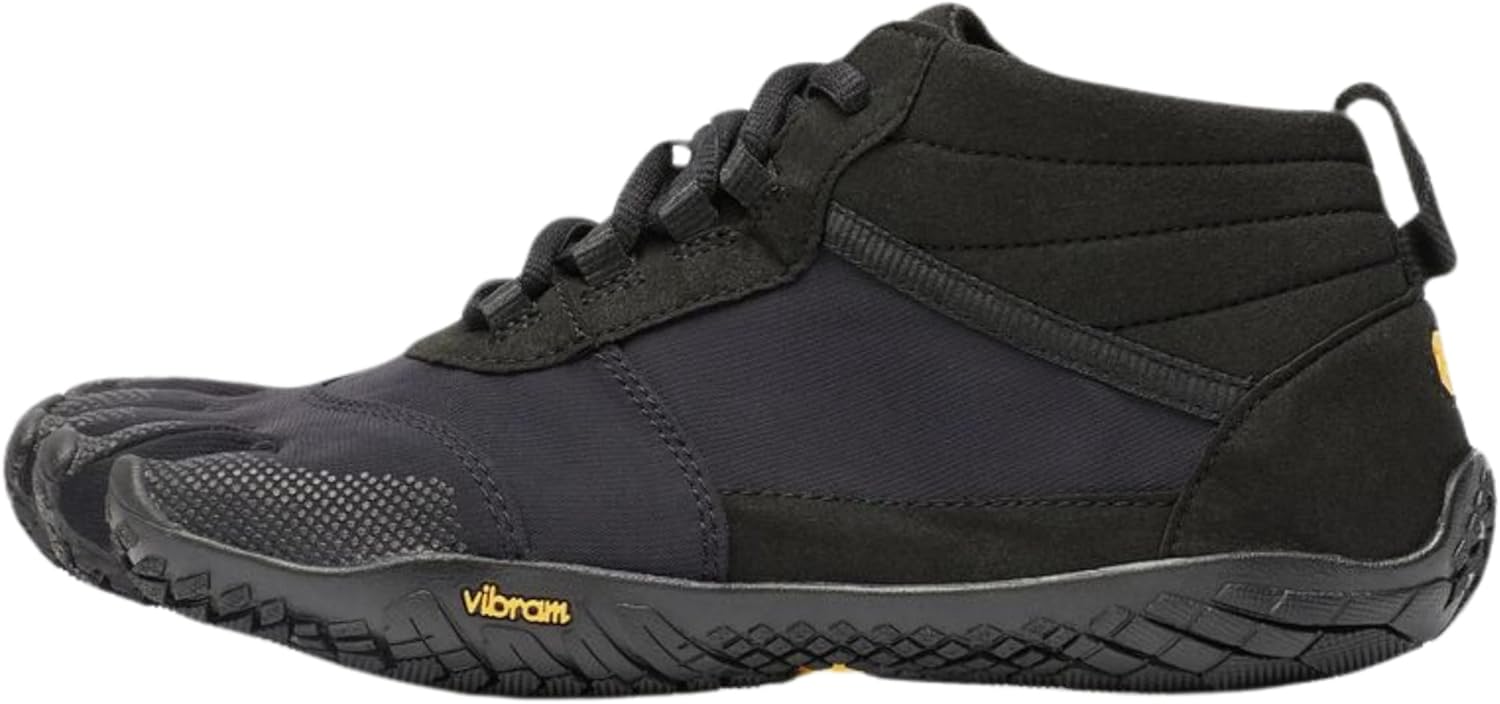
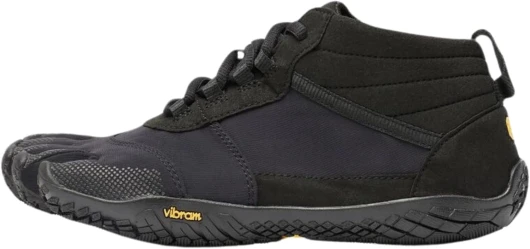
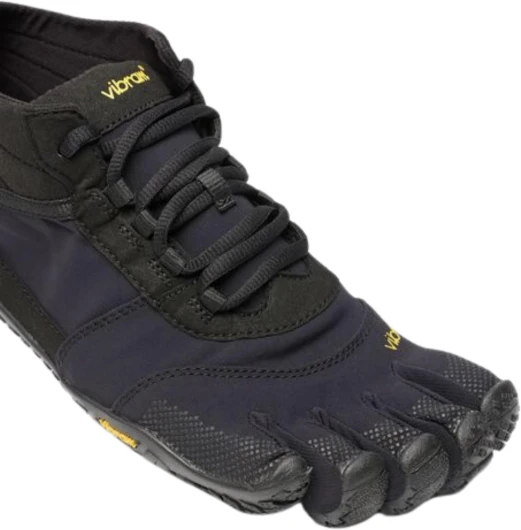
Design-wise, the V-Trek is obviously built around the toe pockets, so let’s start there. Each toe has its own compartment, and the cut is fairly snug. I don’t have super wide toes and they fit fine, but I can see someone with very thick or overlapping toes struggling a bit. Once you’re in, the separation feels natural after a day or two, but the first few minutes are always a bit odd if you’re used to normal shoes. The shape follows the foot well: wide at the forefoot, no taper, and almost no heel-to-toe drop. It feels like a thin glove on the foot.
The Black/Black colorway is low-key, which I like, because the toe shape already draws enough attention. The upper has a kind of soft, slightly fuzzy texture from the wool blend. It doesn’t scream “high-tech”, but it also doesn’t look cheap or like a costume piece. Stitching on my pair is clean, no loose threads or weird glue spots. The sole wraps slightly up around the toes and sides, which helps with durability when scraping rocks and also gives a bit of extra protection at the front.
The lacing system is basic: eyelets and standard laces. No speed laces, no elastic. That’s both good and bad. Good because you can fine-tune the tension across the foot, and if a lace breaks, any normal lace can replace it. Bad because tying and untying gets old if you’re the kind of person who just wants to slip shoes on and off. A couple of Amazon reviewers mentioned looking into alternate lacing systems, and I get it. I ended up tying them once and then just loosening enough to get in and out, which works but isn’t super quick.
Overall, the design is practical more than pretty. It’s built for function: toe articulation, flexible sole, grip, and a bit of upper structure without being stiff. You don’t buy these to look sleek; you buy them because you want your feet to move more naturally. If you’re okay with the toe-shoe look, the rest of the design is actually quite sensible and consistent with its purpose.
Comfort: great if you ease into it, brutal if you don’t
Comfort with these really depends on your expectations and your transition. If you come from thick cushioned shoes and try to do a long hike right away, you’ll probably think they’re harsh. If you already use minimal shoes or like being barefoot, they feel pretty good. For my feet (normal arch, neutral gait), the V-Trek felt comfortable for up to 2–3 hours straight after about a week of gradual use. I started with 30–40 minute walks, then moved to longer hikes. That ramp-up made a big difference in how my calves and arches felt.
The toe separation itself is comfortable once you’re in. The first few days, putting them on is a minor pain: you have to wiggle each toe into its slot, and one always wants to go into the wrong one. After about a week, muscle memory kicks in and it takes maybe 10–15 seconds per foot. Once the toes are in place, the feeling is actually quite nice, especially on uneven terrain. You can grip a bit with your toes, and your foot feels more stable on rocks and roots.
There’s basically no arch support, so your foot has to do the work. That’s the whole point of this type of shoe, but it can be tiring at first. The polyurethane midsole does give a bit of cushion compared to the thinnest FiveFingers models. On hard pavement, it takes the sharp sting off, but you still feel more impact than in a regular running shoe. On trails, that extra couple of millimeters of midsole is just enough that small rocks don’t feel like nails through the sole while still letting you sense the ground.
Ventilation is decent. My feet got warm but not swampy, even on a mild uphill hike. The wool blend seems to help regulate temperature a bit. I didn’t get blisters, but I’m also used to walking barefoot at home a lot. If your skin is sensitive, I’d pair these with thin toe socks for longer outings. Overall, I’d say comfort is good if you accept the minimalist concept and take the time to adapt. If you want step-in pillow comfort on day one, this shoe is going to feel harsh and unforgiving.
Wool blend upper and Megagrip sole: what it feels like in real life
The upper is a 50/50 wool and synthetic blend. In practice, that means it has a bit of stretch, feels softer on the top of the foot than a full synthetic mesh, and handles temperature decently. I wore them in early fall weather, roughly 10–18°C (50–65°F), and my feet never felt cold or sweaty. With thin toe socks, they’d probably handle slightly cooler temps fine. The material has a bit of give when you flex your foot or climb, which makes them comfortable when scrambling over rocks or going up steep trails.
The inside isn’t plush or padded like a classic sneaker. It’s more like a thin liner with a bit of structure. Barefoot, it’s okay, not scratchy. One Amazon reviewer said they’re fine without socks and I agree, as long as your feet don’t blister easily. I did one 8 km hike barefoot in them and had no hot spots, but everyone’s skin is different. The wool blend also doesn’t hold odor as badly as pure synthetic in my experience, but don’t expect miracles. After a few sweaty uses, they will need a wash and air dry.
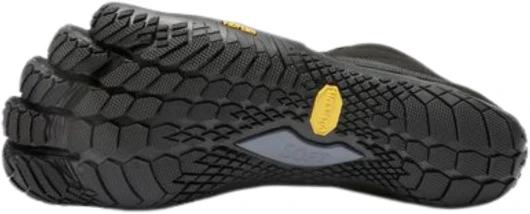
The sole is where Vibram usually shines, and here it’s a 4 mm Megagrip rubber outsole plus a polyurethane midsole that adds a bit of thickness. The rubber compound grips well on: wet rocks, damp roots, and loose dirt. I tested them on a slightly muddy trail after rain, and I didn’t feel like I was sliding around, which is what I care about most. The lugs aren’t huge like a hardcore mountain trail shoe, but they’re enough for light to moderate hiking. On pavement, the sole feels thin but not punishing, though if you heel-strike heavily you will feel it.
Material quality overall feels solid for the weight. You can tell they’re built lightly — this is not a tank of a hiking boot — but nothing on my pair feels flimsy. The trade-off is obvious: lightweight and flexible means less material, which long term might mean faster wear if you abuse them on sharp lava rock or super rough terrain. For normal trail and urban use, the combo of wool blend and Megagrip looks like a good balance between comfort, breathability, and grip.
Durability after a few weeks and what I expect long term
With any minimalist shoe, durability is always a question because there’s just less material to chew through. After a few weeks of mixed use — a few hikes, several urban walks, some light jogging — my V-Treks still look pretty close to new. The outsole shows a tiny bit of smoothing on the most used lugs under the ball of the foot, but nothing worrying. The Megagrip compound usually wears slower than softer running shoe rubbers, so I’m not too concerned about the sole for regular use.
The upper is where I was more curious. The wool/synthetic blend feels soft but not fragile. I scraped them a few times against rocks and tree roots, and they didn’t snag or tear. No seams have popped, and there’s no delamination so far between the upper and the sole. The toe pockets, which are a common weak point on some older FiveFingers, still look fine: no splitting at the toe seams, no visible stretching out of shape. That said, I haven’t dragged them across super sharp terrain or done hundreds of kilometers yet, so this is still early-days feedback.
The laces and eyelets are basic but solid. No fraying on the laces, and the eyelets don’t cut into them. The inside lining hasn’t pilled or worn thin yet despite me wearing them barefoot quite a bit. I did one gentle hand wash and air dry; they dried in about half a day in mild weather and didn’t deform or get stiff. I wouldn’t throw them in a hot dryer though — that’s asking for trouble with this kind of shoe.
Realistically, if you use these mostly for hiking trails, walking, and casual wear, I’d expect a reasonable lifespan for a lightweight shoe, but probably not as long as a heavy leather hiking boot. If you run a lot on pavement or drag your toes, you’ll wear the sole and toe pockets faster. So far, nothing makes me think they’re fragile, but they are still minimalist shoes: light, flexible, and not overbuilt. Treat them as such and they should hold up fine.
Trail and daily performance: where they shine and where they don’t
On the trail, the V-Trek does its job. Grip from the Megagrip outsole is solid on most of what I tried: dirt, roots, small rocks, wet stone, and even some light mud. I wouldn’t use them for deep mud or very loose gravel descents — the lugs just aren’t aggressive enough for that — but for typical hiking paths and forest trails, they hold up well. The flexibility of the sole lets your foot wrap around rocks, which surprisingly improves stability once you’re used to it. You don’t feel like you’re standing on a rigid platform; you feel like your foot is doing the balancing.
For walking and light jogging on pavement or mixed surfaces, they feel fast and agile. There’s almost no weight on your foot, so you don’t get that heavy shoe feeling. The downside is that your form matters. If you heel-strike hard, especially when running, you’ll feel a shock up your legs. These shoes kind of push you into a midfoot or forefoot strike, which is good long term but takes adaptation. One Amazon reviewer mentioned that heel strikers won’t find them very comfortable, and that’s accurate.
On climbs and scrambles, the individual toes help more than I expected. Being able to spread your toes and grip a bit gives extra confidence when stepping on small edges or uneven rocks. The low stack height means you’re closer to the ground, so ankle rolls are less likely, at least in my case. I felt more connected and precise with foot placement compared to a bulky hiking boot. The trade-off: you don’t have the same protection if you kick a rock hard or drop something on your foot.
For everyday urban use, they’re honestly pretty decent if you don’t mind the look. Good grip on wet sidewalks, easy to pack in a bag, and light enough that you forget they’re there. I wouldn’t use them as my only shoe for long days on concrete if I wasn’t used to minimal footwear, but as a daily walking and casual shoe, they perform well. So overall: performance is strong for what they’re built for — natural-feeling hiking, walking, and some light running — as long as you respect their minimalist nature.
What you actually get with the V-Trek
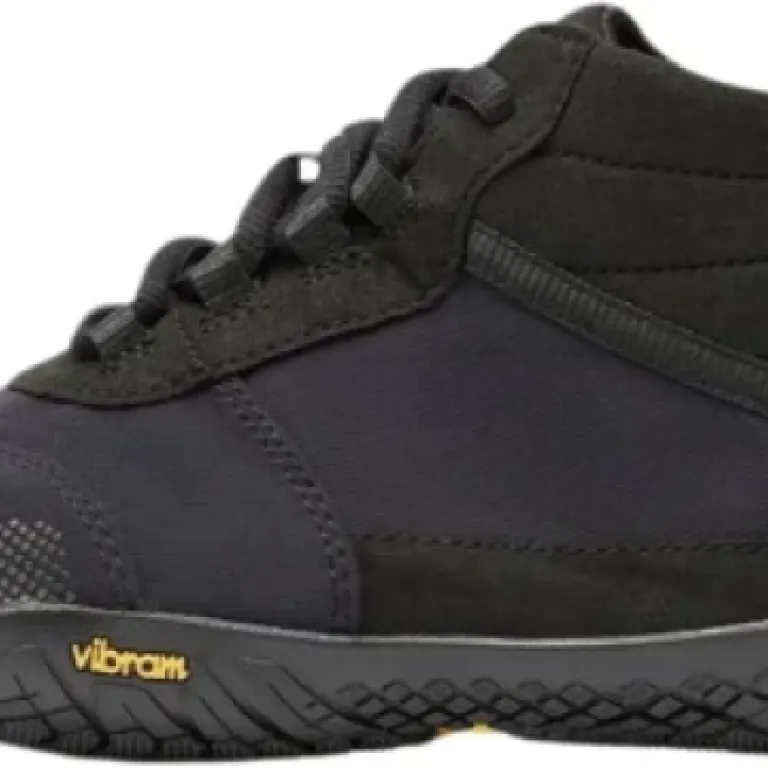
On paper, the Vibram FiveFingers V-Trek is a lightweight minimalist hiking / trekking shoe: 6.5 oz (around 185 g) per shoe, 50/50 wool and synthetic upper, 4 mm Vibram Megagrip outsole, and a slightly thicker polyurethane midsole compared to some of their more hardcore barefoot models. So it’s not the thinnest FiveFingers, but it’s still very much on the minimal side. It’s aimed at trekking, walking, climbing, and general urban use, not just as a gym or yoga novelty.
In the box, you basically get… the shoes. No fancy extras, no bag, no spare laces. Just the pair. The model I used is the Black/Black, size 42 EU. Visually, they look like a cross between a light hiking shoe and a ninja sock with toes. The wool-blend upper has a slightly textured look, not shiny or plastic-like, which I prefer. The lacing system is standard laces, nothing quick-lace or BOA-style, which is fine but a bit old-school for something this niche.
Function-wise, the main selling points are: individual toe pockets for toe splay and grip, a grippy Megagrip outsole that’s supposed to handle wet and dry surfaces, and a bit more cushioning than the ultra-minimal models so you can stay out longer without your feet screaming. Vibram markets it for trekking and hiking, but I used it for a bit of everything: packed dirt trails, rocky paths, wet grass, city sidewalks, and a bit of gravel and pavement jogging.
So in practice, you’re not buying a general-purpose sneaker here. You’re buying a specific tool: a light, flexible trail shoe that lets your feet move almost like barefoot while still giving enough protection so you don’t regret stepping on a rock. If that’s what you want, the spec sheet actually lines up with how it feels on the foot. If you’re expecting a cozy, plush hiking shoe with big cushioning and arch support, this is the wrong product from the start.
Pros
- Very light and flexible, gives a real barefoot-like feel with some protection
- Megagrip outsole offers solid traction on wet and dry trails
- Wool/synthetic upper is comfortable, breathable, and handles temperature fairly well
Cons
- Putting toes into the individual pockets is fiddly, especially at first
- Very little cushioning or arch support, not ideal for heel strikers or people wanting plush comfort
- Look is unusual and price is relatively high for something so niche
Conclusion
Editor's rating
The Vibram FiveFingers V-Trek is a solid minimalist hiking and walking shoe for people who either love being barefoot or are ready to seriously try that style. You get a light, flexible shoe with good grip, individual toe pockets, and a bit more cushioning than the most extreme barefoot models. On trails and mixed terrain, they feel agile and secure, and the Megagrip outsole does what it’s supposed to do. Comfort is good as long as you respect the transition period and don’t expect thick cushioning or arch support.
They’re not perfect. Putting them on is slightly annoying at first, heel strikers will probably find them unforgiving, and the look is definitely not for everyone. Durability seems decent so far, but they’re still minimalist shoes — there’s only so much material between you and the ground. For the price, they make sense if you want exactly this kind of footwear and plan to use them often for trekking, walking, and everyday wear. If you just want a comfy, no-fuss shoe and don’t care about the barefoot feel, there are easier and cheaper options.
So: they’re a good fit for people who like natural movement, already go barefoot a lot, or want a lightweight trail shoe that lets the foot work. People who want plush comfort, strong support, or hate standing out visually should probably skip these and stick to classic trail runners or hiking shoes.