Summary
Editor's rating
Value: solid for what it offers, as long as you know the trade‑offs
Design: more trail shoe than classic boot
Comfort: almost no break-in, but runs warm
Materials: synthetic, Gore‑Tex, and a grippy rubber sole
Durability: holding up so far, but not a forever boot
Performance on the trail: ups, downs, and wet conditions
What you actually get with the X Ultra 4 Mid GTX
Pros
- Very comfortable out of the box with minimal break-in needed
- Lightweight for a mid boot, feels closer to a trail shoe on the foot
- Good traction and waterproofing in typical wet trail conditions
Cons
- Runs warm and less breathable due to Gore‑Tex and synthetic upper
- Stock laces are slippery and tend to loosen, often need double-knotting
- Waterproofing and upper durability may not hold up for many seasons of heavy use

Specifications
View full product page →| Brand | Salomon |
| Is Discontinued By Manufacturer | No |
| Product Dimensions | 13 x 9 x 6 inches |
| Item model number | L41294600 |
| Department | mens |
| Date First Available | October 21, 2020 |
| Manufacturer | Salomon |
| ASIN | B08LKVWQ89 |
Light mid hikers that feel more like trail shoes
I’ve been using the Salomon X Ultra 4 Mid GTX (men’s, size 11 wide) for a mix of day hikes, muddy forest trails, and a couple of wet weekend trips. I usually hike in low trail shoes, so going back to a mid boot was a bit of a change. I picked these because I wanted something lighter than a classic leather boot but still with ankle coverage and Gore‑Tex, mainly for shoulder season and sloppy trails.
Right out of the box, the first thing that stood out was the weight. For a mid-height boot, they feel closer to a chunky trail runner than a classic hiking boot. No heavy, blocky feeling when you walk. First outing was about 6 miles on mixed dirt and rocks, and I didn’t get that usual stiff new-boot vibe. They were basically good to go with just a bit of lace tweaking.
Most of my use has been in wet conditions: shallow streams, puddles, wet grass, and some light snow. I also did one long day of around 12 miles with a 25 lb pack. So far they’ve been through enough abuse to show their strengths and a few weak points. I’m not babying them – rocks, roots, mud, and some sloppy downhill sections where traction really matters.
Overall, they feel like a boot for people who usually prefer trail runners but want a bit more protection and waterproofing. They’re not perfect, and there are some things that bug me (especially around breathability and the laces), but they do a lot of things right. If you’re expecting a tank-like leather boot, this isn’t that. If you want a light, modern hiker with decent support, that’s more what you’re getting here.
Value: solid for what it offers, as long as you know the trade‑offs
Price-wise, the X Ultra 4 Mid GTX usually sits in the mid-to-upper range for hiking boots. It’s not bargain-bin, but it’s also not as pricey as some high-end leather boots or fancy mountaineering models. For that money, you’re getting a light boot with Gore‑Tex, decent traction, and very little break-in time. If you hike regularly and care about comfort and weight, that combo is pretty attractive.
Compared to cheaper boots from brands like Columbia or Hi‑Tec, I notice better grip, a more dialed-in fit, and less of that heavy, clunky feeling. On the flip side, compared to heavier leather boots from Lowa, Scarpa, or Asolo, you’re probably giving up some long-term durability and support under big loads. So you’re essentially paying for a modern, nimble feel rather than a long-service tank. If you’re honest about your actual use – mostly day hikes, weekend trips, moderate pack weights – the value is pretty good.
Where value could dip is if the waterproofing fails too early. If you get only half a year of solid waterproof performance before leaks, that’s annoying at this price. Mine haven’t reached that point yet, but user reports suggest it can happen. If you live somewhere very wet and plan to be in rain and streams constantly, that’s worth keeping in mind. In that case, sometimes a simpler non-Gore‑Tex shoe that dries fast can be better long-term value.
Overall, I’d call the value “pretty solid” if you want a light, comfortable mid boot and you understand it might not last forever. For a casual hiker who goes out a handful of times a year, they’ll probably feel like a good investment. For someone who’s out every weekend year-round, you’ll likely burn through them faster, but you’ll enjoy the comfort and performance while they last.
Design: more trail shoe than classic boot
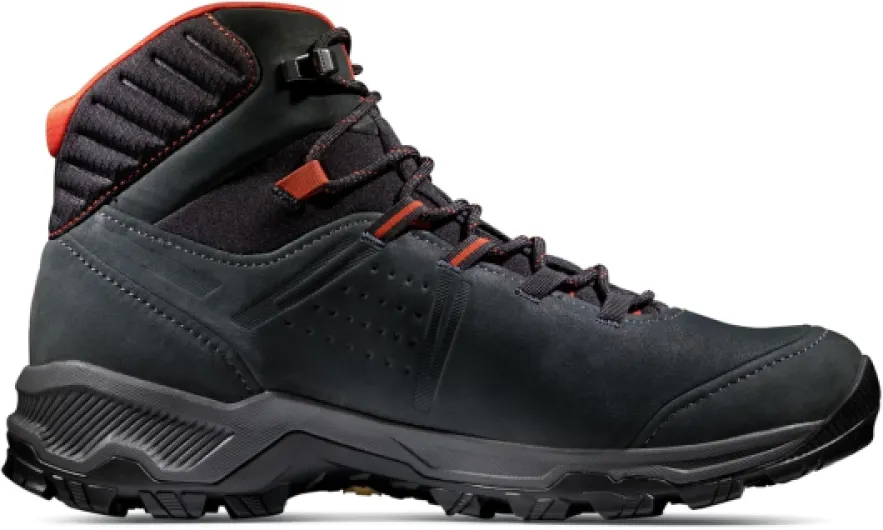
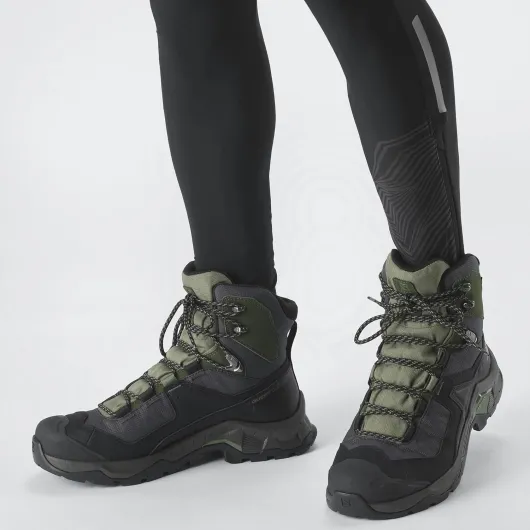
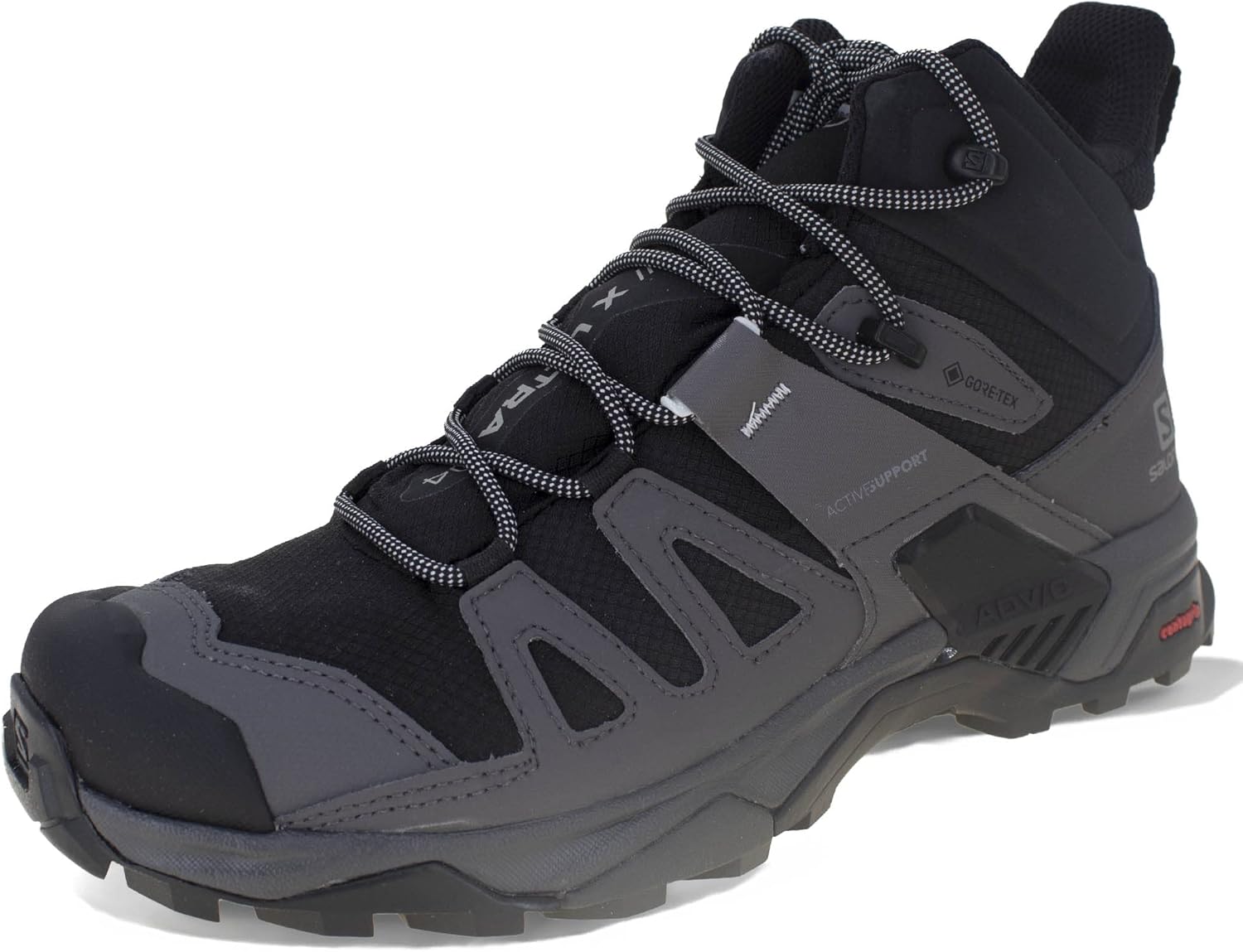
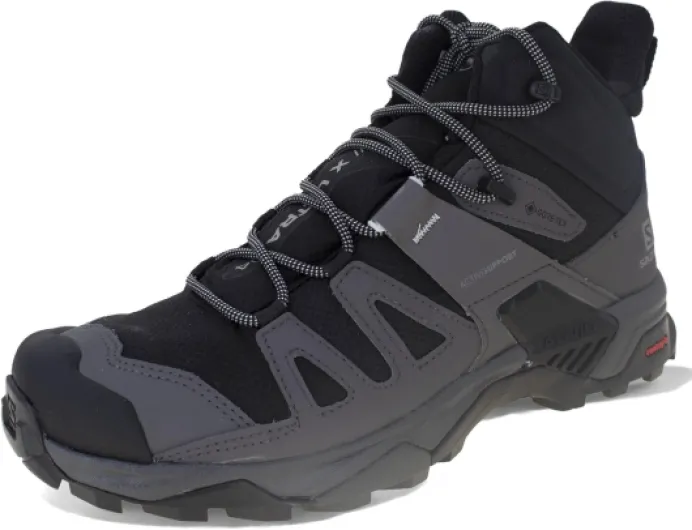
Design-wise, these feel very much like a trail running shoe that’s been stretched into a mid boot. The upper is mostly synthetic with some welded overlays, no big leather panels. That keeps the weight down and also means they dry faster once they do get wet on the outside. The mid height hits just above the ankle bone on me, so you get some coverage but not that locked-in ski-boot feeling that some heavier boots give.
The black/magnet/pearl blue color combo is pretty low-key. Mostly dark, with just a small touch of blue. Good if you don’t want loud colors on the trail or if you’re also using them as work shoes or travel boots. Mud doesn’t show much on the darker upper, which is practical. Visually, they’re not going to turn heads, but they look modern and functional. I’d call it “pretty solid” rather than stylish or ugly.
The lacing system uses standard eyelets plus a couple of hooks at the top. No fancy quick-lace here. The downside: the stock laces are a bit slippery. I’ve had them loosen up mid-hike a few times, especially on longer descents when I really needed the ankle locked in. Double-knotting helps, but I still think the laces could have more grip. I might eventually just swap them for rougher-texture laces.
One thing I do like is the overall shape: there’s enough volume over the instep and a bit of flare in the forefoot, which works for my foot. The heel cup is snug without rubbing. There’s also a decent rubber toe cap that actually takes hits from rocks without feeling like your toes are exposed. In practice, the design is focused on function and comfort more than looks, and for hiking boots, that’s what matters to me.
Comfort: almost no break-in, but runs warm
Comfort has been the main strong point for me. I wore them straight out of the box on a 6-mile hike with some climbs and descents, and I didn’t get any hot spots or blisters. Another user mentioned doing 15 miles with no blisters, and I’d believe that. They feel more like a supportive trail shoe than a stiff boot. The midsole has enough cushioning that rocks don’t punish your feet, but you still feel connected to the ground, which I prefer over super thick, squishy soles.
The wide size is actually useful. My forefoot is on the wider side, and I usually have to go up half a size or suffer numb toes on descents. With these in 11 wide, my toes have room to spread, and I haven’t had issues with my toes banging the front on steep downhills. The heel hold is decent – no major heel lift, even when side-hilling or going down loose gravel. That combination (roomy front, locked heel) is what makes them comfortable for longer days.
The downside is breathability. Gore‑Tex plus synthetic upper means they trap heat more than a non-waterproof mesh shoe. On cool days or in wet conditions, that’s fine. On warmer days, my feet definitely felt warm and a bit sweaty. Not unbearable, but if you mainly hike in hot, dry climates, I’d seriously consider the non-Gore‑Tex version instead. For me, using them mostly in spring, fall, and mild winter, the trade-off is acceptable.
One more comfort point: the ankle support is moderate. It’s better than a low shoe, obviously, but it’s not a super stiff cuff. For my use – light to moderate pack weight, rocky trails, some side slopes – it’s enough. If you have weak ankles or you’re carrying 35–40+ lbs regularly, you might want something with more structure. Overall, though, for typical day hikes and weekend trips, the comfort level is high, and the lack of real break-in is a big plus.
Materials: synthetic, Gore‑Tex, and a grippy rubber sole
The upper is fully synthetic, with welded overlays and a Gore‑Tex membrane underneath. No leather to break in, which is probably why they felt usable straight away. The upside of synthetic is low weight and faster drying. The downside is you don’t get that same long-term molding to your foot that good leather gives, and once the fabric starts to wear, it usually goes quicker than leather.
The Gore‑Tex liner has done its job so far for me. I’ve stood in shallow streams and ankle-deep puddles, and my feet stayed dry. Wet grass and muddy trails haven’t been an issue either. That said, based on user reviews and my experience with other Gore‑Tex boots, I’m not expecting the waterproofing to stay perfect forever. One reviewer mentioned theirs started leaking around the 6-month mark. I haven’t hit that point yet with these, but it’s something I’m watching for. With synthetic boots, once dirt and flexing stress the membrane, it can fail earlier than you’d like.
The sole is a Contagrip-style rubber with multi-directional lugs. On wet rock and loose gravel, grip has been pretty reliable. I’ve used them on muddy descents and light snow, and they’ve held on well enough that I felt confident, not skating around. They also pair fine with microspikes and snowshoes – the mid cut and sole stiffness are enough that the straps don’t dig in too badly. I wouldn’t call this a winter-specific sole, but for three-season use plus some winter days, it works.
Inside, the stock insole is basic. It’s thin and doesn’t add much cushioning. Arch support is decent from the midsole itself, but if you’re picky about insoles or need extra cushioning, you might want to swap them out. Just be aware that if you have a high instep, a thicker insole can make the fit too tight, especially over the top of the foot. Overall, the materials feel geared toward lightness and versatility rather than bombproof durability.
Durability: holding up so far, but not a forever boot
In terms of mileage, I’m around 70–80 miles in, with a mix of rocky trails, muddy forest paths, and some road walking to and from trailheads. So far, the outsole lugs show light wear but nothing dramatic. No chunks missing, no peeling at the edges. The synthetic upper has some scuff marks, especially on the toe area from kicking rocks, but the toe cap has taken the worst of it and is still firmly attached.
The stitching around the upper and the sole bond is still solid on my pair. No separation, no weird bulges. That lines up with my past experience with Salomon: they usually last me one to two hard seasons of frequent use before something gives – often the upper fabric or the Gore‑Tex membrane, not the sole itself. This feels in the same range: not flimsy, but not a 5-year boot either if you hike a lot. If you’re out once or twice a month, you’ll probably get decent life out of them.
The main durability question mark is the waterproofing over time. Another Amazon reviewer mentioned their waterproofing basically failed after six months, and that’s believable with this kind of construction. Once the membrane starts to leak, the boot still works as a boot, but you lose that big selling point. If you drag them through mud, creeks, and rough terrain all the time, expect that to happen sooner rather than later. If you mostly hike in drier conditions and only occasionally hit water, they’ll likely last longer in that department.
So far, I’d say durability is “good enough” for a light synthetic boot. This is not a tank like a full-grain leather model, but you also don’t have to suffer through a long break-in. If you see these as a 1–3 season workhorse rather than a decade-long investment, you’ll have more realistic expectations. For the price point and the weight, the trade-off seems fair to me.
Performance on the trail: ups, downs, and wet conditions
On actual hikes, these boots do the main things you want: they grip well, protect your feet, and don’t feel like bricks. Going uphill, the lighter weight really shows. I don’t get that sluggish “lifting weights with every step” feeling that I get from heavier leather boots. The sole flex is enough that you can walk naturally without that clunky roll. For fast hiking or longer distances on mixed terrain, that makes a big difference in how tired your legs feel at the end of the day.
Downhill is where Salomon pushes their “Descent Control” marketing. In practice, what I noticed is that the heel feels planted and the lugs bite well into dirt and loose rock. I did a few steep, dusty descents where my old boots would sometimes skid, and with these I felt more in control. That said, they’re still just hiking boots – on very slick wet rock, you still need to be careful. But overall traction is pretty solid, and better than some cheaper boots I’ve used from Columbia and Merrell.
Waterproofing has been good so far. I’ve stepped in puddles up to the lower eyelets, crossed small streams, and trudged through soaking wet grass. No leaks yet. Other users have had mixed results over time, with at least one review saying their pair started leaking under six months. I can’t confirm that yet, but I wouldn’t be shocked if the membrane eventually gives up after a lot of flexing and mud. That’s just kind of standard with many Gore‑Tex trail boots, not just Salomon. For the first season or two, though, they usually get the job done.
Winter-wise, they’re okay but not magical. One user mentioned cold toes, and I had the same on a longer hike around freezing temperatures. With good wool socks they’re fine for a few hours, but they’re not insulated boots. They pair well with microspikes and snowshoes, though, so for casual winter hikes on packed trails, they’re workable. I wouldn’t pick them for long, sub-freezing days where you’re standing around a lot. Overall, performance is strong for typical three-season hiking, with a few limits once you push into extreme cold or very heavy loads.
What you actually get with the X Ultra 4 Mid GTX
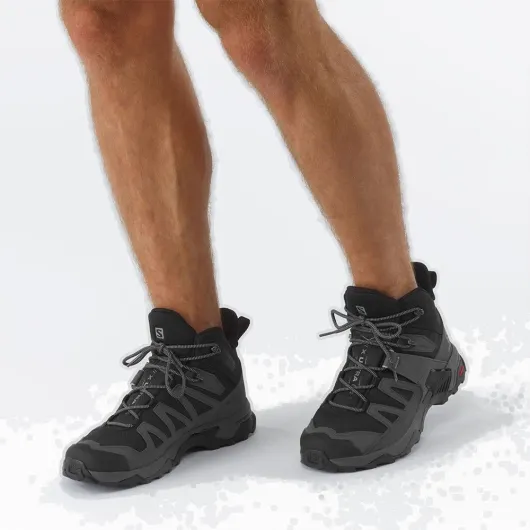
The pair I’m talking about is the men’s X Ultra 4 Mid Gore‑Tex, in the black/magnet/pearl blue colorway, size 11 wide. Salomon markets this as a lightweight hiking boot with “Descent Control” and full waterproofing thanks to Gore‑Tex. In simple terms: mid-height boot, synthetic upper, rubber sole, lace‑up, and meant for anything from day hikes to shorter backpacking trips. Not a mountaineering boot, not a winter boot, just a modern all-round hiker.
On the scale, they’re clearly lighter than classic leather boots I’ve had from Lowa and Asolo. They feel closer to my trail runners from Salomon and Hoka, just with more ankle coverage and a bit more structure. The profile is fairly slim even in the wide version, but the toe box doesn’t feel cramped for me. If you have very wide feet, you’ll still want to try them on, but compared to most standard-width boots, this wide version is noticeably roomier in the forefoot.
The outsole has a fairly aggressive pattern, with decent lugs that bite well into dirt and loose gravel. It’s not a super stiff sole – you can flex it with your hands – which makes it more comfortable on long days but less ideal if you’re carrying really heavy loads or doing a lot of scree and sharp rocks. It’s more “fast hiker” than “heavy-duty backpacking boot”.
In terms of intended use, I’d put them in the category of: weekend backpacking with a moderate pack, day hikes from easy to technical, wet shoulder-season hikes, and light winter use with decent socks. If you’re doing multi-week thru-hikes or hauling 40+ lbs regularly, I’d probably look at something beefier. But for most people doing regular hikes, local trails, and a few trips a year, they fit the brief pretty well.
Pros
- Very comfortable out of the box with minimal break-in needed
- Lightweight for a mid boot, feels closer to a trail shoe on the foot
- Good traction and waterproofing in typical wet trail conditions
Cons
- Runs warm and less breathable due to Gore‑Tex and synthetic upper
- Stock laces are slippery and tend to loosen, often need double-knotting
- Waterproofing and upper durability may not hold up for many seasons of heavy use
Conclusion
Editor's rating
For me, the Salomon X Ultra 4 Mid GTX is a very comfortable, lightweight hiking boot that behaves more like a supportive trail shoe with a bit of extra ankle coverage. It grips well, handles wet trails confidently, and doesn’t need a long break-in. The fit in the wide version is friendly to broader feet, with a roomy toe box and a secure heel. For typical three-season hiking, local trails, and weekend backpacking with a moderate pack, it does the job and does it in a way that keeps your feet fairly happy at the end of the day.
It’s not perfect, though. Breathability is just okay, and they can run warm on hotter days. The stock laces are slippery and annoying until you double-knot or replace them. Durability looks fine so far, but this is still a synthetic Gore‑Tex boot – there’s a real chance the waterproofing won’t last as long as you might hope if you abuse them in wet, rough conditions. If you want a boot to last many years of heavy use, a sturdier leather model is a better bet.
I’d recommend these to hikers who prioritize low weight, comfort, and decent waterproofing over long-term bombproof build. Good for day hikers, light backpackers, and people who usually wear trail runners but want a bit more protection in shoulder season and wet weather. I’d skip them if you mostly hike in hot, dry climates (get a non-GTX low shoe instead), if you carry very heavy packs often, or if you want one boot to last you half a decade of constant use. Within their intended use, they’re a pretty solid choice.