Summary
Editor's rating
Value for money: solid deal if you prioritize comfort and versatility
Design: practical looks, nothing flashy, but thought through
Comfort: the main reason to buy these
Materials and build: feels solid, not premium, but tough enough
Durability: after a few weeks and what I expect long term
Trail performance and waterproofing: reliable in real use
What you actually get when you buy the Moab 3 Mid
Pros
- Very comfortable right out of the box with good heel cushioning and support
- Vibram TC5+ outsole gives reliable grip on wet and dry terrain
- Waterproofing handles rain, wet grass, and shallow puddles without leaks
Cons
- Fit runs a bit snug, especially in the toe box, not ideal for wide feet
- Can run warm in hot weather due to waterproof membrane

Specifications
View full product page →| Brand | Merrell |
| Product Dimensions | 12 x 8 x 4.5 inches; 11.68 ounces |
| Item model number | J035833W |
| Department | mens |
| Date First Available | January 4, 2022 |
| Manufacturer | Merrell |
| ASIN | B0C64B38Z8 |
| Best Sellers Rank | See Top 100 in Clothing, Shoes & Jewelry |
A boot you can actually wear all day, not just on weekends
I’ve been using the Merrell Men’s Moab 3 Mid Waterproof (size 10, Beluga color) as my main boot for a mix of day hikes and everyday wear. I’m not a mountaineer, just someone who walks a lot, hits trails on weekends, and wants one pair of boots that doesn’t kill my feet after a full day. I bought these because my old cheap big-box hiking boots were flattening out and soaking through in light rain.
Right out of the box, the first thing I noticed was the lack of a painful break-in period. With many boots, the first week is basically blister roulette. With the Moab 3, I did a 6 km walk the first evening and a 12 km mixed trail the next day. No hot spots, no weird rubbing, just a bit of normal stiffness in the ankle collar that went away after two outings.
In terms of use, I’ve worn them for about three weeks straight: grocery runs, commuting, two muddy forest hikes, and one very wet, rocky trail. So this isn’t a long-term, 1-year durability report, but it’s past the “honeymoon” phase where many boots start to show their weak points. I’ve had enough time to see how they handle wet, loose terrain, how the waterproofing holds up, and if the comfort is just first-day hype or actually stays consistent.
Overall, my honest first impression: this is a practical, no-drama boot. It’s not flashy, it doesn’t feel like some high-end mountaineering shoe, but it does the basics well: grip, comfort, and decent waterproofing. There are a couple of small annoyances, especially around sizing and toe box space, but nothing that makes me regret the purchase. If you want a realistic user view and not catalog talk, here’s how it actually behaves in real life.
Value for money: solid deal if you prioritize comfort and versatility
In terms of value, the Moab 3 Mid Waterproof sits in that mid-range price bracket where you expect more than a budget boot but you’re not paying for high-end mountaineering gear. For what you get – Vibram sole, waterproof membrane, decent materials, and very good comfort – I think the price is fair. It’s not cheap, but it doesn’t feel overpriced either, especially if you compare it to some big-name brands that charge more for less comfort.
What you’re really paying for here is out-of-the-box comfort and versatility. You can use these as daily shoes, light work shoes, and proper hiking boots without swapping footwear all the time. If you bought a separate pair of sneakers, a pair of work boots, and a pair of dedicated hiking boots, you’d easily spend more. So if you like the idea of one pair doing most of the outdoor tasks, the value is pretty strong.
On the downside, if you’re very rough on your boots – think construction, heavy industrial work, or constant concrete deliveries – you might burn through these faster than a pure work boot with a thicker sole and more leather. In that case, the value drops because you’ll replace them more often. Also, if you hike rarely and mostly on easy dry paths, a cheaper non-waterproof hiking shoe might make more sense and save you money while being lighter and more breathable.
Overall, I’d rate the value as good but not mind-blowing. You’re paying a reasonable price for comfort, decent durability, and a well-known model that has been refined over time. If you catch them on sale, they become an even better deal. If you want ultra-premium leather and lifetime-level durability, you’ll need to spend more and accept more weight and a tougher break-in.
Design: practical looks, nothing flashy, but thought through
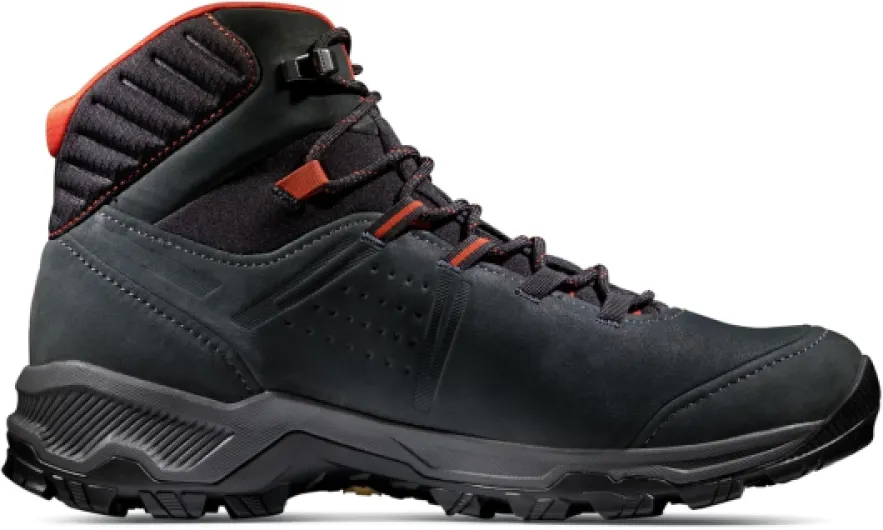
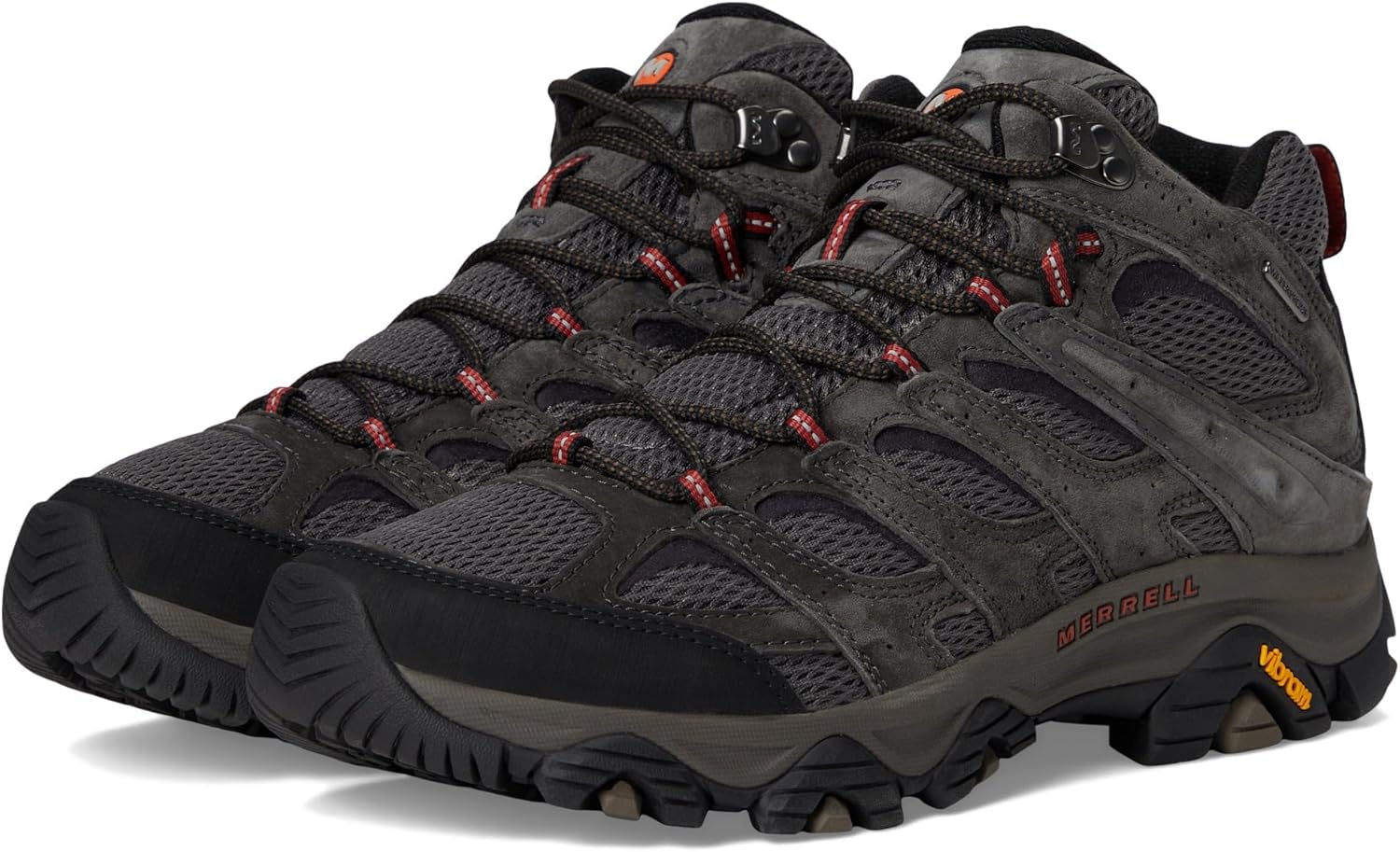
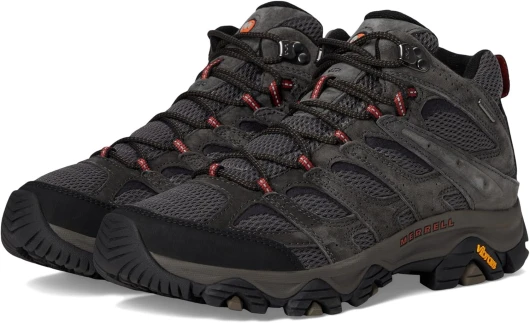
Design-wise, the Moab 3 Mid is very much a hiking boot, not a street sneaker pretending to be one. The Beluga color is basically a dark grey with some black and subtle contrast details. It’s low-key and doesn’t scream “neon trail runner,” which I like. You can wear it with jeans in the city and not feel like you’re wearing full-on mountain gear. If you want something stylish or trendy, this is more on the functional side than fashion-forward.
The upper uses a mix of pigskin leather and mesh panels. In practice, that means the boot has reinforced areas where you need protection (toe cap, sides, heel) and mesh where you need a bit of breathability. The toe cap is quite solid; I kicked a few rocks and roots by accident, and my toes survived without any drama. The bellows tongue is attached to the sides, which actually helps keep out sand, small stones, and mud. On a muddy forest trail, I walked through wet leaves and small puddles, and nothing got inside from the top.
The overall shape is slightly bulky but not clownish. The midsole has a visible cushioning profile, so it looks like a comfort-focused boot, not a thin, minimalist one. On the inside, the heel cup is fairly structured, so your heel stays in place. There are a few subtle design touches, like small Merrell logos and textured side panels, but nothing overly loud. If you like classic, "functional outdoor" styling, you’ll be fine with it. If you want something that looks like a lifestyle sneaker, this probably won’t excite you.
In terms of practicality, the design choices make sense: mid-height for ankle coverage, solid rand at the front for protection, pull tab at the back to help you get them on, and decent spacing between eyelets so you can adjust tightness pretty well. My only minor complaint is that the top metal hooks could be slightly smoother; the laces occasionally catch when unlacing quickly. Not a deal-breaker, but a small detail that shows this is built more for function than for a seamless, polished user experience.
Comfort: the main reason to buy these
Comfort is where the Moab 3 Mid really earns its reputation. The boot has a Kinetic Fit ADVANCED removable insole, extra heel cushioning, and Merrell’s Air Cushion in the heel. In practice, that means the first step doesn’t feel harsh. Compared to my old cheaper hiking boots, the difference is obvious: less heel shock, more even pressure under the foot, and no feeling of standing on a hard plate. I did a 12 km hike on mixed terrain on day two with zero break-in, and my feet felt tired but not wrecked.
The midsole is EVA foam, which gives it a bit of bounce without turning it into a soft, unstable shoe. I weigh around 200 lbs, and I didn’t feel like I was bottoming out. The heel feels the most cushioned; the forefoot is a bit firmer but still comfortable. If you’re used to running shoes with thick foam, this will feel firmer, but compared to many traditional boots, it’s easier on the joints. The arch support is medium – there’s a molded nylon shank that gives some structure, but it’s not a super aggressive arch. If you have very flat feet or very high arches, you might want to swap the insole.
Fit-wise, I found them to run slightly on the snug side. I’m usually between 9.5 and 10; I took a 10, and with thick hiking socks, it’s just right but not roomy. The toe box is okay but not wide. If you have wide feet or like extra space for your toes to splay, consider the wide version or going up half a size. One Amazon reviewer mentioned a blister on the little toe; I can see how that could happen if your foot is wider than average and you don’t size up. For me, no blisters, but I wouldn’t call the fit generous.
Ventilation is decent but not airy. It’s a waterproof boot, so your feet will run warmer than in a mesh trail runner. On a cool, damp day, it was perfect. On a warmer day walking in the city, my feet felt a bit warm but not soaked in sweat. In short, this is a very comfortable boot for walking and hiking, as long as you get the sizing right and don’t expect sneaker-level breathability. For long days on your feet, it’s miles better than stiff work boots or cheap no-name hikers.

Materials and build: feels solid, not premium, but tough enough
The boot uses pigskin leather and mesh on the upper, a waterproof membrane inside, a lightweight EVA foam midsole, and a Vibram TC5+ rubber outsole. On foot, it feels like a good mix of toughness and flexibility. The leather parts give the boot structure and protection, while the mesh panels keep it from turning into a sauna. The waterproof membrane is not some magic shield, but for walking in wet grass, shallow puddles, and light rain, it did its job: my socks stayed dry.
The laces and webbing are 100% recycled, which is nice from an eco point of view, but what matters to me is how they hold up. So far, no fraying or slipping. The laces are slightly textured, so they stay tied pretty well; I only had to re-tie once during a longer hike after I lazily did a loose knot. The lining is also 100% recycled mesh, and it feels smooth against socks. I didn’t get any weird rubbing from seams, which sometimes happens with cheaper boots where the stitching is rough inside.
The Vibram TC5+ sole is the star material, honestly. The rubber compound feels grippy without being super soft. I tested it on wet rocks by a stream, damp wooden bridges, and loose dirt. I never had that "I’m about to slide" moment, as long as I was walking normally and not doing anything dumb. The lugs are medium depth, so they bite into dirt and small gravel, but they’re not so aggressive that they feel awkward on pavement. That’s important if you plan to use these both in town and on trails.
Build quality out of the box looked clean: no glue blobs, no loose threads, and no misaligned panels. After a few weeks, the only visible wear is some creasing in the leather where the foot bends and a bit of dust in the mesh. Nothing unusual. It doesn’t feel like a luxury boot, but for a practical hiking shoe, the materials feel honest and up to the task. I’d still avoid using them as a work boot on construction sites every day if you want them to last years, but for regular hiking and daily walking, they feel more than sturdy enough.
Durability: after a few weeks and what I expect long term
I haven’t owned these for a full year yet, so I can’t claim long-term, multi-season experience, but after a few weeks of regular use, I can at least judge the early durability signs. So far, no stitching has come loose, no parts are peeling, and the sole shows only light wear on the outer heel – which is normal for my walking pattern. The leather has some creasing where the foot bends, but that’s cosmetic and expected.
The outsole lugs still look sharp. I’ve done a couple of rocky trails where cheaper boots often start to show small chunks missing from the rubber after a while. Here, there’s just some cosmetic scuffing. The toe cap has taken a few hits against rocks and roots but hasn’t chipped or separated. That gives me some confidence that these will hold up decently if used for regular hiking and daily walking, not as heavy-duty work boots.
Inside, the insole is holding its shape, and the heel cushioning hasn’t flattened noticeably yet. With some other mid-range boots, the insole starts to feel dead pretty quickly, and you need to replace it with a third-party one. Here, I think many people could comfortably keep the stock insole for quite a while. The mesh lining isn’t pilling or tearing, which sometimes happens around the heel if the boot rubs your socks too much.
Based on how they’re aging so far and on what other users report (like the delivery worker who gets about six months of hard daily use), I’d say durability is pretty solid for the price, but not indestructible. If you’re a big guy walking all day on rough surfaces, expect to replace them every 6–12 months. If you’re an average user hiking on weekends and wearing them casually, you can likely get a couple of seasons or more. There are tougher boots out there if you really abuse your footwear, but they’re usually heavier and less comfortable.

Trail performance and waterproofing: reliable in real use
On the trail, the Moab 3 Mid performs like a solid all-rounder. It’s not a technical alpine boot, but for forest trails, rocky paths, and muddy sections, it handled everything I threw at it. The Vibram TC5+ outsole gives good grip on most surfaces. On wet rocks and damp wooden bridges, I walked carefully but never had a slip. On loose gravel downhill, the lugs dug in enough that I didn’t feel like I was skiing. Traction on dry dirt and grass is obviously fine.
The mid-cut design offers moderate ankle support. It’s not a rigid brace, but it does help with small twists. I stepped on some awkward side slopes and roots; my ankle moved but didn’t roll dangerously. If you have weak ankles or you carry a very heavy backpack, you might want something stiffer. But for day hikes with a light to medium pack, this level of support is pretty comfortable because it still lets your ankle move naturally instead of locking it in place.
Waterproofing was tested in wet grass, shallow puddles, and light rain. I walked for about 40 minutes in soaked fields where my pant legs were getting wet, and the boots stayed dry inside. I also stood in a shallow puddle (up to just below the laces) for about a minute, and no water came through. Obviously, if you go deeper than the membrane height or water gets in from the top, you’ll get wet, but that’s normal. Breathability takes a hit compared to non-waterproof shoes, but that’s the trade-off.
On pavement and daily use, the performance is also decent. The sole is not too noisy, and the cushioning makes walking on concrete much more bearable than harder boots. The only negative point is that it’s not ideal for very hot weather or fast-paced activity like trail running; it’s simply too warm and too boot-like for that. But for its intended use – hiking, walking, and light outdoor work – it performs well and doesn’t do anything weird or annoying during longer outings.
What you actually get when you buy the Moab 3 Mid
On paper, the Merrell Moab 3 Mid Waterproof is sold as an all-round hiking boot: mid height, waterproof membrane, Vibram TC5+ outsole, pigskin leather and mesh upper, and a cushioned midsole with a removable insole. In reality, it feels like a hybrid between a hiking boot and a sturdy sneaker. It doesn’t have that super stiff, heavy work-boot feeling, which for daily wear is a good thing.
The pair I got (size 10, Beluga color) came in a basic Merrell box, nothing fancy. Inside, just the boots and some paper stuffing. No extra laces, no accessories, which is fine for the price range. The listed weight is around 11–12 ounces per boot, and on foot they do feel noticeably lighter than classic leather hiking boots like some older Timberland or heavy work-boot styles. If you’re used to sneakers, you’ll still feel the extra weight, but it’s not tiring.
The boot is mid-cut, so it covers the ankle but doesn’t go very high up the leg. Shaft height is around the ankle as stated, which for me hits a nice middle ground: some support and protection from rocks and mud, but still flexible enough to walk naturally. The lacing system is straightforward: fabric loops lower down, metal hooks at the top. The laces themselves are 100% recycled but feel normal in the hand, not flimsy or slippery.
Overall, as a product, it’s positioned as a do-it-all hiker: something you can use for day hikes, light backpacking, dog walks, and even as a work shoe if your job involves a lot of walking outside. It’s not pretending to be an alpine boot or a minimalist trail runner. If you’re expecting a rigid, ultra-supportive mountaineering boot, this isn’t it. If you want one boot that can handle most outdoorsy stuff without being a brick on your foot, that’s closer to what this is.
Pros
- Very comfortable right out of the box with good heel cushioning and support
- Vibram TC5+ outsole gives reliable grip on wet and dry terrain
- Waterproofing handles rain, wet grass, and shallow puddles without leaks
Cons
- Fit runs a bit snug, especially in the toe box, not ideal for wide feet
- Can run warm in hot weather due to waterproof membrane
Conclusion
Editor's rating
The Merrell Men’s Moab 3 Mid Waterproof is a practical, comfortable hiking boot that works well for everyday use and weekend trails. It’s not flashy and it doesn’t try to be a hardcore mountaineering boot. Where it shines is simple: it feels good right away, grips well on most surfaces, and keeps your feet dry in typical wet conditions like rain, puddles, and muddy paths. For someone who wants one boot that can handle daily walking, light outdoor work, and proper hikes, it hits a nice balance.
It’s not perfect. The fit runs a bit snug, especially in the toe box, so wide-footed people should look at the wide version or size up. Breathability is just okay, not great, because of the waterproof membrane. And if you abuse your boots on rough jobs every single day, there are heavier-duty models that might last longer, though they’ll be less comfortable out of the box. But for most casual to regular hikers and people on their feet a lot, the trade-offs make sense.
I’d recommend this boot to: hikers who want comfort without a long break-in, delivery or outdoor workers who walk a lot on mixed surfaces, and anyone who wants a single pair of boots that can go from city sidewalks to wet forest trails. I’d skip it if you have very wide feet and hate snug fits, if you mostly hike in hot, dry climates where waterproofing is pointless, or if you need a very stiff, technical boot for serious mountaineering. For its intended use, it’s a pretty solid, no-nonsense choice.