
Summary
Editor's rating
Value for money: fair if you need breathable hikers, less so if you want bombproof boots
Chunky trail look with some small design annoyances
Comfortable out of the box, especially if you like roomier boots
Light leather and mesh combo – breathable but not really weatherproof
Durability: mostly solid, but the sole bonding is a concern
Trail performance: good grip and stability, but not a hardcore backpacking boot
What kind of boot this actually is
Pros
- Very comfortable out of the box with a wide, roomy toe box
- Breathable mesh and lighter build make it good for warm-weather hikes
- Works well with orthotic insoles thanks to removable footbed and decent internal volume
Cons
- Not waterproof and gets cold quickly in low temperatures
- Reports of sole delamination raise concerns about long-term durability
- Short tongue and awkward loop placements can cause minor comfort and lacing issues

Specifications
View full product page →| Brand | KEEN |
Light hikers that feel more like everyday shoes
I’ve been wearing the KEEN Men’s Voyageur Mid Height Hiking Boot in Raven/Tawny Olive (size 11) as my main boot for a few weeks. I’ve used them for daily walking, a couple of 6–8 mile hikes with mixed terrain, and just running errands. So this is not a lab test, it’s just how they behaved in normal life with a bit of abuse. In short: they feel more like beefed-up sneakers than classic stiff hiking boots.
The first thing that hit me was how breathable and light they feel for a mid-height boot. If you’re used to full leather, waterproof hiking boots that roast your feet, these are the opposite. Tons of mesh, lots of airflow, and you feel that right away. On the flip side, that also means they’re not really made for wet or cold conditions, even though the leather is “water resistant”. Think “dry trails and warm weather” more than “rainy mountains”.
Coming from heavier boots, I liked how little break-in they needed. I walked about 4 miles the first evening and didn’t get hotspots or big blisters. They have that typical KEEN wide forefoot, so if you’ve got wider feet or your toes hate being squeezed, that’s a plus. If you have narrow feet, you might feel a bit of slop unless you really crank the laces. So the fit is on the roomy side, not a glove-like hiking boot fit.
They’re not perfect though. I’ll get into details later, but there are two things that bugged me: the tongue is a bit short so the laces can ride up and rub the front of your ankle, and I’m a little wary of long-term durability of the outsole/upper bond because of other owners’ delamination stories. Mine haven’t fallen apart yet, but seeing that in reviews makes me pay attention. Overall, they’re pretty solid light hikers, but I wouldn’t trust them as my only boot for a long, wet backpacking trip.
Value for money: fair if you need breathable hikers, less so if you want bombproof boots
Price-wise, the Voyageur Mid usually sits in the mid-range hiking boot bracket. You’re not paying budget-boot money, but you’re also not in the super premium, high-end mountaineering category. For that price, I expect decent comfort, solid materials, and no major quality disasters. Comfort-wise, they deliver: good fit for wider feet, removable insole that works with orthotics, low break-in, and nice breathability. For someone who wants a boot they can wear almost daily, including to work, that’s worth something.
Where the value gets a bit murky is when you compare them to competitors. Some brands in the same price range offer full waterproof membranes, more robust leather uppers, or slightly better long-term durability. The Voyageur trades that off for better airflow and lighter weight. So if your main goal is a cool, breathable boot for warm weather hikes, they’re a decent deal. If you want one boot to handle everything including rain, snow, and heavy backpacks, I’d say look at sturdier, waterproof models instead – otherwise you’ll end up buying a second pair later.
The warranty support helps the value case. Knowing KEEN actually responds and replaces problem pairs makes me more comfortable spending this much, even with those delamination stories floating around. But it’s still annoying having to send boots back if you get a bad pair. Also, sizing and fit are pretty forgiving thanks to the roomy design, which lowers the risk of wasting money on something you can’t wear for more than an hour.
Overall, I’d call the value good but not mind-blowing. If you specifically want a breathable, mid-height hiking boot that feels more like a comfy sneaker and you accept that it’s not waterproof and not a full-on expedition boot, the price makes sense. If you’re rough on gear or you need something absolutely bulletproof, you might feel a bit underwhelmed for the cost and be better off paying a bit more for a heavier-duty model.
Chunky trail look with some small design annoyances
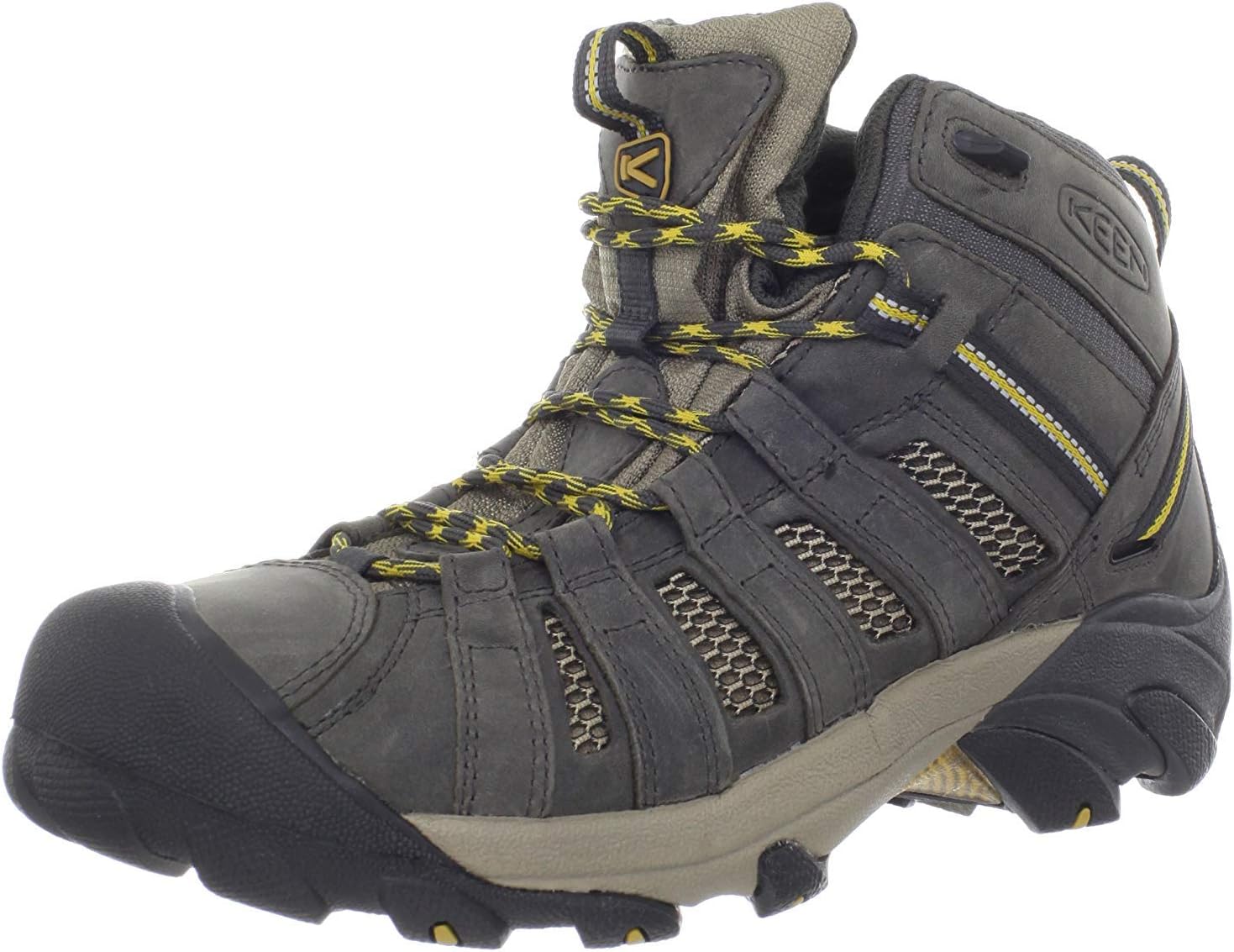
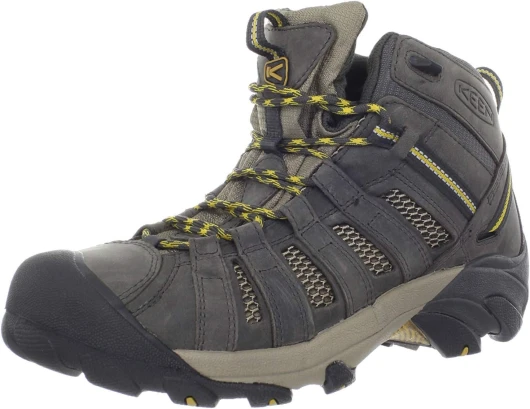
Design-wise, the Raven/Tawny Olive color looks better in person than in photos. Online it looks kind of dull; on foot it has a bit of a “dragon skin” vibe like one of the reviewers said – darker base with some greenish/olive accents. It’s still very much an outdoor boot look, so you’re not sneaking this into a dressy outfit, but for jeans, cargos, or hiking pants it’s fine. The KEEN toe bumper is very visible – that wide rubber cap that makes them instantly recognizable. I don’t mind it because it saves your toes when you kick rocks, but it does add to the chunky look.
The mid-height shaft hits right around the ankle. There’s padding in the collar and tongue, which helps comfort, but this is where one of the design misses shows up: the tongue is a bit short. When I lace them tight, the top eyelets and laces end up very close to the front of my ankle, and sometimes the laces ride above the tongue edge. One unhappy buyer complained that the tongue loop is too high and long, and I get what they mean – running the laces through that loop doesn’t really lock things down the way you’d expect. It’s a detail KEEN could easily fix with a slightly longer, better-positioned tongue.
The pull loop on the heel is also set quite high. In theory, you could run laces through it to get more wrap, but in practice it would just yank the back of the boot up and rub your Achilles. I never used it for anything beyond pulling the boot on. It’s not a deal-breaker, but again, it feels like the placement wasn’t thought through for people who like to tweak their lacing.
On the plus side, the overall layout of mesh panels and leather overlays makes sense. There’s enough mesh for airflow while still having leather in the high-wear zones. The lacing system itself (eyelets and hooks) has worked fine for me, no bending or weird pressure points. So the core design is solid for a light hiker, but the tongue height and loop placements are small but real annoyances, especially if you’re picky about how boots should wrap your ankle.
Comfortable out of the box, especially if you like roomier boots
Comfort is where the Voyageur Mid does pretty well. Out of the box, I wore them for a few hours without any break-in drama. No heel blisters, no weird rubbing on the sides of my feet. The wide toe box is the standout here. KEEN is known for that, and this pair keeps that tradition. My toes can splay out naturally, and on downhill sections my toes weren’t jammed into the front. If you’re used to narrow boots, this will feel noticeably roomier. If you have narrow feet, you may feel like you’re swimming a bit unless you play with thicker socks.
The metatomical footbed has moderate arch support. It’s not like a custom orthotic, but it’s better than the flat insoles you get in cheap boots. I can walk 6–8 miles without my arches screaming. One reviewer mentioned easily swapping in their orthotics after removing the liner, and I tried the same – no problem with fit, there’s enough volume to accommodate them. So if you rely on custom insoles, this model works well with that.
Around the ankle, the padding on the collar is comfortable, but the previously mentioned short tongue can cause some annoyance. If you lace high and tight, the laces can ride above the top of the tongue and start touching the front of your ankle. On longer hikes I had to re-adjust the tension once or twice to keep things in a sweet spot. It’s not torture, but it’s one of those small things you keep noticing. Also, the tongue loop doesn’t do a great job of locking the tongue in place, so the laces can slide around a bit.
Ventilation is good, which indirectly boosts comfort. On warm days, my feet didn’t feel swampy, and the boots never felt heavy or bogged down. On the other hand, in colder wind I felt the air going through the mesh a bit more than I’d like. With medium socks they’re fine for cool spring/fall days, but I wouldn’t pick them for standing around in winter temps. Overall, I’d call the comfort pretty solid for day hikes and everyday wear, with the main caveat being that tongue design and the fact that they’re not insulated or waterproof, so your comfort will depend a lot on weather and sock choice.
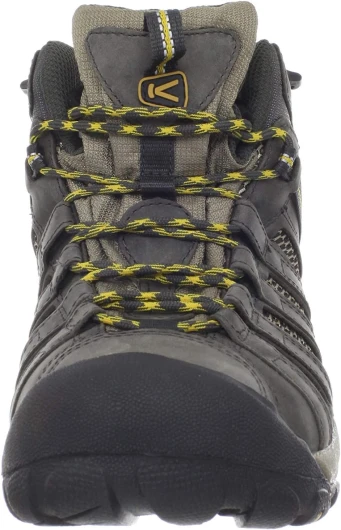
Light leather and mesh combo – breathable but not really weatherproof
The upper is a mix of water-resistant leather and performance mesh. In practice, that means the leather sheds light splashes or damp grass for a while, but the boot is not waterproof. If you step in a puddle that covers the mesh, your feet are getting wet. I walked through some morning dew and shallow wet patches and was fine, but I wouldn’t trust these in steady rain or for crossing streams. They’re clearly built for airflow first, protection second.
The mesh is pretty open, which is why they breathe so well. On warmer days, my feet stayed reasonably dry inside, even with thicker socks. Compared to heavier waterproof boots I own, the difference is obvious – those feel like ovens after an hour, these are more like sturdy trail shoes. The trade-off is insulation: in colder weather you’ll feel the chill pretty fast. One reviewer mentioned adding thick socks to stretch them into cooler conditions, and I agree – that works for walking around town, but for standing around in serious cold (like a winter stadium game) these are not the right tool.
The sole is a rubber KEEN.ALL-TERRAIN outsole fused to a midsole that feels like EVA foam. Cushioning is decent without being super squishy. The rubber itself grips fine and hasn’t shown abnormal wear for me yet. The worry point is the bond between the upper and the outsole. One user had the soles start delaminating in under a week with very light use, and there are a few similar stories. Mine are holding up so far, but seeing that makes me check the glue line every few wears. It suggests some inconsistency in manufacturing or adhesive quality.
Inside, the insole is a standard KEEN metatomical footbed: some arch support, some heel cup, removable. The lining is mostly synthetic textile, nothing fancy but it dries pretty quickly if you sweat. Overall, the materials make sense for a breathable, light boot. Just be clear in your head: these are not full-grain leather tanks and they’re not waterproof. They’re a mix designed for comfort and airflow, and they do that part well, with some question marks about long-term sole bonding based on other people’s experiences.
Durability: mostly solid, but the sole bonding is a concern
Durability is where opinions on this boot split a bit. Some people, including one reviewer who has multiple pairs of KEENs, claim they get close to ten years out of their KEEN shoes and sandals with regular use. Another long-term user said they wore their first pair of Voyageurs 5–6 days a week, year-round, until they got too beat up for work but still usable as weekend work boots. That lines up with how KEEN usually performs: they’re not indestructible, but they usually last a good while if you don’t abuse them.
On the other hand, there are a few very angry reviews about sole delamination after only a few days of light indoor use. One person said their soles started peeling away from the upper in under a week, even though they literally just walked from their car to their office and back. That’s pretty bad, and it’s not something you can just shrug off. It suggests inconsistent quality control or a bad batch of glue. For a boot in this price range, having to worry about the outsole peeling off so soon is frustrating.
My pair, so far, shows no sign of the sole coming off. The stitching around the upper looks clean, and the leather/mesh combo hasn’t frayed. The rubber outsole shows normal wear for the miles I’ve put on it. But knowing that some people had failures so early, I’m checking the glue line every few outings, especially around the flex points at the forefoot. The good news is KEEN seems to honor their warranty; one reviewer specifically praised them for handling a warranty issue quickly and fairly. That doesn’t fix the inconvenience, but at least you’re not stuck with a broken boot and no recourse.
So in practice, I’d say durability is potentially good but a bit of a gamble. If you get a solid pair, you can expect a few solid years of use for day hikes and everyday wear, especially if you rotate with other shoes. If you’re unlucky and land a pair from a bad run, you might be dealing with returns. For something I’d take on a long remote trip with no backup, that uncertainty would bother me. For local hikes and daily use where I can swap them out if needed, I’m less stressed about it.
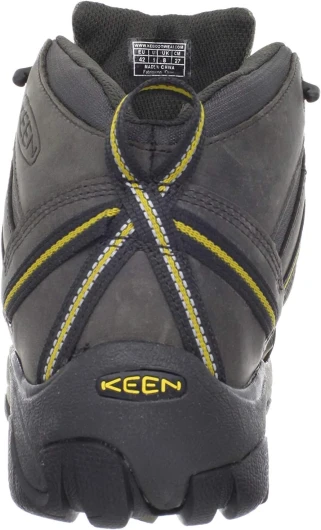
Trail performance: good grip and stability, but not a hardcore backpacking boot
On the trail, the Voyageur Mid performs like a light hiker should. The stability shank gives enough torsional stiffness that your foot doesn’t twist all over the place on rocks and roots, but the boot still flexes naturally at the forefoot. I didn’t feel that clunky, brick-on-your-foot sensation you get from heavy-duty boots. On uneven surfaces the heel capture system does its job – my heel stayed planted, and I didn’t notice much slippage when side-hilling or going downhill at a decent pace.
The 4 mm multi-directional lugs provide solid traction. On dry dirt, loose gravel, and forest trails, grip was predictable. I purposely stepped on a few small loose rocks and off-camber surfaces, and the boots held fine. On wet grass and slightly muddy patches, they were okay – not magic, but not sketchy either. Another reviewer mentioned feeling confident on snowy and icy streets in Wisconsin. I didn’t test them on solid ice, but based on the rubber feel and lug pattern, I can see why they feel more secure than a flat-soled sneaker. Just keep in mind they’re still hiking boots, not crampons.
Where they start to hit limits is heavy loads and really rough terrain. With a light daypack, they’re great: enough support without feeling overbuilt. When I threw on a heavier pack around 30–35 lbs, I could feel that the midsole is more in the “comfort” category than “maximum support”. My feet were fine, but I wouldn’t pick these for multi-day backpacking in rocky mountains. For that, I’d want a stiffer boot. These are more for day hikes, light overnights, and general outdoor use.
Water performance is straightforward: they handle light moisture and splashes on the leather parts, but once the mesh gets involved, water goes in. They also dry reasonably fast thanks to that same mesh, which is nice if you get caught in a quick shower. So from a performance angle, I’d say these do the job well for casual to moderate hiking, city walking in rough weather, and general outdoor work – as long as you’re not expecting them to be full-on mountaineering or winter boots.
What kind of boot this actually is
On paper, the Voyageur Mid is sold as a breathable hiking boot with a mid-height shaft. In reality, it sits somewhere between a trail shoe and a light day-hiking boot. You get ankle coverage and a thicker sole than a sneaker, but not the stiff support or tank-like feel of a full backpacking boot. If you’re expecting something to carry a 40 lb pack over rocky alpine trails for a week, this is probably not it. If you want something to hike 5–10 miles on mixed dirt, roots, and some rocks, it makes more sense.
The boot uses KEEN’s typical wide platform and that slightly chunky, rounded toe shape. It’s not subtle but it’s practical. There’s a removable metatomical footbed that gives a bit of arch support and cradles your foot decently. If you use orthotics, the insole comes out easily and there’s enough volume to slide your inserts in without feeling cramped. That’s a big point if you have plantar fasciitis or other foot issues – one of the Amazon reviewers basically bought it for that reason and I get why.
KEEN mentions a stability shank and a heel capture system. In practice, what that means is the midsole doesn’t fold like a running shoe, and your heel doesn’t slop around much if you lace properly. I felt safe on uneven ground and small rocks. It’s not a mountaineering boot level of support, but for average trails it does the job. The outsole uses their KEEN.ALL-TERRAIN rubber with 4 mm lugs. Grip has been fine on dirt, gravel, and a bit of wet grass. I didn’t feel like I was skating around, and one user even says they feel confident on icy Wisconsin sidewalks, which matches the overall traction feel.
From a use-case point of view, I’d describe the Voyageur Mid as a three-season day-hike and everyday boot: spring, summer, fall, mostly dry conditions, mostly day trips or light overnights. It also doubles as a comfy work/commute shoe if you don’t care about looking very formal. People in offices or warehouses who stand a lot can get away with these if dress codes are relaxed. Just don’t buy them thinking you’re getting a winter, waterproof, heavy-duty boot – that’s not what this model is built for.
Pros
- Very comfortable out of the box with a wide, roomy toe box
- Breathable mesh and lighter build make it good for warm-weather hikes
- Works well with orthotic insoles thanks to removable footbed and decent internal volume
Cons
- Not waterproof and gets cold quickly in low temperatures
- Reports of sole delamination raise concerns about long-term durability
- Short tongue and awkward loop placements can cause minor comfort and lacing issues
Conclusion
Editor's rating
After using the KEEN Men’s Voyageur Mid Height Hiking Boot for a while, I’d sum it up like this: very comfortable, very breathable, decent trail performance, with some design quirks and durability question marks. If you like KEEN’s wide toe box and you want a boot that feels closer to a beefy sneaker than a stiff hiking boot, this one fits that role nicely. It’s easy to wear all day, it handles day hikes and casual trails well, and it works with orthotics without a fight.
Where it falls short is in all-weather and heavy-duty use. It’s not waterproof, the tongue design is a bit lazy (too short, awkward loops), and a few users have had soles start to peel way too early. KEEN’s warranty softens the blow, but it doesn’t change the fact that you might have to deal with a return. For the money, I’m okay with it as a three-season, dry-condition boot that I wear a lot but don’t fully rely on for big trips.
Who is it for? People who hike mostly in dry or warm conditions, have wider feet or use orthotics, and want one boot that can double for walking, light work, and casual wear. Who should skip it? Anyone needing a fully waterproof, winter-ready, or heavy-pack boot, and anyone who hates the idea of possibly dealing with a sole delamination warranty claim. If you fit that first group, it’s a pretty solid option. If you’re in the second, look for something more robust and sealed.