
Summary
Editor's rating
Value: worth it if you really need waterproof and support
Looks more like a serious sneaker than a full-on hiking boot
Comfort: firm support, not a soft couch for your feet
Leather, synthetics and a waterproof bootie: tough but not super airy
Built to last, not to feel ultra-light
Real-world performance: wet trails, city rain, and daily abuse
What this Salomon is actually built for
Pros
- Waterproofing works very well in real rain and shallow puddles
- Stable, supportive chassis that feels secure on uneven terrain
- Durable upper and outsole that can handle regular outdoor abuse
Cons
- Laces tend to loosen and basically require a double knot
- Less breathable due to waterproof bootie, can feel warm in hot weather

Specifications
View full product page →| Brand | Salomon |
Waterproof trail shoes you can actually live in
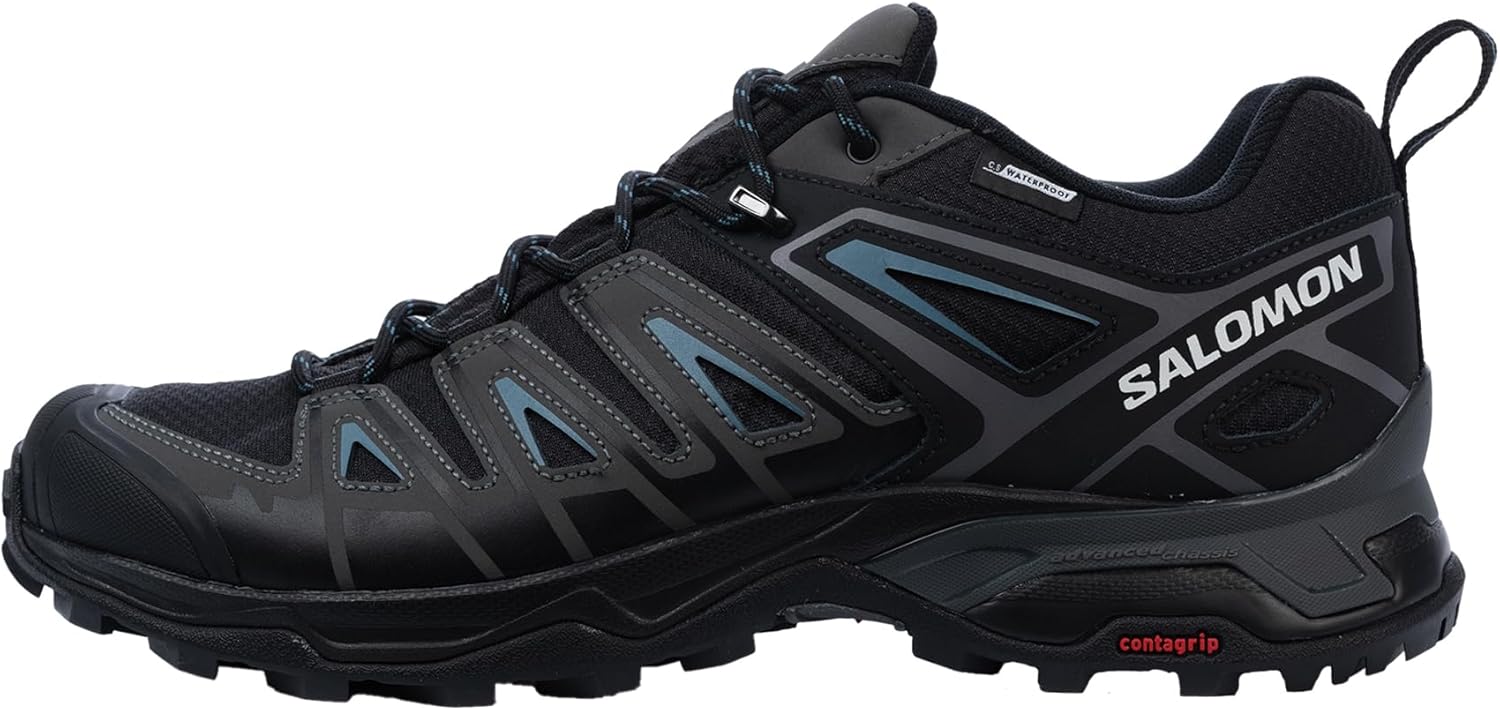
I’ve been using the Salomon X Ultra Pioneer Climasalomon Waterproof as my main shoe for a mix of stuff: wet city walks, muddy park trails, and a couple of short hikes on rocky paths. So this isn’t a lab test, it’s just how they handled real life: rain, puddles, long days on my feet, and a bit of abuse. My pair is the black/magnet/bluesteel colorway in size 12, worn almost daily for a few weeks.
The big promise here is pretty simple: waterproof, grippy, comfortable enough to wear all day. Salomon pushes the hiking angle, but the shape and weight sit somewhere between a trail runner and a light hiking shoe. If you’re expecting a soft running sneaker, you’ll be surprised by how firm and structured they feel. If you’re used to classic hiking boots, these will feel lighter and more agile.
Right away, what stood out to me was the waterproofing and stability. I walked in wet grass, shallow puddles, and constant drizzle, and my socks stayed dry every time. Underfoot, they feel planted and secure, especially on loose gravel and wet pavement. On the other hand, they’re not the most breathable shoes I own, and the regular laces are honestly the weakest part of the package.
So overall, my experience is that they’re pretty solid all-rounders for people who deal with rain or mixed terrain regularly. Not perfect, not super cushy, but they get the job done. If you want a soft, airy running shoe for hot summer miles, this is probably not it. If you want something you can beat up in bad weather and still wear to the office without looking like you’re going on an expedition, they start to make sense.
Value: worth it if you really need waterproof and support
In terms of value for money, I’d say these land in the “pretty solid if you use them for what they’re made for” category. Salomon is not a budget brand, and you can definitely find cheaper trail-style shoes out there. But when you factor in the waterproofing that actually works, the solid chassis, and the overall build quality, the price starts to make sense. You’re paying for a shoe that can handle rough, wet conditions and still be okay as a daily shoe.
If you live somewhere mostly dry and warm, the value drops a bit. You’re basically paying for waterproof tech you won’t use much, and you’re stuck with the reduced breathability all year. In that scenario, a non-waterproof trail runner from Salomon or another brand would probably feel better and cost less. But if your reality is rainy commutes, muddy parks, and occasional hikes, this shoe fits that use case nicely and saves you from having a separate “bad weather” pair.
Compared to cheaper waterproof shoes I’ve tried (from brands like Columbia or generic Amazon models), this Salomon feels more supportive and better put together. The cheaper ones often start peeling at the toe or lose their waterproofing faster. Here, the chassis, upper, and outsole feel like they’re on another level. The main value complaints I’d have are the basic laces (they feel out of place on a shoe at this price) and the fact that they’re not really versatile for hot-weather running.
So overall, if your priorities are dry feet, good grip, and solid support, and you’re okay with a firmer feel and a bit of heat, the price is justified. If you just want something light for occasional dry-weather walks, you can save money with simpler shoes and probably be just as happy.
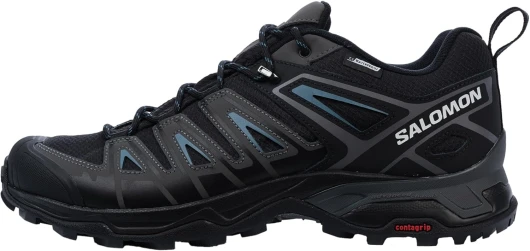
Looks more like a serious sneaker than a full-on hiking boot
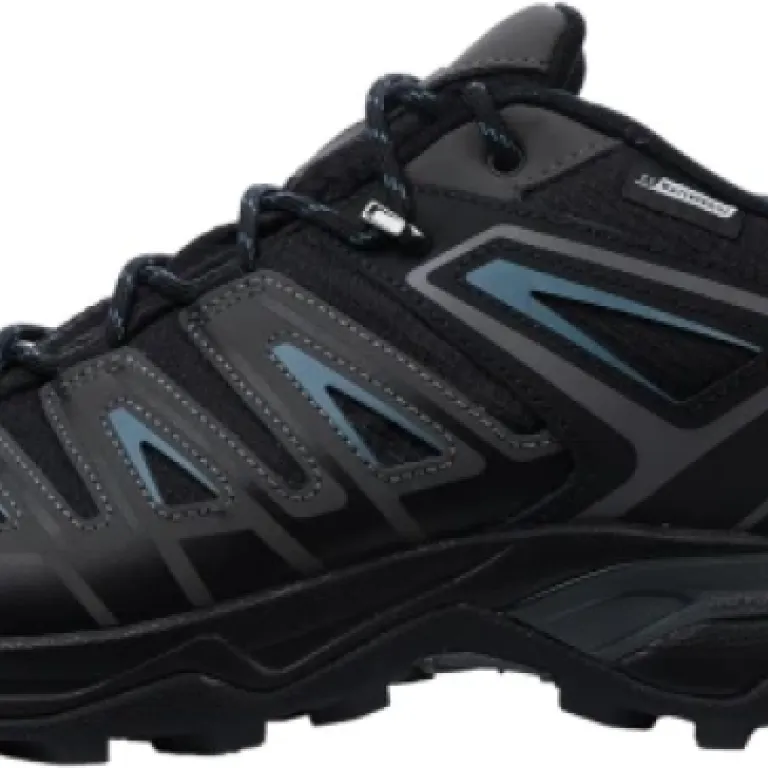
Visually, the X Ultra Pioneer in black/magnet/bluesteel is pretty low-key. Most of the shoe is dark, with the bluesteel bits being more toned down than in some product photos. That matches one of the Amazon reviews saying the blue is not as bright as it looks online. Personally, I prefer it this way; it doesn’t scream “technical shoe” when you wear it with jeans or casual pants. From a distance it just looks like a tough, slightly sporty sneaker.
The overall shape is classic Salomon: a bit pointed at the toe, with angular lines and overlays that clearly say “outdoor”. There are plenty of synthetic overlays over the mesh, which is good for durability and structure but does contribute to that less-breathable feel. The tongue is gusseted (attached to the sides), which helps with waterproofing and also keeps debris out, but it adds some bulk around the instep when you lace them tight.
One design choice I’m not thrilled about is the basic lace setup. These use standard eyelets and regular laces instead of Salomon’s Quicklace system. The problem is, the laces they chose are a bit slick. Just like one of the reviewers mentioned, they tend to loosen unless you double-knot them. On a lazy day walking around town, not a big deal. On a longer hike, I had to stop a couple of times to re-tighten, which gets old fast.
From a practicality point of view, though, the design works: there’s a decent toe bumper, the heel has enough structure to lock your foot in, and the outsole has a serious tread pattern that doesn’t look out of place on dirt or rock. If you want something flashy, this isn’t it. If you want a discreet outdoor shoe that doesn’t look out of place in a casual office, this colorway is pretty easy to live with.
Comfort: firm support, not a soft couch for your feet
Out of the box, the comfort was good but on the firmer side. This is not one of those shoes where you sink into a squishy midsole. If you’re used to plush running shoes, the first impression might be “a bit stiff”. For me, after a couple of days of walking 5–8 km in them, they started to loosen up in a good way: the upper softened and the midsole felt slightly more forgiving, but they stayed supportive.
The fit in size 12 felt true. I’ve got average-width feet with slightly flat arches, and I didn’t have any hot spots or rubbing, which is a win. One of the Amazon reviewers mentioned having very flat feet and needing a break-in period; I can see that. The arch area is supported and the chassis is firm, so if your feet like totally flat, flexible shoes, you might feel pressure at the start. After a week, though, my pair molded enough that I didn’t think about it anymore, which is usually a good sign.
Cushioning-wise, I’d describe it as trail-ready, not cloud-like. Enough padding to walk all day without your feet screaming, but you still feel the ground a bit, just filtered. On rocky paths, the chassis and midsole combo did a good job of blocking sharp edges, and I never got that “stone bruise” feeling in the forefoot. On long days on pavement, I was fine, but if I had knee issues and wanted max softness, I might look at something more cushioned.
Breathability is the weak spot of comfort. Because of the waterproof bootie, your feet stay dry from the outside, but sweat doesn’t escape as fast. In cool or rainy weather, that’s fine and even nice. In warm, humid weather, it gets a bit stuffy. I wouldn’t pick these as my main summer shoe if I lived somewhere hot. For spring, fall, and wet conditions, though, the comfort-to-protection balance is pretty solid.
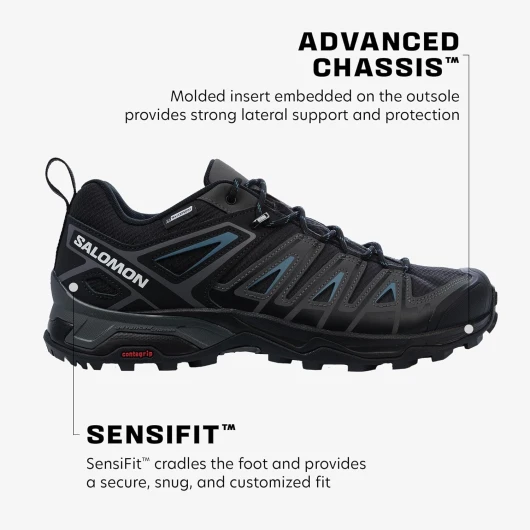
Leather, synthetics and a waterproof bootie: tough but not super airy
Material-wise, Salomon went for a mix of leather and synthetic on the upper with a fully synthetic construction overall. You get some sturdier leather-like panels on the high-wear areas (toe, sides) and more synthetic mesh in between. The result is a shoe that feels robust in the hand. It doesn’t collapse like a soft running shoe when you squeeze it. There’s structure everywhere, especially in the midfoot and heel.
Inside, you’ve got the ClimaSalomon waterproof bootie, which is basically a sealed inner layer. That’s what keeps water out, but it also means there are more layers between your foot and the outside world. When I wore them in cool wet weather, that was perfect: my feet stayed dry and comfortably warm. When I tried them during a warmer, humid day, I definitely noticed the heat buildup. Not unbearable, but you’re not getting the airy feel of a non-waterproof mesh runner.
The outsole is a full rubber unit with aggressive lugs. The rubber itself feels on the firm side, which usually means better durability and slightly less tacky grip on smooth indoor floors. That’s exactly how it behaved: plenty of grip on trails and wet pavement, but on polished tile in a supermarket, you feel the lugs rather than a sticky rubber feel. Not slippery, just more “hiking shoe” than “gym shoe”.
Overall, the materials feel like they’re built more for abuse and bad weather than for lightness. If you want something featherweight and super breathable, this is the wrong product type. If your priority is a shoe that can handle mud, rain, and rough paths without falling apart in six months, the material choices make sense. You pay for that in a bit of extra heat and stiffness, but at least you feel like you’re getting a tough piece of gear, not a flimsy fashion sneaker.
Built to last, not to feel ultra-light
Durability is where these shoes feel reassuring. From the first time you pick them up, they don’t give that flimsy vibe. The upper has plenty of overlays and a solid toe cap, and after a few weeks of regular use in mud, wet grass, and on rocky paths, I’ve got only minor scuffs on the front, nothing that looks like it’s going to peel or tear. The stitching is clean and there are no weird glue marks or separation so far.
The outsole wear has been minimal. I checked the lugs under the heel and forefoot after a mix of pavement and trail use, and there’s only light smoothing on the highest points, nothing serious. The rubber is on the firmer side, which usually means it will outlast softer, super-grippy compounds. If you plan to use these mostly for walking and hiking rather than daily 10K runs, I’d expect them to hold up for a good amount of time.
I also paid attention to the waterproof lining over time, because that’s often the first thing to fail in cheaper shoes. So far, no leaks, no weird creasing or crinkling sounds inside. The gusseted tongue is still sitting correctly and hasn’t warped. One Amazon reviewer mentioned using them for over a year and still being happy with the water resistance, which matches the impression I’m getting from the build quality.
The downside of this durability is that they are not featherweight. You feel the structure, especially around the heel and midfoot. For me, that’s an acceptable trade-off, because I’d rather have a slightly heavier shoe that doesn’t fall apart after one rough season. But if you’re chasing the lightest possible shoe for fast trail runs, this will feel like overkill. As a daily beater for bad weather and rough paths, though, the durability looks promising.
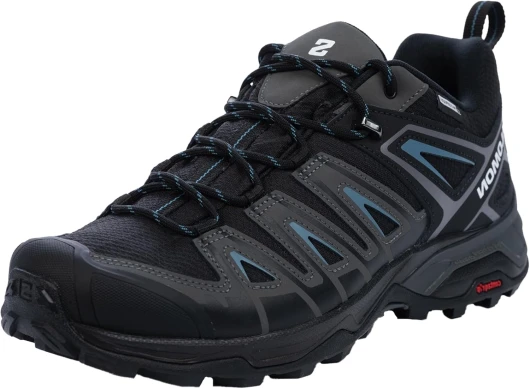
Real-world performance: wet trails, city rain, and daily abuse
Performance is where these shoes actually justify their existence. Waterproofing first: I walked through wet grass, shallow puddles, and a full afternoon of light rain. My socks stayed bone dry every time, even when water was lapping around the lower sides of the shoe. As long as you don’t submerge above the ankle, the ClimaSalomon layer does its job. Compared to non-Gore-Tex waterproof shoes I’ve tried from cheaper brands, these seal better around the tongue area and don’t get that damp feeling after an hour.
Grip is solid on most surfaces. On dirt trails, mud, and gravel, the lugs bite in well and the shoe feels planted. On wet pavement, they behave predictably: no sudden slips, even when stepping off curbs or on painted road markings. On very smooth indoor tiles, you feel the firm lugs rather than sticky rubber, but I never had a scary moment. If you’re doing a mix of urban walking and weekend hikes, they’re more than capable. I wouldn’t use them as a gym shoe, though; the tread is overkill for that.
Stability is another strong point. The Advanced Chassis keeps the shoe from twisting too much, and the heel feels nicely locked in when laced properly. On sidehills and uneven rocky sections, I noticed way less ankle wobble than in softer trail runners. If you carry a backpack or have slightly unstable ankles, this is a plus. The trade-off is that they feel less playful and flexible for actual running; I’d call them “trail-capable hikers” more than “trail runners” in practice.
The two annoyances during use were the laces and the heat. The laces loosening unless double-knotted is real; I had to stop a couple of times on longer walks to re-tie them before I just started double-knotting by default. And during a warm, humid day, my feet definitely felt warm inside. So performance in cool, wet, or mixed conditions: very good. Performance in hot, dry weather: serviceable but not ideal.
What this Salomon is actually built for
On paper, the X Ultra Pioneer Climasalomon Waterproof is sold as a hiking shoe inspired by Salomon’s X Ultra line, which is one of their big sellers. In practice, it lands in that middle zone between a trail runner and a low hiking boot. It’s not as chunky as a classic hiking shoe, but also not as light and flexible as a pure running model. If you mostly walk, hike, and do light trails, the positioning makes sense.
The shoe uses ClimaSalomon Waterproof, which is basically their version of a waterproof bootie inside the shoe. That means the tongue and upper are designed to keep water out as long as you don’t dunk your whole foot past the collar. I walked through wet grass that came halfway up the shoe, and also stood in shallow puddles for a bit. No leaks, no damp spots, which lines up with the user reviews saying “definitely waterproof”.
There’s also an Advanced Chassis wedged between the midsole and outsole. You don’t see it, but you feel it in the way the shoe resists twisting and keeps your foot from rolling too much. Compared to softer trail runners I’ve tried (like some Nike or Brooks trail models), this Salomon feels more controlled and a bit stiffer under the arch. That’s good if you tend to roll your ankle or carry a backpack; less good if you like a super flexible, barefoot feel.
In terms of fit, I’d say true to size with a slightly snug Salomon feel. I wear a 12 in most brands; the 12 here works, but I wouldn’t size down. The Amazon review about going with the larger size if you’re between half sizes matches my experience with Salomon in general. If your feet are very wide, you might feel some pressure at first, especially around the midfoot, but the upper does soften a bit after a few days.
Pros
- Waterproofing works very well in real rain and shallow puddles
- Stable, supportive chassis that feels secure on uneven terrain
- Durable upper and outsole that can handle regular outdoor abuse
Cons
- Laces tend to loosen and basically require a double knot
- Less breathable due to waterproof bootie, can feel warm in hot weather
Conclusion
Editor's rating
After wearing the Salomon X Ultra Pioneer Climasalomon Waterproof for everyday use and a few hikes, my take is pretty straightforward: it’s a solid, no-nonsense waterproof shoe with good support, but it’s not the softest, lightest, or coolest option out there. Where it shines is in bad weather and on mixed terrain. Your feet stay dry, you get reliable grip, and the chassis keeps things stable when the ground gets uneven. If you deal with rain a lot or walk on trails regularly, it does exactly what you buy it for.
On the flip side, there are a couple of annoyances. The laces are too slick and really need a double knot, which is silly at this price. The waterproof bootie also means breathability takes a hit, so on warm days your feet will feel warmer than in a mesh runner. And while you can run short distances in them, I’d call them more of a light hiking / all-weather walking shoe than a true trail running shoe for longer runs.
Who should get these? People who want one pair that can handle rainy commutes, wet dog walks, weekend hikes, and general outdoor use, and who don’t mind a slightly firmer, structured feel. Who should skip them? Runners looking for a light, airy shoe for long trail runs, and anyone living in a hot, dry climate who rarely sees rain. For the right user, they’re a dependable workhorse; for the wrong user, they’ll just feel like overbuilt, warm sneakers.