
Summary
Editor's rating
Value: good if you want comfort and versatility, less so if you need a heavy-duty boot
Design: practical, low-profile, and not trying too hard
Comfort: strong point, especially out of the box
Materials and build: mostly synthetic, built for lightness not armor
Durability: feels solid for light-to-moderate use, but not a tank
Performance on trail: stable, sure-footed, but not a hardcore mountain boot
What you actually get with this Salomon mid hiker
Pros
- Very comfortable out of the box with minimal break-in needed
- Lightweight for a mid boot, easy to wear all day on and off trail
- Decent waterproofing and stable chassis for typical day hikes and bad-weather use
Cons
- Not as durable or supportive as heavier full-leather boots for serious backpacking
- Fit can feel a bit snug for wide feet, especially on longer hikes
- Traction and support are only average in deep mud or very technical, rocky terrain

Specifications
View full product page →| Brand | Salomon |
Mid hiker that feels more like a sturdy shoe than a heavy boot
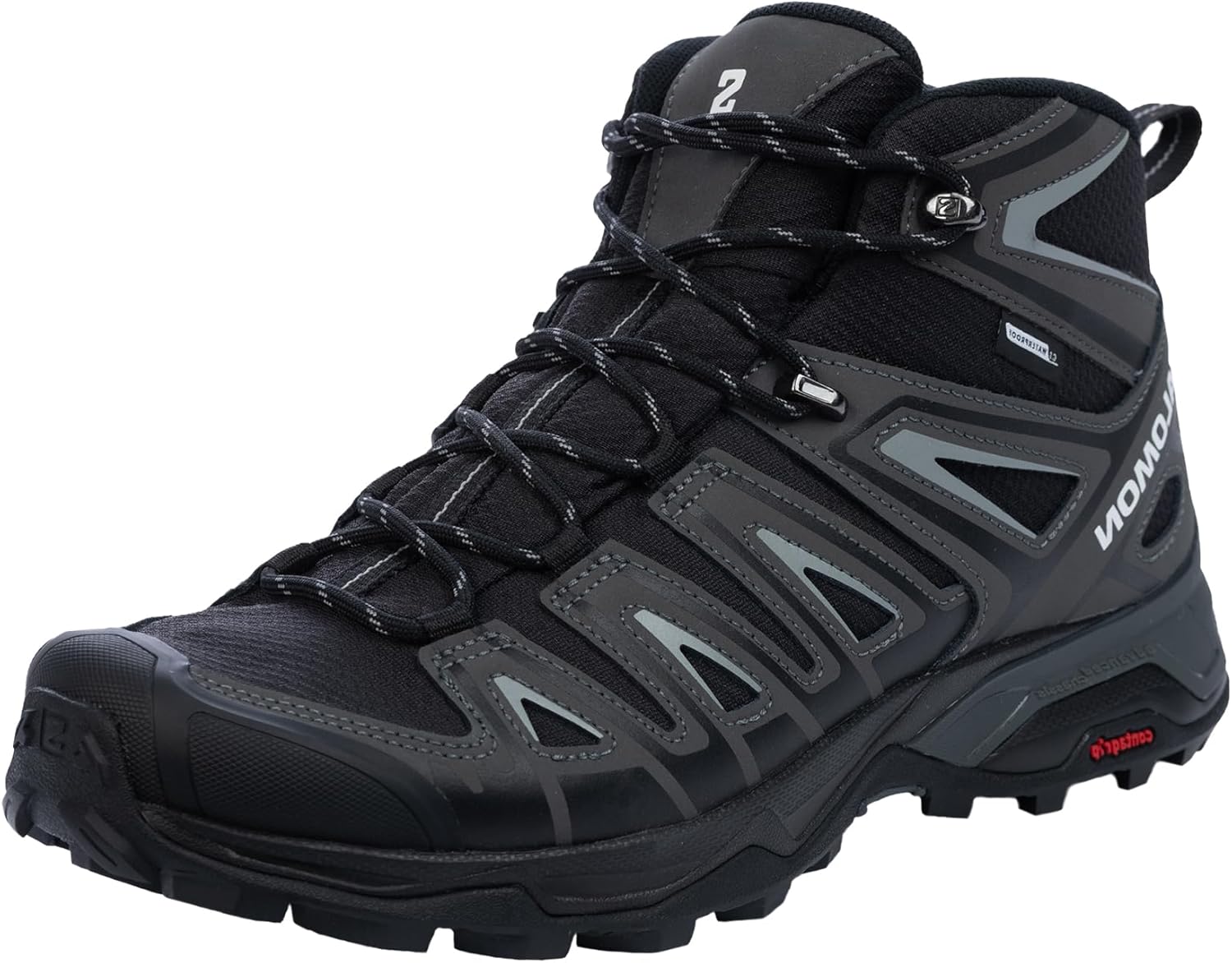
I’ve been using the Salomon Men's X Ultra Pioneer Mid Climasalomon Waterproof (black/magnet/monument, size 12) as my main boot for a few weeks. I’ve used them for weekend hikes on mixed terrain, rainy dog walks, and just running errands in bad weather. I’m usually more of a Merrell guy, so I was curious to see if these actually justified the hype around Salomon trail shoes.
First clear thing: this is more of a beefed-up hiking shoe than a classic stiff boot. If you expect a rigid backpacking boot for heavy loads, that’s not what this is. It feels light on the foot for a mid boot, with decent ankle coverage but still flexible enough to drive, walk around town, or wear all day without feeling like you’re in mountaineering gear.
The second thing that stood out to me is the out-of-the-box comfort. No real break-in for me: I did a 6–7 mile hike the first weekend, mix of dirt, rocks and a bit of mud, and I didn’t get hotspots or blisters. That’s not always the case with mid boots, which often rub around the ankle or feel stiff under the arch for the first few days.
It’s not a perfect boot though. The waterproofing is good but not magic, the grip is solid but not at the level of some of Salomon’s more aggressive trail models, and the price is a bit high for what is basically a light hiker. But if you want something comfortable, reasonably protective, and usable both on trail and in town, it gets the job done pretty well.
Value: good if you want comfort and versatility, less so if you need a heavy-duty boot
Price-wise, the X Ultra Pioneer Mid sits in that mid-range hiking boot zone—not dirt cheap, not premium mountaineering money either. For the cost, you’re getting good comfort, decent waterproofing, and versatile use. If you compare it to similar offerings from Merrell, Keen, or Columbia, it’s roughly in the same ballpark, maybe slightly higher depending on discounts. Salomon’s reputation and tech (chassis, waterproof liner) do justify a bit of that, but it’s not a bargain boot.
Where it really earns its keep is if you want one pair that can handle a lot of situations: day hikes, short backpacking trips, rainy commutes, walking the dog in winter, traveling where you expect mixed weather. In that context, the value is solid because you don’t need a separate heavy boot and a separate trail shoe. It covers a lot of ground, literally and figuratively. The comfort out of the box also means you’re not wasting time and money dealing with blisters or needing to “break them in” for weeks.
On the flip side, if your main use is serious backpacking with heavy loads, or you want a boot that will survive years of abuse, I’d say you’re better off spending the same money (or a bit more) on a sturdier full-leather boot. For very casual use, like walking around town only, you could save money with a cheaper waterproof sneaker or entry-level hiker and probably be just as happy.
Overall, I’d rate the value as good but not mind-blowing. You’re paying for a well-balanced, comfortable, and versatile boot from a known outdoor brand. If that’s what you need, the price makes sense. If you’re looking purely for the cheapest option, this isn’t it. If you want a light, reliable hiker that can double as your bad-weather everyday shoe, it’s a pretty fair deal.
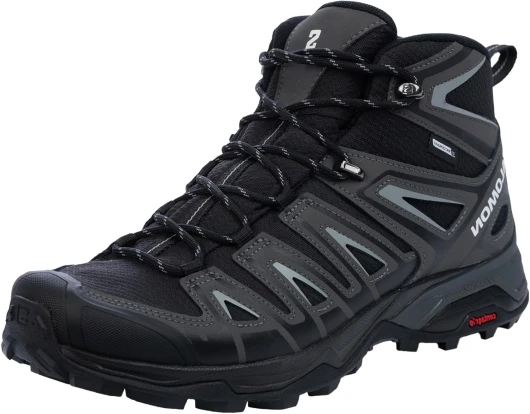
Design: practical, low-profile, and not trying too hard
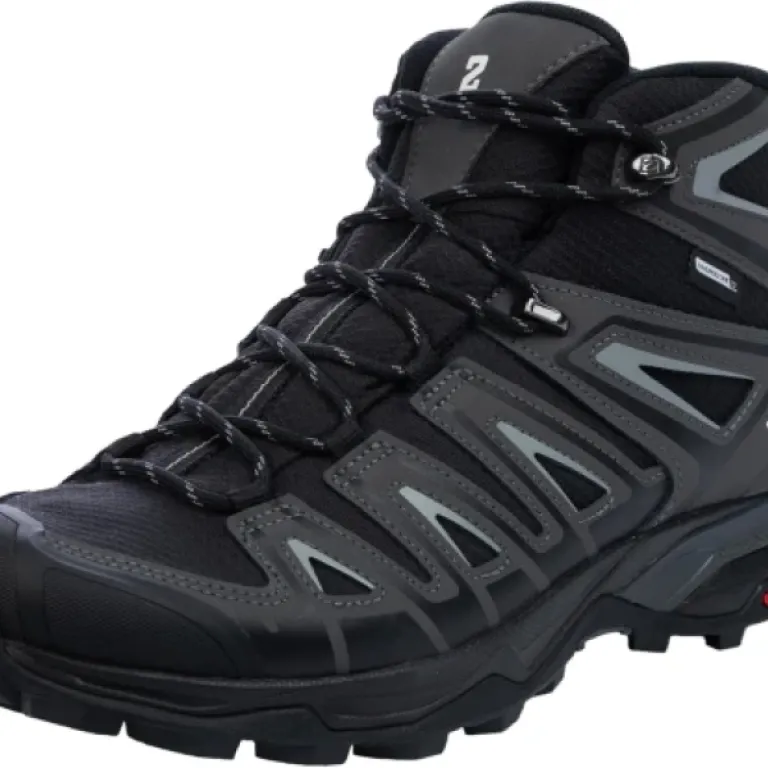
From a design point of view, this boot is pretty straightforward, which I like. No flashy colors, no huge logos, just a black and grey setup with some subtle Salomon branding on the side and tongue. If you’re tired of trail shoes that look like neon racing cars, this is a nice change. You can easily wear these with jeans or work pants and not stand out.
The mid-cut is a true mid: it sits just above the ankle bones, not super high like a full boot, but definitely higher than a regular shoe. That gives you a bit of ankle coverage against rocks, dirt, and water splashes, but it doesn’t lock your ankle like a rigid mountaineering boot. The padding around the collar is decent—enough to be comfortable, but not huge and puffy. I didn’t get any rubbing on my Achilles or the sides of my ankles, even during the first long walk.
One detail I appreciated is the traditional lacing system. Just regular eyelets, no speed hooks or quick-lace system. I’ve had Salomon quick-lace on other models, and it’s convenient, but for boots I prefer normal laces. You can fine-tune the tightness better, especially if you like a looser forefoot and a locked-in heel. The tongue is gusseted, so debris and water don’t easily sneak in from the sides, which is important if you walk in wet grass or shallow puddles.
If I had to nitpick the design, I’d say the toe bumper is decent but not as beefy as some heavier boots. It protects you from minor stubs, but I wouldn’t rely on it if you’re constantly kicking sharp rocks. Also, the style is a bit “generic outdoor shoe”—nothing ugly, nothing particularly cool either. Function over style, which is fine, but if you’re picky about looks, it’s more practical than exciting.
Comfort: strong point, especially out of the box
Comfort is where these boots really shine for me. I put them on the first day, walked a couple of miles around town, and then did a longer hike that weekend. No real break-in needed, no hotspots, no heel slip. For a mid boot, that’s pretty solid. The fit is typical Salomon: slightly snug in the midfoot, decent room in the toe box but not super wide. If you have narrow to medium feet, you’ll probably be happy. If you have very wide feet, you might feel a bit cramped, especially on long hikes when your feet swell.
The cushioning is on the firmer side compared to some Merrell or Hoka hikers, but I actually liked that. It feels supportive and controlled rather than squishy. On rocky trails, the chassis and midsole combo do a good job of blocking sharp edges. I didn’t feel stones poking through, even when stepping on pointy rocks. At the same time, it’s not a brick: there’s enough flex in the forefoot so that your stride feels natural, not clunky.
Around the ankle and heel, the padding is well judged. Enough foam to keep things comfortable, but not overloaded. I didn’t get any rubbing on the Achilles, which is something I’ve had happen with stiffer boots. The tongue stays centered and doesn’t slide to the side, and the laces hold tension well during the day. I didn’t have to re-tie them constantly, which is always annoying on trail. Breathability is decent for a waterproof boot: my feet got warm on steep climbs, but not soaked in sweat. That’s pretty normal for this category.
One thing to note: arch support is moderate. If you have very flat feet or need strong support, you’ll probably want to drop in your own insoles. The stock footbed is okay but nothing special. Overall, though, if your foot shape matches Salomon’s general last, these are the kind of boots you can wear all day—commute, hike after work, walk the dog—and not think about your feet too much, which is basically what you want.
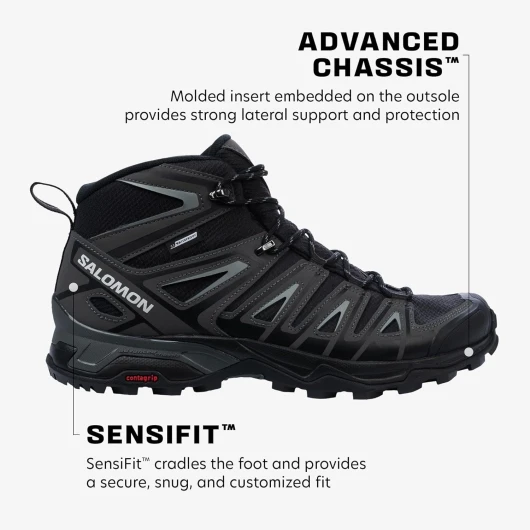
Materials and build: mostly synthetic, built for lightness not armor
The upper is a mix of synthetic fabric and some leather/suede overlays, with a rubber toe cap and a rubber outsole. Salomon lists it as 100% synthetic overall, and that’s exactly how it feels on foot: light, flexible, and not as stiff as full-leather boots. The side panels are a woven or mesh-type synthetic that lets the boot flex easily, while the overlays give structure around the heel and lace area.
Inside, you’ve got the ClimaSalomon Waterproof bootie, which is basically a waterproof membrane lining that sits between the outer fabric and the inner lining. It’s not Gore-Tex, but the concept is the same: keep water out while still letting some moisture escape. The insole is a standard removable footbed—nothing fancy, but it does the job. If you use custom insoles or need more arch support, you can swap it out easily.
The rubber sole feels reasonably grippy and not too hard. The lugs aren’t super deep like a mountaineering boot, but they’re well spaced and have enough bite for forest trails, rocky paths, and wet sidewalks. On very muddy ground, they’ll clog faster than more aggressive soles, but that’s the trade-off: these are built to be versatile, not mud specialists. The midsole feels like EVA foam—cushioned but not bouncy, more focused on stability than a soft, running-shoe feel.
In terms of build quality, seams are clean, no loose threads on my pair, and the glue lines between midsole and upper look neat. It doesn’t feel cheap, but it also doesn’t feel like a heavy-duty, “abuse it for 5 years” tank. It’s clearly designed as a light hiker: good enough for frequent use, but if you drag it over sharp rocks every weekend with a 50 lb pack, you’ll probably wear it down faster than a full-leather boot. For normal hiking and daily bad-weather use, the materials feel well chosen and practical.
Durability: feels solid for light-to-moderate use, but not a tank
Durability is always hard to judge in a short period, but there are a few signs you can look at. After several weeks of use—hikes, wet walks, and daily wear—the outsole shows minimal wear. The lugs still look sharp, and the rubber hasn’t rounded off much. That’s a good start. The upper hasn’t frayed, and the stitching is holding up with no loose threads or separation. The overlays are still firmly attached, no peeling at the edges yet.
The areas I always watch on boots are: toe cap, flex point at the forefoot, and heel. The toe bumper has a couple of light scuffs from kicking rocks, but nothing serious. The flex area across the ball of the foot has some normal creasing, but no cracking or delamination. The heel lining, which often wears out first from friction, still looks basically new. That tells me the internal fabrics are reasonably tough.
That said, this is clearly a lightweight synthetic boot, not a full-grain leather workhorse. If you use it for weekend hikes, travel, and general outdoor stuff, I can easily see it lasting a year or two of regular use without major issues, maybe more if you’re careful. But if you’re abusing it every day on sharp rock, carrying heavy loads, or working in it, you’ll probably see faster wear in the upper and maybe the midsole cushioning packing out sooner.
Given the price bracket and the construction, I’d rate durability as pretty solid for what it is, but not “buy once for life” territory. Also, based on some Amazon feedback, make sure you actually get a new pair in a box, not a previously tried-on pair in a bag. Returned pairs might already have some wear or compromised structure, which obviously affects how long they’ll last. If you treat them as light-to-medium duty hikers instead of hardcore work boots, you’ll probably be satisfied with how they hold up.
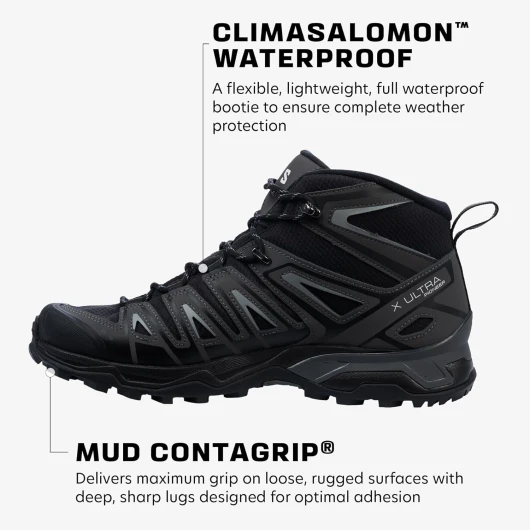
Performance on trail: stable, sure-footed, but not a hardcore mountain boot
On actual trails, the X Ultra Pioneer Mid performs like a solid light hiker. I’ve used it on packed dirt, loose gravel, wet grass, some rocky sections, and a bit of mud. The grip is pretty good in most situations. The outsole lugs bite nicely on dry and slightly loose surfaces, and I felt confident going downhill at a decent pace. On wet rock, it’s okay—better than cheap boots, but you still need to be careful. It’s not magic rubber that sticks to everything, but it’s predictable, which matters more to me.
The Advanced Chassis is noticeable in terms of stability. When you land on uneven rocks or roots, your foot doesn’t roll around too much. The midfoot feels locked in, and the heel cup holds you well. I carried a light pack (10–15 lbs) and had no issues with ankle fatigue or wobbly steps. With a heavy backpack (30+ lbs), I’d probably want something stiffer and more supportive, but for day hikes and light overnights, this setup works well.
Waterproofing with the ClimaSalomon Waterproof bootie is decent. I walked through wet grass, shallow puddles, and light rain, and my feet stayed dry. If you stand in ankle-deep water for a long time, you’ll eventually test the limits, but for typical bad-weather hikes or city slush, it’s fine. Just remember: waterproof boots always trade some breathability. If you hike in hot weather, your feet will get warm. I’d say these are ideal for spring, fall, and mild winters, less ideal for very hot summer days.
On the downside, the traction in deep mud isn’t great; the lugs clog and you lose bite pretty fast. Also, the flexibility that makes them comfortable means they’re not the most supportive option for very rough, technical terrain. They handle normal mountain trails, but if you’re scrambling on steep, rocky ridges all the time, there are beefier options out there. For everyday hiking and mixed use, though, the performance is more than good enough.
What you actually get with this Salomon mid hiker
On paper, the X Ultra Pioneer Mid Climasalomon Waterproof sits in that “do-everything light hiker” category. Mid-cut for some ankle coverage, traditional laces, waterproof bootie inside, and Salomon’s “Advanced Chassis” between the outsole and midsole. In practice, that means it’s built more like a trail running shoe with a slightly higher collar and a bit more structure around the heel and midfoot.
The pair I used is the black/magnet/monument colorway in size 12. Visually it’s pretty neutral: black base with some grey tones, no loud colors. That’s nice if you want something you can wear to work on casual days or in the city without looking like you’re about to summit a mountain. It’s a men’s model, synthetic-heavy construction with some leather/suede overlays, rubber sole, and a fabric upper that’s mostly synthetic. No fancy quick-lace on this one, just regular laces with eyelets, which I actually prefer for boots.
Weight-wise, they feel lighter than most leather mids I’ve worn. I don’t have a scale at home, but they’re closer to a chunky sneaker than a classic backpacking boot. You feel that when walking: the stride is more natural, and it’s easier to pick up the pace. The Advanced Chassis is noticeable mainly in how stable the midfoot feels when you step on rocks or roots. You don’t get that sloppy, twisty feeling some softer hiking shoes have.
Overall, the way I’d describe the product is: a light, mid-height hiking shoe aimed at day hikes, light backpacking, and bad-weather daily wear. Not a hardcore alpine boot, not a minimalist trail runner either. It’s right in the middle, and that’s probably why so many people like this X Ultra family—pretty versatile, even if it doesn’t excel in one single area.
Pros
- Very comfortable out of the box with minimal break-in needed
- Lightweight for a mid boot, easy to wear all day on and off trail
- Decent waterproofing and stable chassis for typical day hikes and bad-weather use
Cons
- Not as durable or supportive as heavier full-leather boots for serious backpacking
- Fit can feel a bit snug for wide feet, especially on longer hikes
- Traction and support are only average in deep mud or very technical, rocky terrain
Conclusion
Editor's rating
After using the Salomon X Ultra Pioneer Mid Climasalomon Waterproof for a while, my honest take is that it’s a very solid light hiking boot with comfort as its main selling point. It feels more like a sturdy trail shoe with a bit of ankle coverage than a classic, stiff boot. If you’re into day hikes, light backpacking, and want one pair that can also handle rainy commutes and weekend errands, it fits that role nicely. The waterproofing works well for normal bad weather, the grip is good on most terrains, and the fit (if Salomon’s shape matches your foot) is easy to live with right from day one.
It’s not perfect. It’s not the toughest boot out there, the outsole isn’t built for deep mud or very technical, rocky routes, and people with very wide feet might feel squeezed. For heavy-duty backpacking or long multi-day treks with big loads, I’d look at something stiffer and more protective. Also, for the price, it’s not a bargain, it’s just fair: you’re paying for comfort, brand, and versatility, not for bulletproof construction.
So, who is this for? Hikers and outdoor folks who want a comfortable, mid-height, waterproof boot for mixed use: day hikes, travel, daily wear in bad weather. Who should skip it? People carrying heavy packs regularly, those who need a very wide fit, or anyone wanting a long-lasting leather tank of a boot. If you know you want a light, comfy hiker that you can wear almost every day, this is a pretty safe choice.