
Summary
Editor's rating
Are they worth the price?
Retro look, modern feel, and a couple of quirks
Where these boots actually shine
Leather, waterproof membrane, and Vibram – good mix, with trade-offs
Built to last a while, but not an indestructible tank
Trail performance: grip and support vs heat and breathability
What you actually get with the Mountain 600
Pros
- Very comfortable straight out of the box with almost no break-in
- Good grip on wet and dry surfaces thanks to Vibram Fuga Megagrip outsole
- Versatile look and build: works for both everyday wear and moderate hiking
Cons
- Runs warm and doesn’t breathe very well, especially in hotter weather
- Not as stiff or supportive as heavier backpacking boots for big loads
- Price is on the higher side compared to some other light hiking boots

Specifications
View full product page →| Brand | Danner |
Light hikers that feel like sneakers, not bricks
I’ve been using the Danner Mountain 600 Waterproof Hiking Boots (men’s, 11 Wide, Brown/Red) as my main boot for a mix of dog walks, weekend hikes, and just running around town. I’m not sponsored, I paid for them, and I’m comparing them to what I usually wear: Salomon X Ultra mids and a pair of old Merrell Moab boots. So that’s the level we’re talking about here, not hardcore mountaineering boots.
The first thing that stood out is how they feel straight out of the box. With a lot of leather boots, I usually plan a week of hot spots and blisters. With these, I went straight into a 2-hour walk on mixed gravel and pavement and didn’t feel like I was being punished for it. No break-in drama, which for me is a big plus. They really do feel closer to a beefy sneaker than a stiff boot.
I’ve used them in: light rain, cold mornings around 35–40°F, some muddy forest trails, and just daily city wear. I have slightly wide feet and usually go for wide when I can, so the 11 Wide version seemed like the right call. I wore them with midweight hiking socks most of the time and occasionally with thicker wool socks in colder weather.
They’re not perfect. They run a bit warm, and I wouldn’t pick them as my only boot for hot summer hikes. But in everyday use and for moderate trails, they’re pretty solid. If you’re expecting a super rigid backpacking boot for heavy loads, this isn’t that. If you want something that’s comfortable right away and doesn’t feel like a cinder block on your foot, they’re worth a serious look.
Are they worth the price?
Danner isn’t a budget brand, and the Mountain 600 is not a cheap boot. Depending on sales and size/color, the price can vary quite a bit, but it usually sits in the mid-to-upper range for hiking boots. For that money, you’re basically paying for: a leather waterproof boot, Vibram outsole and midsole, solid comfort out of the box, and a design you can wear both on trails and in town without looking out of place. Compared to my Salomon and Merrell boots, these feel nicer in terms of materials and look a bit more “premium”, even if that word is overused.
In terms of value for money, it depends what you want. If your main goal is pure performance for long, hot hikes, there are lighter and more breathable synthetic boots that cost less and might suit you better. If you mostly walk on urban surfaces with occasional light trails, you could also get away with cheaper hiking shoes. Where the Mountain 600 makes sense is if you want one boot that covers a lot of bases: daily wear, travel, weekend hikes, and wet-weather use, and you care about comfort and looks as much as raw performance.
Compared to cheaper boots I’ve owned (Columbia, some lower-end Merrells), the Danner feels better built and more comfortable for long days. Compared to more expensive, fully made-in-USA Danners or heavy-duty backpacking boots, it’s more affordable but also clearly a different category. You’re not buying a lifetime boot; you’re buying a very comfortable, versatile hiker that should give you a few good years of mixed use if you take care of the leather.
So is it worth it? For me, yes – mainly because I actually wear them a lot off the trail. If I only wanted something for a couple of big hikes a year, I’d probably look for a cheaper option. But as a daily boot that can handle real trails and bad weather, the price feels fair, especially if you catch them on sale or in an outlet/warehouse deal.
Retro look, modern feel, and a couple of quirks
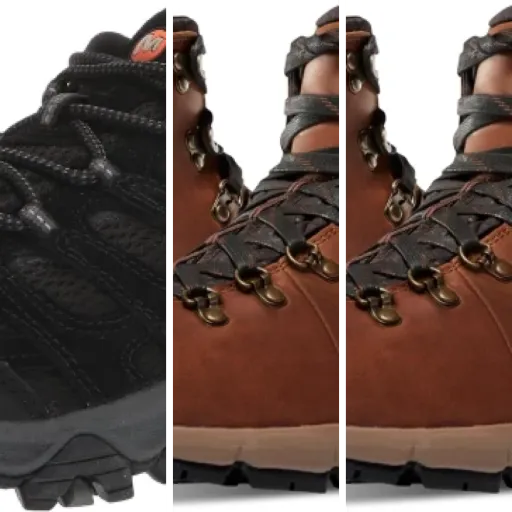
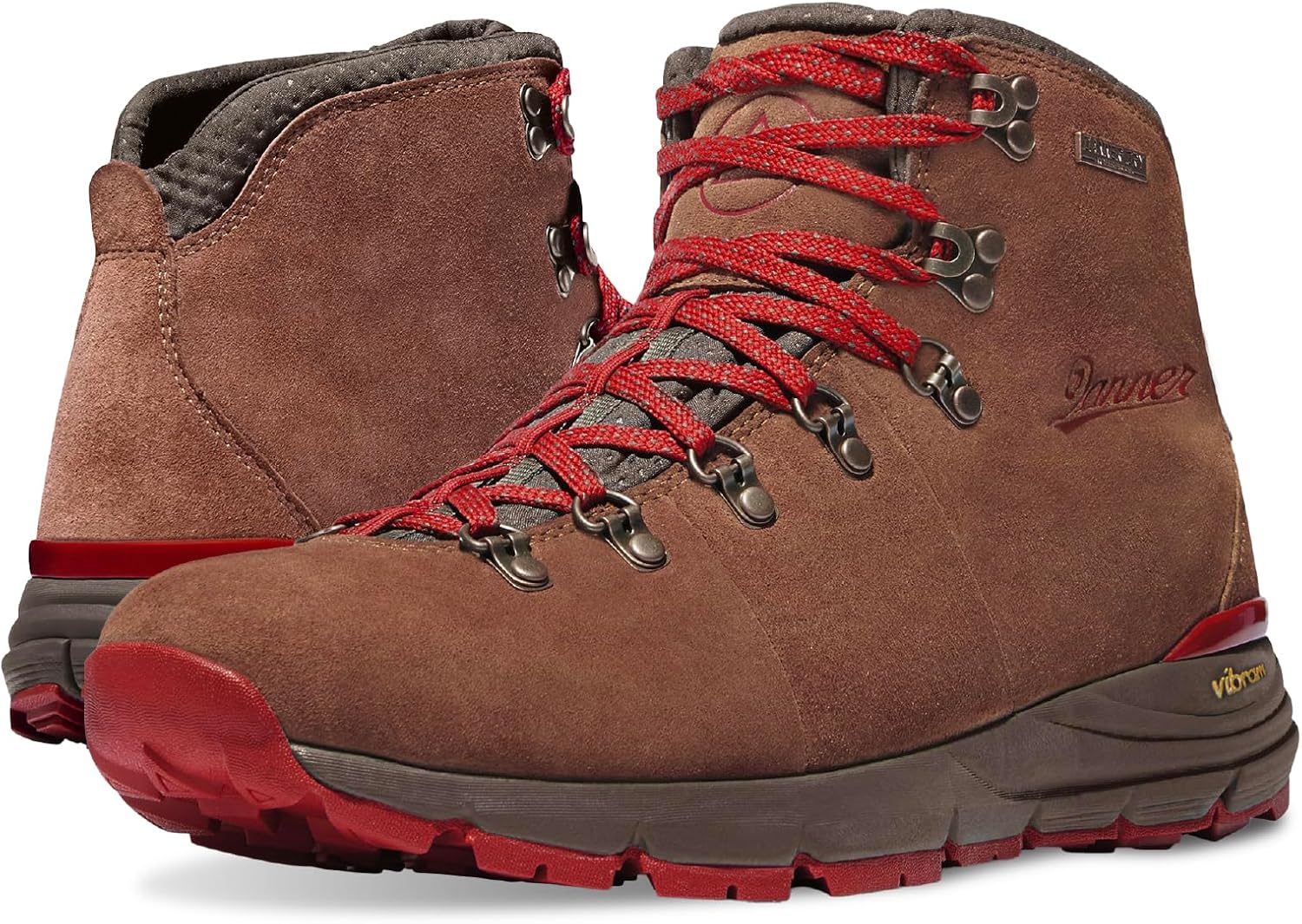
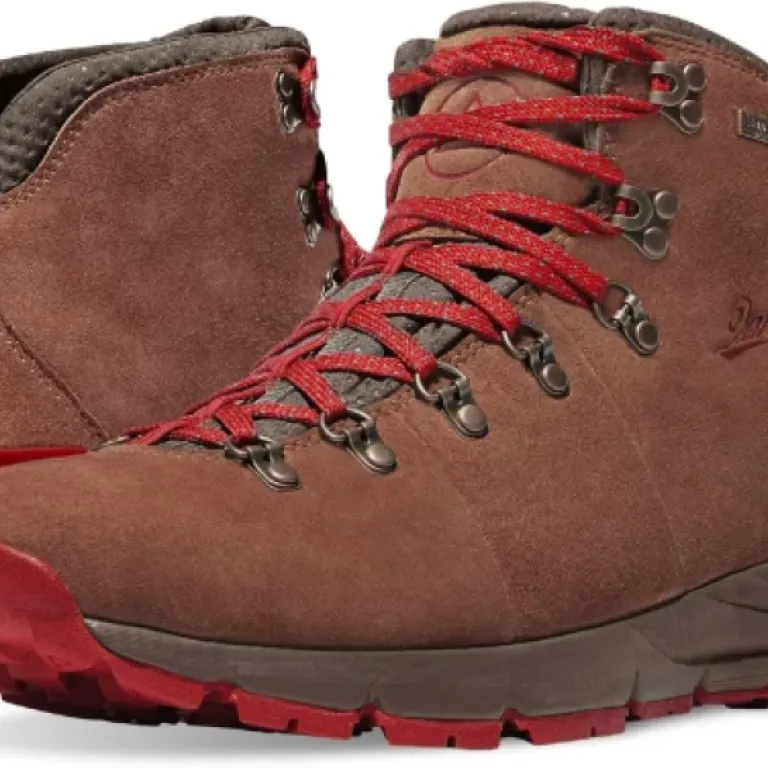
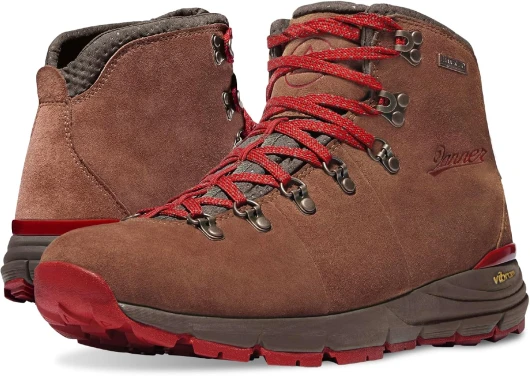
The design leans pretty hard into that old-school hiking boot vibe: leather upper, contrast red laces, metal hardware. If you like the classic mountaineering look without the weight, this hits that spot. I found myself wearing them with jeans and a flannel to work and they didn’t look out of place at all. They don’t scream “technical gear” the way some modern synthetic boots do, which is nice if you want one boot for both town and trail.
The lacing system uses regular eyelets down low and then open metal hooks up top for the last few rows. Personally, I have mixed feelings about this. On the plus side, they’re fast to put on and take off. You just pull the laces off the hooks and you’re out. On the downside, if you don’t tension the laces well, they can loosen a bit during longer walks, especially on descents. I had to stop once or twice on steeper trails to snug them back up. Not a dealbreaker, but something to know.
The toe box is one of the strong points of the design. In the wide version, my toes had room to spread out without feeling sloppy. I didn’t get the usual pinky-toe rub I sometimes get in narrower boots. The ankle collar is padded enough to feel secure but not so stiff that it digs into your Achilles. That said, on the first long day (around 8 hours of wear), I did feel a bit of rubbing at the top of the ankle on my right foot. After a couple more wears and slightly adjusting the lacing tension, that went away.
Visually, the only thing that made me raise an eyebrow was the join where the upper meets the sole. The “flute” or groove around the welt area looks a bit open in spots, not like a full old-school stitched welt. It hasn’t caused leaks for me yet, even in wet grass and shallow puddles, but if you’re used to heavy-duty boots with thick, obvious welt construction, this will feel lighter and a bit more “sneaker-like” in that area. Overall, the design is practical and looks good, but it’s clearly biased toward comfort and everyday wear rather than pure tank-like toughness.
Where these boots actually shine
Comfort is the main reason I kept these instead of sending them back. Out of the box, I went straight into a 2-hour walk with the dog on mixed surfaces: sidewalk, compact dirt, and a bit of loose gravel. No hot spots, no heel slip, no weird pressure on the top of my foot. That’s rare for me with leather boots. Normally I expect at least some rubbing on the heel or toes the first day. Here, nothing worth complaining about.
The Ortholite insole plus the Vibram SPE midsole give a soft, cushioned feel underfoot. If you’re used to old-school boots that feel like wooden clogs, this is the opposite. It’s more like a sturdy sneaker with ankle support. I wore them for a full workday (around 9 hours on my feet, walking between buildings, stairs, etc.) and my feet felt fine by the end. No burning under the balls of my feet, which I sometimes get with flatter insoles. The arch support is moderate – not super high, not flat. If you have a very high arch or special insole needs, you might still swap them out, but for my slightly-high arches, they were good.
Fit-wise, the 11 Wide was the right call for me. I usually hover between a regular 11 and an 11 wide depending on the brand. In these, the wide gave me enough room in the toe box without feeling sloppy in the heel. One thing to note: they do run a bit long and roomy. If you’re between sizes and have normal-width feet, I’d seriously consider going down half a size or skipping the wide. Some other users mention going down half a size and being happier with the fit. With midweight hiking socks, my pair felt secure with no sliding around.
The only comfort downside is heat buildup. After a long day, my feet were definitely on the sweaty side, and if I wore them indoors for hours, I noticed it more. For me, that makes them better for cooler weather, shoulder seasons, or short summer hikes rather than long, hot, all-day treks in the sun. But in the conditions they’re clearly aimed at – damp, cool, mixed terrain – the comfort is genuinely one of their strong points.
Leather, waterproof membrane, and Vibram – good mix, with trade-offs
The upper on my pair is full-grain leather, not suede. Out of the box, the leather feels smooth and reasonably thick, but not super stiff. It’s clearly built more for comfort than for kicking rocks all day with a 50-pound pack. After a couple of weeks, the leather softened up nicely and developed some creases, but I didn’t see any cracking or weird stretching. I did put a light coat of leather conditioner (something like Obenauf’s / similar) on them after the first muddy hike, and it darkened the color a bit but made the leather feel more supple.
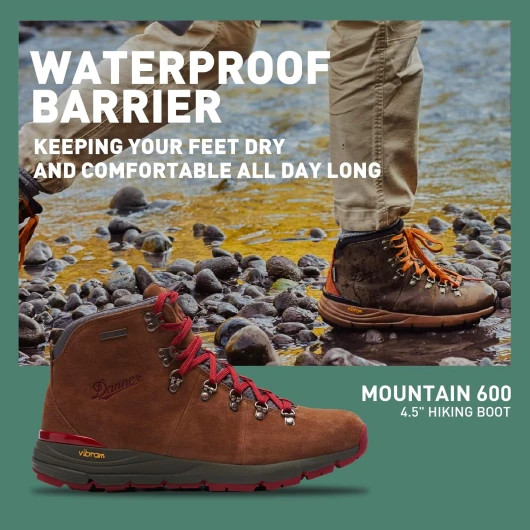
Inside, you’ve got the Danner Dry waterproof membrane. This is where the materials choice has a clear trade-off: waterproof but not very breathable. On cool, damp days, it’s great. My feet stayed dry walking through wet grass and shallow mud. But on milder days, especially if you’re indoors and outdoors a lot, you’ll feel your feet warming up. After a full 10-hour day at work plus walking home, my socks were definitely on the sweaty side. Not horrible, but more than with my Gore-Tex Salomons, which vent a bit better in my experience.
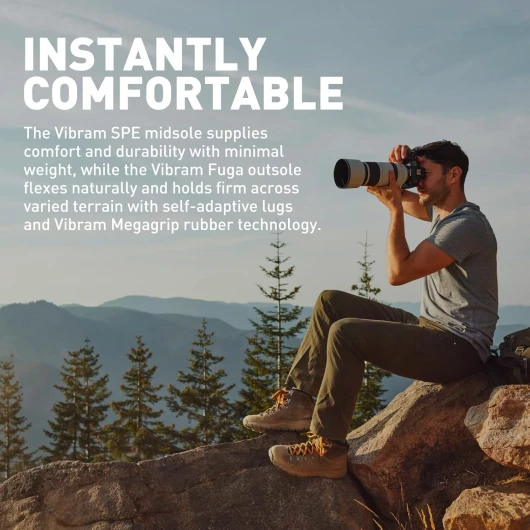
The midsole is Vibram SPE, which is basically a rubberized EVA. It’s softer and more cushioned than the dense foam you find in more rigid backpacking boots. Underfoot, it feels closer to a running shoe than a classic boot. The outsole is Vibram Fuga with the Megagrip compound. The rubber feels grippy to the touch and has medium-depth lugs, not super aggressive like some winter boots, but enough to bite into dirt and loose gravel. On wet pavement and damp rocks, I never felt like I was skating around, which is more than I can say for some cheaper hiking boots I’ve had.
Overall, the materials feel like a conscious choice: comfort and grip first, hardcore breathability and bulletproof toughness second. If you want a really airy boot, this isn’t it. If you want leather plus real waterproofing plus a modern outsole, the combo they used here is pretty solid for day hikes and daily wear.
Built to last a while, but not an indestructible tank
I haven’t had these for years obviously, but I can give a fair idea based on a few weeks of regular use and comparing to other boots I’ve owned. After about 40–50 miles of mixed use (trails, city, wet conditions), the outsole shows only light wear on the heel and forefoot, nothing concerning. Vibram Megagrip usually holds up well, and so far that seems true here. The lugs still have their shape and I don’t see any chunks tearing off, even after some rocky sections.
The leather upper is holding up well. A few scuffs on the toe area from kicking rocks and curbs, but that’s normal. With a bit of conditioner, those marks toned down. No stitching has come loose, and there are no gaps appearing where the upper meets the sole. That said, the way the sole is attached looks more like a modern glued construction than a heavy stitched welt, so long-term sole replacement might be trickier than on a true heritage boot. If you’re the type who resoles boots five times over 20 years, these probably aren’t that kind of project boot.
Inside, the lining and insole still look fine. No peeling, no weird bunching of the fabric around the heel. The Ortholite insole has compressed a bit under the heel, which is normal, but it hasn’t gone flat yet. For someone wearing them daily, I suspect you might want to replace the insole after a year or so just to freshen up the cushioning, but that’s standard for this type of material.
So, durability feels solid for a light hiker/urban boot, but I wouldn’t put them in the same category as super heavy-duty backpacking boots designed for decades of abuse. If you use them as intended – day hikes, travel, commuting, weekend trips – they should hold up well. If you want a boot to drag through serious mountaineering or constant rocky scrambles with heavy packs, I’d go for something beefier and probably heavier. These are more about comfort and versatility than being bulletproof.
Trail performance: grip and support vs heat and breathability
I took these out on a couple of local trails: one was a 7-mile loop with about 900 feet of elevation gain, mostly dirt and gravel, some roots and rocks; the other was a shorter but muddier forest trail after rain. With a light daypack (10–12 lbs), the boots handled both without fuss. The Vibram Fuga outsole with Megagrip does its job: on wet rocks and damp wooden steps, I had good traction and never felt like I was about to slip. In mud, the lugs are decent, though not as aggressive as a dedicated winter or deep-mud boot, so you’ll still get some clogging in really sticky stuff.
Support-wise, the mid-height shaft and padding give enough ankle security for day hikes, but this is not a stiff boot meant for heavy backpacking. You can twist the boot by hand more easily than something like a full leather backpacking boot. On the trail, that translates to a more natural, flexible feel, which I liked, but if you regularly carry 30–40 lbs and walk on rough, rocky terrain, you might want something stiffer. For my usual 10–15 lb daypack, these were perfectly fine.
Waterproofing has been solid so far. I’ve walked through wet grass, shallow puddles, and light rain, and my feet stayed dry. No leaks at the tongue or along the sides. Just keep in mind that waterproof plus leather plus membrane equals heat. On a mild day (around 60–65°F), after a few hours of hiking, my socks were noticeably damp from sweat, not from leaks. If you combine these with good moisture-wicking socks and maybe carry a spare pair for long days, it’s manageable, but if you mainly hike in hot climates, I’d look at a more breathable, non-membrane boot.
Overall trail performance is very good for light to moderate hiking and mixed urban/trail use. Grip is strong, cushioning is great, and support is enough for normal day hikes. Where they lag is in hot-weather comfort and heavy-load stability. So they’re ideal for people who hike a few times a month, carry a light pack, and want something they can also wear to work or around town without feeling like they’re in hardcore mountaineering gear.
What you actually get with the Mountain 600
On paper, the Danner Mountain 600 is sold as a sort of hybrid: part classic hiking boot, part modern lightweight shoe. You’ve got a waterproof suede or full-grain leather upper, Danner Dry waterproof membrane, Vibram SPE midsole, and a Vibram Fuga outsole with Megagrip. The pair I have is the brown leather with the red laces, size 11 Wide. They come with a second, more neutral lace in the box (brown), which is nice if you don’t want the red “look at me” style all the time.
The overall height is a mid-cut, around 5.25 inches, so it covers the ankle but doesn’t feel like a big mountaineering boot. Weight-wise, they feel light in hand and on foot. They’re not trail-runner light, but compared to more traditional leather hikers like heavier Danners or some older Asolo boots I’ve owned, they’re much easier to wear all day. Danner lists them around 1.2 pounds (likely per boot or close to that range), and that lines up with how they feel.
Inside, you get an Ortholite footbed, which is one of those triple-density foam insoles. Normally I rip stock insoles out and replace them with Superfeet or something similar. With these, I actually left the original insole in for a couple of weeks just to see, and it held up fine: decent arch support, good cushioning under the heel, and no weird pressure points under the forefoot. For casual and moderate hiking, I didn’t feel like I needed to upgrade right away.
So in practice, the presentation matches what they claim: a waterproof mid-height leather boot with a serious outsole, but built to feel lighter and more forgiving. You’re not getting a technical alpine boot here, you’re getting a comfort-focused hiker that can double as an everyday boot and still handle real trails as long as you’re not doing something extreme.
Pros
- Very comfortable straight out of the box with almost no break-in
- Good grip on wet and dry surfaces thanks to Vibram Fuga Megagrip outsole
- Versatile look and build: works for both everyday wear and moderate hiking
Cons
- Runs warm and doesn’t breathe very well, especially in hotter weather
- Not as stiff or supportive as heavier backpacking boots for big loads
- Price is on the higher side compared to some other light hiking boots
Conclusion
Editor's rating
The Danner Mountain 600 is a comfort-first hiking boot that makes sense if you’re tired of stiff, heavy footwear. It fits more like a supportive sneaker with a leather upper and a serious outsole, and less like a classic backpacking tank. Out of the box comfort is genuinely good, the Vibram grip is reliable on wet and dry surfaces, and the waterproofing does what it’s supposed to do. For day hikes, dog walks, commuting in bad weather, and general everyday use, they’re easy to live with and don’t need a long break-in period.
They’re not perfect. Breathability is the main weak point – the Danner Dry membrane runs warm, and in hotter weather your feet will get sweaty. They’re also not the stiffest or toughest option if you regularly carry heavy loads on rough mountain terrain. And the price is on the higher side, so if you just want a cheap beater boot, this probably isn’t for you. But if you’re after a boot that you’ll actually want to wear often, both in town and on moderate trails, and you like the retro leather look, they’re a pretty solid choice.
I’d say: they’re for people who hike casually or moderately, walk a lot in wet or cool climates, want good comfort right away, and appreciate a boot that looks decent with jeans. They’re not for hardcore backpackers hauling 40 lbs, people hiking mainly in hot, dry conditions, or anyone who wants the absolute maximum breathability. If you fit in the first group and can find your size at a reasonable price, they’re worth trying.