
Summary
Editor's rating
Value: not cheap, but you get real boot for your money
Straightforward military design with a few smart choices
Comfort: good once broken in, but not a sneaker replacement
Leather, Cordura, and a Vibram sole that feels ready for abuse
Durability: built to last, not to stay pretty
Performance in heat, on rough ground, and over long days
What you actually get when you open the box
Pros
- Very durable Vibram sole and sturdy leather/Cordura upper that handle rough use well
- Lightweight for an 8-inch combat boot, with good ankle support and stability
- Breathable hot-weather design with moisture-wicking lining that keeps feet reasonably dry
Cons
- Fit runs about half a size large and needs break-in; some initial heel slip possible
- Stock insole is only average and may require an upgrade for people with foot or back issues

Specifications
View full product page →| Brand | TACTICAL RESEARCH TR |
Boots built for rucking, not for Instagram
I’ve been wearing the TACTICAL RESEARCH TR550 8-inch boots (Coyote, size 9.5) as my main outdoor and work pair for a while now. I’ve used them for weekend hikes, yard work, some light construction stuff, and a couple of long days on my feet in hot weather. I’m not on deployment, but I do treat my boots pretty rough, so they’ve had a decent workout. I’ll be honest: I didn’t buy them for the brand name, I bought them because they’re AR 670-1 compliant, American-made, and I wanted something close to what active-duty guys actually wear.
From day one, the main thing that stood out was how light they feel for an 8-inch boot. They don’t feel like those old-school bricks where your legs are smoked just from walking around all day. At the same time, they don’t feel like cheap lightweight hikers that fall apart after a month. There’s a real middle ground here: proper ankle coverage, military height, but without that heavy, clunky vibe.
I didn’t baby them during break-in. I did a couple of 5–6 mile walks, some time on gravel and loose dirt, and a lot of ladder work. I did notice a bit of heel slip the first few outings, which is pretty common with this kind of boot, but nothing that tore my feet up. With decent socks (medium-weight boot socks) and a few days of wear, they started to mold to my foot pretty well.
Bottom line for the intro: these boots feel like they’re actually built for daily abuse, not just to look “tactical” in product photos. They’re not perfect and there are a couple of things that bug me, especially around sizing and the stock insole, but overall they feel like serious working boots, not fashion gear. If you’re expecting running shoe comfort out of the box, you’ll be a bit disappointed. If you want a tough, hot-weather boot that you can actually move in, they’re pretty solid.
Value: not cheap, but you get real boot for your money
In terms of value, these sit in that mid-to-upper price range for tactical boots. They’re not bargain-bin, but they’re also not in the crazy high-end custom boot territory. For what you pay, you’re getting: American-made construction, Vibram outsole, decent materials, and a boot that’s actually uniform-compliant for several branches. Compared to some big-name “tactical” brands that charge similar money for boots made with weaker soles and questionable durability, these feel like a better use of cash.
If you’re just looking for something to wear occasionally around town, they might be overkill. You’re paying for durability, compliance, and performance in rough conditions. If you’re military, law enforcement, or doing security / construction / outdoor work, the cost makes more sense. You’re going to beat them up, and they’re built to handle that. One Amazon reviewer straight up said they’d use these for every situation after 12 years of service. That tells me people who actually work in them feel like it’s money well spent.
The only place where I think the value could be a bit better is the stock insole. For the price, I’d like a slightly better footbed out of the box. It works, but when a product markets “advanced orthotic support,” I expect something closer to a real orthotic. That said, dropping $20–40 on aftermarket insoles and pairing them with these boots is still a good deal compared to buying a cheaper boot that blows out in a year.
Overall, I’d call the value pretty solid for serious users. If you’re on your feet all day, rucking, working outdoors, or need something AR 670-1 compliant that won’t fall apart, the cost is justified. If you just want a casual boot for style, there are cheaper and more comfortable options that make more sense. These are built as tools, and if you use them like tools, they’re worth what they cost.

Straightforward military design with a few smart choices
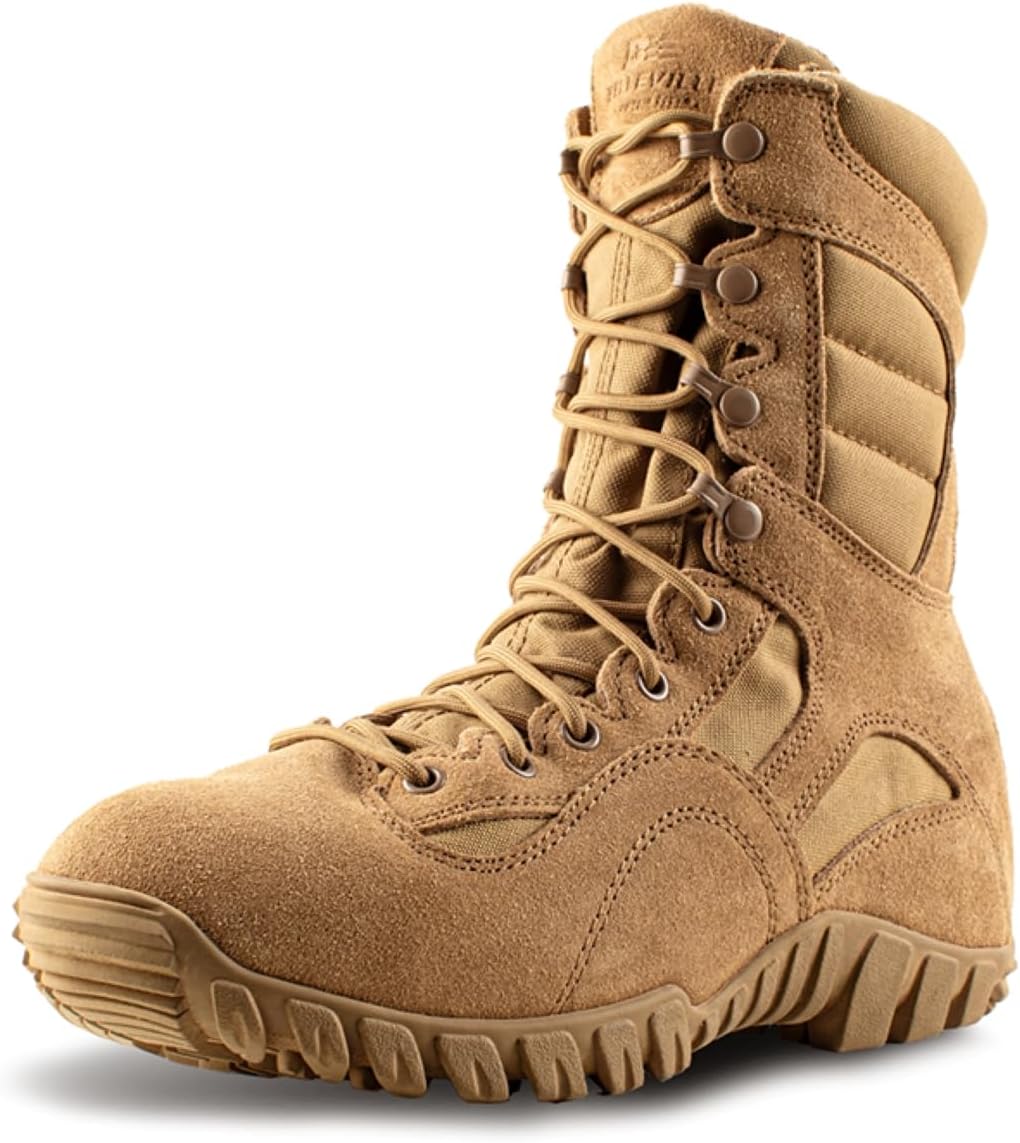
The design is very much function first. Standard 8-inch shaft, coyote brown all around, no weird panels or flashy logos. They comply with AR 670-1 and AFI 36-2903, so if you’re in the Army or Air Force and need something uniform-approved, these tick that box. The shaft circumference is around 13 inches, which gives decent coverage and support without feeling like you’re wearing ski boots. I never felt like I was fighting the boot when bending or kneeling.
The combination of cattlehide leather and Cordura nylon is pretty well thought out. The leather is placed where you need protection and structure (toe, heel, lace area), and the nylon fills in the gaps where you want flex and airflow. You can actually feel the difference if you press around the sides: the leather zones are stiff and protective, the nylon zones give a bit and breathe. The Vibram Ibex outsole has a chunky tread with pronounced lugs and edges that grip well on dirt, gravel, and loose rock. It’s not a smooth, office-friendly sole; it’s clearly meant for rough ground.
One design detail I appreciated is the speed hooks up top. They make it easy to get in and out of the boots quickly, which matters if you’re not the type to spend 5 minutes lacing every time. The hooks themselves feel solid; I’ve snagged them a few times on brush and ladders and didn’t bend or break anything. The tongue is gusseted high enough that dust and small debris stay out pretty well. I’ve walked through sand and small gravel and didn’t end up with half the trail in my socks.
On the downside, the look is very clearly "military boot." If you want something that can pass in an office or with jeans at a nice restaurant, these will stand out. Also, the toe profile is a bit bulky. It’s fine for me, but if you’re used to slim hiking boots or sneakers, they’ll feel big. Overall, the design is practical and no-nonsense: built to work, not to impress anyone on social media.
Comfort: good once broken in, but not a sneaker replacement
Comfort-wise, these boots sit in that “duty boot” zone: supportive and stable, but not soft and plush. Out of the box, the leather is stiff and the boot feels firm underfoot. I didn’t get blisters, but I did feel a bit of heel movement the first couple of days, especially walking downhill. A reviewer on Amazon mentioned taking a shower with them on to speed up break-in, which is an old-school trick. I didn’t go that far, but after a few long walks and some time wearing them around the house, the leather started to mold to my feet and the fit improved a lot.
The advanced orthotic insole they talk about is okay, but I wouldn’t call it anything special. It does a decent job distributing pressure, and the EVA midsole underneath helps absorb impact on hard surfaces. On concrete and asphalt, I can easily do a full day without feeling destroyed, but it’s a firmer feel than, say, a pair of Danners with a softer footbed or a cushy trail runner. If you already use custom insoles or have a favorite aftermarket one, I’d swap them in. The removable insole makes that easy.
In hot weather, these boots do better than most full-leather models I’ve worn. The combination of moisture-wicking lining and nylon panels keeps things from turning into a sauna. My feet still sweat, obviously, but I don’t get that soaked, slippery feeling that leads to blisters. With decent socks (I used medium-weight boot socks), my feet stayed reasonably dry and the skin didn’t get torn up, even after a couple of long, sweaty days moving around in the heat.
If you’re used to sneakers or running shoes, these will feel stiff and tall at first. That’s just the nature of an 8-inch combat boot. After a week or so of wear, they settle in nicely and become one of those “put them on and forget about them” boots. They’re not pain-free magic for everyone—if you’ve got serious foot issues, you’ll still need proper orthotics—but for a healthy foot, they’re pretty comfortable after break-in and definitely good enough for long shifts, rucks, or field work.
Leather, Cordura, and a Vibram sole that feels ready for abuse
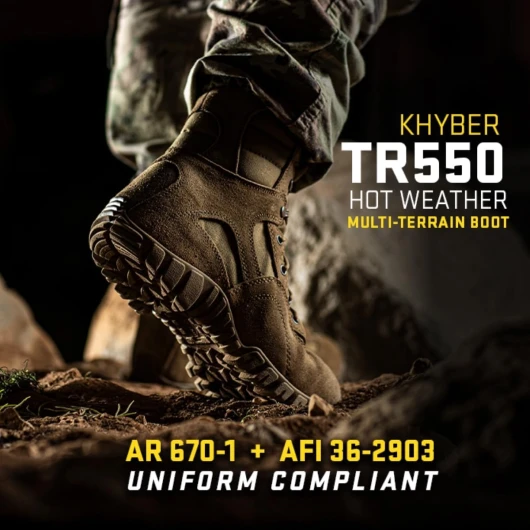
Material-wise, these boots are mostly cattlehide leather with big panels of abrasion-resistant Cordura nylon. The leather out of the box is a bit dry and stiff, which is pretty normal for duty boots. I hit mine with a light leather conditioner after a few wears and it helped a lot with flex and kept them from drying out more. The suede-like finish on the leather will scuff and show wear, but that’s cosmetic. Functionally, the leather has held up well against rocks, brush, and random jobsite abuse.
The Cordura nylon panels are a big part of what makes these work as hot-weather boots. Compared to full-leather boots I’ve owned, I can actually feel air moving around the ankle and upper foot when I’m walking in warmer temps. The nylon doesn’t look cheap or thin; it’s got that rough, durable weave that you usually see on decent packs and gear. I’ve scraped them against concrete and metal edges a few times and didn’t see any tearing or serious fraying.
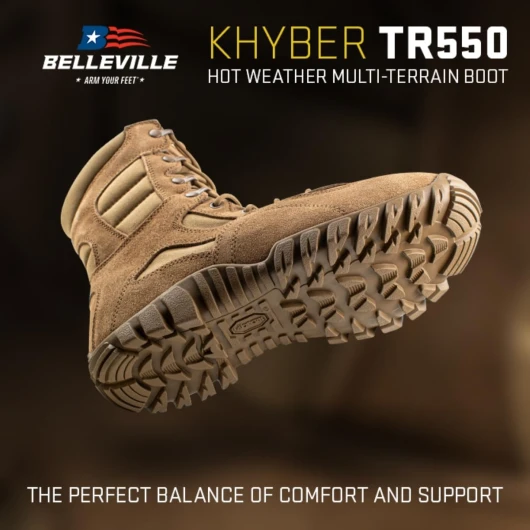
The outsole is Vibram Ibex rubber, and it feels tough. The tread is deep enough that small rocks don’t get stuck constantly, and mud tends to shed off instead of clumping. One Amazon reviewer said “nothing sticks to these soles,” and while that’s a bit of an exaggeration, I’ll say they do stay cleaner than a lot of other lugged boots I’ve had. The rubber is on the firmer side, which is good for durability and bad if you want a super cushy ride. For rucking, hiking, and general use, I’d rather have longevity than pillow-soft steps.
Inside, you’ve got a Breathe-Right moisture-wicking lining and a removable insole with foam glued on top of a firm base. The lining does its job pulling sweat away; my socks come out damp after long hot days, but not soaked or swampy. No weird smells yet, which is a good sign. The insole is okay, but not great. It’s fine for a few hours, but if you’ve got bad knees, back issues, or flat feet, you’ll probably want to throw in your own orthotics. Overall, the materials feel like they’re chosen for durability and real use, not comfort-first, which is exactly what I expected from this kind of boot.
Durability: built to last, not to stay pretty
Durability is where these boots really feel worth the money. After regular use on rough ground, job sites, and general abuse, the Vibram sole barely shows any real wear. The lugs are still sharp, no chunks torn out, no peeling at the edges. One Amazon reviewer claimed thousands of miles and almost no visible wear on the sole; I’m not at that mileage, but I can see how these could go a long time before needing replacement.
The leather does show scuffs and marks, especially on the toe and sides, but that’s cosmetic. No cracking, no splitting at the flex points so far. The suede-like finish will get roughed up if you drag them across rocks or concrete, but the structure of the boot stays solid. The Cordura panels have held up better than I expected. No small tears, no unraveling seams, even after catching them on metal edges and brush. Stitching looks tight everywhere, and I haven’t had any loose threads pop up yet.
The hardware is another strong point. The eyelets and speed hooks haven’t bent, popped out, or rusted. The laces themselves are still in good shape: no major fraying, no snapped ends. One reviewer mentioned their laces and clamps still being perfect after heavy use, and that matches what I’m seeing. I haven’t had to replace anything yet. The sole is still firmly attached to the upper, with no signs of separation or weird gaps, which is a big one for me. Once a sole starts peeling, the boot is basically done.
The only “downside” on durability is that these boots don’t stay looking new for long if you actually use them. The suede scuffs, the coyote color darkens in spots, and they start to look like working boots pretty fast. Personally, I don’t care at all; I’d rather see honest wear than baby them. If you want something that stays clean and sharp-looking for office use, you might need a different style. But if you want boots that can take a beating for months or years, these are pretty tough and feel like they’ll easily outlast a lot of cheaper tactical boots.
Performance in heat, on rough ground, and over long days
In actual use, the TR550s perform like a solid all-around field boot. On dirt trails, loose gravel, and rocky paths, the Vibram Ibex outsole grips well. I didn’t feel like I was sliding around on inclines, and side-hilling felt stable. The tread pattern bites into softer ground without turning into a mud magnet. I’ve walked through wet grass, light mud, and some shallow puddles; these are not waterproof boots, but the leather and construction kept my feet dry in everything short of full submersion or heavy rain. They’re “hot weather” boots, so don’t expect them to act like Gore-Tex hikers.
The EVA midsole does its job on impact. Jumping off small ledges, climbing ladders, or walking long stretches on pavement never felt harsh. It’s not a bouncy feel, more of a firm, damped impact. Compared to cheaper boots with flat, dead soles, these are a big step up. One Amazon reviewer mentioned using them for hunting, hiking miles, sleeping in them for several nights, and shoveling snow for hours; my experience lines up with the idea that they handle long, varied days without falling apart or making your feet miserable.
Ankle support is solid without being overkill. The 8-inch shaft, combined with decent lacing and structure, gives you that locked-in feel that’s nice when carrying weight or moving on uneven ground. I rolled my ankle slightly stepping off a curb wrong, and the boot actually stopped it from going all the way over. That’s exactly why you wear this style instead of low-cut shoes. At the same time, you can still drive, crouch, and climb without feeling like your ankle is in a cast.
In heat, they perform better than many other combat-style boots I’ve tried. The breathable leather and Cordura combo plus the moisture-wicking lining helps keep things manageable. I’ve worn them in the sun in 85–90°F temps, on my feet for several hours, and while my feet were warm, they weren’t soaked or miserable. For real desert deployment-level heat, I’d still pair them with quality socks and maybe foot powder, but the boot itself does its part. Overall, for rucking, range days, work, and general outdoor use, the performance is reliable and predictable, which is what you want.
What you actually get when you open the box
Out of the box, the TR550s look like standard issue combat boots, nothing fancy. Coyote brown, 8-inch shaft, speed lace hooks up top, Vibram outsole with a pretty aggressive pattern. No gimmicks, no weird colors, no fake “operator” styling. Just a straight-up uniform-compliant boot. If you’re buying these to wear with OCP/ACU, they fit right in. If you’re a civilian like me, you just look like someone who likes practical boots.
The first impression in hand is that they’re lighter than they look. You pick them up expecting a heavy chunk of leather, but they’re closer in feel to a hiking boot than an old-school all-leather duty boot. The leather comes pretty dry and a little stiff, which is normal for this type of boot. The Cordura nylon panels help cut the weight and give them a more breathable, flexible feel around the ankle and upper foot.
Inside, you’ve got a removable insole, moisture-wicking lining, and a fairly stiff base under that foam. This is not a plush, squishy boot like a running shoe. It’s more of a firm, supportive feel that’s meant for load-bearing and long days on your feet. The lacing system is straightforward: standard eyelets down low, speed hooks up top. Nothing to learn, nothing to fiddle with. You can crank them down tight if you want a locked-in ankle, or back off a bit if you’re just doing light walking.
In terms of overall presentation, it feels like a tool, not a lifestyle product. No extra accessories, no fancy packaging, just a cardboard box and the boots. Personally, I like that. You’re paying for construction and materials, not for some marketing-heavy unboxing experience. If you expect a premium “wow” moment when opening the box, this isn’t that. If you want boots that look like they belong on a range, in a motor pool, or on a fireline, they fit the bill.
Pros
- Very durable Vibram sole and sturdy leather/Cordura upper that handle rough use well
- Lightweight for an 8-inch combat boot, with good ankle support and stability
- Breathable hot-weather design with moisture-wicking lining that keeps feet reasonably dry
Cons
- Fit runs about half a size large and needs break-in; some initial heel slip possible
- Stock insole is only average and may require an upgrade for people with foot or back issues
Conclusion
Editor's rating
After putting the TACTICAL RESEARCH TR550 8-inch combat boots through a mix of hiking, work, and hot-weather use, my take is pretty simple: they’re serious working boots that focus on durability and support more than instant comfort. The Vibram sole, leather/Cordura combo, and overall build feel solid and reliable. They handle rough ground, long days, and heat better than a lot of other tactical boots I’ve tried. They’re not soft like sneakers, but once broken in, they’re comfortable enough to wear all day without your feet hating you.
They’re best suited for people who actually need this style of boot: military folks needing AR 670-1 compliant footwear, law enforcement, security, construction, wildland/field work, or anyone rucking and spending a lot of time on dirt and gravel. If you’re hard on your gear and want something that can take abuse without blowing out in six months, these make sense. You may want to budget for better insoles, but the base boot is strong.
If you’re just after a casual boot for jeans and city streets, or you want running-shoe comfort right out of the box, this isn’t the right pick. The look is very “military,” the feel is firm at first, and they take a little time to break in. But for the right user, they’re good value: tough, reasonably light for their size, and clearly built to be used, not just worn.