
Summary
Editor's rating
Value for money: who gets the best deal here
Design: more trail runner than classic work boot
Comfort and fit: good once broken in, but met guard is tight
Materials and build: synthetic and mesh, not heavy leather
Durability and long-term outlook
Performance on the job: grip, safety, and day-to-day use
What this boot actually is (beyond the marketing text)
Pros
- Feels more like a cushioned sneaker than a heavy work boot, good for long days on concrete
- Alloy toe and internal met guard provide solid protection while keeping weight reasonable
- Slip-resistant lugged outsole grips well on wet and smooth warehouse surfaces
Cons
- Internal met guard makes the fit tight over the top of the foot, especially before break-in
- Laces tend to come undone unless double-knotted and are a bit too long
- Synthetic and mesh upper likely less durable than full leather in very harsh conditions

Specifications
View full product page →| Brand | Reebok |
A safety boot that wears like a sneaker… almost
I’ve been wearing the Reebok Work Trailgrip Work AT Mid (men’s 11.5 wide, navy) for regular warehouse shifts and some outdoor work around a yard. I’m usually in classic leather safety boots that feel like bricks on my feet by the end of the day, so I wanted something lighter that still ticks the safety boxes. On paper, this one looks like a sport shoe with a safety toe and met guard slapped in.
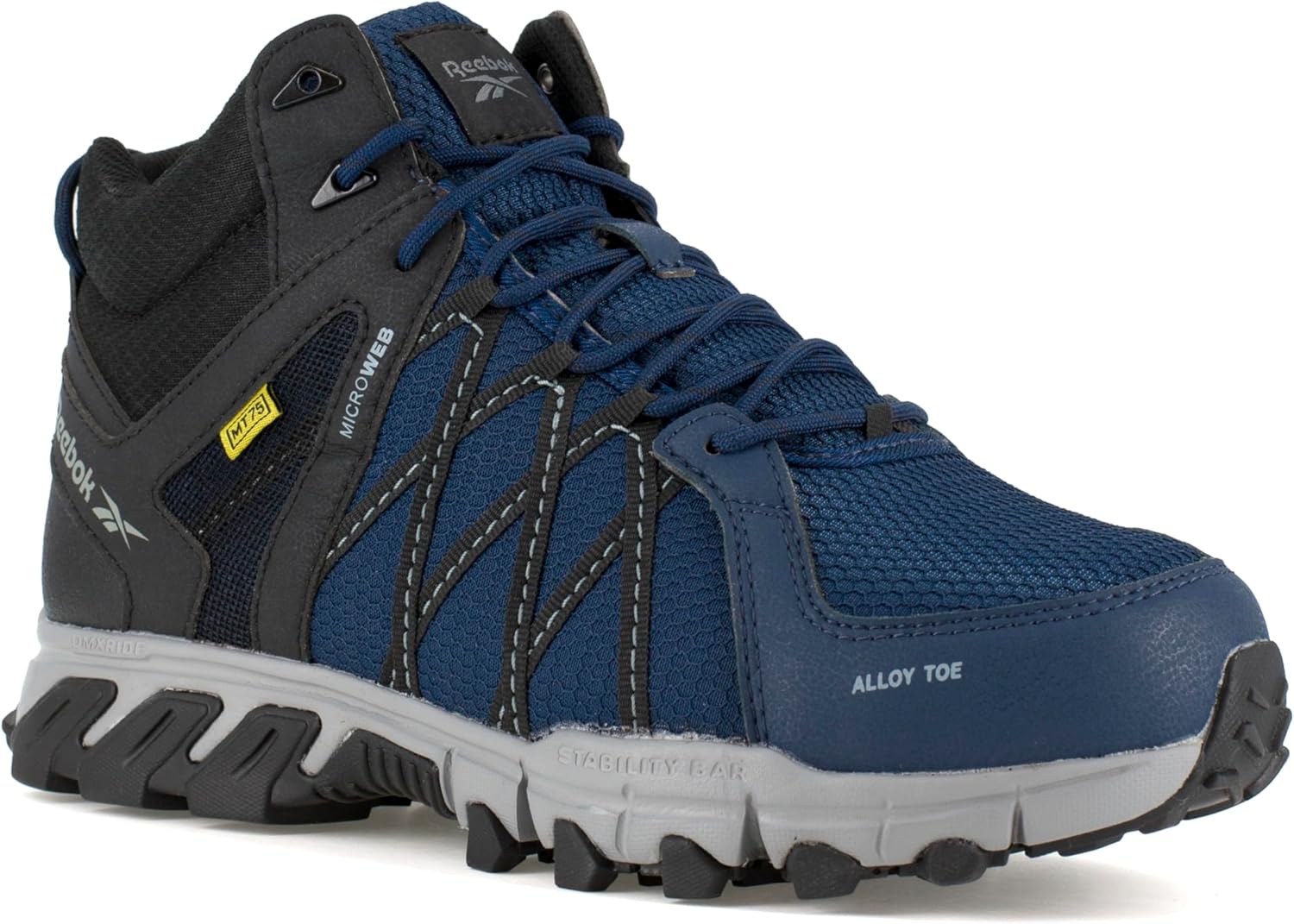
First thing to know: this is not a big, stiff leather boot. It’s more like a chunky trail running shoe with a built-in alloy toe and an internal metatarsal guard. That means it feels different from the usual steel-toe work boot right from the start. The boot is ankle-high, fairly light for a safety shoe, and the sole has a proper hiking-style lug pattern that actually grips instead of just pretending to.
I’ve used it on smooth concrete, slightly oily warehouse floors, and wet asphalt outside after rain. I also wore it during a full 10‑hour shift with a mix of walking, climbing stairs, and standing at a workbench. So this is not just a “tried it on in the living room” opinion. A couple of things stood out very quickly: the comfort underfoot is good, but the met guard and fit are a bit tricky at the beginning.
If you’re thinking about switching from heavy leather boots to something like this, you should know it’s not perfect. It does a lot of things right, especially weight and grip, but there are a few details (fit over the top of the foot, laces, long-term durability question mark) that you need to be aware of before you spend the money.
Value for money: who gets the best deal here
In terms of price, the Reebok Work Trailgrip Work AT Mid usually sits in the mid-range for safety footwear. It’s not bargain-bin cheap, but it’s also not in the premium leather boot category. For what you get – alloy toe, internal met guard, slip-resistant sole, electrical hazard protection, and a sneaker-like feel – I’d say the value is pretty solid if comfort and lighter weight are your priorities.
Where it makes the most sense is for people who walk a lot at work: warehouse pickers, forklift operators who are in and out of the cab, technicians on large sites, delivery workers in industrial settings, etc. If you’re on your feet all day, the extra comfort and reduced weight are worth paying a bit more than for a basic stiff boot. Compared to some big, heavy leather met-guard boots I’ve used before, this feels like a decent compromise between safety and not hating your life after 10 hours on concrete.
On the downside, if you work in very rough outdoor conditions, the materials and construction might not last as long as a proper heavy-duty leather boot. So the value drops if you burn through them in under a year because your job is basically boot torture. Also, the fit issues around the met guard and the need to maybe size up half a size could be annoying if you’re ordering online and can’t try them first.
So, from a straight value perspective: good for light to medium-duty work where comfort and mobility matter, a bit less convincing if you want a tank that will last forever in brutal conditions. For my use (mostly indoor, some outdoor, lots of walking), I’m okay with the price because my feet feel better at the end of the day. If your main goal is maximum lifespan in extreme environments, you might want to look at heavier leather options instead, even if they’re less comfortable.
Design: more trail runner than classic work boot
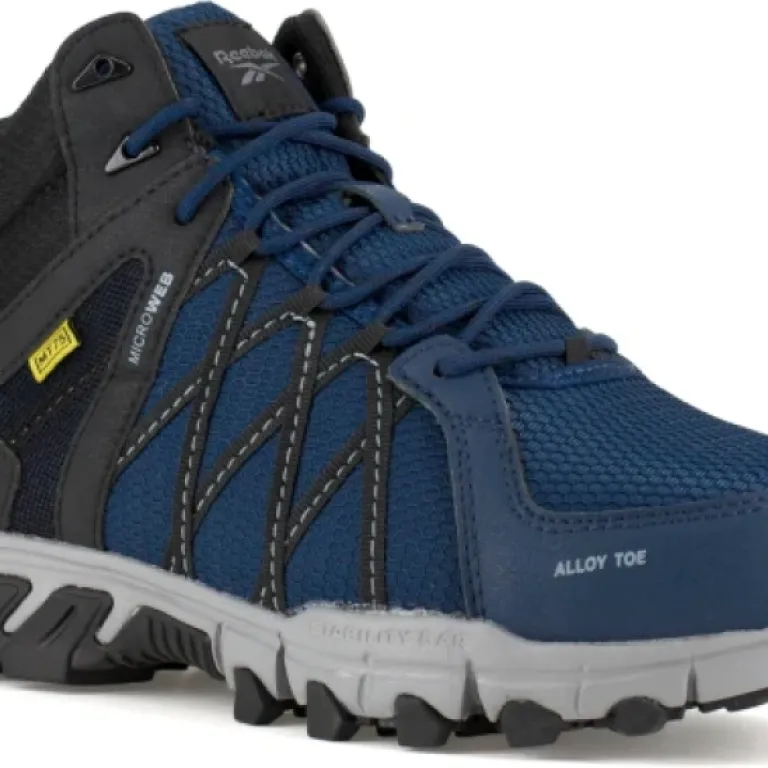
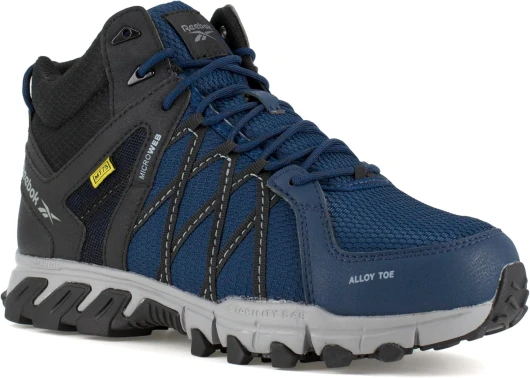
Design-wise, this thing leans heavily into the athletic look. The navy color with synthetic overlays makes it feel closer to a hiking shoe than a steel-toe boot. If you hate the clunky, big-heel leather boot style, you’ll probably like how these look. The cut is mid-ankle, so it gives some support but doesn’t lock your ankle like a tall work boot. For me, that makes stairs and ladders easier because you can actually move your ankle a bit.
The MicroWeb lacing system is basically a web of synthetic straps that the laces run through. The idea is to pull the upper snug around your foot, especially on the sides, so your foot doesn’t slide around. In practice, it does hold the midfoot well, but there’s a catch: with the internal met guard, if you crank the laces too tight, you feel pressure right over the top of your foot. On my first day, I had to loosen them more than I usually would, otherwise it felt like a thick bar pressing onto my instep. After a day of break‑in, that got better, but it’s something to know if you have a high instep.
A small but real annoyance: the laces themselves. Other buyers mentioned it and I agree: they tend to come undone if you don’t double-knot them. They’re a bit long and the material is slightly slick, so a single bow doesn’t hold well through a full shift of walking and bending. Not the end of the world, but you’d think by now brands would put half-decent laces on a work boot. Plan on double-knotting or just swapping the laces if that kind of thing drives you nuts.
Overall, I like the design for my type of work: it’s discreet, looks like a tough sneaker, and doesn’t scream big safety boot. But if you’re used to thick leather uppers and big padded tongues, this will feel lighter and a bit more "sporty" than "rugged". For warehouse, plant, or light outdoor tasks, the design makes sense. For heavy construction in rough conditions, I’d personally want something beefier.
Comfort and fit: good once broken in, but met guard is tight
Comfort is where this boot is clearly trying to stand out. Underfoot, it really does feel more like a chunky sneaker than a classic safety boot. The MemoryTech insole plus DMXRide midsole give you decent cushioning. Walking and standing for 8–10 hours is noticeably easier than with flat, hard boots. My knees and lower back felt less beat up at the end of a shift, which is honestly the main reason I’d stick with this style.
Now, the catch: the internal met guard. Other buyers mentioned it and I had the same experience. On day one, the met guard felt thick and pressed down on the top of my foot. I had to loosen the laces more than usual, almost to the point where it felt a bit too loose around the ankle, just to stop that pressure. After a full working day, the material softened a bit and my foot seemed to adjust. By day two and three, the pressure was much less and I could tighten the laces normally. So there is a break‑in phase, especially if you have a higher instep.
In terms of sizing, I think they run a little snug over the top of the foot because of that met guard, even in the wide version. The toe box itself feels reasonably wide – my toes weren’t crushed – but getting the boot on and comfortable took some fiddling. One user said they couldn’t even get their usual size on because of the met guard height and had to go up half a size. I can see that happening if your feet are tall over the metatarsals. If you’re between sizes or know you have a high instep, I’d lean towards going up half a size, or at least trying them on in person if possible.
Once broken in, I’d rate comfort as pretty solid for all-day wear. My feet weren’t screaming by the end of a shift, and the cushioning plus the sneaker-like feel made moving around easier. Just don’t expect them to feel perfect straight out of the box; give them at least a full working day to settle, and be ready to play with the lacing to find a sweet spot between support and met guard pressure.
Materials and build: synthetic and mesh, not heavy leather
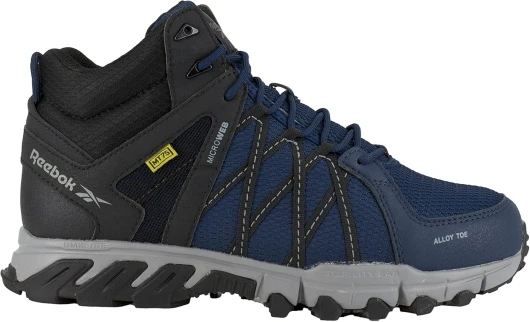
The upper is a mix of microfiber and mesh, with some synthetic overlays for structure. So don’t expect the thick leather feel you get from traditional work boots. That has pros and cons. On the plus side, the boot is lighter and breathes better, and it dries faster if you get caught in light rain or sweat a lot. On the downside, the whole structure feels a bit less armored, especially around the sides, compared to full leather.
The inside is lined with moisture-wicking nylon mesh. That sounds like marketing, but in real use, it does help a bit. After a long shift, my socks were damp but not soaked, and the boot didn’t feel like a swamp. The MemoryTech insole on top of that is a removable memory foam footbed. It’s fairly thick and squishy at first, molding to your foot after a couple of hours. It’s comfortable, but like most memory foam insoles, I’m curious how it will feel after a few months of daily use. These usually compress over time, so it’s good that it’s removable if you want to swap in your own insoles.
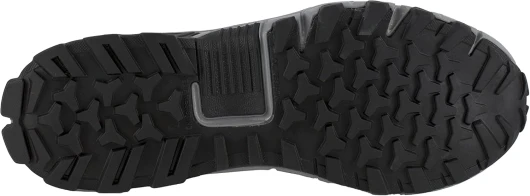
The midsole is DMXRide foam, which is Reebok’s cushioning foam. Underfoot, it feels closer to a running shoe than a hard work boot. You get a bit of bounce and cushion, especially under the heel, which takes some shock out of walking on concrete. The outsole is slip-resistant rubber with a real lug pattern, not just shallow grooves. On wet concrete and slightly oily spots, it held up well for me. I didn’t feel that sketchy sliding you sometimes get with flat-soled work boots.
Build quality out of the box looked clean: stitching was straight, no glue blobs, nothing peeling. But let’s be clear: with these materials, this is not a boot I expect to last as long as a thick leather pair in harsh construction use. For warehouse and light industrial, I think it’s fine. If you’re dragging your toes on rebar, working in gravel and mud every day, or kneeling on rough surfaces constantly, I’d be a bit skeptical about long-term abrasion resistance on the mesh parts.
Durability and long-term outlook
Durability is the one area where I’m a bit cautious. After a few weeks of use, the boots are holding up fine: no stitching coming loose, no delamination of the sole, and the mesh isn’t fraying. The outsole lugs still look sharp, and the cushioning hasn’t packed out yet. So in the short term, build quality feels solid enough. The boot doesn’t feel cheap or flimsy when you bend it or twist it in your hands.
That said, the microfiber and mesh upper is never going to be as tough as full-grain leather in really harsh conditions. If your job involves dragging your toes on concrete, kneeling on rough floors, or working in gravel and metal scraps all day, I’d expect the mesh and synthetic overlays to show wear faster than a leather boot. For warehouse and indoor industrial use, though, I think it’s a reasonable trade‑off: you get better comfort and breathability, but maybe slightly less lifespan if you abuse them.
The removable MemoryTech insole is another durability question mark. Memory foam tends to compress over time. Right now it’s comfortable and bouncy enough, but I wouldn’t be shocked if after 6–12 months of daily wear it feels flatter. The good news is you can pull it out and replace it with a better aftermarket insole if that happens, so the boot itself doesn’t become useless just because the stock insole gets tired.
Overall, I’d say durability is good enough for light to medium-duty use, but I wouldn’t buy these expecting them to survive multiple years of hardcore construction or heavy outdoor abuse. For someone in a warehouse, logistics, or a mixed indoor/outdoor role, I’d expect a decent lifespan, especially if you’re not dragging your feet or grinding the mesh against sharp surfaces all day. Just be honest about your job: if you destroy boots regularly, this more athletic style probably won’t magically change that.
Performance on the job: grip, safety, and day-to-day use
On the job, the two big performance points for me are grip and how the safety features behave in real use. Grip-wise, the active traction rubber lug pattern does its job. On smooth warehouse concrete, slightly dusty floors, and wet patches near loading docks, I felt stable. I didn’t do anything crazy like climbing steel beams in the rain, but for normal industrial and warehouse environments, I had confidence in the sole. Compared to flat-soled safety shoes I’ve worn, this is a clear step up in traction.
The alloy toe and internal met guard are the main safety features. The toe cap gives you the usual protection against dropped tools or boxes. It’s alloy, so it’s lighter than steel, and I didn’t feel a cold toe like you sometimes do in winter with metal caps. The internal CushGuard met guard is supposed to protect the metatarsal bones from impact. It hugs the top of your foot, which explains the pressure during break‑in. Once I got used to it, I liked knowing that area was covered, especially in a warehouse where you’re constantly moving carts and pallets around. It doesn’t feel like a rigid shell sitting on top; it’s more integrated into the tongue and upper.
Electrical hazard protection is there, which is a nice safety net if you work around powered equipment, extension cords, or older installations. I’m not going to pretend I “tested” that because that would be stupid, but it’s certified to ASTM F2413, so for most workplaces that’s what matters. The boot also feels stable laterally; the MicroWeb lacing and mid-cut height keep your foot from sliding side to side too much when you turn quickly or step on uneven spots like pallet edges.
Day to day, the performance is simple: it’s light enough that you don’t think about your feet all the time, it grips well on typical work surfaces, and it offers real protection beyond just the toe cap. The only ongoing annoyance is still the laces coming undone unless you double-knot them. For me, that’s not a dealbreaker, but it’s the kind of small detail that reminds you this isn’t perfect. Overall, though, for warehouse, logistics, light manufacturing, and similar jobs, it performs well enough to justify the safety features and the price, as long as the fit works for your foot shape.
What this boot actually is (beyond the marketing text)
On the box and in the product sheet, the Reebok Work Trailgrip Work AT Mid is sold as an “athletic work hiker” with an alloy toe, internal met guard, and slip‑resistant sole. In real life, that description isn’t far off. It looks like a mid‑cut trail shoe with a safety upgrade, not like a traditional work boot. If you show up with these on a construction site, nobody will confuse them with heavy-duty logger boots, but they clearly don’t look like casual sneakers either.
The size I used is 11.5 wide, and the first thing I noticed pulling them out of the box is the weight: for a boot with alloy toe and met guard, it’s pretty reasonable. It’s not ultra light like a running shoe, but compared to full-grain leather steel-toe boots I’ve worn, this feels easier on the legs after a few hours. The outsole has deep rubber lugs and a fairly athletic shape, and the upper is mainly microfiber and mesh. So you can immediately tell this is built more for people who move a lot and walk all day, rather than someone who just stands in one place on rebar or mud all day.
On the safety side, it checks the usual boxes: ASTM F2413, alloy toe, XTR alloy toe cap, electrical hazard protection, and the CushGuard internal met guard. The toe box is advertised as extra wide, which matters if your toes usually feel crushed in safety shoes. There’s also a removable MemoryTech foam insole and a DMXRide foam midsole, which is Reebok’s way of saying they didn’t just throw a hard plastic board under your foot.
In practice, I’d describe the overall concept like this: a sneaker-style work boot for people who need real toe and metatarsal protection but don’t want to drag around heavy leather all day. It’s aimed more at warehouse, light industrial, delivery, and shop-floor work rather than hardcore concrete pouring or welding in mud. It gets the job done for that type of use, but it’s important to set the right expectations: this is a comfort/sporty safety boot, not a tank.
Pros
- Feels more like a cushioned sneaker than a heavy work boot, good for long days on concrete
- Alloy toe and internal met guard provide solid protection while keeping weight reasonable
- Slip-resistant lugged outsole grips well on wet and smooth warehouse surfaces
Cons
- Internal met guard makes the fit tight over the top of the foot, especially before break-in
- Laces tend to come undone unless double-knotted and are a bit too long
- Synthetic and mesh upper likely less durable than full leather in very harsh conditions
Conclusion
Editor's rating
After actually wearing the Reebok Work Trailgrip Work AT Mid Men’s Boot (11.5 wide, navy) on the job, I’d sum it up like this: it’s a comfortable, lighter safety boot that behaves more like a trail shoe, with a few quirks you need to accept. The cushioning and overall feel are a clear step up from stiff, old-school work boots, and the grip on typical warehouse and light industrial surfaces is solid. The alloy toe and internal met guard give you real protection without making the boot feel like a brick.
The main downsides are the tightness over the top of the foot due to the met guard (especially on day one) and the slightly annoying laces that don’t like to stay tied unless you double-knot them. Durability should be fine for indoor and moderate outdoor use, but I wouldn’t pick these as my only boot for heavy construction, constant kneeling on rough ground, or working in sharp debris all day. They’re built more for movement and comfort than for surviving the most brutal abuse.
If you’re a warehouse worker, a tech on your feet all day, or someone who wants safety features without dragging around heavy leather, this is a pretty good option. If you want a tank that can take years of hard outdoor punishment, or if you have a very high instep and hate any pressure on the top of your foot, I’d look elsewhere or at least try them on before buying. Overall, I’d keep wearing them for my kind of work, knowing they’re not perfect but they get the job done and my feet feel better at the end of the shift.