
Summary
Editor's rating
Value: good boot, not cheap, depends how hard you use them
Design: low-key look, more trail than tank
Comfort: light, no break-in, but not a sofa
Materials: synthetic, Gore-tex, and some trade-offs
Durability: feels okay now, but I wouldn’t bet on 5+ years
Performance on the trail: grip and stability vs. heat and doubts on long-term waterproofing
What you actually get with these boots
Pros
- Very good grip on wet and mixed terrain thanks to the Contagrip MA outsole
- Lightweight and comfortable with almost no break-in, especially for a mid boot
- Wide version offers a more forgiving fit for broader feet compared to older Salomons
Cons
- Gore-tex makes them run warm and less breathable in hot weather
- Long-term waterproofing is questionable based on user feedback and typical GTX wear
- Stock insole is basic and may require an upgrade for better support and cushioning

Specifications
View full product page →| Brand | Salomon |
Trail shoes that decided to become boots
I’ve been using the Salomon X Ultra line for a while, and this X Ultra 4 Mid Gore-tex in 8.5 Wide feels like a trail running shoe that got a higher ankle and a waterproof liner. I used them for a mix of dog walks, muddy forest trails, and two proper day hikes (around 10–12 miles each) with a light pack. So this isn’t a lab test, it’s just what happened to my feet in real life.
The first thing that stood out is how light they feel for a mid boot. When you pick them up, they don’t give that heavy leather boot vibe at all. On the feet, it’s closer to a beefy trail runner with ankle cuffs. That’s nice if you hate clunky boots, but it also means you shouldn’t expect mountaineering-level support or protection. They’re built more for fast hiking than kicking rocks all day with a 60 lb pack.
I went for the wide 8.5 because Salomon can be pretty narrow. I usually wear 8.5 in sneakers, sometimes 9 in hiking boots. With medium hiking socks, the length is fine and the width is finally not crushing my forefoot. If you have really wide feet, it’s still not a huge toe box like Altra, but it’s more forgiving than older Salomons I’ve had.
Overall, my first impression is: solid modern hiking boot with a focus on grip and lightness, with some trade-offs in breathability and maybe long-term waterproofing. It’s not perfect and definitely not cheap, but for day hikes and wet trails, it gets the job done pretty well so far.
Value: good boot, not cheap, depends how hard you use them
In terms of value for money, the Salomon X Ultra 4 Mid GTX sits in that mid-to-high price range for hiking boots. You’re paying for the Salomon name, Gore-tex, and the lighter trail-inspired design. You can definitely find cheaper boots that will get you on the trail, but they’ll usually be heavier, clunkier, or less comfortable out of the box.
What you actually get for the price is: very good grip, solid comfort with almost no break-in, real waterproofing (at least when new), and a boot that feels light on your feet. If you hike regularly in wet or muddy conditions and you like that trail-runner feel with ankle support, the price starts to make sense. You’re basically paying to have something that disappears on your foot instead of dragging you down.
On the downside, there are question marks about long-term waterproofing and overall lifespan. If the Gore-tex starts leaking after a season of hard use, the value drops quickly. In that case, a slightly heavier leather boot that lasts longer might actually be cheaper in the long run. Also, the stock insole is mediocre, so many people will end up buying aftermarket insoles, which adds to the total cost.
For me, I’d say the value is pretty solid if you’re a day hiker or weekend backpacker who wants comfort and grip first, and you’re okay with the idea that you might replace them after a few seasons. If you’re looking for a long-term work boot or a heavy-duty expedition boot, then no, the value isn’t great; you’d be better off with something more robust even if it weighs more.
Design: low-key look, more trail than tank
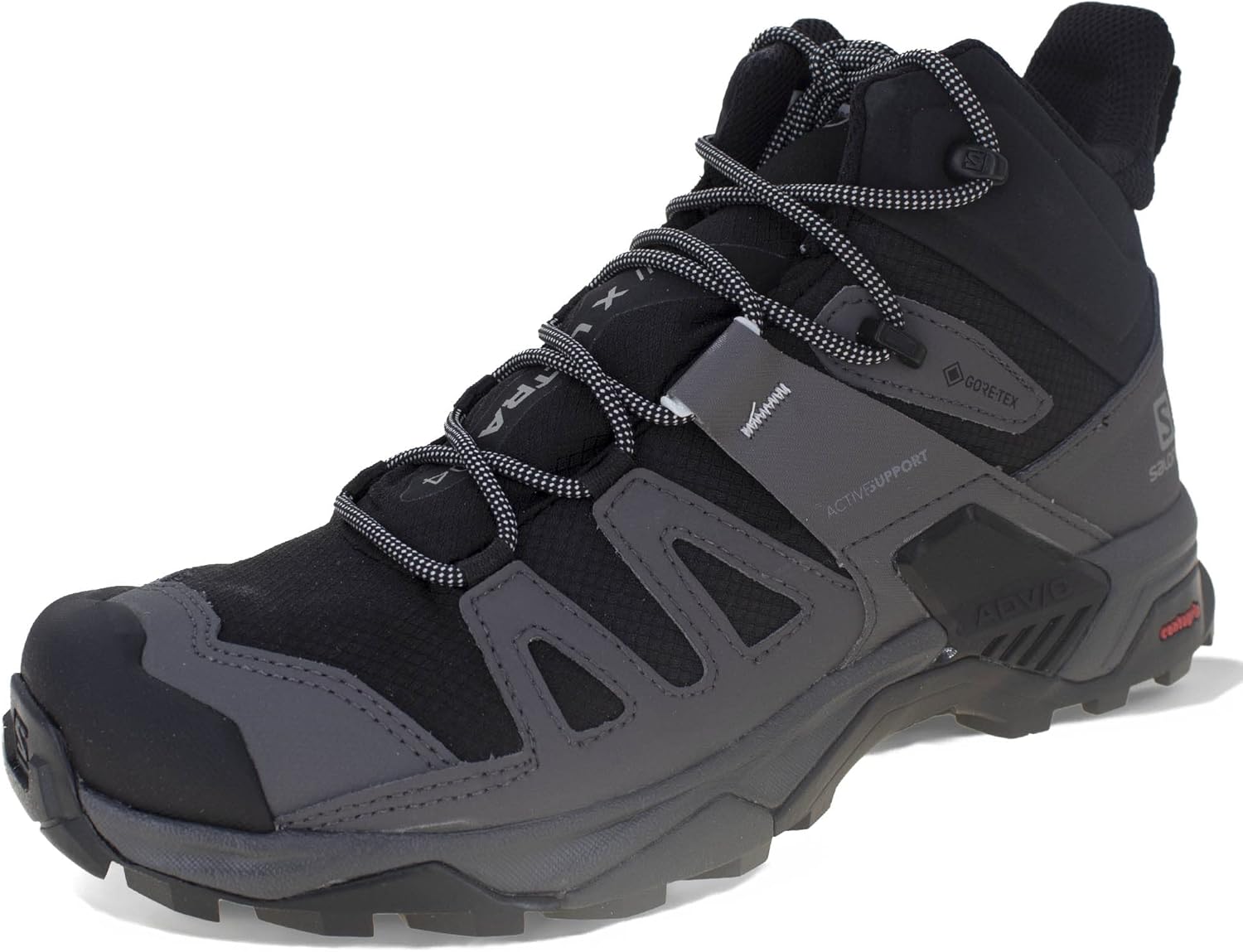
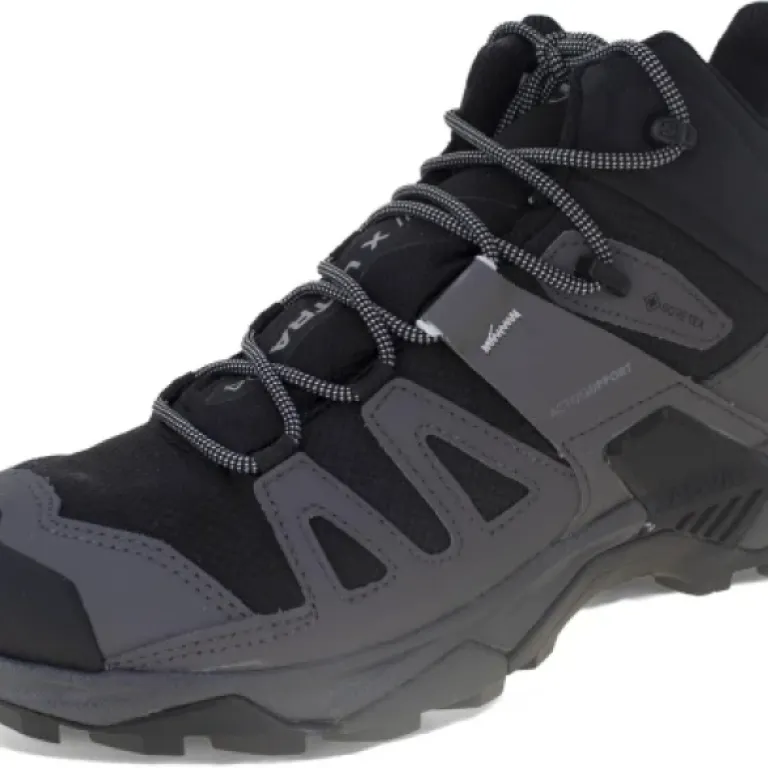
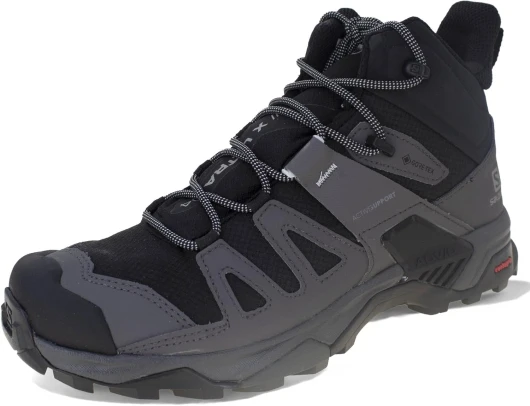
Design-wise, the X Ultra 4 Mid GTX keeps things pretty discreet. The Black/Magnet/Pearl Blue combo is mostly black and dark grey with a few small blue touches. On the trail it just looks like a modern hiking boot, not a neon running shoe. I like that because I can wear them around town without feeling like I’m in full expedition mode. If you want something loud, this isn’t it.
The shape is clearly influenced by trail running shoes: slightly pointed front, not a big boxy toe like some backpacking boots. The wide version helps a bit, but the silhouette is still on the slim side. The ankle cut is mid-height, enough to give a bit of support and keep out debris, but not super tall. If you’re used to big leather boots that hug half your calf, this will feel much lower and more flexible.
Lacing is standard lace-up, no speed hooks at the top, just regular eyelets and a couple of fabric loops. It’s fine, but the laces themselves are a bit slippery. I’ve had to double-knot them to keep them from loosening on longer walks, which matches what some other users mention. It’s not a deal-breaker, just mildly annoying. You can always swap the laces for something grippier if it bothers you.
On the front, you get a decent rubber toe cap. It protects against light rock kicks and roots, but it’s not as beefy as a full leather rand. The heel has enough structure to lock your foot in, and there’s a pull tab to help get them on. Overall, the design is practical and focused on weight and mobility rather than maximum armor. It looks good in a simple way, but the main story is really how it feels on the feet, not how it looks on Instagram.
Comfort: light, no break-in, but not a sofa
Comfort is where these boots are actually pretty solid. Out of the box, I did a 5-mile walk without any real break-in, just medium hiking socks. No blisters, no hot spots, and only a tiny bit of pressure on the top of the foot that went away after the first outing. Compared to older leather boots where you suffer for a week, this is much friendlier.
The wide fit in 8.5 works well for my average-to-slightly-wide forefoot. My toes have room to move without swimming around. If you’re used to wider brands like Keen or Altra, this will still feel narrower, but for Salomon standards, it’s quite forgiving. The heel hold is good; I didn’t get heel lift going uphill, which usually triggers blisters for me. Lacing lets you tweak tension decently, though the slippery laces mean you need to double-knot or occasionally retighten.
Cushioning is on the firmer side. You feel protected from rocks and roots; I never had sharp pain coming through the sole. But if you want a very soft, plush ride, this isn’t that. After a 12-mile hike, my feet were tired, but not destroyed, which I’d say is normal. Swapping the insole for something with more cushion and arch support could make a noticeable difference if you hike big miles.
The only real comfort downside is breathability. Because of the Gore-tex liner and synthetic upper, these get warm in hot weather. On a humid 80°F+ day, my feet were sweating more than in non-GTX trail shoes. It’s not unbearable, but if you mostly hike in hot, dry climates, I’d think twice about Gore-tex boots in general. For mixed weather, rain, and mud, the comfort trade-off is acceptable to me.
Materials: synthetic, Gore-tex, and some trade-offs
The upper is mostly synthetic fabric with overlays, which keeps the weight down and dries faster than leather if it does get wet. It doesn’t feel cheap, but it also doesn’t feel bulletproof. After a few muddy hikes and some rock scraping, mine show light scuffs but nothing serious. This matches what you’d expect from a modern synthetic hiking boot: decent toughness, but not something you’re going to resole and keep for 10 years.
Inside, you’ve got a Gore-tex liner. That’s the whole point of this model: keep water out. In shallow streams and ankle-deep puddles, my feet stayed dry. Same in wet grass and steady drizzle. That said, I’ve seen enough user reviews (and one in your data) mention waterproofing failing after a few months that I’m not going to pretend it’s perfect. Like most Gore-tex boots, if you abuse them, flex them a lot, or wear them daily, seams and membranes can eventually give up. So I’d call the waterproofing good but not legendary.
The sole is rubber Contagrip MA, Salomon’s all-terrain compound. The rubber feels tacky enough without being soft like climbing rubber. The lugs are medium depth, not huge mud spikes but enough to bite into dirt, gravel, and wet rock. On slick wooden bridges and muddy slopes, grip has been pretty solid for me. I didn’t have any sketchy slips that I’d blame on the sole. Obviously, on ice, you still need microspikes; this isn’t magic.
Inside, the stock insole is basic. It gives minimal cushioning and arch support. If you have picky feet or high arches, you’ll probably want to drop in your own insoles. The rest of the interior padding around the ankle and tongue feels decent, no rough seams or weird hot spots for me. Materials overall feel functional: built for lightness and weather protection more than for luxury or extreme durability.
Durability: feels okay now, but I wouldn’t bet on 5+ years
Durability is always tricky to judge early, but I’ll be straight: these feel sturdy enough, not indestructible. After around 80–100 miles, the outsole lugs are slightly worn but far from flattened, and the upper has some cosmetic scuffs, especially around the toe bumper. Nothing is peeling, and stitching is still intact. So for casual to regular use, they seem fine so far.
The weak point, based on both my experience with similar boots and what other users mention, is likely the waterproofing over time. One review saying the waterproofing failed in under six months matches what I’ve seen on other lightweight Gore-tex footwear. The fabric flexes a lot, and eventually the membrane or seams can fail, especially if you’re bending them hard, drying them near heat, or wearing them daily. I wouldn’t treat these as a 5-year investment boot if you’re out every weekend in nasty conditions.
The synthetic upper is less forgiving than leather when it comes to long-term abuse. Leather can be conditioned and will often age better. Synthetic tends to either be fine or suddenly tear or delaminate once it’s tired. So far, no signs of that on my pair, but I’m realistic: this is more of a 2–3 season regular-use boot than a decade-long companion. For many people, that’s acceptable, especially if you value weight and comfort over maximum lifespan.
If you rotate these with another pair and don’t wear them every single day, I think they’ll hold up reasonably well. If you plan to thru-hike or do constant heavy backpacking, I’d either budget for a replacement sooner or look at something heavier and more traditional. In short: decent durability for a light boot, but don’t expect miracles, especially around the waterproof membrane.
Performance on the trail: grip and stability vs. heat and doubts on long-term waterproofing
On actual trails, the grip is the standout point. Wet rocks, damp roots, muddy slopes – the Contagrip MA outsole handles all that pretty confidently. I tested them on a wet forest loop with slick wooden bridges and didn’t have any scary slips. Another user mentioned “amazing grip on wet surfaces,” and I’m on the same page there, minus the fancy wording. It’s just solid, reliable traction for typical hiking conditions.
Stability is decent for a light boot. The mid-height collar and chassis give enough support for uneven terrain with a daypack. On rocky sections, my ankles felt supported, but I could still move naturally. If you’re used to big backpacking boots, this will feel more flexible and a bit less locked-in, but for day hikes and light overnights, I think the balance is good. It feels like a trail shoe that went to the gym, not a full-on mountain boot.
About waterproofing: when new, it works. I stood in ankle-deep puddles and walked through wet grass for a while, and my feet stayed dry. That lines up with several positive reviews. But the fact that some people report the Gore-tex failing in under six months is a red flag. This is pretty common with lightweight waterproof boots in general – lots of flex points, thinner materials, and eventually the membrane or seams give in. So I’d rely on them for wet hikes, but I wouldn’t be shocked if, after a year of heavy use, they start to seep. If you only hike occasionally, they’ll probably last longer.
Overall performance is good for what they’re built for: fast to moderate hiking on mixed terrain, in variable weather. They’re not ideal for super hot climates, long multi-week treks with heavy loads, or hardcore winter. But for weekend warriors and people who hike regularly on trails with mud, rocks, and rain, they do the job well while keeping your feet lighter than with big leather boots.
What you actually get with these boots
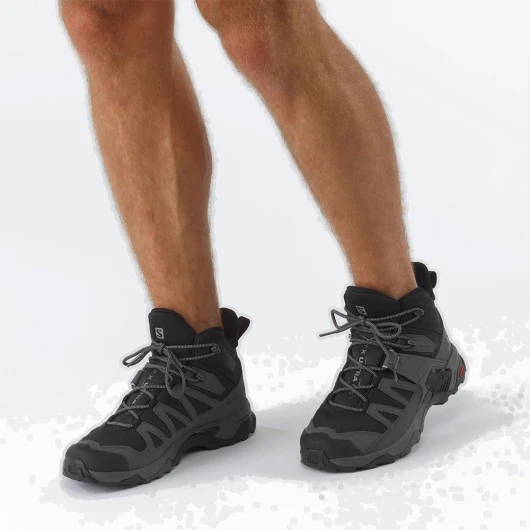
On paper, the X Ultra 4 Mid GTX is a waterproof, mid-cut hiking boot that tries to mix trail running agility with hiking stability. Marketing aside, in practice that means a fairly flexible boot with a decent shank, ankle padding, and a Gore-tex liner. The pair I’m talking about is the “Black/Magnet/Pearl Blue” colorway in 8.5 Wide, which is basically dark grey/black with a few subtle color accents. Nothing flashy, which I like.
The boot uses a synthetic upper with some overlays and a rubber toe bumper, plus Salomon’s Contagrip MA outsole. You get classic laces (not their quick-lace system), a gusseted tongue, and a fairly padded collar. No fancy removable gaiter or anything like that. It’s a straightforward hiking boot in terms of layout: mid height, standard lacing, rubber sole, Gore-tex membrane inside.
Weight-wise, on the foot it feels closer to a trail shoe than a traditional leather hiking boot. You really notice this on long walks where your legs don’t feel as beaten up. But because it’s so light and mostly synthetic, you don’t get that armored tank feeling either. If you regularly bash your ankles on rocks or do a lot of scree, you’ll want to keep that in mind.
In terms of use, I see this boot as aimed at: day hikes, weekend trips, maybe light backpacking with a moderate load. Not my first choice for winter mountaineering, heavy backpacking over sharp rocks, or deep snow. If you stay in that realistic use case, the specs and design choices make sense and line up with how it feels outside.
Pros
- Very good grip on wet and mixed terrain thanks to the Contagrip MA outsole
- Lightweight and comfortable with almost no break-in, especially for a mid boot
- Wide version offers a more forgiving fit for broader feet compared to older Salomons
Cons
- Gore-tex makes them run warm and less breathable in hot weather
- Long-term waterproofing is questionable based on user feedback and typical GTX wear
- Stock insole is basic and may require an upgrade for better support and cushioning
Conclusion
Editor's rating
The Salomon X Ultra 4 Mid Gore-tex is a light, comfortable hiking boot that behaves a lot like a trail running shoe with a higher ankle and a waterproof liner. Grip is one of its best points, especially on wet, mixed terrain. Comfort out of the box is also good, especially in the wide version, with very little break-in and no major hot spots for me. If you mostly do day hikes or short backpacking trips and want something that doesn’t feel like a brick on your feet, this boot makes sense.
It’s not perfect, though. Breathability is just okay because of the Gore-tex, so in hot weather your feet will run warm. Durability seems fine so far, but I’m not fully confident in the long-term waterproofing, especially if you hike a lot. The materials and construction feel more like a 2–3 season workhorse than a decade-long partner. And at the price point, you’re paying a bit for the brand and the lightweight design.
I’d recommend these to hikers who want: light boots, good grip, real waterproofing (at least initially), and a fit that’s a bit more forgiving in the wide version. If you have very wide feet, hike in hot/dry climates, or need a boot for heavy loads and rough abuse, I’d look at non-GTX or sturdier leather options instead. Overall, a good modern hiking boot with clear strengths and a few trade-offs you should be aware of before buying.