Summary
Editor's rating
Value for money: decent in the £90–£110 range, great on sale
Looks and fit: more practical than pretty
Comfort and fit: good underfoot, a bit tight over long days
Leather, lining and sole: where it feels solid and where it doesn’t
Durability: okay for casual use, questionable for heavy mileage
Waterproofing and grip: strong start, question marks over time
What you actually get with the Expeditor Ridge 2.0
Pros
- Comfortable underfoot with EVA midsole and OrthoLite insole after a short break-in
- Very good grip from the OPTI-STUD sole on wet grass, mud and mixed terrain
- Waterproofing works well initially for everyday wet-weather use and shorter hikes
Cons
- Fit runs on the snug side; many users may need to size up for all-day comfort
- Durability concerns reported around seams and toe cap separation with heavier use
- Waterproof performance may decline after several months of regular, rough use

Specifications
View full product page →| Brand | Berghaus |
| Item Weight | 1 kg |
| Date First Available | 24 Aug. 2017 |
| Manufacturer | Berghaus |
| ASIN | B082VWCP6R |
| Item model number | 4-22197 |
| Department | Men's |
| Best Sellers Rank | See Top 100 in Fashion |
Decent boots for real-world use, not just catalog photos
I’ve been using the Berghaus Men’s Expeditor Ridge 2.0 boots (black/red, size 9 UK) as my main walking footwear for a while now – dog walks, muddy fields, wet pavements, a couple of proper hikes. I’m not a mountaineer, just someone who needs boots that keep my feet dry and don’t fall apart after a season. So this is coming from day-to-day use, not some sponsored trek.
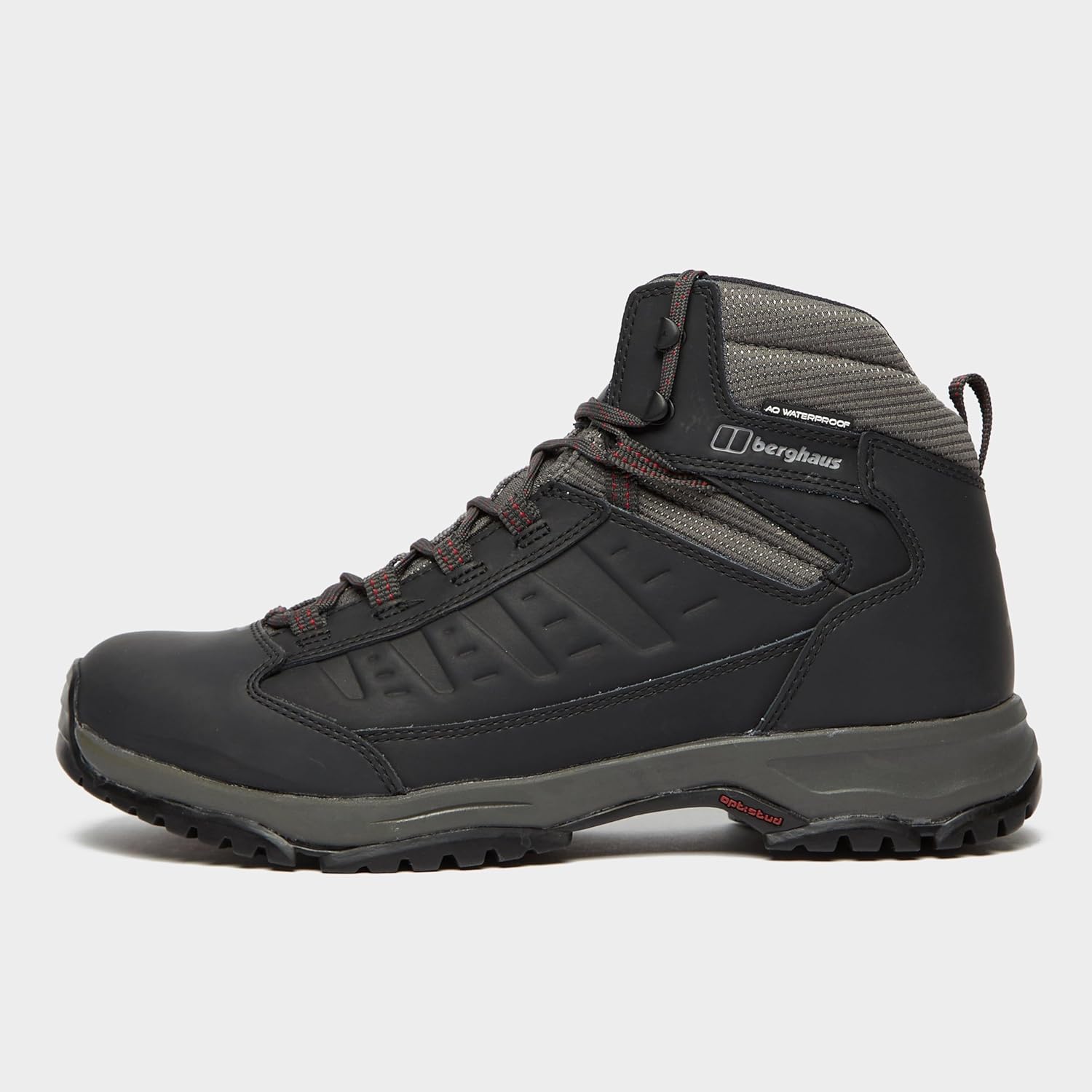
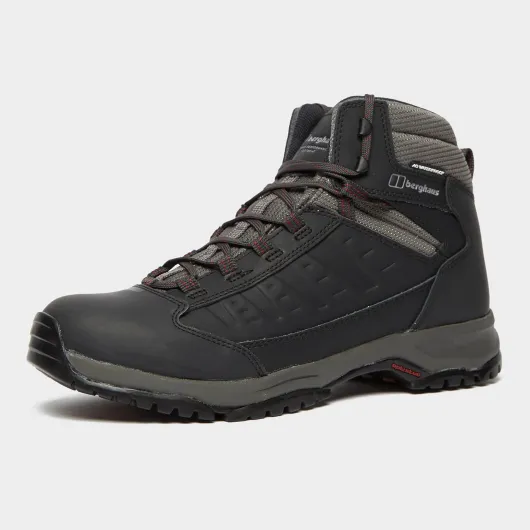
The first impression out of the box was pretty straightforward: they look like standard hiking boots, a bit chunky, nothing that’s going to turn heads. They feel reasonably light in hand for leather boots, and the sole looks aggressive enough for British mud and wet grass. I wasn’t blown away, but I didn’t feel short-changed either – they feel like mid-range boots, not cheap budget stuff, but not premium either.
What pushed me to try them was the mix of claims: waterproof AQ lining, leather upper, EVA midsole, OrthoLite footbed, and those OPTI-STUD soles that are supposed to grip well. On paper it sounds like they tick all the boxes: comfort, grip, durability, and dry feet. In practice, it’s a bit more mixed. Some things work well, some are just okay, and a couple of points annoyed me over time.
If you’re wondering whether to get these for regular walking, light hiking, or dog-walking in all weather, I’ll go through what actually works, what feels overhyped, and where I think Berghaus cut a few corners. They’re not terrible, they’re not perfect, and whether they suit you will depend a lot on how often you walk and how rough you are with your boots.
Value for money: decent in the £90–£110 range, great on sale
On value, it really depends what price you pay and how hard you plan to use them. Officially they sit in that £100–£150 bracket, but they often drop below that. One Amazon reviewer grabbed them for £95 and felt happy with the deal. Another got them on Black Friday for about £56 and was very pleased. At around £90–£110, I’d say the value is decent: you get genuine leather, a waterproof lining, a comfortable midsole, and a sole with very good grip. They feel clearly better than cheap supermarket or no-name boots.
If you catch them closer to £60–£80, they become a pretty good deal for everyday walking boots. At that price, I’d be more forgiving about potential long-term durability issues, because most boots in that range have compromises somewhere. You’d basically be paying for solid comfort, good grip, and at least a season or two of reliable waterproof performance, which is acceptable for casual use.
Where I’d hesitate is if you’re paying the full higher-end price and expecting them to compete with more serious brands like Meindl, Scarpa, or higher-spec Salomon models. In that league, you can often get better build quality and longer life, especially if you hike a lot. The Amazon rating of 4.3/5 matches how I feel: generally positive, but with some people clearly frustrated by leaks and failure over time.
So for value, my view is: good if you’re a regular dog walker, weekend rambler, or someone who just wants reliable boots for wet days and the odd hike. Less attractive if you’re a heavy user who’ll grind through them in a year. If you see them on sale under £90, they’re worth a serious look. At full RRP at the top of the range, I’d compare carefully with other brands before committing.
Looks and fit: more practical than pretty
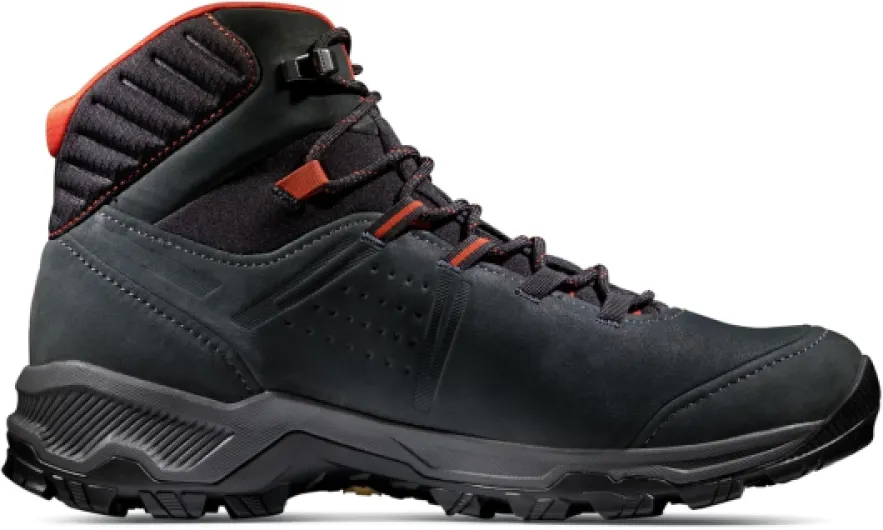
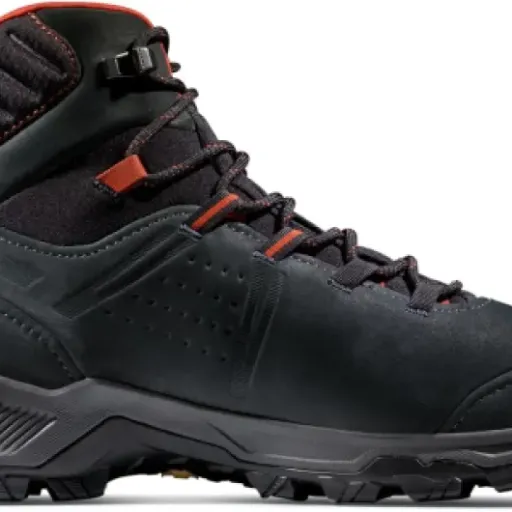
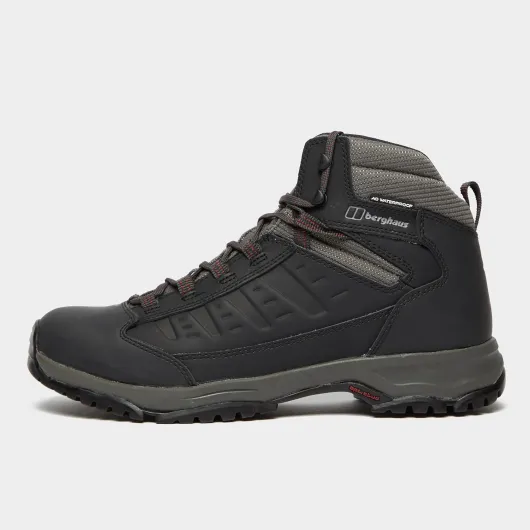
Design-wise, these boots are very functional-looking. The black/red colourway is fairly standard: mostly black leather and synthetic panels with a few red accents on the stitching and laces. One Amazon reviewer said they’re “a triumph for substance over style”, and I agree. They’re not ugly, but they’re definitely more about practicality than looking sharp. If you want something that looks like a fashion boot, this isn’t it.
The shape is fairly classic: rounded toe, medium width, ankle height. I normally wear a size 8.5–9 UK in trainers and boots. With these, I went for a 9 and I’d say they run slightly on the snug side, especially in the forefoot if you wear thicker hiking socks. I’d seriously consider going half a size up if you like extra room or plan to wear them all day. One Amazon user mentioned going from 8.5 to 9, then saying they’d even go 9.5 next time to avoid tightness by the end of the day – that lines up with my experience.
The lacing system is simple: standard eyelets at the bottom and hooks at the top. It’s easy enough to get a secure fit, but I did find that the top of the tongue and ankle area can feel a bit stiff for the first few outings. After about a week of use, that eased up, but the break-in is noticeable. Not painful, just a bit rigid around the ankle when flexing.
Overall, the design is practical: ankle support, decent toe protection with a slightly reinforced toe area, and a sole pattern that clearly aims at mud and wet ground. There’s nothing fancy like a rock plate or advanced toe rand. It’s very much built as an everyday walking boot that you don’t mind getting dirty, not something you’d put on for looks. For my use (fields, trails, wet pavements), the design is fine. If you’re sensitive to tighter fits or want wide boots, I’d be cautious and maybe size up or look at brands known for wider lasts.
Comfort and fit: good underfoot, a bit tight over long days
On the comfort side, I’d say these boots are pretty solid overall, with a few caveats. Straight out of the box they felt reasonably comfortable underfoot thanks to the EVA midsole and OrthoLite insole. There’s enough cushioning that walking on hard pavements or stony tracks doesn’t feel harsh. Compared to stiffer leather boots I’ve had before, these are easier on the feet for everyday use. I did a couple of 8–10 km walks in them early on without major issues.
The main thing to watch is fit and tightness. In my usual size (9 UK), they felt snug, especially across the forefoot and instep with midweight hiking socks. Not painful, but after wearing them most of the day, I could feel a bit of pressure building up. One of the Amazon reviewers said they’d go up to 9.5 next time to avoid that end-of-day tightness, and I get that. If you like a roomy toe box or you’re between sizes, I’d go half a size up. Once I switched to slightly thinner socks, the fit felt better, but that’s not ideal in cold weather.
The ankle and tongue padding are decent. At the start, the collar felt a bit stiff and dug in slightly when going downhill, but that eased off after a week or so. I didn’t get blisters, just that “new boot” stiffness. After break-in, they feel supportive without being too restrictive. For dog walks, local trails and light hikes, I’ve been comfortable wearing them for a couple of hours at a time. All-day wear is doable, but I definitely notice my feet more by the evening than in some roomier boots.
In terms of temperature, they’re warm enough for UK autumn/winter but not overly insulated. In cold, wet weather my feet stayed comfortable. In mild, humid weather, they can feel a bit warm, especially because of the waterproof lining. That’s normal for this type of boot, but if you run hot or mainly walk in warm conditions, you might find them a bit sweaty. Overall, comfort is good if you get the size right and accept a short break-in period. Not perfect, but better than a lot of cheap hiking boots I’ve tried.
Leather, lining and sole: where it feels solid and where it doesn’t
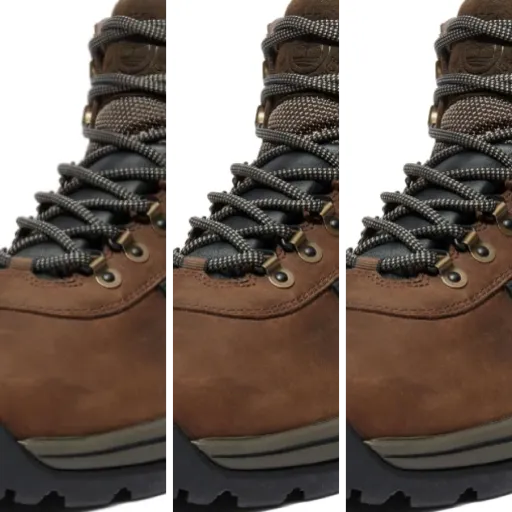
The upper is mainly treated leather, with some synthetic panels. The leather is from a tannery certified by the Leather Working Group, which is nice to see on paper, but in real life what matters is how it holds up. Out of the box, the leather feels reasonably thick and slightly stiff, more protective than those fabric-based hiking shoes, but not as beefy as heavy-duty full-grain boots. There’s a scuff-resistant treatment, and in the first weeks, small scrapes and bumps didn’t leave big marks, so that part seems fine.
Inside, you’ve got an AQ waterproof lining and an OrthoLite footbed. The lining feels like a typical waterproof membrane – a bit warm compared to non-lined boots, but normal for this type of product. Breathability is okay, not spectacular. On cooler, wet days my feet stayed comfortable; on warmer days doing longer walks, my socks were noticeably damp from sweat by the end. That’s pretty standard for waterproof boots, so I wouldn’t call it a big flaw, just something to know.
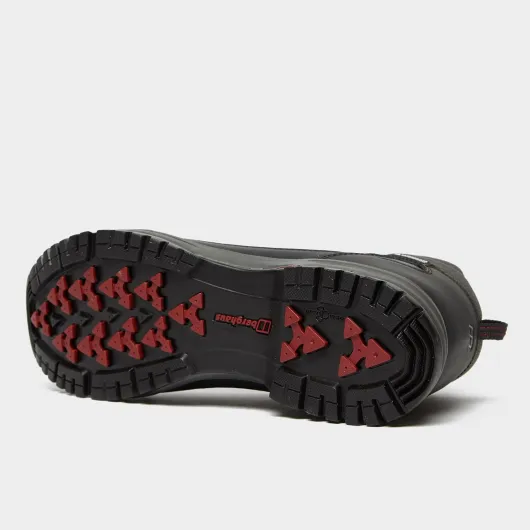
The midsole is EVA, which is common in running shoes and lighter boots. It gives decent cushioning, especially under the heel. On tarmac and hard paths, it’s comfortable enough and definitely softer than old-school heavy leather boots. The insole is removable, and the OrthoLite one is fairly soft and springy at first. If you have your own insoles, you can swap them without trouble. The outsole is Berghaus’s OPTI-STUD rubber, with deep lugs and a pattern that bites well into mud and loose ground. Grip is one of the stronger points – on wet grass and muddy slopes, I felt pretty secure.
Where I’m less convinced is long-term durability of the materials and bonding. Some Amazon reviews mention seams splitting, leather cracking at flex points, and the toe cap separating from the upper after several months. I haven’t destroyed mine yet, but I can see some early creasing and stress points around the toe flex area that make me think those comments aren’t random. My feeling is the leather and rubber themselves are okay, but the way they’re joined (glue vs stitching) is a bit of a weak spot. For occasional use, it’s probably fine. For heavy, daily use in rough terrain, I’d be a bit wary.
Durability: okay for casual use, questionable for heavy mileage
Durability is where I’m a bit on the fence with these boots. Short-term, they feel robust enough. The leather upper takes knocks and scrapes from brambles and rocks without instantly looking wrecked. The sole shows normal wear after a few months of mixed use, nothing alarming. The stitching around the main panels on my pair still looks intact, and there are no obvious failures yet. For someone doing a few walks a week, they feel fine in the first phase of ownership.
The concern is more medium to long term, especially if you walk a lot or on rough ground. Several Amazon reviews mention issues like: toe cap separating from the main body, seams splitting, and sides of the boots cracking after less than a year. One reviewer even said this happened on two separate pairs, which suggests it’s not just a one-off bad batch. When I flex the boot by hand, I can see the stress lines forming where leather meets the rubber toe area – exactly the kind of spot that tends to fail if the bonding isn’t strong.
There’s talk of a “lifetime guarantee” from Berghaus, but that’s always a bit vague. Lifetime of the product? Lifetime of the user? Most of the time, these guarantees come with conditions and require you to go through support, send photos, wait, etc. I haven’t had to claim anything yet, but based on the reviews, I wouldn’t buy these assuming that guarantee will magically solve every problem. I’d treat it as a possible bonus, not a reason to overlook potential weak points.
So my take: if you’re planning to use these as occasional hiking boots and daily dog-walkers on fairly gentle terrain, they’ll probably last an acceptable amount of time for the price, especially if you maintain the leather (clean, dry, and treat it now and then). If you’re doing long, rocky hikes every week or rely on them as your only serious outdoor boot, I’d be cautious. There are tougher, more expensive boots out there that handle abuse better. These sit in that middle ground where durability is okay but not bulletproof. You get what you pay for, more or less.
Waterproofing and grip: strong start, question marks over time
Performance-wise, there are two big questions: do they keep your feet dry, and do they grip properly? On the grip side, I’m pretty happy. The OPTI-STUD sole has deep lugs and a pattern that clears mud fairly well. On wet grass, muddy tracks and leaf-covered paths, they feel secure. One Amazon reviewer joked it feels like you could walk up the side of a house, and while that’s obviously an exaggeration, I get what they meant – traction is one of the strong points. On wet pavements, they’re also decent; I didn’t feel like I was skating around.
For waterproofing, it’s a bit more mixed. At the start, the AQ lining does its job. I walked through wet grass, puddles, and steady rain for around 30–40 minutes at a time and my feet stayed dry. Dog walks in heavy drizzle and muddy fields were fine. The leather sheds water pretty well when new, especially if you give it a quick treatment with a leather-proofing spray or wax. For the first couple of months of normal use, I had no complaints.
However, looking at longer-term reviews, there’s a pattern: some people report the boots starting to leak after several months, especially around seams and flex points. One detailed Amazon review mentioned seams splitting, sides cracking and water getting in after about six months of occasional use, and that this was the second pair with similar issues. I haven’t reached that stage yet, but I can already see creasing around the flex area near the toe that could become a weak point if used heavily in wet conditions.
So, in practice: if you use them mainly for regular dog walks, weekend hikes and general wet-weather use, they perform well at the start and probably for a decent while, especially if you look after the leather. If you’re expecting them to stay bone dry for years under heavy, daily abuse, I’d be less confident. The grip is genuinely good; the waterproofing is good at first but might not be as durable as the marketing suggests. I’d call the performance solid for casual to moderate use, but not on the same level as higher-end boots built for serious, long-term trekking.
What you actually get with the Expeditor Ridge 2.0
On paper, these boots are sold as lightweight all-round walking boots with waterproof protection and decent cushioning. You get a leather upper, AQ waterproof lining, EVA midsole, OrthoLite insole, and OPTI-STUD outsole. The pair in size 9 UK weighs about 1 kg, which feels reasonable in the hand and on the foot. They sit at ankle height, so they give some support without feeling like full-on mountaineering boots.
Out of the box, mine came in a basic Berghaus cardboard box, no fancy extras. Inside: the two boots, some paper stuffing, and a small tag explaining the waterproof lining and leather certification (Leather Working Group). Nothing fancy, but it’s enough. The laces are standard flat hiking-style laces, not overly long, and the hooks/eyelets are metal. Everything looked cleanly put together – no glue blobs, no weird stitching hanging out, at least when new.
Berghaus markets these as a kind of do-everything boot: dog walks, weekend hikes, maybe some low-level hills. They’re not sold as hardcore alpine gear, and that shows in the design and build. The sole pattern is quite aggressive but the boot itself feels more like an everyday hiker than a technical mountain boot. I see them as mid-range: above supermarket boots, below the pricier leather boots from Scarpa, Meindl, etc.
In daily use, they fit the role of general-purpose outdoor boots pretty well. You can wear them into town without feeling silly, then go straight into a muddy field. They’re not trying to be ultra-light trail runners or ultra-rigid mountain boots, and that’s fine. The issue is more about how long they hold up and whether the waterproofing keeps up with the marketing over time – and that’s where the story gets more nuanced.
Pros
- Comfortable underfoot with EVA midsole and OrthoLite insole after a short break-in
- Very good grip from the OPTI-STUD sole on wet grass, mud and mixed terrain
- Waterproofing works well initially for everyday wet-weather use and shorter hikes
Cons
- Fit runs on the snug side; many users may need to size up for all-day comfort
- Durability concerns reported around seams and toe cap separation with heavier use
- Waterproof performance may decline after several months of regular, rough use
Conclusion
Editor's rating
Overall, the Berghaus Expeditor Ridge 2.0 boots are solid mid-range walking boots that do a lot of things fairly well without being flawless. Comfort is good once you get past a short break-in, especially underfoot thanks to the EVA midsole and OrthoLite insole. Grip from the OPTI-STUD sole is one of the best points – they feel secure on wet grass, mud and greasy pavements. Waterproofing is effective at the start, and for casual dog walks and weekend hikes in the rain they keep your feet dry.
The downsides are mainly around fit and long-term durability. They run a bit snug, so many people will want to go up half a size, especially if they plan to wear thicker socks or keep them on all day. And while the leather and sole feel fine at first, there are enough reports of seams splitting and toe caps separating over time to make me cautious if you’re a heavy user. I’d treat these as everyday walking boots rather than serious long-distance trekking gear.
If you can get them at a decent price (around £60–£100) and your use is moderate – dog walking, local trails, occasional hikes – they’re a good, practical choice that gets the job done. If you’re planning long, frequent hikes in rough terrain and expect years of hard service, I’d look at sturdier, more premium boots. In short: good comfort and grip, decent waterproofing early on, but not the toughest option out there.