
Summary
Editor's rating
Value: worth it if you prioritize comfort and speed
Design: more running shoe than classic combat boot
Comfort: snug at first, then they feel like part of your foot
Materials: light and breathable, but some weak spots
Durability: mostly solid, but watch the fabric and heel
Performance: built for speed, not hardcore mountaineering
What these Garmont T8 NFS 670 boots actually are
Pros
- Very comfortable after break-in, feels more like an athletic shoe than a classic combat boot
- Lightweight and flexible, easy to run and move fast in
- AR 670-1 and AFI 36-2903 compliant, suitable for Army and Air Force use
Cons
- Fabric around heel and upper can be a weak point for durability
- Less ankle support and protection than heavier hiking or mountaineering boots

Specifications
View full product page →| Brand | GARMONT |
Light boots for long days on your feet
I’ve been wearing the GARMONT TACTICAL T8 NFS 670 boots as my main work/field boots for a bit now, and they’re pretty much built for people who are on their feet all day and need to move fast. Think more “rugged running shoe with ankle support” than classic heavy combat boot. If you’re coming from old-school issued bricks, the first thing you notice is the weight – or lack of it. They really do feel lighter than they look.
In my case, I used them for a mix of stuff: range days, walking on concrete all day, light hikes on rocky trails, and some quick runs between buildings with a full load of gear. I’m not deployed, but I treat my boots hard: lots of dust, some mud, and a habit of never really babying footwear. So this is coming from someone who actually lives in boots, not someone who wears them once a month.
Overall, my first impression was pretty positive: they fit close to the foot, the ankle isn’t locked like a mountaineering boot, and the sole grip is decent without packing up with mud like deep Vibram lugs often do. They do need a bit of break-in, though. Out of the box they’re on the snug side, especially if you’re in between sizes or use thicker socks. After a few long days, they started molding to my feet and felt much better.
They’re not perfect. There are some durability question marks, especially around the fabric panels and heel area, and they’re not the best choice if you want maximum ankle protection in nasty rocky terrain. But if you’re looking for AR 670-1 compliant boots that feel closer to athletic shoes than bricks, they’re pretty solid. Just don’t expect them to replace a real hiking boot in technical terrain or to last forever if you abuse them every single day.
Value: worth it if you prioritize comfort and speed
On value, I’d say these sit in the "good but depends on your use" category. They’re not bargain-bin cheap, but they’re also not at the very top of the price range like some high-end Danners or specialty mountaineering boots. For what you get – AR 670-1 compliance, light weight, solid comfort, and decent durability – the price feels fair. You’re paying for a boot that behaves more like an athletic shoe than a clunky work boot, and that alone is worth it for a lot of people who are on their feet all day.
Compared to other brands I’ve tried (Belleville, Bates, Rocky, Nike SFB), these land near the top in comfort for me. One reviewer who had bounced between those same brands for 15 years said these are the most comfortable boots they’ve owned, and I can see why. If you’ve already spent money cycling through different models trying to find "the one" that doesn’t wreck your feet, paying a bit more for something that actually works is not a bad deal. Especially if you’re in the Army or Air Force and need something compliant that doesn’t destroy your heels.
The downside on value is the potential durability issues. If you end up being that person whose heel fabric tears after a couple of months, the value obviously drops. The fact that Garmont swapped them under warranty helps – at least you’re not eating the full cost if there’s an early defect – but it’s still a hassle. Also, if you’re the type who destroys boots quickly and expects them to last years, you might find yourself buying replacements more often than you’d like.
So, who gets good value here? People who:
- Need AR 670-1 compliant boots
- Walk or run a lot on duty
- Prefer lighter, more flexible footwear over stiff tanks
- Are okay with the idea that lighter boots usually don’t last as long as heavy leather bricks
Design: more running shoe than classic combat boot
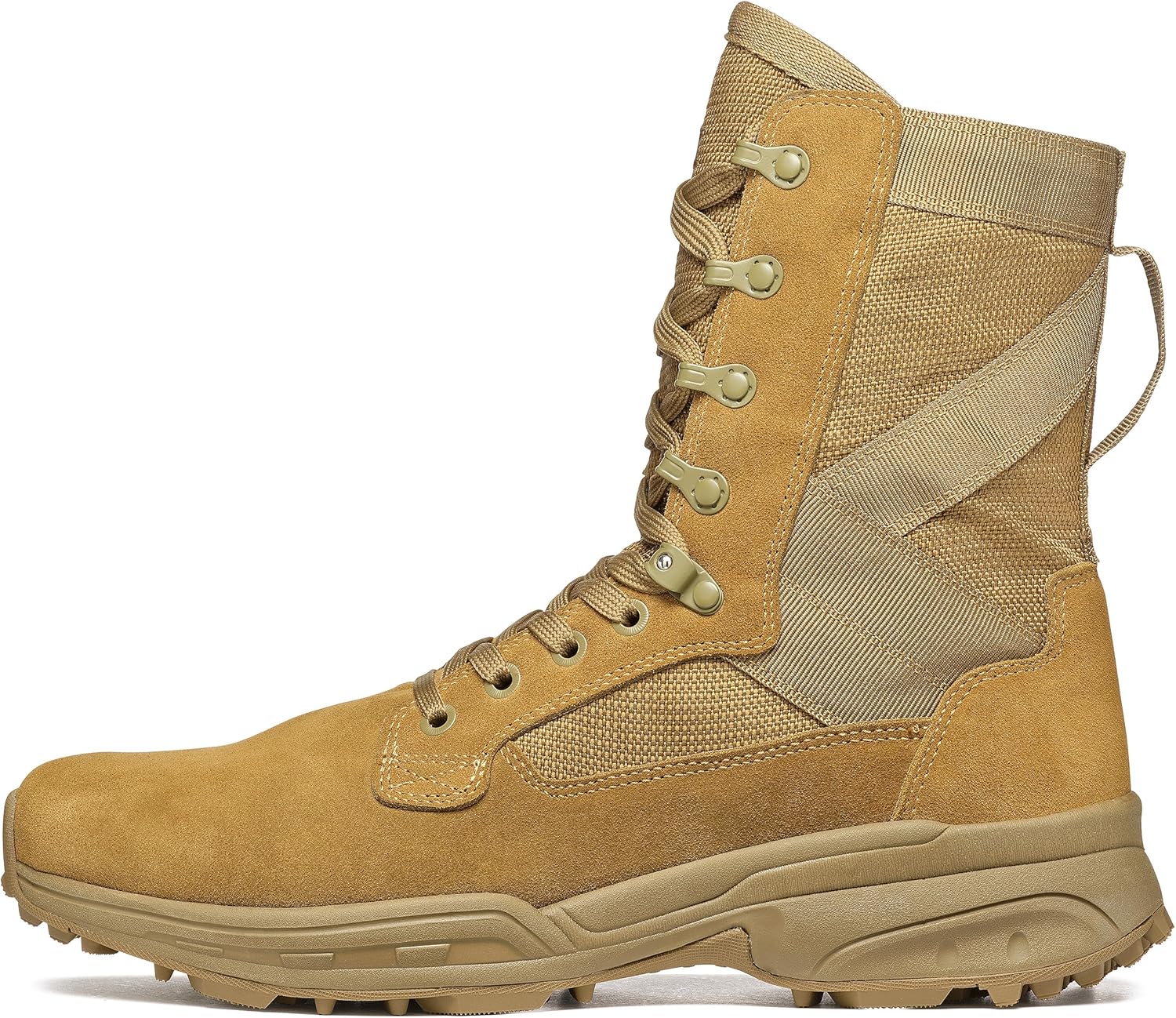
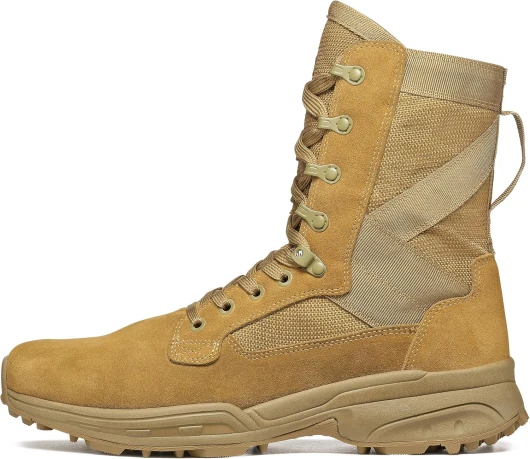
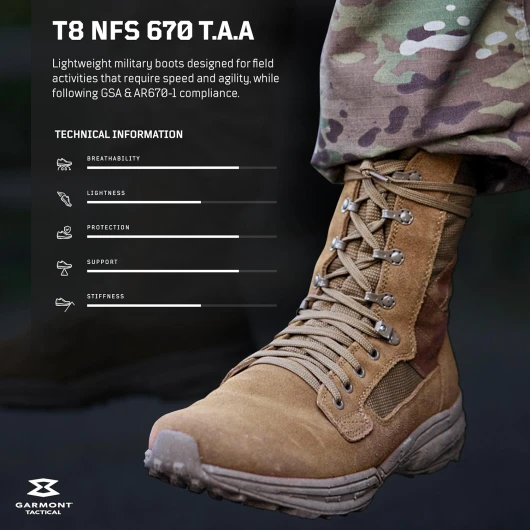
The design is pretty straightforward: tan/coyote color, suede leather on the main stress areas, and fabric panels to keep weight down and add breathability. Shaft height is around the ankle, so not a tall 8" tower that locks your leg, but high enough for basic support and to keep debris out. The overall shape is slightly narrow and streamlined, so it doesn’t feel like you’re dragging two bricks around. Visually, they look like standard-issue modern boots – nothing flashy, nothing weird.
One thing I noticed is the lacing system. The eyelets and hooks are simple but effective. I can cinch the lower part tighter and leave the top a bit looser if I want more flex. That’s useful if you’re switching between walking, driving, and light running in the same day. The tongue is padded enough to avoid lace pressure, but not thick and bulky. No fancy BOA system or side zippers here, which I actually prefer in a boot that might see field use; fewer parts to break.
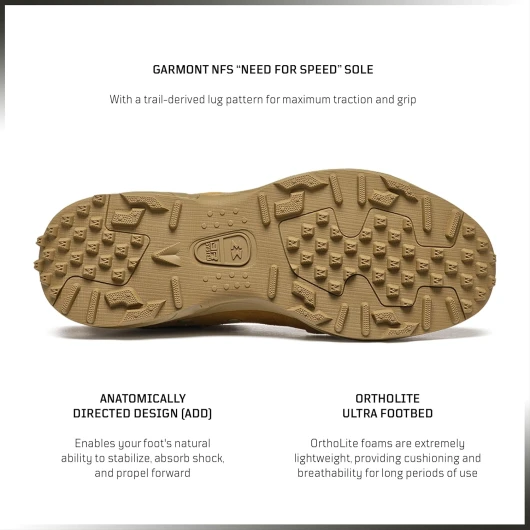
The outsole pattern is inspired by athletic cleats, and you can tell. The lugs are not super deep like heavy-duty hiking boots, but they’re spaced well and they bite into dirt and gravel without holding onto too much mud. On wet grass and loose gravel they held up fine for me. On smooth wet concrete, they’re okay but not magic – about what you’d expect from a standard rubber sole. Compared to something like a Vibram mountain sole, this feels more agile but less aggressive on technical rocky slopes.
From a practical design standpoint, these are clearly built for speed and all-day wear. The downside is you don’t get that locked-in ankle cage you’d want for serious mountaineering or very uneven terrain with big loose rocks. If your main use is base life, range, urban work, or relatively tame trails, the design fits the bill. If you’re used to stiff Danners or big Bellevilles, you’ll feel the difference immediately: more flex, more freedom, slightly less protection.
Comfort: snug at first, then they feel like part of your foot
Comfort-wise, these start out as "pretty good but snug" and turn into "I forget I’m wearing them" after break-in. When I first put them on, they felt a bit tight in the forefoot with my usual boot socks. Not painful, but definitely not loose. After two or three long days (8–10 hours each), the suede and fabric started to give a bit, and the insole settled. After that, they honestly felt more like high-top sneakers than classic duty boots. I could walk and jog without feeling like my shins and arches were getting hammered.
The Ortholite Ultra footbed does a solid job. There’s enough cushion under the heel and midfoot that you don’t feel every small rock, but the sole isn’t so soft that you lose all ground feel. If you’re standing on concrete all day, these are much nicer than stiff, flat boots. I didn’t get hot spots or blisters during break-in, which is rare for me with new boots. That said, fit is key: one Amazon reviewer mentioned the T8 in their size felt slightly tight while another Garmont model ran half a size larger. My advice: if you’re between sizes or have wide feet, consider going up half a size.
One thing that helps a lot is picking the right socks. With a thin to medium tactical sock, the fit was great for me. With thick winter socks, they got too snug. Because the boot is built more like an athletic shoe, it doesn’t leave a ton of extra volume inside. Once I dialed in the sock thickness, the boot felt locked to my foot with no heel slip and no sliding forward on descents. That’s exactly what you want if you’re moving fast or changing direction a lot.
Breathability is decent. My feet did sweat in hot weather, but not more than normal, and the inside didn’t feel swampy. They dry faster than full leather boots, which is nice if you get caught in light rain or sweat a lot. If you want a super padded, plush feel like some big cushioned hiking boots, this isn’t that. This is more "supportive running shoe" than "pillowy cloud." For me, for work and light field use, that’s actually better.
Materials: light and breathable, but some weak spots
Materials are a mix of 1.8 mm suede leather and polyester fabric inserts, with a rubber outsole and Ortholite insole. The suede is on the usual high-wear areas: toe, sides, lace area. The fabric panels are on the sides and around the ankle to save weight and help your feet breathe. For hot or warm climates, this combo makes sense; my feet didn’t feel like they were cooking, even after several hours on sun-baked concrete.
The insole is one of the better parts. The Ortholite Ultra footbed has a decent amount of cushion and doesn’t feel like it flattens out instantly. After several long days of wear, I didn’t notice any major collapse. It’s not as plush as some aftermarket insoles, but for stock it’s pretty solid. If you’re heavy or carry a lot of weight, you might still want to upgrade, but you don’t absolutely need to on day one like with some cheap boots.
Where I have a bit of concern is the fabric around the heel and back of the boot. One reviewer mentioned the canvas tearing after a couple of months, and I can see why that would happen if the boot rubs in that area or if you’re rough putting them on and off. The material there feels lighter and less reinforced than on a heavy-duty work boot. In my pair, nothing has blown out yet, but I’m watching that spot. This is the trade-off of going light: you don’t get tank-like fabric everywhere.
The outsole rubber itself feels tough enough. I’ve scraped it over gravel, rocks, and rough concrete and didn’t see chunks peeling off or anything like that. It’s not the hardest compound ever, but that’s good for grip. Overall, the materials are focused on keeping weight and heat down, not on making a boot that will last ten years of daily abuse. For regular duty, field work, or weekend use, that’s fine; for hardcore construction or constant rucks with heavy weight, you might wear through them faster than a heavier boot.
Durability: mostly solid, but watch the fabric and heel
Durability is where these boots get a mixed but still mostly positive verdict from me. The leather parts and the outsole feel strong and have held up fine to scuffs, rocks, and general abuse. After a stretch of use on rough ground and concrete, I saw normal cosmetic wear but nothing that made me worry. No sole separation, no stitching blowing out on the leather panels. So the core structure seems solid.
The weak points are more in the lighter fabric areas, especially around the heel and upper shaft. One Amazon reviewer mentioned the canvas at the back of the heel tearing after just a couple of months. My pair hasn’t torn yet, but I can see why that might happen if you’re rough putting them on (jamming your heel in without loosening laces) or if the boot rubs in that area each step. The material there is clearly lighter than what you find on heavier work boots. The good news is that Garmont apparently honored the warranty quickly for that user, so at least the company isn’t hiding from issues.
Another reviewer said this was their fourth pair of the same boot, which tells me two things: one, they like how the boot feels enough to keep rebuying it; two, these boots probably aren’t going to last forever if you use them hard. That lines up with what I’d expect from a lightweight tactical boot: you trade some lifespan for comfort and speed. If you hammer them every day in harsh conditions, expect to replace them sooner than a heavy leather tank boot. If you rotate them with another pair or mainly use them for duty shifts and training, they should last a reasonable amount of time.
So, in practice: if you want something indestructible for heavy construction, constant rucking with heavy loads, or years of daily field abuse, this is not that. If you accept that a lighter boot will wear out a bit faster but keeps your feet happier, the durability is acceptable. Just keep an eye on the heel fabric and stitching, use the warranty if needed, and don’t expect miracles from a boot that’s built to be fast and light rather than bombproof.
Performance: built for speed, not hardcore mountaineering
In actual use, these boots perform best when you’re moving fast on relatively sane ground: dirt roads, gravel, base sidewalks, light trails, and dry to slightly muddy terrain. The outsole grips well enough that I never felt like I was skating on loose gravel or packed dirt. The cleat-style pattern does its job: enough bite to feel secure, but not so aggressive that it traps a ton of mud. Compared to some deep Vibram soles I’ve used, these shed mud better, which matters if you’re in and out of vehicles or buildings and don’t want to track half the field with you.
Running or jogging in them is actually doable, which isn’t something I say often about boots. They flex in the right places, and the weight is low enough that your legs don’t feel like they’re lifting anchors. I did a couple of short sprints and some fast walking with a moderate load, and my shins and knees felt fine afterwards. That lines up with what one reviewer said: they feel like an extension of your foot when they’re broken in, and that’s accurate. If your job or training involves a lot of quick movement rather than just standing, this is where these boots earn their keep.
Where they are weaker is in really rough, uneven rocky terrain. On medium to big loose rocks, you can feel that the ankle isn’t locked down like a dedicated hiking or mountaineering boot. One Amazon reviewer pointed this out clearly: for serious rocky ground where a rolled ankle would be a big problem, they’d switch to a true hiking boot. I agree. The T8 NFS 670 has support, but not that "ankle in a cast" feeling. For me, that trade-off is fine because I’m mostly on mixed urban/field surfaces, but if your life is steep scree and boulder fields, look elsewhere.
On wet surfaces, grip is ok but not magic. Wet grass and damp dirt were manageable. Smooth wet tile or polished concrete is, as usual, a bit sketchy if you’re not careful, which is normal for most rubber soles. Overall, performance is solid for what they’re designed to do: fast movement, long days, and moderate terrain. They’re not the best at any one extreme, but they handle the typical everyday mix very well.
What these Garmont T8 NFS 670 boots actually are
The T8 NFS 670 are basically Garmont’s "need for speed" military boot: AR 670-1 and AFI 36-2903 compliant, suede leather with fabric inserts, rubber outsole, ankle-height shaft. They’re unisex, and the pair I tried is the 10.5 Regular. On paper, a half pair in size 9 is around 525 g, so the full pair is roughly just over a kilo, which is pretty light for something in the combat boot category. You feel that right away when you pick them up.
Design-wise, they sit in between a duty boot and a lightweight hiking boot. They’re not as stiff or protective as a full-on mountain boot, but they’re more supportive than your average high-top sneaker. The lacing goes up high enough to give you some ankle support without feeling like your leg is in a cast. They’re clearly built with running, rucking, and moving quickly in mind rather than just standing around at a post all day, though they work fine for that too.
The brand advertises an Ortholite Ultra footbed and something they call ADD (Anatomically Directed Design), which is basically their way of saying the shape of the boot follows the foot more naturally. In practice, it means the boot hugs your foot more like a performance shoe than a boxy work boot. If you’re used to wide, sloppy issued boots, this fit will feel tighter and more precise. If you already wear sport shoes or trail runners a lot, this will feel familiar.
In terms of positioning, I’d put these against brands like Nike SFB, Rocky lightweight boots, or some of the softer Belleville models. They’re aimed at people who are moving fast, in hot or moderate climates, and who care more about comfort and speed than maximum armor on the foot. If you expect a tank, you’ll be disappointed; if you want something you can actually run in without wrecking your shins, they make sense.
Pros
- Very comfortable after break-in, feels more like an athletic shoe than a classic combat boot
- Lightweight and flexible, easy to run and move fast in
- AR 670-1 and AFI 36-2903 compliant, suitable for Army and Air Force use
Cons
- Fabric around heel and upper can be a weak point for durability
- Less ankle support and protection than heavier hiking or mountaineering boots
Conclusion
Editor's rating
Overall, the GARMONT TACTICAL T8 NFS 670 boots are a solid choice if you care more about comfort, speed, and all-day wear than about having the toughest, stiffest boot on the market. Once broken in, they feel close to a high-top athletic shoe with actual support: light, fairly breathable, and easy to move in. Several users, including me, rate them as some of the most comfortable boots we’ve worn, especially compared to common brands like Belleville, Bates, Rocky, and Nike SFB. For Army or Air Force folks who need AR 670-1 compliant footwear that doesn’t chew up their feet, they make a lot of sense.
They’re not perfect. The lighter fabric panels, especially around the heel, can be a weak spot, and if you’re brutal on boots every single day you may see wear sooner than with heavier all-leather models. They also don’t give the same ankle lockdown you’d want for serious rocky, technical terrain, so I’d still grab a true hiking or mountaineering boot for that. But for base life, range days, urban duty, and moderate trails, they get the job done very well.
If you want a light, compliant boot that you can actually run and move fast in, and you’re okay trading a bit of long-term toughness for comfort, these are worth buying. If your priority is maximum durability and ankle armor over everything else, or you mainly work in brutal rocky terrain, you’ll probably be happier with a heavier, stiffer boot instead.