
Summary
Editor's rating
Value: worth it if you prioritize comfort and light weight
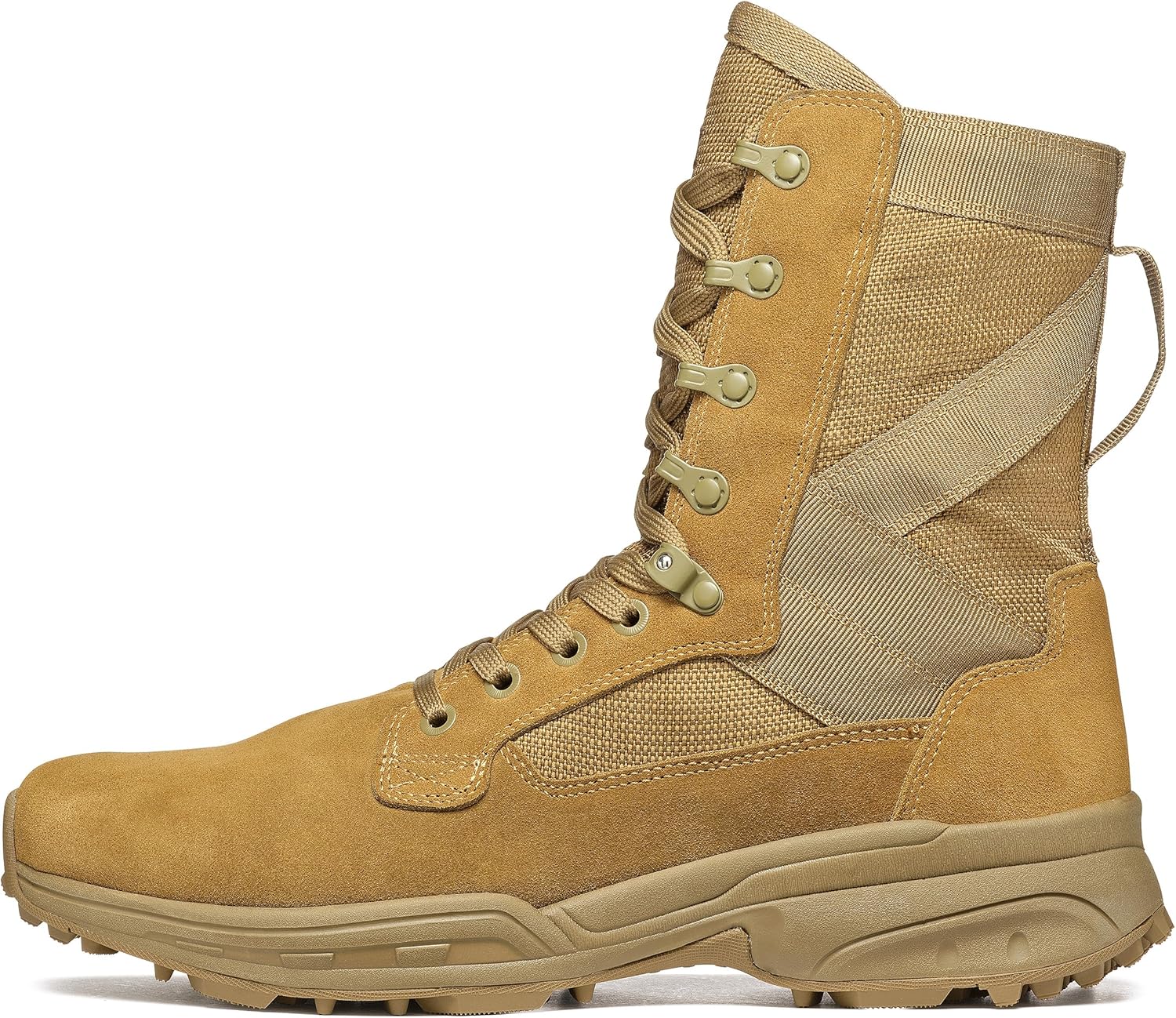
Design: more like a tactical sneaker than a brick boot
Comfort: snug at first, then they feel like part of your foot
Materials: light suede and fabric, with some trade-offs
Durability: generally solid, but watch the heel fabric
Performance: good grip and agility, but not a hardcore mountain boot
What these Garmont T8 NFS 670 boots actually are
Pros
- Very comfortable after break-in, with a good Ortholite insole
- Lightweight and agile, easy to walk and run in compared to heavier combat boots
- AR 670-1 and AFI 36-2903 compliant while still feeling more like a sneaker
Cons
- Fabric/canvas around the heel can be a weak durability point
- Not ideal for heavy rucking or very rocky, technical terrain
- Fit runs a bit snug at first and needs a short break-in period

Specifications
View full product page →| Brand | GARMONT |
Light boots for long days on your feet
I’ve been wearing the GARMONT TACTICAL T8 NFS 670 boots as my main work / field pair for a while now. I use them for range days, yard work, light hikes, and just general all-day wear when I know I’ll be on my feet for hours. I’m not deployed, but I do enough walking on gravel, dirt, and pavement to see pretty quickly if a boot is trash or not.
The first thing that stood out is how much they feel like a stiff high-top sneaker rather than a classic heavy combat boot. They’re light and fairly flexible, especially compared to old-school Bates or Belleville clunkers. Out of the box, they were on the snug side, but after a week of wearing them a couple of hours a day, the suede loosened up and they started to feel more natural. You do need a short break-in, they’re not slippers on day one.
My use is mixed: some time behind the wheel, some walking on rocky paths, some kneeling and squatting on concrete. I’m not babying them, but I’m also not dragging them through razor wire. Under that kind of use, they’ve held up pretty well so far: no sole separation, stitching is holding, and only light scuffing on the suede where I’d expect it. Nothing out of the ordinary for a boot in this category.
Overall, my first impression is that these boots are built more for speed and comfort than for heavy abuse. If you want a tank of a boot for constant rucking with heavy loads over nasty terrain, these might feel a bit light. If you want something you can move quickly in, that still gives decent support and meets AR 670-1 style rules, they make sense. They’re not perfect, but they’re pretty solid for what they’re meant to do.
Value: worth it if you prioritize comfort and light weight
In terms of value, these sit in that mid-to-upper price range for tactical boots. They’re not bargain-bin cheap, but they also aren’t the most expensive option out there, especially compared to some Danner or high-end models. For the price, what you’re really paying for is the mix of comfort, light weight, and AR 670-1 / AFI compliance. If those three things matter to you, the cost starts to make sense.
Compared to other boots I’ve worn (Bates, Belleville, Rocky, Nike tactical), the Garmont T8 NFS 670s feel more comfortable and more natural to move in once broken in. Several reviewers echoed this, including one guy who said they were the most comfortable boots he’s owned after 15 years of trying various brands. I’m not ready to crown them the absolute best ever, but I will say they’re definitely in the top tier for comfort in this category. That alone gives them decent value if you wear boots all day and your feet usually hurt in heavier models.
Where the value takes a small hit is the potential durability issues. The reports of heel fabric tearing and one pair "ripping open" early are not great, even if they seem to be isolated cases and backed by warranty. If you’re hard on boots and expect them to last forever, you might feel a bit shortchanged if they fail early. On the other hand, if you get a solid pair (like most reviewers seem to), the comfort and performance you get out of them justifies the price in my opinion.
So in plain terms: good value if you want a light, comfy, regulation-compliant boot, and you’re okay with the fact that it’s not the toughest boot ever made. If your priority is maximum durability above all else, there are better tanks out there for similar money, but they usually weigh more and feel less comfortable. Here you’re paying for a boot that makes long days on your feet easier, and on that front, it delivers well enough to be worth considering.
Design: more like a tactical sneaker than a brick boot
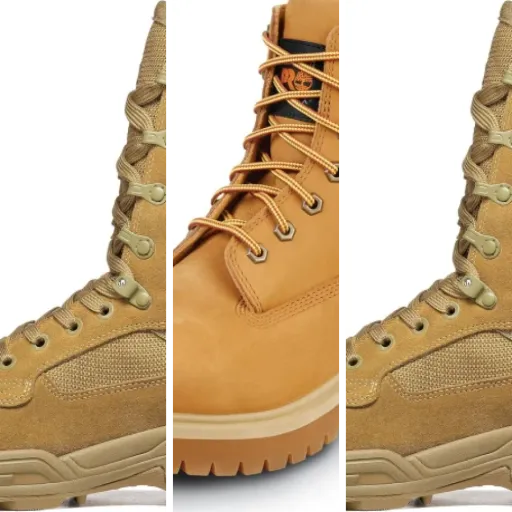
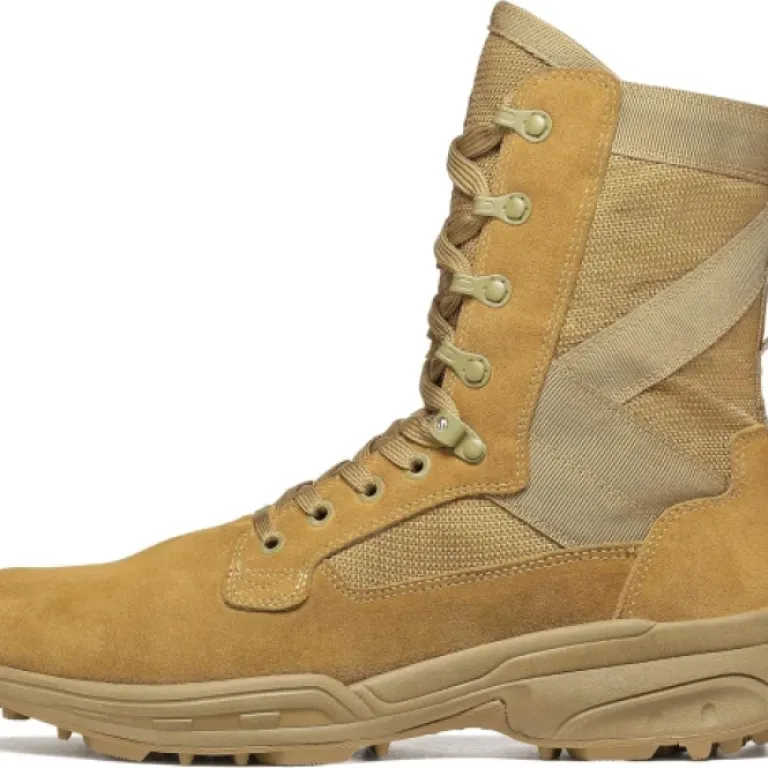
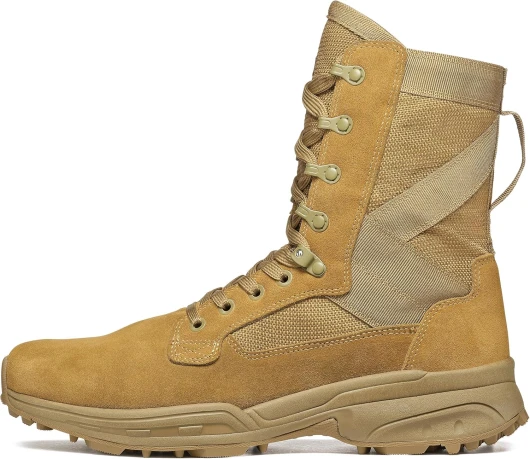
The design is pretty straightforward: 8" ankle height, tan/coyote color, suede with fabric panels, and a relatively slim profile for a combat boot. Visually, they look like standard issue-style boots, so nothing flashy, which is good if you’re in uniform or just don’t like loud gear. The toe isn’t bulbous, and the boot doesn’t feel as clunky as some other brands I’ve worn (Belleville, older Bates models).
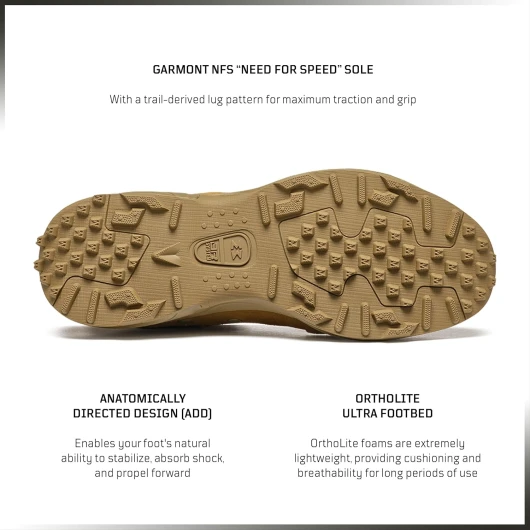
The outsole pattern is where you see the "Need For Speed" idea. The rubber sole is inspired by athletic cleats, so you get smaller, more numerous lugs instead of huge chunky blocks. In practice, this gives you decent grip on dirt, gravel, and pavement without that feeling of walking on giant knobs. One user mentioned they don’t pick up tons of mud, and I noticed the same: they shed light mud better than deep-lug hiking soles. They’re not perfect in thick clay, but they don’t turn into 2-inch platforms as fast as some heavy-duty boots.
The collar and tongue have enough padding to be comfortable without feeling like pillows. There’s fabric/canvas around the back of the heel and upper shaft, which keeps the weight down and adds some breathability. That said, one reviewer had the canvas at the heel tear after a couple of months. I haven’t had that issue yet, but I can see that area being a weak spot if you’re rough when putting them on, or if the heel rubs a lot. So the design choice is good for weight, but maybe not the toughest point of the boot.
Overall, the design is practical and low-key. Nothing fancy, no weird colors or overdesigned panels. The main idea is clear: keep them light, keep them compliant, and make them look like a normal duty boot while feeling closer to a running shoe. On that front, they succeed, with the trade-off that they don’t feel as protective as a heavier, more reinforced model.
Comfort: snug at first, then they feel like part of your foot
Comfort-wise, these are one of the better boots I’ve worn in this weight class, but you do need to give them some time. Out of the box, my 8.5 Regular felt a bit tight, especially across the midfoot. That lines up with another user who said their T8s in size 11 felt slightly tight at first but then broke in and ended up fitting like an "extension of your foot". I had the same experience after about a week of wearing them a few hours a day.
The Ortholite Ultra footbed is a big part of why they feel good. There’s enough cushioning to take the edge off walking on concrete and rocky ground, but not so much that you feel wobbly. The insole shape feels neutral: no crazy high arch, but some support. Unlike the Bifida model that one reviewer said dug into their heel until it broke in, I didn’t feel any weird pressure points from the insole in the T8 NFS 670. Heel felt seated, no slipping, no hot spots once I dialed in the lacing.
Breathability is decent. They’re not as airy as a mesh running shoe, obviously, but the fabric panels and non-lined suede keep them from turning into ovens. After a full day on my feet in mild heat, my socks were damp but not soaked, and I didn’t get that swampy, soggy feeling I’ve had in some fully leather boots. The ankle support is there, but not rigid – more like a firm high-top sneaker than a stiff mountaineering boot. If you need your ankle completely locked, these won’t do that, which one reviewer also pointed out when they said they’d pick a real hiking boot on sketchy rocky terrain.
One thing to highlight: sock choice matters. With thinner socks, I had a bit of rubbing at the back of the heel the first two days. Switching to a slightly thicker boot sock solved it. Once broken in, I can easily do a full day (8–10 hours) without blisters or sore spots. So in terms of comfort: they’re not magic on day one, but after break-in they’re genuinely easy to wear all day, especially if you’re used to heavier, stiffer boots.
Materials: light suede and fabric, with some trade-offs
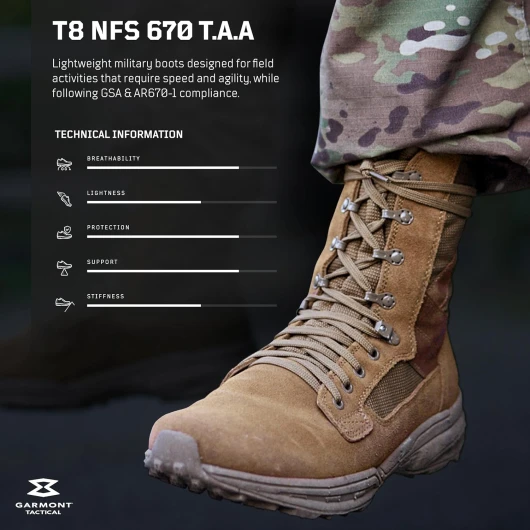
The upper is 1.8mm suede leather with polyester inserts, and you can feel right away this is not the thick, stiff leather you find on old-school combat or heavy hiking boots. It’s softer, bends easier, and breaks in faster. That’s great for comfort and weight, but it does mean you’re not getting tank-like protection. Kicking rocks or scraping against sharp edges will mark the suede pretty quickly, though so far I’ve only seen cosmetic scuffs, no real damage.
The polyester fabric panels are placed mainly around the sides and back of the shaft and near the heel. They add breathability and cut weight, which is nice in warm weather. The downside is durability in those spots. One Amazon reviewer mentioned the canvas at the back of the heel tearing after a couple of months; Garmont replaced the boots under warranty, which is reassuring, but it still shows that this lighter material is a potential weak point. Mine show some light fuzzing where the heel rubs, but no holes yet.
The sole is rubber with an athletic-style tread, and it feels decently sturdy. It’s not Vibram (unlike the Bifida model another reviewer mentioned), but it doesn’t feel cheap either. Flex is moderate: enough bend in the forefoot to walk and jog normally, but still some stiffness under the arch. The Ortholite Ultra insole is one of the better stock insoles I’ve had in a duty boot – decent cushioning and doesn’t pack out immediately. I haven’t felt the need to swap it like I usually do with cheaper boots.
Bottom line on materials: they’re chosen for lightness and comfort, not max armor. For normal work, patrols, range days, or urban use, that’s fine. For heavy rucking with 60+ lbs over sharp rocks day after day, I’d personally go for something with thicker leather and a beefier sole. Here, you’re getting a decent quality build, but clearly tuned toward speed and breathability rather than indestructibility.
Durability: generally solid, but watch the heel fabric
Durability so far has been pretty solid for a lightweight boot, but there are a couple of things to keep an eye on. After regular use (walking on gravel, some rocky paths, concrete, and general outdoor work), the suede shows normal scuffing but nothing alarming – no tears, no deep gouges, and the stitching is still intact. The sole hasn’t started to peel or separate, and the tread wear is what I’d expect at this point: slightly rounded lugs on the high-contact areas, but plenty of grip left.
The main concern area, which matches Amazon reviews, is the fabric/canvas at the back of the heel and around the shaft. One reviewer said that the canvas at the back of the heel started tearing after a couple of months. In my case, I can see some light fraying and fuzzing where my heel rubs when I put them on, but no actual tearing yet. It’s pretty clear that this area is less bombproof than full leather would be. If you’re rough pulling them on without loosening the laces, I can easily see that fabric giving out faster.
Another reviewer said their latest pair "ripped open" even though they had barely worn them, which suggests there can be occasional quality control misses. On the positive side, Garmont apparently honored the one-year warranty quickly for the user whose heel canvas tore, sending a replacement pair without drama. That doesn’t erase the issue, but it’s better than being stuck with a defective boot.
Overall, I’d rate durability as good, but not heavy-duty indestructible. The suede and sole hold up fine for normal duty / work use. If your job is brutal on boots – constant kneeling on concrete, barbed wire, sharp rocks, or daily heavy rucks – I’d expect these to show their limits sooner than more rugged models. For mixed urban/field use and regular wear, they should last a reasonable amount of time, as long as you’re aware the heel fabric is the weak link and don’t treat them like a pure worksite beater.
Performance: good grip and agility, but not a hardcore mountain boot
In practice, these boots are built for fast movement and moderate loads. On dirt, gravel, and pavement, grip has been solid. The outsole pattern bites well enough on loose gravel and dry dirt, and I haven’t had any sketchy slips on wet pavement yet. One user mentioned they grip well but don’t accumulate a ton of mud, and I noticed the same: in light to medium mud, they shed it better than deep-lug soles that turn into clogs.
For speed and agility, they do well. You can jog, sprint, and change direction without feeling like you’re dragging weights on your feet. That matches what one reviewer said about being able to run in them without shin splints or blisters once they were broken in. They feel much more natural to move in than old-style heavy combat boots. If your work involves a lot of walking, short runs, getting in and out of vehicles, and going up and down stairs, these fit that style of movement nicely.
Where they’re less strong is technical, uneven terrain with heavy loads. They have some ankle support, but the cuff isn’t stiff enough to fully prevent ankle rolls if you’re side-hilling on big rocks with a heavy pack. One reviewer pointed out they’d pick real hiking boots for areas with medium to larger rocks, and I agree. These are fine for trails, fire roads, and mixed urban terrain, but they’re not the boot I’d choose for multi-day backpacking in rough mountains.
Under normal work use – think range days, yard work, moderate hikes, or as a replacement for painful issued boots – they perform well. One user bought them after Army-issued boots wrecked their son’s feet, and he reported no blisters and good comfort. That’s pretty much how I’d sum them up: for day-to-day duty and light field use, performance is solid. For extreme conditions and heavy rucks, they’re a bit on the light side, by design.
What these Garmont T8 NFS 670 boots actually are
The GARMONT T8 NFS 670 is basically a lightweight, AR 670-1 compliant combat boot with an 8" style height and a suede + fabric upper. Mine are the 8.5 Regular. The brand markets them as "Need For Speed" boots, and that description is actually pretty close to reality: they’re clearly built to be lighter and more agile than the typical brick-shaped military boot.
You get a suede leather upper (1.8mm) with polyester fabric panels, a rubber outsole that looks more like an athletic cleat pattern than a traditional lug, and an Ortholite Ultra insole. They’re imported, unisex, and they sit in that middle ground between duty boots and light hikers. If you’ve worn Garmont Bifidas before, these feel like the leaner, faster sibling – less chunky tread, less bulk around the ankle, and a bit more "sneaker" in the way they move.
In terms of use cases, they’re clearly targeted at people in uniform (Army/Air Force rules compliant), but they also make sense as work boots for people who walk a lot: warehouse, security, ranch/farm if you’re not in deep mud all day, or just as a light field boot. A couple of reviewers mentioned using them as a replacement for issued boots and for general work around mud and rocky terrain, and that lines up with how I’ve used them.
So from a pure "what am I buying" standpoint: you’re getting a light-duty, speed-focused combat boot that wants to feel fast and comfortable more than it wants to be a hardcore mountaineering or heavy rucking boot. If you go in with that expectation, the product makes sense. If you expect a full-on stiff hiking boot with ankle locked solid, you’ll probably say they feel too soft.
Pros
- Very comfortable after break-in, with a good Ortholite insole
- Lightweight and agile, easy to walk and run in compared to heavier combat boots
- AR 670-1 and AFI 36-2903 compliant while still feeling more like a sneaker
Cons
- Fabric/canvas around the heel can be a weak durability point
- Not ideal for heavy rucking or very rocky, technical terrain
- Fit runs a bit snug at first and needs a short break-in period
Conclusion
Editor's rating
The GARMONT TACTICAL T8 NFS 670 is a light, comfortable combat-style boot that makes sense if you spend long days on your feet and need something AR 670-1 / AFI compliant. It feels more like a sturdy high-top sneaker than a brick, with a decent insole, good grip, and a break-in period that’s noticeable but not painful. Once they mold to your foot, they’re easy to wear for full shifts without blisters, which is more than I can say for a lot of issued boots.
They’re not perfect. The fabric around the heel and shaft is the weak point, and there are a couple of reports of tearing or early failures, even if Garmont seems to back them up with a one-year warranty. They’re also not the best choice for super rough terrain with heavy packs – the ankle support and overall build lean more toward speed and flexibility than hardcore protection. If you want a stiff hiking or mountaineering boot, look elsewhere.
I’d recommend these to: soldiers and airmen looking for a more comfortable, compliant alternative to issued boots; security and law enforcement who walk a lot; and anyone needing a light-duty work or field boot that feels agile. I’d skip them if your priority is maximum durability in brutal environments, or if you need serious ankle immobilization on rocky mountain trails. Overall, they’re a pretty solid, comfort-focused tactical boot with a few trade-offs you should be aware of before buying.