
Summary
Editor's rating
Value: you pay a bit more, but you get a real work boot
Classic wheat work boot look, built for the job not Instagram
Comfort: good out of the box, better with proper insoles
Leather, insulation, and a tough sole – nothing fancy, but solid
Built to take abuse, at least from what I’ve seen so far
On the job: grip, protection, and all-day use
What you actually get when you open the box
Pros
- Comfortable for a steel-toe boot, especially in wide sizing, with quick break-in
- Reliable waterproofing and 200g insulation that works well in cool and wet conditions
- MaxTRAX TPU outsole offers strong slip resistance on wet and slightly oily surfaces
Cons
- Stock insole is basic and not supportive enough for long shifts on hard floors
- Wheat nubuck shows dirt and scuffs quickly and needs regular cleaning

Specifications
View full product page →| Brand | Timberland PRO |
Steel toes that don’t murder your feet (for once)
I’ve been wearing the Timberland PRO 6IN Direct Attach Steel Toe MaxTRAX boots (size 10.5 Wide, wheat) as my main work boots for a couple of weeks, doing a mix of warehouse work, light construction, and a lot of walking on wet concrete. I’m not sponsored, I paid for them, and I was honestly just hoping they wouldn’t wreck my feet by lunchtime like some cheaper boots I’ve had.
The first thing that stood out is they feel more like a regular boot than a heavy safety boot. They’re not light, but for a steel toe and all the insulation and waterproofing, the weight is pretty reasonable. I could wear them a full day right out of the box without needing to swap to sneakers on my breaks, which is already better than a lot of budget steel-toe options I’ve tried before.
My feet run wide and I usually struggle with the steel cap rubbing my toes. With the 10.5 Wide, I didn’t get that constant pressure on the sides of the toes. There’s still that typical steel-toe feeling in the front, but nothing that turned into blisters or hot spots during the first week. Break-in was quick – about two to three days of normal use before they started to feel natural.
They’re not perfect: the stock insole is pretty basic, and if you’re on concrete all day you’ll probably want to swap it for something with more arch support. But overall, as a first impression, these feel like a solid, no-nonsense work boot that focuses more on doing the job than looking pretty.
Value: you pay a bit more, but you get a real work boot
Price-wise, these sit above the bargain-bin work boots but below some of the really pricey high-end brands. For what you get – steel toe, waterproofing, insulation, slip-resistant TPU outsole, and ASTM/EH compliance – the value is pretty solid. You’re not just paying for the Timberland logo; the boot actually performs like a proper work tool.
Compared to cheaper steel-toe boots I’ve used from random brands, the difference shows up in comfort and durability. With cheaper pairs, I usually start getting foot pain and visible sole wear within a month or two. With these, comfort is better from day one, and the sole and leather feel like they’ll last longer. Yes, you probably want to spend a bit more on good insoles, but even factoring that in, the total setup still feels fair for a daily work boot.
If you’re someone who works long shifts on concrete, in wet or oily environments, and you need proper safety ratings, paying a bit more for a boot that keeps your feet dry and relatively comfortable is worth it. On the other hand, if you only need steel toes occasionally or you’re mostly in a clean, dry environment, you might find something cheaper that’s “good enough” for occasional use.
So in terms of value for money: good, not mind-blowing. You’re paying a reasonable price for a boot that does its job well and should last a decent amount of time. It’s not the cheapest option out there, but it feels like one of those purchases where you’re actually getting what you pay for.
Classic wheat work boot look, built for the job not Instagram
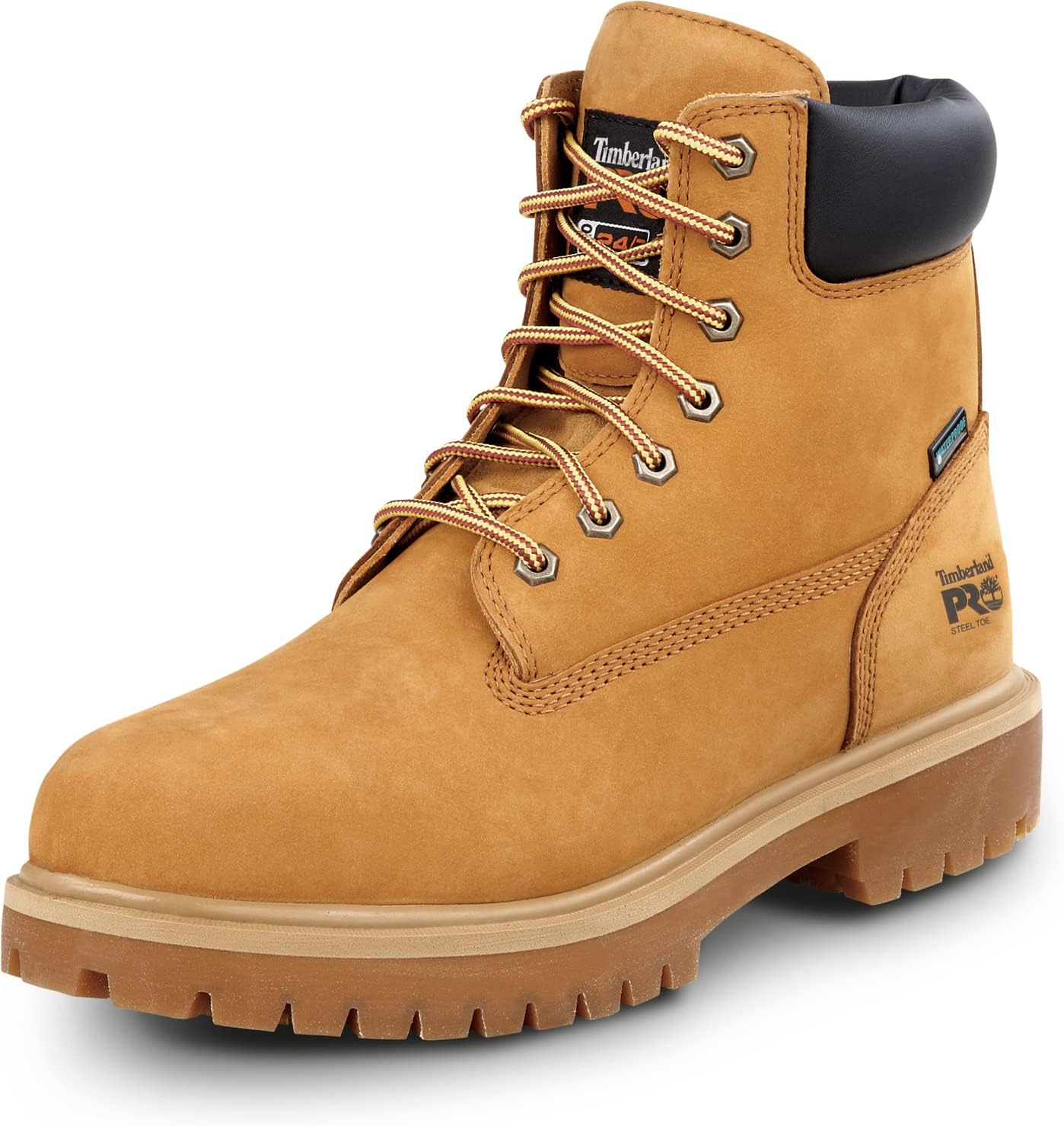
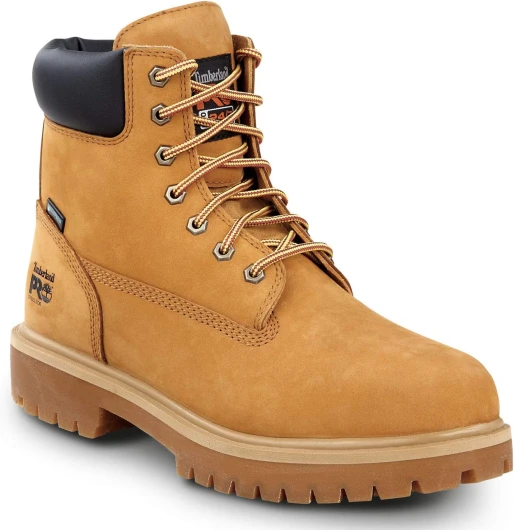
Design-wise, this is a very typical 6-inch wheat work boot. If you’ve seen Timberland boots before, you pretty much know the look. The upper is waterproof nubuck leather with a padded black collar around the ankle, plus the usual metal eyelets and round laces. Nothing flashy. On the job site, they just blend in with every other tan work boot, which is fine by me. They’re more about function than style.
The steel toe is fairly well integrated into the shape. Some steel-toe boots look bulky or oddly shaped at the front, but here the toe box looks normal enough. You can tell it’s a safety toe, but it doesn’t feel like you’re wearing clown shoes. The overall profile is medium: not super slim, not super chunky. The 10.5 Wide version gives enough width without making the boot look like a box.
The outsole is where you see the work-focused design. The MaxTRAX slip-resistant tread has a patterned design meant to grip on wet and oily surfaces. The tread is not super deep like aggressive hiking or logging boots, but it’s clearly built for flat surfaces like concrete, tile, or shop floors. After walking on wet concrete and a bit of oily shop floor, I can say the design works better than many generic rubber soles I’ve tried. There was noticeably less sliding when turning quickly or walking on slightly greasy spots.
One thing to note: the wheat color plus nubuck finish will show stains, scuffs, and oil pretty quickly. If you actually work in dirty environments, they’ll lose that fresh look in a week or two. If you care about looks, you’ll be wiping them down a lot. Personally, I don’t care if work boots look beat up, as long as they’re practical, and this design hits that mark.
Comfort: good out of the box, better with proper insoles
Comfort is usually where steel-toe boots fall apart for me, especially with wide feet. With these in 10.5 Wide, the fit was pretty decent from day one. The toe box has enough room so my toes aren’t constantly pressing against the steel. There’s still that typical steel-toe awareness, but no pain points. The heel locks in fairly well, and I didn’t get much heel slip once I tightened the laces properly.
Break-in time was short. After about two to three days of wearing them 6–8 hours, the leather softened just enough and the boot started to flex more naturally with my foot. No major blisters, just a bit of normal stiffness at the start. The padded collar around the ankle helps a lot; it keeps the boot from digging into your ankle when you bend or climb ladders.
Where comfort could be better is underfoot support. The Timberland PRO 24/7 comfort system is basically a standard footbed with some cushioning. It’s fine if you’re on your feet a few hours, but if you’re doing 10–12-hour shifts on concrete, you’ll likely feel some foot fatigue by the end of the day. I added my own arch-support insoles after the first week, and the difference was obvious: less soreness in the arches and heels, especially after long days walking and standing.
Temperature-wise, the 200g Thermolite insulation is comfortable in cool to cold conditions. My feet stayed warm outdoors in chilly weather without feeling frozen, and indoors they got warm but not unbearable. In hot summer conditions, these will probably feel too warm, but for fall and winter work, they’re well balanced. So overall: comfortable enough stock, but if you’re serious about long shifts, plan on upgrading the insoles.
Leather, insulation, and a tough sole – nothing fancy, but solid
The upper is waterproof nubuck leather, and it feels thick and sturdy in the hand. It’s not soft fashion leather; it’s more rigid at first, which is what you want for a work boot that’s going to take abuse. The seam-sealed waterproof construction actually holds up: I stood in shallow puddles and worked in wet areas, and my feet stayed dry. No obvious leaks around the tongue or the seams after a couple of weeks.
Inside, there’s a breathable, moisture-wicking lining plus 200 grams of Thermolite insulation. In practice, this means your feet stay reasonably warm in cold conditions without turning into ovens indoors. I used them in cool weather and in a warm warehouse, and while my feet did get warm, they didn’t get sweaty to the point of being uncomfortable. For heavy summer heat, this might be a bit much, but for fall, winter, and early spring, the insulation level feels about right.
The midsole is PU (polyurethane), and the outsole is Thermoplastic Polyurethane (TPU) with the MaxTRAX tread. TPU soles tend to be tough and resistant to oil and abrasion, and that’s exactly how these feel. After a couple of weeks of daily wear on rough concrete and some metal grating, I saw only light wear on the tread. The sole is also non-marking, oil, and abrasion resistant, which is handy if you’re in a shop or facility that cares about floor marks.
Inside, the insole is nothing special. It’s part of Timberland PRO’s 24/7 comfort system, but honestly, it feels like a basic foam footbed. It’s fine for short days, but if you’re on your feet 8–12 hours, I’d strongly suggest adding a better insole with real arch support. So overall, the materials are solid and work-focused, but the stock insole is where they clearly saved a bit of cost.
Built to take abuse, at least from what I’ve seen so far
Durability is always tricky to judge in just a couple of weeks, but you can usually tell if something is cheaply made. These don’t feel cheap. The direct-attach construction and the stitching around the upper all look solid. No loose threads, no gaps, and no weird glue marks out of the box. After daily use, the leather has creased like normal, but nothing that looks like early cracking or tearing.
The TPU outsole seems tough. After walking on rough concrete, gravel, and a bit of metal grating, the tread wear is minimal – just some light rounding on the edges of the lugs. No chunks missing, no separation between the sole and the upper. The heel area, which usually wears fastest for me, still looks in good shape. That’s a good sign that these should last a while under normal work conditions.
The nubuck leather does show scuffs and dirt pretty quickly, especially in the wheat color. If you care about looks, you’ll need to clean and maybe treat them now and then. But from a structural point of view, the leather feels thick and resistant. I’ve bumped them against pallets, tools, and random metal edges, and apart from cosmetic marks, nothing serious has happened to the leather or seams.
From what I’ve seen and from other users’ feedback, these are the kind of boots you can buy again and again for work because they hold up reasonably well over time. They’re not indestructible, but they feel more durable than a lot of cheaper warehouse boots. If you rotate them with another pair and keep them somewhat clean, I’d expect them to last a good while before the sole or upper starts to really give out.
On the job: grip, protection, and all-day use
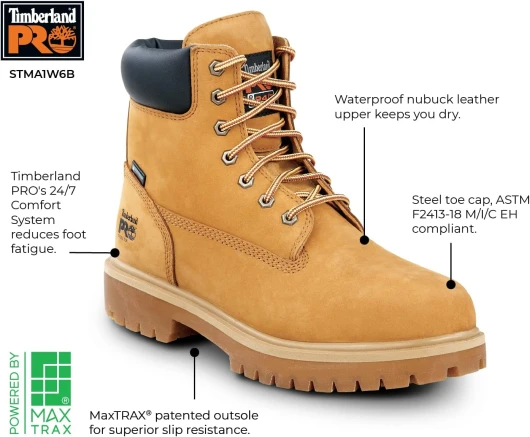
In actual use, the boots do what they’re supposed to do. The MaxTRAX slip-resistant outsole is legit. I tested them on wet concrete, slightly oily shop floors, and metal ramps, and they held traction better than my previous generic work boots. You still have to be careful, obviously, but I noticed fewer small slips when turning quickly or stepping in wet spots. For anyone working around oil, water, or chemicals, that’s a big plus.
The steel toe and EH (electrical hazard) rating cover the basic safety side. I banged the toe into pallets, metal parts, and random junk like I always do, and my toes were fine. The cap doesn’t feel overly tall or low; it’s just a standard safety toe that does its job. If your workplace checks for ASTM compliance, these meet ASTM F2413-18 M/I/C EH, so you’re covered.
Waterproofing is another strong point. Between the seam-sealed construction and the waterproof leather, I didn’t get any leaks walking through puddles or standing in wet areas for a while. The tongue is gusseted high enough to keep water out under normal work conditions. I wouldn’t call them waders, but for rain, wet grass, and shop floors, they’re more than good enough. Paired with the 200g insulation, they handled cold, wet mornings without my feet feeling soaked or frozen.
For long shifts, performance is decent but, again, very dependent on insoles. The PU midsole absorbs some impact, but if you’re heavy or on hard surfaces all day, you’ll feel some fatigue, especially in the arches. Once I added my own insoles, the boots handled 10–12-hour days much better. So in practice: strong traction, solid protection, reliable waterproofing, and acceptable comfort that can become very good with a small upgrade.
What you actually get when you open the box
Out of the box, the Timberland PRO 6IN Direct Attach looks exactly like what it is: a classic wheat work boot with a steel toe. No surprises, no fancy extras. You get the pair of boots, basic paper stuffing inside, and the usual tags about safety standards and features like waterproofing and insulation. No extra laces, no special care kit, nothing like that. Very straightforward.
The label lists all the specs: steel toe, ASTM F2413-18 M/I/C EH compliant, waterproof nubuck leather, 200g Thermolite insulation, and the MaxTRAX slip-resistant TPU outsole. If you work in an environment that cares about safety certifications (construction sites, industrial settings, warehouses), that ASTM and EH (electrical hazard) info is important, and it’s clearly indicated.
The boots come laced up but a bit loose. I had to fully unlace the top eyelets to get my wide feet in the first time, which is normal for this style. Once on, they sit at a mid-ankle height – not super high like logger boots, but enough to give some ankle support and keep splashes and debris out. The wheat color is that typical Timberland look: nice at first, but you know it’s going to show dirt quickly if you’re actually working in them and not just wearing them for style.
Overall, the presentation is simple and practical. It feels like a tool, not a fashion item. If you’re expecting some premium unboxing experience, you’ll be disappointed. If you just want to pull them out, lace up, and go to work, it does exactly that with no fuss.
Pros
- Comfortable for a steel-toe boot, especially in wide sizing, with quick break-in
- Reliable waterproofing and 200g insulation that works well in cool and wet conditions
- MaxTRAX TPU outsole offers strong slip resistance on wet and slightly oily surfaces
Cons
- Stock insole is basic and not supportive enough for long shifts on hard floors
- Wheat nubuck shows dirt and scuffs quickly and needs regular cleaning
Conclusion
Editor's rating
Overall, the Timberland PRO 6IN Direct Attach Steel Toe MaxTRAX boots are a solid choice if you actually work in them and not just wear them for looks. They give you the important stuff: real waterproofing, decent insulation, strong slip resistance, and proper safety ratings (ASTM F2413-18 M/I/C EH). Comfort out of the box is better than many steel-toe boots, especially if you go for the wide size, and break-in is quick. The main weak point is the stock insole, which is just okay. With a better aftermarket insole, these go from “pretty good” to “actually comfortable” for long shifts.
They’re best for people who work on concrete or hard floors, around water or oil, and need steel toe and EH protection: mechanics, warehouse workers, industrial electricians, light construction, that kind of job. If you’re in very hot climates year-round, the 200g insulation might be a bit too warm, and if you only need boots occasionally, you might not need to spend this much. But if you’re on your feet most of the day and want something that holds up and keeps your feet dry, they’re a solid bet.