
Summary
Editor's rating
Value: good if you want light and compliant, less so if you want a tank
Design: more running shoe than brick
Comfort: good for moving, less ideal for standing all day
Materials: suede and fabric with a tough-ish sole
Durability: holding up well so far, but not a tank
Performance: built for pace, not for stomping through everything
What these boots are trying to be
Pros
- Lightweight for a regulation-compliant tactical boot, easier to move and ruck in
- Comfortable out of the box with quick break-in and a decent Ortholite insole
- Good breathability and reasonable durability for the weight class
Cons
- Underfoot protection is only moderate; you feel rocks and rough terrain more
- Not waterproof and the sole isn’t ideal for deep mud or very wet conditions

Specifications
View full product page →| Brand | GARMONT |
Light boots for long days on your feet
I’ve been using the GARMONT TACTICAL T8 NFS 670 boots for a few weeks now, mostly for range days, rucking on mixed terrain, and some long days on concrete. I’m not active duty, but I do enough walking with weight that bad boots punish me quickly. I picked these mainly because they’re AR 670-1 compliant and a couple of buddies in the Guard recommended Garmont in general.
First impression out of the box: they feel light. Compared to older issued-style boots I still have lying around, these are noticeably less bulky and don’t feel like you’re strapping bricks to your feet. The ankle height is standard, nothing crazy high, and the profile looks more like a running-inspired boot than an old-school clunker. I didn’t baby them: first weekend, I did a 10km ruck with about 35 lb and some dry dirt trails plus asphalt.
What stood out quickly is that these boots are clearly built more for speed and mobility than for standing guard for 12 hours without moving. The sole is fairly flexible, the grip is decent, and they don’t feel stiff. On the flip side, if you’re used to heavy, super-protective boots, you’ll probably feel the ground more than you’re used to. That’s not necessarily bad, but it’s something to know.
In this review I’ll go through how they feel in real use: the design, materials, comfort over a full day, performance on different surfaces, durability so far, and whether they’re worth the money versus other tactical boots I’ve worn. Spoiler: they’re pretty solid overall, but they’re not perfect, and they definitely suit a certain type of use better than others.
Value: good if you want light and compliant, less so if you want a tank
In terms of price, the T8 NFS 670 sits in that mid-to-upper range for tactical boots. You can definitely find cheaper boots that are AR 670-1 compliant, and you can also find more expensive ones with fancy features. For what you pay, you’re mainly getting low weight, regulation compliance, and decent comfort right out of the box. If those three things matter to you, the price feels fair. If you just want something cheap to beat up occasionally, there are less expensive options that will do the job, even if they’re heavier or less comfortable.
Compared to some generic PX-style boots I’ve tried, these feel better built and noticeably lighter. The Ortholite insole and the more anatomical shape do make a difference over distance. On the other hand, if I compare them to some premium tactical brands that cost more, those sometimes offer better underfoot protection, stiffer support for heavy loads, or waterproof membranes. So it really depends where you place your priorities:
- If you want light and breathable for hot weather and lots of movement, these are good value.
- If you want maximum protection and stiffness for heavy loadouts, the value is a bit weaker.
Factoring in the early signs of durability, I think they justify their price for people who will actually use the "need for speed" side of the design. If you’re mostly standing around or doing light duty, you might not fully benefit from what you’re paying for. Personally, I’d say they’re good value for money if you’re active, ruck regularly, or train often and want something that doesn’t feel like a brick. They’re not a bargain, but they’re not overpriced for what they offer either.
So, value-wise: decent to good, depending on your use case. If you buy them expecting a light, regulation-friendly boot that’s comfortable for movement, you’ll probably feel you got your money’s worth. If you expect a do-everything boot that’s perfect in mud, cold, and heavy loads, you might feel you paid a bit too much for something that’s more specialized than it looks.
Design: more running shoe than brick
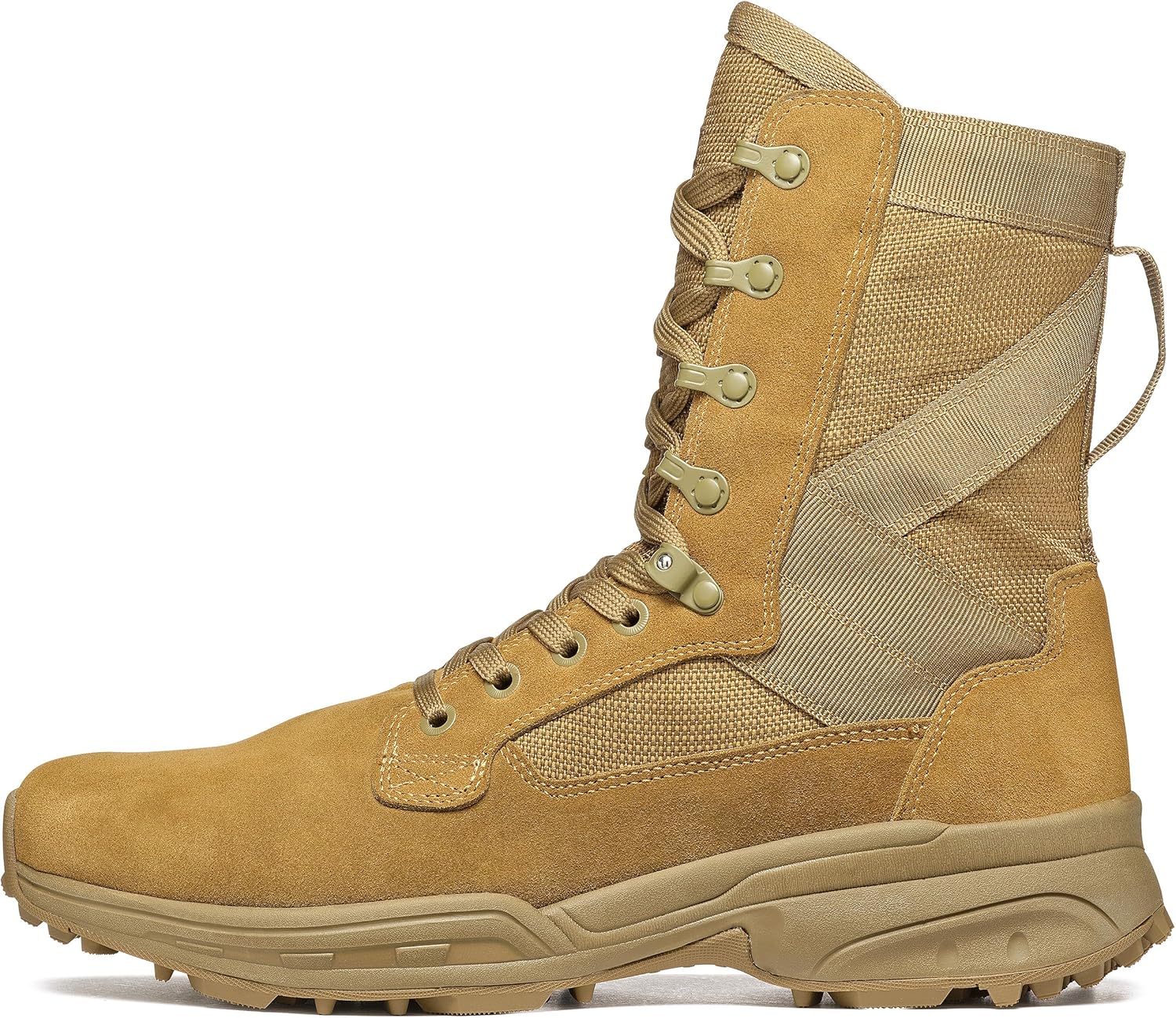
Design-wise, the T8 NFS 670 sits in that newer wave of tactical boots that borrow a lot from athletic shoes. The toe box is medium: not super wide like some barefoot-style boots, but not pinchy. I’ve got average-width feet and I didn’t feel squeezed, even after swelling a bit on longer walks. Someone with very wide feet might find them a bit snug, though, especially if you wear thicker socks. The lacing system is straightforward, with standard eyelets and speed hooks at the top, nothing fancy but it works.
The ankle support is there but not overly stiff. Compared to older full-grain leather boots I’ve worn, these flex more when you lean forward or side to side. That’s good for mobility, less good if you want that fully locked-in, ski-boot feeling. The tongue is padded enough to avoid lace bite, and it stays in place decently. I didn’t have issues with it sliding to one side, which is something that annoys me in some cheaper boots.
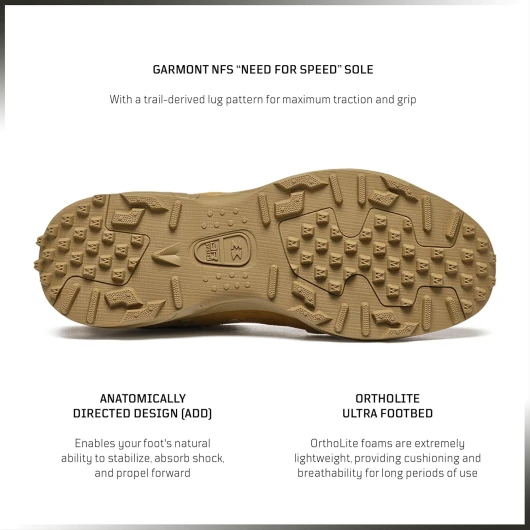
The outsole has a pattern inspired by athletic cleats, according to the brand. In real life, the lugs are medium depth and fairly tightly packed. This gives good traction on dry dirt, gravel, and asphalt, but in thick mud they do clog up a bit. It’s not a dedicated mud boot, and you can tell. On wet concrete, they’re okay: not slippery, but also not as grippy as some softer rubber soles I’ve tried. The plus side of the slightly harder compound is that it should last longer under abrasion.
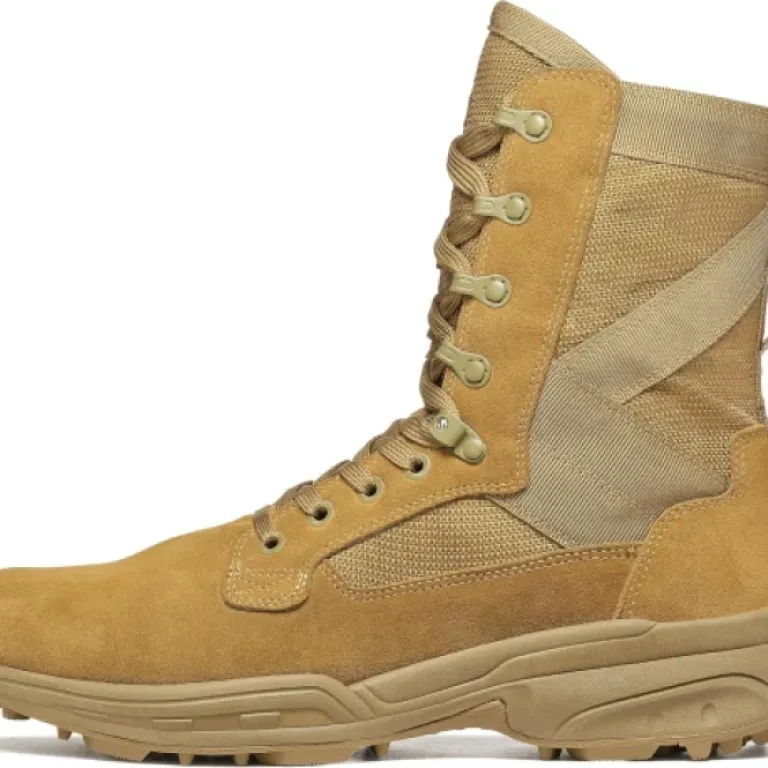
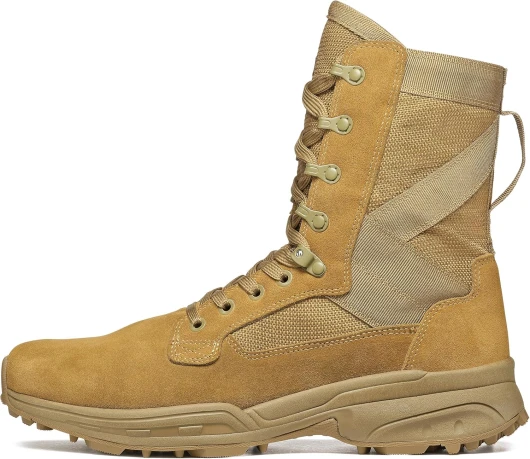
Visually, they’re pretty standard-looking tactical boots: coyote-ish suede, fabric inserts, no flashy logos screaming from across the room. If you want something that blends into a uniform setup, they do that. If you’re looking for a boot that looks cool with jeans, they’re fine but nothing special. The design is clearly more focused on function than style, which honestly is what I prefer in this category.
Comfort: good for moving, less ideal for standing all day
Comfort is where these boots lean toward the “need for speed” idea. On my first 10km ruck with about 35 lb, I didn’t get blisters, which is already a win. There was a bit of pressure on the top of my foot at the flex point for the first hour, but that faded as the suede broke in. Break-in time is short: after two or three outings, they felt pretty natural. Compared to older full-leather boots that need weeks, this is a big plus if you’re in a hurry.
The Ortholite Ultra footbed gives decent cushioning, especially under the heel. On mixed terrain, my feet felt supported enough. Where I noticed the limit was during a full day mostly standing on concrete. After around 6–7 hours, the balls of my feet started to feel tired. It’s not unbearable, but it’s clear these boots are more comfortable when you’re walking and moving than when you’re just planted in one spot. If your job is a lot of standing sentry or on a flight line without moving much, you might want extra insoles or a boot with thicker underfoot cushioning.
Breathability is pretty good. I tried them in warm weather (around 80–85°F / 27–29°C) with medium-weight socks. My feet got warm, obviously, but not swampy. When I took the boots off, my socks were a bit damp but not soaked, and there was no strong smell building up after a few days, which means the airflow is doing its job. For hot climates, these should be more comfortable than heavier all-leather boots with less ventilation.
Fit-wise, they run close to true to size for me. I took my usual boot size and had room for a medium sock without feeling loose. Heel lock is decent; I didn’t get heel slip on inclines. If you’re between sizes or like thicker socks, I’d consider going up half a size. Overall, I’d rate comfort as good for active use, decent but not great for long static shifts. There’s better out there if you mainly stand around, but for moving under load, they do the job well.
Materials: suede and fabric with a tough-ish sole
The upper uses 1.8 mm suede leather with polyester inserts. In hand, the suede doesn’t feel super thick, but it’s not flimsy either. After a few weeks of use, including brushing up against rocks and some light bushwhacking, I’ve got some scuffs but nothing tearing or peeling. The fabric panels help cut down weight and improve breathability, but obviously they won’t protect as well as full leather if you bash your foot against something hard.
The inside is lined with a textile that doesn’t feel rough. I wore them a couple of days with thin socks just to see if there would be hotspots, and I didn’t get rubbing on the heel or ankle. The Ortholite Ultra footbed is better than the usual flat foam that turns into a pancake in two weeks. It has a bit of arch support and decent rebound. That said, if you have specific foot issues or need strong arch support, you’ll probably still want your own insoles. The stock ones are good, but not magic.
The rubber outsole feels on the firmer side, which usually means better wear resistance but slightly less shock absorption. After several outings on asphalt and gravel, there’s only minimal wear on the lugs, so that part looks promising. The stitching around the upper and sole junction is clean and even. I didn’t see loose threads or glue blobs, which I’ve seen on cheaper boots straight out of the box. Time will tell how they hold up after months, but early signs are reassuring.
One thing to note: these are not waterproof. They breathe better because of the fabric inserts, but if you stand in a puddle, your feet will get wet. For me that’s fine because I’d rather have a cooler boot for long dry days than a sweaty waterproof tank, but if you’re often in rain or wet grass, that’s a trade-off. Overall, the materials feel like a reasonable balance between weight, durability, and comfort, but they’re clearly tuned for hot to mild conditions more than cold, wet environments.
Durability: holding up well so far, but not a tank
Durability is always tricky to judge early, but after a few weeks of mixed use, I can at least comment on the short-term signs. So far, the stitching is intact, the leather hasn’t cracked, and the fabric panels don’t show fraying. I’ve scraped them on rocks and caught them on branches, and the worst I’ve got is some cosmetic scuffing on the suede, which is normal. No seams are opening, and the sole is still firmly attached with no signs of separation.
The outsole wear is minimal. I paid attention to the heel and forefoot lugs after several outings on asphalt, gravel, and some light jogging, and they still look almost new with just a bit of smoothing at the edges. That’s usually a good sign that the rubber compound is hard enough to last. Of course, a few weeks isn’t a deployment or a full season of daily work, but at least nothing is screaming “this will fail soon.”
That said, you can tell these aren’t built like super heavy-duty mountaineering boots. The 1.8 mm suede and fabric combo keeps weight down but won’t shrug off abuse the way thick full-grain leather does. If you constantly drag your toes, kick rocks, or kneel on rough concrete, you’ll probably see wear on the softer parts faster than with a heavier boot. They feel like a good match for repeated field exercises, range work, and general duty, but if your environment is extremely harsh day in, day out, you might want something a bit more overbuilt.
Overall, I’d say durability seems solid for the weight class. They’re not indestructible, but they’re also not fragile. If you treat them as a light, fast boot and not as a bulldozer, they should last a reasonable amount of time. I’d just be realistic: these are for speed and mobility, not for kicking down doors every day on concrete for years without any wear.
Performance: built for pace, not for stomping through everything
In actual use, the T8 NFS 670 behaves more like a rugged trail shoe than a classic heavy combat boot. On dirt trails, gravel roads, and uneven ground, the flexible sole and lighter weight make a real difference. I could keep a faster pace on rucks without feeling like I was dragging my feet. The ankle support is enough to keep you from rolling easily, but you can still pivot and move quickly without fighting the boot.
Traction is solid on dry surfaces. On compact dirt and small rocks, I felt stable even going downhill with weight. On wet grass and light mud, they’re okay but not amazing; the lugs just aren’t aggressive enough to bite deep. In thick mud, they pack up and you lose grip, which is normal for this style of sole. On wet concrete and metal (like ramps), they’re average: I didn’t slip, but I was a bit more careful than with some softer, stickier soles I’ve tried.
One area where you notice the lightweight build is underfoot protection. You can feel sharp rocks and roots more than in stiffer-soled boots. It’s not painful, but if you’re doing a lot of movement over rocky terrain, you’ll notice the ground more. Some people like this because it gives better feel and balance; others might find it tiring over many hours. For urban and mixed terrain, I thought it was an acceptable trade-off.
For running short bursts or doing drills, these boots behave better than most heavier options I’ve worn. You can actually jog without feeling like your knees are taking a beating from dead weight. That said, they’re still boots, not running shoes. If you expect them to feel like sneakers, you’ll be disappointed. In my view, they’re a strong match for field training, rucking, and range days where you move a lot. For hard-core mountain work or constant mud, I’d pick something beefier with a more aggressive sole and more rigid underfoot protection.
What these boots are trying to be
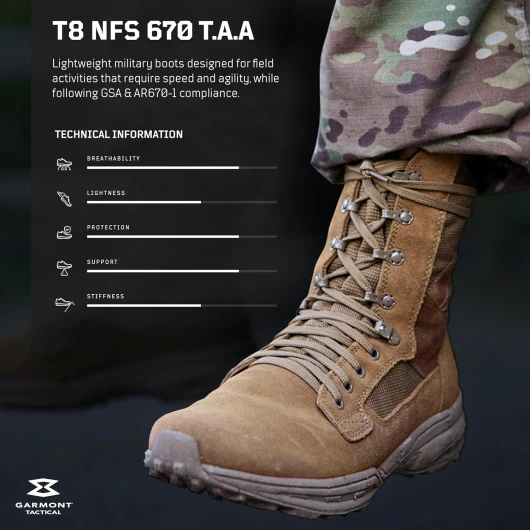
On paper, the GARMONT T8 NFS 670 is pitched as a lightweight, AR 670-1 compliant combat boot for people who need speed and agility. They’re unisex, ankle-height, with suede leather and polyester on the upper and a rubber outsole. One boot in size 9 supposedly weighs around 525 grams, which lines up with how they feel in hand and on foot. They don’t feel like running shoes, but they’re definitely on the lighter side for military-style boots.
The brand pushes two big ideas: the Ortholite Ultra footbed for cushioning and breathability, and their Anatomically Directed Design (ADD) for stability and shock absorption. In practical terms, that means the insole has a bit more structure than the cheap foam you get in many budget boots, and the boot shape follows the foot more naturally instead of being a straight brick. I noticed the heel cup feels more defined, and the midfoot doesn’t slop around as much as some generic boots I’ve worn before.
They’re also clearly designed to tick the regulation boxes: AR 670-1 and AFI 36-2903. So if you’re in the Army or Air Force and need something regulation-compliant, these fit that niche. Color-wise and shape-wise, they look like something that would pass inspection if your command isn’t super picky. For civilians or contractors, that just means they’re in the classic coyote-ish uniform-friendly tone, not some flashy outdoor color.
Overall, the product pitch matches what you get: a light, regulation-friendly field boot
Pros
- Lightweight for a regulation-compliant tactical boot, easier to move and ruck in
- Comfortable out of the box with quick break-in and a decent Ortholite insole
- Good breathability and reasonable durability for the weight class
Cons
- Underfoot protection is only moderate; you feel rocks and rough terrain more
- Not waterproof and the sole isn’t ideal for deep mud or very wet conditions
Conclusion
Editor's rating
After a few weeks with the GARMONT TACTICAL T8 NFS 670, my take is pretty straightforward: they’re light, comfortable for movement, and regulation-compliant, with decent build quality for the weight. They suit people who walk, run drills, and ruck more than they stand in one spot. The Ortholite insole and the more anatomical shape do help over distance, and break-in is quick, which is a big plus if you don’t have time to suffer through weeks of stiff leather.
They’re not perfect, though. Underfoot protection is moderate, so you feel rough terrain more than with heavier, stiffer boots. They’re also not waterproof, and the sole pattern isn’t ideal for deep mud. If your daily reality is heavy loads, rocky ground, constant wet conditions, or long static posts on concrete, there are better options, even if they weigh more. In short, these make sense if you want a fast, breathable, AR 670-1 compliant boot for field work, training, and rucking. If you want a heavy-duty tank for extreme abuse, I’d look elsewhere.
For who it’s for: active duty or reservists needing compliant, lighter boots; civilians who ruck or train outdoors and are tired of clunky footwear; anyone in warm climates who values breathability over full waterproofing. Who should skip it: people needing maximum protection and stiffness, those in very wet or muddy environments, or anyone who mostly stands around and wants thick, plush cushioning underfoot. Overall, I’d give these a solid score: they get the job done well in the role they’re clearly designed for.