
Summary
Editor's rating
Value: solid protection for the money, but not without trade-offs
Design: smart ideas, rough execution around the ankle
Comfort: good foot support, but ankle pain is a real risk
Materials and build: tough where it counts, but not exactly soft
Durability and wear: built to last a few hard seasons
Performance in the field: protective and stable, but fussy zipper
What you actually get with the Rocky Lynx
Pros
- Tall 15-inch shaft with reinforced toe and heel gives solid lower-leg protection for snakes and brush
- Good traction and stable feel for long walks, hunting, and winter use
- Waterproof out of the box and generally durable for several seasons with basic care
Cons
- Very stiff around the ankle and lower shaft, can cause painful hotspots for some users
- Zipper and gusset design is fussy and prone to snagging inner fabric if you’re not careful

Specifications
View full product page →| Brand | ROCKY |
Tall boots, tall promises
I’ve been using tall hunting boots and snake boots for years, mostly for hog hunting, early-season deer, and just walking around in brushy areas where you really don’t want to surprise a rattler. So when I picked up the ROCKY Lynx Waterproof Snake Boot 11 MOBU, I was mainly looking for three things: real lower-leg protection, decent comfort for long walks, and no drama with the waterproofing. On paper, these boots tick all those boxes: 15-inch shaft, waterproof, rubber sole, lace-up with D-rings, zipper, and reinforced toe and heel.
Out of the box, my first reaction was that they’re big and a bit heavy, but that’s kind of expected for a snake boot. They feel like a serious piece of gear, not some casual hiking boot with a fancy camo print. I wear snake boots a lot in warmer months and sometimes as winter boots with thick socks, so I’m used to this style. I went with my normal size, and like a lot of people on Amazon said, the fit in the foot area felt about right—no weird tight spots around the toes or heel slipping right away.
Where the story gets more interesting is around the ankle area and the zipper. Before even walking much, I could tell the material around the ankle was stiff. Not just “new boot stiff”, but that hard, unflexing kind of stiff that makes you wonder how long it’ll take to break in. I saw those Amazon reviews complaining about the boots tearing up their ankles, and honestly, they weren’t exaggerating. After a few outings, I had the same issue: the protection is there, but comfort around the ankle is not great.
So my overall first impression: these boots feel tough and secure, especially for lower-leg protection and winter use with thick socks, but they’re not exactly the kind of boot you forget you’re wearing. If you want soft, sneaker-like comfort, look elsewhere. If you’re fine with a heavier, more rigid boot that you might have to tweak a bit (or wear ankle sleeves with), then they’re worth a closer look. Just don’t expect them to feel broken in after one weekend.
Value: solid protection for the money, but not without trade-offs
On the value side, the Rocky Lynx Waterproof Snake Boot sits in that mid-range snake boot bracket. It’s usually cheaper than high-end options like some Danner models, but not bargain-bin cheap either. One reviewer flat-out said they went with the Rockys over the Danner Sharptail because of the price, then regretted it after zipper and comfort issues and decided to return them and go back to Danner. That kind of comparison is fair: you save money with the Rocky, but you accept a few compromises.
What you do get for the price is: tall 15-inch protection, a waterproof build (at least for the first year or so), a solid sole with good traction, and a boot that, once you work around the ankle issue, can handle hunting, hiking, and even winter tasks. Several verified buyers are very happy with them, wearing them constantly in the woods or for work and planning to buy them again. For those folks, the boots are clearly good value because they get a few years of use and they like the feel enough to stick with the model.
On the downside, the comfort and zipper quirks drag the value down a bit. If you have to buy ankle sleeves, spend time hammering the ankle area, or fight the zipper regularly, that’s time and hassle you wouldn’t have with a better-finished boot. If you end up returning them like that 1-star reviewer did, then obviously the value is zero for you. So it really depends on your tolerance for stiff boots and your willingness to baby the zipper.
Overall, I’d say they’re pretty solid value if your priority is leg protection and waterproofing at a reasonable price, and you’re okay with a break-in period plus some possible tweaks. If you want plug-and-play comfort and perfect finishing out of the box, you might be better off saving up a bit more and going for a higher-end brand. These get the job done, but they’re not flawless, and the price reflects that balance.
Design: smart ideas, rough execution around the ankle
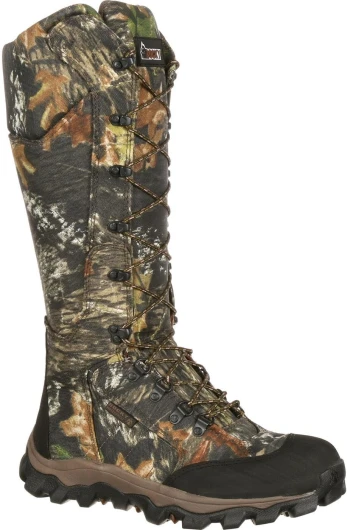
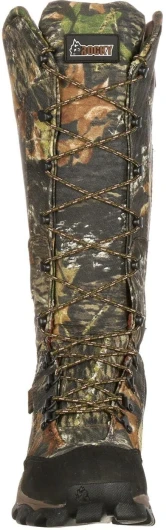
The design of the Rocky Lynx Snake Boot is clearly focused on coverage and protection. The 15-inch shaft gives you a tall wall of material from your foot almost up to your knee, which is exactly the point of a snake boot. The camo pattern (MOBU) blends in fine in woods and brush; it’s not flashy, and that’s good. You’ve got a reinforced toe and heel cap, so you can kick through brush or rocks without feeling like you’re going to blow out the front of the boot in one season.
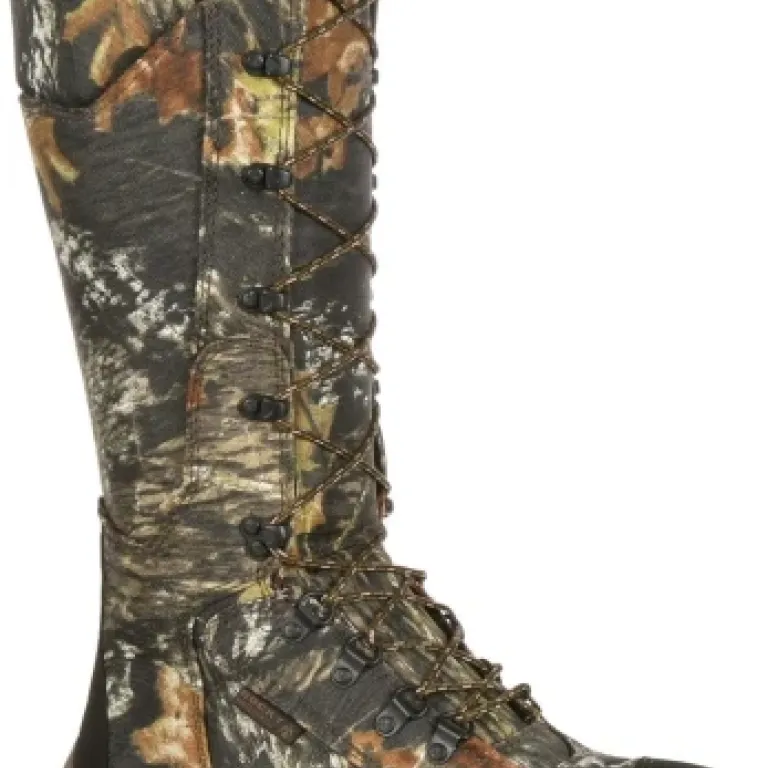
The closure system is where Rocky tried to be clever: a combo of lace-up with D-rings and speed lace hooks plus a side zipper. On paper, that’s great. You can lace the boot tight once so it hugs your calf and lower leg, then use the zipper to take them on and off quickly. In real life, it’s a bit more finicky. The zipper gusset area is crowded: you’ve got fabric, snake guard layers, and the zipper track all jammed together. If you’re not careful, the inner fabric can get caught in the zipper, which is exactly what one of the 1-star reviews described—zipper stuck so bad they almost cut the boot off.
The other design issue is the ankle zone. Multiple reviewers, and me included, felt the boot “biting” into the ankle. It’s a mix of stiff material and how the shaft bends right at that point. One user even mentioned using a 2x4 and hammer to soften that area, which tells you how rigid it can be. I had hotspots after a couple of long walks, to the point where I started wearing thicker socks and even tried an ankle sleeve like one reviewer did. That did help, but you shouldn’t have to patch around design flaws like that on a boot at this price.
Overall, I like the concept of the design: tall shaft, zipper plus laces, reinforced toe/heel, aggressive sole. But the execution is hit and miss. If Rocky had cleaned up the zipper gusset so it doesn’t snag and softened or reshaped the ankle area a bit, this would be a very well-thought-out boot. As it stands, it does the job from a protection standpoint, but comfort and ease-of-use take a hit because of those design choices.
Comfort: good foot support, but ankle pain is a real risk
Comfort on the Rocky Lynx Snake Boot is a mixed bag. Let’s start with the good: the footbed and fit in the foot area are actually pretty solid. I went true to size, and like several Amazon reviewers mentioned, the fit felt as expected—no big heel slip, toes had enough room, and the cushioned footbed does its job. For long walks, the bottom of my feet felt fine, especially once I paired them with decent wool socks. One reviewer said they walk 6+ miles a day in snake boots and found the foot part of these very comfortable, and I’d agree with that part.
The trouble starts around the ankles and lower shin. The shaft is tall and quite stiff, and the way it bends right at the ankle can create pressure points. On my first couple of outings (a few hours each, some uneven terrain), I ended up with sore spots on the sides of my ankles where the boot dug in. I’m not talking mild discomfort—more like “I’m thinking about taking these off halfway through the day.” I’m not the only one: multiple reviews mention the boots “tearing up your ankles BAD,” and one guy had to buy neoprene ankle supports just to make them wearable.
There are ways to work around this, but they’re not ideal. Thicker socks help a bit. Loosening the laces around the ankle can reduce pressure, but then you lose some of the secure feel. One reviewer even used a 2x4 and a hammer to soften the ankle area, which is basically old-school boot stretching. I tried flexing and bending the shaft by hand a bunch of times and wearing them around the house to speed up the break-in. It helped slightly, but these boots never turned into “slip them on and forget about them” comfortable. They stayed on the firm side.
On the positive side, for winter or cold weather, they do pretty well. With thick wool socks, my feet stayed warm, and the tall shaft plus tight lacing kept snow out. One reviewer even uses them as go-to winter boots for ice fishing and snowshoeing, and I can see why: the coverage and waterproofing are good, and they lace up tight enough to seal everything in. So overall, comfort is decent in the foot, decent for warmth, but questionable around the ankle for a lot of people. If your ankles are sensitive or you hate stiff boots, these might frustrate you.
Materials and build: tough where it counts, but not exactly soft
The boot is listed as 100% textile for the upper, with a rubber sole. In practice, it feels like a mix of heavy-duty fabric, snake-guard layers, and some synthetic overlays around the toe and heel. The material around the foot feels sturdy and supportive, and I never felt like a stick or thorn was going to poke through. The reinforced toe and heel caps give you extra confidence when you’re kicking through brush or stepping on rocks. This isn’t a floppy, fabric-only boot; it’s got some structure to it.
The downside of that structure is stiffness, especially around the ankle and lower shaft. That’s where the materials feel almost overbuilt. They don’t flex easily at first, and even after several outings, they were still on the rigid side. Some stiffness is good for protection, but here it crosses the line into discomfort for some people. The reviews reflect that too: several folks mention the boots tearing up their ankles until they added neoprene ankle sleeves or tried to soften the material with some DIY tricks.
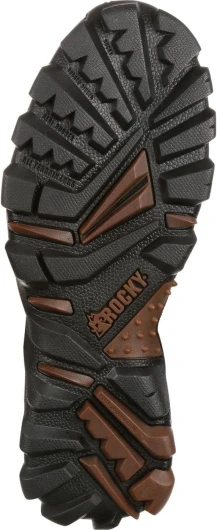
The rubber sole feels solid, with decent grip. It’s not a soft, bouncy sole like a running shoe, but it’s fine for hiking, snow, and muddy ground. The tread pattern sheds mud fairly well, and I didn’t feel like I was sliding around, even on wet grass. The midsole cushioning is there, but it’s not plush. With a good insole or thicker sock, it’s comfortable enough for long walks, but out of the box, it’s just “good enough,” not particularly cushy.
As for the zipper and stitching, that’s where the materials and quality control feel a bit inconsistent. Some users (and me) had no catastrophic issues, just the occasional snag if you rush the zipper. Others had the zipper jam completely because the inner Cordura-type fabric got caught. That points to a design and assembly problem: too much loose fabric too close to the zipper teeth. Overall, the materials are geared toward durability and protection, and they feel like they’ll last a few seasons, especially if you treat the waterproofing over time. Just don’t expect soft leather or flexible mesh—this is more armor than slipper.
Durability and wear: built to last a few hard seasons
In terms of durability, the Rocky Lynx Snake Boot feels like it’s built for a few solid seasons of real use, not just occasional weekend trips. The materials are on the tougher side: thick textile upper, reinforced toe and heel, and a sturdy rubber sole. One long-time Rocky user on Amazon mentioned they usually get about three years out of a pair before the material in the flex area of the foot starts to wear out. That sounds about right to me based on how these feel and how other Rocky boots I’ve owned have held up.
The main wear points to watch are the flex area at the ball of the foot and the zipper zone. The flex area takes a beating because that’s where the boot bends with each step. Over time, especially if you’re walking a lot in rough terrain, the textile can start to crease and then eventually break down. It’s not unique to this boot; most textile snake boots do that. But it’s something to keep in mind if you walk long distances daily—don’t expect them to look fresh after a season or two of hard use.
The zipper durability is more about design than raw toughness. The zipper itself seems strong enough, but because the inner fabric is so close to the teeth, you risk snagging and potentially damaging either the fabric or the zipper if you force it. That 1-star review where the buyer almost had to cut the boot off is a good example of how a simple design oversight can turn into a durability problem. If the zipper teeth get bent or the slider damaged from forcing it over caught fabric, the boot’s basically compromised, because getting in and out will be a hassle from then on.
On the plus side, one reviewer uses these for winter work, ice fishing, snowshoeing, hunting, and hiking year-round, which is a tough mix of conditions, and they were confident enough in the build to say they’d buy another pair. That tells me that if you can live with the comfort quirks and baby the zipper a bit, the overall structure of the boot will hold up to regular abuse. So I’d rate durability as good, with the caveat that the zipper/fabric interface is the weak link if you’re not careful.
Performance in the field: protective and stable, but fussy zipper
Out in the field, the Rocky Lynx Snake Boot does what it’s supposed to do in terms of protection and stability. The tall 15-inch shaft and firm construction give you a strong sense of security when you’re walking through tall grass, brush, or rocky ground. I didn’t have to worry about thorns, sticks, or anything sharp hitting my lower legs. For snake country, that’s the whole point: you want something that feels like armor from the foot up to mid-calf. Judging by the build and what other users say, it’s pretty clear these are meant for serious lower-leg protection.
On traction and walking comfort, they’re pretty solid. The rubber sole grips well on dirt, wet grass, and even snow. One reviewer said they walk 6+ miles a day in snake boots and found the Lynx sole very confidence-inspiring, and I had a similar experience. The boot feels stable, with no weird rolling or twisting. The foot stays locked in without slippage, so on uneven ground you feel planted. They’re not light, but for a tall snake boot, they’re manageable. You do notice them, but they don’t feel like ankle weights.
The waterproofing seems decent out of the box. I walked through wet grass, shallow puddles, and light snow, and my feet stayed dry. A couple of reviewers mentioned that Rocky snake boots usually stay waterproof for about a year to a year and a half before you need to start treating them, and that matches my past experience with Rocky as well. I’d still plan on re-treating them with a waterproof spray or similar if you want them to last several seasons, especially around the flex points where fabric starts to wear.
The weak point in performance is the zipper and gusset area. If you rush it, the inner fabric can catch in the zipper, and then you’re fighting to get them off. One reviewer had a nightmare scenario where the zipper jammed so badly they needed pliers and almost had to cut the boot off. I didn’t get to that level, but I did have a couple of annoying snags that made me slow down and guide the zipper carefully with one hand. So, performance-wise: protection, traction, and waterproofing are good, but the user experience with the zipper is not smooth. If you’re patient and careful, it’s fine. If you’re rough or in a hurry, it can be a pain.
What you actually get with the Rocky Lynx
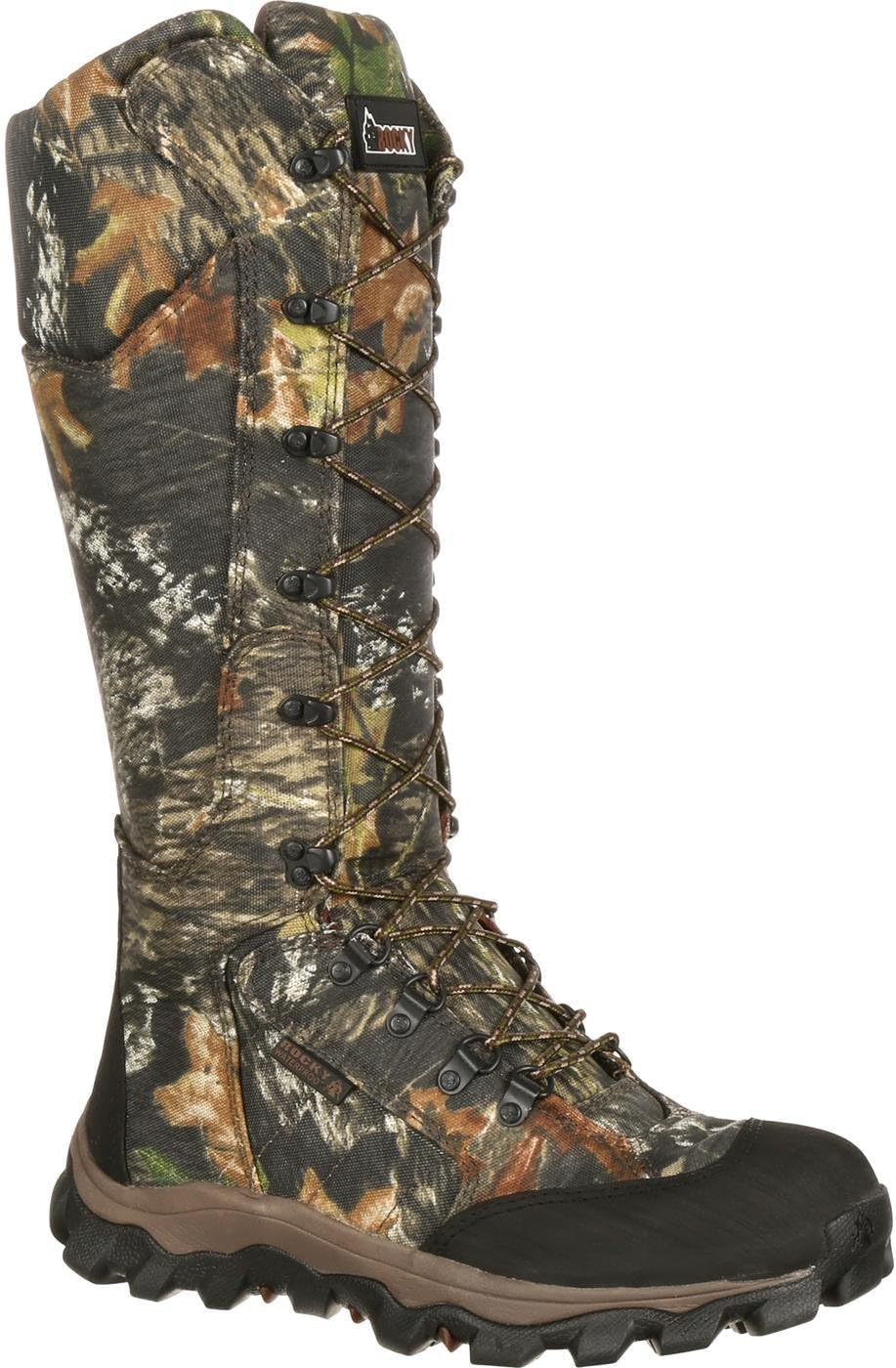
The ROCKY Lynx Waterproof Snake Boot 11 MOBU is basically a tall, full-coverage hunting boot built to keep fangs and water out. The shaft is about 15 inches high, so it goes well up the calf, which is what you want in snake country or in deep grass and brush. The upper is listed as 100% textile, with a Mossy Oak Break-Up style camo (MOBU), and there’s a Rocky logo patch on the tongue. The toe and heel are reinforced, so you’re not kicking rocks with just thin fabric up front.
The boot uses a rubber sole, and the tread is fairly aggressive without feeling like cleats. It’s not a super flexible hiking sole, but it feels steady on mud, snow, and loose dirt. On the closure side, you get a combo of lace-up with D-ring hardware and speed hooks, plus a side zipper with a gusset. The idea is good: lace once, then mostly use the zipper to get in and out. In practice, that zipper area is where some problems show up, especially with the inner fabric catching if you’re not careful.
Weight-wise, the listing says about 4.5 pounds for the pair, and it feels like it. Not crazy heavy for a snake boot, but you’re not forgetting they’re on your feet. They’re imported, standard men’s sizing, and they’ve been around for a while (first available in 2011), so this isn’t a brand-new, untested model. The Amazon rating around 4.3/5 lines up with what I felt: a lot of people like them, but there’s a clear pattern of complaints around the ankle and zipper.
So in short, you’re getting a tall, waterproof, snake-resistant boot that’s built more for protection and durability than for lightness or softness. It’s set up for hunting, hiking in rough terrain, and even winter chores if you throw on some wool socks. Just go in knowing that the design is more utilitarian than comfortable sneaker-style, and that you might need to baby the zipper and manage the ankle stiffness a bit.
Pros
- Tall 15-inch shaft with reinforced toe and heel gives solid lower-leg protection for snakes and brush
- Good traction and stable feel for long walks, hunting, and winter use
- Waterproof out of the box and generally durable for several seasons with basic care
Cons
- Very stiff around the ankle and lower shaft, can cause painful hotspots for some users
- Zipper and gusset design is fussy and prone to snagging inner fabric if you’re not careful
Conclusion
Editor's rating
The ROCKY Lynx Waterproof Snake Boot 11 MOBU is a tough, tall, no-nonsense snake boot that focuses on protection and stability more than comfort and finesse. The 15-inch shaft, reinforced toe and heel, and solid rubber sole give you real confidence when you’re walking through snake country, thick brush, or snow. The waterproofing is decent out of the box, and with good socks, they work well even as winter boots. Foot support is good, traction is reliable, and the boot feels like it can handle a few hard seasons if you look after it.
Where it falls short is comfort around the ankle and the zipper design. The shaft is stiff and can dig into your ankles, especially early on, and for some people it never really breaks in enough to be painless without extra help like ankle sleeves or DIY softening. The side zipper is handy in theory but fussy in practice, with the inner fabric sometimes catching and, in worst cases, jamming badly. So, these are not the kind of boots you forget you’re wearing; they’re more like armor you put on when you need it.
I’d recommend these to hunters, landowners, and anyone spending long hours in snake-prone or brushy areas who cares more about protection and durability than softness, and who doesn’t mind a bit of break-in and some care with the zipper. If you’ve worn Rocky snake boots before and liked them, this will feel familiar, just a bit harsher at the ankle. But if you have sensitive ankles, hate stiff boots, or want top-tier comfort like some Danner models, you’ll probably be happier spending more and skipping these. For the price, they’re good, functional boots with clear strengths and equally clear flaws.