
Summary
Editor's rating
Value: you’re paying extra, but you do get a better boot
Design focused on fit and calf adjustment
Comfort: good for a rubber boot, still a rubber boot
Rubber and neoprene that feel built for abuse
Early durability feels solid, but time will tell
Field performance in mud, water, and light snow
What you actually get with the Alphaburly Pro 18"
Pros
- Genuinely waterproof with a tall 18" shaft that handles mud, water, and snow well
- More comfortable than basic rubber boots thanks to EVA footbed and better heel/ankle fit
- Adjustable neoprene gusset fits different calf sizes and makes on/off easier
Cons
- Bulky and warm, not ideal for long hikes or mild-weather, high-activity hunts
- Pricier than generic rubber boots, so overkill for occasional or light use

Specifications
View full product page →| Brand | LaCrosse |
Serious rubber boots for people who actually get muddy
I’ve been wearing rubber hunting boots for years, mostly for whitetail and duck hunts, and I finally picked up the LaCrosse Alphaburly Pro 18" to see if they’re really worth the hype. I’ve used cheaper farm-store rubber boots, and I’ve also tried a couple of mid-range brands that either leaked too fast or felt like concrete blocks on my feet after a few hours. So I took these Alphaburlys through about three long weekends of use: tree stand sits, walking cut corn fields, and slogging through some pretty soupy marsh edges.
The first thing I wanted to check was simple: are they actually waterproof and comfortable for more than an hour? Sounds basic, but a lot of boots fail on one of those two points. I wore them in ankle‑deep water, wet grass that soaks everything, and some light snow. I also did a couple of 3–4 mile walks to see how my feet and calves felt afterwards. I’m not babying them; I expect hunting boots to be tools, not collectibles.
Overall, they do feel like a step up from the generic rubber boots I’ve used. The fit is more dialed in, the neoprene upper helps with movement, and the EVA footbed does make a difference on longer walks. But they’re not perfect. They’re still tall rubber boots, so they’re a bit clunky if you’re used to lightweight hikers, and the calf area can feel warm and sweaty if you’re doing a lot of moving in mild weather.
If you mostly hunt in wet, muddy, or snowy conditions and you’re tired of boots that either leak or chew up your feet, these are pretty solid. If you’re mainly hiking dry ridges or mountains, they’re overkill and not the most agile option. I’ll break down what worked for me and what annoyed me, so you can see if they fit how you actually hunt.
Value: you’re paying extra, but you do get a better boot
Price-wise, the Alphaburly Pro sits above the bargain rubber boots and roughly in line with other known hunting brands. You’re definitely paying more than you would at a farm store for a generic pair. The question is whether the extra cost makes sense. After using them, I’d say the value is pretty good if you actually hunt or work in wet conditions often. The better fit, more supportive footbed, and tougher materials are noticeable upgrades over the cheap stuff.
If you only need rubber boots once or twice a year to walk a muddy driveway or do a quick chore, these are overkill. In that case, you’re probably fine with something cheaper and just accept that they’ll be less comfortable and won’t last as long. But if you’re out in the field a lot—multiple weekends a season, plus maybe some farm or yard work—the cost starts to make more sense. Dry feet, less fatigue, and not having to replace boots every year or two is worth something.
Compared to some other mid-range rubber hunting boots I’ve tried, the Alphaburly Pro feels a bit more dialed in on fit, especially around the heel and calf. That’s the main reason I’d lean toward them rather than saving a few bucks on a generic brand. The downside is that they’re still bulky and warm, so they’re not a one-boot solution for all seasons. You might still want a lighter hiking boot for drier, warmer hunts, which adds to your overall gear cost.
Overall, I’d rate the value as good but not mind-blowing. You’re paying for a solid, reliable tool rather than something fancy. If you hunt wet, muddy, or snowy ground regularly and you’re tired of sore feet and leaky boots, the money feels justified. If you’re more casual or mostly hunt dry country, you can probably save your cash and go with something lighter and cheaper.
Design focused on fit and calf adjustment
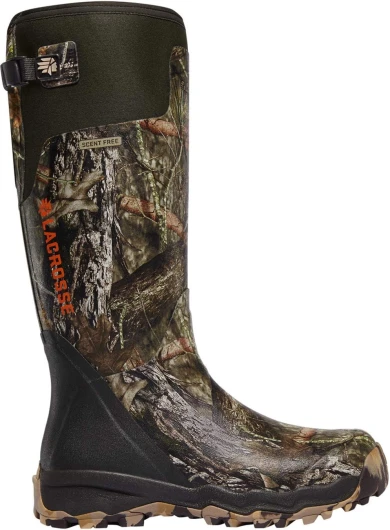
The main design feature that stands out is the adjustable neoprene gusset at the back of the calf. A lot of rubber boots either choke your calf or flap around like buckets. Here, you get a neoprene panel with a strap and buckle, so you can open it up to slide your foot in and then cinch it down. I have pretty average calves, and I liked that I could loosen it for thick wool socks and late-season pants, then tighten it a bit when I wore lighter layers. It also makes taking them off way easier after a long day.
The "Active Fit" design is another thing worth mentioning. Compared to generic rubber boots that feel like a straight tube, these have a more defined heel cup and a narrower ankle area. When I walked through uneven ground and sidehills, my heel didn’t rise and fall inside the boot as much as it usually does. That cuts down on hot spots and rubbing. You still feel that classic rubber boot stiffness when you flex forward, but at least your foot isn’t swimming around.
The tread pattern is pretty aggressive, with deeper lugs and gaps that help shed mud. On wet clay and snowy grass, traction was solid enough that I didn’t think about it, which is the best compliment I can give. I did notice that on smooth, wet concrete (like a garage floor or gas station), the sole can feel a bit slick if there’s a film of mud or water. That’s common with a lot of hunting soles, but worth knowing if you’re going in and out of buildings or trucks a lot during the day.
Design-wise, my only real gripe is the bulk around the ankle and lower leg. It’s part of the protection and waterproofing, but if you’re trying to still-hunt quietly through brush or climb a lot, you feel that extra mass. They’re built more for stand hunting, blinds, and wet fields than for mountain-style hiking. If you accept that, the design choices—especially the gusset and more secure heel—make sense and work pretty well.
Comfort: good for a rubber boot, still a rubber boot
Comfort-wise, I’d say these are pretty solid for their category, but you need to keep your expectations grounded. They’re not going to feel like trail runners, but they’re better than the typical stiff, sloppy rubber boots. The EVA footbed really does help. On a 3–4 mile walk through fields and woods, my heels and arches felt supported, and I didn’t get that dead-leg feeling I often get in cheaper rubber boots. The heel cup holds your foot in place fairly well, so you’re not fighting your boot with every step.
The shaft and calf area are where you feel both the pros and cons. The adjustable neoprene gusset means you can tune the fit, which cuts down on rubbing at the top of the boot. Walking through brush, the boot stayed in place and didn’t slide down or twist. I wore them with mid-weight wool socks and later with thicker late-season socks; in both cases, the fit was secure once I adjusted the strap. No major hotspots, just the usual mild pressure points you expect from taller boots.
Heat and sweat are the main comfort downside. On a cold, damp morning sitting in a stand, they felt great—feet stayed warm and dry. But on a day where I was moving more in temps around the high 40s to low 50s, my calves got noticeably sweaty. The boot doesn’t breathe, so moisture just stays in there. If you’re planning to walk a lot in shoulder-season weather, pick your socks carefully and maybe bring a dry pair for the ride home. Also, if you have very wide feet or big calves, I’d be careful with sizing; they’re not crazy narrow, but they’re more shaped than the usual rubber tube.
Getting them on and off is decent thanks to the gusset, but it’s still a bit of a workout if you’re tired and sweaty. I could pull them off without a boot jack, but using one made it easier. In short: for long sits and moderate walking in wet or cold conditions, I found them comfortable enough to keep on all day. For hot, active hunts, they’re overkill and can feel like too much boot. But compared to budget rubber boots, the comfort upgrade is noticeable.
Rubber and neoprene that feel built for abuse
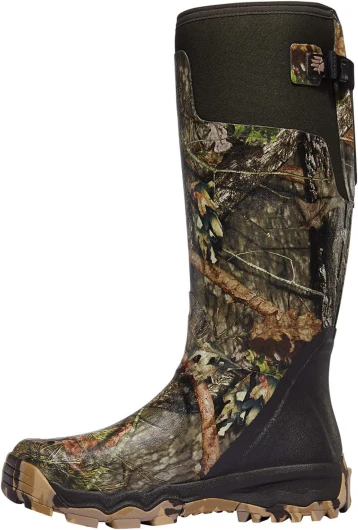
The boot is made from natural rubber over a neoprene core. The lower part (around the foot and ankle) has a thicker, more rigid rubber shell that gives you structure and protection. The upper shaft is mainly neoprene with rubber overlays in key wear spots. In hand, it feels a lot more solid than the thin, plasticky rubber you get on bargain boots. When I pressed into the sides and toe, there was very little give, which is what you want when you’re kicking through brush, rocks, or hidden sticks in the mud.
The neoprene section is where the comfort and fit come from. It flexes enough to move with your calf when you walk, and it also gives some insulation. I didn’t see any obvious weak seams or sloppy glue marks around the joins between rubber and neoprene on my pair. After a couple of weekends of use in wet conditions, there were no signs of peeling or cracking, which is usually the first failure point on cheap boots. Obviously, long-term durability needs a full season or two, but the initial impression is that the materials are decent quality.
The EVA footbed inside is removable and feels like a basic but useful insole—nothing fancy, but it adds some cushioning and arch support. On long walks, I could tell it was taking some of the sting out of heel strikes compared to flat rubber. If you have tricky feet or need orthotics, you can probably swap it for your own insole without much trouble. The interior lining is smooth and doesn’t grab socks too much, which helps when you’re pulling them on in the dark with thicker wool socks.
One thing to keep in mind: that much rubber and neoprene means heat buildup. The materials are great for cold, wet hunts, but in milder temps (say 50–60°F while moving), my lower legs started to feel sweaty. The materials don’t breathe; they trap warmth and moisture. So while they’re solid for late-season or wet conditions, they’re not the boot I’d pick for warm early-season scouting or a lot of uphill hiking. Overall, though, for what they’re meant to do—keep water and cold out—the material choice makes sense and feels sturdy.
Early durability feels solid, but time will tell
I’ve only had a few solid weekends in these, so I can’t pretend I’ve put multiple seasons on them yet, but the early durability signs are good. After walking through thick brush, mud, and some rocky ground, the rubber shows normal scuffing but no cuts or deep gouges. The toe area in particular feels well protected; I bumped into a couple of buried rocks and logs, and there was no real damage beyond cosmetic marks. The sole lugs haven’t rounded off or chunked yet, which can happen fast on cheaper boots if you hit a lot of gravel or hard surfaces.
The critical area on boots like this is the seam where the rubber meets the neoprene. That’s usually where you start to see cracking, peeling, or slow leaks after some use. On my pair, those seams still look tight, with no lifting or glue lines opening up. Flexing the boot forward at the ankle doesn’t show any stress cracks so far. I also rolled the neoprene shaft a bit to see if it creased badly, and it bounced back fine. Obviously, months of being left in a hot truck or shed could change that, but that’s more about how you treat them.
The adjustable gusset hardware (strap and buckle) feels decent too. I tightened and loosened it a bunch of times while trying different pants and sock combos, and it didn’t slip or feel flimsy. No fraying or tearing around the gusset opening yet. The interior lining is still smooth with no pilling or weird wear spots from my socks, which is a good sign for avoiding blisters down the line.
Realistically, if you use these hard—multiple seasons of mud, snow, and farm work—they’ll eventually show their age like any rubber boot. But compared to the lower-end stuff that starts cracking in a season or two, these feel like they’ll last longer if you rinse them off and don’t bake them in the sun. I’d still like to see how they look after two full seasons, but based on the build and materials, I’m cautiously optimistic about durability.
Field performance in mud, water, and light snow
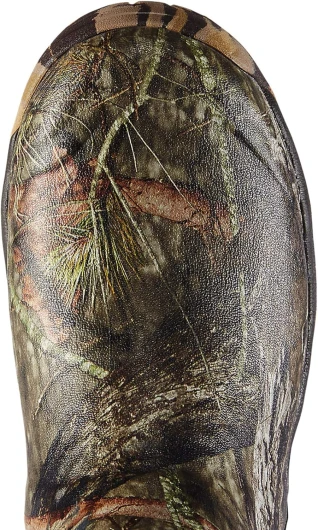
In actual use, the Alphaburly Pro does what it’s supposed to do: keep water out and keep you on your feet. I stood in ankle-deep water along a marsh edge for about 20–25 minutes while setting and picking up decoys, and there were zero leaks, no damp spots, nothing. Walking through soaked grass and shallow puddles all morning, my socks stayed completely dry. That’s the basic test, and they passed it without any drama. The tall 18" shaft also gives you enough height that you don’t stress every time you hit a deeper rut or step in a hidden hole.
Traction in mud and snow was good. The tread pattern grips well in soft ground and doesn’t pack up too badly in clay. I walked across muddy tractor ruts, slick grass, and some early snow and didn’t feel like I was skating. On icy patches, they’re like most rubber boots: better than flat soles but not magic. You still need to watch your step. On hard, dry ground or gravel, they feel a bit clunky but stable. They’re not loud, but you do get that rubber boot thud instead of a soft hiking boot step.
As for temperature, with medium wool socks in temps around freezing to mid-30s, my feet stayed reasonably warm as long as I was moving or doing short sits. For long, motionless sits in the stand below freezing, I’d want heavier socks or a version with more insulation if available. These aren’t deep-winter, sit-all-day-in-10°F boots, but they handle normal cold-season hunts fine if you manage your layers. In milder temps, they lean warm, especially if you’re hiking.
They also feel protective. Walking through brush and deadfall, I never worried about sticks or thorns punching through the side. Regarding snake protection, the rubber and height give you some peace of mind, but I didn’t have any encounters to truly test that. Overall, in the typical wet, muddy, and mildly cold conditions most of us see, their performance is solid. They’re not magic, but they do the job without fuss, which is really what you want from this type of boot.
What you actually get with the Alphaburly Pro 18"
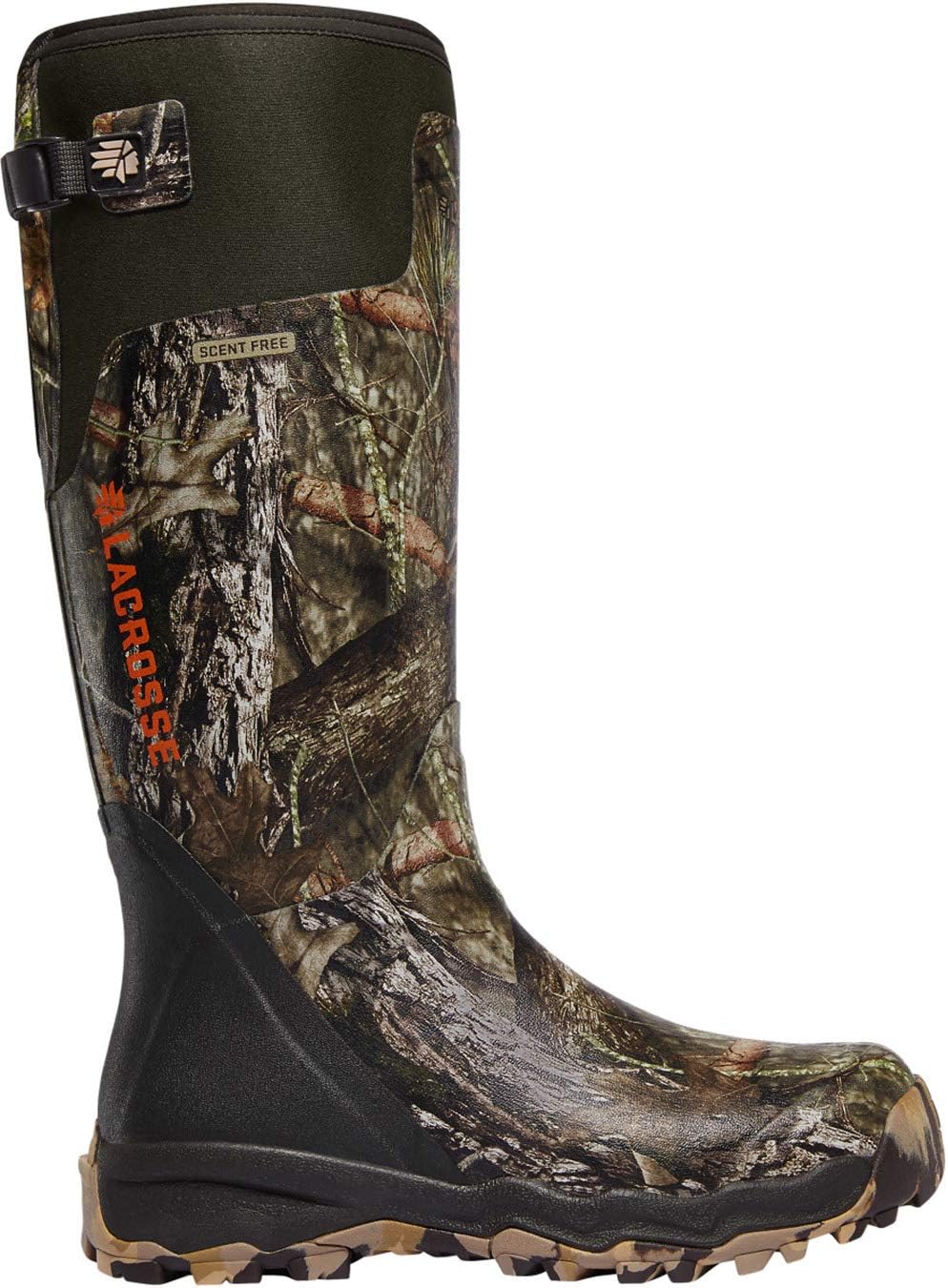
The Alphaburly Pro 18" is basically LaCrosse’s take on a serious rubber hunting boot: tall shaft, neoprene upper, thick rubber lower, and an aggressive tread. The version I had is the men’s 18" with the adjustable neoprene gusset at the back of the calf. It’s a pull‑on boot, no laces, so you’re relying entirely on the shape of the boot and that gusset strap to keep it snug. The shaft height is calf‑high, which in practice means it sits well below the knee but high enough that you can cross shallow creeks and walk through deep mud without worrying.
Out of the box, they look like what they are: work/hunting boots, not something you wear to town. The rubber feels thick and a bit stiff at first, especially around the ankle, but the neoprene at the upper part of the shaft is more flexible. The pair I tried is imported, made from a mix of natural rubber and neoprene, and you can feel that the lower part is built for abuse while the upper is more about fit and insulation. The tread pattern is deep and fairly open, clearly designed to shed mud rather than pack up like some flat-soled work boots.
LaCrosse markets these as waterproof boots for mud, muck, and snow, with an EVA footbed for cushioning and an "Active Fit" that’s supposed to keep the boot from slopping around on your foot. In practice, what that means is the heel area is a bit more contoured than the usual rubber tube boot, and the ankle is slightly locked in. They also highlight protection against snake bites thanks to the tall, thick rubber shaft. I don’t have a way to test that properly, but the material does feel tougher than the flimsy discount stuff.
Overall, the presentation matches what most hunters expect from this category: tall, plain, and built for abuse rather than looks. If you’re coming from cheap rubber boots, you’ll notice they look and feel more structured. If you’re coming from leather hikers, these will feel bulky, but that’s just the nature of this style. Nothing flashy here, just a straightforward hunting boot setup with a couple of comfort tweaks.
Pros
- Genuinely waterproof with a tall 18" shaft that handles mud, water, and snow well
- More comfortable than basic rubber boots thanks to EVA footbed and better heel/ankle fit
- Adjustable neoprene gusset fits different calf sizes and makes on/off easier
Cons
- Bulky and warm, not ideal for long hikes or mild-weather, high-activity hunts
- Pricier than generic rubber boots, so overkill for occasional or light use
Conclusion
Editor's rating
The LaCrosse Alphaburly Pro 18" is a solid choice if you’re regularly dealing with mud, standing water, or snow and you want a boot that actually keeps your feet dry without beating up your legs. The natural rubber and neoprene build feels sturdy, the EVA footbed adds real comfort compared to flat rubber, and the adjustable calf gusset makes a noticeable difference in fit. In the field, they do the basics right: waterproof, good grip in soft ground, and enough support that a few miles of walking don’t wreck your feet.
They’re not perfect. They’re bulky, they run warm, and they’re not the best option if your hunting style is more hiking than sitting. If you mostly hunt in dry, mild conditions or walk long distances over varied terrain, a lighter leather or synthetic boot will feel better. But if your reality is wet fields, marsh edges, snowy stands, or sloppy farm work, these are a dependable tool. I’d recommend them to hunters who spend a lot of time in cold, wet environments and are tired of cheap boots leaking or feeling like bricks. Casual users who only need rubber boots occasionally, or those who hunt mostly dry high ground, can probably save money with a simpler, lighter boot.