
Summary
Editor's rating
Value: fair price for what you get, with a few trade-offs
Design: western look, work boot soul
Comfort: decent after break-in, not cloud-like
Materials: full-grain leather with some cost-cutting around the edges
Durability: feels built to last a while, not forever
Performance on the job: grip, protection, and daily use
What you actually get with these Wolverine Ranchers
Pros
- Roomy square steel toe with proper ASTM and EH safety rating
- Goodyear welt construction and full-grain leather for decent durability
- Pull-on western style with slip-resistant rubber lug outsole that grips reasonably well
Cons
- Out-of-the-box comfort is just okay; stock insole is mediocre for long shifts
- Not waterproof and can let in moisture in heavy rain or standing water

Specifications
View full product page →| Brand | Wolverine |
Square-toe work boots that look ranch, feel jobsite
I wore the Wolverine Men's Rancher 10" Square Toe Steel Toe Work Boot in Dark Brown/Rust (size 10) as my main work boots for a couple of weeks on a mixed schedule: concrete shop floor, some muddy yard work, and a few long days standing around on gravel. I’m not a cowboy, just a guy who likes pull-on boots because laces always end up soaked, frayed, or untied at the worst time. I picked these because I wanted something that looked like a western boot but could still pass as a proper safety boot with a real steel toe.
First impression right out of the box: they look like standard ranch-style pull-ons with that square toe and contrast stitching, nothing fancy. They feel a bit stiff at first, especially around the shaft and the ankle, but that’s pretty normal for full-grain leather. Slipping them on the first time, I could tell the toe box was roomy, which I like, but the heel felt a bit loose until I dialed in the right socks. So, not a perfect out-of-box fit, but workable.
My main goal with these was simple: can I wear them all day without my feet screaming, and will they handle wet spots and oily patches without sending me flying? Also, I wanted to see if the steel toe and Goodyear welt were just marketing lines or if they actually felt solid in day-to-day use. I’m not gentle with boots, so they got dragged through some mud, flexed on ladders, and kicked into a few pallets and metal edges, on purpose and by accident.
Overall, after some break-in, they did the job. They’re not the softest, most cushioned boots I’ve worn, but they’re not bricks either. They sit in that middle ground: pretty solid for work, with a few annoying points you notice after long days. If you’re expecting miracle comfort out of the box, you’ll be disappointed. If you just want a western-style safety boot that holds up decently and doesn’t cost like a high-end handmade pair, these make sense.
Value: fair price for what you get, with a few trade-offs
In terms of value, these sit in that mid-range sweet spot: not bargain-bin cheap, not premium-priced. For the money, you’re getting full-grain leather, a real steel toe with proper ASTM and EH rating, Goodyear welt construction, and a recognizable brand name. That’s already better on paper than a lot of cheaper no-name pull-on boots that cut corners on materials or safety certification.
Where you feel the price point is in the comfort and finishing details. The stock OrthoLite insole is okay but not great for long, punishing days. The EVA midsole keeps things light but might not age as nicely as denser materials. The leather is decent quality but not the kind that makes you go “wow” when you touch it. So you’re basically paying for a solid, work-ready boot that does its job without extra luxury. If you’re expecting top-tier comfort and premium leather at this price, you’ll be a bit underwhelmed.
Compared to some other western-style safety boots I’ve worn, these are competitive. Some cheaper pairs I’ve tried had glued soles that started to separate within a season or steel toes that felt cramped. On the flip side, more expensive brands sometimes offer better insoles, thicker leather, and more polished construction, but you’re paying a clear jump in price for that. Here, you’re getting a decent balance: good construction method, acceptable comfort that you can upgrade with an aftermarket insole, and a design that works for both jobsite and casual wear if you don’t mind the work-boot look.
Overall, I’d call the value good but not mind-blowing. If you want a reliable pull-on steel toe boot and don’t want to spend top dollar, this is a sensible choice. If you’re on a very tight budget, you can find cheaper, but you’ll probably sacrifice durability or safety. If you’re super picky about comfort and plan to wear them 10–12 hours every day, factor in the cost of a better insole, and maybe consider stepping up to a higher-end line if your budget allows.
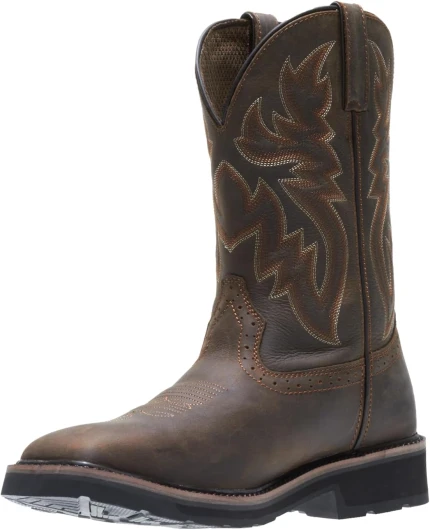
Design: western look, work boot soul
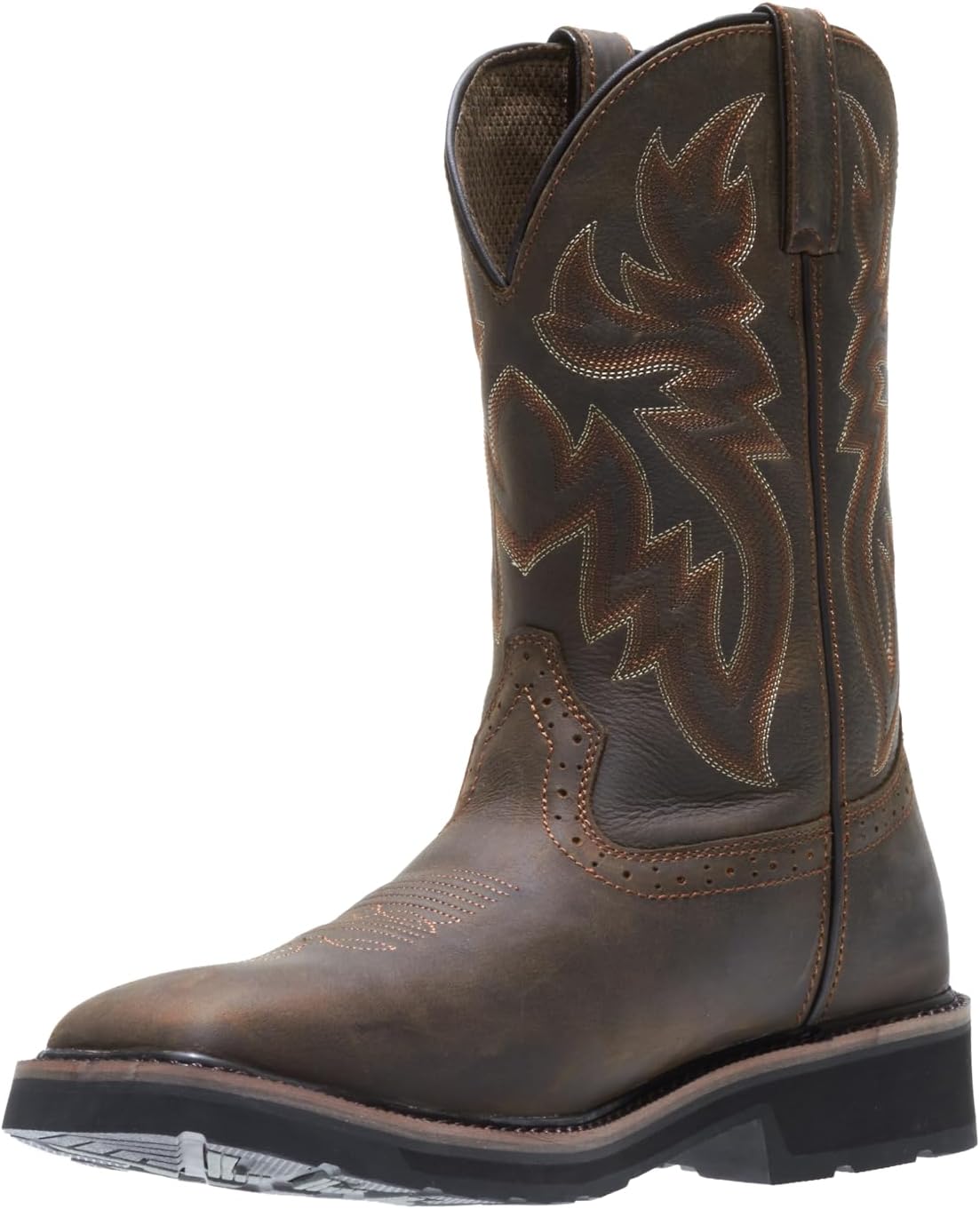
The design is pretty straightforward: 10" pull-on shaft, square steel toe, and a lugged rubber sole. The western vibe comes from the stitching on the shaft and the square toe shape, but everything else screams practicality. The pull tabs are big enough to actually grab with gloves, which is something brands weirdly mess up sometimes. Here, they’re sturdy and don’t feel like they’ll rip off the first time you yank them on in a hurry.
The square toe is honestly one of the better parts of the design. With a steel toe, a narrow toe box is torture. Here, your toes can actually move. I could wiggle my toes even with thick socks on, and after a long day that makes a difference. The trade-off is that visually, they look a bit bulky from the top, but if you care more about comfort and safety than a sleek profile, it’s a good call.
The heel is fairly standard and not overly high, so you’re not walking on an angle all day. The outsole pattern has real lugs, not just a flat surface with pretend grip lines. On wet concrete and around oily spots in the shop, it held up fine. Not magic, you still have to watch your step, but I didn’t feel like I was on ice. The Goodyear welt construction is a plus, especially if you’re the type to resole boots instead of tossing them. The stitching looked decent out of the box, no loose threads on mine, and the welt line was straight enough. Again, nothing fancy, just functional.
From a style point of view, they’re work-first, style-second. You can wear them with jeans and they look okay, but they don’t have that polished western boot feel you’d wear to a wedding or a night out. They’re clearly built to get dirty. If you want a boot that passes as both proper western dress boot and work boot, this isn’t it. If you want something you don’t mind scraping against a trailer hitch or caking in mud, the design works just fine.
Comfort: decent after break-in, not cloud-like
Comfort-wise, these boots are fine but not mind-blowing. Out of the box, the leather was stiff and the ankle area felt a bit tight when pulling them on. The first two days, I noticed some pressure on the top of my foot when bending down or climbing ladders, which is common with pull-on boots until they crease in the right spots. After about 3–4 days of regular wear, that eased up and they started to mold a bit to my feet.
The toe box is one of the better parts: the square steel toe gives you room to spread your toes, even with thick work socks. No pinching, no toenails scraping the cap, which is a problem I’ve had with narrower boots. Standing all day on concrete, the combo of EVA midsole and OrthoLite insole felt okay for about 6–7 hours. After the 8–10 hour mark, I started to feel that typical dull ache in the heels and balls of my feet. Not unbearable, but enough that I noticed it. When I swapped the stock insole for my usual aftermarket one with better arch support, the situation improved a lot.
One thing to note: being pull-on boots, heel slip is a thing at first. I had some heel lift for the first few days, especially walking downhill or on uneven ground. With thicker socks and as the leather around the heel broke in, that got better. Still, if you like your boots locked in like a sneaker, this style in general might bug you a bit. On the plus side, the mesh lining did help keep my feet from feeling soggy. They were warm but not miserable on a mild day. I haven’t tried them in deep winter, but these don’t feel insulated; they’re more of a 3-season boot unless you layer socks.
Overall, I’d rate the comfort as good enough for regular work, especially if you upgrade the insole. If you’re used to hardcore, super-padded work boots, these might feel a bit basic. If you’re coming from cheap no-name boots, these will feel like a step up. Just don’t expect to skip the break-in or to feel fresh after a 12-hour shift without some extra arch support.
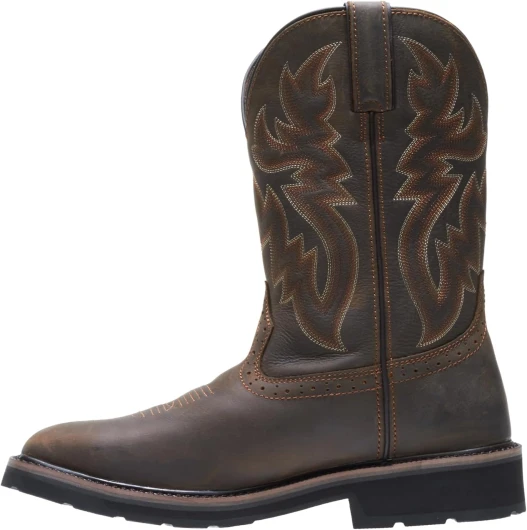
Materials: full-grain leather with some cost-cutting around the edges
The upper is advertised as 100% full-grain leather, and it feels like it. It’s a bit stiff out of the box, especially around the ankle and instep, but that’s normal. After a few days of bending, climbing, and general abuse, it started to soften up. It’s not buttery-soft premium leather, but for a work boot at this level, it’s decent. It handled a couple of muddy days and hose-downs without getting weird or overly dry. I’d still hit it with conditioner if you want it to last more than a season or two.
Inside, you’ve got a moisture-wicking mesh lining. That’s basically a synthetic fabric that helps pull sweat off your socks and dry faster. It does its job, but don’t expect miracles. On hot days, my feet were still sweaty, but the boots weren’t swampy. By the next morning, they were dry inside, which is all I really care about. The lining doesn’t feel scratchy, and I didn’t notice any rubbing spots or seams digging into my ankle or heel, which is good.
The midsole is EVA, which is a lightweight foam. That’s what keeps the boot from being overly heavy, but it also means the long-term support might fade after heavy use. It’s comfortable enough out of the gate, but if you’re used to heavier boots with dense midsoles, these might feel a bit springy or thin after a few months. The outsole is rubber with a lug pattern, and it feels tough enough. I dragged the soles over concrete, metal steps, and some gravel, and they didn’t chunk or peel in the first couple of weeks.
The insole is a removable OrthoLite footbed. It’s soft, has some bounce, and is better than those thin cardboard-style insoles you find in cheap boots. Still, for serious daily wear, I see it more as a starter insole. If you have bad knees, back issues, or just want more arch support, you’ll probably end up swapping it for a more supportive aftermarket insole. Overall, the materials are solid for the price point: not premium, but not garbage either. You can tell they tried to balance cost and durability, and it mostly works.
Durability: feels built to last a while, not forever
Durability is always hard to judge in just a couple of weeks, but you can usually tell if something is flimsy right away. These didn’t feel flimsy. The Goodyear welt construction is a big plus; it’s generally tougher and more repairable than glued-on soles. The stitching along the welt and upper looked clean on my pair, no loose threads or gaps. After dragging them through gravel, mud, and some mild abuse (scraping them on metal edges, bumping into concrete), the leather picked up normal scuffs but nothing that looked like it was going to tear or crack immediately.
The outsole shows minimal wear after my testing, which is what I’d expect in that time frame. The lugs still look sharp, no chunks missing, and no signs of the sole starting to separate from the welt. The heel edges, which usually wear first for me, only showed light smoothing. The leather upper creased in the usual spots (across the toe and above the instep), but the creases looked healthy, not like the finish was flaking off.
Where I see potential long-term weakness is in the EVA midsole and the insole. EVA tends to compress over time, especially if you’re heavier or carrying loads a lot. So while they feel fine now, I wouldn’t be shocked if the underfoot cushioning feels flatter after a few months of daily use. The OrthoLite insole is also a wear item; it’ll likely lose some bounce and shape with heavy use. The upside is that both are relatively easy to work around: you can replace the insole, and the Goodyear welt means you can resole if the outsole eventually wears down but the upper is still good.
Basically, these feel like good working boots for at least a season or two of solid use, maybe more if you take care of the leather and don’t absolutely thrash them every single day. They’re not tank-level indestructible like some very heavy, very expensive boots, but they’re also not disposable. If you’re the kind of person who cleans and conditions leather once in a while and doesn’t mind swapping insoles, you can probably stretch their life pretty well.
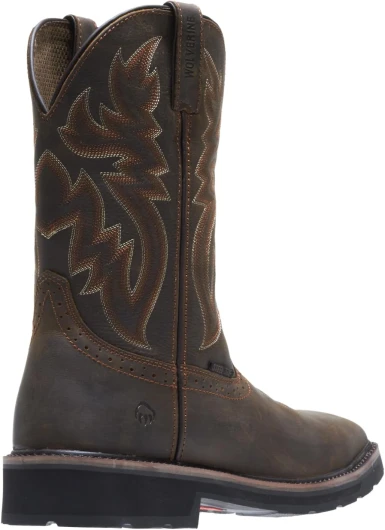
Performance on the job: grip, protection, and daily use
In day-to-day use, these boots perform like a solid mid-range work boot. The steel toe is legit; I banged it into pallets, caught it on a trailer hitch, and deliberately kicked a few pieces of scrap metal to see how it felt. My toes stayed safe, and there was no weird flex or feeling like the cap was loose inside, which can happen with cheaper boots. The electrical hazard rating is nice peace of mind, though I didn’t exactly go testing that on live wires.
The slip-resistant rubber lug outsole did its job reasonably well. On wet concrete, oily shop floors, and damp grass, I didn’t feel like I was constantly about to wipe out. You still have to be careful on smooth metal surfaces or greasy spots, but that’s true for basically any boot. The lugs cleared mud fairly well; they didn’t instantly pack up into a smooth blob. I walked through a muddy yard, and while they did pick up some mud, it kicked off pretty easily once it dried a bit.
On ladders and uneven ground, the boots felt stable. The heel isn’t crazy high, so you don’t feel like you’re tipping forward. The shank support feels okay; I didn’t get that painful flex in the middle of the foot when standing on rungs for a few minutes. That said, these aren’t hardcore logger boots, so if you’re on ladders all day, every day, you might want something with a stiffer shank. For mixed work—some walking, some standing, some climbing—they’re good enough.
In terms of weather, they’re not sold as waterproof, and they’re not. Light splashes, wet grass, and quick exposure to water are fine; they didn’t soak through instantly. But standing in puddles or working in heavy rain, you’ll eventually feel the moisture. The moisture-wicking lining helps dry them out afterward, but if you need true waterproofing, you’ll either need to treat them heavily or look for a model with a membrane. Overall, performance is reliable but not specialized: they cover most general jobsite needs without doing any one thing incredibly well.
What you actually get with these Wolverine Ranchers
On paper, the Wolverine Rancher 10" is a pull-on western-style work boot with a steel toe and Goodyear welt. Full-grain leather upper, moisture-wicking mesh lining, removable OrthoLite insole, EVA midsole, and a slip-resistant rubber lug outsole. The toe meets ASTM F2413-11 M I/75 C75 EH, which basically means it’s a legit safety toe and rated for electrical hazard protection. Shaft circumference is listed at 14 inches, so it's a mid-calf pull-on that gives decent coverage but isn’t knee-high.
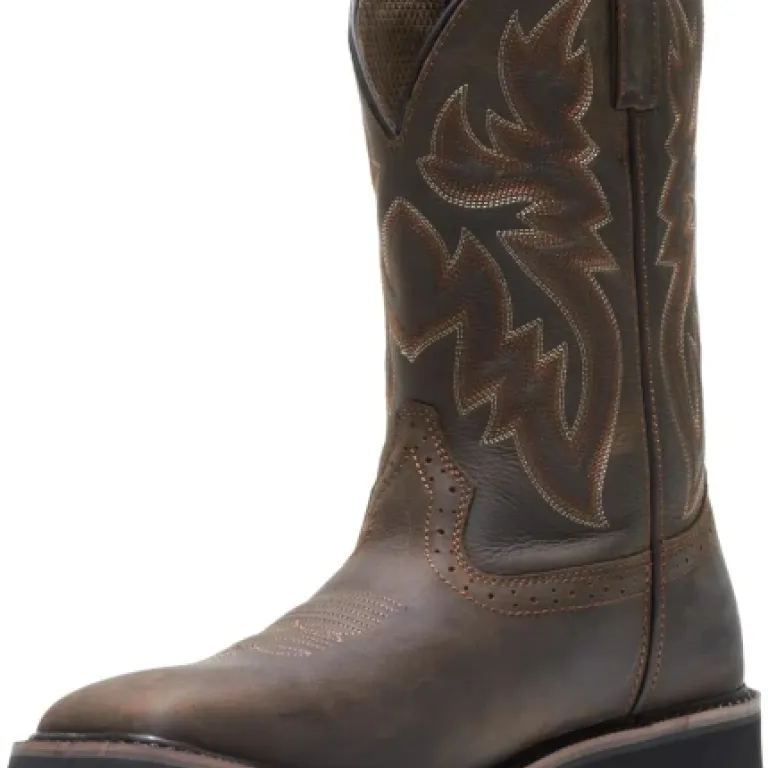
When you actually hold them, they feel lighter than some heavy-duty lace-up work boots, thanks to that EVA midsole, but still heavier than casual western boots. I’d put them in the medium weight category: you notice them on your feet, but they’re not anchors. The Dark Brown/Rust color is pretty straightforward: darker foot, slightly lighter shaft with contrast stitching. Nothing flashy, just standard work boot western look. The square toe is wide, which steel toe wearers will appreciate, especially if you’ve had your toes smashed in narrow boots before.
The removable OrthoLite footbed is one of those standard foam insoles: it’s cushioned, has a bit of bounce, and it does help for the first few hours. But if you’re on your feet 10–12 hours, you’ll probably want to swap it for something more supportive. The inside lining is mesh, which is there to help with moisture and sweat, and it does dry faster than plain leather inside. After a sweaty day, they didn’t stay damp overnight, which is a plus if you wear them back-to-back days.
Overall, the presentation is no-nonsense work boot with a western look. They’re not pretending to be fashion boots, and they’re not the tank-like logger boots either. They sit in that middle area: safety certified, pull-on, a bit of cushioning, and a design that works both on a jobsite and for casual wear if you don’t mind a chunky sole. Just don’t expect premium-level finishing or ultra-precise stitching; it’s more functional than refined.
Pros
- Roomy square steel toe with proper ASTM and EH safety rating
- Goodyear welt construction and full-grain leather for decent durability
- Pull-on western style with slip-resistant rubber lug outsole that grips reasonably well
Cons
- Out-of-the-box comfort is just okay; stock insole is mediocre for long shifts
- Not waterproof and can let in moisture in heavy rain or standing water
Conclusion
Editor's rating
The Wolverine Men’s Rancher 10" Square Toe Steel Toe Work Boot is a straightforward, no-nonsense work boot with a western look. It gives you a roomy steel toe, decent leather, a slip-resistant rubber outsole, and Goodyear welt construction at a fair mid-range price. Comfort is acceptable after a short break-in, especially if you swap in a better insole, and the pull-on design is convenient if you hate dealing with laces. It’s not a cushy, luxury boot, but it gets the job done without feeling cheap.
This boot makes the most sense if you want a western-style safety boot for mixed work—shop floors, light construction, yard work, farm/ranch stuff—and you’re okay with “good enough” comfort rather than top-tier. It’s also a decent option if you like square-toe boots and need real ASTM-rated protection without spending a small fortune. On the other hand, if you’re on your feet 10–12 hours every single day, have foot or back issues, or want something more polished that can double as a dress western boot, you might want to look at higher-end models or at least budget for a premium insole. Overall, it’s a pretty solid, practical boot for everyday work, with a few corners cut mostly in comfort rather than safety or basic durability.