
Summary
Editor's rating
Value: fair price for what you get, if they fit your feet
Design: functional, with a couple of quirks
Comfort: great out of the box, but watch the toe box
Materials: decent quality, not luxury
Durability: built to take abuse, but not indestructible
Performance on trail: solid grip, decent waterproofing
What you actually get when you open the box
Pros
- Comfortable out of the box with minimal break-in for most foot shapes
- Good traction from the Vibram TC5+ sole on varied trail surfaces
- Waterproof enough for typical rain, puddles, and wet trails
- Sturdy build that should handle regular hiking use for a few seasons
Cons
- Toe box runs on the narrow side and can cause discomfort for wider feet
- Cushioning is firm rather than plush, less comfy for long walks on pavement
- Waterproofing can eventually let water in during prolonged heavy rain or deep soak

Specifications
View full product page →| Brand | Merrell |
Trail boots for people who actually walk in them
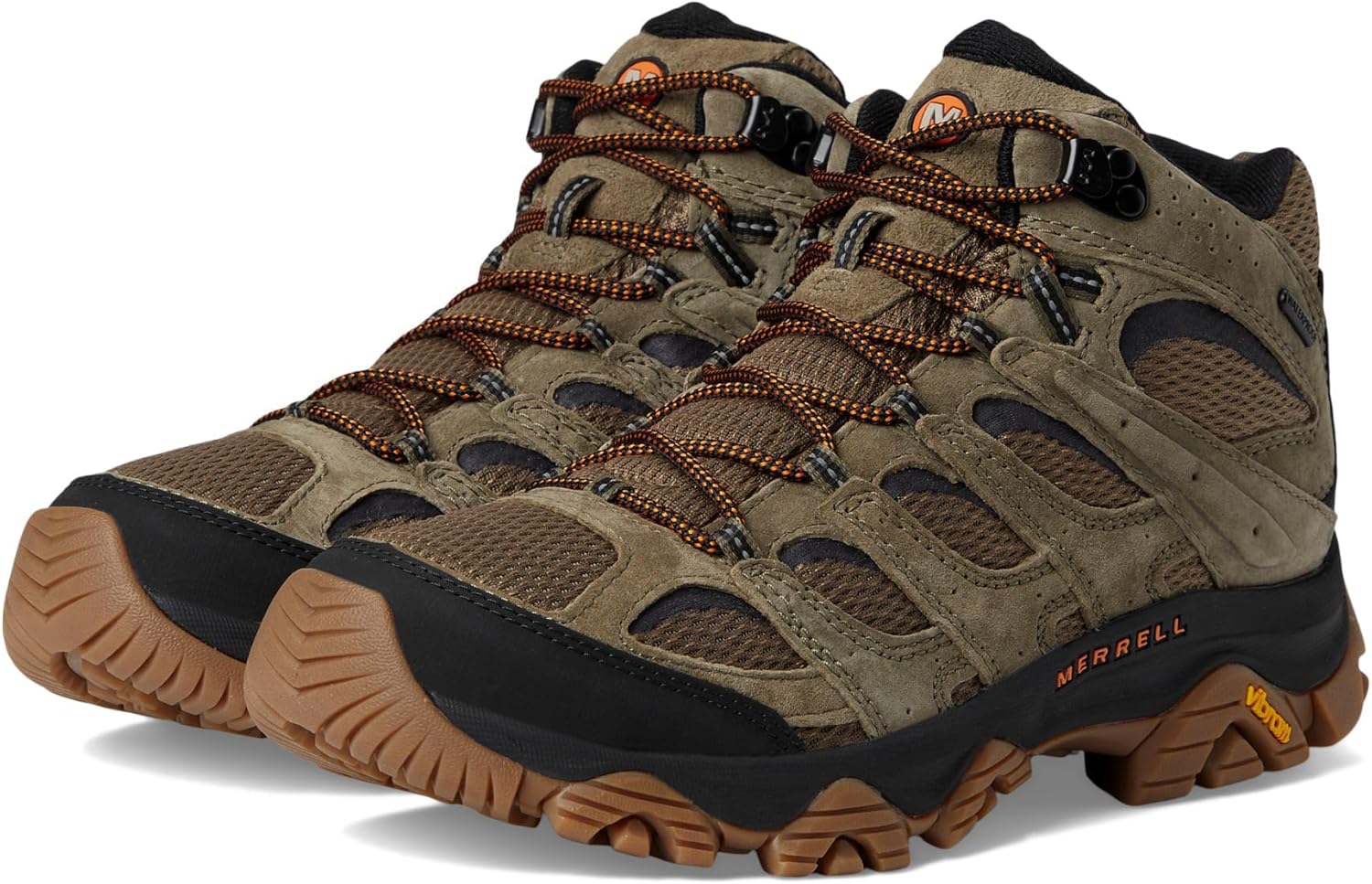
I’ve been wearing the Merrell Men’s Moab 3 Mid Waterproof (size 10.5, New Olive/Gum) as my main boot for day hikes and weekend trips. I’m not a thru-hiker doing 30 miles a day, but I do regular 4–8 mile hikes on mixed terrain: forest trails, wet roots, rocks, some muddy sections. I also used them a bit in town on rainy days to see how they feel on pavement. So this is very much a “real person using them normally” review.
The first thing I noticed is they’re exactly what Merrell is known for: you put them on and you can actually use them right away. There’s basically no break-in period for the upper. The sole is on the firmer side, but the boot doesn’t feel like a brick. If you’re used to running shoes, it’ll feel stiffer, but compared to a classic leather hiking boot, it’s pretty forgiving straight out of the box.
In terms of fit, my feet are average width bordering slightly wide at the forefoot. In 10.5, length was right, but the toe box is not super generous. It’s not cramped like some narrow European boots, but if your pinky toe usually complains, you’ll want to pay attention to sizing or maybe look at the wide version. I tried them with both thin hiking socks and thicker wool socks; with the thicker pair, I could feel the front more.
Overall, my first impression was: solid, no-nonsense hiking boot. Nothing flashy, no “wow” moment, but they feel like something you’d actually beat up on trails without worrying too much. If you expect a super cushy sneaker feel, you might be a bit underwhelmed. If you want something you can throw on and go hike in the rain without babying it, they make sense. Not perfect, but they do their job.
Value: fair price for what you get, if they fit your feet
Price-wise, the Merrell Moab 3 Mid Waterproof sits in that mid-range hiking boot zone. It’s not bargain-bin cheap, but it’s also not in the premium category. For that money, you get: a Vibram outsole, a waterproof membrane, a known comfort-focused design, and materials that are decent enough to last. So on paper, the value is pretty solid if you actually use them regularly on trails.
Where the value can swing one way or the other is fit. If the boot shape matches your foot — average width, not too wide in the forefoot — you’re getting a comfortable, versatile boot that can handle most hikes, light backpacking, and bad weather. In that case, the cost feels justified, and they’re a good workhorse. You’re not paying for fancy tech or extreme lightness; you’re paying for a reliable, all-around boot.
If your feet are wider or you need a roomy toe box, the story changes. Then you either have to size up, try the wide version, or accept some discomfort. If you end up playing the return-and-exchange game because of sizing, the whole thing becomes annoying fast, especially if you ordered online. In that situation, even a decent boot starts to feel like poor value simply because it doesn’t work with your feet.
Compared to some competitors like Keen, these feel a bit more durable and slightly more supportive, but maybe a touch less roomy in the front. So if you want something that leans more toward support and long-term use rather than pure out-of-the-box softness, the Moab 3 gives you good value. If you’re chasing ultra-light or very cushy boots, there are better choices, but they’ll often cost more or wear out faster.
Design: functional, with a couple of quirks
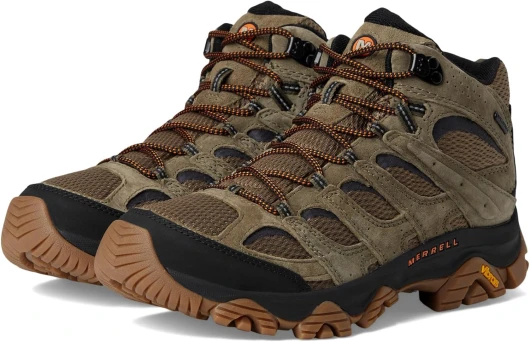
The design is very typical Moab: mid-cut ankle, lots of mesh panels, suede overlays, and that chunky Vibram outsole. The shaft height is ankle, so you get some support without feeling locked into a high boot. If you do a lot of rocky terrain or carry a heavy pack, this height is a decent compromise: more support than trail runners, less bulk than a full high-cut boot.
The lacing system is simple: regular eyelets down low and a couple of hooks up top. The hooks hold the laces well, and I didn’t have issues with them loosening mid-hike. There’s enough room to play with tension — I could keep the forefoot looser and crank down the ankle area if I wanted more support for descents. The tongue is gusseted high enough to help with water and debris, but it’s not overly padded, so it doesn’t feel bulky.
One design thing I noticed: the heel feels a bit built up compared to the forefoot, partly due to the thick tread and the Merrell Air Cushion. On pavement, it can feel like your heel is slightly higher than your toes, especially if you’re sensitive to that. On trail, this isn’t really an issue, but if you walk long distances on flat concrete, you might feel that heel-to-toe drop more clearly. It’s not a deal-breaker, but it’s there.
Ventilation-wise, the mesh panels help, but remember it’s still a waterproof boot with a membrane. So you get some air movement compared to all-leather boots, but it’s not a summer running shoe. In cooler weather and wet conditions, the design makes sense. In hot, dry climates, your feet will get warm, especially if you wear thick socks. Overall, the design is practical and trail-focused, with a couple of comfort trade-offs you should know about.
Comfort: great out of the box, but watch the toe box
Comfort is where these boots mostly shine, with one important warning. On day one, I wore them for a 5-mile mixed trail hike: forest, a bit of mud, some rocky sections. No break-in blisters, no major hotspots. The ankle padding is well done — snug but not suffocating — and the heel feels locked in. I didn’t get heel lift on climbs, which is usually where boots annoy me. So in that sense, they live up to the “out-of-the-box comfort” reputation.
Where things get tricky is the toe box width and overall volume. These run a bit snug in the front. My feet are not especially wide, and in my usual size (10.5), the length was right, but the front felt close, especially with thicker socks. After a few hours, my little toes definitely knew they were in boots, not in roomy trail runners. I didn’t get bleeding like one of the Amazon reviewers mentioned, but I can see how that could happen if you sized too small or have wider feet.
The cushioning is decent but on the firmer side. If you’re used to squishy running shoes, it might feel a bit hard under the ball of the foot on long days, especially on pavement. On dirt and softer trails, it’s fine and actually feels more stable. The Super Rebound midsole and Air Cushion in the heel do their job: they take the edge off impacts and help with longer descents, but they don’t turn this into a plush sneaker-like boot. I’d call it supportive and firm, not super soft.
For all-day comfort, I’d strongly recommend:
- Consider going up half a size if you’re between sizes or like thick socks.
- Look at the wide version if you have wider feet or hate tight toe boxes.
- Plan to swap the insole if you hike a lot or have arch issues.
Materials: decent quality, not luxury
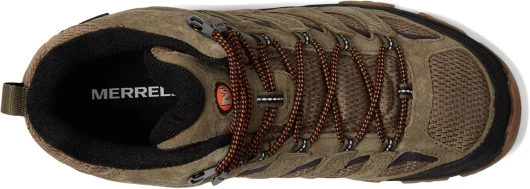
The upper is a mix of pig suede leather and breathable mesh, with a waterproof membrane underneath. The suede panels cover the high-wear areas (toe, sides, heel), and the mesh fills in the gaps for breathability. The suede doesn’t feel super premium, but it’s consistent and has held up fine to scuffs and mud so far. I’ve kicked rocks, scraped roots, and the toe cap plus the suede have taken it without peeling or obvious damage.
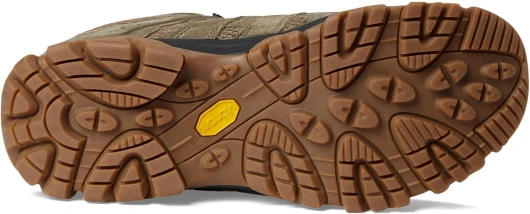
The sole is a Vibram TC5+ rubber, which is pretty standard for mid-range hiking boots. The rubber feels on the grippier side, especially on dirt, roots, and wet rock. The lugs are fairly deep and aggressive, so you get real traction rather than just a sneaker-like pattern. Under that, you’ve got the Super Rebound Compound midsole and Merrell Air Cushion in the heel. In reality, this means the shoe has a firm, slightly bouncy feel — not marshmallow-soft, but not dead either.
Inside, the insole is better than a lot of stock insoles but still not something I’d call premium. It has some arch support and a bit of heel cushioning, but if you have finicky feet or need serious arch support, you’ll probably end up swapping it for a third-party insole after a while. The lining feels smooth and didn’t cause hot spots for me, even on longer hikes, though again, this can vary a lot depending on foot shape.
Merrell also mentions partially recycled fabrics. You don’t really feel that as a user; the boot just feels like a normal modern hiking boot. Nothing about the materials screams cheap, but nothing feels high-end either. It’s in that “good enough and built to be used hard” zone. For the price point, the materials make sense. If you expect full-grain leather and super premium foam, this isn’t that boot.
Durability: built to take abuse, but not indestructible
Durability is always tricky to judge early, but based on a mix of my use and what I’ve seen from older Moab models, these are built to handle regular hiking without falling apart in a few months. The stitching around the toe and sides looks clean and hasn’t shown signs of fraying. The suede has taken scrapes and mud without peeling or cracking. After several muddy hikes and a couple of hose-offs, the upper still looks structurally solid, just a bit worn-in.
The outsole shows minimal wear so far. The Vibram rubber is on the grippier side, which usually means it can wear faster than rock-hard rubber, but I’m not seeing chunks missing or lugs flattening quickly. If you mainly hike on dirt and forest trails, I’d expect these to last a good while. If you walk a lot on pavement, you’ll chew through the lugs faster, which is normal for this kind of sole.
One thing to watch long-term is the waterproof membrane. On most boots with this kind of construction, the membrane is usually the first thing to fail after heavy use, especially if you constantly flex the boot hard or soak and dry it repeatedly. I haven’t had them long enough to kill the membrane, but based on similar boots, I’d say: expect solid waterproofing for a good period, but not forever. After a couple of seasons of heavy, wet use, it’s common for small leaks to show up.
Overall, compared to some competitors like Keen, people (and one of the Amazon reviewers) often say these hold up better. I’d agree so far. They feel like a boot you can beat on trails for a couple of years of normal use. If you’re doing extreme mileage or super harsh terrain, you’ll eventually outwear them, but for regular hikers, the durability-to-price ratio is pretty good.
Performance on trail: solid grip, decent waterproofing
On actual trails, the Moab 3 Mid Waterproof does what it’s supposed to do. The Vibram TC5+ outsole grips well on most surfaces I tried: packed dirt, loose gravel, wet roots, and damp rocks. I didn’t feel like I was skating around, even on steeper descents. The lug pattern clears mud reasonably well; you still get some buildup in sticky clay, but that’s true for pretty much any boot that isn’t a full-on mud tire.
Waterproofing is good, with a caveat. Walking through wet grass, shallow puddles, and light to medium rain, my feet stayed dry. The waterproof membrane and gusseted tongue do their job in those conditions. However, like one Amazon reviewer mentioned, if you’re out in heavy, constant rain or stand in water for a while, you’ll eventually feel moisture creeping in. I’d call it trail-hiking waterproof, not “stand in a stream for an hour” waterproof. Paired with gaiters, it’s more than enough for most normal hikes.
Stability is decent for a mid boot. The ankle height plus the firm midsole give you enough support for light to moderate loads. I wouldn’t pick these for a week-long trip with a very heavy backpack over rough alpine terrain, but for day hikes, weekend trips, and general outdoor use, they hold up well. The heel cushioning also helps reduce fatigue on long downhills, which I noticed after a longer loop with a lot of descent.
On pavement and hard surfaces, they’re okay but not great. The aggressive tread and firmer sole make them feel a bit overbuilt for city use. After a few hours walking around town, I felt more pressure under the ball of my foot than I do in regular sneakers. So as a trail boot, performance is pretty solid. As an everyday city shoe, they’re passable but not ideal.
What you actually get when you open the box
Out of the box, the Moab 3 Mid Waterproof looks and feels like a straightforward hiking boot. Mine in New Olive/Gum came in a standard Merrell cardboard box, nothing fancy. Inside, you just get the boots wrapped in paper, no extra laces, no fancy booklet. It’s basic, but honestly, that’s fine. You’re paying for the boot, not the unboxing experience.
When you pick them up, they’re lighter than a full-on backpacking boot but heavier than a trail runner. The listed weight (about 11–12 ounces per boot in this size) feels about right in the hand. You can tell there’s real rubber in the sole and some structure around the heel and ankle. It doesn’t feel cheap or flimsy, but it’s not a tank either. If you’re used to Merrell, it’s pretty much what you’d expect from a Moab: middle-of-the-road weight, all-purpose feel.
The color (New Olive/Gum) is fairly muted. It’s a greenish-brown upper with a gum-colored sole, so it works fine both on trail and with jeans. It doesn’t scream “technical mountaineering boot,” which I like. The branding is visible but not huge; a few Merrell logos, the Vibram logo on the sole, nothing over the top. If you care about appearances, it looks like a modern hiking boot, not dad’s clunky leather boots.
In practice, the presentation tells you exactly what this is: a mass-market, practical hiking boot that aims for comfort and utility over style and hype. If you’re expecting some premium packaging or a “wow” factor, you won’t get it. If you just want to pull them out, lace them up, and go, they fit that role perfectly.
Pros
- Comfortable out of the box with minimal break-in for most foot shapes
- Good traction from the Vibram TC5+ sole on varied trail surfaces
- Waterproof enough for typical rain, puddles, and wet trails
- Sturdy build that should handle regular hiking use for a few seasons
Cons
- Toe box runs on the narrow side and can cause discomfort for wider feet
- Cushioning is firm rather than plush, less comfy for long walks on pavement
- Waterproofing can eventually let water in during prolonged heavy rain or deep soak
Conclusion
Editor's rating
The Merrell Men’s Moab 3 Mid Waterproof in New Olive/Gum is a practical, no-drama hiking boot that suits most casual to intermediate hikers. It’s comfortable straight out of the box, offers solid grip thanks to the Vibram sole, and handles wet conditions well enough for typical day hikes and weekend trips. The build feels sturdy without being overly heavy, and the design is low-key enough to wear off-trail if you don’t mind the chunkier look.
The main downside is the fit in the toe box. If your feet are on the wider side or you like a lot of wiggle room up front, you really need to consider going up half a size or getting the wide version. Ignore that, and you may end up with sore or even damaged toes on longer hikes, like one Amazon reviewer experienced. Cushioning is also more on the firm, supportive side than plush, which is fine for many people but not ideal if you want a very soft, sneaker-like feel.
In short: if you’re a regular hiker who wants one boot to cover forest trails, mixed terrain, and bad weather, and your feet are average width, the Moab 3 Mid Waterproof is a pretty solid choice for the money. If you have wide feet, very sensitive toes, or you mostly walk on pavement and want maximum softness, you should probably look at other options or at least try these in-store before committing.