
Summary
Editor's rating
Is it worth the price compared to other hiking boots?
Chunky, practical design with the classic KEEN toe
Wide-foot friendly and no break-in, but not a lightweight sneaker
Leather, chunky rubber, and a waterproof membrane that actually works
Built to last, but you still need to care for the leather
Trail performance: grip, support, and waterproofing in real use
What you actually get when you open the box
Pros
- Genuinely wide toe box and good fit for high insteps and wide feet
- Supportive sole with stability shank that protects on rocky, uneven terrain
- Waterproof membrane that keeps feet dry in wet grass, puddles, and slushy snow
Cons
- Heavier and bulkier than lighter hiking shoes or trail runners
- Can feel warm in hot weather and may be too roomy for narrow feet

Specifications
View full product page →| Brand | KEEN |
Serious hiking boot for people with wide feet and bad ankles
I’ve been using the KEEN Men’s Durand II Mid Height Waterproof Hiking Boot (Cascade Brown/Gargoyle, size 11) for a mix of weekend hikes, muddy dog walks, and some yard work. I don’t baby my boots, and I’ve got wider feet and slightly cranky ankles, so I’m pretty picky. Before these, I’d been rotating between an old pair of Merrells and cheaper mid-height boots from a big-box store that never really felt right in the toe box.
The first thing that stood out is how these feel like a proper, traditional hiking boot. They’re not a sneaker-style hiker. They’re chunkier, more protective, and you can tell they’re built for people who actually step on rocks and roots, not just gravel paths. That said, I was surprised that I didn’t need a break-in period. I wore them right out of the box for a 2-hour muddy trail and didn’t get hotspots or heel rub, which is rare for me.
I’ve put them through wet grass, light snow, and a couple of rocky climbs. The waterproofing has held up so far, and the grip is solid on wet roots and packed dirt. They’re not featherlight, but they’re not bricks either. After a few hours on the trail, my legs felt fine, and my feet weren’t screaming to get out of them, which is really what matters at the end of the day.
Overall, my first impression is that this is a pretty solid boot if you’ve got wide feet and want real support, not just a casual hiking look. It’s not perfect, and there are lighter options out there, but for stability, toe room, and all-day comfort, it does the job well enough that I keep reaching for it over my other boots.
Is it worth the price compared to other hiking boots?
Price-wise, the Durand II sits in that mid-to-upper range for hiking boots. It’s not the cheapest option, but it’s also not in the extreme premium category. For what you get – leather upper, waterproof membrane, made in the USA, decent insole, and a real shank – the value is pretty good if you actually use all those features. If you just want something to walk the dog on pavement, this is probably overkill and not great value for you.
Compared to lighter boots like the Merrell Moab Speed 2 Mid, this KEEN is heavier and more supportive. If you want a nimble, almost sneaker-like feel, the Merrell or similar options give you that at a similar or slightly lower price. But they usually don’t give you the same level of toe protection or stiffness underfoot. For wide feet, the Durand II has a real edge: the toe box is genuinely roomy, and the high instep design means less pressure on the top of the foot. If you’ve struggled to find boots that don’t crush your toes, that alone might make the price feel fair.
Another point in favor of the value is the comfort right out of the box. Not having to suffer through a long break-in or buy aftermarket insoles immediately saves time and extra cash. I’ve had cheaper boots that needed new insoles on day one and still never felt right. With these, I’d be fine running them stock for a long time. Also, the fact they work both for real hiking and things like yard work or general outdoor chores means you’re not buying a single-purpose boot that sits in a closet most of the year.
So in terms of value, I’d say this: if you hike regularly, have wide or problematic feet, and want a supportive, waterproof boot, the Durand II is a good use of your money. If you only do easy, dry trails a few times a year or prefer very light footwear, there are cheaper and more comfortable options for that type of use. It comes down to whether you’ll actually benefit from the extra support and build quality.
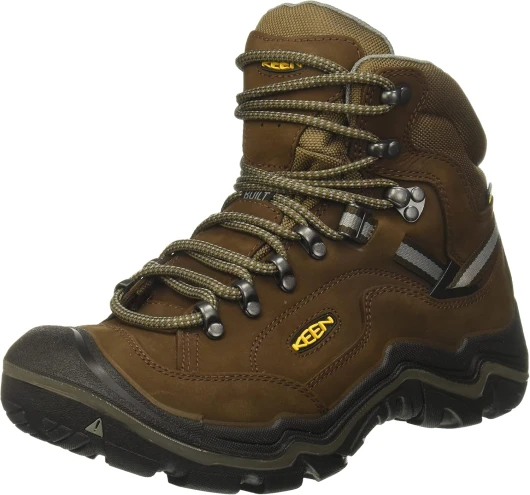
Chunky, practical design with the classic KEEN toe
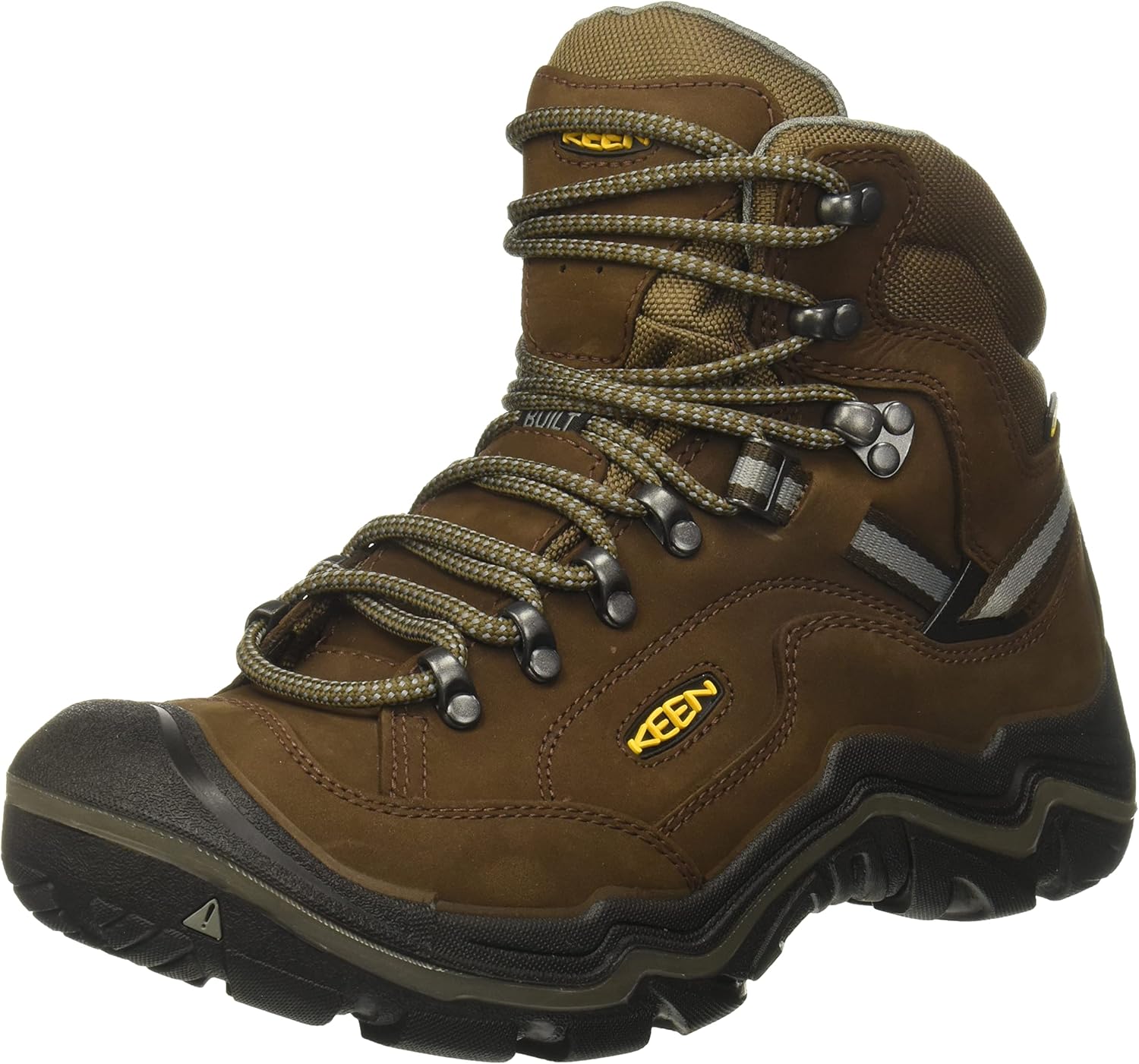
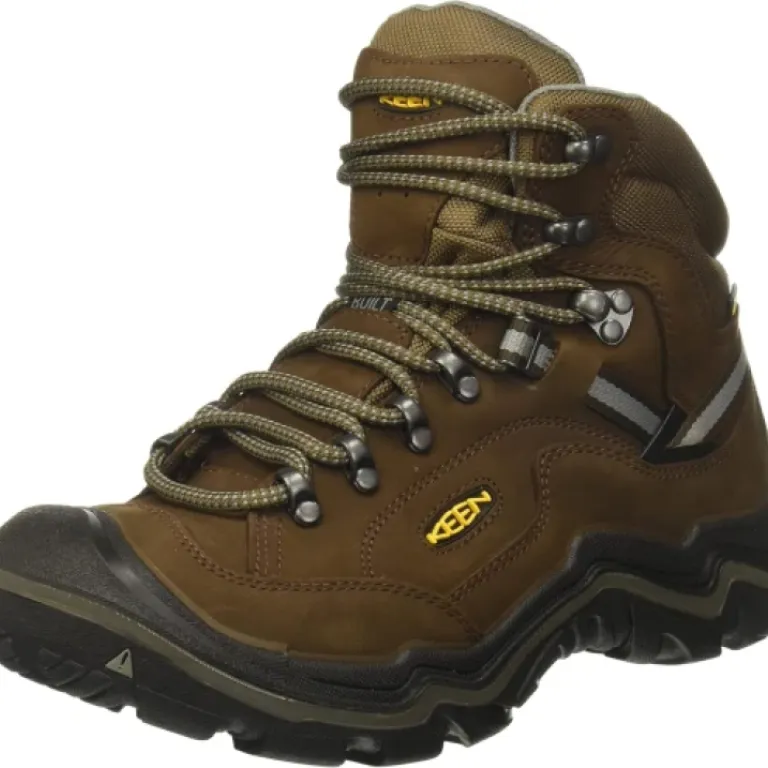
Design-wise, this is not a sleek, city-friendly boot. It looks like a tool, and I mean that in a good way. The Cascade Brown/Gargoyle color is a dark brown with some darker trim and the usual KEEN rubber toe bumper up front. That big toe bumper is kind of their signature: it’s not pretty, but it saves your toes when you slam into rocks or roots. I’ve done that more than once, and I was glad that rubber was there instead of just leather.
The boot is ankle height with a padded collar and tongue. The padding is generous without feeling like a pillow. The collar doesn’t dig into the leg, even when you cinch it tight, which is something I’ve had issues with on stiffer leather boots. The lacing setup is pretty straightforward: standard eyelets down low, then a locking-style D-ring, then speed hooks up top. The setback hook near the ankle is actually useful; you can pull the heel snug and then leave the top looser if you like more ankle flex.
On the sole, you’ve got KEEN’s ALL-TERRAIN rubber with 4 mm lugs. In practice, that translates to a medium-aggressive tread: deeper than a casual shoe, shallower than a mountaineering boot. The outsole wraps up a bit on the sides and toe, which helps with protection and gives you more confidence when you’re edging on rocks or side-hilling. It’s not a super flexible sole; there’s a shank inside, so the boot resists twisting. That’s good for stability, less good if you want a natural, barefoot-type feel.
Overall, the design clearly favors protection and support over style and lightness. If you like clean, minimalist hiking shoes, you might think these look a bit bulky. If your priority is “my feet and ankles need to survive rocky trails,” the choices KEEN made here make sense. It’s the kind of design you stop noticing once you’re on the trail, which is what I want from gear.
Wide-foot friendly and no break-in, but not a lightweight sneaker
Comfort is where this boot stands out if you have wide feet or a high instep. The toe box is genuinely roomy. My toes can move, and I don’t get that pinched feeling on the sides after a few hours. That’s a big deal for me because most standard-width boots end up crushing my little toes or creating hot spots on the outer edge. Here, I did a straight 2-hour hike right out of the box, and my feet felt pretty fresh afterwards. No blisters, no heel slip once I dialed in the lacing.
The arch support is moderate. The dual-density insole and shank give you a stable platform, but it doesn’t feel like an aggressive, high arch. If you’re flat-footed, you’ll probably be fine. If you need serious arch support, you might still want your own insoles, but the stock ones are decent. The heel cup holds the foot in place well, especially when you use that setback hook to lock the heel. Going downhill, my toes weren’t slamming into the front, which is usually where boots fail for me.
In terms of weight, you do feel that you’re wearing a real boot. If you’re coming from trail runners or light hiking shoes, there’s an adjustment period. On longer days, though, I preferred this extra support. My ankles felt more secure on uneven ground, and the shank helps when you’re stepping on sharp rocks or roots. You get less flex, but you also get less foot fatigue from the ground poking through every step. Around town, they’re overkill. On trails, the balance between support and comfort makes sense.
One thing to note: they’re warm. Not winter-boot warm, but there’s enough leather and padding that in hot summer conditions, your feet might cook. In cool, wet, or mixed conditions, they’re great. Overall, comfort is a strong point if you value room in the forefoot and decent support, and you’re okay with a bit of extra weight compared to a light hiker.
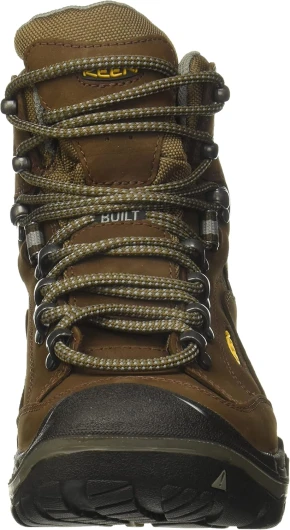
Leather, chunky rubber, and a waterproof membrane that actually works
The upper is 100% leather, and you can feel that right away. It’s not flimsy or thin; it has some structure to it. KEEN mentions they pick leather that’s meant to last, and while I obviously can’t confirm years of use yet, the boot doesn’t feel cheap in the hand. The leather isn’t super soft out of the box, but because of the padding and the way the boot is built, it still felt comfortable on the first hike. This is the kind of leather that benefits from a bit of care: a cleaner and conditioner now and then, especially if you’re in mud and snow a lot.
Underneath, you’ve got a rubber outsole and what KEEN calls a dual-density cushioning footbed plus a stability shank. In real life, that means the boot feels firm under the arch but a bit softer under the heel and forefoot. The insole is removable, which is important if you use custom orthotics. I pulled it out to check, and there’s enough volume to fit a slightly thicker aftermarket insole without making the boot feel cramped, at least for my feet.
The waterproofing is handled by their KEEN.DRY membrane. It’s basically their version of Gore-Tex: keeps water out, lets sweat vapor out. I walked through wet grass, shallow puddles, and slushy snow, and so far, my socks have stayed dry. No leaks at the seams or around the tongue, which is gusseted high enough to handle small streams and deeper puddles as long as you don’t fully submerge the boot. Breathability is decent for a leather boot with a membrane. My feet were warm, but not swampy, even after a few hours in cool, damp weather.
Materials-wise, nothing feels cheap or flimsy, and the made-in-USA label will matter to some people. The trade-off is that you’re not getting a super airy, mesh-heavy upper. You’re getting leather, padding, and a membrane. That’s good for protection and durability, less good if you hike in hot, dry climates all the time. For mixed weather, mud, and snow, the material choices make sense and feel appropriate for the price point.
Built to last, but you still need to care for the leather
Durability is hard to judge long-term without years of use, but there are some clear signs here. The stitching looks clean and consistent, especially around high-stress areas like the toe and the lace eyelets. I didn’t see loose threads or sloppy glue marks when I inspected them. The rubber toe bumper and the way the outsole wraps up around the sides give extra protection where boots usually start to get chewed up by rocks and roots.
After several muddy hikes, some snow, and using them for yard work (wet grass, pushing a mower, walking on uneven ground), the leather has picked up some scuffs but nothing serious. A quick clean and a bit of conditioner brings them back. KEEN themselves say you should use a leather cleaner and conditioner, especially on lighter colors, and I’d agree. If you’re the type who never cares for leather, they’ll still hold up better than synthetic-only boots, but you’ll shorten their life if you let mud and salt sit on them forever.
The outsole wear so far is minimal. The lugs still look sharp, and there’s no peeling at the edges. One user said they retired their old pair after about two years, which sounds about right for someone who uses them regularly. If you hike heavily every weekend and use them for work too, expect normal wear – they’re tough, but not indestructible. The fact that they’re made in the USA might matter to you from a quality control standpoint; at least in my pair, there are no obvious build issues.
Overall, I’d say durability looks solid for the type of boot this is. Treat the leather a couple of times a year, rinse off the worst mud, and you’ll likely get a good run out of them. If you want a boot you can totally neglect and abuse without any care, nothing will truly survive that. But for regular hikers and outdoor use, these feel like they’ll hold up better than the cheaper imports I’ve burned through in the past.
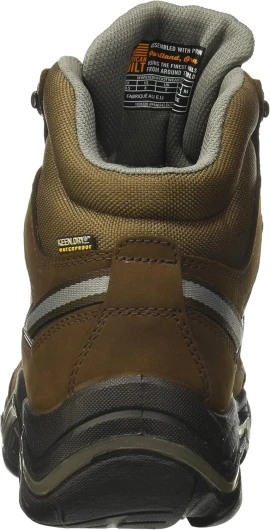
Trail performance: grip, support, and waterproofing in real use
On the trail, the Durand II feels stable and predictable. The 4 mm lugs on the KEEN ALL-TERRAIN outsole give solid grip on packed dirt, wet grass, and muddy sections. I’ve used them on a mix of forest trails, some rocky sections, and a bit of snow. In mud, the lugs bite well enough that I didn’t feel like I was skating, and they shed dirt reasonably fast. On wet roots and rocks, they hold okay; you still need to watch your footing, but I didn’t have any scary slips. Indoors, the non-marking outsole does its job – no black streaks on floors.
The stability shank is very noticeable in a good way. Side-hilling or stepping on uneven rocks, the boot resists twisting, which helps if you’ve got weak ankles or you’re carrying a pack. I didn’t feel my foot bending in weird ways when I stepped on edges. That’s the main reason I’d pick these over a lighter shoe for certain hikes. You trade some flexibility for more support, and if you’re prone to rolling your ankles, that’s worth it.
Waterproofing has been solid so far. I’ve stood in shallow puddles, walked through wet grass for 30–40 minutes, and did a slushy snow walk. No leaks, no damp socks. The KEEN.DRY membrane seems to do its job. They’re not magic – if you go above the ankle in water, you’ll soak them, and if you hike all day in pouring rain, eventually moisture can creep in through the top or just from sweat. But for typical wet conditions, they’ve kept my feet dry and reasonably comfortable.
The only real downside performance-wise is the weight and bulk if you’re used to minimal shoes. They’re not heavy for a full leather, supportive boot, but you do notice them on your feet. For long, fast hikes on easy trails, I’d probably grab something lighter. For rougher terrain, multi-day trips, or when I know it’ll be wet and sloppy, these feel like the right tool. They give you confidence to step on stuff without constantly worrying about bruised feet or twisted ankles.
What you actually get when you open the box
Out of the box, the Durand II feels like a proper work tool, not a fashion item. You get the pair of boots, laced up and ready to go, with no fancy extras. No extra insoles, no extra laces, just the basics. Honestly, that’s fine by me. The first thing I did was squeeze the heel counter and flex the sole by hand, and it’s clear this boot is built on the stiffer side compared to lightweight trail shoes. It’s closer to a backpacking boot than a casual hiker.
The size 11 I tried fits true to size length-wise, but the big story is the toe box and width. KEEN is known for that bulbous, wide forefoot, and you really feel it. I can spread my toes without them pressing into the side, which is something I can’t say for a lot of other brands. If you have narrow feet, you might actually find these a bit sloppy unless you really crank the laces. For wide or high-instep feet, though, this shape is a relief.
There’s also a removable insole that’s thicker and more supportive than the paper-thin ones you get in cheaper boots. It has a bit of arch support and some heel cupping. I didn’t feel the need to swap it out immediately, which is rare for me. The lacing system has speed hooks at the top and a set-back hook to really lock your heel in. That small detail matters if you’re trying to avoid heel slip on descents, and it actually works in practice once you figure out the tension you like.
In terms of first impression, the Durand II comes across as a no-nonsense, ready-to-use hiking boot. Nothing fancy in the packaging, but the boot itself looks and feels like it’s meant for people who actually go off pavement. If you’re expecting something ultralight and sneaker-like, this isn’t that. If you want a boot that feels like a boot, this is much closer to that category.
Pros
- Genuinely wide toe box and good fit for high insteps and wide feet
- Supportive sole with stability shank that protects on rocky, uneven terrain
- Waterproof membrane that keeps feet dry in wet grass, puddles, and slushy snow
Cons
- Heavier and bulkier than lighter hiking shoes or trail runners
- Can feel warm in hot weather and may be too roomy for narrow feet
Conclusion
Editor's rating
The KEEN Men’s Durand II Mid Height Waterproof Hiking Boot is a solid choice if you’ve got wide feet, need real ankle support, and actually get into mud, rocks, and snow. The roomy toe box, decent arch support, and no-break-in comfort are the main selling points for me. Add in the reliable waterproofing and a stable, supportive sole, and you get a boot that feels trustworthy on longer, rougher hikes. It’s not light or sleek, but it does the job it’s built for: keeping your feet protected and reasonably comfortable all day.
On the flip side, it’s not the right boot for everyone. If you have narrow feet, you might find the fit too roomy. If you mostly walk easy, dry trails or prefer a light, sneaker-like feel, this will probably feel bulky and warmer than you’d like. You’re paying for leather, a shank, and made-in-USA construction, which makes sense only if you’re going to use those strengths. For people with problematic feet, high insteps, or a history of rolled ankles, I think the price and weight are justified. For casual walkers, it’s probably more boot than you need.
Bottom line: great for wide-footed hikers who want a tough, supportive, waterproof boot; less ideal for minimalist or casual users. If that description matches you, this is a pretty safe bet. If not, you might be happier with a lighter, cheaper hiker instead.