
Summary
Editor's rating
Value: great on sale, less convincing at full price
Design: practical, a bit old-school, with one annoying detail
Comfort and fit: where these boots actually shine
Leather, rubber, and where they cut corners
Built to last a while, with one likely failure point
Waterproof and grippy enough… with clear limits
What you actually get out of the box
Pros
- Excellent size and width range (up to 16 and 4E), good for hard-to-fit feet
- Waterproofing works well in real use (rain, puddles, wet grass, slush)
- Comfortable out of the box with removable insoles for orthotics
Cons
- Lace hooks feel flimsy and can bend with rough use
- Traction is only average, especially on snow, ice, and wet rocks

Specifications
View full product page →| Brand | Rockport |
Big waterproof boots for big feet
I picked up the Dunham Men's Cloud Waterproof Boot in brown mainly because I have wide feet and finding anything in 4E that doesn’t feel like a brick is a pain. This model goes all the way up to size 16 and comes in different widths, so it immediately caught my eye. I’ve been using them as my daily bad-weather boots: walking the dog, light hiking on muddy trails, and running errands in slush and rain.
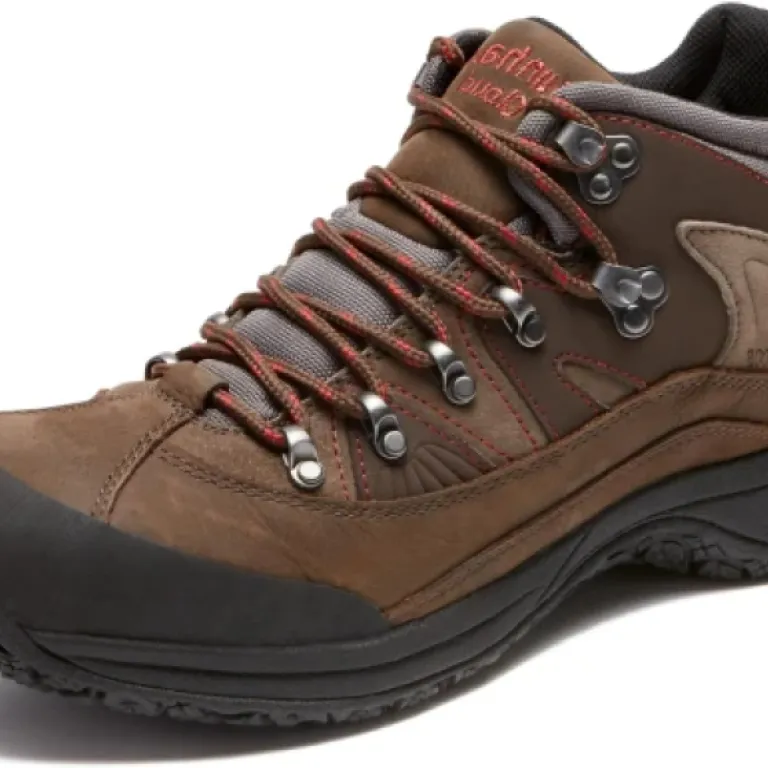
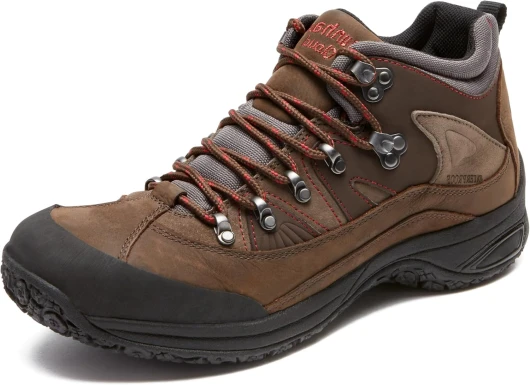
In terms of first impression, they look like a pretty standard leather hiker: mid-height shaft, brown full-grain leather, black rubber sole. Nothing flashy, nothing stylish, just a practical boot. That matches what I was looking for: something that can sit by the door and handle rain, wet grass, and the occasional snow day without me having to baby it.
Over a couple of weeks, I wore them in wet grass, shallow puddles, and one very sloppy parking lot after a storm. My feet stayed dry every time, so the waterproof claim is not just marketing. At the same time, I wouldn’t call them heavy-duty work boots. They feel more like comfortable hikers that can survive rough use, but if you spend your days on construction sites, you’ll probably want something beefier.
If you’re coming from regular sneakers or cheap fake-leather boots, these will feel like a big upgrade in terms of support and weather protection. If you already own higher-end hiking boots, these sit more in the middle: pretty solid for the price when on sale, but not mind-blowing. The key point is simple: if you have big or narrow feet and need real waterproofing, they’re worth a look. If fit is not a problem for you, you have more options to compare.
Value: great on sale, less convincing at full price
On Amazon, the rating sits around 4.2/5, which matches how I feel: good but not flawless. The real question is price. One reviewer mentioned grabbing them for about $85 and said they were very happy at that price but wouldn’t necessarily pay full price compared to other options. I’m in the same camp. At a discount, they’re a strong deal for anyone with wide or unusual feet who needs real waterproofing. Full price, they’re still decent, but the competition gets tougher.
What you’re mainly paying for here is the combination of: extended sizes, multiple widths, real leather, seam-sealed waterproofing, and removable insoles. If you have standard feet and can fit into more common brands, you’ll find alternatives from Merrell, Columbia, or even some work-boot brands in the same price range, sometimes with better traction or more modern design. But if you’re a 4E or a B width, the pool shrinks fast, and that’s where Dunham/Rockport makes sense.
In day-to-day use, they feel like you’re getting your money’s worth, especially if you actually use the waterproofing: walking in rain, slush, wet grass, etc. If you only wear them indoors or on dry days, you’re paying for features you’re not using. The slip-resistance and waterproofing are the main value drivers; the rest is pretty standard. The cheap-feeling lace hooks are the only part that makes me think, “okay, they definitely saved some money there.”
So in simple terms: if you find them at around $80–$100 and you struggle to find boots that fit your width, I’d call the value good to very good. If they’re significantly more expensive and you have normal-width feet, I’d shop around and compare, because the traction and hardware don’t really justify a big premium.
Design: practical, a bit old-school, with one annoying detail
Design-wise, these boots lean more toward “dad hiker” than modern technical shoe. The brown leather and black sole combo is very standard. If you want something flashy or super urban, this isn’t it. For me, that’s actually fine. I mainly needed something I can wear with jeans or work pants without looking weird, and these do that. They’re low-key enough for casual office days on bad-weather mornings.
The lacing system uses metal eyelets on the lower part and metal hooks on the top. Here’s where the design gets a bit annoying. The eyelets feel solid, but the hooks are made from stamped metal and feel flimsy. One Amazon reviewer pointed this out too: if you kneel, crawl around, or roll on the ground for any reason (work, kids, yard stuff), the hooks can bend inwards. I didn’t manage to bend mine yet, but I can see it happening over time because they’re thin and not tightly closed. That’s a weak point on an otherwise sturdy-feeling boot.
Another small design gripe: the laces themselves are okay but not great. They’re a bit stiff and don’t slide easily through the eyelets, so tightening the boots takes a bit of effort. Once they’re laced, they stay put, but if you’re used to shoes that you just yank tight quickly, these feel slower to put on and off. One user review even mentioned being happy with the boots except for the lace pattern, and I kind of get that. Functionally fine, but not pleasant.
On the positive side, the mid-cut shaft gives decent ankle coverage without being restrictive. There’s enough padding around the collar and tongue to avoid rubbing, and the shape around the ankle bone felt okay to me straight away. If you’re used to low-cut shoes only, you’ll feel the extra material at first, but it’s not stiff like some heavy work boots. Overall, the design is practical but a bit dated, and the lace hooks are the main weak spot in the whole setup.
Comfort and fit: where these boots actually shine
This is the main reason to buy these: fit and comfort for awkward feet. I have wide feet and high insteps, and most boots either crush my toes or feel like I’m standing on a lump. In 4E width, the Dunham Cloud felt good right out of the box. No major break-in drama. The toe box has enough volume so my toes can move, and I didn’t get that squeezed feeling on the sides. That lines up with reviews from people with rare sizes like 13B saying, “they fit perfectly.” That’s basically the whole selling point.
The arch support is moderate. There is some built-in support, so you’re not walking on a flat board, but it’s not super aggressive like some hiking boots. If you have neutral feet or slightly flat feet, you’ll probably find them comfortable as-is for daily use and light hiking. If you need serious arch support or custom orthotics, the removable insole makes it easy: pull it out, drop your orthotic in, done. I tested with my own inserts and there was enough depth in the boot to handle them without feeling cramped.
Underfoot cushioning is decent but not soft and bouncy. It’s more of a firm base with a bit of foam on top. After a full day walking around town and a couple of hours on trails, my feet felt fine, not aching, but I could tell these are not cushy running shoes. They’re boots meant to give structure and support more than plush comfort. The collar and tongue padding are enough to avoid rubbing around the ankle. I didn’t get any blisters, even on the first long walk, which is a good sign.
Weight-wise, they’re lighter than many work boots but heavier than low-cut hikers. I’d call them “lightweight for a leather boot,” which seems to match the review from the guy who called them light waterproof hikers. You feel them on your feet, but they don’t drag you down. If you’re on your feet all day indoors on hard floors, there might be better options with more cushioning. But for mixed use—commute, errands, light hikes, and wet-weather walking—they land in a comfortable middle ground.
Leather, rubber, and where they cut corners
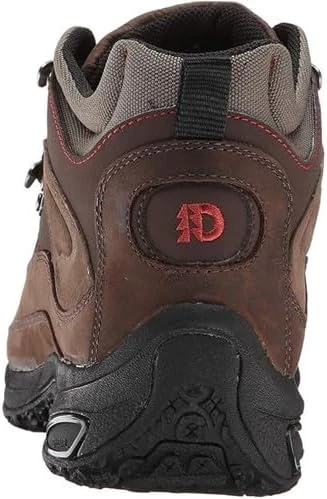
The upper is made from full-grain leather, and it feels like real leather, not plastic-coated junk. It’s on the stiffer side when new, which is normal, but it softens up after a few wears. I hit them with a basic leather conditioner after the first muddy walk, and the leather took it in nicely. No cracking, no weird peeling, so from a material standpoint the upper seems decent. This isn’t luxury leather, but for a functional boot, it’s fine.
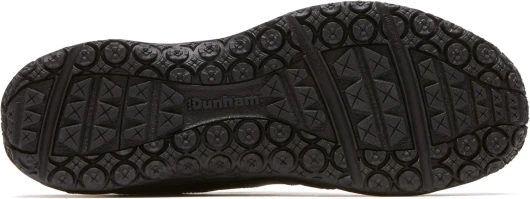
The sole is rubber, with a non-marking slip-resistant compound. The rubber doesn’t feel super soft or super hard, kind of middle-of-the-road. That matches how it behaves: okay grip on wet pavement and wet grass, nothing special on snow or ice. One Amazon reviewer called out the traction as “average” and said the “extra sticky” marketing is exaggerated. I’d agree. It’s not slippery trash, but if you’re expecting winter-boot traction, you’ll be disappointed. These are more like wet-weather hikers than winter specialists.
Inside, the removable insoles are basic memory foam. They give a bit of squish and help with step-in comfort, but they’re not high-end orthotic-level. After a couple of hours of walking, I could feel the foam compressing a bit, which is normal at this price point. The good thing is you can toss them and drop in your own insoles. The lining seems synthetic and does a decent job wicking moisture away. I didn’t get hot spots or rubbing, even wearing mid-weight socks.
The only place where I clearly see cost-cutting is those lace hooks. The eyelets are cast metal and feel solid. The hooks, on the other hand, look like thin stamped pieces that could bend if you catch them on something. It’s a weird contrast: good leather, solid eyelets, okay rubber, and then cheap-feeling hooks. Overall, the materials are pretty solid for the price, especially if you grab them around the $80–$90 range, but don’t expect premium work-boot hardware.
Built to last a while, with one likely failure point
I haven’t owned them for years obviously, but based on the materials and a couple of weeks of rough use, they feel like they’ll hold up fairly well. The leather upper is thick enough that it doesn’t feel fragile. I scuffed them on rocks and curbs, and the marks were surface-level, nothing deep. A quick wipe and a bit of conditioner made them look fine again. That lines up with the review from the person who said they’ve owned Dunham boots for years and that the sizing and quality haven’t changed much.
The stitching looks clean and even, no loose threads out of the box. The bond between the upper and the sole feels solid—no gaps or weird glue lines. After wearing them in wet and muddy conditions, I checked around the toe and heel where separation usually starts, and everything was still tight. If you don’t abuse them like worksite boots every single day, I can see these lasting several seasons of regular use.
The weak link, again, is the lace hooks. They’re thin and feel like they could bend or even snap if you really catch them on something or if you’re constantly kneeling and putting pressure on them. One reviewer already had to pry them open to get the laces out after they bent. That’s the kind of thing that doesn’t kill the boot, but it’s annoying and can shorten the lifespan of the lacing system. If you plan to use these for crawling under cars or working on the ground, that’s a real concern.
As long as you treat them as light hikers / everyday waterproof boots and not hardcore work boots, the durability seems pretty solid for the price, especially if you grab them around that $80–$100 range. Use them for dog walks, trails, commutes, yard work, and casual winter days, and I don’t see them falling apart quickly. Use them as your daily construction boots, and you’ll probably expose their limits, especially at the hooks and the not-so-aggressive sole.
Waterproof and grippy enough… with clear limits
On performance, the waterproofing is the clear strong point. I walked through wet grass after heavy rain, stood in shallow puddles, and did a slushy parking lot walk, and my feet stayed dry every time. No leaks at the seams, no damp toes. Another reviewer even mentioned all-day waterproof performance in rain, snow, puddles, and wet grass, and that matches my experience. For everyday bad-weather use, the seam-sealed construction does what it’s supposed to do.
Traction is where things are more mixed. The outsole is marketed as slip-resistant and certified to ASTM and SATRA standards. On wet pavement and tile, I felt reasonably secure—definitely better than cheap smooth-soled boots. On wet grass and dirt trails, grip was decent, but not aggressive. Where it falls short is in snow, ice, and wet rocks. The lugs are not deep or sharp enough to really bite into slick surfaces. One reviewer said the traction was “OK but unhelpful in snow, ice and wet rocks,” and I’d agree. If you’re buying these as your winter-ice boots, you’ll be underwhelmed.
In terms of stability, the mid-height shaft and firm sole give good support. Side-to-side, my ankles felt stable on uneven ground, and the boot doesn’t twist much. That’s good for light hiking and yard work. The trade-off is that they’re not flexible like a sneaker, so if you hate that locked-in boot feel, you might not enjoy them. For me, the support was welcome, especially with a backpack or carrying groceries on slippery days.
As for temperature, they’re not insulated, so you need to manage warmth with socks. In cool and damp weather, they’re great with regular socks. In winter, I used thicker wool socks and was fine for walking, but standing still in the cold you’ll eventually feel it. They’re not winter boots, they’re waterproof hikers. Overall performance: strong on waterproofing and support, average on traction, and fine for 3-season use with the right socks.
What you actually get out of the box
Out of the box, the Dunham Cloud boots are pretty straightforward. No fancy extras, no spare laces, just the boots and paper stuffing. The model I tried is the brown leather version, size 12 4E. The boot height is around 4.5 inches, so it’s a mid boot, not a full high-ankle work boot. It covers your ankle well but doesn’t feel like a mountaineering boot. The overall look is neutral: brown upper, black sole, a few stitching lines, and metal eyelets/hooks for the laces.
The first thing that stood out to me was how they’re clearly designed for people with tricky feet. They go from size 7 to 16 and offer narrow (B), medium (D), and extra wide (4E). That’s rare. One reviewer even mentioned a 13B “kangaroo foot”, which tells you the brand is actually covering weird sizes most brands ignore. If you usually get squeezed in standard D-width boots, these feel like a relief right away.
The boots have removable memory foam insoles, which is handy if you use custom orthotics. I pulled the stock insoles out and they’re decently cushioned, not super thick, but enough for casual walking and light hiking. If you have plantar fasciitis or need serious arch support, you’ll probably swap them for your own inserts, but at least the design makes that easy. No glue fights, they just lift out.
On the functional side, the brand advertises waterproof seam-sealed construction and slip-resistant outsoles certified to ASTM F1677 and SATRA TM144. In practice, that means they’re supposed to handle wet floors and outdoor surfaces better than a basic hiking boot. The outsole pattern isn’t very aggressive, though, so don’t expect magic on ice or deep mud. Overall, presentation is basic but honest: practical boot, focused on fit and weather protection, not on style or fancy packaging.
Pros
- Excellent size and width range (up to 16 and 4E), good for hard-to-fit feet
- Waterproofing works well in real use (rain, puddles, wet grass, slush)
- Comfortable out of the box with removable insoles for orthotics
Cons
- Lace hooks feel flimsy and can bend with rough use
- Traction is only average, especially on snow, ice, and wet rocks
Conclusion
Editor's rating
The Dunham Men’s Cloud Waterproof Boot is basically a solid, no-nonsense boot for people with tricky feet who need real waterproofing. The best part is the fit range: sizes up to 16 and widths from narrow to extra wide, which is rare. Comfort is good right out of the box, especially if you usually feel squeezed in regular boots. The waterproofing actually works, and for rain, wet grass, and slushy sidewalks, they do the job very well. As everyday bad-weather boots or light hikers, they make a lot of sense.
They’re not perfect, though. The traction is only average, especially on snow, ice, and wet rocks, so don’t buy these expecting winter-boot performance. The lace hooks feel like the weak point and can bend if you’re rough on them, which is annoying on a boot that otherwise feels sturdy. Design is basic and a bit old-school, so if you want something stylish, look elsewhere. Where they really earn their place is for people who can’t find their size or width in mainstream brands and just want a boot that fits, stays dry, and doesn’t kill their feet.
If you have wide or narrow feet, want a waterproof leather boot for everyday use, and can catch them around the $80–$100 mark, they’re a pretty solid choice. If you have standard feet and need serious winter traction or heavy-duty work durability, I’d skip these and look at more aggressive hiking or work boots instead.