
Summary
Editor's rating
Are they worth the money compared to other options?
Tall, camo, and all function – but not exactly sleek
Surprisingly wearable all day, with a few tradeoffs
Leather, nylon, PFAS and a tough outsole – what they’re really made of
Built to take abuse, but not exactly disposable-priced
How they handle real-world use: traction, support, and daily wear
What you actually get with these ROCKY snake boots
Do they actually protect you from snakes and water?
Pros
- 16-inch snakeproof coverage with real-world strike protection reports
- Comfortable enough for 6–10 hour days once broken in
- Waterproof construction that keeps feet dry in wet grass and shallow water
Cons
- Warm in hot weather and slower to put on due to full-height lacing
- Contains PFAS chemicals, which some people will want to avoid

Specifications
View full product page →| Brand | ROCKY |
Snake country boots that don’t feel like torture devices
I’ve been using the ROCKY ProLight Hunting Waterproof Snake Boots (Mossy Oak, unisex, size 9.5) mainly for walking brushy fence lines and doing chores in rattlesnake country. I’m not a guide or a pro hunter, just someone who spends a lot of time outside in tall grass, creek bottoms, and around wood piles. I bought these because I was tired of rolling the dice in regular work boots every time I stepped over a log.
The first thing that stood out when I started wearing them is that they actually feel like boots you can keep on for a full day, not just emergency gear. A lot of snake boots I tried before were stiff, heavy, and felt like wearing plastic pipes on my legs. These are still tall and a bit clunky, but they’re lighter than I expected and broke in faster than most knee‑high boots I’ve owned.
I haven’t had a snake hit them personally, but between the build and reading about people taking real strikes in these, I’m comfortable stomping through knee‑high grass and not staring at my feet every second. They come up close to my knee, so you get decent coverage for those surprise side strikes when you’re stepping over deadfall or walking in ditches.
They’re not perfect: they’re warm in hot weather, the PFAS note is something to keep in mind if that bothers you, and they’re not cheap. But in practice, when you’re out there in thick stuff and hear that rattle or see something move near your feet, the price suddenly feels less important. For what they are, I’d say they get the job done pretty solidly.
Are they worth the money compared to other options?
Value is always relative. These ROCKY ProLight snake boots sit in the mid to upper price range for snake boots. You can definitely find cheaper rubber or no‑name snake boots, and you can also find more expensive models from premium brands. What you’re paying for here is a mix of proven protection, reasonable comfort, and decent durability without going into ultra‑premium pricing.
Compared to cheaper snake boots I’ve tried, the big difference is comfort and weight. The cheaper ones often feel like you’re dragging buckets on your feet and start rubbing your shins after a couple of hours. These feel more like real hunting boots that happen to be snakeproof. On the flip side, if you almost never walk in snake territory and just want something "just in case" for one trip, you might not get full value out of them, and a cheaper pair might make more sense.
Considering the user reviews – including someone literally saved from a snake strike and another wearing them 8–10 hours a day – you’re not just paying for a logo. The performance and real‑world stories line up with what the boots are supposed to do. My only hesitation on value is the PFAS aspect; if that bothers you, you might want to look for alternatives, even if they cost more, just for peace of mind.
Overall, for regular hunters, landowners, or anyone who spends a lot of time in snake country, I’d call the value good but not crazy cheap. You’re getting solid protection and boots that can actually be worn all day, which, in this category, is already a win.
Tall, camo, and all function – but not exactly sleek
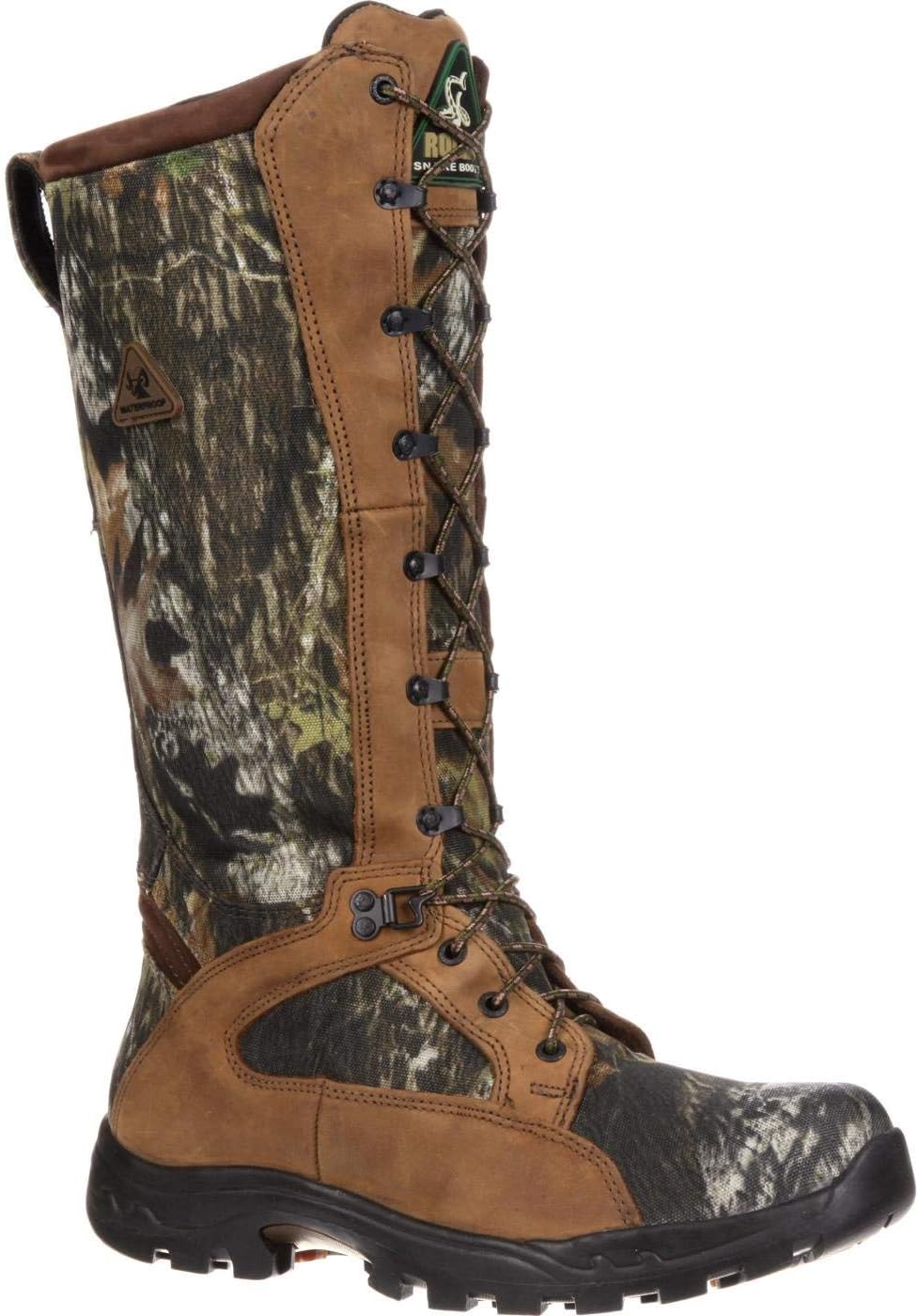
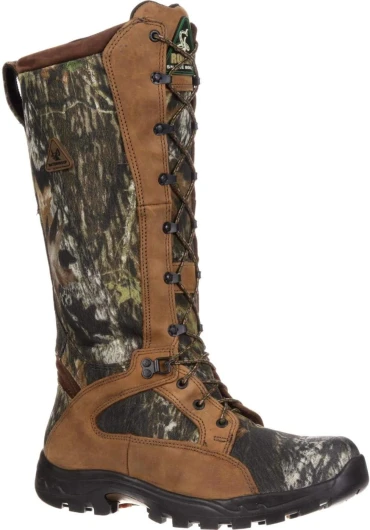
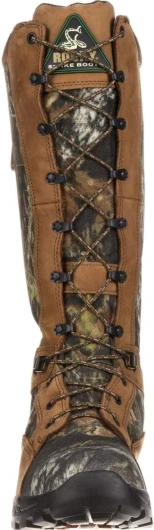
Design‑wise, these ROCKY ProLight snake boots are clearly built for one thing: protection from ground-level nastiness. You get a knee‑high shaft with a mix of full‑grain leather around the lower part and Mossy Oak Break-Up camo nylon running most of the leg. Functionally, that combo works: leather where you bang into rocks and brush, and nylon up the leg to keep weight down. Visually, they look like hunting boots, not something you’d wear into town.
The lacing system runs nearly the full height, which lets you dial in the fit around your calf. That’s handy if you’ve got slimmer or thicker calves, or if you’re tucking in pants. The hooks grip the laces pretty well, so once you crank them to where you want, they stay put. The tradeoff is they’re not zip‑on/zip‑off quick. If you want boots you can throw on in 10 seconds, these will annoy you. I need a good minute or two to lace them properly, especially if I’ve loosened them a lot.
The toe and heel have enough structure that you don’t feel like you’re in a rubber boot, but they’re not as reinforced as some heavy-duty work boots with steel toes. I’d call it a middle ground: enough structure for hiking and kicking through brush, not a full-on safety toe for construction sites. Around the ankle, the design gives decent support without feeling like a ski boot, which I liked on uneven ground and when side‑hilling.
In terms of looks, they’re fine if you’re into camo and hunting gear. For me, it’s purely functional. The camo does help them blend into the field, which is what they’re meant for. If I had one gripe on design, it’s that there’s no side zipper option on this model; that alone would make them a lot easier to live with for quick trips. But if you care more about secure lacing and coverage than convenience, the design choices make sense.
Surprisingly wearable all day, with a few tradeoffs
Comfort was my biggest concern before buying these. Most snake boots I’ve tried felt like wearing stovepipes – loud, stiff, and tiring. These ROCKY ProLights are not sneakers, but they’re more comfortable than I expected for a 16-inch protective boot. Out of the box, they were already decent: no nasty hotspots on the first day, and I did a few hours of walking and fence checking without feeling like I had to rip them off.
The footbed has a basic cushion – not super plush, but enough that my feet didn’t feel beat up after 6–8 hours. If you’re used to high-end hiking insoles, you’ll probably want to drop your own in, especially if you’ve got high arches or picky feet. The ankle support is good without being overly locked in, so you can still flex and crouch without fighting the boot. Compared to a rubber knee boot, these feel more like real footwear and less like waders.
On sizing, they run true to men’s size for me. I wear a 9.5 in most work and hiking boots, and the 9.5 here fits with a medium‑thick sock. People converting from women’s sizes should downsize about 2 sizes (like the user who went from women’s 9 to men’s 7). Width felt standard; if you’ve got very wide feet, you might feel a bit snug in the forefoot until they break in. After about a week of use, the flex at the ankle and instep got noticeably better.
The downside is heat. With the waterproof membrane and the tall shaft, they get warm in hot weather. In 80–90°F temps, my legs and feet were sweating more than in non‑waterproof boots. In cooler months or early mornings, it’s actually nice, but if you live somewhere really hot and humid, be ready for that. Overall, though, for something that protects against snakes and water, the comfort is better than “meh” – I’d call it solid, especially if you tweak them with better insoles.
Leather, nylon, PFAS and a tough outsole – what they’re really made of
The materials are pretty clear from the spec sheet: full‑grain leather, nylon upper, polyurethane/rubber outsole, and a waterproof membrane (Rocky’s own system). In hand, the leather around the foot and lower ankle feels decent quality – not luxury boot level, but thick enough that you’re not worried about it tearing on the first barbed wire snag. The Mossy Oak nylon up the leg is tightly woven and feels tough, not like cheap backpack fabric.
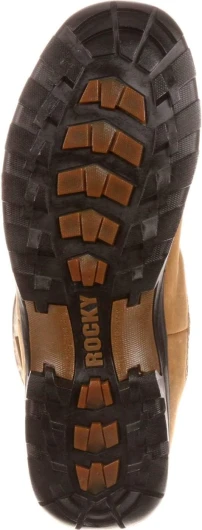
The outsole is a synthetic mix (PU/rubber) with the ProLight BioMech pattern. On dirt, loose rock, and wet grass, grip has been solid. I’ve walked on damp clay, gravel roads, and leaf‑covered slopes with them and never felt like I was on skates. In mud, like most boots, they’ll cake up, but the lugs are spaced enough that a few stomps or a stick scrape clears them. I wouldn’t call them mountaineering level, but for general hunting and property work, the traction is more than enough.
One important detail: these boots are explicitly listed as made with PFAS chemicals. That’s likely tied to the waterproofing and fabric treatments. If you’re trying to avoid PFAS for health or environmental reasons, that’s a real downside. They’re marketed as personal protective equipment, so the priority is clearly durability and water resistance, not being the cleanest product from a chemical standpoint.
Overall, the materials match the use case: tough, fairly stiff where you need protection, and built to handle brush, thorns, and repeated soaking/drying cycles. I’ve scraped mine on rocks, mesquite, and old fencing, and so far only cosmetic scuffs. The nylon hasn’t frayed, and the stitching is holding. For the price, I’d say the material quality is pretty solid, but the PFAS note might be a dealbreaker for some people.
Built to take abuse, but not exactly disposable-priced
Durability is where these boots justify their cost. They’re not cheap, so I was looking closely at how they hold up. After regular use in brush, rocky ground, and wet conditions, the leather has scuffed but not cracked, and the nylon hasn’t shown any fraying or punctures. I’ve snagged them on thorns and old fencing, and so far it’s only left cosmetic marks. The stitching around the toe and along the shaft is still tight with no loose threads yet.
The outsole wear has been reasonable. I’ve put in a mix of dirt roads, rocky two‑tracks, and some pavement when I forget to change boots, and the lugs are wearing evenly. No chunks missing, no early delamination. The heel edge is rounding a bit, which is normal. The bond between the sole and upper still looks solid, no gaps or peeling.
The waterproofing has held up through repeated soak/dry cycles. I’ve walked through wet grass and shallow water plenty of times, and the membrane is still doing its job. With time, any waterproof boot will eventually start to seep if you abuse it, but given how long some users have worn theirs (one person used them 8–10 hours a day and only replaced old ones when they wore out), I’m expecting a few good seasons out of these if I don’t completely trash them.
They’re not indestructible, and if you only need boots once a year, they might feel overpriced. But if you’re in snake or wet country often, the build quality and how they’re holding up for me so far makes the price easier to swallow. I’d rate durability as strong, assuming you do basic care like drying them properly and not baking them next to a heater.
How they handle real-world use: traction, support, and daily wear
Out in the field, performance comes down to three things for me: traction, stability, and how tired my legs feel at the end of the day. The ProLight outsole has a lug pattern that bites well on dirt, loose gravel, and forest floor. I’ve gone up and down rocky hills and through leaf‑covered slopes, and never felt sketchy. On wet grass and mud, they hold their own, though like any lugged boot they’ll cake up if the mud is really sticky.
Stability is good thanks to the tall shaft and lacing. Once you’ve got them snugged up, the boot keeps your ankle from rolling without feeling like a cast. Side‑hilling and stepping over blowdowns feels controlled, which is what you want when you can’t always see where your foot is landing. The synthetic outsole gives a bit of flex, so it’s not like walking on a board, but it’s still firm enough that sharp rocks don’t punch through to your feet.
As for fatigue, they’re lighter than some other snake boots I’ve tried, but they’re still a tall leather/nylon boot. After 8–10 hours, you’ll know you’ve been wearing them, especially if you’re not used to knee‑high boots. That said, I’ve done full days of property work and hiking in them without blisters, and my main complaint at the end of the day is just wanting to let my legs breathe, not pain points or hotspots.
One more thing: noise. They’re quieter than stiff rubber boots but not as quiet as soft leather hikers. The nylon and leather don’t swish much, and once broken in, they don’t squeak. For still hunting or slow stalking, they’re acceptable. Overall, in real use, the performance is pretty solid: they protect, they grip, and they don’t fight you every step of the way.
What you actually get with these ROCKY snake boots
On paper, the ROCKY ProLight Snake Boots are pretty straightforward: 16 inches of snakeproof protection, waterproof construction, full‑grain leather mixed with Mossy Oak nylon, and a synthetic outsole. They’re sold as unisex but sized in men’s sizes, so you have to convert if you’re used to women’s sizing. Mine are a men’s 9.5, which usually lines up with a women’s 11, and that matched what I felt on foot: true to size with a bit of room for thicker socks.
The shaft is basically knee‑high, which is both the selling point and the thing you have to live with. When you pull them out of the box, they look like a cross between a hunting boot and a military boot: tall, narrow profile, brown leather trim, and camo nylon up the leg. They’re lace‑up all the way, with that "unique" lace system the brand mentions. In reality it’s just a set of hooks and eyelets that grip pretty well, but I’ll admit once you set your tension, the laces don’t loosen up much during the day.
They’re not light like running shoes, but for a 16-inch protective boot, the weight is reasonable. The listed weight is about 4.5 pounds for the pair, and that feels about right in hand. You notice them when you pick them up, but once they’re on and laced, the weight is spread well enough that you stop thinking about it unless you’re climbing steep hills for hours.
Overall, the presentation is practical: no fancy packaging, no gimmicks, just a big pair of boots meant to be used and beaten up. If you’re expecting something stylish or city‑friendly, this is not it. If you want something you can throw in the back of a truck and not baby, the way they’re presented matches that vibe pretty well.
Do they actually protect you from snakes and water?
In terms of snake protection, that’s the main reason these exist. The boots are advertised as protecting against most North American venomous snakes – rattlesnakes, copperheads, coral snakes. Obviously, I’m not about to stick my leg in front of a snake on purpose to test that, but the construction gives you some confidence: thick leather around the lower part, dense nylon upper, and 16 inches of coverage that comes just shy of the knee. That height matters because a lot of strikes hit mid‑calf when you step over brush or logs.
User reviews include at least one person who took a real strike and walked away fine, which lines up with what these are designed to do. For me, the practical test is how relaxed I feel walking through waist‑high grass and brushy draws. With regular work boots, I tend to tap logs and step extra carefully. With these on, I still pay attention, but I’m not constantly worried about a fang going into my ankle. That mental comfort is worth a lot if you’re out there often.
On the waterproof side, they’re solid. I’ve walked through wet grass, shallow creeks, and muddy ditches where water came up several inches over the foot, and my socks stayed dry. One user mentioned they stay waterproof unless you literally dunk them, which matches what I’ve seen. If you stand in water up to the laces for a long time, you might eventually get some seepage, but for normal hunting, farm use, or rainy days, they keep your feet dry.
Overall effectiveness: for the intended job – snake protection plus staying dry on rough ground – they get the job done. They’re not magic, and you still need to watch where you step, but they’re miles better than gambling in regular hiking boots or cheap rubber boots in snake country.
Pros
- 16-inch snakeproof coverage with real-world strike protection reports
- Comfortable enough for 6–10 hour days once broken in
- Waterproof construction that keeps feet dry in wet grass and shallow water
Cons
- Warm in hot weather and slower to put on due to full-height lacing
- Contains PFAS chemicals, which some people will want to avoid
Conclusion
Editor's rating
After spending real time in these ROCKY ProLight Hunting Waterproof Snake Boots, my take is simple: they’re practical, reasonably comfortable, and they do the job they’re built for. The 16-inch height, sturdy leather/nylon mix, and solid outsole give you real protection and confidence in snake country. Add in the waterproofing that actually works in wet grass and shallow water, and you’ve got a boot that handles most hunting and property work situations without fuss.
They’re not perfect. They’re warm in hot weather, the full lace-up design is slower to get on and off than a zip boot, and the PFAS note is a real downside if you’re trying to avoid that. They’re also not bargain-bin cheap. But in practice, if you regularly deal with rattlesnakes, copperheads, or similar, the cost makes a lot more sense. I’d recommend these to hunters, ranchers, and anyone who spends long hours in brushy, snake‑prone areas and wants real protection without killing their feet. If you only see a snake once every few years or mainly walk on clean trails, you might be better off with regular waterproof hikers and save the cash.