Summary
Editor's rating
Value for money: worth it if you’re already into FiveFingers
Design: warm ninja sock vibes, with some odd choices
Comfort and fit: warm and secure, but sizing is tricky
Materials and build: warm lining, grippy sole, not truly waterproof
Durability after real use: holding up well, but not a tank
Performance in the cold: where they shine and where they fall short
What you actually get out of the box
Pros
- Very good grip on snow and typical icy surfaces thanks to ICETREK sole
- Warm 360° wool lining that keeps toes comfortable in cold weather
- Light and flexible minimalist feel compared to bulky winter boots
Cons
- Tricky sizing; often need 1–2 sizes up and toe box can feel snug
- Ankle collar can rub on outer ankle bone for some people
- Only water resistant, not waterproof, and annoying to put on due to no heel pull tab and standard laces

Specifications
View full product page →| Brand | Vibram |
| Is Discontinued By Manufacturer | No |
| Item Weight | 10 ounces |
| Item model number | Trek Ascent Insulated-M |
| Department | mens |
| Date First Available | August 14, 2015 |
| Manufacturer | Vibram Mens Shoes |
| ASIN | B017Z1LS8O |
Toe shoes in winter: good idea or dumb experiment?
I’ve been in and out of Vibram FiveFingers for a while, but I usually park them once it gets properly cold. This winter I decided to push it and grabbed the Vibram Trek Ascent Insulated in black, size 43 (I’m normally a 42–43 in regular shoes). I’ve used them for a few weeks for dog walks, errands, and short hikes in cold, wet conditions. Think wet sidewalks, frozen trails, and a bit of snow slush.
My main question going in was simple: can these toe shoes actually keep my feet warm and reasonably dry, or is this just a niche gimmick for hardcore barefoot fans? I’m not babied by thick boots, but I don’t like frozen toes either. I compared them to my normal winter setup: a mid-height hiking boot with wool socks and, on lighter days, regular Trek Ascents with thick socks.
Right away, a few things stood out. The grip is no joke, the warmth is better than I expected, and putting them on is still that slightly annoying Vibram ritual. They’re not magic, and they have some odd design choices, but they do fill a specific gap: winter use for people who already like minimalist shoes and individual toes.
If you’ve never worn FiveFingers before, these are probably not the pair I’d start with. But if you already own a couple of Vibrams and you’re tired of switching to clunky boots as soon as it snows, this model is worth a real look, with some caveats about sizing, ankle comfort, and water resistance that I’ll get into below.
Value for money: worth it if you’re already into FiveFingers
Price-wise, these sit in the same ballpark as other Vibram FiveFingers models, sometimes a bit higher, sometimes lower depending on size discounts. One reviewer grabbed a size 45 for about $99 because it was cheaper than other sizes; that kind of weird pricing happens a lot with niche sizes. In general, you’re paying a mid-range to slightly high price for what is basically a specialized winter minimalist shoe. Compared to a standard winter hiking boot, they’re not cheap, but they’re not luxury-level either.
The value really depends on who you are. If you already own and like FiveFingers, the Trek Ascent Insulated fills a very specific gap: cold-weather use without having to go back to bulky boots. For that person, it’s pretty solid value. You get real warmth, good grip, and that barefoot feel you’re used to. If you’ve never worn toe shoes before and you’re just looking for warm winter footwear, I’d say there are better options for the money that are easier to size, more waterproof, and more forgiving.
There are also a few design compromises that hold back the value proposition a bit. The missing heel pull tab and the choice of regular laces on a winter shoe are small things, but they add daily annoyance. Water resistance is fine, but at this price some people will expect closer to waterproof performance. And because the sole is relatively thin and the rubber is softer for winter grip, you’re probably not going to get 5+ years out of them with heavy use.
Overall, I’d rate the value as good but not mind-blowing. If you’re the target user—someone who lives in their Vibrams and just needs something for cold and modestly wet conditions—you’ll probably feel your money is well spent. If you’re just curious and want to “try toe shoes,” I’d start with a cheaper or non-insulated model first and only pick these up once you know you like the whole concept.
Design: warm ninja sock vibes, with some odd choices
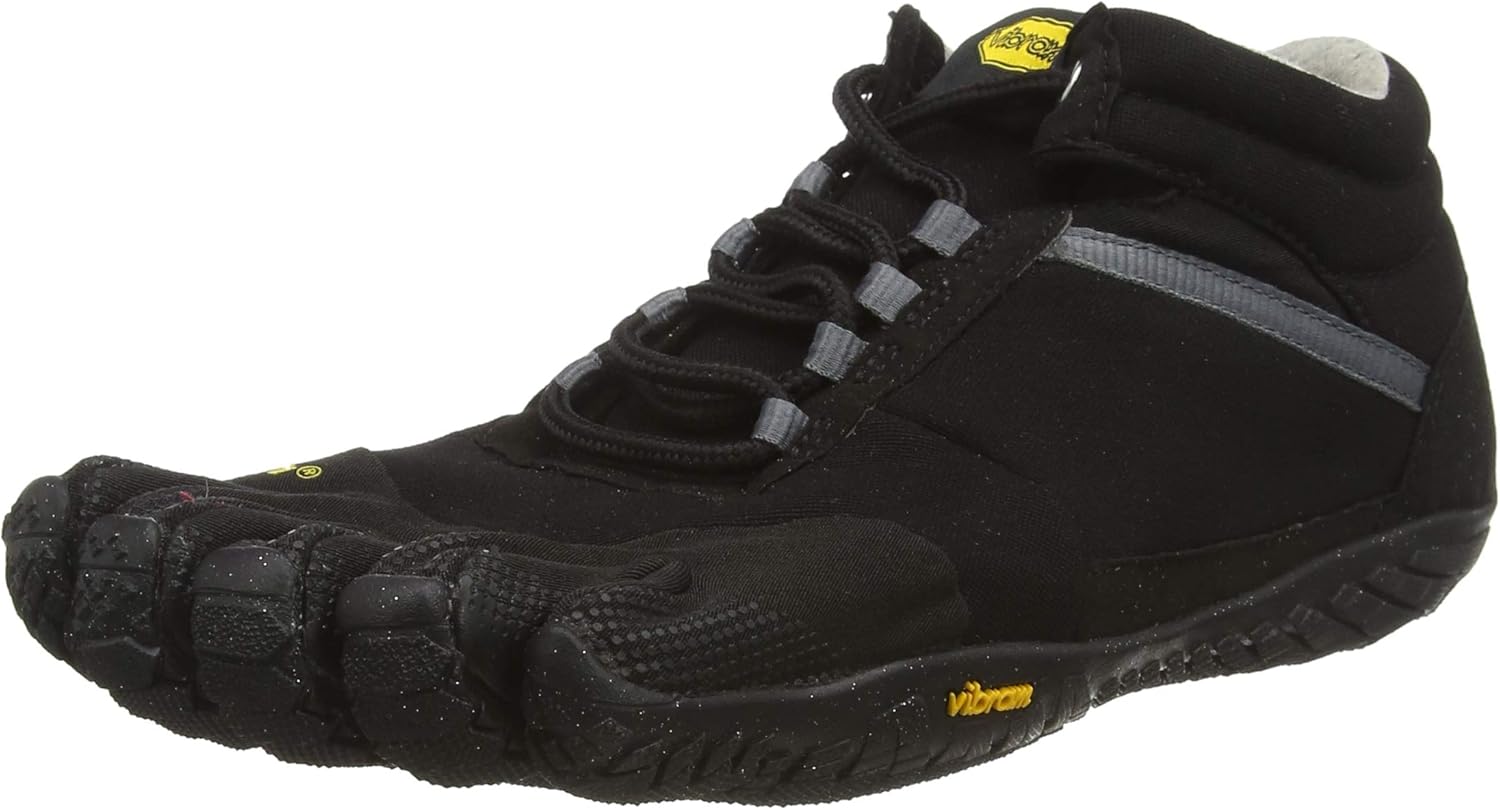
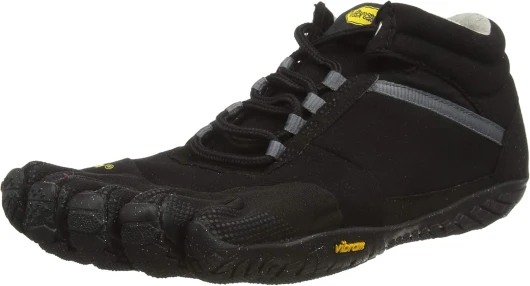
Design-wise, the Trek Ascent Insulated sits in a strange spot: it looks technical but still low-key enough in black that you don’t feel like a circus act, at least once people get over the toe thing. The all-black color helps; it hides dirt and snow stains better than the brighter models. From a distance, it just looks like a compact winter shoe. Up close, the separated toes and the slightly puffy insulated upper give it that “winter glove for your feet” feeling that a few reviewers mentioned.
The mid-top cut is a double-edged sword. On one hand, the extra coverage around the ankle keeps snow and cold drafts out better than the low-cut FiveFingers. On the other hand, the collar hits right at the ankle bones. On my right foot, it rubbed on the outer bone (fibula) during longer walks. After about 30–40 minutes, it started to feel tender. I saw at least one user who literally cut a notch in the upper there, and I get why. On my left ankle, no problem at all. So it really depends on your anatomy and how bony your ankles are.
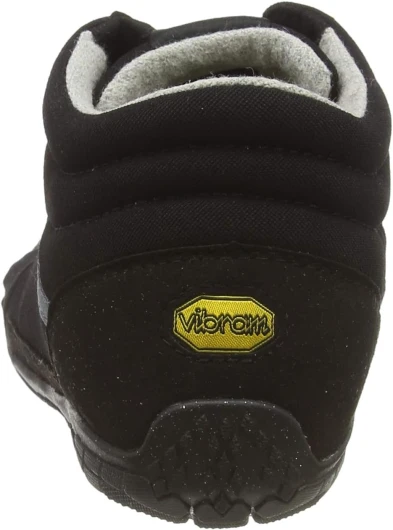
The lack of a heel pull tab is just annoying. FiveFingers aren’t slip-ons; you already have to wiggle your toes into each pocket. Not having that small loop at the back to pull the heel up makes the whole process more fiddly. Also, they used regular fat laces instead of the quick-pull system they use on other Vibrams. In winter, dealing with soggy, fat laces with cold fingers is just not fun. Functionally they work, but it feels like a step backward compared to their own lineup.
On the positive side, the overall silhouette is compact and practical. The rubber toe bumpers give a bit of extra protection when you kick a rock or curb, and the ICETREK outsole has a tread pattern that actually looks built for snow and slick surfaces: lots of small lugs and edges instead of big chunky blocks. So the design choices are a mix: some very well thought-out for winter grip and warmth, and some lazy (laces, missing pull tab, ankle cut) that you really notice once you use them daily.
Comfort and fit: warm and secure, but sizing is tricky
Comfort is a mixed bag that depends heavily on whether you’re used to FiveFingers and how you handle the sizing. I normally wear around EU 42–43 in regular shoes and a 42 in many Vibrams. For this insulated version, I went up one size and that felt about right with thin to medium socks. Some reviewers went up two sizes, especially if they wanted to wear thicker socks or they usually like a tight fit. The wool lining and the extra padding between the toes eat up a bit of space compared to summer models, so if you buy your usual Vibram size, there’s a good chance it’ll feel pretty snug, especially around the toes.
Once on, the shoe is warm and fairly comfy underfoot. You still get that barefoot-style thin sole feel, so you’ll feel rocks and uneven ground, just slightly muted. If you’re coming from thick boots, this will feel odd at first. If you already like minimalist shoes, it feels natural. The big plus is how warm the toes stay. On walks around freezing (0–5°C / 32–41°F), my toes stayed warm with just thin socks. Below that, with a bit of wind, I’d go for slightly thicker socks, but I never had that numb-toe problem I get in normal FiveFingers in winter.
The ankle area is where things can get annoying. The mid-top collar presses around the ankle bones. On my left foot, no issue at all. On my right, after a couple of longer walks (45–60 minutes), the outer ankle bone started to feel sore from the repeated contact. I had to loosen the laces a bit and adjust the tongue to reduce the pressure. One Amazon reviewer literally cut a notch in the upper at that spot and said it fixed the problem. I didn’t go that far, but I see how some people might have to if their bone sticks out a lot.
Ventilation is obviously less than a summer Vibram because of the wool lining, so indoors or in mild weather they can get too warm and a bit sweaty. I wouldn’t wear these in a heated office all day. For outdoor winter use, though, they hit a good balance: warm but not sauna-level. Overall comfort: good if you nail the size and your ankles tolerate the collar. If you’re between sizes, I’d say go up one full Vibram size if you use thin socks, two if you want thicker socks or have wide feet.
Materials and build: warm lining, grippy sole, not truly waterproof
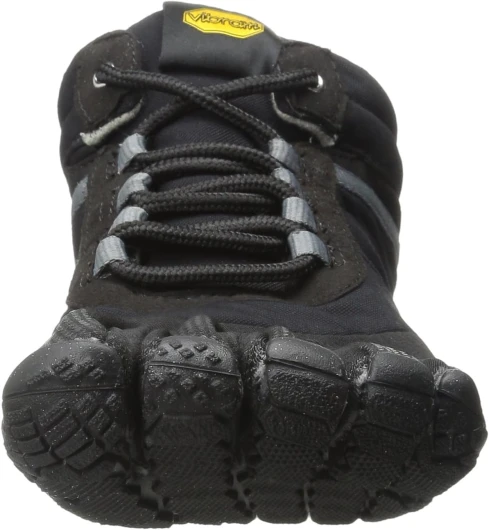
The upper is a combination of high-tenacity nylon with a water-resistant treatment, plus polyester and a 360° wool lining. In practice, that means the outside feels like a tough synthetic shell, and the inside feels like a soft, medium-thick sock. It’s not a super thick boot-style insulation, but enough that you immediately notice the warmth difference compared to regular FiveFingers. The wool runs all around the foot, not just under it, so the sides and top of your foot stay warm too.
The sole is Vibram’s ICETREK rubber. This is where the shoe shines. The compound is slightly soft and tacky to the touch, and the tread pattern is dense. On icy sidewalks and packed snow, I felt much more confident than in my normal hiking boots. You’re still not wearing crampons, so pure black ice is always sketchy, but for normal winter conditions—frozen gravel, slushy pavement, light ice—it grips really well. The trade-off with this kind of softer winter rubber is usually faster wear on dry, warm asphalt. I haven’t chewed through them yet, but based on other winter soles I expect them to wear quicker if you use them heavily in non-winter conditions.
Water resistance is decent but not heroic. The fabric treatment shrugs off light rain, wet grass, and short slush encounters. Walking through shallow slush for 10–15 minutes was fine for me; my feet stayed dry. But this is not a sealed, membrane-style boot. Stand in deeper puddles or heavy slush for longer and you’ll eventually feel moisture creeping in, especially around the toe separations and seams. Several users mentioned staying dry so far, but they also clarified they weren’t treating them like rubber boots. That matches my experience: think water resistant, not waterproof.
Quality of stitching and glue seems solid so far. No loose threads, no peeling at the sole after a few weeks. One user did mention getting a hole in the sole after about a year of daily use on another Trek model, which sounds plausible if you’re pounding pavement every day with a thin minimalist sole. Overall, the materials feel chosen for warmth and grip first, long-term abrasion second, and full waterproofing basically ignored. If you manage your expectations that way, it makes sense.
Durability after real use: holding up well, but not a tank
Durability is always a question with minimalist shoes because the soles are thinner and you feel like you’re closer to wearing them out. After a few weeks of mixed use (pavement, dirt trails, light snow), the Trek Ascent Insulated still looks solid. The outsole shows light wear on the usual spots (heel and ball of the foot), but nothing alarming. The upper hasn’t scuffed badly, and the stitching around the toes and sides is still tight. No peeling, no weird bubbles in the rubber.
The wool lining is the part I was a bit worried about at first. Some insulated shoes get matted and gross quickly, especially if you sweat a bit and don’t air them out. So far, the lining has stayed soft. I’ve followed the instructions: machine wash cold, air dry only, but I haven’t washed them yet because they don’t smell or feel nasty. Knowing they’re machine washable is a plus though; for winter shoes that’s handy once they’ve seen enough slush and salt.
Looking at other users’ feedback, one guy mentioned getting a hole in the sole of his Trek model after about a year of daily use. That doesn’t shock me; these aren’t built like heavy-duty work boots. The ICETREK sole is probably a bit softer than their regular compounds, so if you wear them year-round on rough pavement, you’ll likely chew through them faster. Used mainly in winter and off-season, I’d expect at least a couple of winters out of them, maybe more if you rotate with other shoes.
Overall, I’d say durability is decent but not bulletproof. The build quality seems good, but the design and materials are naturally more fragile than a big leather boot with a thick lug sole. If you treat them as your winter daily driver for walking and light hiking, they should last a reasonable amount of time. If you’re planning to do construction work or rocky scrambles every day in these, you’re probably asking too much from this type of shoe.
Performance in the cold: where they shine and where they fall short
Out in real winter conditions, this is where the Trek Ascent Insulated starts to justify its existence. I’ve used them for dog walks on icy sidewalks, short hikes on frozen dirt trails, and just general city use on cold wet days. Temperatures ranged from just above freezing down to around -5°C (23°F), with wind and occasional slush. In that range, with thin to medium socks, my feet stayed warm and mostly dry. One Amazon user mentioned wearing them barefoot on ice and snow down to around -2°C (29°F) and being fine, which sounds about right if you’re moving.
The grip is probably the best part. The ICETREK sole feels secure on packed snow and those sketchy frosty patches that usually make you tiptoe. It’s not magic on pure ice—you still have to respect physics—but compared to my regular boots, I felt more confident, especially going downhill on frozen dirt and mixed snow. The flexibility of the sole also helps: you can actually use your toes and foot muscles to stabilize, instead of skating around on a stiff block of rubber.
For longer periods of standing around in the cold (like watching a game or waiting at a bus stop), they’re less ideal. Because the sole is thin, the cold ground eventually seeps through more than in a thick-soled boot. Moving around keeps them warm, but if you’re mostly stationary in sub-freezing temps, you’ll notice the cold sooner than with a traditional insulated boot. They’re clearly built for active use, not for standing in one spot on ice for an hour.
Water-wise, light snow and shallow slush are fine. I did a few walks through wet sidewalks with slushy puddles, and as long as the water stayed below the laces and I wasn’t standing in it, my feet stayed dry. Deeper or longer exposure and you’re pushing your luck. So for performance: very good grip, good warmth for active use, okay water resistance, and mediocre for static, long-term cold exposure. If you know that going in, they do the job they’re meant for pretty well.
What you actually get out of the box
Out of the box, the Trek Ascent Insulated looks like a winterized version of the classic Trek Ascent, just a bit bulkier around the upper. It’s still very much a FiveFingers shoe: separate toes, thin flexible sole, and that low profile that makes them feel more like grippy socks than traditional shoes. Mine came in basic packaging, nothing fancy: standard Vibram box, paper, and that’s it. No extra insoles or accessories.
The model I tested is the black version, men’s, in the 9–9.5 range (around EU 43). The upper is a mix of nylon, polyester, and a wool lining. You can feel the 360° wool lining when you slide your foot in; it’s noticeably softer and thicker than the standard Trek Ascent. The shoe is mid-top, so it comes up just above the ankle bone. Weight-wise, they’re light for a winter shoe. You don’t feel like you’re lugging bricks around, especially compared to standard insulated boots.
Vibram markets them as water resistant with an ICETREK sole for better grip on cold, slick surfaces. That part is accurate: the rubber feels softer and tackier than their typical summer soles. The lacing system is old-school: normal laces, no quick-pull toggle like some other FiveFingers. No heel pull tab either, which is honestly a weird omission given how annoying these can be to put on.
In terms of target use, it’s pretty clear: these are meant for people who move around a lot outdoors in cold conditions—walking, light hiking, maybe winter running—who still want that barefoot-style feel. If you’re looking for a fully waterproof boot or something you can stand in puddles with for an hour, this is not it. But as a winter daily-driver for minimalist fans, the positioning makes sense.
Pros
- Very good grip on snow and typical icy surfaces thanks to ICETREK sole
- Warm 360° wool lining that keeps toes comfortable in cold weather
- Light and flexible minimalist feel compared to bulky winter boots
Cons
- Tricky sizing; often need 1–2 sizes up and toe box can feel snug
- Ankle collar can rub on outer ankle bone for some people
- Only water resistant, not waterproof, and annoying to put on due to no heel pull tab and standard laces
Conclusion
Editor's rating
After using the Vibram Trek Ascent Insulated for a while in real winter conditions, my take is pretty straightforward: they do exactly what a winter FiveFingers should do, but they’re not a universal winter shoe. The warmth is genuinely good for active use around freezing and a bit below, the ICETREK sole grips very well on snow and typical icy patches, and the overall feel is light and flexible. If you already like minimalist shoes and hate switching to clunky boots every winter, these make sense.
They’re not perfect though. Sizing is finicky—you almost certainly need to go up at least one size, maybe two if you want thicker socks. The ankle collar can rub on the outer ankle bone depending on your anatomy, which can be a deal-breaker if you’re sensitive there. Water resistance is okay for light snow and slush, but this is not a stand-in-puddles boot. Design choices like the missing heel pull tab and basic laces feel a bit lazy at this price.
I’d recommend these to people who: already own FiveFingers, walk or run regularly in cold conditions, and want something warmer without giving up ground feel and toe separation. I’d skip them if you: need fully waterproof boots, hate fiddly shoes that take time to put on, or are brand new to toe shoes and just want simple winter footwear. For the right user, they’re a pretty solid winter tool; for everyone else, they’ll feel like an expensive, slightly weird experiment.