
Summary
Editor's rating
Good value if you don’t need a safety toe, less so if you do
Classic wheat work-boot look with some practical tweaks
All-day comfort is the main selling point here
Waterproof leather, TPU sole, and insulation that feels more mid-weight than heavy-duty
Built to last a good while, but not an indestructible tank
Slip resistance and waterproofing are strong, protection is limited by the soft toe
What you actually get with this specific Timberland PRO model
Pros
- Very comfortable for long days thanks to wide fit, PU midsole, and Timberland PRO 24/7 comfort system
- Reliable waterproofing and decent insulation for wet and cool conditions
- MaxTRAX slip-resistant TPU outsole grips well on wet and oily surfaces
Cons
- Soft toe with no safety cap, not suitable for jobs requiring steel or composite toe
- Insulation can feel warm in hot indoor environments
- Wheat nubuck shows dirt and scuffs quickly

Specifications
View full product page →| Brand | Timberland PRO |
Soft toe work boot that feels like a broken‑in pair pretty fast
I wore the Timberland PRO 6IN Direct Attach Soft Toe MaxTRAX boots (size 10.5 Wide, Wheat Nubuck) for a couple of weeks doing regular warehouse work, some light construction tasks, and a few rainy days running errands. So this isn’t a lab test; it’s just how they behaved in everyday use. I’ve used other Timberland PRO boots before, plus Carhartt and Wolverine, so I’ve got a decent point of comparison.
The first clear thing: these feel more like a comfortable everyday boot than a hardcore safety boot. They’ve got a soft toe and no safety cap, so if your job requires steel or composite toe, these are simply the wrong product. But if you just need something slip-resistant, waterproof, and reasonably tough, they make sense. The Amazon rating around 4.6/5 doesn’t surprise me after wearing them.
Out of the box, they didn’t destroy my feet like some stiffer work boots do. The break-in time was short. After the second day, I could do full shifts on concrete without thinking too much about my feet. That’s where the Timberland PRO 24/7 comfort system and the PU midsole actually show up in real life: the boots feel a bit like a cushioned sneaker inside, but with a work-boot shell.
They’re not perfect. The wide fit is generous but not super locked-in, the insulation can get warm indoors, and the wheat nubuck gets dirty very fast. But overall, for a soft-toe, slip-resistant boot that’s waterproof and fairly light for a 6-inch work boot, they’re a pretty solid option if you know what you’re buying and your job doesn’t demand a safety toe.
Good value if you don’t need a safety toe, less so if you do
In terms of value for money, these sit in that mid-range work boot zone. You’re paying for the Timberland PRO name, waterproofing, insulation, and the MaxTRAX slip-resistant sole. For what you get—comfort, slip resistance, and waterproof leather—I’d say the price is reasonable. They feel more solid and comfortable than cheaper store-brand work boots I’ve tried, and closer in quality to other known brands like Wolverine and Carhartt.
Where the value really makes sense is if your job doesn’t require a safety toe but still demands long hours on your feet and wet or slick surfaces. In that situation, you’re not paying extra for a steel or composite cap you don’t need, but you still get the EH rating and serious slip resistance. The comfort level also adds value, because being able to wear them all day without sore feet is worth a lot if you’re on shift for 8–12 hours.
On the downside, if your workplace could suddenly decide to enforce safety-toe rules, or if you sometimes work in areas with more impact risk, you might end up needing another pair of boots with a safety toe. In that case, buying these might feel like a half-measure. Also, the wheat nubuck shows dirt quickly, so if you care about looks, you’ll either be cleaning them often or just accepting the worn-in look.
Overall, I’d rate the value as good but not mind-blowing. You’re getting what you pay for: a comfortable, waterproof, slip-resistant soft-toe boot from a brand that usually holds up decently over time. If that’s exactly what you need, the price makes sense. If you need full protection and maximum durability for heavy construction, you might be better off spending the same or a bit more on a safety-toe model instead.
Classic wheat work-boot look with some practical tweaks
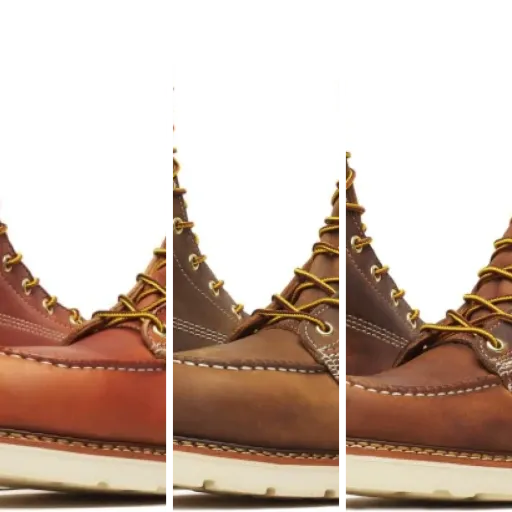
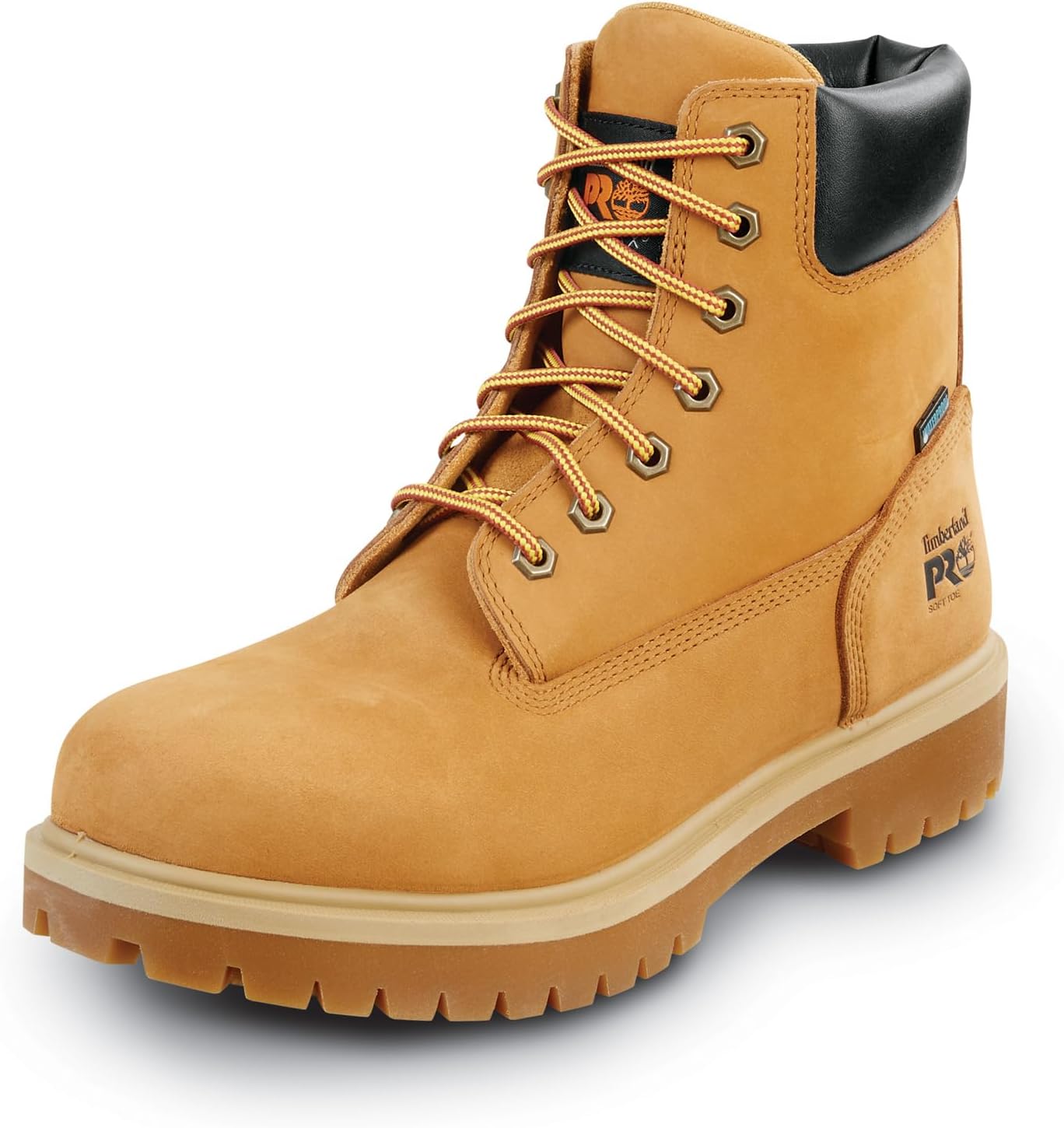
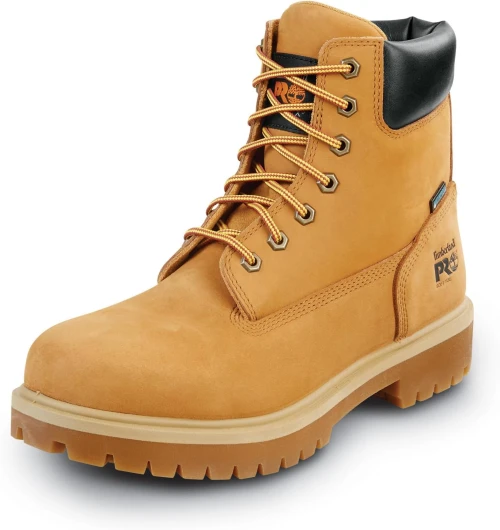
Design-wise, this boot is pretty much what you’d expect from Timberland in the wheat nubuck color: that classic tan/yellow look that you see everywhere, but a bit more “work site” and a bit less “streetwear.” The 6-inch height gives decent ankle coverage without feeling like you’re wearing a mountaineering boot. It’s a lace-up closure with standard round laces, metal eyelets and hooks at the top, and a padded collar that looks and feels like the usual Timberland PRO style.
One thing I noticed is how the wide fit changes the look and feel. On my feet, they looked slightly bulkier than a regular width, but not clownish. The toe box is rounded and roomy, which I appreciated after a few hours when my feet usually swell a bit. If you’re used to tighter, narrow work boots, this will feel more relaxed. For me, that was a plus for comfort, but it does mean you might feel a tiny bit less “locked-in” if you like a snug performance fit.
The outsole has a pretty aggressive MaxTRAX tread pattern. You can see that the lugs are designed to channel liquids away and give more contact points. It’s not a hiking-boot style tread; it’s more flat and industrial-looking, made for slick floors, oil, and wet surfaces. The color contrast between the wheat upper and darker sole is standard but looks fine. Nothing fancy, just functional. The branding is there but not screaming: small Timberland PRO logos on the side and tongue.
In daily use, the design is practical: easy to lace, easy to wipe down, and neutral enough that I didn’t feel weird wearing them outside of work with jeans. If you want a flashy boot, this isn’t it. If you want a normal-looking, work-focused boot that doesn’t draw attention, the design hits that mark. It’s straightforward, familiar, and mostly about function over style, which matches what this boot is made for.
All-day comfort is the main selling point here
This is where these boots make the most sense. The Timberland PRO 24/7 comfort system and the PU midsole actually do something noticeable. From day one, they felt more like a cushioned casual boot than a stiff work tank. The wide fit in 10.5W gave my toes space to move, and I didn’t get the usual rubbing on the little toes that I’ve had with narrower boots. I wore them for full 8–10 hour shifts on concrete floors, plus walking to and from the car, and my feet were tired but not wrecked at the end of the day.
The insole is decent out of the box. It’s not some fancy orthopedic insert, but it has enough padding and arch support for normal feet. If you have serious foot issues, you’ll probably still want your own insoles, but for me, it was fine. The heel cushioning is noticeable when you step down—there’s a bit of bounce instead of a dead thud, which helps when you’re going up and down stairs or ladders a lot. The padded collar and tongue also help avoid pressure points around the ankle.
One thing to note: the 200 g insulation is a double-edged sword. In cooler weather, it’s great. My feet stayed warm during early morning work outside and walking in cold drizzle. But in a warm indoor environment, especially if you’re moving a lot, your feet will get warm. Not soaking wet, but warm enough that if you already have sweaty feet, you’ll notice it. The breathable lining does help, but it’s still an insulated boot, not a summer shoe.
In terms of break-in, I’d say these were pretty forgiving. The first day I felt a bit of stiffness around the front flex point, but by day three they bent with my foot naturally. No blisters, no hot spots, which for a new work boot is a win in my book. If your priority is comfort over maximum protection, this model fits that profile: soft toe, decent cushioning, and a shape that doesn’t punish your feet over long shifts.
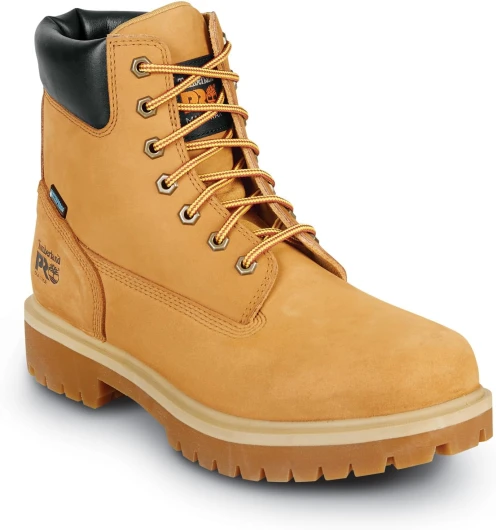
Waterproof leather, TPU sole, and insulation that feels more mid-weight than heavy-duty
The upper is waterproof leather (wheat nubuck), and you can feel that it’s not cheap plastic-like material. It has that slightly velvety touch you get with nubuck, but it’s a bit more treated and stiff than a fashion boot. After a couple of days, it softened up in the flex zones without cracking or creasing weirdly. The seam-sealed waterproof construction is legit: I walked through wet grass, shallow puddles, and slushy parking lots, and my socks stayed dry every time. No seepage around the tongue or sides.
The sole is Thermoplastic Polyurethane (TPU), which is known for being tough and resistant to oil and chemicals. Underfoot, it doesn’t feel rubbery and soft; it’s more firm with a bit of give from the PU midsole above it. That combo works: the midsole gives cushioning, and the TPU gives durability and grip. The outsole didn’t show much wear after a couple of weeks on concrete, asphalt, and some rough ground. No chunks missing, no obvious smoothing of the lugs.
Inside, you’ve got 200 grams of Thermolite insulation and a breathable, moisture-wicking lining with odor control. In practice, that means they’re warm enough for cool to cold days, but not like heavy winter boots. On a chilly morning, my feet stayed warm without needing thick socks. Indoors in a heated warehouse, they did get a bit warm after a few hours, but not to the point of being unbearable. The lining did a decent job of keeping sweat from feeling clammy, and I didn’t notice any strong odor after daily use.
Overall, the materials feel solid but not overbuilt. They’re clearly chosen to handle long hours at work, wet environments, and some abuse, but this isn’t a boot designed for extreme construction sites with falling objects and hardcore abrasion. For what they are—soft toe, slip-resistant, waterproof work boots—the material quality feels right for the price point and the Timberland PRO name. Not bulletproof, but definitely not flimsy either.
Built to last a good while, but not an indestructible tank
Durability is always hard to judge long-term, but after a couple of weeks of daily use, you can at least see how a boot is aging. On these Timberland PRO Direct Attach boots, the leather upper held up nicely. The usual creasing showed up where the foot bends, but nothing that looked like premature cracking or peeling. The nubuck finish does pick up dirt and scuffs pretty fast—especially in the wheat color—but that’s more cosmetic. A quick brush and wipe-down made them look decent again, though they’ll never stay “fresh” looking for long if you actually work in them.
The TPU outsole is where I usually see early wear on cheaper boots, especially at the heel edges and ball of the foot. Here, after using them on rough concrete and asphalt, the lugs were still sharp and well-defined. No big chunks missing, no visible separation from the upper. The direct-attach construction helps with that; it feels like one solid piece rather than a glued-on sole that might peel. I also didn’t notice any stitching starting to fray around the upper, which is a good sign.
Inside, the lining and insole were still intact, no tearing at the heel or flattening of the cushioning in such a short time. I’ve had some boots where the heel lining starts to wear through quickly from friction, and that didn’t happen here. The laces and eyelets also felt sturdy; I yanked the laces pretty hard a few times and there was no bending or popping of the hardware.
So, are these going to last 8 years like one of the Amazon reviewers mentioned? That depends on how you use them. For regular warehouse, light construction, delivery, or maintenance work, I can see these lasting a good stretch if you take basic care of them. If you’re doing brutal demolition, heavy construction, or dragging your toes through gravel every day, they’ll wear faster, and honestly you probably need a heavier-duty, safety-toe boot anyway. Overall, I’d call the durability pretty solid for the category and price, but not bulletproof.
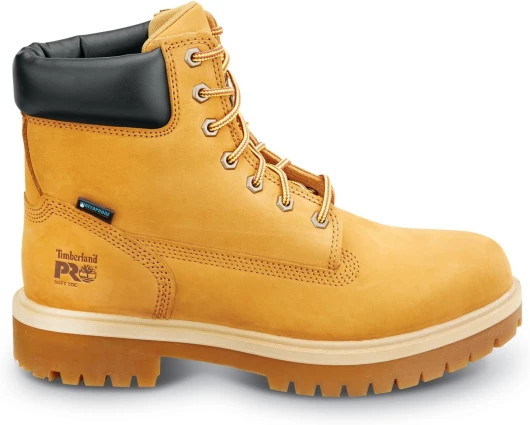
Slip resistance and waterproofing are strong, protection is limited by the soft toe
Performance-wise, the two big things that stood out were slip resistance and waterproofing. The MaxTRAX slip-resistant TPU outsole actually grips well. I tried it on wet concrete, oily patches in a loading area, and smooth tile in a store entrance on a rainy day. I didn’t feel that sketchy “ice rink” slide you get with cheaper soles. There’s still common sense involved—you can’t sprint on motor oil and expect miracles—but compared to generic work boots, traction felt clearly better and more secure.
The waterproofing was also solid. I walked through shallow puddles, wet grass, and slush, and even stood in a couple of inches of water for a bit while unloading stuff. My feet stayed dry every time. No leaks around the lace area or seams. The seam-sealed, direct-attach construction seems to do its job. For people who work outdoors in rain or around wet floors, that’s a big plus. You don’t have to baby these boots when the weather turns bad.
Where performance has a limit is safety and protection. These are soft toe boots with no steel or composite cap. That means no impact protection if something heavy falls on your toes. They are ASTM F2892-24 EH SRO compliant, so they cover electrical hazard and slip resistance, but if your job requires ASTM toe protection, these are not acceptable. For me, doing mostly warehouse and light construction tasks where impact risk was low, it was fine, but I would not wear these on a site where there’s a real chance of dropping heavy tools or materials.
Day to day, they handled walking, lifting, light ladder work, and driving without any issues. The sole flex is moderate: not super stiff, not floppy. That makes them comfortable to walk in but still stable enough when carrying loads. If you think of them as a comfortable, waterproof, slip-resistant work boot for lower-risk environments, they perform well. If you expect heavy-duty protective performance, you’re looking at the wrong category.
What you actually get with this specific Timberland PRO model
On paper, this model is a 6" direct-attach, soft toe, waterproof work boot with MaxTRAX slip-resistant outsole, Thermolite insulation (200 g), and a leather upper. The exact one I tried is the 10.5 Wide, Wheat Nubuck version. It’s lace-up, about 7.25 inches in shaft height, and uses a TPU outsole that’s nonmarking, oil-resistant, and abrasion-resistant. There’s no steel or composite toe, but it is ASTM F2892-24 EH SRO compliant, so you get electrical hazard and slip resistance, just not toe impact protection.
In reality, when you pull them out of the box, they look and feel like the classic Timberland yellow boot’s more practical cousin. Slightly more work-boot oriented, less fashion. The nubuck is softer than the stiff leather you get on some heavy-duty boots, so it bends easier from day one. The seam-sealed waterproof construction is clearly visible around the welt area, and the direct-attach construction makes them feel like a single solid piece rather than stitched-on soles that might separate quickly.
The pair I used came well-finished: no loose threads, glue marks, or crooked seams. The laces are basic but solid, and the metal eyelets felt sturdy when I really cranked the laces. Inside, the breathable, moisture-wicking lining feels smooth, not scratchy, and there’s a slight “new shoe” smell, but nothing chemical or annoying. The insole is removable, which is important if you like to swap for custom orthotics.
So overall, in terms of presentation, it’s a straightforward work boot: no fancy gimmicks, no hidden tech that you never feel. You’re getting a waterproof leather boot with slip resistance, light insulation, and comfort padding that’s clearly built for people on their feet all day, but not for heavy impact hazards. If you read the spec sheet and that’s what you want, the real product matches the description pretty closely.
Pros
- Very comfortable for long days thanks to wide fit, PU midsole, and Timberland PRO 24/7 comfort system
- Reliable waterproofing and decent insulation for wet and cool conditions
- MaxTRAX slip-resistant TPU outsole grips well on wet and oily surfaces
Cons
- Soft toe with no safety cap, not suitable for jobs requiring steel or composite toe
- Insulation can feel warm in hot indoor environments
- Wheat nubuck shows dirt and scuffs quickly
Conclusion
Editor's rating
The Timberland PRO 6IN Direct Attach Soft Toe MaxTRAX Work Boot is a solid choice if you want comfort, waterproofing, and serious slip resistance without a safety toe. After wearing the 10.5 Wide Wheat Nubuck version for regular work and everyday use, the main strengths for me were how quickly they felt broken in, how well they handled wet and slick surfaces, and how reliably they kept my feet dry. The wide fit and 24/7 comfort system make them easy to wear for long shifts, and the materials feel sturdy enough for normal work abuse.
They’re not the right boot for everyone though. The soft toe is the big limitation: no steel or composite cap means they’re off the table for jobs that require toe protection or where heavy objects around your feet are a real risk. The 200 g insulation is nice in cool weather but can feel warm indoors, and the wheat nubuck gets dirty fast if you actually work in rough environments. For light to medium-duty work—warehouse, delivery, maintenance, retail backroom, light construction—they make sense and feel like good value. For heavy construction or stricter safety standards, you should look at a safety-toe alternative, possibly even within the Timberland PRO line.