
Summary
Editor's rating
Value for money: good comfort and safety if you accept the quirks
Chunky, wide, and built more for function than looks
Comfort: wide and supportive, but size up and expect some weight
Smell and odor control: less stink than usual work shoes
Leather upper, rubber sole, and a few things to watch long term
Built to last a while, but not indestructible
What you actually get out of the box
Safety and grip: they do the job they’re supposed to do
Pros
- Wide, roomy steel toe with good comfort once you size up
- Strong grip on wet and oily surfaces thanks to lugged rubber sole
- Decent cushioning and support for long shifts on hard floors
Cons
- Runs short in length, often requires going up a size
- Only water-resistant, not fully waterproof, so limited in very wet conditions

Specifications
View full product page →| Brand | KEEN Utility |
Low work shoe that feels more like a hiking boot
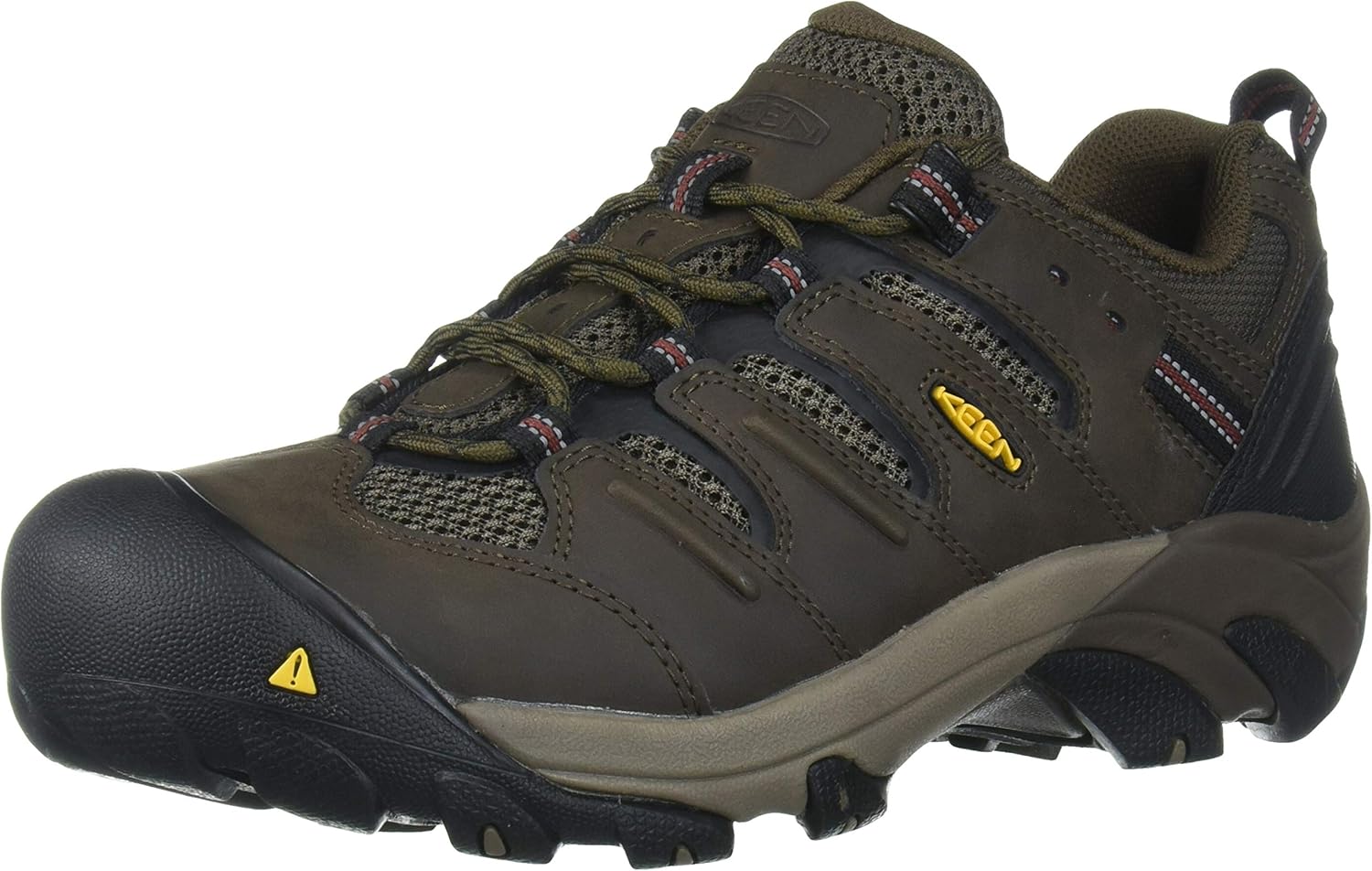
I’ve been wearing the KEEN Utility Lansing Low steel toe in Cascade Brown/Fired Brick for a bit now, in a warehouse and for yard work, and I’ll be straight: they feel more like chunky hiking shoes with a steel toe than classic work shoes. If you’re used to cheap, flat safety shoes, these are going to feel wider, heavier, but also more supportive. They’re clearly built around that typical KEEN wide forefoot, which for me is a big plus, but the length is a little tricky.
On my feet, they came out slightly short in the toe if I went with my usual size. That lines up with what a few people said: I also had to go up half a size to a full size to get enough room in the toe box, especially because of the steel cap. Once I sized up, the shoes stopped rubbing the tips of my toes and felt much better for full shifts on concrete.
In day-to-day use, I’ve mostly used them in a warm indoor setting (lots of walking, some kneeling, some ladder work) and also a few evenings mowing and doing light stuff in the yard. They’re clearly aimed at that kind of light-duty construction, warehouse, or landscaping job where you’re on your feet a lot but not pouring concrete or crawling through mud all day. They’re not a hardcore logger boot, more like a sturdy safety sneaker with a leather upper.
If you want a simple summary up front: good comfort and grip, solid protection, but not perfect. Sizing runs short, they’re not fully waterproof, and I can already see that long-term the sole bond might need watching, like one reviewer mentioned with Shoe Goo. For the right use case though—indoor or dry-weather work where you want a wide, protective shoe—they get the job done pretty well.
Value for money: good comfort and safety if you accept the quirks
On value, I’d say the Lansing Low sits in a sweet spot for people who want real comfort and safety without going into premium boot prices. You’re paying more than for the bargain-bin steel toe sneakers, but you’re getting better materials, better support, and a more comfortable wide fit. For someone who’s on their feet 8–10 hours a day, that price difference is justified pretty quickly in less foot pain and better traction.
The main trade-offs for the money are: they’re only water-resistant, not waterproof, and the sole durability is good but not top-tier. Also, the sizing quirk (running short) means you might have to return and swap sizes if you order online, which is annoying. On the upside, users seem consistently happy: ratings around 4.3/5 and reviews talking about good comfort, rugged feel, and even people buying a second pair. That tells me they hit the mark for a lot of workers who don’t want to fuss too much, just want shoes that work.
Compared to cheaper alternatives I’ve worn, the Lansing Low feels more supportive and less cramped, especially in the wide version. Compared to much pricier work boots, you obviously lose some long-term toughness and full waterproofing, but you also avoid the weight and long break-in. So it’s kind of a middle-ground option: good enough protection and comfort for most light to medium-duty jobs, at a fair price.
If your job is mostly indoors or in dry conditions and you need steel toe, slip resistance, and a wide fit, the value is solid. If you’re constantly in mud, water, or doing heavy demolition, I’d say spend more on a full boot. For what these are designed for—warehouse, landscaping, light construction—they’re a pretty sensible buy.
Chunky, wide, and built more for function than looks
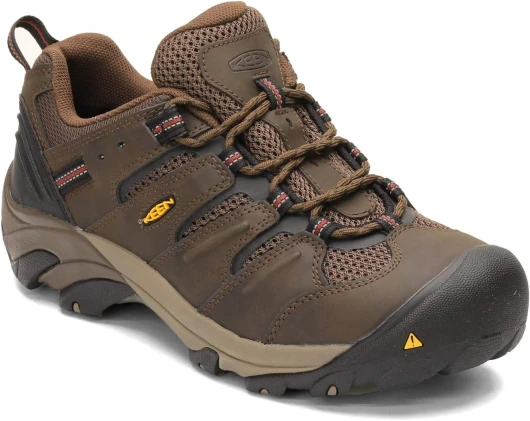
The design is clearly focused on protection and stability. The left and right asymmetrical steel toes are meant to give more natural shape and room. In practice, the toe box does feel less cramped side-to-side than many steel toe shoes I’ve worn, especially in the wide version. The flip side is, visually, the front of the shoe looks a bit bulky. If you care a lot about a slim, sneaker-like profile, this isn’t it. For work though, I’ll take the extra room over style any day.
The low height (around a 3-inch shaft) makes them feel more like a sturdy trainer than a boot. That’s good if you’re constantly bending, driving, or climbing ladders and hate high shafts cutting into your ankles. The heel has a contoured lock design that grips the back of the foot pretty well, so I didn’t get much heel lift when walking fast or going up stairs. Lacing is straightforward: standard eyelets, no hooks, so they’re quick to get in and out of.
Underneath, the lugged rubber sole is where the design stands out most. The pattern is aggressive enough for wet floors and grass, with channels that clear small debris fairly well. It’s also oil- and slip-resistant and certified to ASTM non-slip standards, which is more than just marketing—on wet concrete in my warehouse, they held up nicely, and I didn’t feel like I was skating. One Amazon reviewer mentioned using similar soles for mowing for years, and I get why: they bite into turf better than flat work sneakers.
From a pure design perspective, it’s function-first, looks-second. The color hits a decent middle ground, and the fired brick accents keep it from being totally dull. But if you’re buying mainly for appearance, you’ll probably find them a bit bulky. If your priority is a wide, stable steel toe with a serious outsole, the design choices all make sense and feel thought-through.
Comfort: wide and supportive, but size up and expect some weight
Comfort-wise, the wide fit is the main selling point for me. I have a wider forefoot, and a lot of safety shoes feel like they’re squeezing my toes against the steel cap by mid-shift. With the Lansing Low in wide, once I sized up, my toes actually had space to spread out. The asymmetrical steel toe helps here too; it doesn’t cut in on the outer toes like some cheaper models. If you’ve cursed narrow steel toes before, this is a big relief.
That said, the shoe definitely runs a bit short. My normal size felt fine at first try, but once I walked around for an hour, my big toe was brushing the cap, which is a no-go for long days. Going up a half size to a full size solved that. Several Amazon users said the same thing: “order a size larger than you normally wear” and “I wear a 12 wide but these 13 wide fit great with arch support inserts.” So if you’re on the fence, err on the bigger side, especially if you use thicker socks or orthotics.
Underfoot, the dual-density EVA insole and the torsional stability shank actually do their job. On hard concrete, I didn’t get that dead, slappy feeling you get with flat soles. The shoe feels supportive in the midfoot, and the heel is well-cushioned. After a full 8–10 hour day, my feet were tired—these are still 21 oz safety shoes—but not wrecked. Compared to basic steel toe sneakers from discount brands, I’d say these are noticeably more comfortable for long shifts.
Heat and sweat management is decent but not perfect. The mesh liner and moisture-wicking fabric help, and the low-cut design lets a bit more air in than a boot. Still, if you work in really hot environments, your feet will get sweaty. The built-in odor control (more on that next) helps keep the smell down, but don’t expect miracles. Overall, comfort is a strong point as long as you size up and accept the weight that comes with a proper steel toe and a chunky sole.
Smell and odor control: less stink than usual work shoes
Obviously, these are work shoes, not cologne, so the “fragrance” out of the box is just that standard new-shoe smell: a mix of leather, rubber, and glue. Nothing special, nothing nasty. It fades after a few days of use. Where the smell part actually matters is after you’ve been sweating in them for a couple of weeks, especially in warm indoor environments where your feet don’t really get a break.
KEEN uses something called CleansportNXT, which is basically a probiotic-based treatment that’s supposed to break down odor from sweat. In real life, that means the shoes don’t start reeking as fast as some other work shoes I’ve had. After long shifts, my socks still smell like I’ve been working, but when I take the shoes off and check inside, the odor isn’t as sharp or sour as usual. It’s more of a mild “used shoe” smell instead of full-on locker room.
I tested this by wearing the Lansing Lows for several days straight without swapping insoles or spraying anything. Normally, by day three or four, some of my older boots are pretty rough. With these, I could still bring them in the house without getting comments. That doesn’t mean they stay fresh forever—if you sweat a lot, you’ll still want to let them air out, maybe swap socks mid-shift, and occasionally pull the insole to dry.
So on the smell front, the odor control is a small but real plus. It won’t magically fix bad hygiene or super sweaty feet, but it does slow down the stink compared to untreated shoes. For anyone who wears safety shoes daily and tosses them in a locker or truck, that’s actually pretty handy, even if it’s not the main reason you’re buying them.
Leather upper, rubber sole, and a few things to watch long term
The upper is made from water-resistant leather, not full-on waterproof leather with a membrane. In practice, that means it shrugs off splashes, light rain, and wet grass for a while, but if you stand in a puddle or work in constant water, your feet will eventually get wet. For indoor warehouses or dry construction sites, that’s fine. For heavy outdoor trades in wet climates, I’d want something more sealed. The leather itself feels reasonably tough and holds its shape, and KEEN says they source from LWG-certified tanneries, so at least the processing is a bit more controlled environmentally.
Inside you’ve got a mesh lining and a moisture-wicking textile that does a decent job of pulling sweat away. I wore them on long, warm days and my socks were damp but not soaked, which is pretty normal for work shoes. The removable EVA insole is dual-density and metatomical, meaning it’s shaped to somewhat follow the curves of your foot. It’s better than generic foam, but if you have serious arch issues, you’ll probably still want your own insoles. The nice part is that the shoe has enough volume to accept aftermarket inserts without feeling like your foot is crammed in.
The outsole is non-marking rubber, and you can tell it’s softer than cheap, hard plastic soles just from how it grips smooth flooring. That’s good for traction but usually means you trade some long-term wear resistance. One reviewer mentioned that after about five years of use on a similar model, the sole lost most of its grip and started to separate from the foam at the edges, needing Shoe Goo. That sounds about right for this type of construction: good performance, but eventually the bond between midsole and outsole will be the weak point.
Overall, the materials are pretty solid for the price bracket. You’re not getting full-grain tank-like leather or triple-stitched welts, but you’re also not paying top-tier work boot money. For light to medium duty use, the mix of leather, rubber, and EVA is fine. Just don’t expect indestructible farm-boot levels of toughness, and plan on doing a bit of maintenance if you want to stretch them beyond a couple of seasons of hard use.
Built to last a while, but not indestructible
Durability is always the question with work shoes: are you getting one hard season, a year, or several years? With the Lansing Low, I’d put them in the “pretty solid but not bulletproof” category. The leather upper feels sturdy and doesn’t crease too fast. After some bending and kneeling, I didn’t see cracks or weird wrinkles forming. The toe area has enough structure that it doesn’t collapse, which helps them look decent for longer.
Where I’m a bit more cautious is the sole construction. One user who had a similar KEEN sole for about five years said the sole lost most of its grip and started to separate from the foam at the edges, and they used Shoe Goo to keep it going. That doesn’t surprise me: softer rubber for good grip usually means it wears faster, especially if you’re always on rough surfaces or asphalt. Also, many glued constructions eventually start to peel at stress points. In the short term, everything feels tight and well-bonded; no gaps, no weird noises, no flexing in the wrong places.
In my own use, after a few weeks of warehouse shifts and yard work, they still look almost new apart from some dust and minor scuffs on the leather. The stitching is holding up fine, and the heel area isn’t breaking down. But I can already tell that, long-term, the first signs of aging will probably show in the tread flattening out and the bond between the outsole and midsole needing attention. That’s pretty standard for this tier of work shoe.
If you’re relatively gentle—indoor warehouse, light construction, landscaping—they should easily last a good stretch, possibly a couple of years if you rotate shoes or don’t abuse them daily. If you’re in heavy construction or harsh environments, you might chew through them faster and would be better off with a tougher, more boot-like model. Overall, durability is decent for the price, but not legendary. Treat them reasonably, maybe keep Shoe Goo on standby after a year or so, and you’ll get fair value out of them.
What you actually get out of the box
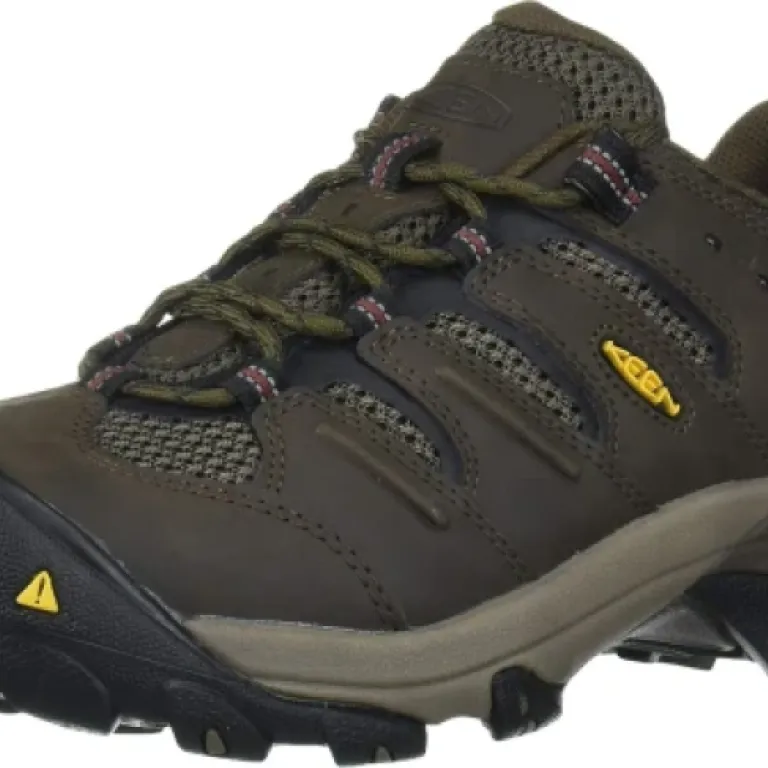
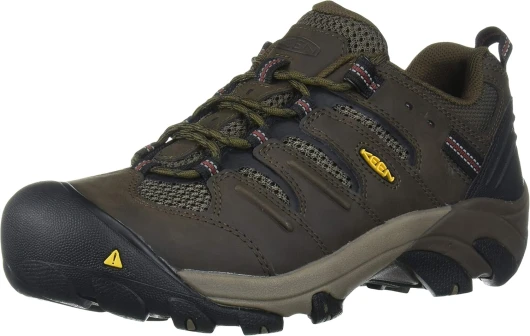
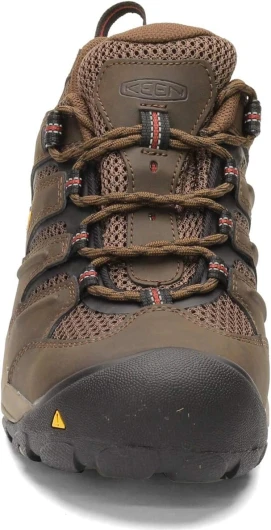
Out of the box, the KEEN Lansing Low looks exactly like what it is: a low-cut work shoe that’s trying to be part boot, part hiking shoe. The Cascade Brown/Fired Brick color is basically dark brown leather with some red accents. Nothing flashy, but it doesn’t scream “clown shoe” either, which I appreciate for wearing them to and from work without feeling like I’m in full PPE mode at the grocery store. The overall look is chunky, especially around the toe, because of the asymmetrical steel caps.
The first thing I noticed picking them up is the weight. At around 21 oz (about 595 g) per shoe, they’re not light, but they’re not bricks either. If you’re used to regular sneakers, you’ll feel the difference. If you’re used to classic steel toe boots, they’ll feel pretty normal. The leather feels decently thick and a bit stiff out of the box, but not like those rock-hard work boots that need a month to break in.
Inside, there’s a removable dual-density EVA insole that actually looks like someone thought about support, not just a flat piece of foam. The mesh lining is there, and you can tell KEEN tried to make it breathable for warm environments. No crazy bells and whistles, but you do get some details like the torsional stability shank and a decent heel lock. It feels more like a serious shoe than a cheap safety sneaker from a big-box store.
Overall, presentation-wise, it feels like a mid- to upper-mid range work shoe: clean stitching, decent finishing, and practical design. Not stylish in the lifestyle sense, but good enough that you don’t feel like you’re wearing bargain-bin PPE. Just be ready for the toe area to look and feel a bit bigger than normal, because of the steel and the wide KEEN last.
Safety and grip: they do the job they’re supposed to do
When it comes to actually doing the safety job, the Lansing Low is solid. The steel toe meets ASTM F2412 and F2413 I/75 C/75 EH, so you’re covered for impact and compression. I’ve bumped my toes into pallets, lift trucks, and random metal stuff plenty of times, and the caps took it without me feeling that “oh no” shock you get in softer shoes. The asymmetrical design also means the protection doesn’t feel like a straight metal bar across your foot; it follows the shape a bit better.
The shoes are also EH rated (electrical hazard), which is more of a backup layer of protection than something you want to rely on daily, but it’s good to have if you work around live circuits. Obviously, that doesn’t replace proper PPE and procedures, but it ticks the box for many workplaces that require EH-rated footwear. The torsional stability shank gives good midfoot support when you’re on ladders or uneven ground, and I noticed my feet didn’t twist as easily when stepping on edges or gravel.
Traction is another strong point. The oil- and slip-resistant rubber outsole with the lug pattern grips well on wet concrete, dusty floors, and grass. I deliberately tested them on a wet loading dock and on slightly oily patches, and they held up better than the flat-soled safety sneakers I used before. You can still slip if you do something dumb, but for normal walking and quick turns, they feel planted. One reviewer mentioned using a similar sole for mowing for years and liking it, and I can see why: it bites into slopes and damp grass pretty confidently.
So in terms of effectiveness as a safety shoe—protection, support, and grip—they get the job done without drama. They’re not magic, but they hit all the key standards and, in daily use, I never felt under-protected. If your workplace has basic safety footwear requirements, these will check most of the boxes and then some.
Pros
- Wide, roomy steel toe with good comfort once you size up
- Strong grip on wet and oily surfaces thanks to lugged rubber sole
- Decent cushioning and support for long shifts on hard floors
Cons
- Runs short in length, often requires going up a size
- Only water-resistant, not fully waterproof, so limited in very wet conditions
Conclusion
Editor's rating
The KEEN Utility Lansing Low steel toe is a wide, supportive work shoe that does its main job well: protect your feet and keep you reasonably comfortable through long shifts. The asymmetrical steel toe, roomy wide fit, and decent cushioning make a clear difference compared to cheap, flat safety sneakers. Traction is strong on wet and oily surfaces, and the EH rating plus solid build tick the safety boxes most workplaces ask for. Odor control is a nice bonus that actually works better than nothing, especially if you’re in warm environments.
It’s not perfect, though. The sizing runs short, so you pretty much need to size up, especially if you use thick socks or insoles. They’re only water-resistant, not fully waterproof, so they’re not the best choice for constant wet or muddy conditions. And while the build feels solid, long-term durability will likely be limited more by the outsole wearing down and the sole bond than by the leather upper. For indoor job sites, warehouses, and light-duty construction or landscaping, they’re a good, practical option. If you’re doing heavier trades or want something that can take serious abuse year after year, you might want a more rugged boot.
So, who should get these? Anyone with wider feet who spends a lot of time on concrete or light outdoor work and wants a comfortable, protective low-cut shoe. Who should skip them? People needing full waterproofing, ultra-lightweight footwear, or maximum durability in brutal conditions. For the right user, they’re a pretty solid, no-nonsense pair of work shoes that get the job done without much fuss.