
Summary
Editor's rating
Are these ROCKY snake boots worth the money?
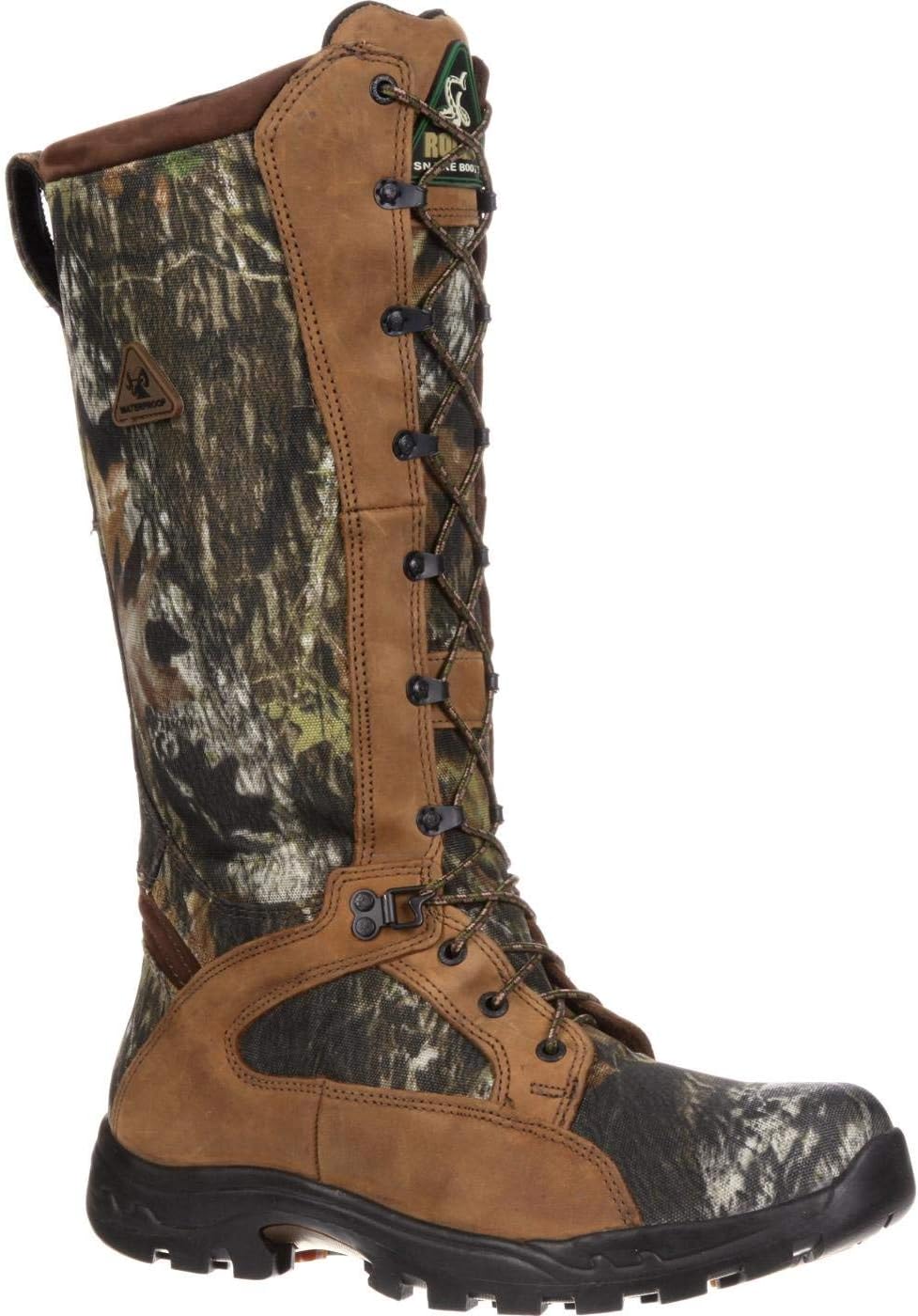
Tall, camo, and built more for function than looks
Surprisingly comfortable for such a tall, protective boot
Leather, nylon, rubber… and a few trade-offs
How they hold up with daily abuse
What you actually get with these ROCKY snake boots
Protection and waterproofing: how it really behaves in the field
Pros
- 16-inch snakeproof coverage gives solid protection for lower legs
- Surprisingly comfortable for a tall, protective boot; easy to wear 8–10 hours
- Good traction and stability on uneven, muddy, or grassy terrain
Cons
- Waterproofing can start to fail after about a year of heavy wet use
- Runs warm; feet tend to sweat without good moisture-wicking socks
- Made with PFAS chemicals, which some people will want to avoid

Specifications
View full product page →| Brand | ROCKY |
Snake boots you can actually live in all day
I’ve been using the ROCKY ProLight Hunting Waterproof Snake Boot (Mossy Oak, unisex size 7) as my main “walk around the property” boot for a while now. I’m in rattlesnake country and I’m outside a lot – fence checks, tall grass, irrigation, that kind of stuff. I wanted something that actually protects from snakes but doesn’t feel like I’m dragging cinder blocks on my feet. These looked like a decent compromise between serious protection and everyday wear.
Right out of the box, the first thing I noticed was the height. These are tall – around 16 inches – so they cover your lower leg almost up to the knee. That’s exactly what I was looking for because I’m constantly in brush and tall weeds. The second thing was the weight: not super light, but lighter than a lot of rubber snake boots I’ve tried. You can actually walk around in these for hours without feeling like you’re doing leg day.
I didn’t baby them. First week, they went straight into mud, wet grass, and some shallow standing water. I used them for chores about 6–8 hours a day, plus a couple of longer walks through brushy areas where I know snakes hang out. No snake encounters yet, which I’m obviously fine with, but I’ve stepped through places where I’d normally be a little nervous in regular work boots.
Overall, my first impression: they feel like a practical, everyday ranch/hunting boot that happens to be snakeproof, not a specialty boot you only pull out a few times a year. They’re not perfect – my feet do get warm, and I can already see that long-term waterproofing might be the weak point – but in terms of comfort and confidence walking through sketchy grass, they get the job done.
Are these ROCKY snake boots worth the money?
Price-wise, these sit in that mid-range snake boot zone: not bargain-bin cheap, but not at the very top of the market either. For what you get – real snake protection, decent comfort, and workable waterproofing – the value is pretty solid. You can definitely find cheaper snake boots, but most of those will feel stiffer, less comfortable, or sketchier in terms of build quality. You can also spend more on big-name brands and maybe get better long-term waterproofing or slightly nicer materials.
Where these earn their keep is how wearable they are. Several users, including me, end up wearing them all day: 8–10 hours doing chores, walking property, or hunting. That matters, because a cheaper boot you hate wearing is basically wasted money. One reviewer even bought a backup pair after liking them so much, which tells you they hit a good balance for daily use. Another has been loyal to this model for years and just upsized to fit better arch support inserts, which is a good sign that the base boot is worth investing in.
The main knocks against the value are: 1) waterproofing may start to fail after about a year of hard, wet use, and 2) they use PFAS, which some people won’t like. Also, if you compare them to premium brands like Danner, you might find those a bit more comfortable or longer-lasting, but you’ll also pay more. So it comes down to what you expect: if you want a comfortable, protective boot that you’ll realistically wear a lot and you’re okay with the idea that you might replace them after a year or two of heavy use, the price makes sense.
In short, I’d rate the value as good but not mind-blowing. You’re paying for real function and comfort, not fancy looks. If you live or work in snake country and need something you can actually stand to wear all day, these are worth the money. If you’re only occasionally in snake territory and mostly on dry, easy ground, you might get away with something cheaper or a different style entirely.
Tall, camo, and built more for function than looks
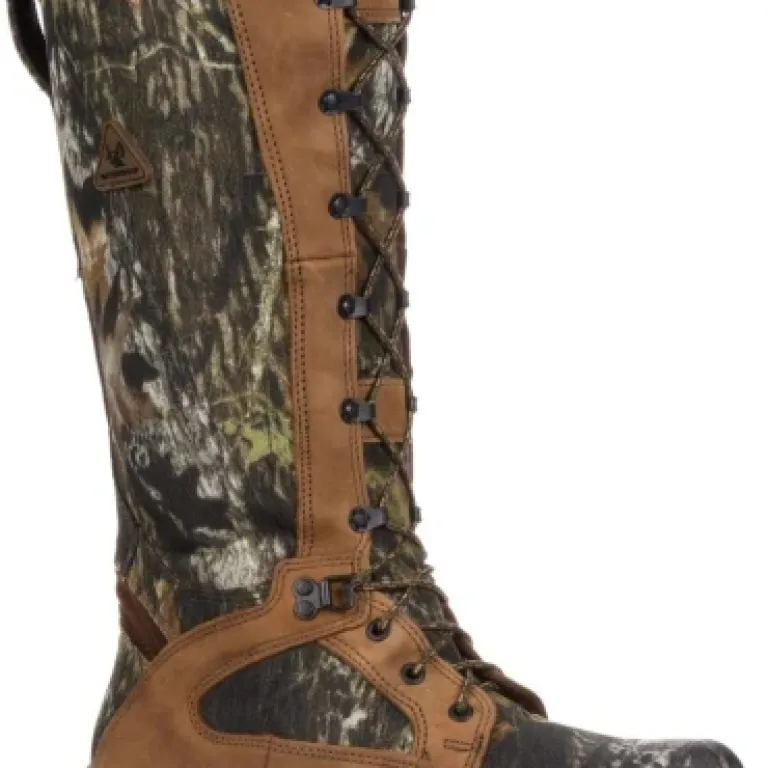
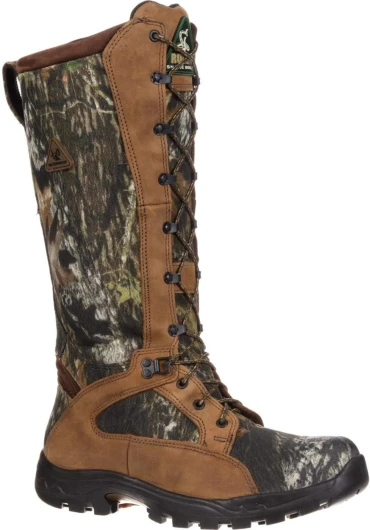
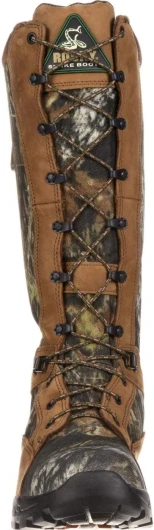
The design is very much “working boot in snake country,” not something you wear to look cool. The Mossy Oak Break-Up camo on the nylon shaft blends in with brush and tall grass, which is fine if you’re hunting or just don’t care what your boots look like. The full-grain leather sections around the foot and some parts of the shaft give it structure and a bit more abrasion resistance where you’re likely to bump into rocks or branches.
The height is the key design feature: around 16 inches of coverage up your leg. On me (average height), they sit just below the knee. That’s enough to cover the area that most snake strikes hit when you’re walking through brush. It also means the boot needs a good lacing system so it doesn’t flop around. Thankfully, the laces run pretty much the full length, so you can tighten the ankle area and loosen the calf if you have thicker legs or want more airflow. Once dialed in, they feel secure but not like a cast.
From a usability standpoint, the no-zip design is both good and bad. Good because zippers on tall boots tend to be the first thing to fail, especially with dirt and mud. Bad because you do spend a bit longer getting in and out compared to side-zip snake boots. For me, that’s an acceptable trade-off. I’d rather spend an extra 30 seconds lacing than have a zipper blow out in the middle of summer when I’m already sweating.
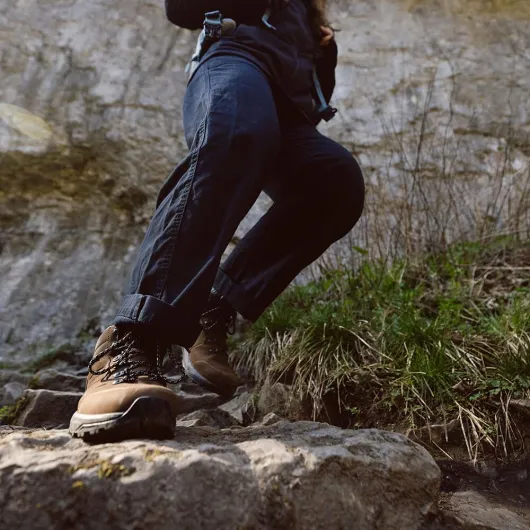
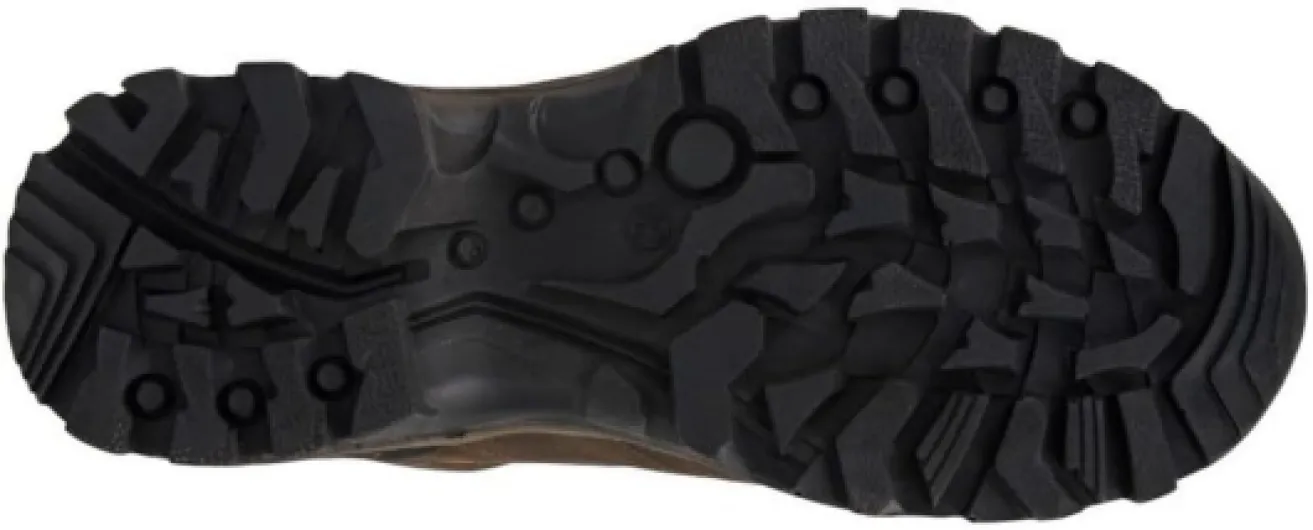
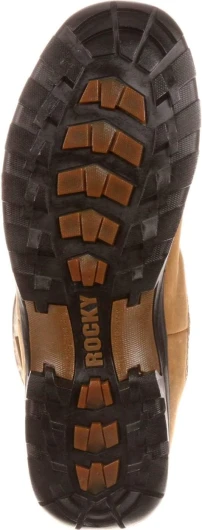
The tread is fairly aggressive but not overdone. On wet grass, mud, and loose dirt, traction is pretty solid. I’ve walked slopes, ditches, and uneven orchard ground without slipping much. On hard surfaces like concrete or smooth rock, they’re fine, but you can feel the lug pattern underfoot, so they’re not exactly casual street shoes. Design-wise, these boots clearly prioritize protection, stability, and adjustability over style. If you want sleek and stylish, look elsewhere. If you want a boot that looks like it belongs in the woods or on a ranch, this fits right in.
Surprisingly comfortable for such a tall, protective boot
Comfort was the part I was most skeptical about. Tall boots that are snakeproof usually feel stiff, heavy, and tiring after a few hours. These are honestly more comfortable than I expected. Right out of the box, there wasn’t much of a break-in period. The leather around the foot softened up quickly, and the shaft flexes enough that walking doesn’t feel like you’re fighting the boot. I was doing 6–8 hour days in them pretty quickly without hotspots or major rubbing.
Fit-wise, they run a bit large, which matches what other buyers said. I normally sit between sizes, and going a half size down worked better for me. If you’re planning to add thick insoles or wear heavy socks, you might stick with your usual men’s size. A couple of people with wider feet mentioned that the wide option works well, especially if you have bunions or need extra room in the toe box. The lacing system also helps with comfort since you can fine-tune how snug they are from ankle to calf.
There is a downside: heat and sweat. These boots don’t breathe all that well, which isn’t surprising given the snakeproof and waterproof layers. On warm days, my feet get sweaty, even with moisture-wicking socks. It’s manageable, but if you’re sensitive to heat or live somewhere very hot and humid, just know your feet won’t feel airy. Quality socks make a big difference here – I’d avoid cotton and go for synthetic or wool blends.
Underfoot, the cushioning is decent but not plush. For everyday use, it’s fine, but if you have flat feet or need more arch support, consider dropping in a better insole. One reviewer mentioned buying a size up specifically to fit a thick insert, which is a smart move if you’re planning to hike long distances. In short, comfort is one of the stronger points of this boot: not like sneakers, but very wearable for long days compared to a lot of other snake boots.
Leather, nylon, rubber… and a few trade-offs
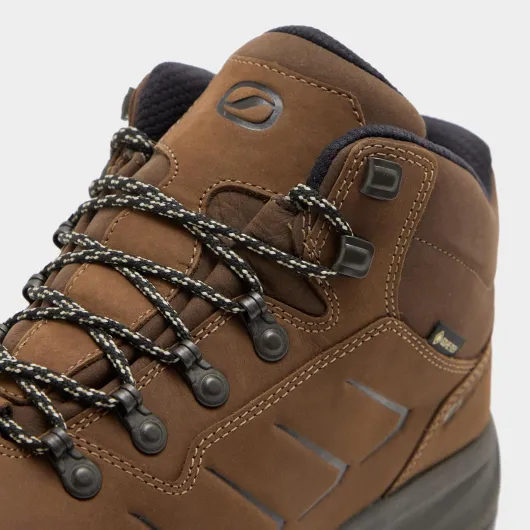
Material-wise, ROCKY went with a full-grain leather + nylon combo, plus a polyurethane/rubber outsole. The leather is mainly around the lower part of the boot and key stress points, which makes sense because that’s where you get scuffs, rocks, and constant flex. After a bunch of days in mud, wet grass, and dust, the leather on mine shows normal wear – creases and some marks – but nothing that feels weak or cheaply tanned.
The Mossy Oak camo nylon makes up most of the upper shaft. It keeps the weight down compared to an all-leather boot and is flexible enough that your leg doesn’t feel trapped. That said, nylon will never feel as tough as thick leather. I’ve pushed through mesquite, tall weeds, and some thorny brush. The nylon has held up fine so far, but you can tell that if you constantly bash these into sharp metal or heavy thorns, you’ll eventually see snags. For normal ranch and hunting use, it’s a reasonable compromise between weight and toughness.
The outsole is a PU/rubber combo. The rubber gives you grip and basic durability, while the polyurethane adds cushioning and structure. Walking on gravel and uneven ground feels stable, and there’s enough stiffness that rocks don’t poke through into your feet. After regular use, the tread wear looks normal – no chunks missing, just a bit of smoothing on the highest contact points. For a boot that’s meant to be worn a lot, that’s acceptable. It’s not a forever boot, but it doesn’t feel cheap either.
One thing that needs to be mentioned: the boot is explicitly listed as being made with PFAS chemicals. That’s likely tied to the waterproofing and stain resistance. If you’re trying to avoid PFAS, this is a downside. If you don’t care and just want something that keeps your feet dry and protected from snakes, you probably won’t think twice. Overall, the materials feel practical and purpose-driven: not luxury-grade, but solid enough for daily abuse in the field.
How they hold up with daily abuse
Durability so far has been pretty decent, but with some caveats. The upper materials – leather and nylon – are holding up well to regular use in brush, mud, and rough ground. No blown seams, no major tears, and the lacing hardware hasn’t bent or snapped. For a boot that gets used several hours a day, that’s what I’d hope for. The tread wear is normal: a bit of smoothing on the high-contact areas, but nothing that makes me think they’ll be bald anytime soon.
Where things get iffy is the waterproofing over time. One user mentioned the boots lasted about a year before the waterproofing on the left boot gave up, leading to a soaked foot in rainy, tall grass conditions. That lines up with what I’d expect from this type of membrane boot: they’re great when new, and then, depending on how hard you use them, the waterproof layer slowly degrades. If you’re in wet conditions constantly, a one-year solid run is okay but not impressive. If you’re more of a dry-climate user with occasional wet days, they’ll likely last longer before you notice any issues.
The snakeproof aspect should last as long as the boot structure stays intact. The protective layers don’t just “expire” quickly; they only really fail if the boot is torn, heavily worn through, or poorly stored. So as long as you’re not shredding them on barbed wire or letting them rot in a damp shed, the snake protection should outlast the waterproofing. That’s not ideal, but it’s better than the other way around.
Overall, I’d rank durability as good but not bulletproof. Expect a solid working life out of them if you use them regularly but not brutally. If you’re hard on gear and constantly in wet, rough conditions, you should budget mentally for a replacement after about a year or two, depending on use. They’re clearly better than cheap big-box-store boots, but they’re not on the same level as top-end brands known for multi-year abuse without blinking.
What you actually get with these ROCKY snake boots
On paper, the boot is pretty straightforward: 16 inches of snakeproof protection, full-grain leather combined with Mossy Oak Break-Up nylon, rubber/PU outsole, and they’re marketed as waterproof. It’s a unisex model, but sizes are in men’s, so you need to convert if you’re used to women’s sizing. The pair I used was a men’s 7, which lines up roughly with a women’s 9, and that tracks with what other buyers are saying.
Physically, they look like a classic hunting boot: camo nylon shaft, leather trim, and a fairly aggressive tread on the bottom. No zipper – it’s all laces, from the ankle almost all the way up the leg. That sounds like a pain, but in practice it’s not too bad. Once you get the lacing pattern how you like it, you mostly just loosen the top few rows to get in and out. The boot feels purpose-built: you can tell it’s designed as personal protective equipment first, fashion second.
One thing that stands out is the branding vs reality on waterproofing. The product description pushes the “waterproof” angle with the Rocky membrane, but real-world feedback (and my own use) says: they’re solid against wet grass, light rain, and shallow puddles, but they’re not waders. Once you get into deeper water or extended soaking, especially as they age, water can creep in. So I’d call them water-resistant for daily ranch/hunting use, not something you’d rely on for standing in water for hours.
Also worth noting: they are made with PFAS chemicals, which the manufacturer calls out. If you’re trying to avoid that kind of stuff for environmental or health reasons, that’s a red flag. If you’re just focused on function and safety, you’ll probably shrug and move on. In short, the presentation matches what you’d expect from a mid-to-high range hunting boot: serious protection, decent materials, and a design aimed at people who actually spend time in snake country, not just hiking a groomed trail on weekends.
Protection and waterproofing: how it really behaves in the field
On the snake protection side, this boot is clearly built for serious use. You get 16 inches of coverage, and the materials and construction feel robust enough that I actually trust them in tall grass and brush. I haven’t taken a direct snake strike in them (and I’m not volunteering for that), but ROCKY markets them as protecting against most common North American venomous snakes like rattlesnakes, copperheads, and coral snakes. The way the shaft is reinforced, plus the thick leather and layered fabric, gives you a good sense of security when you’re stepping over logs or walking through hidden holes and weeds.
Where things are a bit mixed is waterproofing. When new, they handle wet grass, light rain, and shallow puddles without any issue. I’ve walked through damp orchards and muddy ranch ground and stayed dry. The problem is long-term and heavy exposure. Based on one user’s experience and what I’ve seen starting to show up, after about a year of regular use, the waterproofing on at least one boot can start to fail, especially if you’re in constant wet conditions. That person had a soaked left foot after a year when working in rain and tall wet grass. So I’d call these good for normal wet conditions, not for constant soaking or standing in water.
In terms of actual field use, they perform well for their intended role: walking through areas where snakes might be, dealing with mud, and handling uneven terrain. The outsole gives you stability on slopes and rough ground, and the tall shaft keeps brush and debris off your legs. If your main fear is stepping somewhere you can’t see and getting tagged by a snake, these boots do a solid job of giving you peace of mind. Just don’t treat them like knee-high rubber waders and expect bone-dry feet after hours in deep water.
Overall effectiveness: very solid on snake protection and basic water resistance, a bit weaker on long-term waterproofing. For ranch work, hunting, and property maintenance in snake country, they get the job done. If you spend most of your time in swamps or standing water, you’ll want something more dedicated to that kind of environment.
Pros
- 16-inch snakeproof coverage gives solid protection for lower legs
- Surprisingly comfortable for a tall, protective boot; easy to wear 8–10 hours
- Good traction and stability on uneven, muddy, or grassy terrain
Cons
- Waterproofing can start to fail after about a year of heavy wet use
- Runs warm; feet tend to sweat without good moisture-wicking socks
- Made with PFAS chemicals, which some people will want to avoid
Conclusion
Editor's rating
Overall, the ROCKY ProLight Hunting Waterproof Snake Boot is a solid, practical choice if you live, work, or hunt in snake country and need something you can actually wear all day. The big strengths are clear: real 16-inch snake protection, better-than-average comfort for such a tall boot, and decent traction and stability on uneven ground. It feels like a working boot first, not a fashion piece, and that’s exactly what most people buying this kind of gear want.
It’s not perfect. Long-term waterproofing looks like the weak point, especially if you’re constantly in wet grass or rain – you might start seeing leaks after about a year of heavy use. They also run a bit warm, so expect sweaty feet in hot weather unless you pair them with good moisture-wicking socks. And if you’re trying to avoid PFAS, the material choice is a downside. But if your priority is staying safe from snakes while you walk through brush, tall weeds, or orchards, these boots do the job without killing your feet.
I’d recommend these to ranch owners, hunters, land managers, and anyone who spends serious time in areas with rattlesnakes, copperheads, or similar. They’re especially good if you want one boot that can handle daily chores and weekend hunts. People who should probably skip them: folks who mostly deal with deep water or swampy ground (you’ll want true rubber boots), and those who only occasionally go into snake country and don’t need something this heavy-duty. For regular use in snake territory, they’re a good, no-nonsense option that balances protection, comfort, and price fairly well.