
Summary
Editor's rating
Value: not cheap, but makes sense if you actually work in them
Design: classic moc look, chunky feel
Comfort: surprisingly good out of the box, but on the heavy side
Materials: proper leather and a resolable sole, with a few trade-offs
Durability: built to last, with the option to resole
Performance on the job: grip, waterproofing, and safety
What you actually get with the Wingshooter ST
Pros
- Comfortable right out of the box with almost no break-in
- Goodyear welt construction and full-grain leather make it durable and resoleable
- Waterproof, non-metallic safety toe, and full ASTM/EH/slip ratings for real jobsite use
Cons
- Noticeably heavy and a bit bulky, especially around the toe
- Stock laces feel cheap and are likely to wear out before the boot does

Specifications
View full product page →| Brand | Irish Setter |
Work boots that don’t need a week of suffering
I’ve been wearing the Irish Setter Wingshooter ST, 6" waterproof, non‑metallic safety toe, in size 10.5 brown for regular jobsite work and some weekend projects. I’m not a logger or anything, but I’m on concrete, steel grating, gravel, and wet ground pretty much every day. I usually wear Red Wing and some cheaper safety boots (Timberland PRO, CAT), so I’ve got a decent reference point for how these should feel and hold up. I went into these expecting a long break‑in because of the Goodyear welt and full‑grain leather.
First surprise: they were comfortable right out of the box. I wore them for a full 9‑hour shift on day one with no hot spots, which is rare for a leather safety boot. No blisters, no heel rubbing, and the ankle support felt stable without digging into my leg. For a 6" boot, they feel more supportive than some 8" boots I’ve tried, probably because of the stiff leather and the shank in the sole.
That said, they’re not light. If you’re used to hiking-style safety shoes or athletic-style work boots, these are going to feel chunky. One Amazon review calling them "Frankenstein shoes" isn’t totally wrong. You feel the weight when you’re climbing stairs or walking long distances, but it’s the trade‑off for a more traditional, rebuildable construction and heavy-duty leather. Personally, I got used to the weight after a few days, but the first couple of shifts I definitely noticed it.
Overall, my first impression is that this is a pretty solid, old‑school work boot with modern safety features (non‑metallic toe, EH, slip resistance, waterproofing). It’s not perfect – there are some small annoyances I’ll get into – but if you want a boot that feels broken‑in fast and can be resoled instead of tossed, this one actually makes sense. If you want something super light and sneaker‑like, this is probably not what you’re looking for.
Value: not cheap, but makes sense if you actually work in them
In terms of price, these sit in that mid-to-upper range for work boots – more expensive than big-box store brands, usually a bit less than premium Red Wings. So the question is: do you actually get enough for the money? Based on the build and how they feel on the job, I’d say yes, if you’re going to use them hard and keep them for a while. If you just need something for occasional light use, they might be overkill.
You’re paying for a few specific things: full-grain leather, Goodyear welt (resoleable), real waterproofing, non‑metallic safety toe, and proper ASTM safety ratings. If you compare that to a cheaper cemented boot that you’ll toss in a year when the sole separates, the cost difference over a few years isn’t huge. Especially with the option to resole, which can extend the life of the boot significantly. The comfort out of the box also saves you from that miserable break‑in week where you’re limping around – that has value too if you’re on your feet all day.
Where the value is a bit less convincing is if you care a lot about weight and athletic feel. There are lighter composite-toe work shoes that feel more like sneakers and cost similar money. They won’t last as long or be resoleable, but if you prioritize lightness over build, those might feel like better value for you. Also, little things like the mediocre laces make it clear Irish Setter didn’t spend every penny on premium touches; they focused more on the big structural stuff.
Overall, I’d call the value pretty solid for serious users. If you’re in a steel mill, construction, or any trade where boots take daily abuse, this is money reasonably spent. If you just need safety boots for the occasional site visit or light weekend work, you could easily get away with something cheaper and lighter and not miss most of what this boot offers.
Design: classic moc look, chunky feel
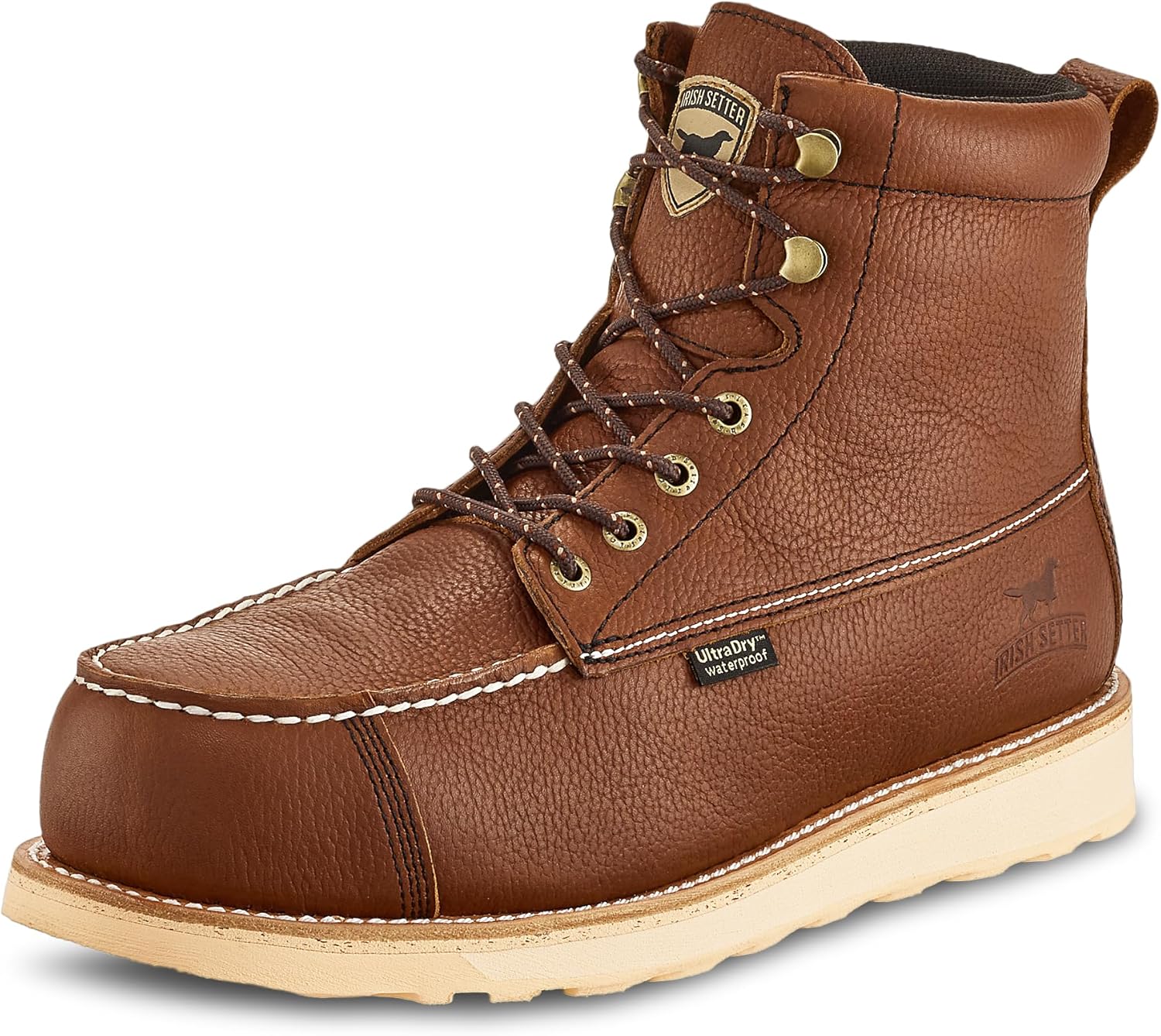
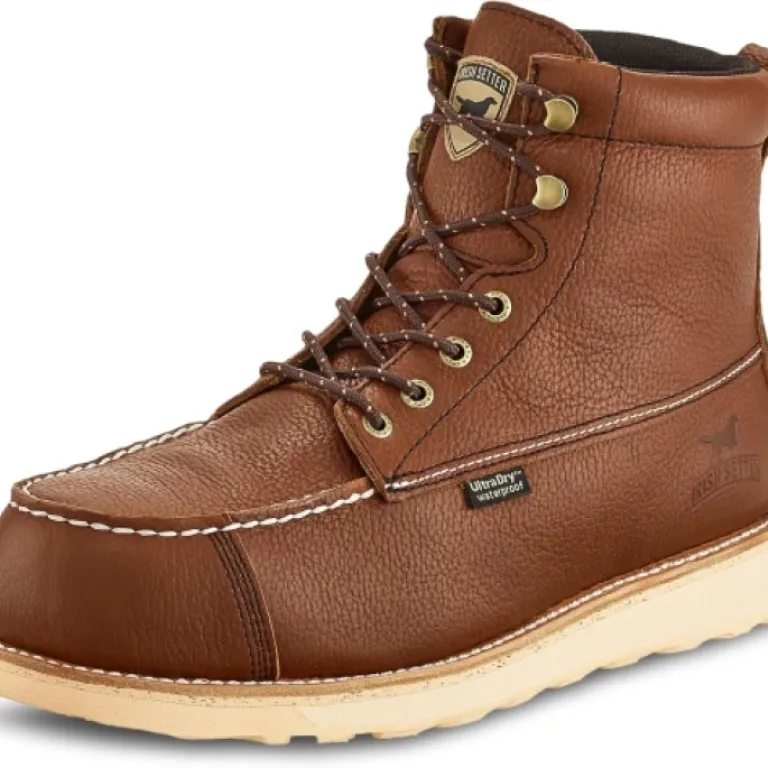
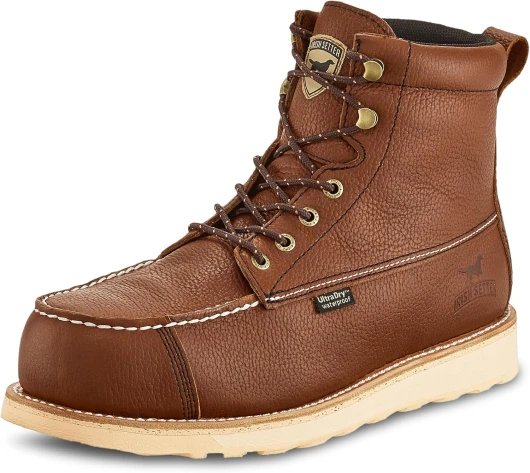
Design-wise, this is very much a classic moc-toe work boot with a safety twist. Brown full‑grain leather upper, moc stitching around the toe, contrast white/cream traction tred outsole, and standard lace-up system with eyelets and speed hooks near the top. If you’ve ever seen the old Wingshooter hunting boots, this looks like the work-boot cousin with a safety toe. On the jobsite, it passes as a serious work boot but doesn’t scream "industrial clunker" like some big black safety boots do.
The toe profile is on the bulky side because of the non‑metallic safety toe. It’s not cartoonish, but if you’re coming from a soft-toe boot or a more tapered composite toe, you’ll notice the extra volume in front. That’s partly why people say it feels a bit like "Frankenstein shoes" – visually and on foot, there’s some bulk. I didn’t have issues tripping over the toe, but in tight spaces (climbing ladders, working around machinery) you’re aware of it.
One thing I liked is the lace layout and ankle cut. The 6" height and padded collar give good ankle wrap without digging into your Achilles. The speed hooks at the top make it quick to get on and off, which matters if you’re changing boots at work every day. The downside: the stock laces are pretty basic and feel like the weak link. One of the Amazon reviewers mentioned needing new laces after a while, and I can see that happening – they’re not terrible, just nothing special. I’d probably swap them out for a tougher pair if you’re hard on laces.
Overall, the design is more about function than style, but it still looks decent enough to wear off the job with jeans. If you want a slim, sneaker-inspired work shoe, this isn’t it. If you’re okay with a chunky, traditional work-boot look that signals "I actually work in these", the design does what it needs to do. Just expect a little visual bulk and plan on upgrading the laces at some point.
Comfort: surprisingly good out of the box, but on the heavy side
Comfort is where these boots surprised me the most. I was ready for a week of sore feet because Goodyear welt + full‑grain leather usually means stiff at the start. Instead, the break‑in was basically zero. First day, I did around 9 hours on a mix of concrete and steel grating, and I didn’t get any blisters or weird pressure points. The collar around the ankle is padded just enough, and the tongue doesn’t dig in. For a safety boot with a solid build, that’s a big plus.
The polyurethane insole is decent: firmer than memory foam, but it supports better over a full shift. After about a week, I could tell it was molding a bit to my foot but not collapsing. Under that, the steel shank gives the boot some rigidity. That’s good when you’re on ladders or uneven surfaces because your foot doesn’t flex in weird ways. If you’re on flat concrete all day, the shank might make them feel a bit stiffer than a soft sneaker-style work shoe, but my feet felt less tired at the end of the day compared to cheaper, floppy boots.
The trade‑off is weight and bulk. These are not light boots. You feel the mass when you’re hustling up stairs or walking long distances. One reviewer calling them "Frankenstein shoes" is a fair description if you’re used to lighter footwear. Personally, after three or four days, my legs adapted and it stopped bothering me, but if you’re sensitive to heavy boots or have knee issues, keep that in mind. On the positive side, the weight does translate into a stable, planted feel. You don’t feel like you’re going to roll your ankle every time you step on uneven ground.
Fit-wise, they run true to size but a bit snug for wider feet. I have a fairly normal-width foot, and my usual 10.5 fit well with work socks. If you’ve got wide feet or like a roomy toe box, you might want to try a wider size if available, or at least expect a slightly tighter fit at first. Overall, I’d rate comfort as very solid for a safety work boot: no nasty break‑in, good support, but with some unavoidable heft.
Materials: proper leather and a resolable sole, with a few trade-offs
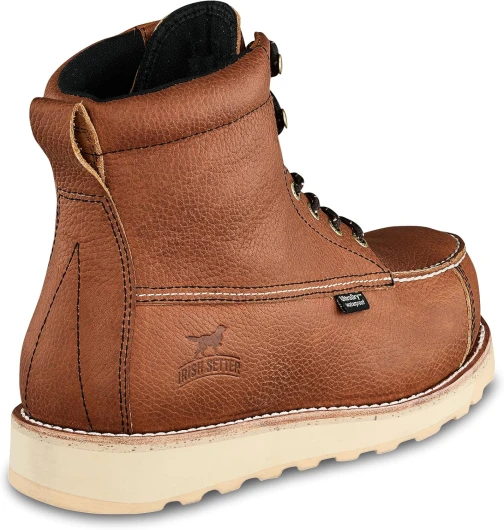
The upper is 100% full-grain leather, and you can feel that right away. It’s not thin or plasticky like cheaper boots. Out of the box, the leather has a firm feel but not brick-hard, which explains why the break‑in is basically non‑existent. After a few days of bending and kneeling, the leather started to soften up nicely without feeling loose. Compared to some budget work boots I’ve had, this leather feels more trustworthy – like it will actually shape to your foot instead of just cracking and separating at stress points.
The sole is a rubber-EVA traction tred attached with Goodyear welt construction. That combo is interesting: the EVA layer helps with cushioning and cuts some weight, while the rubber outer gives grip and heat resistance. The Goodyear welt is the big plus here – you can resole these when the tread is gone instead of tossing the whole boot. That’s something you usually see on pricier boots, so having it at this level makes sense if you keep boots for years. The outsole is also rated HRO (heat resistant to at least 475°F), which isn’t just a number if you’re around hot metal, asphalt, or anything similar.
Inside, you’ve got a removable polyurethane insole that’s decently cushioned. It’s not as plush as some memory-foam insoles, but it holds its shape better and doesn’t bottom out in a week. The steel shank in the midsole adds stiffness underfoot, which helps when you’re on ladders, rebar, or uneven ground. The waterproofing is handled by Irish Setter’s UltraDry system – basically a waterproof membrane plus a moisture-wicking lining. It’s not a rubber boot, but for rain, wet grass, and small puddles, it holds up fine.
The non‑metallic safety toe meets ASTM impact/compression standards, and the whole boot is also EH rated and slip resistant (ASTM F3445-21 SR). So from a materials and safety standpoint, it’s not cutting corners. The only weak spot in the materials, in my opinion, is the laces. They feel like standard generic laces and don’t match the toughness of the leather and sole. I’d call the materials overall pretty solid for the price range, with the clear highlight being the leather and the resolable Goodyear welt platform.
Durability: built to last, with the option to resole
Durability is where this boot actually makes sense long term. The Goodyear welt construction and thick leather upper give it a sturdier feel than most glued-on, cheaper boots. After regular use, the leather on mine has some creases and scuffs, but nothing that looks like it’s going to fail. The stitching around the moc toe and welt is straight and tight, with no loose threads so far. Compared to some sub-$150 boots I’ve burned through in under a year, these feel more like something you can maintain rather than just wear until they die.
The outsole compound seems to hold up well. One Amazon reviewer said they’ve been "beating the hell out of these boots for 7 months in a steel mill" and still think they’re worth the money. That matches what I’d expect: the rubber-EVA traction tred is firm enough that it doesn’t shred quickly on concrete but still has some give. If you’re constantly on rough surfaces, the tread will obviously wear, but because of the welt, you can resole instead of replace the whole boot, which is a big difference in total cost over a few years.
The waterproofing has stayed consistent so far. No leaks around the flex points or the tongue, which is where cheaper boots usually start to fail. As long as you treat the leather every now and then with a conditioner or waterproofing product, I don’t see a reason it wouldn’t stay reliable. The only part I’m not confident in long-term are the stock laces. They’re already showing a bit of fuzzing, and based on other reviews, they’re usually the first thing to go. That’s not a dealbreaker – laces are cheap – but it’s worth mentioning.
Overall, I’d say durability is one of the key strengths of this model. It’s not indestructible, but it’s clearly built to survive real work. If you’re the kind of person who wears boots until the soles are bald, the ability to resole and the toughness of the leather make this a more sensible choice than constantly buying disposable boots.
Performance on the job: grip, waterproofing, and safety
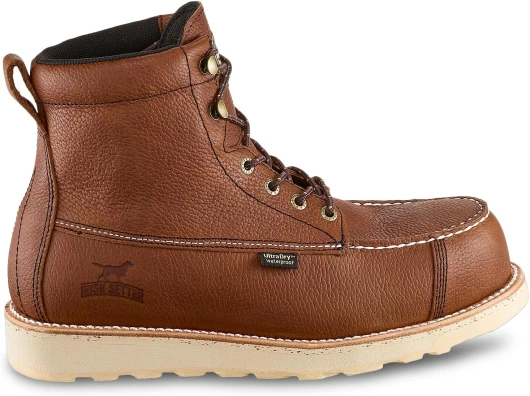
In actual day-to-day use, the Wingshooter ST holds up well. The slip resistance is decent – not magic, but clearly better than generic work boots. On wet concrete and slightly oily shop floors, I never felt like I was skating. One Amazon review mentioned it does a "fair job" with slip resistance, and I’d agree. It’s not like walking on Velcro, but it grips well enough that you’re not worried every time you hit a slick patch. On gravel and dirt, the traction tred pattern bites in fine and doesn’t clog too badly.
The waterproofing with the UltraDry system is solid for real-world use. I wore them through wet grass, shallow puddles, and light rain, and my feet stayed dry. The leather beads water at first, and the membrane does the rest. I wouldn’t stand in ankle-deep water for an hour and expect miracles, but for normal jobsite moisture, they get the job done. Inside, the moisture-wicking lining helps your feet not feel swampy by mid-day, though in hot weather any waterproof boot will run warmer than a non‑waterproof one.
On the safety side, the non‑metallic toe and EH rating do exactly what they’re supposed to. I bumped the toe into pallets, steel, and random junk more times than I can count, and my toes never felt it. The non‑metal toe also doesn’t get as cold as steel in winter, which I’ve had issues with in other boots. If you work around hot surfaces or welding, the HRO outsole (heat resistant to 475°F) is a nice safety margin – you won’t ruin your soles just by stepping briefly on hot metal or freshly laid asphalt.
Overall performance is reliable and predictable. No weird surprises, no random leaks, no sudden loss of cushioning after a couple of weeks. They just feel like a solid tool on your feet. There are boots with more aggressive lug patterns for mud and boots that are lighter for constant walking, but as an all-round safety work boot for mixed environments (steel mill, shop, light construction), these hold up well.
What you actually get with the Wingshooter ST
The full name is a mouthful: Irish Setter Wingshooter ST, men’s 6" waterproof, non‑metallic safety toe work boot. Mine is the brown leather, size 10.5. Out of the box, you’re looking at a classic moc‑toe work boot with a white-ish traction tred outsole. It looks like a traditional hunting/work boot that’s been adapted for industrial use – safety toe, EH rating, slip resistance, the whole list of ASTM stuff (F2413‑18, M/I/C, EH and F3445‑21 SR). If your company is picky about safety ratings, these check the boxes.
The boot uses Goodyear welt construction, which is a big deal if you care about resoling. Most cheaper work boots are cemented construction – once the sole is shot, they’re done. With these, you can actually take them to a cobbler and slap a new sole on. That matters if you’re hard on soles but the leather upper ages well. Irish Setter also touts an HRO rubber outsole that’s heat-resistant up to 475°F, so for people around hot surfaces or metal, that’s not just marketing; it actually matters.
Inside, there’s a removable polyurethane footbed, a steel shank in the midsole, and their "UltraDry" waterproof setup (waterproof membrane + moisture-wicking lining). The toe is non‑metallic, so you still get impact/compression protection without setting off metal detectors or freezing your toes in the winter like some steel toes. The shaft height is about 6.5", so it sits just over the ankle – enough to feel supported but not a full high‑leg boot.
On paper, it’s basically a traditional leather work boot with modern safety and comfort tweaks: resolable platform, waterproof membrane, non‑metal toe, EH and slip resistance. If you work in a steel mill, factory, or construction site where boots get hammered but you still care what’s on your feet, this one sits in that middle ground between cheap disposable boots and ultra-premium stuff. It’s not flashy, but the spec sheet is solid and practical.
Pros
- Comfortable right out of the box with almost no break-in
- Goodyear welt construction and full-grain leather make it durable and resoleable
- Waterproof, non-metallic safety toe, and full ASTM/EH/slip ratings for real jobsite use
Cons
- Noticeably heavy and a bit bulky, especially around the toe
- Stock laces feel cheap and are likely to wear out before the boot does
Conclusion
Editor's rating
The Irish Setter Wingshooter ST is a no-nonsense work boot that leans more toward durability and support than lightness and flash. The big positives are clear: full‑grain leather, Goodyear welt construction you can resole, real waterproofing, and a non‑metallic safety toe that meets all the usual standards. Comfort is better than expected – basically no break‑in, decent insole, and a stable feel thanks to the steel shank. You can put them on and work a full day right away, which isn’t something I can say about every leather safety boot.
On the downside, they’re not light and they do feel a bit bulky, especially around the toe. If you’re used to sneaker-style safety shoes, these will feel like a step up in weight. The stock laces are also a weak point and will probably need replacing sooner than the rest of the boot. Slip resistance is good but not magic, and in hot weather the waterproofing will make things warmer than a non‑waterproof boot.
I’d recommend these for people who actually beat up their boots: steel mill workers, trades, construction, maintenance – anyone who’s on their feet all day in rough conditions and wants a boot that can be resoled instead of tossed. If you just need something light for occasional use, or you’re very sensitive to boot weight, you might be happier with a lighter composite-toe model and save some money. For serious daily work, though, this is a pretty solid, long-term boot that just quietly gets the job done.