
Summary
Editor's rating
Value: good deal if you prioritize safety and flexibility over luxury comfort
Design: looks like a work boot, moves more like a hiking boot
Comfort: good once broken in, but plan on better insoles and decent socks
Materials: solid leather, tough toe, and a basic insole
Durability: feel tough, but more like 1–2 year workhorses than forever boots
Performance on the job: protection and grip are the strong points
What these Wolverine Overpass boots actually are (and aren’t)
Pros
- Flexible for a safety boot, easier to kneel and move in than many steel-toe models
- Reliable waterproofing and good slip resistance on wet and oily floors
- Composite toe offers strong protection without the weight of steel
Cons
- Stock insole is mediocre; long shifts on concrete almost require aftermarket insoles
- Toe box and hard sole may cause discomfort for some foot shapes, especially during break-in
- Runs warm and not ideal for long hikes or very hot-weather use

Specifications
View full product page →| Brand | Wolverine |
Work boots that don’t feel like bricks (but still have issues)
I’ve been wearing the Wolverine Overpass 6" Mid Composite Toe Waterproof boots in size 10 (Summer Brown) for regular warehouse and light site work. I’m on my feet most of the day on concrete, in and out of wet areas, and I’m pretty rough on my footwear. I’m not sponsored, I bought these with my own money, and I’m judging them against the usual suspects: Timberland PRO, Caterpillar, and some cheaper no-name safety boots I’ve killed in under a year.
The first thing that stood out is that these feel more like a chunky hiking boot than a classic stiff work boot. They bend at the forefoot, they’re not insanely heavy, and you don’t get that wooden plank feeling some safety boots have. That said, they’re still not sneakers. You feel the safety toe and the harder sole, especially in the first week.
I’ve put them through wet floors, oil spots, dusty warehouse aisles, and some light outdoor mud. The waterproofing and grip are honestly the parts that impressed me most: feet stayed dry, and I didn’t feel like I was skating on smooth concrete with a bit of grease on it. On the other hand, the inside comfort out of the box is just okay. The stock insole is there, but it’s nothing to brag about if you stand 8–10 hours a day.
Overall, my first impression is that the Overpass is a pretty solid work boot for people who need real protection but don’t want a stiff leather tank on their feet. It’s not perfect: you’ll probably want better insoles, and the toe box and hard sole won’t suit everyone. But in terms of doing the job—safety, waterproofing, and basic comfort—it holds up. The rest of this review goes through design, materials, comfort, performance, durability, and value in more detail.
Value: good deal if you prioritize safety and flexibility over luxury comfort
For the price these usually sell at online, I’d put the value as pretty solid. You’re getting a composite toe that meets ASTM standards, waterproof leather, a slip- and oil-resistant outsole, and a boot that actually flexes with your foot instead of fighting it. The Amazon rating of 4.4/5 lines up with my feeling: most people will be happy, a few will have fit or comfort issues, and it’s not perfect, but it’s not overpriced for what it delivers.
Where the value is strongest is if you compare it to similarly priced steel-toe boots that are heavier and stiffer. The Overpass gives you a lighter feel and better flexibility, which, over a long shift, can matter more than a tiny bump in durability. If most of your work is on concrete, in and out of wet areas, and you need real protection, it’s a good trade-off. You’ll probably need to spend a bit extra on good insoles, but even with that added cost, the total package is reasonable.
On the downside, there are cheaper boots out there that can also keep you safe, especially if you don’t care about waterproofing or flexibility. If your budget is tight and you just want something that passes safety checks and you only wear it a few hours a day, you might not fully benefit from what the Overpass offers. Also, if you’re extremely sensitive to toe box shape or need very soft cushioning, you might end up feeling like you paid for features (waterproofing, flex tech) you don’t really enjoy because of the fit.
Overall, I’d say good value for regular workers who are on their feet a lot and actually use the waterproofing and slip resistance, decent but less compelling if you only wear safety boots occasionally. There’s better out there if you’re ready to pay significantly more, and there’s cheaper if you just want basic protection. This sits in a nice middle ground where the price matches the performance pretty fairly.
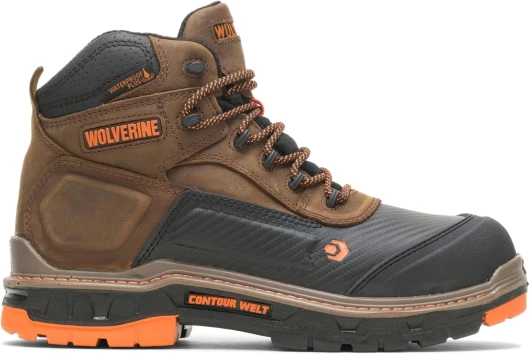
Design: looks like a work boot, moves more like a hiking boot
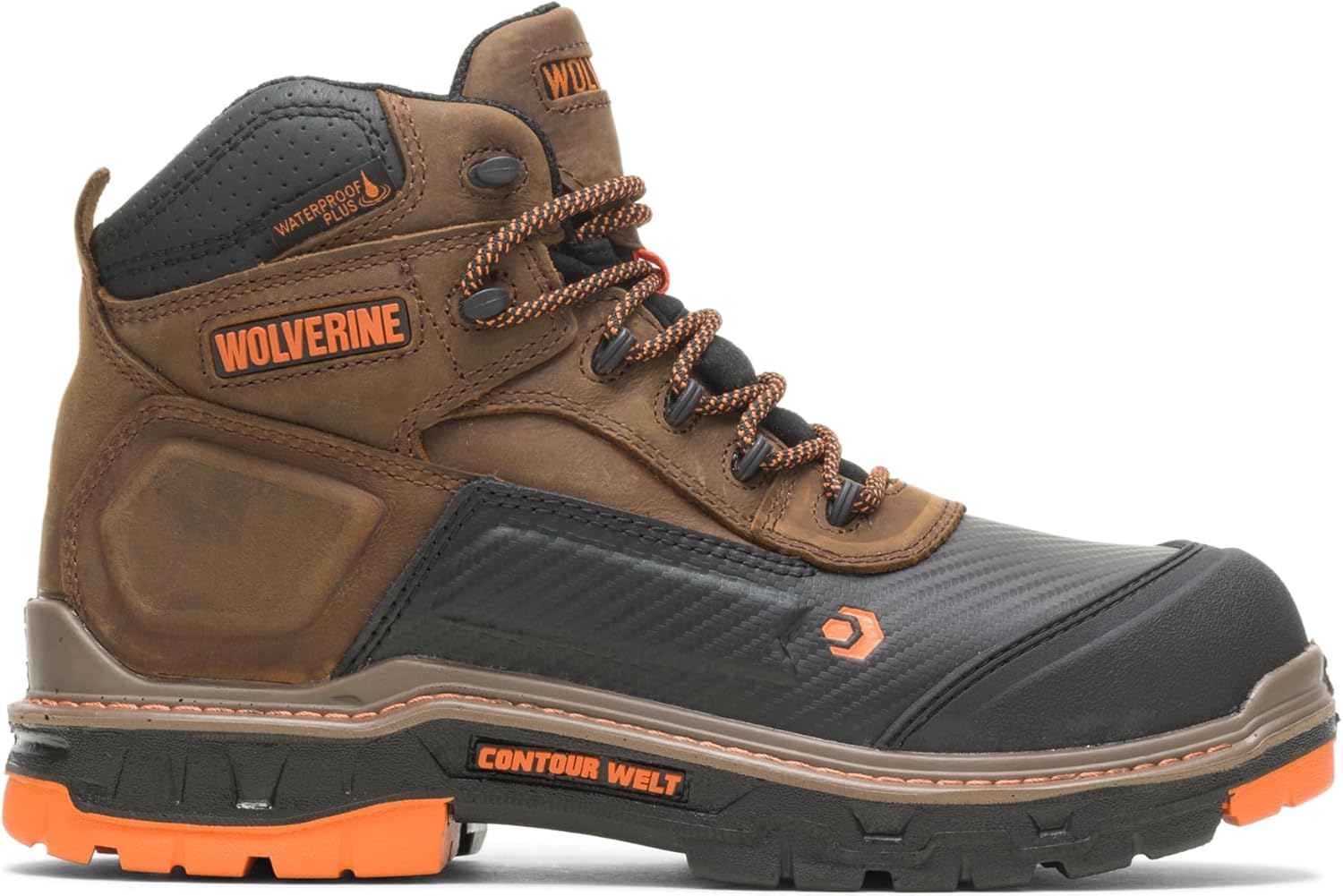
Design-wise, the Overpass in Summer Brown looks like a modern work boot with some outdoorsy vibes. The Summer Brown color is a medium brown leather with darker accents and black around the sole and heel. It’s not flashy, but it doesn’t scream “clunky safety boot” either. I’ve had coworkers comment that it looks cleaner and more modern than the usual yellow or plain black work boots. If your company has brown or earth-tone uniforms, it blends in nicely.
The height is 6", which for me is a good middle ground: high enough to give ankle coverage and keep water and debris out, but not so high that it digs into your calves or feels like a full-on logger boot. The lacing system is straightforward: standard eyelets with hooks at the top, easy to tighten and loosen. One thing I liked is that the laces actually stay tied without needing a double knot, which matches one of the Amazon reviews. That sounds minor, but when you’re moving all day, constantly retying boots gets old fast.
Functionally, the design focuses a lot on flex points. You can actually see where the boot is meant to bend near the ball of the foot. Compared to older Wolverines or some heavy Timberland PRO models, these flex more naturally when you kneel, squat, or climb ladders. That’s a clear plus if your job has you constantly up and down instead of just standing in one spot.
On the downside, the toe area is pretty chunky. It’s not crazy big, but the composite toe cap is noticeable, and if you have wider feet or a weird gait, you might feel the cup at the back of the toe area, like one reviewer who mentioned nerve pain in their big toe. For most people it’ll be fine, but the design clearly prioritizes protection over a sleek shape. Overall, the design is practical and work-focused, with a bit of athletic influence, but still very much a safety boot first and foremost.
Comfort: good once broken in, but plan on better insoles and decent socks
Comfort is where these boots are decent but not mind-blowing. Out of the box, they’re lighter and more flexible than many steel-toe boots, which is a big plus. You notice right away that you can actually bend your foot and squat without fighting the boot. That said, the first few days, the inside felt a bit hard under the heel and forefoot. After a couple of long shifts, I swapped the stock insole for a thicker cushioned one, and that made a big difference. I’d honestly budget for aftermarket insoles if you stand or walk all day.
The break-in period is real. The leather and internal seams soften after a week or two, but during that time you can get hotspots if you wear thin socks. One Amazon reviewer mentioned getting blisters with thin socks and recommended semi-thick ones while breaking them in, and I agree. With thicker work socks, the rubbing was much less of an issue, and by the end of the first week, the boots started to mold to my feet better.
One thing to note: the toe box and the hard sole won’t suit everyone. The composite toe has a firm edge inside, and if your toes ride high or your gait is odd, you might feel that edge. Another reviewer mentioned what felt like nerve damage in their big toe from where the back of the toe cap hits. I didn’t have pain like that, but I can feel where the toe cap ends if I really flex my toes. If you’ve had issues with tight or low toe caps in other boots, I’d try these on in person if possible or consider going half a size up.
Once broken in with better insoles, all-day comfort is pretty solid for a safety boot. I can get through a full shift without counting the minutes until I can take them off. They’re not as comfy as a proper running shoe, but compared to classic stiff work boots, they’re easier on the legs and back. Just don’t expect them to feel great for long hikes or in extreme heat; one user pointed out they’re not ideal for hours-long hikes in 100°F weather, and I agree—they run warm and are built for job sites, not summer trail adventures.
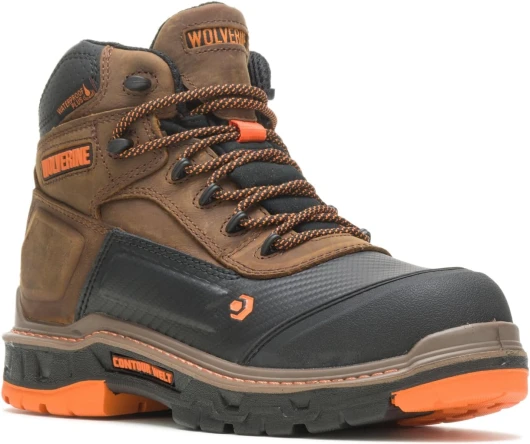
Materials: solid leather, tough toe, and a basic insole
The Overpass uses 100% leather for the main upper, with some synthetic overlays, especially around the toe where you get an abrasion-resistant cap. The leather feels decent: not luxury-level, but thick enough that you don’t worry about every scrape. After some weeks of use, it creases like any leather boot but doesn’t look destroyed. It also cleans up pretty easily with water and a stiff brush, which matches what another user said about them still looking close to new after a few washes.
The outsole is rubber, and you can tell it’s made for job sites: the lugs are deep enough for grip but not so aggressive that they trap a ton of mud. The rubber compound seems to handle oil and wet spots well. I’ve walked through greasy patches on smooth concrete and didn’t feel that sketchy sliding you get with cheap soles. The boot is rated for slip, oil, water, abrasion, and chemical resistance, and so far it behaves like it. I wouldn’t treat it like a chemical suit for your feet, but for normal shop/warehouse chemicals and spills, it’s more than fine.
Inside, there’s a removable Ortholite cushioned footbed. I’m going to be blunt: it’s okay, but nothing special. If you’re light or only on your feet a few hours, it’s probably enough. If you do 8–12 hour shifts on concrete, I’d upgrade the insole. Several users mentioned buying cushier insoles, and I did the same. The boot instantly felt better with aftermarket insoles. So I see the stock footbed as a starting point, not a final solution.
The composite toe itself feels sturdy. One reviewer mentioned taking an H block from 4 feet directly on the toe, and the boot stayed intact and protected their toes. I haven’t had that level of impact (thankfully), but I have kicked pallets, steel edges, and heavy boxes into them, and the toe cap has no cracks or soft spots. Overall, the materials are work-appropriate and lean more toward durability and protection than softness, with the main weak point being the average insole comfort out of the box.
Durability: feel tough, but more like 1–2 year workhorses than forever boots
In terms of build, the Overpass feels solid and ready for abuse. The stitching is clean, no loose threads on my pair, and the leather doesn’t feel thin or flimsy. The abrasion-resistant toe cap is a nice touch; I’ve already scraped it against pallets, metal, and concrete, and it’s just scuffed, not torn. Compared to cheaper boots where the toe leather peels quickly, this one holds up better in the early months.
The outsole seems like it will last a while. It’s a proper rubber compound with a decent thickness, so I don’t expect it to wear flat in a few months unless you’re doing heavy mileage on rough concrete every day. One reviewer called them “strong and durable” and mentioned the boots feel heavy and built well, and I agree with the “built well” part—there’s no sense of them being fragile or thrown together cheaply.
That said, I don’t see these as 5+ year boots under daily hard use. The construction is more flexible and somewhat lighter than the big, old-school welted boots that can be resoled forever. The ContourWelt design is there to help flex, not to be a tank. My guess, based on the materials and feel, is that for a normal trades or warehouse worker using them daily, you’re probably looking at 1–2 years of solid use before the cushioning is shot and the outsole is noticeably worn. That’s pretty standard for this style and price point.
So far, no issues with leaks, delamination, or eyelets pulling out. The waterproofing is still intact, and the boot hasn’t loosened up in a sloppy way—just enough to feel broken in. So I’d say durability is good for the class and price, but if you’re expecting a lifetime boot you can rebuild endlessly, this isn’t that. It’s more of a reliable work boot you’ll likely replace after a couple of hard seasons rather than something you pass down to your kids.
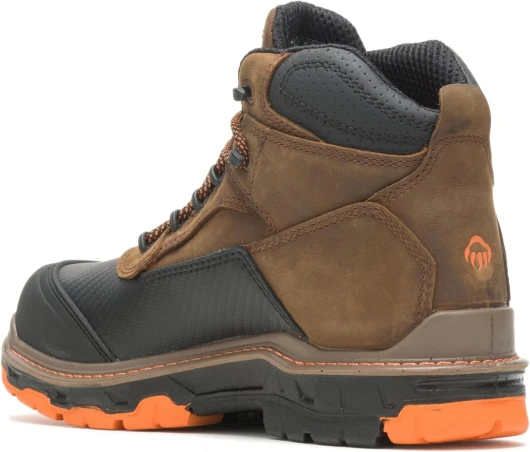
Performance on the job: protection and grip are the strong points
On the job, the Overpass does what it’s supposed to do: protect your feet and keep you upright. The composite toe is legit. I’ve dropped smaller metal parts, slammed pallets, and kicked into equipment, and there’s been no sign of weakness. The Amazon review about an H block falling from 4 feet and the toe still being intact lines up with how solid the cap feels. Protection-wise, for typical warehouse and light construction hazards, I trust them.
The slip resistance is one of the best parts. On smooth, slightly greasy concrete, I still felt in control. I’ve walked through water, oil drips, and dusty sections, and the outsole grips well without feeling sticky. The lugs don’t clog up too badly with mud either, which is nice if you go from yard to warehouse often. They’re rated for slip, oil, water, abrasion, and chemical resistance, and in real life, they behave like a proper work outsole, not a cheap, hard plastic one.
The waterproofing is also solid. I’ve stood in shallow puddles, walked in wet grass and mud, and worked in light rain. My feet stayed dry every time. The leather does darken when wet but dries out without stiffening too much. They’re not waders, but for normal wet job conditions—hoses, splashes, wet floors—they get the job done. Several users mentioned their feet staying dry in muddy, wet situations, and that matches my experience.
Where performance dips a bit is in long-term comfort under heavy walking or standing. The sole is on the firmer side, so if you’re covering a lot of miles in a shift, your feet can feel beat up without better insoles. Also, they’re not great for technical terrain—one user said not to use them for bouldering or serious hiking, and I agree. They flex more than old-school boots but still don’t give the precise grip and feel you want on rocks or steep trails. In short: excellent for typical work tasks, less ideal for anything that feels like real hiking or all-day trekking.
What these Wolverine Overpass boots actually are (and aren’t)
The Wolverine Overpass 6" Mid is basically a mid-height, composite toe, waterproof work boot that tries to feel a bit like an athletic or hiking boot. The shaft is around the ankle (about 6" height) with a pretty big listed shaft circumference (around 18.85 inches, though in practice that just means it opens up enough for thicker socks and pants). It’s aimed at people who work on concrete, in warehouses, light construction, trades, or anywhere you need ASTM-rated toe protection and slip resistance.
You get a composite toe (ASTM F2413-11 M I/75 C/75 EH), so it’s safety-rated but doesn’t set off metal detectors and is usually lighter than steel. The outsole is rubber, rated as slip, oil, water, abrasion, and chemical resistant. Inside, there’s a removable Ortholite cushioned footbed. The upper is 100% leather, with some synthetic/abrasion-resistant material around the toe, and the boot uses Wolverine’s ContourWelt construction which is supposed to make it flex more naturally at key points.
In practice, I’d describe these as: “a work boot that tries to meet safety rules without feeling like your feet are in a cast.” They’re clearly not designed for hiking mountains or long backpacking trips, and I wouldn’t call them a pure outdoor hiking boot. They’re also not ultra-heavy-duty logger boots. They sit in that middle ground: warehouse, yard, shop floor, and light to moderate construction. If your job is mostly indoors or mixed environment and you need your boots to bend when you kneel or climb into machines or trucks, the positioning makes sense.
So if you’re expecting an ultra-rugged, thick-leather, old-school work boot that lasts 5+ years of daily abuse, you might be disappointed. If you’re expecting a sneaker with a safety toe, you’ll also be disappointed. This is more like a compromise: real safety features and waterproofing, with a more flexible, lighter feel than typical work boots, but still clearly a work boot and not casual footwear.
Pros
- Flexible for a safety boot, easier to kneel and move in than many steel-toe models
- Reliable waterproofing and good slip resistance on wet and oily floors
- Composite toe offers strong protection without the weight of steel
Cons
- Stock insole is mediocre; long shifts on concrete almost require aftermarket insoles
- Toe box and hard sole may cause discomfort for some foot shapes, especially during break-in
- Runs warm and not ideal for long hikes or very hot-weather use
Conclusion
Editor's rating
The Wolverine Overpass 6" Mid Composite Toe Waterproof boot is a solid, no-nonsense work boot that focuses on real-world needs: safety, waterproofing, and flexibility. It feels more like a tough hiking boot with a safety toe than a classic stiff work boot, which is great if you’re constantly kneeling, climbing, or moving around machinery. The composite toe does its job, the outsole grips well on wet and oily surfaces, and the waterproof leather keeps your feet dry in normal job-site conditions.
It’s not perfect. The stock insole is pretty average, and the sole is on the firmer side, so if you’re on concrete all day, you’ll almost certainly want better insoles. The break-in period can be rough if you wear thin socks, and some people may find the toe box shape or the internal edge of the toe cap uncomfortable, especially if they have wider feet or a sensitive big toe. Long hikes or very hot-weather use aren’t its strong points either.
I’d recommend these to warehouse workers, tradespeople, and anyone who needs a waterproof, safety-rated boot that doesn’t feel like a cinder block. If you’re on your feet 8–10 hours and you’re willing to spend a bit more on quality insoles and decent socks, they’re a good, practical choice. If you want ultra-soft cushioning, zero break-in, or a super-roomy toe box, or if you just wear boots occasionally and don’t need waterproofing, you might be happier with either a cheaper basic safety boot or a higher-end comfort-focused model from another brand.