
Summary
Editor's rating
Value: good if you want one shoe for trail and everyday use
Design: low-profile, outdoorsy, and a bit technical-looking
Comfort: strong point, especially for long days on your feet
Materials: suede, EVA, TPU – solid but not bombproof
Durability: decent for a lightweight hiker, not a tank
Performance on trails, pavement, and wet ground
What kind of shoe is the Vasque Juxt really?
Pros
- Very comfortable for long days on your feet, with a supportive but not bulky feel
- Versatile design that works for both day hikes and everyday casual wear
- Tunable lace system and wide-size option make it easier to get a good fit
Cons
- Grip on wet, smooth or oily concrete is weaker than some work-oriented shoes
- Toe protection is limited; not suitable as a safety or heavy work shoe
- EVA midsole and lighter build mean it likely won’t last as long as heavier boots under hard abuse

Specifications
View full product page →| Brand | Vasque |
A hiking shoe that feels like a sneaker (in a good way)
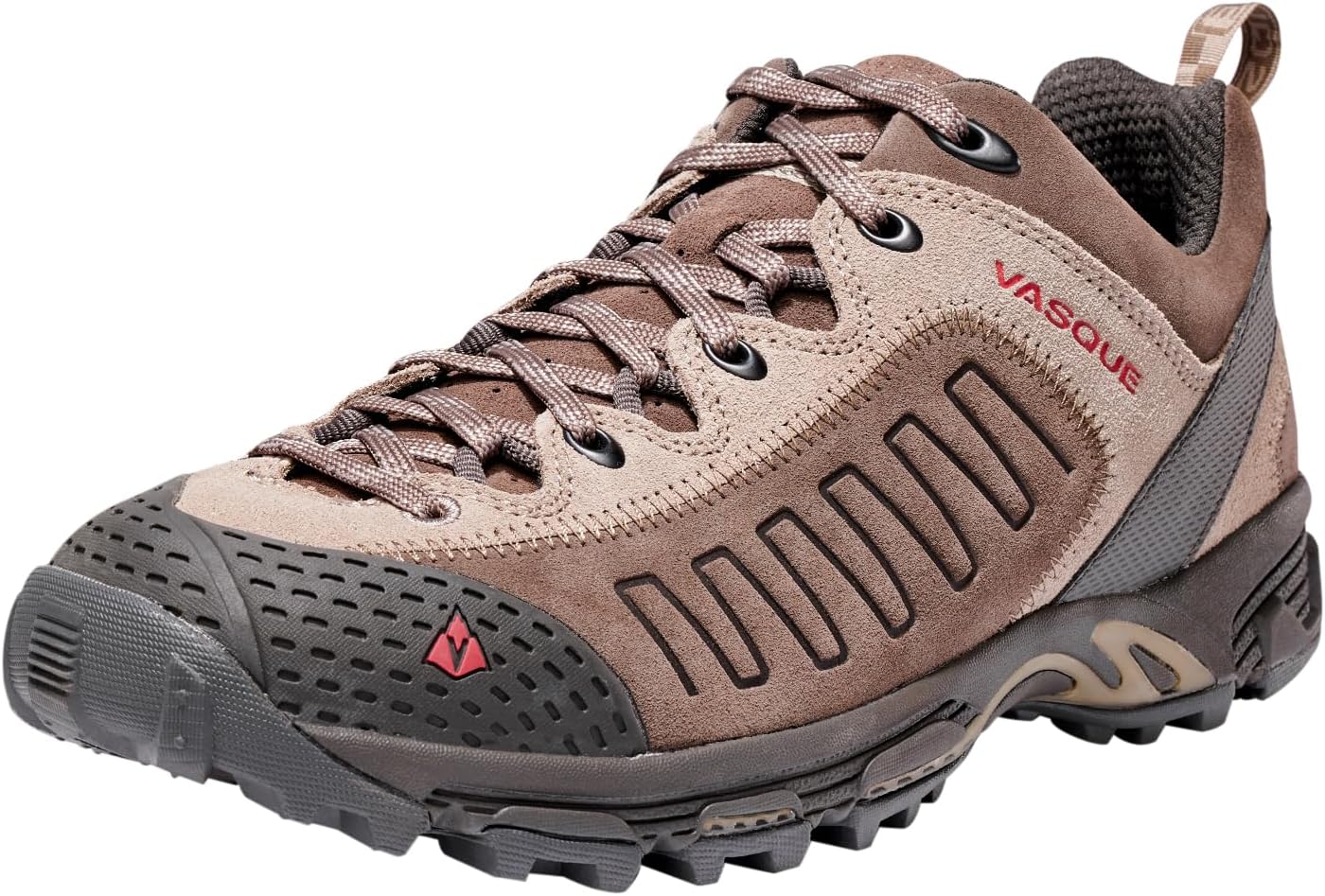
I’ve been using the Vasque Men’s Juxt (size 10.5, Aluminum/Chili Pepper) as my main everyday shoe for a mix of dog walks, light hikes, and running errands. So this is not a lab test or some expedition review, it’s just how they behave in normal life: pavement, park trails, a bit of mud, and long days on my feet. I’ve also owned Merrell Moabs and a couple of Keen hikers before, so I’ve got some reference points.
The first thing that hit me is that these feel more like a sturdy sneaker than a classic hiking boot. They’re low cut, fairly light, and the sole has a trail-style tread but the overall feel is closer to an approach shoe. If you’re used to heavy leather boots, these will feel much lighter and more flexible. If you’re used to running shoes, they’ll feel more supportive and a bit stiffer underfoot.
During the first week, I wore them almost every day, including a couple of 5–6 mile walks and one muddy trail with shallow streams. No waterproof membrane here, so they do get wet, but they also dry quicker than full leather boots. Indoors, they’re surprisingly quiet – no loud clacking or squeaky rubber on tiles, which sounds like a small thing but is actually pretty nice if you’re walking around an office or store all day.
Overall, my first impression is that the Juxt is a pretty solid all-rounder: good for day hikes, good enough for casual wear, and not so bulky that you feel over-geared. It’s not perfect – grip on wet smooth surfaces isn’t top tier, and protection in the toe isn’t on the level of a work shoe – but as a do‑it‑all outdoor shoe, it holds its own.
Value: good if you want one shoe for trail and everyday use
In terms of value, the Juxt sits in that middle price zone where you’re paying more than for a generic sneaker, but less than for a high-end mountaineering boot. With an Amazon rating around 4.5/5, most buyers seem happy, and I can see why. You’re getting a mix of comfort, trail-ready tread, and a design that doesn’t look out of place in town. If you actually use them for both hiking and daily wear, they justify their price pretty well.
Compared to similar shoes, here’s how I see it:
- Versus Merrell Moab: the Juxt feels a bit more precise and lower profile, but a bit less cushy and “forgiving.”
- Versus Keen work‑oriented hikers: the Juxt is lighter and nicer for all‑day wear, but offers less grip on oily floors and less toe protection.
- Versus a cheap trail runner: the Juxt has better support and durability, but it’s heavier and not as bouncy.
If you’re looking for a shoe just to walk around the mall, this is probably overkill and you can save money with a regular sneaker. If you want a proper boot for backpacking with 40+ lb loads, this is under‑built for that and you’d be better off spending more on a stiffer boot. The strong use case is someone who hikes on weekends, walks a lot during the week, and wants one pair that can handle both without feeling like a compromise.
So is it good value? I’d say yes, for the right person. If you understand that it’s a lightweight hiker/approach-style shoe and not a heavy-duty work boot, the comfort and versatility are worth the money. If you’re rough on your shoes and expect them to survive serious industrial abuse, you’ll probably chew through these faster than you’d like and feel they weren’t worth it.
Design: low-profile, outdoorsy, and a bit technical-looking
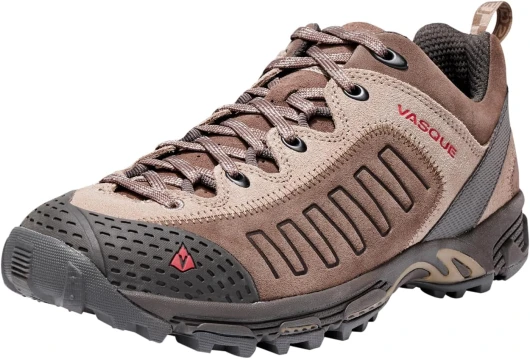
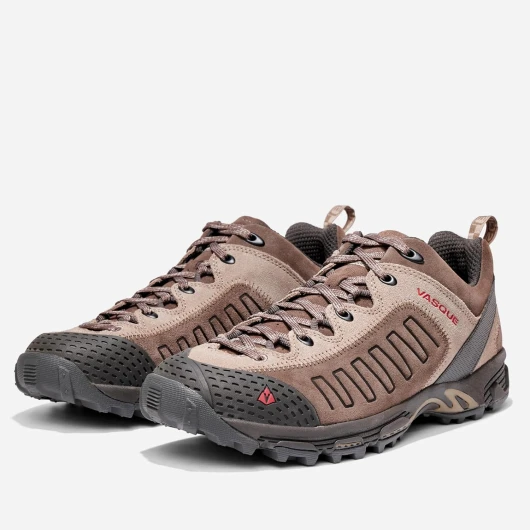
Design-wise, the Juxt leans more toward an approach shoe than a classic hiking sneaker. The lacing goes almost all the way down to the toes, which gives it that technical climbing-shoe vibe. This isn’t just for looks; you can really dial in how snug the front of the shoe is. If you’ve got narrow feet or weird toe shapes, this is helpful. If you’re lazy with laces, it also means more eyelets to deal with every time you put them on, so it’s a trade‑off.
The Aluminum/Chili Pepper color is basically a muted grey with red accents. It looks outdoorsy without screaming “I just came from a trailhead.” I’ve worn them with jeans and they don’t look out of place. The branding is fairly subtle – a small Vasque logo on the side and heel, nothing too flashy. The toe has a rubber cap, but it’s more of a scuff guard than a real safety bumper. Don’t expect it to save you from a dropped hammer.
One thing I like: the shoe has a low but stable profile. You feel close to the ground, which makes you more confident on uneven terrain. There’s no big rocker like some running shoes, so you don’t feel like you’re tipping forward. For walking and light hiking, I prefer this flatter, more planted feel. On the flip side, if you like that bouncy, rolling sensation from modern sneakers, these will feel a bit more old‑school and firm.
In terms of practicality, the tongue and collar padding are moderate – enough to be comfortable, not so thick that they get in the way. The heel shape holds the foot well without digging in. The only minor annoyance: because the laces come so far down, they tend to collect dust, sand, and little bits of trail junk, especially if you walk through loose gravel. It’s not a dealbreaker, but it does mean you’ll occasionally need to knock them out or brush them off.
Comfort: strong point, especially for long days on your feet
Comfort is where the Juxt does well. Out of the box, I didn’t have any serious hot spots, just a bit of snugness across the midfoot that eased up after a couple of short walks. After two or three days of wearing them a few hours at a time, they felt broken in. No brutal break‑in period like you get with some thick leather boots. The EVA midsole gives enough cushioning for pavement and concrete without feeling mushy on the trail.
On longer days – I did a couple of 6–7 hour days mostly on mixed surfaces (concrete, tile, gravel) – my feet felt supported, not wrecked. The heel hold is good; I didn’t have heel slip or rubbing. The forefoot has enough room in the regular width for my average foot, and the fact that they also come in wide is a big plus if your feet have spread over the years. Several users with foot issues mentioned that Vasque in general works well for them, and I get why. The last shape is fairly forgiving without being sloppy.
The lacing system helps a lot here. Because the laces go down close to the toes, you can loosen the front if your toes swell or tighten the whole forefoot for a more precise feel on uneven ground. The downside is it takes a few more seconds to lace up than a typical 4–5 eyelet casual shoe. Once adjusted, though, the fit stays put throughout the day and you don’t have to keep re‑tying.
Ventilation is decent for a suede-heavy shoe. My feet didn’t feel swampy, even on warmer days. They’re not ultra-breathable like a full mesh trail runner, but they also don’t have a membrane trapping moisture. If you sweat a lot, you might want moisture‑wicking socks, but that’s normal. Overall, I’d rate comfort as one of the main reasons to buy these: good for people on their feet all day, and good enough for moderate hikes without beating your feet up.
Materials: suede, EVA, TPU – solid but not bombproof
The upper is mostly 1.6 mm suede leather, with some fabric areas for flexibility and breathability. The suede is on the thinner side compared to heavy boots, but that’s normal for a shoe in this category. It feels soft enough right out of the box, not stiff or cardboard‑like. After a couple of days, it starts to loosen up and crease where your foot bends, which is what you want. It’s not the kind of leather you’re going to be conditioning and polishing like heritage boots; it’s more “wear it hard and brush off the dirt.”
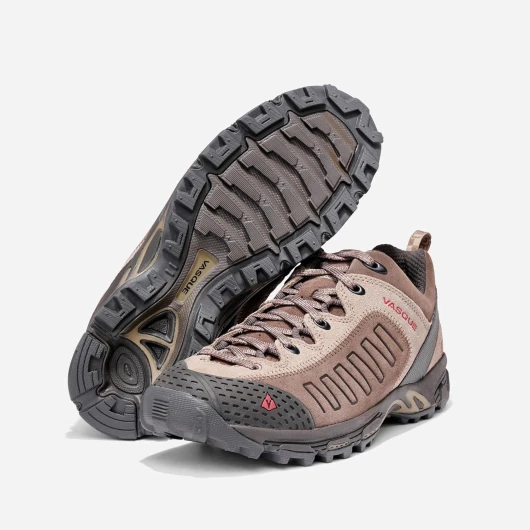
Underfoot you’ve got a molded EVA midsole and a TPU plate built in for stability. EVA is standard in most modern shoes – it gives you cushioning but it will compress and lose some bounce over time. Compared to a urethane midsole (like you see on some heavier work or hiking boots), EVA is lighter and more comfortable out of the gate, but it usually doesn’t last quite as long before it packs out. The TPU plate adds a bit of rock protection and torsional stability, so you don’t feel every sharp stone under the ball of your foot.
The outsole is Vasque’s Off the Grid rubber. The tread is designed more for dirt, rocks, and loose soil than for polished concrete or oily floors. That matches what I’ve felt: good off-road, less confidence on smooth, wet surfaces. The rubber doesn’t feel super soft or super hard – somewhere in the middle. After regular use, the lugs start to flatten but not fall apart, which is what you expect from a lighter hiking shoe.
Inside, the stock insole is decent but nothing special. It’s comfortable enough for casual use and light hiking. If you have foot pain or are on concrete all day, you might want to swap in a more supportive insole like a Sole or Dr. Scholl’s gel, as one reviewer did. Overall, the materials feel practical and geared toward comfort, not old-school tank-like durability. If you treat them as lightweight hikers and not work boots, the choices make sense.
Durability: decent for a lightweight hiker, not a tank
Durability so far is pretty solid for the weight class, but you have to be realistic about what this type of shoe is built for. After regular use, the outsole lugs start to flatten gradually, which is normal. One user mentioned that by the time the tread was almost gone, the rest of the shoe was still holding up fine, and they were satisfied with that lifespan for a light shoe. If you’re coming from heavy Keens or work boots that last over a year of abuse, the Juxt will probably not match that if you treat them the same way.
The suede upper seems to handle scuffs and light abrasion reasonably well, but it’s not something I’d wear for welding, grinding, or any job where sparks or slag are flying. One reviewer even mentioned specifically swapping to boots when using a torch, because hot metal would go right through this kind of upper. That’s exactly the right approach. These are hiking and everyday shoes, not PPE. For trail use, scraping on rocks and the occasional stub, the leather and stitching look capable enough.
The EVA midsole is the part that will slowly pack out over time. That’s just how EVA works. You get comfort and low weight, but you trade away some long-term firmness compared to urethane. The good news is that even when the tread starts to fade, the shoe doesn’t seem to stretch out badly or lose its shape, based on user feedback. So it’s more a question of traction and cushioning slowly degrading, not the whole shoe falling apart.
If you rotate these with another pair and don’t use them as your only shoe for heavy industrial work, you should get a reasonable amount of life. For someone wearing them every day on mixed surfaces, I’d personally expect around 6–12 months of solid use before the sole is noticeably worn and the cushioning feels tired. That’s not “forever,” but it’s fair for a comfortable, lighter hiker in this category.
Performance on trails, pavement, and wet ground
On dry trails, the Juxt performs really well for a light hiker. The outsole grips dirt, small rocks, and roots without drama, and the TPU plate keeps sharper stones from poking through. I did a 5‑mile mixed hike with some muddy sections and shallow stream crossings. Even when fully soaked, the shoe stayed reasonably supportive, didn’t feel like a sponge, and once I got home and aired them out, they dried at a reasonable pace. They’re not waterproof, but they also don’t stay soggy for days like some thick leather boots.
On pavement and indoor surfaces, they’re comfortable and, oddly enough, very quiet. No squeaking or heavy thudding on tile. For walking around stores, warehouses, or an office, that’s actually nice – you’re not announcing every step. The cushioning is fine for long walks on concrete, but if your whole day is on hard floors, some people might want a beefier insole for extra support. One user who works on concrete all day was still happy with Vasque in general and uses them a lot, which matches my feeling that they’re friendly to tired feet.
Where they fall a bit short is grip on wet, smooth surfaces. On wet concrete with a bit of oil or fluids, they’re not as secure as some work-oriented shoes like certain Keen models. The tread pattern and rubber compound are clearly tuned more for loose soil than for slick factory floors. They’re fine for everyday wet sidewalks, but if your job has a lot of oily or slippery surfaces, I’d be cautious and maybe look for something specifically rated for that environment.
Protection-wise, they’re okay for light hiking but not a work-boot replacement. The toe cap protects against scuffs and small bumps, but it’s not rigid enough to save your toes from heavier impacts. There’s no safety toe. For carrying a heavy pack on rocky terrain or doing serious scrambling, I’d want something with a bit more structure. For day hikes, trail runs, and everyday wear, the performance is solid and matches the design intent.
What kind of shoe is the Vasque Juxt really?
The Juxt is marketed as a “sporty shoe for day hiking with approach-shoe durability, stability and comfort.” In practice, that’s actually a decent description. Think of it as a halfway point between a trail runner and a light hiking boot. It’s low cut, has a fairly aggressive outsole for dirt and loose terrain, but it doesn’t have the bulk or stiffness of a typical boot. If you’re looking for something to wear both on the trail and in town, it sits in that sweet middle ground.
Construction-wise, you get a 1.6 mm suede leather upper with fabric panels, a molded EVA midsole, and a TPU plate for stability. The outsole is Vasque’s “Off the Grid” rubber. There’s no waterproof membrane like Gore‑Tex in this version, so it’s a straight breathable shoe. The lace system goes far down toward the toes, similar to an approach shoe, which lets you fine‑tune the fit over the whole foot instead of just yanking on the top two eyelets.
On the foot, it feels like a supportive casual shoe that’s ready for dirt. It’s not as cushy as a pure running shoe, but it’s more stable and protective. Compared to something like a Merrell Moab, the Juxt feels a bit lower to the ground and more precise. Compared to a Keen work-style hiker, it’s lighter and less bulky, but also less protected in the toe and midsole.
If you’re expecting a hardcore backpacking boot for heavy loads, this is not it. If you want one shoe you can wear to work, walk the dog in, and then hit a local trail after, that’s exactly the type of use where it makes sense. It fits best in the “everyday outdoor shoe” category, not in the heavy-duty mountaineering or safety-footwear lane.
Pros
- Very comfortable for long days on your feet, with a supportive but not bulky feel
- Versatile design that works for both day hikes and everyday casual wear
- Tunable lace system and wide-size option make it easier to get a good fit
Cons
- Grip on wet, smooth or oily concrete is weaker than some work-oriented shoes
- Toe protection is limited; not suitable as a safety or heavy work shoe
- EVA midsole and lighter build mean it likely won’t last as long as heavier boots under hard abuse
Conclusion
Editor's rating
The Vasque Men’s Juxt is a comfortable, low‑cut hiking shoe that doubles nicely as an everyday beater. It feels more like a sturdy sneaker than a boot, with enough support and tread for day hikes, muddy trails, and light scrambling, but still low‑profile enough to wear with jeans around town. The suede upper, EVA midsole, and TPU plate combo give you a good balance of comfort and stability, and the long lacing system lets you really dial in the fit. If you’re on your feet all day or you’ve struggled to find shoes that don’t wreck your arches, this one is worth a look, especially with the option for wide sizes.
It’s not perfect. Grip on wet, smooth concrete is only okay, not great, and toe protection is clearly in the hiking category, not the safety-shoe category. Durability is decent for a lighter hiker, but if you punish your footwear like work boots, you’ll likely wear them down in under a year. For someone who wants a single pair that can handle dog walks, grocery runs, and weekend trails, the Juxt is a pretty solid choice. If you need a true work shoe, a safety toe, or something built for heavy backpacking, you should look elsewhere.