
Summary
Editor's rating
Value: good for what you pay, as long as you add insoles
Design: classic hiking boot with a few quirks
Comfort: good once broken in, but upgrade the insoles
Materials: real leather upper, budget insole
Durability: feels tough, but hardware is the weak link
Performance: waterproof and supportive, but not a hardcore mountain boot
What you actually get out of the box
Pros
- Genuinely waterproof in real-world use (streams, mud, wet grass)
- X-wide fit with plenty of toe room, good for wide feet and thick socks
- Sturdy leather upper and solid ankle support for uneven terrain
Cons
- Stock insoles are flat and cheap – almost mandatory to replace for real comfort
- A bit heavy and squishy underfoot compared to lighter, modern hiking shoes
- Hardware (eyelets) and laces feel budget and may be a long-term weak point

Specifications
View full product page →| Brand | Wolverine |
Solid workhorse boots, not fancy – and that’s fine
I’ve been using the Wolverine Spencer Waterproof Hiking Boot in men’s 10.5 X-Wide for a mix of dog walks, muddy trails, and random weekend chores. Think more “real life use” than Instagram hiking. I wanted something wide enough for my duck feet, actually waterproof, and not priced like a mountaineering boot. These landed right in that middle zone: not cheap junk, not premium boutique either.
The first thing that stood out is that they feel like proper boots, not sneaker-hikers. There’s a bit of weight, a firm upper, and solid ankle support. Out of the box, they were a bit stiff, and I wouldn’t plan a full-day hike on day one. After a couple of long walks and some time around the yard, they started to loosen up, but you can tell they’re built more for durability than for that soft sneaker feel.
I’ve had them out in wet grass, shallow streams, and plenty of mud. So far, the waterproofing has held up well. I’ve stood in a couple of inches of water for a few minutes at a time and came out with dry socks, which is pretty much the main thing I was hoping for. Cleanup is simple: hose them off, wipe them down, done. No drama there.
They’re not perfect. The stock insoles are basic, the laces feel a bit cheap, and if you’re used to lighter trail runners, these will feel heavy. But overall, for the price and what you’re getting – full leather upper, slip-resistant sole, and a roomy X-wide fit – they’re a pretty solid everyday boot for mixed use, from dog walks to casual hikes.
Value: good for what you pay, as long as you add insoles
For the price bracket these sit in, I’d say the value is pretty solid, especially if you need a wide fit and real waterproofing. You’re getting a full leather upper, a waterproof membrane that actually works in real use, a supportive mid-height design, and a boot that can handle mud, streams, and everyday abuse better than basic sneakers or cheap hikers. The Amazon rating around 4.3/5 matches my experience: mostly positive with a few legitimate complaints.
Where the value takes a slight hit is the stuff you’ll probably want to upgrade: insoles and maybe laces. The stock insole is too thin and flat for serious hiking or long days on your feet. Once you factor in the cost of a decent pair of aftermarket insoles, you’re adding a bit to the total price, but still staying in a reasonable range. The laces work, but I wouldn’t be surprised if they need replacing within a year if you’re using the boots hard or in wet conditions often.
Compared to more expensive options like premium hiking boots or Wolverine’s own higher-end models (like the 1000 Mile line), you obviously give up things like resolable construction, premium leather, and long-term rebuild options. But you’re also paying a lot less. Compared to something like Timberland Eurohikers, which have climbed in price, these make sense if you want to stay under that higher price point and still get a decent, leather waterproof boot.
If you’re the kind of person who goes on the occasional hike, walks dogs in all weather, or just wants one boot that can handle yard work, rainy days, and light trails, the cost-to-usage ratio is good. If you’re a serious backpacker doing long-distance trips, I’d say save up and get something lighter and more technical. For everyday outdoor use, though, these are good value for money, as long as you budget for better insoles from the start.
Design: classic hiking boot with a few quirks
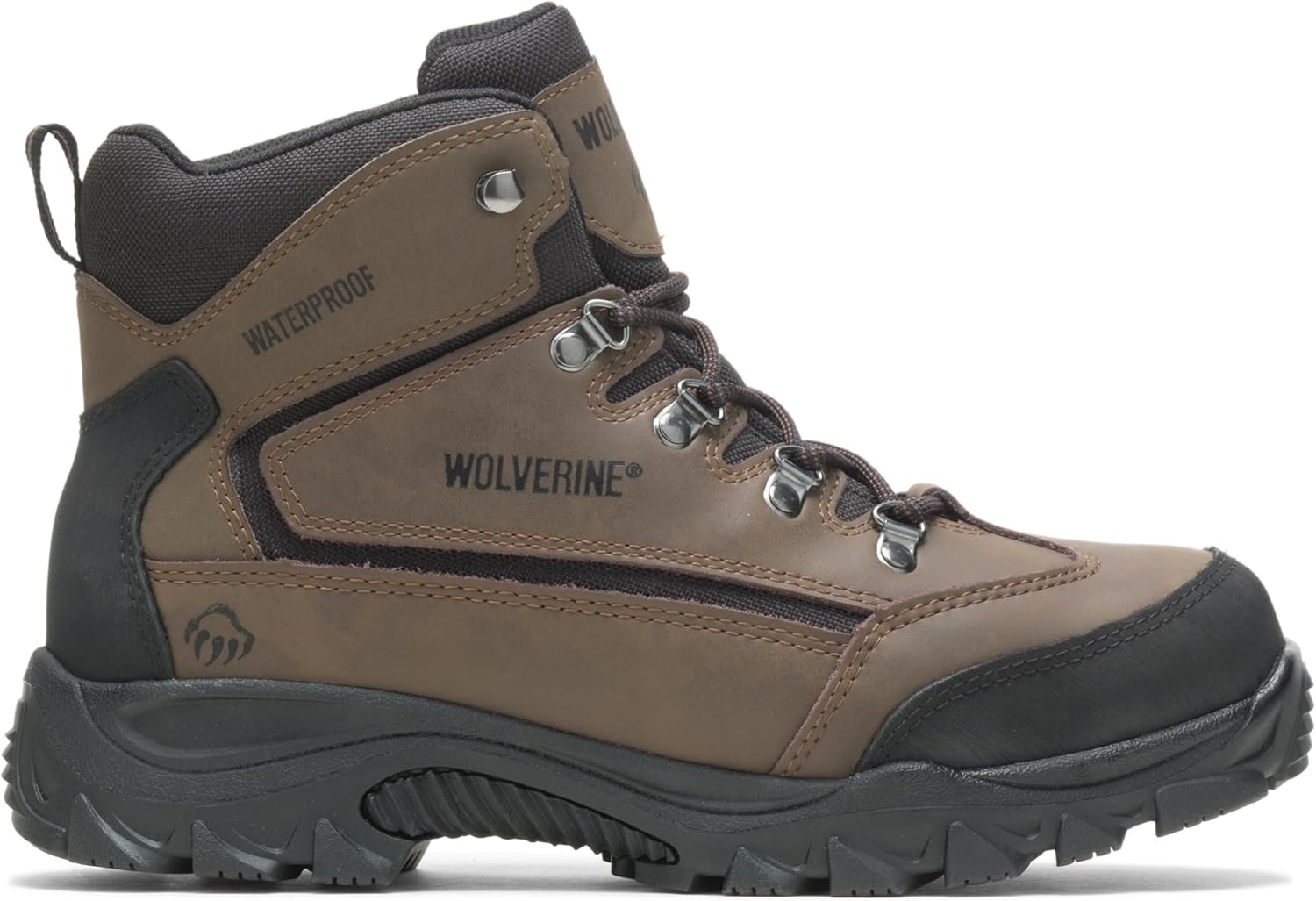
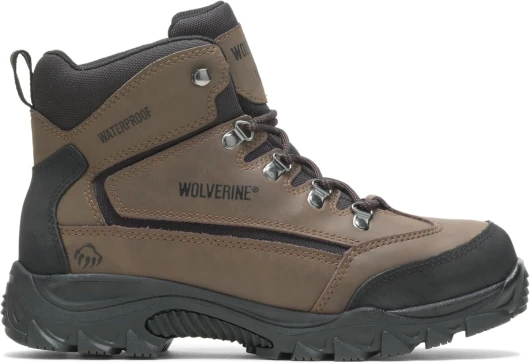
Design-wise, the Spencer is pretty straightforward: mid-height boot, padded collar, traditional lacing with eyelets and hooks at the top, and a fairly aggressive tread pattern. In brown/black, they lean more towards work-boot looks than sleek hiking shoes. Personally, I like that – they don’t scream “technical gear,” but they also don’t look out of place on a trail. The extra-wide version doesn’t look weird from the outside; it just feels roomier on the inside.
The lacing system is simple but functional. You’ve got regular eyelets down low and speed hooks up top, which makes it easier to get in and out of them. One user mentioned an eyelet falling off after a month, and that’s the kind of thing that can happen on cheaper hardware. Mine haven’t failed yet, but I can see that the metal isn’t top-of-the-line. If you’re rough with your laces or constantly reefing them tight, this could be a weak spot long-term. The stock laces themselves are okay but feel like the kind that will eventually fray or soak up water and get annoying.
The sole is thick and a bit squishy, with a slip-resistant pattern that grips pretty well on wet grass, dirt, and rock. It’s not a minimalist design at all. You don’t get much ground feel – your foot sits pretty high and cushioned. That’s nice for comfort and shock absorption, but if you like feeling the terrain under your feet, these will feel a bit disconnected. For me, they work fine for casual hikes and daily wear; I just wouldn’t pick them for very technical, steep mountain stuff where precision matters.
One thing I do like: the ankle support. The boot is stiff enough around the ankle that you feel supported when you twist or step on uneven ground, but not like you’re wearing a ski boot. I’ve had a few moments stepping on roots or slick rocks where I could feel that in sneakers I probably would’ve rolled an ankle. So in terms of design, I’d sum it up as: traditional, sturdy, slightly bulky, but functional. Not stylish in a fashion sense, but totally fine for everyday outdoor use.
Comfort: good once broken in, but upgrade the insoles
Out of the box, comfort was decent but not great. The leather was stiff, and the stock insole felt flat and cheap. I wore them for a couple of shorter walks the first few days, maybe an hour or so each, just to let them start to mold to my feet. After around 10–12 hours of total wear, they relaxed noticeably. The heel softened, the flex point at the toes broke in, and they started feeling like they were actually mine, not rental boots. So there is a break-in period; don’t expect sneaker comfort on day one.
The X-wide fit is a big plus if you’ve got wide feet or like room for thick socks. My toes had plenty of space, no pinching, and no rubbing on the sides. That’s not always the case with hiking boots. Length-wise, they run maybe a hair large, but not enough for me to size down. If you’re between sizes or wear thin socks, you might be tempted to go half a size smaller, but I stuck with my usual size and used better insoles instead, which worked out.
Speaking of insoles, this is where comfort really changed. With the factory insoles, I could feel that my arches weren’t getting much support. After a couple of longer walks, my feet were a bit tired. Once I swapped in a more supportive insole, the boots felt much better for extended use. I’ve done 4–6 hour stretches in them now, including hiking and running errands, with no hotspots or blisters. So my advice: plan on adding your own insoles if you care about comfort over long distances.
Weight-wise, they’re a bit heavier than some modern light hikers, but not crazy heavy. You notice them if you’re used to trail runners, but for a leather boot with good ankle support, the weight is acceptable. The padding around the ankle and tongue is comfortable, and I haven’t had any pressure points from the laces. Overall, once broken in and upgraded with decent insoles, I’d say they’re comfortable enough for day hikes, dog walks, and general outdoor use. For multi-day backpacking with a heavy pack, I’d probably look for something lighter and more supportive, but for most casual use, they get the job done.
Materials: real leather upper, budget insole
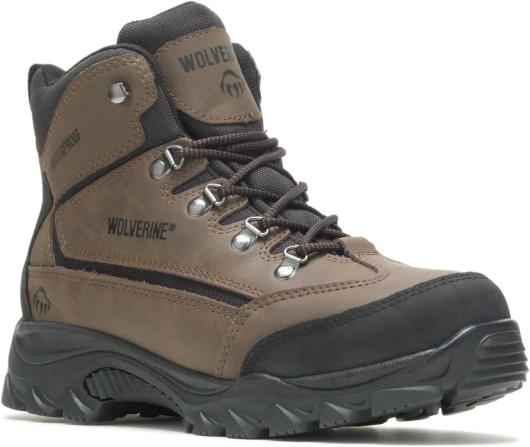
The upper is 100% leather, and that’s one of the things that makes these boots feel more serious than a lot of fabric-heavy hikers. The leather is on the stiffer side out of the box, which is normal. After a week or so of wear, it started to soften and crease in the usual spots. It doesn’t feel like super premium, buttery leather, but it also doesn’t feel cheap or plasticky. For the price range, I’d call it pretty solid leather that should hold up to regular use if you take basic care of it.
The sole is man-made (synthetic), and it feels like a mix of firm rubber with a softer mid-layer. It’s cushioned and fairly shock-absorbing, which is nice on hard surfaces like pavement or rocky trails. On the flip side, that cushioning is what makes it feel a bit “squishy” underfoot, like one reviewer mentioned. You don’t feel sharp rocks much, which is good for comfort but again, not ideal if you like a very precise feel. Traction has been good in my use – wet grass, mud, and some smooth rocks. It’s not magic on ice, but nothing really is without spikes or chains.
Inside, the removable cushion footbed is honestly nothing special. It’s a thin, basic foam insole that offers minimal arch support. Several users suggested adding your own insoles, and I completely agree. I dropped in a pair of aftermarket insoles with more arch support, and the comfort improved a lot. Also, the boot volume seems designed with that in mind – without a thicker insole, the boot feels a bit too roomy and loose, especially if you’re not wearing thick socks.
Hardware-wise, the eyelets and hooks are standard metal. They do the job, but as that one 2-star review showed, they’re not bulletproof. If you’re the type who’s rough on your gear, that might be a concern. The lining inside feels like a standard synthetic waterproof membrane – nothing fancy, but so far it has kept water out. Overall, the materials feel aligned with the price: good enough for regular hiking and daily use, but not built like top-tier mountaineering boots.
Durability: feels tough, but hardware is the weak link
Durability is always tricky to judge early, but there are a few clues here. The leather upper feels thick enough to take some abuse. I’ve scraped them on rocks, dragged them through brush, and flexed them a lot. So far, no cracking, no peeling, and just some normal scuffing that you’d expect on real leather. With basic care – wiping them down, maybe hitting them with leather conditioner once in a while – I can see these lasting a couple of years of regular use, easily, for casual hikers and dog walkers.
The sole seems well bonded to the upper. I haven’t seen any separation at the toe or heel, even after soaking them in water and then drying them multiple times. They’re not Goodyear welted or anything fancy like that; they’re more of a glued construction, which is standard at this price. So when the sole eventually wears out, you’re probably replacing the boots, not resoling them. For the price range, that’s normal. The tread wear so far has been minimal, and I’ve used them on a mix of pavement and trail.
The big question mark is the hardware. One reviewer had an eyelet fall off after just a month, and that’s not nothing. Mine are still intact, but I can see that the eyelets and hooks aren’t top-shelf. If something fails, it’ll likely be there, not the leather or the sole. The laces also feel like they’ll be a consumable item; I’d expect to replace them with better ones at some point, especially if you’re often in wet or freezing conditions. That’s a cheap fix, but worth knowing.
Overall, I’d rate durability as good for the money, with some caveats. The leather and sole should hold up fine for regular use, but don’t expect them to last forever like a high-end, resolable boot. If you’re rough on your gear, be ready for potential issues with eyelets or laces. If you’re more of a normal user – hiking on weekends, walking dogs, running errands in bad weather – they should last long enough to feel like you got decent value out of them.
Performance: waterproof and supportive, but not a hardcore mountain boot
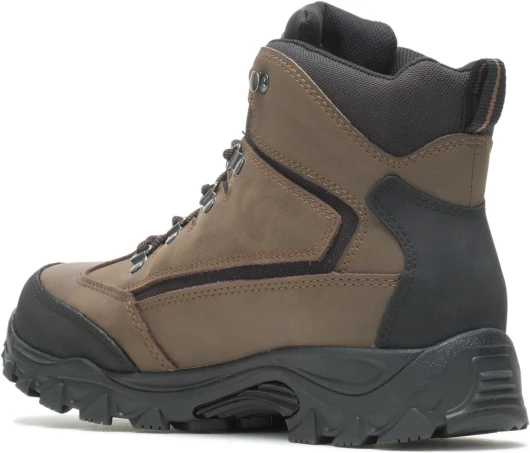
In actual use, these boots do the main things they claim: they keep your feet dry, they grip reasonably well, and they support your ankles. I’ve walked through wet grass, shallow streams, and plenty of mud. One Amazon reviewer mentioned multiple stream crossings and even climbing around a waterfall, and that lines up with my experience: the waterproofing is legit, at least in the first few months. I’ve stood in a couple inches of water for a few minutes with no leaks. Obviously, if you go deeper than the tongue gusset or stay in water forever, you’ll eventually find the limits, but for normal hiking and wet conditions, they hold up.
Traction is solid on dirt, gravel, and rock. I’ve had a few slips on slick, mossy stones, but honestly, that happens with almost any boot. On wet pavement and light snow, the sole feels stable and predictable. One user mentioned using ice chains over them, and that makes sense – if you’re dealing with serious ice, add traction. For regular winter sidewalks and light trail snow, they’re fine. They’re also warm enough for mild to moderate winter days with decent socks. Not insulated like a true winter boot, but not flimsy either.
In terms of support, the ankle coverage and firmness help a lot on uneven terrain. I’ve stepped in holes, hit roots at weird angles, and they’ve kept my ankles from rolling. Compared to sneakers, there’s a clear difference in how secure your foot feels. Underfoot, the cushioning is good for shock absorption, but as mentioned earlier, you lose some ground feel. For light to moderate hiking, that’s actually kind of nice because rocks and roots don’t beat your feet up as much. For very technical hikes where you need to feel every little edge, these wouldn’t be my first pick.
So performance-wise, I’d put them in this category: great for everyday outdoor use, dog walking, casual to moderate hikes, and wet/dirty conditions. If you’re doing multi-day backpacking trips with a heavy pack or serious alpine stuff, there are better, more specialized boots out there. But for the average person who wants something tougher and more waterproof than sneakers or cheap hikers, these do their job quite well.
What you actually get out of the box
Out of the box, the Spencer boots look like straightforward, old-school hikers: brown leather with black accents, fairly chunky sole, and classic lace-up design. No fancy gimmicks, no weird colors. In the 10.5 X-Wide, they look big, but not clown-shoe big. If you’ve worn wide work boots before, this will feel familiar. They come with basic paper stuffing inside and no extras – no spare laces, no fancy packaging. Just boots in a box. Honestly, that’s fine by me; I’d rather the money go into the boot than the cardboard.
The model I’ve got is the leather outer version (100% leather upper, man-made sole). The branding is pretty low-key: a small Wolverine logo on the side and tongue, nothing screaming for attention. They look like something you can wear on a trail and then straight into the grocery store without feeling weird. If you’re after flashy, these aren’t it. If you want something that just looks like a normal hiking boot, they fit that bill.
Fit-wise, Wolverine tends to run a touch roomy, and that matches my experience. The 10.5 X-Wide gives plenty of toe space, and the width feels true to an extra-wide boot. One thing worth noting: several users mentioned, and I agree, that these are kind of designed to be worn with a decent insole or thicker sock. With thin socks and no aftermarket insole, they can feel a bit empty underfoot, like there’s just too much vertical room inside. That’s easy to fix, but it’s something to plan for.
Overall, the presentation matches the price and the purpose: no-nonsense, work-ready hiking boots. If you want premium-level finishing or a fancy unboxing experience, this isn’t that. If you just want a sturdy pair of boots that look normal and are ready to get dirty right away, these check that box pretty well.
Pros
- Genuinely waterproof in real-world use (streams, mud, wet grass)
- X-wide fit with plenty of toe room, good for wide feet and thick socks
- Sturdy leather upper and solid ankle support for uneven terrain
Cons
- Stock insoles are flat and cheap – almost mandatory to replace for real comfort
- A bit heavy and squishy underfoot compared to lighter, modern hiking shoes
- Hardware (eyelets) and laces feel budget and may be a long-term weak point
Conclusion
Editor's rating
Overall, the Wolverine Spencer Waterproof Hiking Boot in 10.5 X-Wide is a solid, no-nonsense boot for people who need a wider fit and real waterproofing without spending a fortune. It’s not a fancy technical boot, but it handles wet trails, mud, and daily abuse much better than regular sneakers or cheap hikers. The leather upper feels tough, the waterproofing works, and the ankle support is genuinely helpful on uneven ground. Once broken in and paired with decent insoles, comfort is good enough for day hikes, dog walks, and general outdoor use.
It’s not perfect. The stock insole is weak, the laces and hardware feel a bit budget, and the boot is on the heavier, squishier side compared to modern lightweight hikers. If you’re planning serious backpacking trips or long technical hikes, you’ll probably want something lighter and more supportive out of the box. But if you’re looking for a workhorse boot that keeps your feet dry, fits wide feet well, and doesn’t cost as much as premium brands, this is a pretty sensible choice. People who should buy it: wide-footed users, dog walkers, casual hikers, outdoor workers who need waterproof leather boots for mixed use. People who should skip it: ultralight hikers, hardcore backpackers, and anyone who refuses to mess with aftermarket insoles.