
Summary
Editor's rating
Are they worth the money?
Straightforward design: more work boot than fashion piece
Comfort after long days on hard floors
Leather, sole, and what actually touches your feet
Durability and how they age over time
How they hold up on the job: grip, support, and safety
What you actually get with the Ashby
Pros
- Comfortable enough for 10–12 hour days and 7–9 miles of walking once broken in
- Oiled full-grain leather and Goodyear welt construction that can be resoled
- Heat-, slip-, and electrical hazard–rated sole suitable for many work environments
Cons
- No safety toe, so not suitable for jobs that require steel or composite protection
- Not waterproof or insulated, which limits use in very wet or cold conditions

Specifications
View full product page →| Brand | Irish Setter |
A classic work boot I actually want to keep wearing
I’ve been wearing the Irish Setter Ashby 6" soft toe in brown as my main work boot for a while now. I use them for a mix of stuff: walking concrete floors all day, yard work, and weekend projects in the garage. I’m not sponsored, I paid out of pocket, and I’ve beaten them up enough to have a real opinion. If you’re looking for a flashy, sneaker-style work shoe, this isn’t that. It’s more of a straightforward leather boot that relies on old-school construction.
The first thing I noticed when I pulled them out of the box was the leather. It’s oiled full-grain, feels thick enough to inspire confidence, but not like a stiff brick. There’s a light leather smell that’s actually pleasant, not that chemical/plastic smell some cheaper boots have. Out of the box they felt more broken-in than most Goodyear welt boots I’ve had in the past, which usually punish you for the first week.
I’ve mainly used them on hot, hard surfaces and a bit of dirt and gravel. No steel toe here, so I wouldn’t wear these around heavy falling hazards, but for general maintenance, warehouse, shop, or yard work, they fit the bill. The heat-resistant sole and electrical hazard rating are nice to have, even if I’m not constantly working on 475°F surfaces or live panels. It’s more peace of mind than anything.
Overall, this is a pretty solid classic work boot: not perfect, not the cheapest, but it feels like something you can live in every day and then resole later instead of tossing. In the rest of this review, I’ll break down what I liked, what annoyed me, and who I think will actually be happy with these versus who should look at something else.
Are they worth the money?
Price-wise, the Ashby sits in that mid-range work boot bracket: not bargain-bin cheap, not super premium either. You can definitely find cheaper boots at big box stores, but most of those are cemented construction with synthetic leather and no resole option. On the flip side, you can also pay a lot more for heritage brands that frankly don’t give you much more in terms of actual work performance, especially if you’re going to beat them up on the job anyway.
The way I see it, the value here comes from a mix of decent comfort, real leather that breaks in, and the ability to resole. If you’re walking a lot at work—say 7–10 miles a day—and you keep these for 2–3 years with maybe one resole, the cost per year ends up pretty fair. One user got three years out of his first pair and still considered resoling them, which tells me the upper holds up well enough to justify the extra spend. Another user liked them enough after months of use that he planned to buy a second pair just for camping and fishing.
That said, they’re not perfect for everyone. If you need waterproofing, a safety toe, or heavy insulation, you’ll either be adding aftermarket stuff (like waterproofing sprays and thicker socks) or you’ll be shopping a different model. Also, if you only wear work boots occasionally and don’t walk much, the resoleable construction might be overkill—you could probably get away with a cheaper, glued boot and not feel the difference.
For regular use, especially if you’re on your feet all day on hard surfaces, I’d say the Ashby offers good value for money. You’re paying for real materials and a rebuildable platform, not marketing fluff. If that lines up with how you use boots, the price makes sense. If you just want the cheapest thing that looks like a work boot, this is probably more than you need.
Straightforward design: more work boot than fashion piece
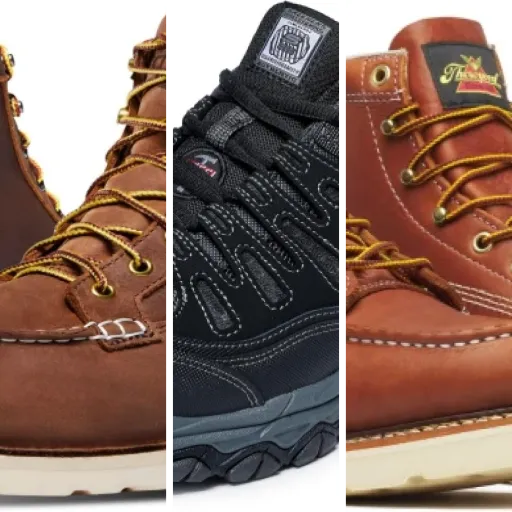
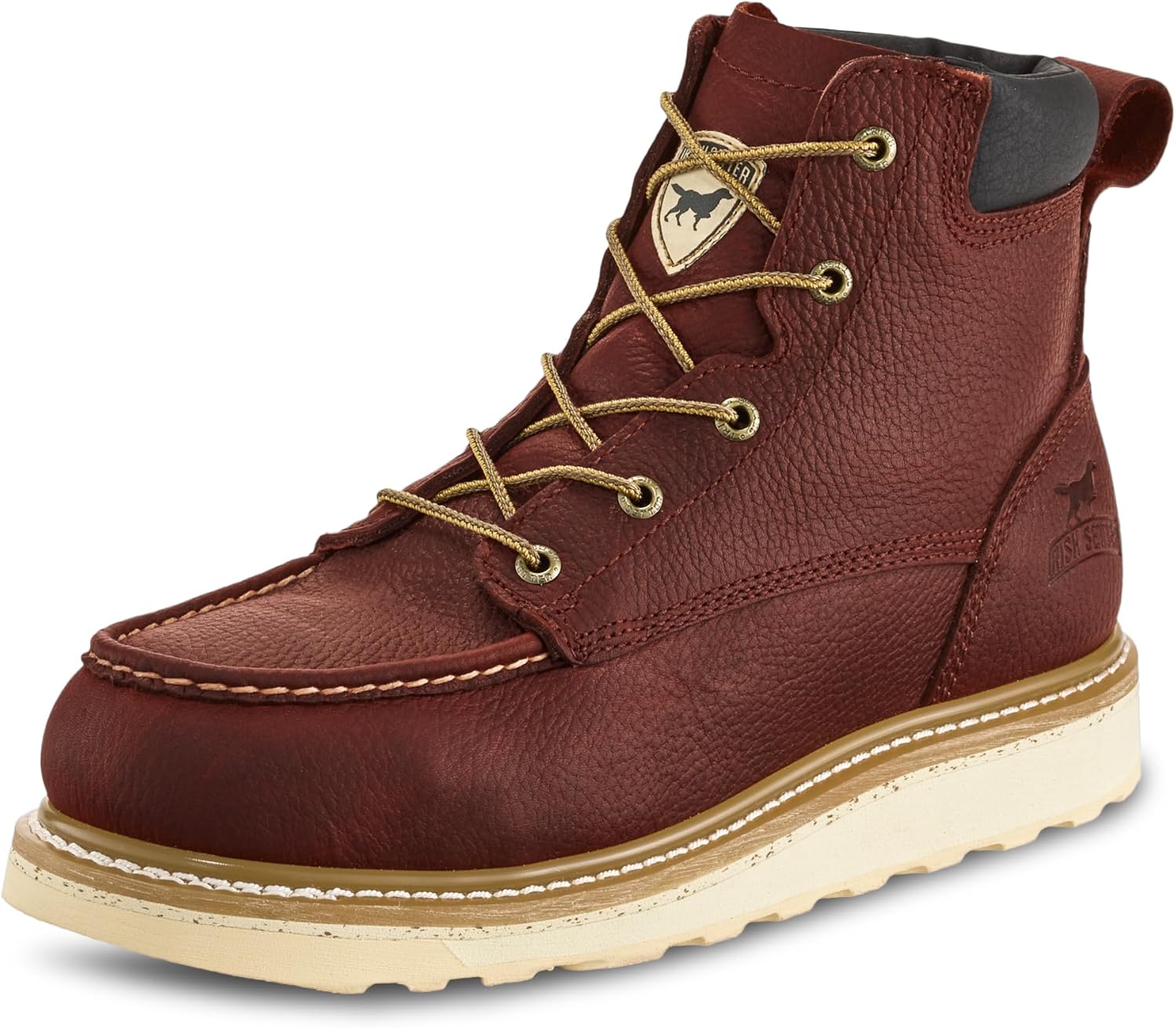
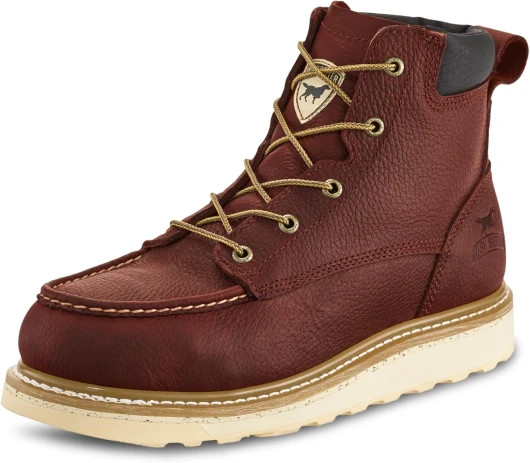
Design-wise, the Ashby is pretty no-nonsense. It has that classic moc-toe work boot look, similar to what you see from Red Wing and other heritage brands, but a bit more work-focused than fashion-focused. The brown color on my pair is actually nicer in person than in photos: not too dark, not that weird orange some cheap boots have. It’s a medium brown that hides dirt and scuffs fairly well. One Amazon reviewer mentioned worrying it might look orange; I had the same fear, but in hand it’s just a normal, solid brown.
The profile is fairly slim for a work boot, especially around the toe. It’s not a big bulbous safety toe since this is a soft toe model. On the foot, it looks more like a traditional leather boot than a clunky safety boot. I’ve worn them with jeans to run errands after work and they don’t scream “PPE”. The stitching lines are clean, and the moc toe stitching is straight. I checked the welt stitching too, and there were no loose threads or weird glue blobs on my pair.
One thing I like is the 6" height. For me, it’s the sweet spot: high enough to give some ankle support and keep junk out (small rocks, branches, metal shavings), but not so high that it feels like you’re lacing up ski boots. The lacing system is simple: standard eyelets all the way up, no speed hooks on my pair. I kind of wish they had a couple of hooks at the top just to make taking them on and off faster, but it’s not a dealbreaker. If you like a clean look, the all-eyelet setup is fine.
In terms of style, you’re not buying these as a fashion statement, but they don’t look bad at all. The design is simple, honest, and fits right in on a jobsite, in a shop, or just doing yard work. If you’re into that heritage workwear vibe, these scratch that itch without being precious about it. They’re boots you don’t mind getting dirty, but you also don’t feel weird wearing them out for a casual dinner after a shift.
Comfort after long days on hard floors
Comfort was the main reason I tried these. I was coming from a hiking-style work shoe that was light but started to break down after about a year. With the Ashby, the break-in was surprisingly mild for a Goodyear welt boot. The first couple of days, my feet felt the extra support around the ankle and the firmer sole, but I didn’t get blisters or crazy soreness. One Amazon reviewer said he did a 12-hour day and his feet weren’t the sorest part of his body; I had a similar experience on a 10–11 hour shift on concrete.
The footbed is simple but does a decent job. There’s a bit of arch support, and it spreads out pressure pretty well when you’re walking 7–9 miles a day on hard surfaces. I wouldn’t call it pillowy, but it’s firm in a good way. After about a week, the leather around the forefoot loosened up enough that I stopped thinking about the boots mid-day, which is kind of my test for comfort: if I forget I’m wearing them, they’re doing their job. One guy mentioned he has wide feet and went with regular width and was still fine; I’m in the same boat. The regular width is snug at first, but the leather gives just enough.
Heat-wise, these are leather boots without a waterproof membrane, so they breathe better than fully sealed boots. I’ve worn them in temps around 75–85°F, and my feet were warm but not soaked in sweat. Another reviewer mentioned their son using them in warm weather and not getting sweaty feet, which sounds about right. They’re not ventilated sneakers, but for a leather work boot, they handle heat reasonably well. In colder weather, a decent pair of socks is enough; they’re not insulated, so don’t expect winter boot warmth, but they’re fine for typical cool mornings.
If you need orthopedic-level cushioning or have serious foot issues, you might still want to drop in custom insoles. But for normal feet, including slightly wide and slightly flat, these are comfortable enough for full workdays as long as you give them a short break-in period. Over months, they actually get more comfortable, which is exactly what you want from leather boots. They’re not the most cushioned boots I’ve worn, but they strike a good balance between support and comfort for all-day wear.
Leather, sole, and what actually touches your feet
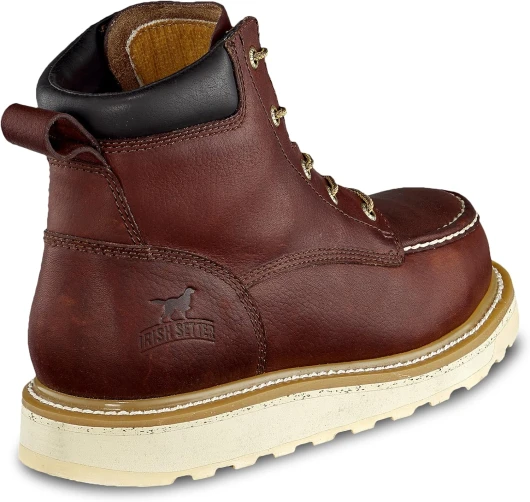
The materials are one of the stronger points of this boot. The upper is oiled full-grain leather, and it feels legit. It has some thickness and structure, but it’s not a stiff board. When I first flexed the boot by hand, there was some resistance but no cracking or weird creasing. After a couple of weeks of wear, the leather started to soften and mold to my foot without getting floppy. Several reviewers mentioned the leather becoming really supple over months, and I’m seeing the same trend.
The sole is a rubber-EVA “Traction Tred” design. It’s basically a wedge sole with a shallow tread pattern. It’s not a deep lug like a hiking boot, so don’t expect crazy traction in deep mud, but on concrete, metal grating, and packed dirt it grips well. It’s rated heat resistant to 475°F, which I haven’t fully tested, but I have stood on hot blacktop and metal ramps in summer without feeling the sole get soft or weird. The Goodyear welt is the big win here: it adds some weight, but it also means you can resole the boot once you’ve worn the tread down, which a couple of reviewers have actually done or plan to do.
Inside, you get a removable polyurethane footbed. It’s nothing fancy or high-tech, but it’s not a paper-thin insole either. There’s a bit of arch support and some cushion under the heel. One user with flat feet said he could wear these daily without complaints, which lines up with my experience. I ended up keeping the stock insole instead of swapping it out for aftermarket ones, which I usually do. The lining inside the boot is basic but smooth, and I haven’t had any hotspots from seams rubbing.
Overall, the materials feel like they’re chosen more for durability and rebuildability than for lightweight performance. If you’re used to sneaker-like work shoes with mesh uppers and foam everywhere, this will feel heavier and simpler. But if you care about real leather that breaks in over time and the option to resole, the material choices here make sense and are actually one of the main reasons to consider the Ashby.
Durability and how they age over time
Durability is where these boots start to justify their price. You’ve got a Goodyear welt, which means the sole is stitched to the upper instead of just glued. In real life, that translates to the boot staying together longer and being easier to resole when the tread wears down. One Amazon reviewer mentioned getting about three years out of his first pair and still considering a resole. Another said after 8 months of walking 7–9 miles a day, the boots were close to needing a resole but the leather was so broken-in and soft that he’d rather resole than replace. That’s exactly the kind of long-term behavior you want from a leather work boot.
On my pair, after several months of regular use, the leather has picked up some scuffs and marks, but nothing that looks like actual damage. A quick clean and oil session every month or two keeps them looking pretty fresh. I’ve been using mink oil, similar to what one reviewer mentioned (Sof Sole mink oil), and it really helps keep the leather from drying out and adds a bit of water resistance. These are not fully waterproof boots, but treated leather plus the Goodyear welt construction does a decent job of keeping your feet dry in light rain and wet grass.
The sole wear is about what I’d expect from a wedge sole used on hard surfaces. The tread is shallower to begin with, so you’ll see wear faster than on a deep-lug boot, but the comfort and ground contact are better. I can already tell that in another half year or so of daily hard-floor walking, I’ll probably be thinking about a resole, not a replacement. Stitching on my pair has held up fine so far—no fraying or blown seams around the flex points.
If you’re the type who trashes boots and never maintains them, they’ll still probably last you longer than a cheap glued pair, but you won’t get the full benefit. If you’re willing to clean and oil them every couple of months, you can easily stretch their life and make that future resole worth it. In short, the durability is pretty solid, especially considering you can rebuild them instead of throwing them out when the soles are done.
How they hold up on the job: grip, support, and safety
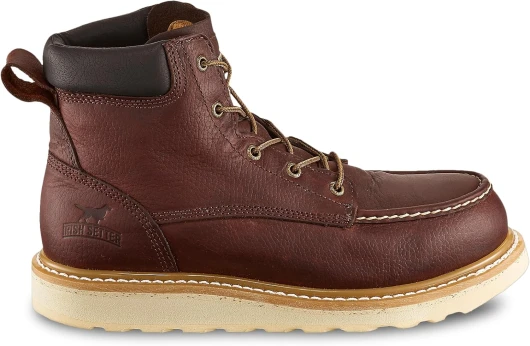
In daily use, the Ashby does what it’s supposed to do without any drama. On concrete floors, the traction is solid. I walk 7–9 miles a day in a facility with a mix of smooth concrete, painted floors, and some slightly oily spots. I haven’t had any sketchy slips so far. The slip-resistant rating (ASTM F3445-21 SR) isn’t just a sticker; the tread pattern actually grips decently. It’s not an aggressive lug, so in mud or loose gravel it’s only okay, but that’s the trade-off with wedge soles in general.
The boot is also rated for electrical hazard (ASTM F2892-18 EH). I’m not intentionally testing that by poking live wires, but if you work around electrical panels or on job sites where EH-rated footwear is required, this box is checked. The heat-resistant sole (up to 475°F) is more relevant if you’re around hot metal, fresh asphalt, or industrial surfaces. I’ve used them on sun-baked metal platforms and hot pavement in summer; no softening, no weird smell, no feeling like the sole is melting. So while I’m not hitting the rated max, they handle high surface temps better than regular cheap rubber soles.
Support-wise, the 6" height gives decent ankle support without feeling like a straightjacket. When I’m walking all day or stepping on uneven surfaces, I notice less ankle fatigue compared to low-cut shoes. The soft toe gives some protection from bumps and dropped small objects, but obviously it’s not meant for heavy falling hazards. If your job requires a safety toe, this model is not for you. For my use (maintenance, warehouse, yard work), soft toe is enough, and I prefer the lighter feel and roomier toe box.
Overall, in terms of performance, the Ashby is more about steady, all-day use than extreme conditions. It handles long hours, hard surfaces, moderate heat, and basic jobsite hazards well. It’s not waterproof, not insulated, and not a mountaineering boot. But for typical trades, warehouse, shop work, and general outdoor chores, it gets the job done without any weird surprises.
What you actually get with the Ashby
On paper, the Irish Setter Ashby is a 6" soft toe leather work boot with a Goodyear welt and a rubber-EVA “Traction Tred” outsole. It’s heat resistant up to 475°F, slip resistant, and rated for electrical hazard according to ASTM standards (F2892-18 EH and F3445-21 SR). In normal language, that means it’s a leather boot that should grip decently, won’t melt on hot surfaces like fresh asphalt or metal grating, and gives some protection if you’re around live circuits, as long as the boot is in good shape.
The pair I have is the brown version, size 12. Irish Setter lists it as 100% leather upper, imported, with a removable polyurethane footbed. The shaft height is around 6 inches, so it covers the ankle but doesn’t go crazy high like logger boots. The shaft circumference spec (around 18.85 inches) sounds like a generic number; in reality, it fits like a normal 6" work boot around the ankle. The boot is built on a resoleable platform thanks to the Goodyear welt, which is one of the main reasons I picked it over cheaper cemented boots.
Out of the box, you don’t get anything fancy in terms of extras. No spare laces, no special cleaning kit, nothing like that. Just the boots, tissue paper, and a basic info tag about the safety ratings. Honestly, that’s fine by me. I’d rather they put the money into the leather and construction than into marketing flyers and gimmicks. The overall first impression is: simple, traditional, and made to work, not to sit on a shelf.
So in practice, the Ashby is positioned as a general-purpose work boot: good for trades, warehouse, light construction (if soft toe is allowed), and everyday use where you want real leather and the option to resole later. If you want a composite or steel toe, waterproof membrane, or tons of fancy cushioning, this particular model is not that. It’s more of a straightforward, old-school boot with a few modern safety ratings baked in.
Pros
- Comfortable enough for 10–12 hour days and 7–9 miles of walking once broken in
- Oiled full-grain leather and Goodyear welt construction that can be resoled
- Heat-, slip-, and electrical hazard–rated sole suitable for many work environments
Cons
- No safety toe, so not suitable for jobs that require steel or composite protection
- Not waterproof or insulated, which limits use in very wet or cold conditions
Conclusion
Editor's rating
Overall, the Irish Setter Ashby 6" soft toe is a solid, no-nonsense work boot. It’s built with real oiled full-grain leather, a Goodyear welt, and a heat- and slip-resistant wedge sole that’s comfortable enough for long days on concrete. The comfort isn’t fancy or ultra-cushioned, but after a short break-in, it settles into that “I can wear these all day and not think about them” zone. Multiple users, including myself, have done 10–12 hour days and regular 7–9 mile shifts in them without foot misery, which is really what matters.
It’s not perfect. There’s no safety toe, no waterproof membrane, and no insulation. So if you’re on heavy construction sites, in very wet environments, or in freezing weather, this specific model isn’t ideal. But if your work is more in the maintenance, warehouse, light trades, shop, or yard-work category—and you care about real leather that can be cleaned, oiled, and eventually resoled—the Ashby makes a lot of sense. It feels like a boot you can live in for a few years, not a disposable pair you toss every season.
If you want a straightforward leather work boot with good comfort, rebuildable construction, and a proven track record from people actually walking in them all day, this is a good option. If you’re chasing the lowest price, or you absolutely need a steel/composite toe and full waterproofing, you should probably look elsewhere or at a different model in the lineup.