
Summary
Editor's rating
Is the price justified for what you get?
Chunky street style with some compromises
Surprisingly wearable from day one, with a few quirks
Soft Wyoming leather and a classic PVC sole
Built to last, but not indestructible
Daily performance: city walking, light weather, no drama
What you actually get when you buy these Embury Chelseas
Pros
- Softer Wyoming leather makes them comfortable much sooner than classic Docs
- Chunky Dr. Martens style with solid build and recognizable design
- Durable PVC sole and leather that handle daily city use well
Cons
- Basic insole and fairly firm sole; may need extra insoles for long days
- Can run warm and lack breathability during extended indoor wear
- Traction on smooth wet tiles is only average

Specifications
View full product page →| Brand | Dr. Martens |
Docs without the usual breaking‑in nightmare
I’ve been wearing Dr. Martens on and off for years, so I kind of know what I’m getting into: stiff leather, a painful first week, then boots that last forever. With these Dr. Martens Unisex Embury Leather Chelsea Boots (Black Wyoming, women’s 9/men’s 8), I was honestly expecting the same story. But right out of the box, they felt different. Softer leather, lighter on the foot, and no immediate hotspots when walking around the house.
I used them mainly for day-to-day stuff: commuting, walking around the city, grocery runs, and a couple of nights out where I was on my feet for hours. No hiking, no heavy construction work, just normal urban use. Over a few weeks, I wore them 4–5 times a week, so enough to see how they behave once the “new shoe” effect wears off. The main thing I noticed is they feel like a more relaxed version of the classic 2976 Chelsea, with less weight and a bit more flex.
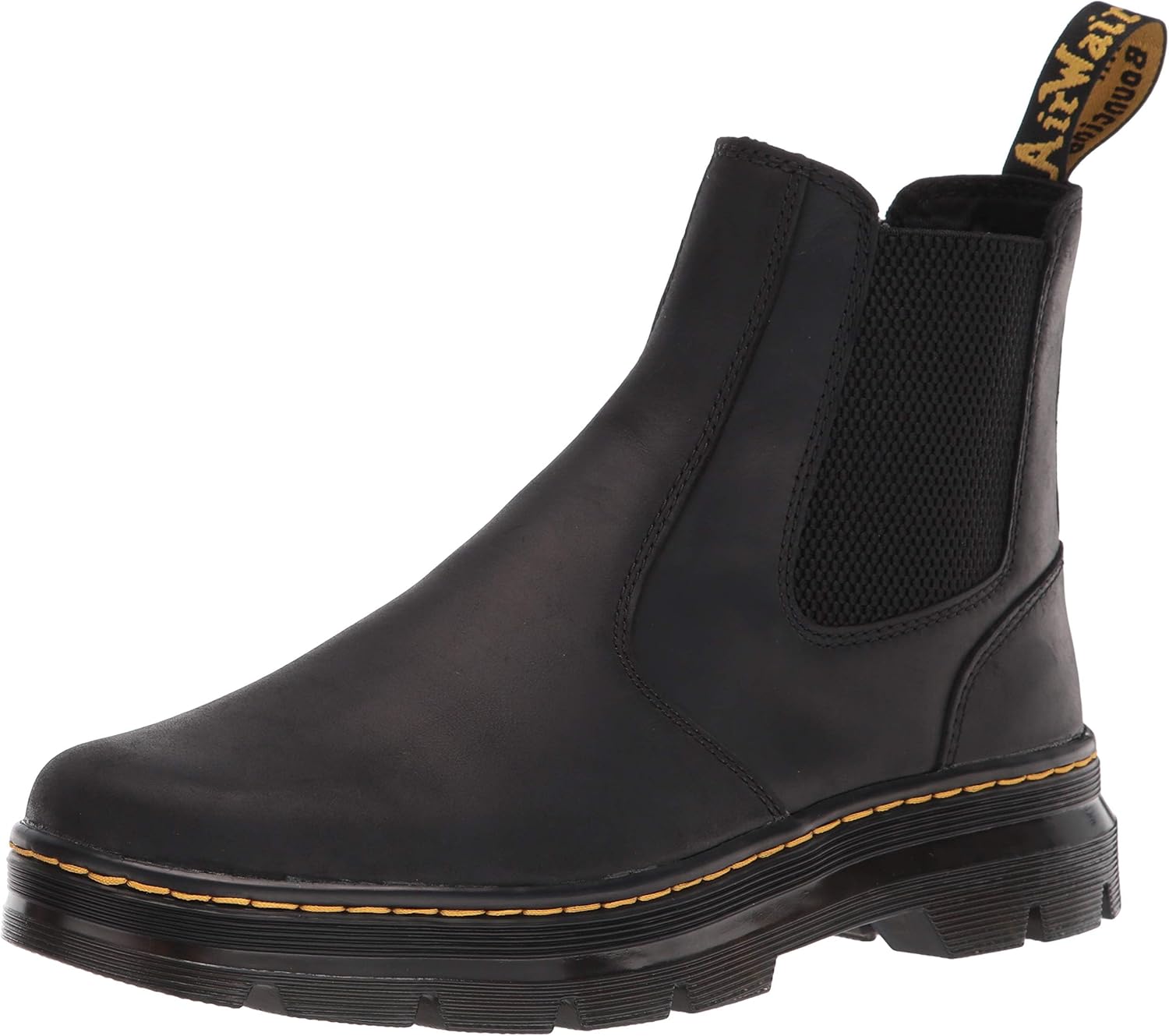
They still look very much like Docs: chunky shape, yellow stitching, and the AirWair loop at the back. If you like that style, you’ll be happy. If you think Docs are too bulky, these might still feel a bit much, but they’re not as heavy and rigid as the classic models. I’d say they sit somewhere between fashion boot and work boot, but leaning more toward casual streetwear than true workwear.
Overall, my first impression after a few wears was pretty clear: these are Docs made for people who like the look but hate the brutal break‑in period. They’re not perfect, and there are things that bugged me, especially around sizing and breathability, but they do the job for everyday use and are easier to live with than the traditional models.
Is the price justified for what you get?
Dr. Martens are rarely cheap, and the Embury Chelsea is no exception. You’re paying for the brand, the look, and the general build quality. In terms of value, I’d place these in the “good but not mind-blowing” category. If you just want a basic Chelsea boot and don’t care about the Doc style, you can find cheaper options that are lighter and sometimes more cushioned. But if you specifically like the Dr. Martens aesthetic and want something easier to break in than their classic models, the Embury makes more sense.
What you’re getting for the money: real leather upper (Wyoming), a thick PVC sole that should last quite a while, the iconic design, and a boot that’s more comfortable out of the box than the usual Docs. You’re not getting premium extras like fancy insoles, high-end leather lining, or advanced waterproofing. It’s a straightforward boot that leans on the brand’s reputation and style. For regular city wear a few times a week, I think the cost is acceptable, especially if you plan to keep them for several years.
Compared to other Chelseas I’ve worn in similar price ranges, the Embury wins on style identity and long-term sole toughness, but loses a bit on comfort and breathability. Some competitors use lighter, more flexible soles and better insoles, which feel nicer for all-day wear but might not last as long. So it depends what you prioritize: if you want that Doc look and a solid build, the value is decent. If you just want the most comfortable Chelsea for the money, you might find better options elsewhere.
In short, I’d say the value is pretty solid if you’re already into Dr. Martens or want your first pair without suffering through a brutal break‑in. If you’re completely neutral about the brand and only care about comfort per dollar, then these are good, but not the best deal on the market. They get the job done, look good, and should last, but they’re not some crazy bargain.
Chunky street style with some compromises
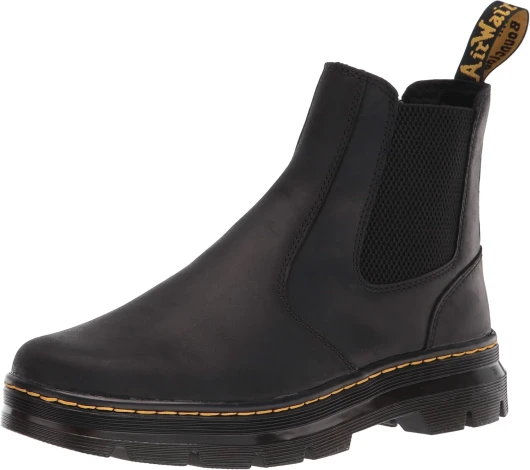
The design is clearly aimed at city wear: it’s a Chelsea boot with all the Dr. Martens signatures—grooved edges, visible stitching, and the AirWair heel loop. The shaft height hits around the ankle, so they sit nicely under straight or slim jeans. The profile is chunky but not clownish. Compared to the classic 2976, the Embury feels a bit less aggressive and a bit more casual, which worked well for me with everyday outfits. I wore them with black jeans, blue denim, and even some cropped chinos, and they looked consistent across the board.
One thing I noticed is that the Wyoming leather has a slightly textured, grainy look. It’s not glossy; it has more of a matte, oily finish. This helps hide small scuffs, so after a few weeks of wear, they still looked decent with just a quick wipe. If you’re used to the super stiff, smooth Docs leather, this feels more relaxed and less formal. Visually, the yellow stitching pops against the black, which is either a plus or a minus depending on your taste. Personally, I like it—it’s part of why you buy Docs in the first place.
From a practical design standpoint, the twin elastic panels are solid but a bit tight out of the box. It took a few uses before they stopped feeling stiff when I pulled the boots on. The opening is not huge, so if you have a high instep or wide feet, getting them on the first few times might be a bit of a struggle. Once on, though, the boot doesn’t feel sloppy. The ankle is fairly secure, and the shaft height gives enough coverage for light rain or cooler days.
Where the design falls a bit short for me is ventilation and flexibility. There are no perforations or anything like that, and with the thick sole plus leather upper, your feet can get warm quickly in indoor heated spaces. Also, while the sole has some flex, it’s still a Dr. Martens sole, so don’t expect sneaker-like movement. For city walking and standing, it’s fine. For anything that needs a lot of foot flex, it starts to feel a bit blocky. So overall: the design looks good if you’re into the Doc aesthetic, but it’s clearly built more for style and simple day-to-day use than for technical performance.
Surprisingly wearable from day one, with a few quirks
Comfort is where these Embury Chelseas differ most from the usual Dr. Martens experience. Out of the box, they were actually wearable, which is not something I say often about this brand. The Wyoming leather bends more easily, so I didn’t get the usual ankle rubbing and heel blisters in the first days. I wore them for a full workday (commute, office, grocery stop) on day two, and while my feet felt a bit tired at the end, I didn’t have any real pain spots.
That said, they’re still boots with a firm sole. The insole is pretty basic, and after about 5–6 hours of walking/standing, I started to feel the lack of cushioning under the heel. Once I added a thin comfort insole, the situation improved a lot. If you plan to stand all day in these, I’d recommend doing the same. The ankle area felt snug but not cutting, and the elastic panels gave enough hold without digging into my skin. The only slight annoyance at first was getting my foot in—the opening is a bit tight, so I had to really pull on the heel loop the first few times.
In terms of sizing, they run a bit long, like many Docs. I’m usually between sizes, and I think people with narrow feet might feel some extra room in the toe box. Thicker socks fixed that for me. Width-wise, they’re medium to slightly wide. If you have very wide feet, you might still feel some pressure at the sides in the beginning, but the leather does give in a bit after a few wears. There’s minimal arch support; it’s basically a flat boot. If you need strong arch support, you’ll definitely want your own insoles.
The main downside comfort-wise is heat build-up. With the leather upper and PVC sole, there’s not much airflow. On cooler days, it’s fine, and they actually feel cozy. In a warm indoor environment or if you’re running around a lot, your feet can get sweaty. So I’d call the comfort level "pretty solid for a Doc," especially in the break‑in phase, but not on the same level as modern comfort-focused boots or sneakers. For everyday city use and casual wear, they get the job done, as long as you manage expectations and maybe tweak them with better insoles.

Soft Wyoming leather and a classic PVC sole
The main thing with these Embury boots is the Wyoming leather. It’s 100% leather, but it feels softer and more forgiving than the usual Dr. Martens stiff leather. Right away, I could bend the boot a bit with my hands, which is not something I can say about my older Docs. The surface has a light grain and a slightly oily touch. In practice, this means it doesn’t crease in ugly sharp lines as quickly, and it hides scratches better. After a couple of weeks of regular use, the leather showed some natural creasing over the toe, but nothing dramatic or ugly.
The sole is polyvinyl chloride (PVC), which is standard for many Dr. Martens models. It’s thick, a bit springy, and has that familiar slightly translucent look. Underfoot, it absorbs some shock and doesn’t feel like a hard wooden block, but it’s not as cushioned as modern foam soles you find on sneakers or some newer boots. The tread pattern gives decent grip on dry and slightly wet pavement. On very smooth wet tiles, it can be a bit slippery, which is something I’ve noticed with other Docs as well. So it’s okay for normal city conditions, but I wouldn’t rely on it for icy sidewalks.
Inside, there’s a basic insole—not super plush, just a standard footbed. I ended up trying them with a thin aftermarket insole after a week, and that made a noticeable difference for longer days. The lining feels synthetic rather than full leather, which is fine for durability but doesn’t help much with breathability. My feet got warm after a few hours indoors, especially with thicker socks. If you run hot, that’s something to keep in mind.
Overall, the materials feel solid for the price, but not luxurious. The leather is the highlight: easier to break in, looks good, and seems tough enough for daily use. The PVC sole is tried and tested for Docs, but it’s not the most modern option out there in terms of comfort or grip. If you’re used to classic Dr. Martens, you’ll feel right at home. If you’re coming from running shoes or very cushioned boots, these will feel firmer and less breathable.
Built to last, but not indestructible
Durability is usually where Dr. Martens shine, and the Embury seems to follow that pattern, with a few nuances. After a few weeks of regular wear, the sole and stitching still looked almost new. No separation, no loose threads, and the yellow stitching didn’t show any fraying. The PVC sole is thick and feels like it can handle a lot of miles before wearing down significantly. If you’ve owned Docs before, you probably know the soles usually outlast the fashion trends.
The Wyoming leather is softer than some of their classic leathers, so I was a bit worried it might be less durable. So far, it has held up well. I bumped the toe into curbs and stairs a few times, and it only left light marks that I could mostly rub out with a damp cloth and a bit of conditioner. The grainy texture helps hide small scratches, which is nice if you’re not super careful with your footwear. The creasing over the toe looks natural rather than messy, and there’s no cracking or weird stretching yet.
Where I see potential long-term weak spots is around the elastic panels and the inner lining. The elastic is solid and snug, but on most Chelsea boots, that’s the first thing to show age—losing tightness or getting small tears where it meets the leather. I obviously can’t test years in a few weeks, but based on other boots I’ve owned, that’s the area I’d watch. Inside, the lining is synthetic and might wear faster at the heel if you’re constantly slipping them on without fully opening the boot or if your socks have rough seams.
Overall, I’d say the durability feels pretty solid for day-to-day use, especially if you do basic care: occasional cleaning, some leather conditioner every now and then, and not soaking them in water all the time. They’re not indestructible work boots, but for commuting, casual wear, and general city abuse, they feel like they’ll last several seasons without falling apart. There are tougher boots on the market if you really abuse your footwear, but for the style and price bracket, the build quality feels fair.

Daily performance: city walking, light weather, no drama
I used these boots mainly for urban walking: pavements, public transport, office floors, and a bit of light rain. For that kind of use, they did their job without any big surprises. The sole has enough grip for normal conditions, and the leather upper handled light showers fine. Water beads off the Wyoming leather to some extent, but these are not fully waterproof boots. In a heavier downpour, water will eventually find its way in around the elastic panels. I got caught once in moderate rain for about 15 minutes; my feet stayed dry, but I wouldn’t push it much longer than that.
In terms of support, the ankle coverage and firm sole give a stable feeling. You don’t feel every little stone under your foot, and the boot doesn’t twist easily, which I liked when walking on uneven older sidewalks. At the same time, this stiffness means they’re not agile. If you need to move quickly, climb, or squat a lot, they feel a bit clunky. For normal walking speed, they’re fine, and after the first few days, the flex at the front improved enough that I stopped thinking about it.
Traction is okay but not spectacular. On dry concrete and asphalt, no issues. On wet pavement, still fine. Where I felt less confident was on smooth, wet indoor tiles (like in some malls or train stations). The sole can feel a bit slick if you step on a wet patch. It’s not like walking on ice, but you do notice it and adjust your stride. If you live somewhere with lots of snow and ice, I’d look at something with a more aggressive outsole.
As for long days, I did a couple of 10,000+ step days in these. With my added insoles, my feet were okay at the end, just a bit warm. Without extra cushioning, I think my heels would have been more sore. So performance-wise, I’d sum it up like this: good everyday boot for city life, fine for light weather and long walks if you tweak the insoles, but not a technical or heavy-duty boot. It’s more about style and general robustness than advanced performance features.
What you actually get when you buy these Embury Chelseas
Out of the box, the Dr. Martens Embury Chelsea boots look exactly like what you’d expect from the brand: black leather, yellow stitching, chunky sole, and the classic pull tab. The pair I had was the Black Wyoming leather in unisex sizing (women’s 9/men’s 8). They come in a basic Dr. Martens cardboard box, nothing fancy, just paper wrapping around each boot. No extras, no care kit, just the boots. For the price range, that’s pretty standard, but don’t expect anything special in terms of presentation.
The shape is based on the original 2976 Chelsea, but in person it feels a bit more streamlined. Still chunky, but not as brick-like as some older Docs. The elastic side panels are fairly stiff at first but not painful, and they do their job: you can pull them on and off without wrestling too much. Weight-wise, they’re lighter than my classic 1460 lace-ups, which I appreciated when walking longer distances. You still feel like you’re wearing boots, though; this is not a sneaker-style Chelsea.
On the foot, they have that typical Dr. Martens vibe: slightly industrial, slightly punk, but still clean enough to wear with jeans, chinos, or even black trousers if your office isn’t super strict. They definitely lean casual. If you’re after a sleek, dressy Chelsea boot, this is not it. The toe is round and a little bulbous, and the sole is visibly thick. Personally, I like that look, but it’s not subtle.
In terms of everyday practicality, the pull-on design is handy. No laces, no fiddling, just grab the heel loop and slide in. The flip side is you have less control over tightness. If your ankle is narrow or your instep is low, you might feel a bit of heel slip at first. That happened to me slightly, but thicker socks helped. Overall, the presentation is very much "classic Docs, slightly updated"—nothing mind-blowing, but you immediately know what brand you’re dealing with.
Pros
- Softer Wyoming leather makes them comfortable much sooner than classic Docs
- Chunky Dr. Martens style with solid build and recognizable design
- Durable PVC sole and leather that handle daily city use well
Cons
- Basic insole and fairly firm sole; may need extra insoles for long days
- Can run warm and lack breathability during extended indoor wear
- Traction on smooth wet tiles is only average
Conclusion
Editor's rating
The Dr. Martens Embury Leather Chelsea Boot is basically a more forgiving take on the classic Doc boot. You still get the chunky style, yellow stitching, and tough sole, but with softer Wyoming leather that doesn’t punish your feet in the first week. In everyday use—commuting, walking around town, casual nights out—they hold up well. They’re stable, fairly comfortable once you tweak them with better insoles, and they feel like they’ll last several seasons if you take basic care of them.
They’re not perfect. The insole is basic, the boots run a bit warm, and the grip on very smooth wet surfaces could be better. If you need strong arch support, all-day comfort out of the box, or a sleek dressy Chelsea, this isn’t the ideal pick. But if you like the Dr. Martens look and want something that’s easier to live with than the classic models, the Embury hits a good middle ground. I’d recommend them to people who want a solid everyday boot with character and are okay with a bit of weight and warmth. If you’re on a tight budget or mainly care about maximum comfort, there are more practical choices from other brands.