
Summary
Editor's rating
Value depends heavily on the price you pay
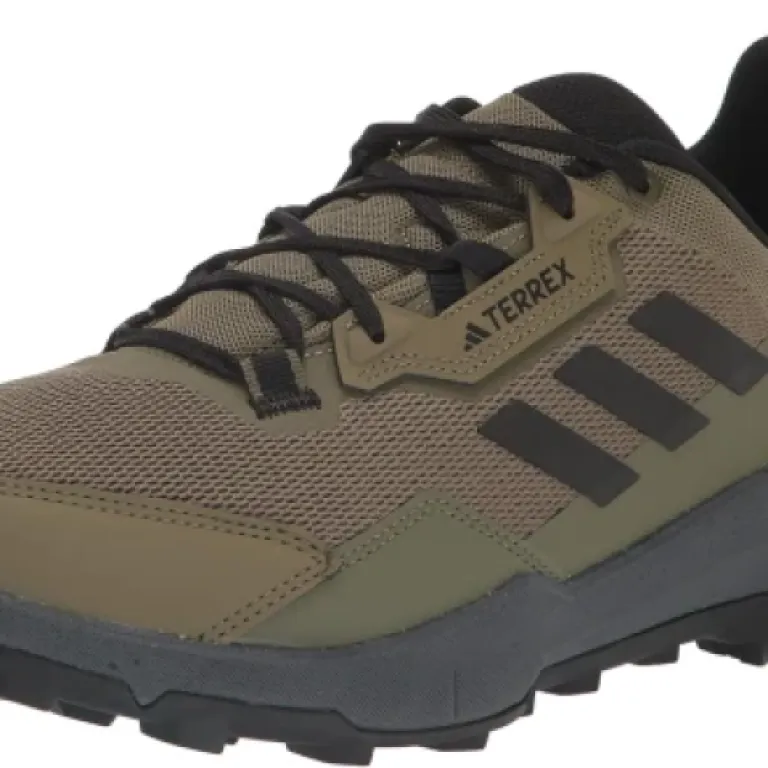
Looks like a trail shoe, not a fashion sneaker
Comfortable once on, but the fit is definitely on the narrow side
Synthetic mesh with decent build, but the leather claim is misleading
Built well for regular use, but not a lifetime boot
Trail performance: grip is the star, support is moderate
What these Terrex AX4s are actually built for
Pros
- Continental Rubber outsole provides strong grip on wet and dry trails
- Lightweight and comfortable enough for all-day day hikes
- Breathable mesh upper that dries relatively quickly after getting wet
Cons
- Fit runs narrow, especially in the toe box, not ideal for wide feet
- No waterproof membrane, feet will get wet in heavy rain or deep puddles
- Product listing is misleading about leather; it’s mostly synthetic mesh

Specifications
View full product page →| Brand | adidas |
Trail shoes that feel more like beefed‑up sneakers
I’ve been using the adidas Terrex AX4 in Focus Olive/Black/Grey (size 11) for a few weeks now, mostly for weekend hikes and some casual daily wear. I’m not a pro hiker, just someone who walks a lot, does a few trails a month, and wants shoes that don’t kill my feet after a couple of hours. I swapped to these from an older pair of Salomon trail shoes that were pretty worn out and a bit heavy.
The first thing that stood out is that these feel more like sporty sneakers than classic hiking boots. They’re fairly light for a hiking shoe, easy to wear all day, and you don’t get that clunky boot feeling. On my first day with them, I did around 10 km on mixed trail and some pavement, and I didn’t feel like I had to rip them off as soon as I got home, which is usually a good sign.
On the trails, the Continental Rubber outsole is the real highlight. I had one hike with damp rocks and muddy sections after a light rain, and the grip was clearly better than my old shoes. I wouldn’t call them miracle shoes, you can still slip if you’re careless, but I felt confident stepping on wet roots and loose gravel. For day hikes or light backpacking, the traction is definitely one of the big selling points.
They’re not perfect though. The fit is on the narrow side, especially in the toe box. I have fairly normal feet (not wide, not super narrow), and I still felt a bit of pressure on the sides after a few hours on the first two outings. It eased up slightly as they broke in, but if you usually buy wide sizes, I’d be careful here. Overall, my first impression is: pretty solid trail shoes with good grip and comfort, but the fit won’t suit everyone.
Value depends heavily on the price you pay
Value on these Terrex AX4s is a bit tricky because the price on Amazon seems to jump around a lot depending on size and stock. I’ve seen some sizes around a normal mid-range hiking shoe price, and others going way higher (one reviewer even mentioned north of $200). At a standard mid-range price, I’d say the value is good: you get solid grip, decent comfort, and a reliable brand behind it. At the inflated prices some sizes show, it’s harder to justify, especially when you can get more supportive, more durable boots in that range.
What you’re paying for here is mainly:
- Continental Rubber outsole with strong grip in wet and dry conditions
- Lightweight feel compared to heavier boots
- Decent cushioning and support for day hikes
- Breathable mesh upper that dries fairly quickly
On the downside, you’re not getting waterproofing, you’re not getting a wide fit option, and the materials are mostly synthetic, not full leather despite what the spec line might suggest. So if you’re expecting a rugged leather hiking boot at this price, you’ll be disappointed. If you treat it as a light hiking/trail shoe, the value makes more sense.
Compared to some competitors like basic Merrell or Columbia hikers in the same price bracket, the AX4 feels a bit more athletic and has better wet grip, but the fit is narrower. So it really comes down to your foot shape and budget. If you find them at a reasonable price and your feet are not wide, they’re good value for money. If your size is only available at a big markup, I’d honestly look around at alternatives before pulling the trigger.
Looks like a trail shoe, not a fashion sneaker
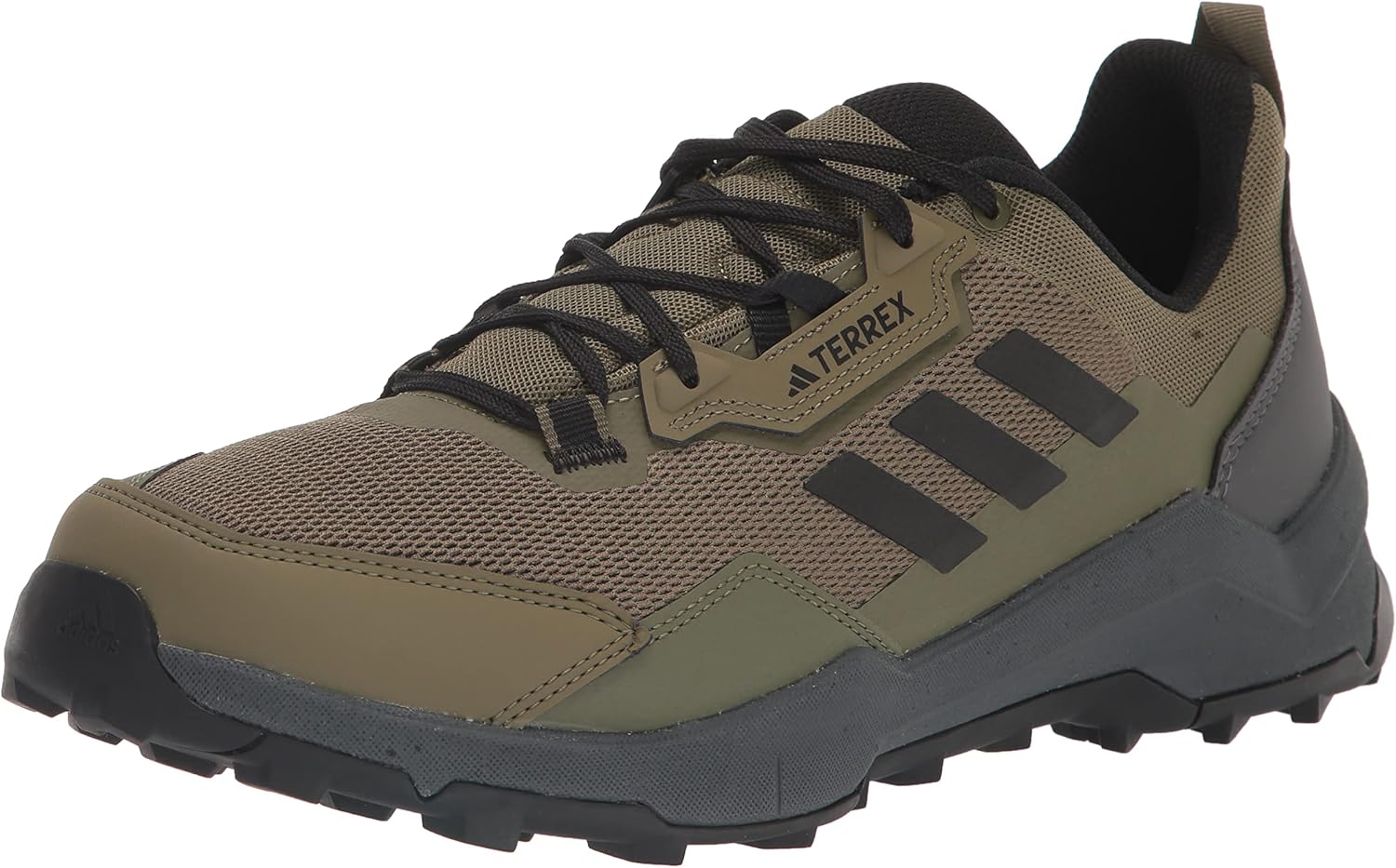
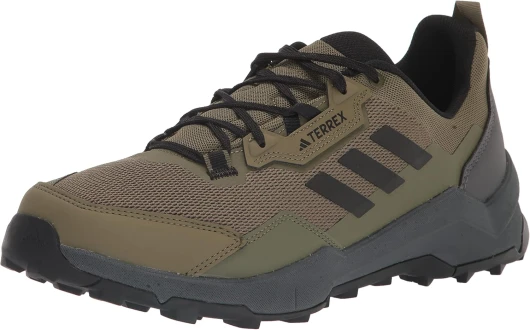
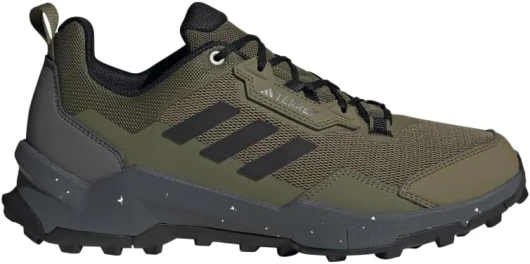
Design-wise, the Terrex AX4 in Focus Olive/Black/Grey sits in that space between sporty and outdoorsy. The color combo is fairly muted: mostly olive with black and grey accents. It doesn’t scream “neon running shoe”, which I like. I wore them with jeans around town and they didn’t look too out of place, but they still clearly have that hiking shoe vibe. If you want something that passes as a clean lifestyle sneaker, this isn’t it. If you’re fine with a functional outdoor look, it’s decent.
The shape is slightly narrow and tapered at the front. You can see it just by looking down at your feet: the toe box doesn’t flare out much. That matches my experience wearing them — they hug the forefoot a bit more than some other trail shoes I’ve had. The heel area feels well sculpted and locks the foot in nicely, which is good for stability on descents. I never felt heel slip, even going downhill with a light backpack, which is something that annoys me a lot in other shoes.
There’s enough reinforcement in the right places: toe cap, side overlays, and a decent heel counter. It doesn’t look or feel like it will fall apart quickly. After a few weeks of use, including some mud and cleaning, there are no signs of peeling glue or frayed stitching. The mesh hasn’t snagged on small rocks or branches yet, and the overlays protect the high-wear areas around the toe and sides. So from a practical design point of view, it’s pretty solid.
The tongue is padded but not overly thick, and the lacing system is basic but works. I didn’t have issues with laces coming undone or hotspots on the top of my foot. Ventilation-wise, you can see a lot of mesh, which helps the shoe breathe. Visually, it’s clearly an outdoor shoe, but not loud. If you care a lot about style, you might find it a bit plain. Personally, I’d call the design functional and low-key rather than eye-catching. It gets the job done and doesn’t look cheap, but it’s nothing special in terms of looks.
Comfortable once on, but the fit is definitely on the narrow side
Comfort is where these shoes are a bit of a mixed bag, depending on your foot type. On my fairly normal-width feet, they felt comfortable underfoot from day one. The EVA midsole gives a firm but cushioned ride, and the heel and midfoot feel nicely locked in. I did a 10 km hike right out of the box with no blisters, just a bit of mild pressure on the sides of the forefoot. After two or three outings, that pressure eased up slightly as the shoe broke in.
The main issue is width. The toe box is not generous. If you have wide feet or usually go for “wide” sizing, there’s a good chance these will feel cramped. One Amazon reviewer wearing size 9 Wide mentioned the toe box not being true to size, and I agree. I don’t have wide feet and I still noticed the snugness. If you like to splay your toes or use thicker hiking socks, you might want to size up half a size or look at a wider model altogether. For narrow to medium-width feet, it’s fine, but it’s not a roomy shoe.
Arch support is decent. I don’t have high arches, but I sometimes get arch fatigue in very flat shoes. With the AX4, I didn’t get that. One reviewer with high arches even said their arches felt more supported than ever, so clearly the built-in support is on the stronger side. If you prefer very flat, minimal shoes, that might bother you. For most people who just want normal support, it’s probably a positive.
Breathability is good thanks to the mesh upper. I wore them in mild to warm weather (around 20–25°C), and my feet never felt like they were cooking. They’re not waterproof, so if you step in deep puddles you’ll get wet, but they do dry reasonably fast. One reviewer said they dry off in a few hours, which matches my experience after walking through wet grass. In short: underfoot comfort and support are pretty solid, but the narrow fit is the main downside and will be a deal-breaker for some.
Synthetic mesh with decent build, but the leather claim is misleading
Let’s talk materials because the product description is a bit confusing. The spec line says “100% Leather”, but in hand and on foot, these are clearly not full leather shoes. The upper is mainly mesh with synthetic overlays. There might be tiny bits of leather somewhere, but practically, you’re dealing with a synthetic mesh hiking shoe. That’s not a bad thing, it just means you shouldn’t expect the feel or longevity of a thick leather boot. If you bought it thinking it was all leather, you’d probably be annoyed, and I get why some reviewers mention this.
The mesh itself feels reasonably tough. It’s not that super thin runner-style mesh that tears if you look at it wrong. I dragged these through some light brush and kicked a few rocks by accident, and the mesh didn’t show any damage. The toe area has a rubberized cap that takes the hits, and the sides have enough overlay material to protect the midfoot. So while it’s not a tank, it’s built well enough for regular hiking use.
The midsole is EVA, which is pretty standard foam. It’s not fancy, but it works. It gives a mix of firmness and cushioning: you don’t sink in, but it takes the edge off sharp rocks and hard ground. For me, after a 15 km hike, my feet felt tired (which is normal), but not beaten up. The insole is basic but acceptable; I didn’t feel the need to swap it out immediately, though if you have arch issues, you might want your own insoles. One Amazon reviewer with high arches said they felt very supported, so it will depend a bit on your foot shape.
The outsole is Continental Rubber, which is the highlight material-wise. This rubber compound is known for good grip, and you can feel it especially on wet surfaces. I tested them on wet wooden bridges and slightly muddy rocks and the shoes held on better than my older non-Continental pair. The lugs are not super deep like a full mud shoe, but for regular trails, they’re enough. Overall, materials are solid for what the shoe is, but the leather claim in the specs is misleading and might cause wrong expectations.
Built well for regular use, but not a lifetime boot
Durability is always hard to judge long-term, but after a few weeks of use and looking closely at the build, I’d say these sit in the “pretty solid, but not indestructible” category. The outsole shows minimal wear after several hikes and a fair bit of daily walking. Continental rubber usually holds up well, and I don’t see any early rounding of the lugs yet. If you mostly hike on dirt and occasional rock, I’d expect the sole to last a good while.
The upper is where most hiking shoes fail, but so far the mesh and overlays are holding up nicely. I’ve scraped them against rocks, stepped in mud, and rinsed them off, and the stitching still looks tight. No peeling glue around the toe rand or side overlays so far. The toe cap has taken a few direct hits and doesn’t show major scuffing yet. So for normal hiking and casual wear, durability looks decent. Obviously, if you’re dragging them through sharp rocks every weekend, they’ll wear faster than a full leather boot.
Inside the shoe, the lining and insole haven’t compressed too much yet. The heel area, which usually starts to fray first for me, still looks intact. The laces are standard, nothing special, but they haven’t frayed or slipped. One thing to keep in mind: because the shoe is mostly mesh and synthetic, it won’t age like leather. It won’t soften and mold the same way, and once the mesh goes, that’s pretty much it. That’s just the trade-off with this type of shoe.
If you use these as intended — day hikes, weekend trips, some gym and casual use — I’d expect at least a couple of solid seasons out of them before they start to feel tired. If you’re looking for something to abuse on heavy backpacking trips for years, you’re better off with a sturdier, more expensive boot. For the price range these usually sit in (when not inflated by weird stock issues), the durability seems fair to good.

Trail performance: grip is the star, support is moderate
On actual trails, the Terrex AX4 performs well for the type of shoe it is. I used it on a mix of hard-packed dirt, loose gravel, some rocky sections, and a couple of muddy patches after rain. The Continental Rubber outsole is the standout. On wet rock and damp wooden bridges, I noticed way less slipping compared to my old generic-rubber hikers. You still need to watch your step, but I felt comfortable walking at a normal pace instead of tiptoeing around every wet surface.
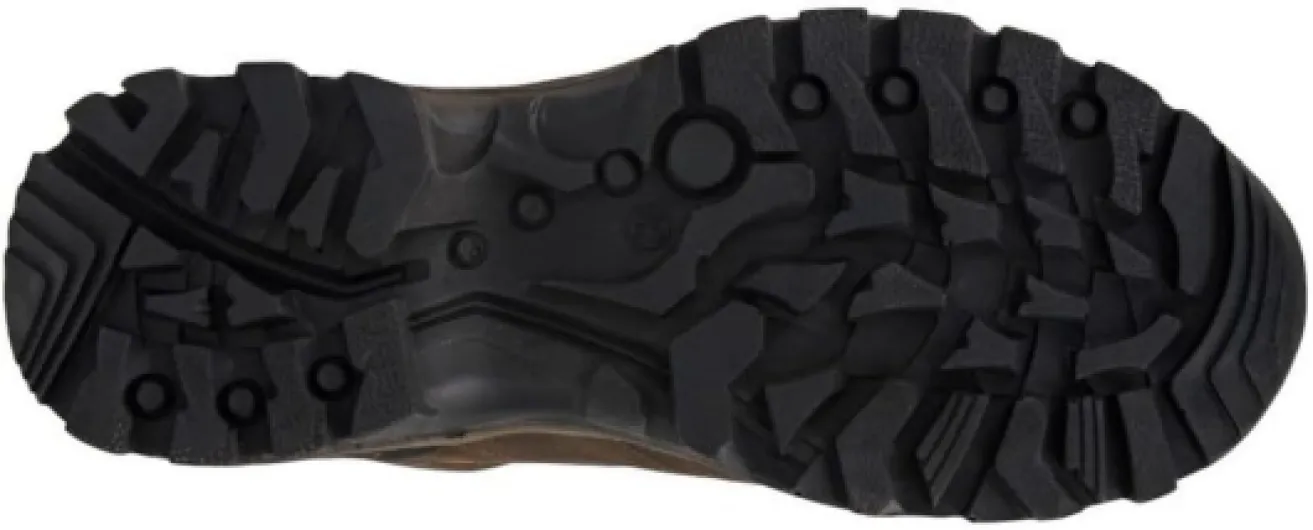
The lugs are medium depth, so they bite into dirt and small gravel without feeling too aggressive on pavement. If you hike a lot on very muddy trails, you might want something with deeper lugs, but for mixed conditions, this setup works well. On descents, the heel grip is good, and I didn’t feel like I was sliding forward inside the shoe, which is often where you get bruised toes. The heel cup and lacing system do a decent job of keeping the foot locked in.
In terms of stability and support, these are mid-level. They’re not floppy, but they’re not super stiff either. The platform feels stable enough for light scrambling and uneven surfaces, but you still feel the terrain under you a bit, which I actually like. If you’re carrying a very heavy backpack or doing long multi-day treks, you might prefer something with a stiffer sole and maybe ankle support. For day hikes with a light pack, the support is totally fine.
On the downside, there is no waterproof membrane. For some people that’s a negative; for others, it’s a plus because the shoe breathes better. I walked through wet grass and shallow puddles and, as expected, my feet got damp if the water went over the mesh. They did dry within a few hours at home. So in performance terms: great grip, good all-day hiking comfort, average protection, and no built-in waterproofing. It does the job well for day hikes and general outdoor use, but it’s not a hardcore mountain boot.
What these Terrex AX4s are actually built for
The Terrex AX4 is basically adidas’ take on a light, multisport hiking shoe. It’s not a big leather boot and it’s not a flimsy running shoe either. It sits in that middle spot: low-cut, flexible, and meant for hiking, scrambling, and general outdoor use. adidas markets it as a multisport shoe you can wear from forests to rocky trails, and that description is pretty fair in practice. I wore it on forest paths, packed dirt, some rocky hill trails, and a bit of city walking, and it handled all of that without feeling out of place.
The upper is mainly mesh with synthetic overlays, and they mention it’s made in part with recycled content (at least 20% recycled materials). To be honest, I couldn’t feel any difference from regular synthetic uppers just by wearing them, but it’s worth mentioning if you care about that. There is also some confusion in the product info about “100% leather”, but in hand these are clearly not full leather shoes. They’re a classic synthetic/mesh hiking shoe with some sturdier panels for structure.
Underfoot, you get an EVA midsole for cushioning and a Continental Rubber outsole for grip. The EVA midsole is pretty standard: not plush like a running shoe, but it gives enough cushioning so that your feet don’t get beaten up by rocks and roots. The Continental outsole is what sets it apart from cheaper hiking shoes. The lugs are not huge like a full-on mountaineering boot, but they bite into dirt and grip wet surfaces better than generic rubber. I noticed this right away when stepping on wet wooden footbridges where my old shoes used to feel sketchy.
In terms of target user, I’d say these are made for people who: do regular day hikes, want one pair that works for trail and casual wear, and don’t need ankle support or a stiff boot for very heavy loads. If you’re carrying a big backpack for multi-day treks or going on technical alpine routes, you’ll probably want something more supportive. But for 5–20 km day hikes, light scrambling, or even using them as tough everyday shoes, the AX4 fits the bill pretty well.
Pros
- Continental Rubber outsole provides strong grip on wet and dry trails
- Lightweight and comfortable enough for all-day day hikes
- Breathable mesh upper that dries relatively quickly after getting wet
Cons
- Fit runs narrow, especially in the toe box, not ideal for wide feet
- No waterproof membrane, feet will get wet in heavy rain or deep puddles
- Product listing is misleading about leather; it’s mostly synthetic mesh
Conclusion
Editor's rating
Overall, the adidas Terrex AX4 in Focus Olive/Black/Grey is a solid light hiking shoe with one standout feature: the Continental Rubber grip. On normal day hikes with mixed terrain, it feels secure, reasonably cushioned, and light on the foot. The mesh upper breathes well and dries fairly quickly, which makes it comfortable for warmer weather and situations where you might get splashed but not fully soaked all the time. If you’re coming from heavy boots, these will feel much easier to live with day to day.
The two main caveats are the narrow fit and the price fluctuations. If you have wide feet or like a roomy toe box, there’s a real chance these will feel too tight, especially on longer hikes. And if your size is only available at a high markup, the value starts to look weak compared to other brands. Also, don’t expect a leather boot: despite the confusing spec line, this is a synthetic/mesh hiking shoe with moderate support and no waterproof membrane.
I’d recommend the Terrex AX4 to hikers who: have narrow to medium-width feet, do regular day hikes, want strong grip in wet and dry conditions, and prefer a shoe that feels more like a sturdy sneaker than a heavy boot. If you have wide feet, carry heavy loads, or want a waterproof leather boot for multi-day treks, you should probably skip this model and look at something more supportive and spacious.