
Summary
Editor's rating
Are they worth the money?
Tall, chunky, and built more for function than looks
Surprisingly comfy for such a heavy, tall boot
Leather tank with Gore-Tex and a Vibram sole
Built to last, if you’re willing to look after them
In the field: mud, bog, hills, and long days
What you actually get when you buy these
Pros
- Very good waterproofing and weather protection in real muddy, wet conditions
- Strong ankle support and tall shaft for rough, uneven ground and brush
- Thick leather and Vibram sole give a durable, long-term feel if well maintained
Cons
- Heavy and warm, overkill for casual or hot-weather walking
- High price compared to mid-range hiking boots
- Laces tend to wear quickly on the lower hooks, and stock insole is only average

Specifications
View full product page →| Brand | Meindl |
Serious boots for people who actually live in mud
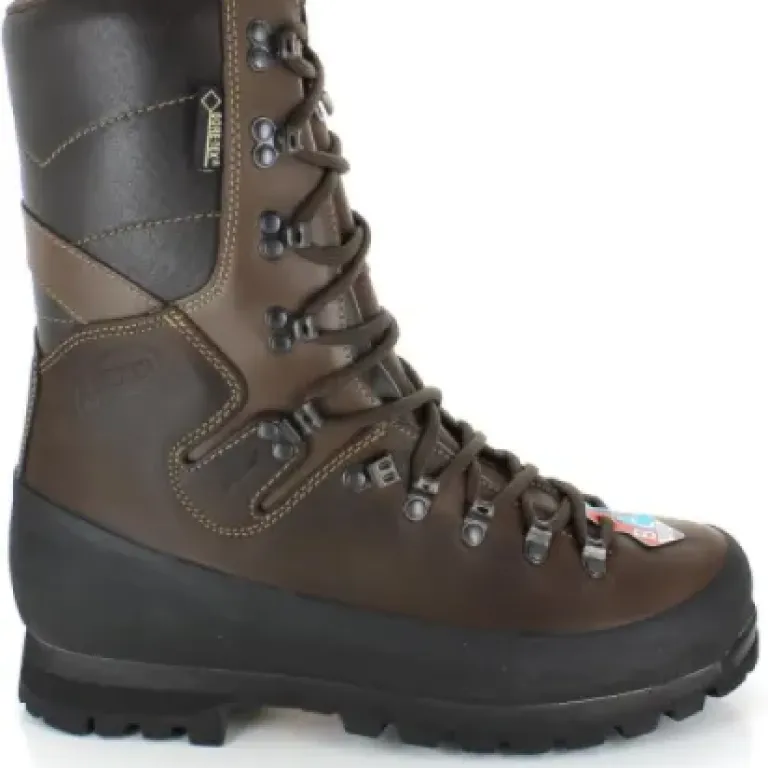
I’ve been using the Meindl Dovre Extreme GTX Wide (size 8.5 UK, brown) as my main field boots for a while now. I bought them for stalking, forestry work, and long wet walks where cheap boots usually give up after a season. I’m not a gear nerd, I just needed something tall, waterproof and tough enough for bog, brambles and steep hills. These came up again and again in chats with other people who work outdoors, so I bit the bullet despite the price.
Out of the box, they look and feel like proper work boots, not fashion hiking shoes. High leg, thick leather, and they’re not light. First impression when you pick them up: “Right, these are serious.” When you put them on, though, they don’t feel like blocks of wood. I walked a full day in them straight away with no blisters, which honestly surprised me given how stiff the leather looks.
I mainly used them in wet woodland, rough pasture and peat, plus a couple of long days over moorland. Lots of mud, plenty of standing water, and a fair bit of side-hilling where ankle support actually matters. I also tried them driving, doing jobs around the yard, and just walking the dog to see if they were overkill for more casual use.
Overall, these boots are clearly built for abuse, not for looking pretty. They’re not perfect – they’re heavy, they run warm, and the price stings – but if you’re regularly in wet, rough country, they start to make sense. If you just want something for the odd Sunday walk on gravel paths, you’re paying for features you probably won’t use.
Are they worth the money?
Let’s be blunt: these boots are not cheap. You feel it when you hit the checkout. So the real question is whether they earn their keep over time. For someone who goes out a few times a year on easy trails, I’d say no – you’re paying for durability, support and waterproofing that you’ll barely use. A mid-range hiking boot would probably do the job for that kind of use, and you’d save a good chunk of money.
But if you’re out in the woods, on the hill, or in wet fields several times a week, the value starts to look better. I’ve killed cheaper boots (including some well-known brands) in a year or less with that kind of use – soles worn smooth, seams leaking, leather cracking. If these last three, four, five seasons of hard use with only minor issues like lace wear and insole flattening, then the cost spread over that time is actually reasonable. The comfort out of the box, solid waterproofing and strong ankle support also mean you’re not just paying for longevity, you’re getting less hassle day to day.
One thing I like is that they don’t come with pointless accessories or packaging fluff. The money clearly goes into thick leather, a proper Vibram sole and a Gore-Tex lining. You still need to budget for care products (wax, maybe replacement insoles, spare laces), but that’s the case with any serious leather boot. Compared to something like Grisport or other mid-range brands, you’re paying more upfront, but you’re also stepping up in build quality and field performance.
So, value-wise: for a casual dog walker, these are overkill and too expensive. For a stalker, gamekeeper, forester, or anyone spending long days in wet, uneven country, they’re a pricey but sensible investment. Not a bargain, but fair value if you actually use them hard and look after them properly.
Tall, chunky, and built more for function than looks
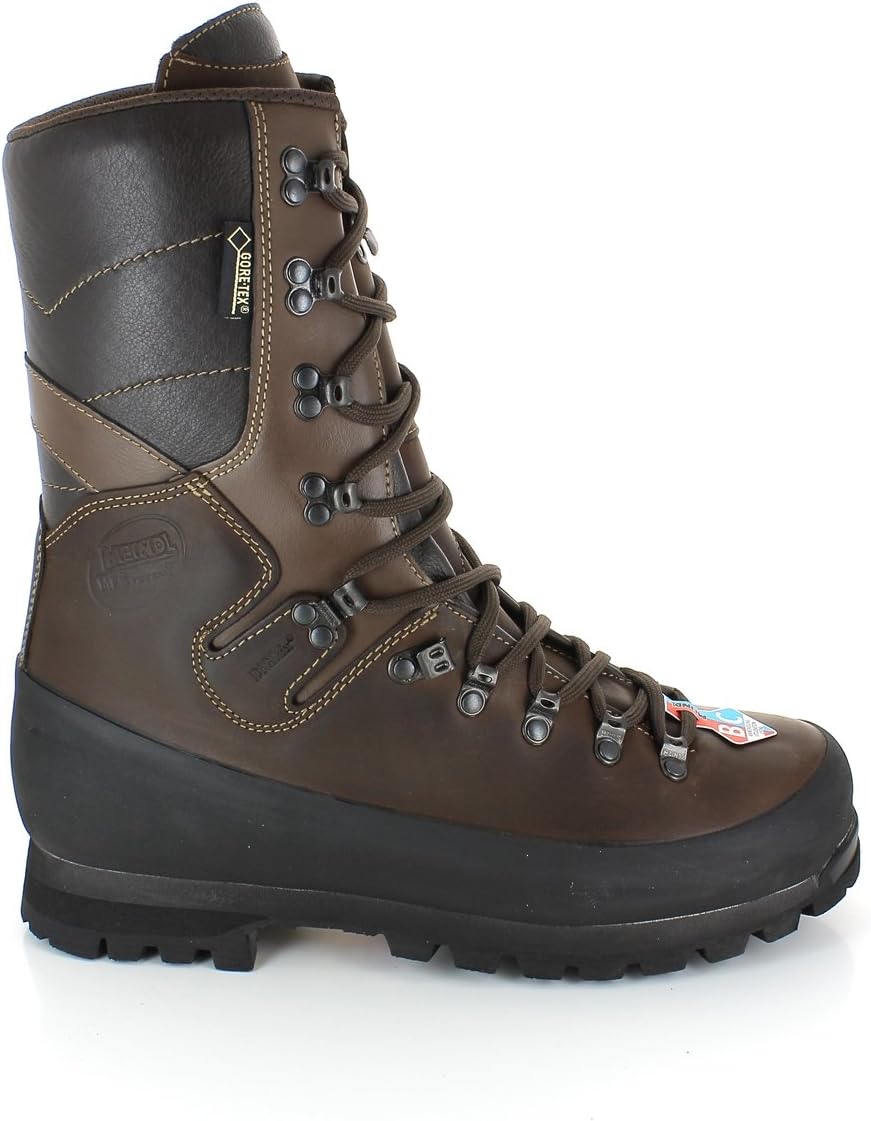
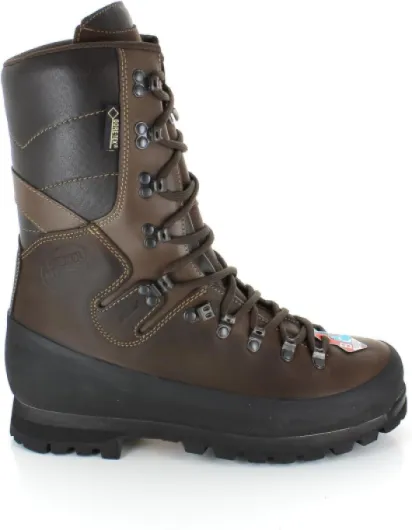
The design is very much “field first, fashion second”. These are high-leg leather boots with a fairly plain brown finish, no flashy colours, and no pointless decorative panels. If you’re after something that looks good in the city, these will feel overkill and a bit clunky. But if you’re tramping through woods or moor all day, the design choices start to make sense. The shaft height protects your shins from heather, brambles and wire, and the extra lace hooks give you good control over how tight they are around the ankle and calf.
The lacing system is simple: standard eyelets at the bottom, then a mix of hooks going up the leg. One thing I noticed, and others have mentioned, is that the angle of the lower hooks can wear laces faster than usual. After a few weeks I could already see some wear marks where the lace bends sharply, so I wouldn’t rely on the stock laces lasting forever. It’s not a deal-breaker, but I’d keep a spare pair or switch to 550 cord if you’re hard on kit.
The boot shape is fairly roomy through the forefoot, with a round toe that doesn’t crush your toes on descents. The heel cup holds the foot steady – I didn’t get heel lift, even on steep ground, which usually gives me blisters in cheaper boots. The ankle area is padded enough to feel secure without biting into the bone. There’s a semi-rigid mid-sole, which in practice means it’s stiff enough for side-hilling and carrying weight, but you can still walk normally without feeling like you’re in ski boots.
Aesthetically, they’re just brown leather boots. Nothing fancy, nothing ugly either – they look like what they are: working footwear. Once they get covered in mud and wax, you stop caring about looks anyway. The main design point is that they feel like a hybrid between a hunting boot and a heavy-duty trekking boot. If you mostly do groomed trails, the design is probably too much. If you’re in rough, wet country, the design choices are pretty sensible.
Surprisingly comfy for such a heavy, tall boot
Comfort was the part I was most suspicious about, because tall, stiff leather boots usually mean a painful break-in period. With these, the break-in was much milder than I expected. I wore them for a full day straight away – mixed woodland, mud, a few miles on track – and didn’t get any blisters. My feet felt a bit tired at the end purely from the weight, but there were no hot spots or rubbing points. That’s already better than most cheaper leather boots I’ve owned.
The fit in the wide version is generous in the forefoot. I had enough room to wiggle my toes even with thick socks, which is nice on long days or in the cold. The heel stayed locked in place, so I didn’t get that annoying heel lift on climbs. The ankle support is strong but not brutal – once the leather softens slightly with use and wax, it wraps around your ankle rather than digging in. If you lace them sensibly (a bit looser at the top when you don’t need max support), they’re comfortable for all-day wear.
The downside is the weight and warmth. At roughly 980 g per boot, you’re definitely aware you’re wearing something substantial. Over a long day, especially on easier terrain, you might feel more tired than in lighter boots. They also run on the warm side, which is great in winter, cold bog, or standing around on wet ground, but less ideal in hot weather. On a mild day with thick socks, my feet were warm but not soaked in sweat, so the Gore-Tex seems to breathe reasonably well, but it’s still a tall leather boot – it’s never going to feel airy.
If you’re used to lightweight trail shoes, these will feel like overkill and might annoy you. If you’re used to old-school leather boots or wellies, these feel like a comfortable upgrade: more support, better insole, and less foot fatigue from sliding around. For me, once I got used to the weight, they felt like “solid and predictable” rather than clumsy. Not slipper-level comfort, but very good for the category.
Leather tank with Gore-Tex and a Vibram sole
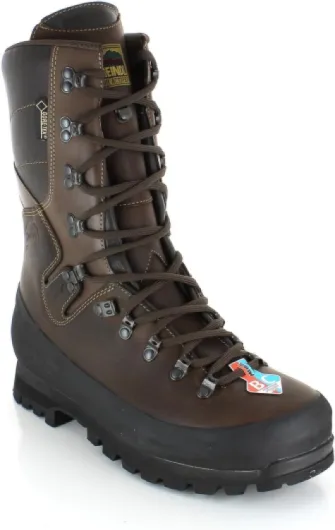
The upper is thick waxed leather, and you can feel that as soon as you pick them up. This isn’t thin fashion leather; it’s the kind that starts out a bit stiff and slowly shapes to your foot. I treated mine straight away with wax (I used normal boot wax first time, then Meindl’s own stuff later). Warming the leather gently with a hair dryer and working the wax in made a big difference – the leather softened a bit and took on a more water-repellent finish. If you skip that step, they’ll still work, but I think you’re leaving performance and lifespan on the table.
Inside, you’ve got a Gore-Tex lining and synthetic inner materials. There’s some confusion in the specs online (mentions of fleece and leather lining), but in practice what you feel is a padded, synthetic interior with a waterproof-breathable membrane. The insole is basic memory foam – comfortable enough out of the box, but nothing special. If you’re on your feet all day, I’d seriously consider swapping in a proper aftermarket insole for more arch support and cushioning. That’s not a criticism of just these boots; I do that with most footwear I use hard.
The sole is Vibram Multigriff rubber, with deep, widely spaced lugs. On mud, wet grass and peat, it grips well. On wet smooth rock, it’s decent but not magic – you still need to watch your footing, but that’s normal. The mid-sole is semi-rigid, so you get good support when traversing slopes or carrying a heavy pack. You lose a bit of ground feel compared to lighter boots, but in return you don’t feel every stone punching through your foot.
Overall, the materials feel like they’re chosen for durability and weather protection rather than lightness. These are not ultralight boots, and you notice that when you pick them up. But if you want something that can take deep mud, brash, and general abuse for several seasons, the mix of thick leather, Gore-Tex and Vibram rubber makes sense. Just accept that you’ll need to put in some care – regular cleaning and waxing – if you want the leather to last and stay properly waterproof.
Built to last, if you’re willing to look after them
Durability was a big reason I went for these boots, and so far they look like they’ll easily outlast the cheaper brands I’ve burned through. The leather is thick and doesn’t mark easily. Scratches from brambles and branches mostly brush off or disappear after a bit of wax. The stitching has held up fine after weeks of daily use in mud, water and rough ground. No seams have opened, and the sole is still firmly attached with no signs of separation.
Several owners report getting multiple years of heavy use before the heels or lining start to go, and that lines up with how they feel in hand – more like a long-term investment than a one-season boot. One user mentioned that after two years of constant travel and woodland use, only the heels and insides were starting to show their age, which is pretty solid for boots that see that much abuse. Another person uses them daily for forestry work and expects several years out of them, which seems realistic if you keep up with care.
The main weak points I’ve noticed or seen mentioned are: laces wearing faster than ideal on the lower hooks, the sole feeling a bit thin for some users who want extra cushioning, and the inner lining eventually flattening out with heavy use. None of that is shocking – laces are cheap to replace, you can add an insole if you want more padding, and all linings eventually compress. The key thing is that the structure of the boot (leather, stitching, sole bond) feels solid.
Maintenance is not optional with these. If you just thrash them in mud and never clean or wax them, the leather will dry out and crack sooner or later, and then you’ll be annoyed given the price. A quick routine of rinsing off mud, letting them dry naturally (no radiator), and re-waxing when the leather starts to look dry will keep them going for a long time. If you’re willing to put in that small amount of effort, I’d say the durability is one of their strong points and justifies the higher upfront cost.
In the field: mud, bog, hills, and long days
In actual use, these boots shine most in wet, uneven terrain. I’ve had them in knee-deep mud, shallow streams, soaked peat and long stretches of wet grass. As long as the water didn’t go over the top of the boot, my feet stayed dry. The Gore-Tex lining and well-treated leather did their job. No slow seepage, no damp socks at the end of the day. That’s a big step up from cheaper boots I’ve used, where the waterproofing starts to fade after a few months of abuse.
Grip on hills and rough ground is solid. The Vibram Multigriff sole bites well into mud and soft ground, and the lugs clear themselves fairly quickly so you’re not carrying a huge clump of mud under each foot. On steep, wet grassy slopes, I felt confident enough to side-hill and cut across without feeling like I was about to ski down on my face. On rocky paths, the stiffness of the mid-sole helps – you don’t feel sharp stones digging into your feet – but you do lose a bit of sensitivity compared to lighter boots.
In terms of stability, the tall shaft and good ankle support really help when carrying weight or moving on uneven ground. Crossing ditches, climbing over fallen trees, and walking across rutted tractor tracks all felt controlled. I’ve rolled my ankle in shorter boots before in this type of terrain; in these, the boot stopped my ankle from going too far. That doesn’t mean you’re invincible, but it gives you a bit more margin for error when you’re tired or distracted.
On the downside, for long flat walks on easy tracks or roads, they feel a bit overbuilt. The weight starts to feel unnecessary if you’re not using the support and protection they offer. Also, they’re overkill for hot summer conditions – your feet will cook on warm days if you’re marching fast. But if your normal environment is wet woods, moorland, fields, and rough paths, their performance is genuinely strong. They feel like they’re made for people who are out in that kind of stuff several days a week, not just a few times a year.
What you actually get when you buy these
When you open the box, there’s nothing fancy going on. Simple cardboard box, paper stuffing, and the boots. No fancy extras, no free care kit, no marketing booklet trying to tell you they’re life-changing. Honestly, I prefer that – it feels like most of the cost went into the boot itself, not the packaging. The boots come pre-laced, with decent but not amazing laces, and the leather has a light factory finish on it, but it’s not swimming in wax.
Size-wise, I went for 8.5 UK while I’m normally a straight 8 in regular shoes. That half-size up works well if you plan to wear thick socks or a liner plus a wool sock. The “Wide” label is real: there’s more room across the forefoot than in standard Meindl trekking boots I’ve tried before. If you’ve got narrow feet, you might find you have to play with sock thickness to avoid sliding around, but for me (average to slightly wide foot) it felt spot on.
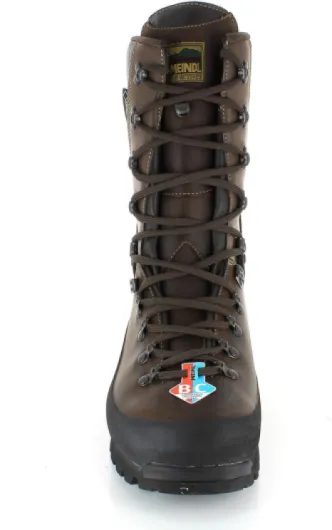
Height-wise, they’re around 26 cm, so definitely taller than standard hiking boots. They come up well above the ankle, almost to mid-calf on me. That’s great for bog, heather, brambles, and for stopping crap falling into your boots. It does mean they feel like proper field boots rather than nimble trail shoes – you notice the height when you’re bending and kneeling, especially at first.
Out of the box there were no loose threads, no glue marks, and the stitching looked tidy all round. The Vibram Multigriff sole looks aggressive, with deep lugs and a fairly stiff mid-sole. It’s the kind of sole that makes you think “this will handle most terrain”, but you can also tell it’s not a trainer – it has some flex, but there’s a clear firmness under the arch and forefoot. Overall, the presentation is simple, but the boots feel like a proper tool, which is what I wanted.
Pros
- Very good waterproofing and weather protection in real muddy, wet conditions
- Strong ankle support and tall shaft for rough, uneven ground and brush
- Thick leather and Vibram sole give a durable, long-term feel if well maintained
Cons
- Heavy and warm, overkill for casual or hot-weather walking
- High price compared to mid-range hiking boots
- Laces tend to wear quickly on the lower hooks, and stock insole is only average
Conclusion
Editor's rating
The Meindl Dovre Extreme GTX Wide are heavy-duty field boots built for people who actually live in mud, bog and rough ground, not for occasional Sunday strolls. They’re tall, quite heavy, and far from cheap, but they deliver where it matters: solid waterproofing, strong ankle support, good grip and materials that feel ready for several hard seasons if you take basic care of them. Comfort is better than you’d expect from such a chunky leather boot – I had no real break-in pain, and the wide fit works well with thick socks and long days on your feet.
They’re not perfect. The weight is noticeable, they run warm, the laces wear faster than I’d like on the lower hooks, and some people might want a thicker or softer sole underfoot. For easy paths and dry climates, they’re frankly too much boot, and you’d be wasting money and energy hauling them around. But if you’re a stalker, forester, hill worker, or just someone who regularly wades through wet rough ground, they make a lot of sense. The higher upfront cost is easier to swallow when you realise you’re not replacing them every year.
In short: these are solid, no-nonsense tools for serious outdoor use. If you need that level of support and protection, they’re a strong option. If you mostly walk on dry, easy tracks, look for something lighter and cheaper instead.