
Summary
Editor's rating
Value: good deal if you actually need a technical boot
Design: rigid, technical, and clearly built for rocks
Comfort: good fit and no blisters, but hard on the soles over long days
Materials: tough where it matters, but quite hard underfoot
Durability: built to take abuse, not to feel soft and plush
Performance: grip, support, and waterproofing are the strong points
What you actually get with the Salewa Crow GTX
Pros
- Very good grip on rock and mixed terrain with the Vibram New Mulaz sole
- Strong ankle support and secure heel hold, suitable for rough ground and mild ankle issues
- Properly waterproof Gore-Tex lining and synthetic upper that doesn’t soak much water
- Durable construction with full rubber rand and abrasion-resistant materials
- Compatible with combi/semi-automatic crampons for winter and alpine use
Cons
- Hard and stiff underfoot, tiring on long days without upgraded insoles
- Heavier and more rigid than needed for casual or easy hiking
- Toe box and fit are more technical than roomy, not ideal for very wide feet

Specifications
View full product page →| Brand | Salewa |
Serious mountain boots, not Sunday hikers
I’ve been using the Salewa Crow Gore-Tex men’s boots (Black Papavero, size 6.5 UK) mainly for alpine-style hikes, scrambly ridges and winter days with crampons. These are not casual walking boots for park paths – they’re clearly built for rough ground, rocks, and snow. If you’re thinking about them for easy trails, you’re probably over-arming yourself and paying for features you won’t really use. But if you spend time on steep, rocky terrain, they start to make more sense.
From the first time I picked them up, the thing that stood out was how rigid they are. The sole barely flexes, the upper holds the ankle firmly, and the whole boot feels more like a light mountaineering boot than a classic hiking boot. That lines up with what Salewa says: crampon-compatible Vibram Mulaz sole, alpine trekking focus, and a fairly stiff insole with fibreglass reinforcement. So I went into testing them with that in mind: I expected security and precision underfoot, but not running-shoe comfort.
Over several outings, I used them on wet rocky paths, loose scree, a couple of snowy days with semi-automatic crampons, and some long mixed days where you’re walking tracks at the bottom and then scrambling higher up. In short: they grip well, they’re properly waterproof, and they hold the ankle solidly. Where they fall short is underfoot comfort after many hours – my feet felt tired and a bit battered at the end of long days, which matches what a few Amazon reviewers mentioned.
If I had to sum up the first impression: these boots feel like a good choice for people who actually go into the mountains (alps, Scottish winter, Dolomites-type terrain) and need something tough that can take crampons. For Sunday walks or long, flat treks, they’re frankly overkill and not the most comfortable option. They do the job they’re built for, but they’re not perfect, and you might want to budget for better insoles.
Value: good deal if you actually need a technical boot
In terms of value, the Salewa Crow GTX sits in that mid-to-upper price range for technical hiking/mountaineering boots. They’re not cheap, but they’re also not in the ultra-premium category. For what you’re paying, you get: Gore-Tex, Vibram sole, crampon compatibility, a full rand, and a fairly proven design that’s been on the market for years with a solid 4.4/5 average rating from thousands of reviews. That already tells me they’re not some experimental model with random issues.
Where the value is good is if you actually use the features: alpine routes, via ferrata, winter walking with crampons, rocky ridges, and mixed conditions where you really want support and durability. In that context, they make sense and feel like money reasonably well spent. They’re robust enough that you’re not going to destroy them in one season, and they perform well in the kind of terrain they’re built for. If you add a decent pair of insoles, you end up with a solid, technical boot for less than some of the big-name alpine models.
On the other hand, if your real use is 90% easy hiking and occasional rocky sections, I’d say the value drops. You’re paying for crampon compatibility and stiffness that you don’t really need, and you’ll probably find them too hard and tiring compared to softer trekking boots. In that case, a simpler, lighter boot will be more comfortable and cheaper, and you won’t be missing much.
So my take on value is pretty straightforward: good value if you’re a regular in the mountains, average if you’re mostly a casual hiker. They’re not overpriced for what they offer, but they’re also not some miracle bargain. You just have to be honest with yourself about the kind of terrain and conditions you actually face most of the time.
Design: rigid, technical, and clearly built for rocks
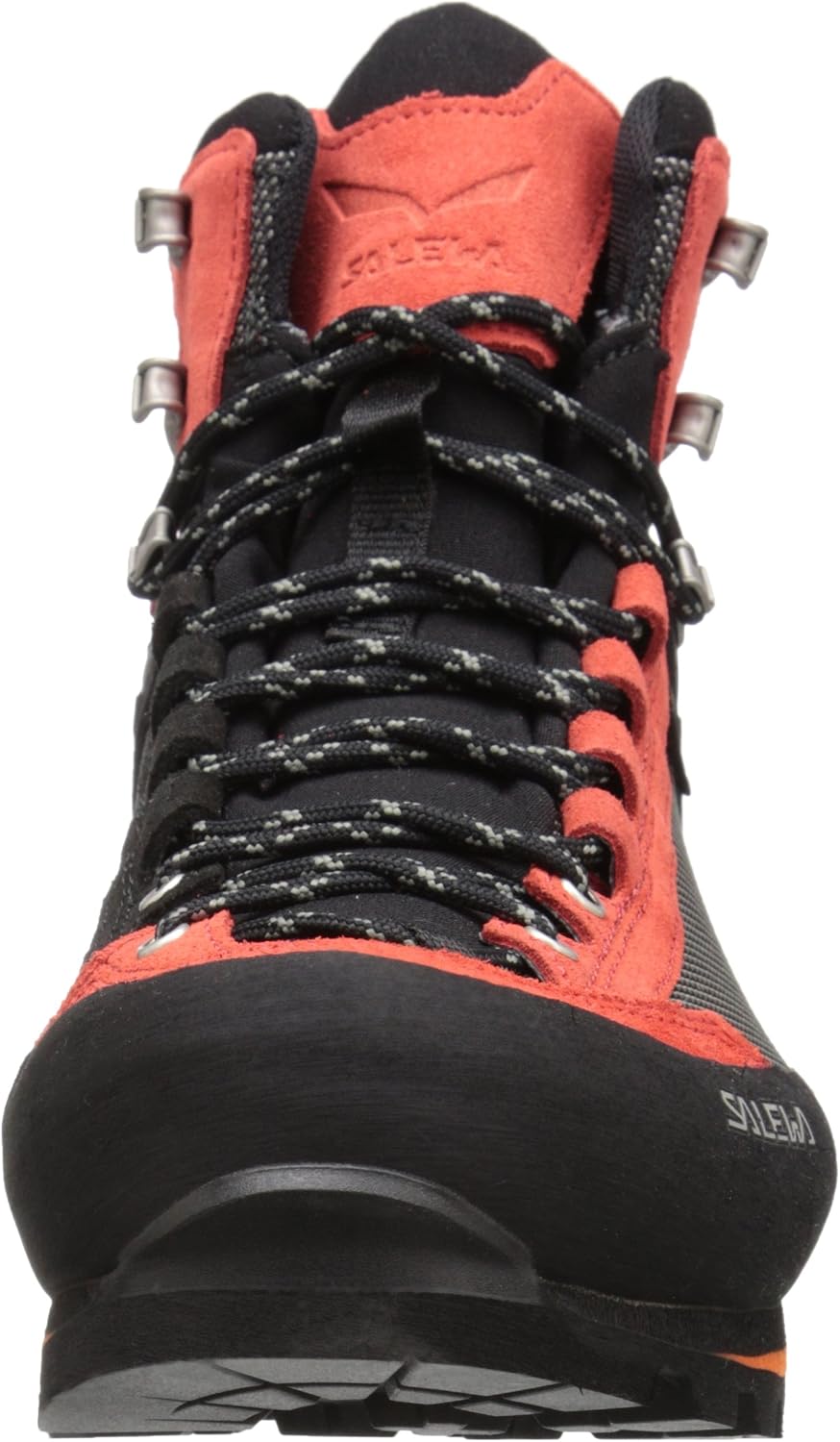
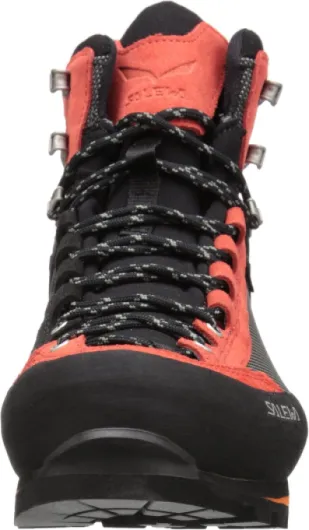
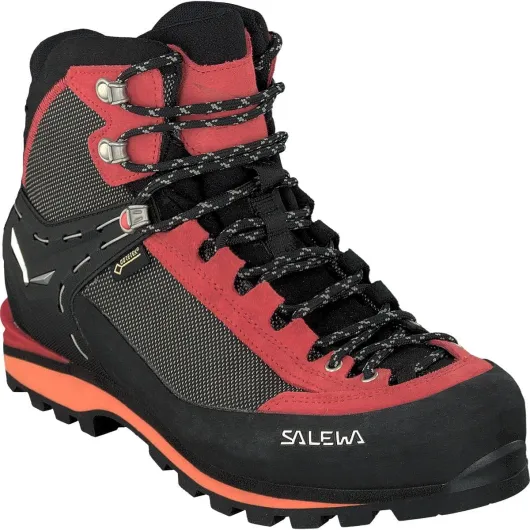
Design-wise, the Salewa Crow GTX in Black Papavero is pretty straightforward: black base with red/orange accents, no flashy chrome nonsense, and a very functional look. It’s not ugly, but it’s clearly designed by people thinking about performance first, style second. The 360° rubber rand around the boot is one of the first things you notice. It adds weight, but it also stops rocks and crampon bails from chewing up the upper too quickly. On scree and sharp limestone, that’s actually useful – I’ve kicked plenty of rocks with them and the upper still looks fine.
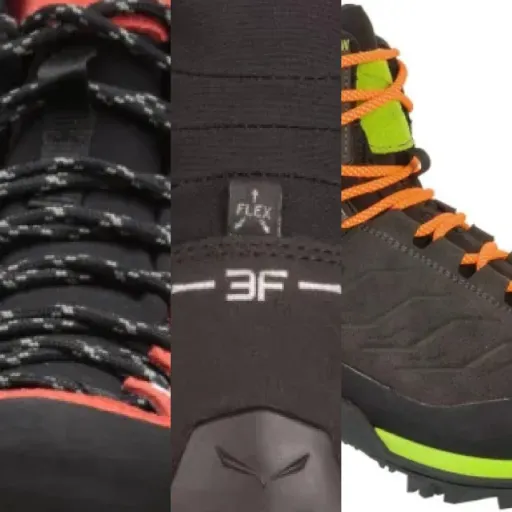
The lacing is another strong point. You get a proper climbing-style lacing system that goes quite far down towards the toes. Combined with the “cinch” locking hook in the midfoot, you can clearly separate how tight the lower and upper parts of the boot are. In practice, I’d lace the lower part fairly snug for precision, then play with the top hooks depending on whether I was climbing, traversing, or just walking out on easy ground. It’s simple, but it works. And it matches what one Amazon reviewer said: the ankle feels very secure, but you can also loosen the top a bit if it starts to feel too tight.
The collar has what Salewa calls a Flex Collar, basically a cut-out and curve at the back that gives the ankle a bit more rearward movement. On steep descents with long strides, I did feel that my ankle had slightly more freedom than in older, very stiff boots I’ve used. It doesn’t suddenly make them soft, but it avoids that locked-in ski-boot feeling on the downhill. That said, you still know you’re in a mountaineering boot: lateral movement is limited on purpose, to protect the ankle.
If I have a criticism on design, it’s that they’ve clearly prioritised support and precision over cushioning. The sole is rigid, the midsole is hard, and there isn’t much in the way of built-in softness under the heel. For technical use, that’s fine, but for long, boring approach walks, you do feel it. Overall, the design is pretty honest: tough, technical, and clearly not aimed at people who want sneaker-like comfort.
Comfort: good fit and no blisters, but hard on the soles over long days
Comfort is where the Salewa Crow GTX is a bit of a mixed bag. On the positive side, the fit and heel hold are very good. The 3F system and the lacing setup do a solid job of locking the heel in place without crushing the top of the foot. I didn’t get any heel lift, even when side-hilling or descending steep, loose trails. Also, I didn’t get blisters, even on the first long outing. That matches what several Amazon reviewers say – they were comfortable out of the box and didn’t need a painful break-in period.
However, after several hours, especially on more monotonous ground (tracks, forest roads, long descents), I really started to feel the lack of cushioning underfoot. The sole is stiff and the midsole is quite hard, so impacts are not absorbed as well as in softer trekking boots. By the end of an 8–10 hour day, the bottoms of my feet felt tired and a bit bruised, similar to what one reviewer described as feeling “battered” after 60 km. Swapping in better insoles helped, but even then, it’s still a rigid boot at the core.
In terms of sizing, they run fairly true, but I’d still say: either go half to a full size up if you plan to wear thick socks or use them in winter. I wore my usual size with medium-weight hiking socks and had enough room, but if I wanted thick winter socks plus a liner, I’d probably size up. Some reviewers said they went a full size up and were happy. The toe box is not super wide, but I didn’t find it overly cramped either – it’s more of a precise technical fit than a roomy trekking fit.
Overall, comfort is fine for what they are: technical mountain boots. If you expect them to feel like trainers or soft hiking shoes, you’ll be disappointed. If you accept that stiffness is part of the package for crampon use and edging, you’ll probably find them decent, especially with upgraded insoles. For long, flat treks or people with very sensitive feet, I’d look at something softer. For alpine routes, via ferrata, and rough ground, the comfort is “good enough” considering the stability you get.
Materials: tough where it matters, but quite hard underfoot
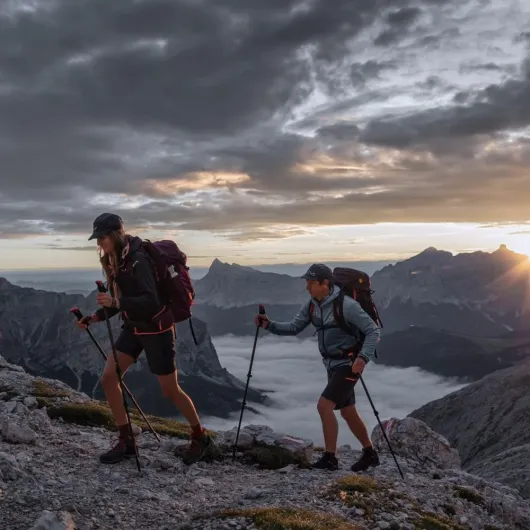
The materials on the Salewa Crow GTX are clearly chosen for durability and technical use rather than plush comfort. The outer is a mix of extremely wear-resistant synthetic fabric, some 1.6 mm suede-style leather, and that full rubber rand around the whole boot. After scraping them on rocks and scree, I didn’t see much damage beyond a few cosmetic marks. Compared to softer leather hiking boots I’ve had, these feel like they’ll take a lot more abuse before they start falling apart.
Inside, you get a Gore-Tex Performance Comfort lining. In practice, that means they’re properly waterproof, but not the warmest thing on earth. For me that’s fine: with decent socks, I was okay in cold, wet conditions, and they didn’t feel like saunas in milder weather. The fabric lining is smooth enough that I didn’t get any hot spots or weird rubbing, which is probably why a lot of reviewers mention the “blister-free” claim actually holding up. The upper material also doesn’t soak up tons of water, so the boots don’t become bricks after a few stream crossings.
The midsole and insole are where the choices are more divisive. The insole is a rigid polyamide plate with fibreglass, which is good for crampon compatibility and edging, but there’s very little built-in cushioning. The stock footbed is basic – it’s fine, but nothing special. After a couple of long days, I swapped them out for more padded insoles, and that helped a lot with fatigue. If you’re used to trail shoes or softer trekking boots, you’ll notice the difference immediately: these feel harsher, especially on hard-packed trails or forest roads.
Overall, the material choices make sense for a boot in this category: abrasion-resistant upper, solid rand, stiff insole, Gore-Tex lining. Just be aware that the focus is on longevity and technical performance, not plush comfort. If you’re okay with that and maybe plan to upgrade the insoles, the materials feel pretty solid for the price point and the use they’re aimed at.
Durability: built to take abuse, not to feel soft and plush
On durability, the Salewa Crow GTX feels pretty solid. The abrasion-resistant synthetic upper and full rubber rand clearly help. I’ve dragged these against sharp rocks, scraped them in chimneys, and kicked plenty of scree, and apart from cosmetic scuffs on the rand, they’re holding up well. Compared to full leather boots, you don’t get the same “patina” look as they age, but you also don’t see deep cuts or scratches as easily. For people who are rough on their gear, that’s a plus.
The stitching and glue points look clean and haven’t shown any signs of peeling so far. The sole is still firmly attached with no gaps. The Vibram rubber is on the harder side, which means it should wear more slowly than a very soft, grippy compound. After a decent amount of mixed use (rock, paths, some tarmac on the way back to the car), the lugs are only slightly worn. I’d expect these to last several seasons of regular alpine use, as long as you don’t completely neglect them.
The Gore-Tex lining is always a bit of a gamble long-term, because once it fails, the boot is never truly waterproof again. So far, no leaks, but obviously that’s something that only shows after years. The fact that the upper doesn’t soak much water helps reduce stress on the membrane, so that might extend its life. Also, because the materials are mostly synthetic, they don’t stretch out or deform as much as soft leather, so the fit stays more consistent over time – good if you like a precise fit, less good if you were hoping they’d "break in" and soften a lot.
Overall, the durability seems better than average for this type of boot at this price. They feel like they’re meant to be used hard – rocks, snow, crampons, rough ground – and not babied. The trade-off is that they’re not the most comfortable thing for everyday walks, but if you’re buying them for mountaineering and serious trekking, I think the durability is one of their clear strengths.
Performance: grip, support, and waterproofing are the strong points
On performance, the Salewa Crow GTX does what it’s supposed to do. The Vibram New Mulaz sole grips really well on rock, wet slabs, and mixed ground. On scrambly sections and via ferrata-style terrain, I felt confident putting weight on small edges and stepping on random bits of rock. A couple of times I expected to slip on wet rock and the sole actually held, which lines up with what one of the Amazon reviewers said about being surprised how well it kept them upright. On mud and wet grass, it’s decent but not magic – still a hard mountaineering sole, not a deep-lugged mud boot.
The ankle support is also one of the strong points. I’ve rolled my ankles before in softer boots, especially when carrying a heavy pack. With these, the ankle feels locked in but not totally immobilised. Sideways movement is controlled, which is what you want on uneven ground and when traversing. One reviewer even said they rely on these for an existing ankle injury, and I can see why: they give a lot of confidence when you’re tired or picking your way through loose rocks. The Flex Collar helps a bit on descents, so you don’t feel like you’re fighting the boot every step.
Waterproofing has been solid so far. Between the Gore-Tex lining and the synthetic upper that doesn’t absorb much water, I’ve walked through streams, slushy snow, and soaked paths without getting wet feet. The water beads off the surface nicely when they’re still relatively new. Over time that will fade unless you reproof them, but that’s normal. The main thing is: no leaks yet, even after several wet trips and a couple of deliberate soaks for cleaning.
Where performance is weaker is in long-distance comfort and versatility on easy terrain. You can absolutely do long days in them, but you feel the price you pay for stiffness. For pure trekking on non-technical trails, there are boots that are lighter and more forgiving. But if you’re mixing hiking, scrambling, snow, and occasional crampon use, the performance of the Crow GTX makes sense: they’re stable, secure, and reliable in the conditions they’re designed for.
What you actually get with the Salewa Crow GTX
On paper, the Salewa Crow GTX is sold as a versatile mountaineering boot, somewhere between a big trekking boot and a full-on B2/B3 alpine boot. You get a synthetic upper with a 360° rubber rand, Gore-Tex Performance Comfort lining, a Vibram New Mulaz outsole that’s crampon compatible (for semi-automatic/combi crampons), and their usual 3F system to lock the heel in. The single boot weight is around 675 g, so not ultra-light, but reasonable for something this stiff and protective.
They sit at about mid-height on the ankle – not a super high alpine boot, but definitely higher and more supportive than a regular hiking shoe. The official specs mention a polyamide insole with 27% fibreglass, which explains why they feel so rigid underfoot. This is good for edging on rock, kicking steps in snow, and using crampons, but you pay for it in cushioning. The boot is clearly designed with rough, uneven terrain in mind, not for strolling on gravel paths.
In terms of use cases, I’d put them in this box: summer alpine routes, via ferrata, long rocky ridges, Scottish winter days, and tougher trekking with occasional crampon use. They’re not my first choice for soft forest trails or multi-day hut walks on easy terrain – you can do it, but there are softer and lighter options. The Amazon reviews are pretty aligned on that: lots of people talk about using them in Scotland, the Alps, 4000ers, and they’re happy with the grip and waterproofing.
So overall, the presentation is honest: this is a technical boot for people who need stability, crampon compatibility and durability. If you read the description and think “that sounds like too much for me”, you’re probably right. If you’re planning routes where falling or slipping has consequences, then this level of stiffness and protection starts to look like a good compromise, even if comfort takes a bit of a hit.
Pros
- Very good grip on rock and mixed terrain with the Vibram New Mulaz sole
- Strong ankle support and secure heel hold, suitable for rough ground and mild ankle issues
- Properly waterproof Gore-Tex lining and synthetic upper that doesn’t soak much water
- Durable construction with full rubber rand and abrasion-resistant materials
- Compatible with combi/semi-automatic crampons for winter and alpine use
Cons
- Hard and stiff underfoot, tiring on long days without upgraded insoles
- Heavier and more rigid than needed for casual or easy hiking
- Toe box and fit are more technical than roomy, not ideal for very wide feet
Conclusion
Editor's rating
The Salewa Crow Gore-Tex men’s boots are solid, technical mountain boots that do their job well if you use them for the right things. They give very good grip on rock, strong ankle support, proper waterproofing, and they work with semi-automatic crampons. The fit is precise with good heel hold, and I didn’t get blisters, even on longer days. Durability also feels like a strong point: the synthetic upper, full rubber rand, and Vibram sole all seem built to cope with rocks and rough use.
The downsides are mostly about comfort over long distances and on easy terrain. The sole is very stiff, the midsole is quite hard, and there’s not a lot of built-in cushioning. After many hours, especially on tracks or hard ground, the soles of my feet felt tired and a bit beaten up. Swapping to better insoles helps, but you’re still dealing with a rigid boot by design. Also, if you never use crampons and rarely go on steep or technical ground, you’re basically buying more boot than you need.
I’d recommend these to people who do alpine-style hiking, via ferrata, Scottish or Alpine winter days, and rocky summits where stability and protection really matter. If you mainly walk on lowland trails, rolling hills, and forest paths, you’ll probably be happier in a lighter, softer trekking boot. In short: strong, reliable mountain tools, but not the comfiest choice for casual hiking.