
Summary
Editor's rating
Value: worth it if you actually need this much boot
Design: old-school hiking boot with a few modern tweaks
Comfort: supportive and secure, but not a slipper
Materials: built tough, but not the lightest choice
Durability: built to last, not to save grams
Performance on the trail: grip, support, and real-world use
What you actually get when you unbox them
Pros
- Very supportive and structured boot, good for rough terrain and weak ankles
- Durable materials with full rubber toe cap and sturdy leather upper
- Good grip and stable sole that blocks sharp rocks and uneven ground
Cons
- Heavier and stiffer than many modern light hiking shoes
- Breathability is only average; feet can get warm in hot weather

Specifications
View full product page →| Brand | Oboz |
Serious boots for real walking, not for posing
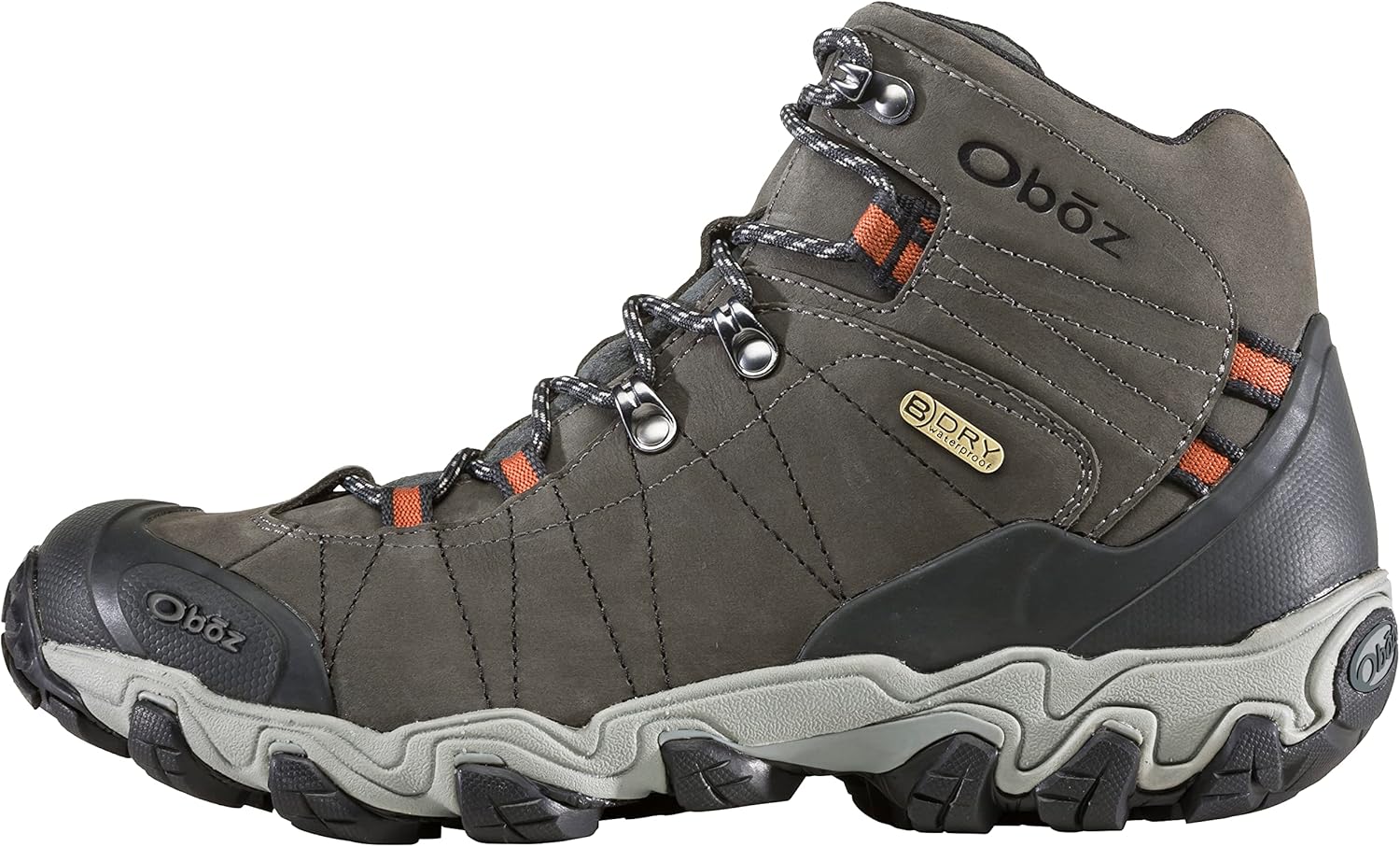
I’ve been using the Oboz Men’s Bridger Mid B-Dry (size 9, Raven color) as my main hiking boot for a while now. I’m not sponsored, I paid for them, and I’m hard on gear. My usual hikes are rocky forest trails, wet roots, and some muddy fire roads, plus the odd weekend where I’m carrying a heavier pack for 10–15 km. I also wore them a bit for day-to-day stuff just to see how they behave on pavement.
Overall, these are proper boots: fairly stiff, on the heavier side compared to modern trail runners, but with strong support and good protection. If you’re used to light sneakers or minimalist shoes, they’ll feel like tanks at first. If you’re used to old-school leather hiking boots, they’ll feel familiar but a bit more cushioned and less brick-like.
What pushed me to try them is exactly what a lot of reviewers mention: I wanted something with real ankle support and a solid upper that doesn’t fold or collapse when the terrain gets nasty. I’m also picky about waterproofing because I hike in wet areas a lot. The B-Dry membrane and the full rubber toe caught my eye, and the user reviews about support and durability sealed it.
They’re not perfect, and I wouldn’t recommend them to everyone. They’re overkill for casual city walks, and the weight is noticeable if you’re used to light shoes. But if you care more about support, grip, and protection than shaving grams, they start to make sense. I’ll break down what I liked and what annoyed me so you can see if they fit your use or not.
Value: worth it if you actually need this much boot
In terms of value, the Oboz Bridger Mid B-Dry sits in that mid-to-high price bracket for hiking boots. You can definitely find cheaper boots, and you can also find more expensive ones from the big brands. The question is whether you need this level of support and durability. If you mostly walk dogs on flat paths or do the occasional short hike on easy trails, this boot is probably overkill, and you’d be paying for features you won’t really use.
Where the value starts to make sense is if you do things like: carry a heavy pack, hike on rocky or volcanic terrain, go off-trail, or have feet/ankles that benefit from a stiff and supportive boot. In those situations, the combination of strong upper, solid outsole, and real ankle support is worth paying for. You’re less likely to roll an ankle, less likely to feel every rock, and less likely to destroy the boot in one season. That’s where paying more upfront can end up cheaper than replacing cheaper, softer boots repeatedly.
Compared to lighter modern boots and trail runners, you give up some agility and comfort on hot days, but you gain in stability and lifespan. If you’re the type who cares more about shaving 200 grams than about long-term durability, the value here will feel off. If you’re okay with a bit more weight in exchange for a boot that “just works” in rough conditions, the price feels justified. The Amazon rating around 4.4/5 lines up with my experience: very solid overall, with the main complaints probably coming from people who realized after buying that they didn’t actually want such a stiff, supportive boot.
So, is it the best bargain on the market? No. But as a reliable workhorse boot that can take abuse and still be comfortable enough for long days, it’s good value for money. You get what you pay for: proper materials, real support, and a design focused on actual hiking, not just looking outdoorsy.
Design: old-school hiking boot with a few modern tweaks
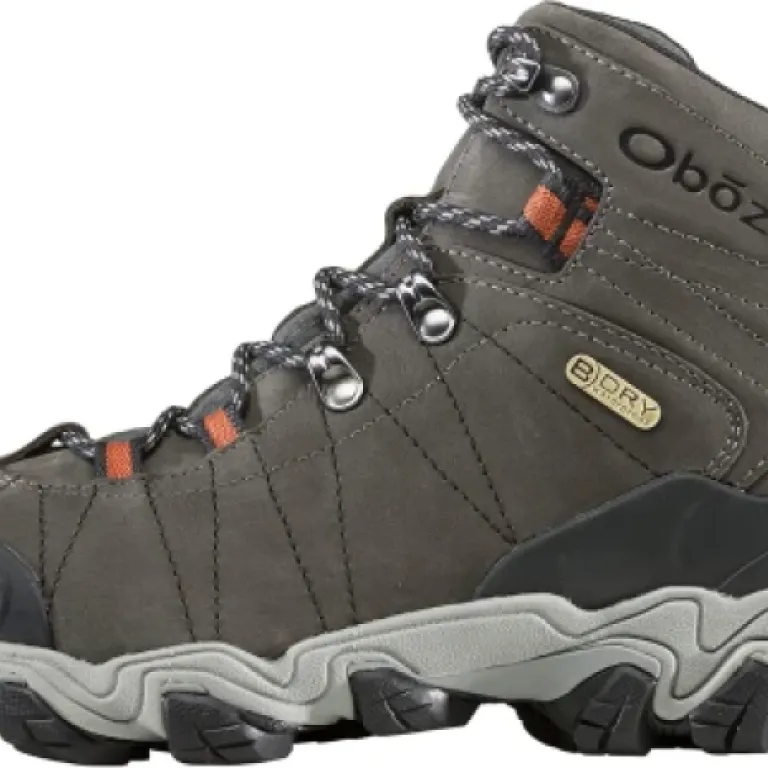
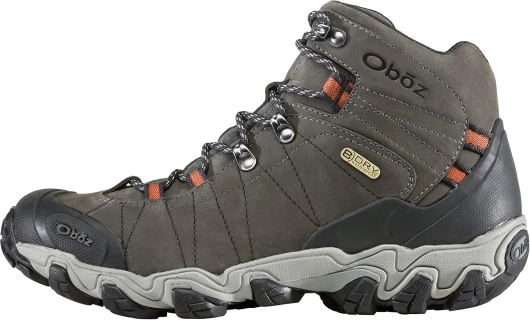
The design of the Bridger Mid B-Dry leans more toward traditional hiking boot than trendy urban outdoor. The silhouette is fairly chunky, with a pronounced toe bumper and a high, padded collar. If you’re expecting something sleek and sporty, this isn’t it. But if you like a boot that looks ready for real trails, this fits that vibe. The stitching is generous, with multiple overlays that add structure and probably help with durability, though they also add some weight.
The lacing system is simple but thought-through. You get standard eyelets down low and then metal hooks above the ankle for quick tightening. It’s easy to dial in a snug heel lock by tightening the lower part first, then cranking the hooks a bit. The boot holds the heel pretty well, and once laced, it doesn’t loosen by itself. The tongue has enough padding to keep the lace pressure from digging into the top of your foot, which I’ve had issues with on cheaper boots.
One thing I appreciated is the full rubber toe protection. I’ve kicked plenty of rocks and roots with these, and my toes never felt the impact directly. The toe cap also helps with abrasion when scrambling or kneeling. The heel has a small ledge that works fine with most strap-on gaiters, and the overall shape of the sole is slightly rockered so your stride doesn’t feel completely blocky, even though the midsole is on the stiff side.
On the downside, the boot is not subtle visually. If you wear them with jeans in the city, you look like you’re either coming from a hike or going to one. That’s fine for me, but if you want something that can double as a casual office shoe, this is not it. Also, the bulk around the ankle might feel overbuilt if you only hike on well-groomed, flat paths. From a pure design standpoint, it’s function-first: lots of support, lots of protection, not much style flexibility.
Comfort: supportive and secure, but not a slipper
Comfort-wise, these boots lean more toward support and structure than that soft, squishy feel you get from some modern hiking shoes. When I first put them on, I noticed two things right away: the heel felt locked in nicely, and the forefoot felt snug but not cramped. There’s enough room for my toes to move, but it’s not a wide, sloppy fit. If you have very wide feet, you might want to look at a wide size, because the standard fit is more medium than generous.
The break-in for me was fairly short. After one 5–6 km walk around town and a short trail loop, they felt good. The leather softened a bit, but the boot kept its structure. I didn’t get any blisters, just a slight pressure on the top of the foot the first day that went away once the tongue padding settled. The ankle padding is substantial without feeling like a pillow, and I never felt my foot wobbling inside the boot, even on sidehills.
Underfoot, the stock insole is decent. It has some arch support and a bit of heel cup. If you have flat feet or strong over-pronation, like one of the reviewers mentioned, I’d still consider adding your own orthotics or a firmer insole. The boot is stiff enough that it won’t fold or collapse around them, which is a big plus. The midsole cushioning is firm rather than bouncy. After a full day hike, my feet felt tired but not beaten up, which is about what I expect from a boot in this category.
The only comfort downside I noticed is heat build-up on warmer days. The waterproof membrane and leather combo means less airflow. On a hot, humid day, my socks came out damp from sweat, not from leaks. If you mostly hike in cooler or mixed conditions, it’s fine. If you’re in hot desert or summer mountain conditions, it might feel a bit much. Overall, though, once broken in, they’re comfortable in a practical, supportive way, not in a soft slipper way.
Materials: built tough, but not the lightest choice
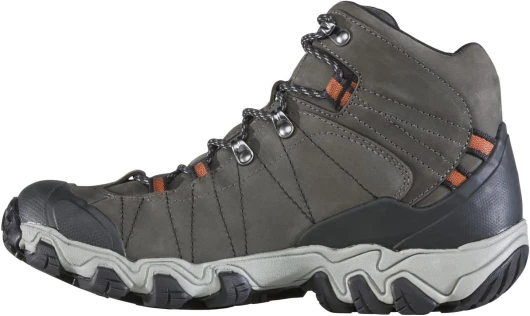
Material-wise, Oboz went with waterproof nubuck leather and high-abrasion fabric on the upper, plus their B-Dry waterproof membrane inside. The product sheet you gave mentions cotton as the outer material, but in reality these are leather plus synthetic textile, not soft cotton sneakers. The leather panels feel thick and dense, and after a bunch of hikes with rocks, roots, and some bushwhacking, I don’t see any serious scuffs or cuts, just normal surface marks.
The high-abrasion fabric is used in areas where you need flexibility, like around the ankle and tongue, but it still feels sturdy. It’s not a flimsy mesh that tears if you look at it wrong. The stitching is dense and looks reinforced in stress zones (toe flex, heel, lace area). The rubber toe cap is one continuous piece, not a thin decorative strip, and it extends high enough to matter when you jam your foot into a rock or dig into scree.
Inside, you have the B-Dry membrane and a lining that feels like standard synthetic fabric. It’s not plush like a winter boot, but it’s smooth and hasn’t caused any rubbing for me when paired with decent hiking socks. The midsole is EVA, which gives some cushioning while still allowing the boot to stay fairly stiff torsionally. The outsole rubber is grippy and hasn’t worn down quickly so far, despite a fair bit of use on mixed terrain. It’s not a super soft rubber that melts on asphalt, which I appreciate.
The trade-off with these materials is weight and breathability. You get serious protection and structure, but they don’t feel airy. On cooler or wet days, that’s great. On hot summer hikes, my feet got warm and a bit sweaty compared to lighter synthetic boots. So in practice, the materials are solid and confidence-inspiring, but if your main priority is ultra-light and ultra-breathable, this is not the best match. For durability and support, though, they’re pretty solid.
Durability: built to last, not to save grams
Durability is where these boots start to justify their weight and price. After a fair amount of use on rocky, rooty trails and some off-trail sections, I don’t see anything more than cosmetic wear. The toe cap has a few scrapes, but no peeling or separation. The leather has some creases where it flexes, which is normal, but no cracks. The stitching is all still intact, even around high-stress points like the toe flex area and the lace anchors.
The outsole lugs have rounded slightly in the main impact zones, but they’re far from worn out. I’ve had lighter boots where the tread looked half gone after the same kind of use. Here, it looks like they’ll easily handle a few seasons of regular hiking if you’re not dragging your feet on asphalt every day. The midsole hasn’t packed out noticeably yet; the support still feels the same as when they were new, which is important if you rely on the structure for ankle and arch stability.
The waterproofing has also held up so far. No leaks at the flex points, which is where cheaper boots often start to fail. I do treat the leather with a basic waterproofing spray every so often, just to keep it from drying out. That’s normal maintenance for leather boots and helps them age better. The inner lining shows no signs of tearing or pilling, and the insole hasn’t flattened to a useless pancake, though heavy users or heavier hikers might still want to upgrade the insole over time.
If I had to nitpick, the price might feel a bit high if you’re only an occasional hiker, but for someone who actually uses their boots hard, the durability per dollar seems fair. These are not boots you replace every season. They feel like the type you keep for years, resole only when absolutely needed, and keep going. So in terms of longevity, they’re pretty solid, especially compared to lighter, more fashionable options that tend to die faster.
Performance on the trail: grip, support, and real-world use
On actual trails, the Bridger Mid B-Dry behaves like a sturdy hiking tool. The outsole grip is honestly one of the things I noticed most. On wet roots and damp rocks, they held better than some lighter shoes I’ve used. The tread pattern bites well into dirt and loose gravel, and I never felt like I was skating around, even when going downhill with a pack. The rubber compound seems to strike a good balance between grip and durability; after multiple outings, the lugs still have their shape.
The stiffness of the sole is a plus on rocky terrain. When you step on sharp stones, you don’t feel them poking through, which is a big difference compared to softer trail shoes. That’s especially nice when you’re carrying extra weight; your feet don’t have to work as hard to stabilize on uneven ground. The ankle support is also noticeable on side slopes. The boot holds your foot in line instead of letting it roll outward or inward easily. If you have weak ankles or a history of sprains, this kind of structure is reassuring.
The B-Dry waterproofing has been solid so far. I’ve walked through wet grass, shallow streams, and muddy sections, and my feet stayed dry. The membrane also blocked cold wind nicely on a couple of chilly, rainy days. Breathability is okay, not great. Moisture from outside stays out, but heat and sweat don’t escape as fast as with non-waterproof shoes, which is pretty much what you’d expect from a leather boot with a membrane.
The downside of all this performance is weight and agility. If you’re used to jogging down trails or moving fast and light, these will feel clunky. Quick direction changes aren’t as easy, and you feel the mass when lifting your feet over and over on long climbs. For me, on rough terrain and slower, steady hiking, the trade-off is worth it. But if your hikes are mostly well-maintained, flat paths, this level of boot might be more than you need and just make you more tired than necessary.
What you actually get when you unbox them
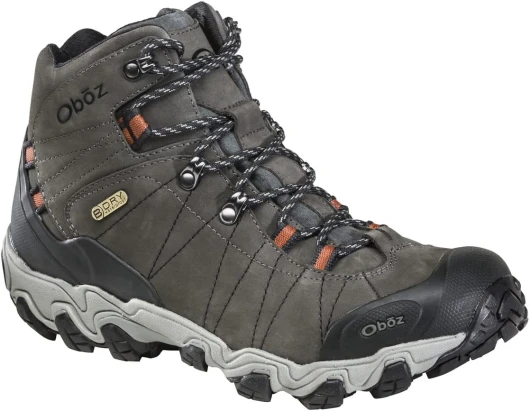
Out of the box, the Oboz Bridger Mid B-Dry looks and feels like a serious hiking boot, not a lifestyle shoe pretending to be one. In size 9, each boot has a bit of heft to it. They’re not crazy heavy, but you definitely feel them in your hands compared to a trail runner or a light mid. The Raven color is basically a dark grey/black mix with some subtle contrasts. It’s neutral and practical; dirt doesn’t show up much, which I like.
The boot is mid-height, covering the ankle properly. There’s a full rubber toe cap that wraps up nicely over the front, and the heel has a sturdy counter. The lacing system is classic: fabric and metal eyelets down low, and hooks at the top. Nothing fancy, but it looks reliable and easy to fix if something ever goes wrong. The tongue is gusseted high enough that water and debris stay out unless you step into something really deep.
Inside, the stock insole is better than the usual flimsy foam many brands throw in. It’s still not at the level of a premium aftermarket insole, but for most people it’s probably enough. The boot feels structured when you squeeze it: the sides don’t collapse easily, and the midsole has a clear stiffness, which is good if you’re on rocky terrain or carrying weight. The listed sole material is EVA (ethylene vinyl acetate) with a rubber outsole on top, which is standard for this type of boot.
In terms of sizing, they run a bit on the snug side in my experience. I’m normally a 9, and 9 fits, but with thick hiking socks there’s not tons of extra room. If you’re between sizes or you use thick insoles or orthotics, I’d seriously consider going up half a size. Overall, the first impression is: no nonsense, trail-focused boot. Not stylish, not ugly, just clearly built to be used and abused.
Pros
- Very supportive and structured boot, good for rough terrain and weak ankles
- Durable materials with full rubber toe cap and sturdy leather upper
- Good grip and stable sole that blocks sharp rocks and uneven ground
Cons
- Heavier and stiffer than many modern light hiking shoes
- Breathability is only average; feet can get warm in hot weather
Conclusion
Editor's rating
The Oboz Men’s Bridger Mid B-Dry is a serious hiking boot for people who actually spend time on rough trails, carry weight, or need real support. It’s not the lightest, it’s not the coolest-looking, but it does the basics very well: good grip, solid ankle support, strong toe protection, and reliable waterproofing. If you’ve been fighting with flimsy boots that fold or collapse when you add insoles or hit rocky terrain, this is a clear step up.
On the flip side, you do feel the weight and stiffness. For easy paths, city walks, or fast-and-light hiking, it’s more boot than you need and will just make your legs work harder. Breathability is also only average because of the leather and membrane combo, so hot climates aren’t its strong point. But if your hikes are in wet forests, mountains, or rough volcanic or rocky areas, and you don’t mind a bit of extra weight, it’s a pretty solid choice.
I’d recommend these to hikers who: have weak or sensitive ankles, often carry heavier packs, or regularly hike on uneven, rocky ground. I’d skip them if you: mostly walk on groomed trails, want one shoe for office and trail, or are obsessed with ultra-light footwear. Overall, they’re a dependable, no-nonsense boot that focuses on support and durability rather than trends.