
Summary
Editor's rating
Value for money: comfort vs. price
Design: practical, wide, and a bit boring
Comfort and support: where these boots actually shine
Materials and build: comfort-focused, with a few weak spots
Durability so far: solid boot, questionable laces
Waterproofing and trail performance in real use
What you actually get out of the box
Pros
- Very comfortable out of the box with almost no break-in needed
- Wide toe box and strong arch support are great for plantar fasciitis and sensitive feet
- Waterproof leather and sealed seams keep feet dry in normal wet conditions
Cons
- Price is high compared to regular hiking boots with similar basic features
- Laces feel weak and may need early replacement
- Design is plain and not very stylish or technical-looking

Specifications
View full product page →| Brand | Orthofeet |
Boots for bad feet: do these actually help?
I picked up the Orthofeet Men's Orthopedic Leather Hunter Boots in size 9, black, mainly because my feet are a mess: mild plantar fasciitis, wide forefoot, and I get sore arches fast. I wanted something I could use for weekend hikes, dog walks in the rain, and just general winter abuse without ending every day limping. The Amazon rating was around 4.1/5, so not perfect, but good enough to take a shot, especially with all the talk about arch support and pain relief.
Over a few weeks, I wore these for mixed use: 2–3 hour hikes on muddy trails, walking on wet sidewalks, and some basic yard work. Nothing extreme like mountaineering, but enough to see if they’re actually practical. I also swapped between thin everyday socks and thicker wool socks to see how the fit changed, since that’s usually where boots annoy me.
The short version: they really lean into comfort and support more than anything else. If you’ve got sensitive feet, bunions, plantar fasciitis, or just hate narrow, stiff boots, there’s a lot to like. But they’re not perfect. The price is on the high side, the look is pretty generic, and a couple of details (like the laces) feel cheaper than the rest of the boot.
So this review is from that angle: not a hardcore mountaineer, just someone who walks and hikes a lot and doesn’t want their feet to scream at them. I’ll go through comfort, design, materials, performance in wet/weather, durability so far, and whether I think they’re worth the money compared to other hiking and outdoor boots I’ve used.
Value for money: comfort vs. price
Here’s where opinions will split. Orthofeet is not cheap, and these Hunter boots are definitely priced above a lot of basic hiking boots from brands like Columbia, Nortiv 8, or even some Merrell models. One Amazon reviewer flat-out called them “overpriced,” and I can see why someone would say that if they don’t need the extra orthopedic features. If your feet are normal and happy in standard boots, you can probably get similar waterproofing and basic comfort for less.
Where the price starts to make more sense is if you have foot issues: plantar fasciitis, diabetes, arthritis, bunions, hammertoes, or just generally sensitive feet. The built-in orthotic insole, arch booster, wide toe box, and soft interior are not things you usually get all together in a typical hiking boot. You’d normally have to buy a separate orthopedic insole and stuff it into a regular boot, and that combo doesn’t always fit well. Here, it’s all designed to work together out of the box.
Compared to my old New Balance MW1400 boots, the Orthofeet Hunters feel more supportive and more comfortable for long wear, but also more expensive. Compared to something like a Columbia Newton Ridge, they’re much better for foot pain but worse in terms of price-to-basic-features ratio. So it really comes down to this: if you’re just looking for a general hiking boot and your feet are fine, these are probably not the best value. If you’re actively trying to reduce pain and need extra support, the extra cost starts to look more reasonable.
So in terms of value, I’d call them pretty solid for people with problem feet and just okay for everyone else. You’re paying a premium for comfort and orthopedic design, not for cutting-edge outdoor tech or stylish looks. If that’s exactly what you need, the price is easier to swallow. If not, there are cheaper options that will do the job.
Design: practical, wide, and a bit boring
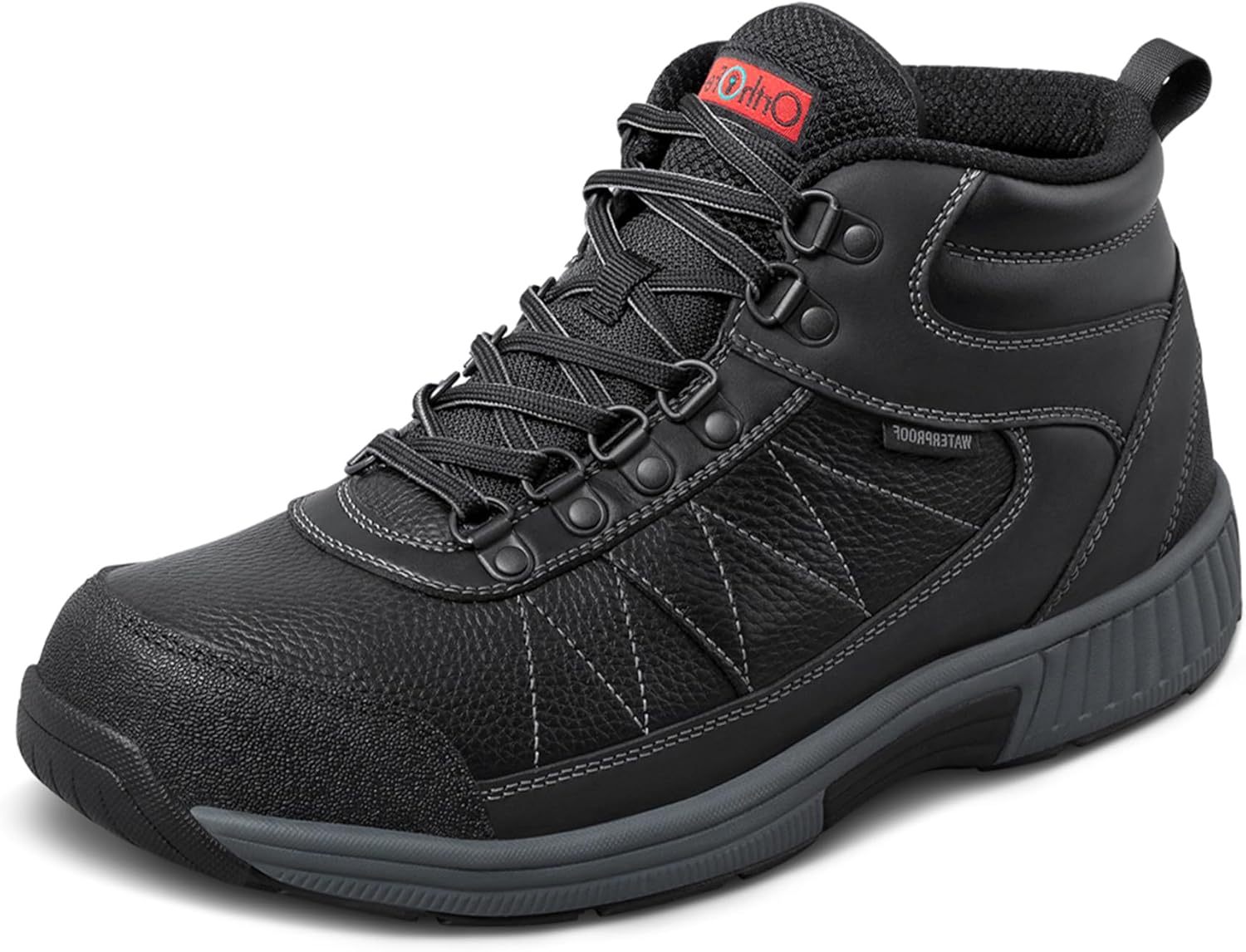
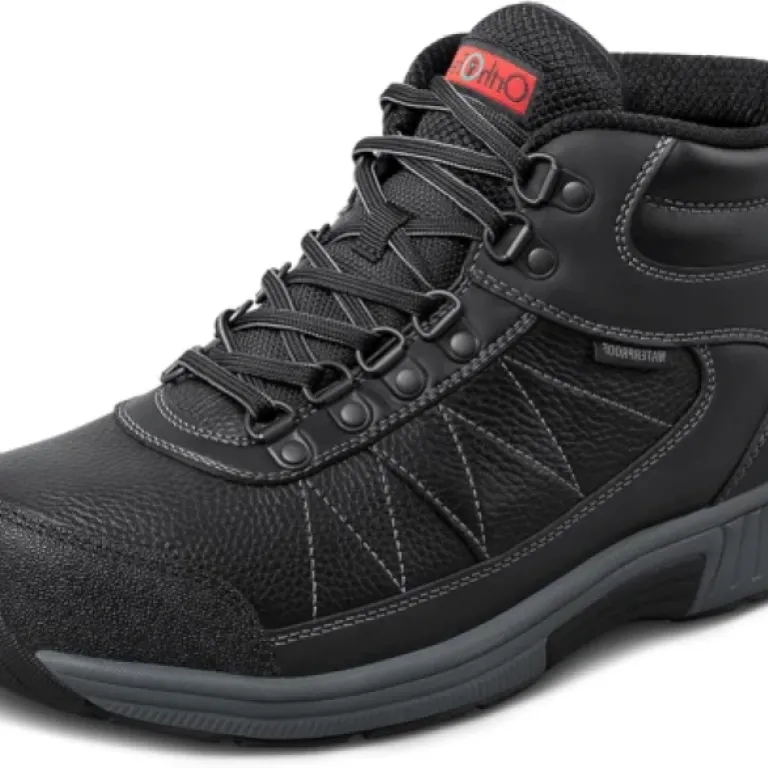
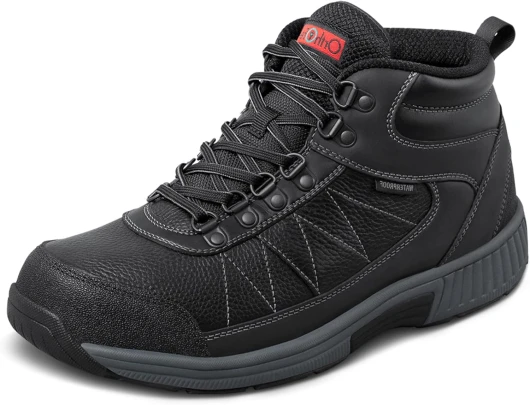
The design is pretty straightforward: ankle-height, black leather with fabric panels, and a standard lace-up system. The shaft circumference is about 10 inches, which for me (average male legs) gives a secure feel without digging into the ankle. The padded collar and tongue are quite noticeable – they give it that “comfort shoe” vibe more than a sleek hiking boot look. If you’ve ever worn New Balance walking boots, this feels like it’s in that same design family, just a bit more outdoorsy.
The wide toe box is honestly the key design feature. Compared to something like Columbia Newton Ridge, these feel much more relaxed in the forefoot. My toes actually spread out instead of getting crammed together. If you’ve got bunions, hammertoes, or just hate tight boots, you’ll probably appreciate this. On the flip side, if you like a very locked-in performance feel for steep or technical trails, this looser front might feel a bit vague. I personally prefer not having my toes smashed, so I’ll take the room.
Ventilation-wise, this is a leather waterproof boot, so don’t expect miracles. There are fabric sections, but it still leans warm rather than airy. For cool to cold weather, that’s fine. For hot summer hiking, my feet did get a bit warm and sweaty after a couple of hours. The lacing system is basic but works: a mix of standard eyelets and hooks near the top so you can cinch the ankle. Nothing fancy like speed lacing or BOA systems, but honestly that’s fine for this type of boot.
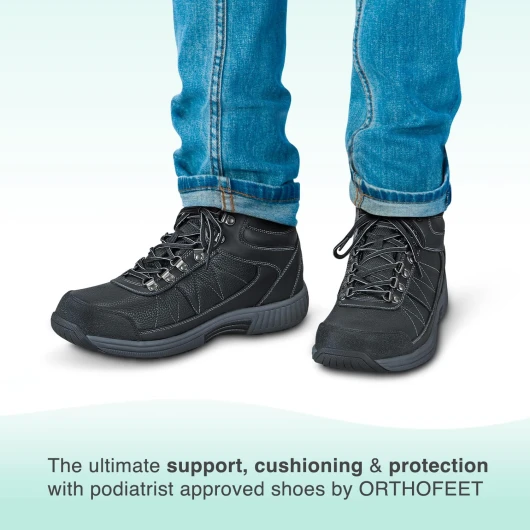
In terms of looks, I’d call the design “workhorse, not showpiece.” They’re neutral enough to wear with jeans or hiking pants without standing out, but no one is going to compliment you on your boots. If your priority is comfort and support over style, the design does its job. If you want something that looks sharp in photos, you might find them a bit plain and bulky.
Comfort and support: where these boots actually shine
This is the main reason to buy these boots. Out of the box, there was basically no break-in period for me. I wore them for a full afternoon right away – roughly 3–4 hours of mixed walking and standing – and didn’t get any blisters or hot spots. The padded interior and heel cushioning are very noticeable. If you’re used to stiff hiking boots that need a week to soften up, this feels closer to a supportive sneaker in boot form.
The arch support is strong, especially with the included arch booster installed. I have mild plantar fasciitis, and usually after a couple of hours in regular boots, I feel that sharp heel pain start creeping in. With these, the heel felt better supported and more cushioned. I’m not going to say they magically fix everything, but I could do longer walks without thinking about my feet every ten minutes. One Amazon reviewer mentioned walking up to ten miles a day in the UK with plantar fasciitis and being fine, and I can see that being realistic if the fit matches your foot.
The wide toe box is a big plus for comfort. I could wiggle my toes easily, even with thicker wool socks. No pressure on the sides of my big toes, which is usually where boots annoy me first. If you have bunions or hammer toes, this extra room will probably make a big difference. One user mentioned wearing them year-round in high desert with all kinds of spiky plants and heavy socks, and I get it – they’re roomy enough to layer socks without turning into a vice around your foot.
On the downside, the loose toe area and soft overall feel mean you don’t get that locked-in, “precision” fit some hikers like on more technical terrain. For casual hikes, daily walks, or work days on your feet, I think the trade-off is worth it. For serious mountain trails where you need exact foot placement, you might want something stiffer and more fitted. But if your priority is pain reduction and all-day comfort over performance, these do a pretty solid job.
Materials and build: comfort-focused, with a few weak spots
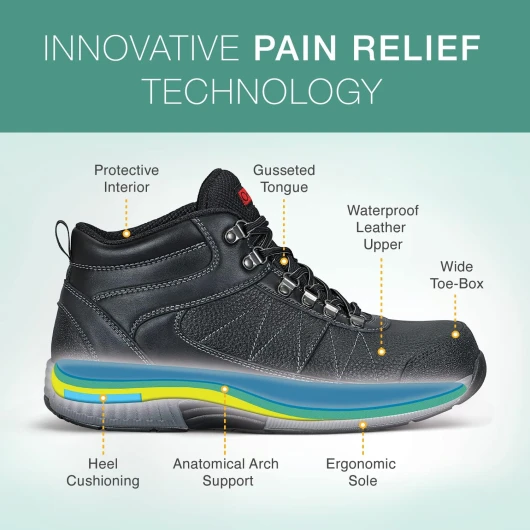
The upper is a mix of waterproof leather and fabric, with sealed-seam construction. In practice, that means it feels like a typical light hiking boot rather than a heavy full-grain leather work boot. The leather panels give it structure and water resistance, while the fabric keeps the weight down and adds a bit of flexibility. The overall weight is lighter than my old New Balance MW1400 boots and noticeably lighter than most full leather work boots I’ve worn.
The sole is rubber, with a tread that’s decent but not super aggressive. Grip on wet pavement and packed dirt was fine for me; I didn’t feel like I was sliding around. On loose gravel and muddy patches, the traction was okay but not crazy. If you’re mostly walking trails, sidewalks, or doing light hiking, the sole is good enough. If you need hardcore traction for steep, rocky stuff, there are boots with deeper lugs and stickier rubber.
Inside, the materials are clearly chosen for comfort: soft lining, thick insole, and extra heel cushioning. The included orthotic insole and arch booster feel like proper orthopedic components, not the flimsy foam inserts you get in cheap boots. I tried using them with and without the arch booster. With the booster, the arch support is pretty strong – good if you’ve got flat feet or plantar fasciitis. Without it, it’s still more supportive than a regular hiking boot insole, but less intense.
The weak spot in terms of materials seems to be the laces. One Amazon reviewer mentioned both laces snapping after about five months, and I can see why. The laces on mine feel thinner and cheaper than the rest of the boot. They work, but they don’t feel as sturdy as I’d like for the price. I’d probably just plan on replacing them with stronger aftermarket laces sooner rather than later. Apart from that, stitching and glue lines on my pair looked clean, no obvious defects or sloppy build.
Durability so far: solid boot, questionable laces
I haven’t had these for years, obviously, but after a few weeks of fairly regular use (3–4 outings per week, 2–3 hours each), there are some early signs about durability. The leather upper has held its shape well, no cracking or weird creasing yet, just the normal folds you’d expect. The stitching around the seams and along the sole looks clean and hasn’t frayed. The rubber outsole shows minor wear on the heel, but nothing unusual for the mileage I’ve put on them.
The waterproofing is still holding up after repeated exposure to wet conditions. I’ve walked through wet grass and puddles several times, and the leather hasn’t started absorbing water or darkening in weird patches. As with any leather boot, I’d still recommend treating them occasionally with a waterproofing spray or conditioner if you want them to last longer, especially if you’re in a wet climate.
The main red flag is the laces. Another Amazon reviewer mentioned that both laces snapped within about five months, and while mine haven’t broken yet, they don’t inspire a lot of confidence. They feel thin and a bit plasticky compared to the rest of the boot. For the price point, I’d expect beefier laces from the start. Realistically, I’d just budget an extra few bucks for better aftermarket laces and treat the stock ones as temporary.
Overall, I think the boot itself will hold up fine for regular hiking and daily wear, especially if you’re not abusing them on sharp rocks every day. The outsole, leather, and stitching all feel up to the task. Just don’t expect indestructible work-boot levels of toughness, and be ready to replace the laces and maybe the insole after a couple of seasons if you use them heavily.
Waterproofing and trail performance in real use
Orthofeet advertises these as waterproof with sealed-seam construction, and in normal use they held up well. I walked through wet grass, shallow puddles, and steady rain, and my feet stayed dry. One Amazon review called them “reasonably waterproof,” and I’d agree with that wording. They’re good for rain, wet sidewalks, and light to moderate trail moisture. I wouldn’t use them for repeated stream crossings or deep mud where water can come in over the ankle – but that’s true for most ankle-height boots.
On the trail, the rubber sole is fine for typical conditions: dirt paths, gravel, and mild rocky sections. Grip on wet rocks is decent but not outstanding. These feel designed more for comfort and support than aggressive hiking. If your idea of hiking is national park trails, forest paths, and general outdoor walking, they’ll handle it. One reviewer mentioned using them for hiking in Montana and said they felt great, which lines up with my experience on moderate trails.
Stability-wise, the ankle support is medium. The padding holds your ankle comfortably, but the boot isn’t super stiff. I twisted my foot slightly on a root once, and the boot gave a bit instead of locking everything in place. It didn’t cause a problem, but if you have weak ankles and want a very rigid boot, this might feel too soft. On the flip side, that flexibility makes walking on flat ground more natural and less tiring.
Breathability is where you feel the waterproof leather trade-off. On cooler days, no problem. On warmer days or longer hikes, my feet got warm and a bit sweaty. Not unbearable, but definitely not as airy as something like a mesh-heavy hiking shoe. I’d call the overall performance profile: great for comfort-first hiking and everyday outdoor use, not built for hardcore alpine adventures or super hot climates.
What you actually get out of the box
Out of the box, the Orthofeet Hunter boots look like fairly standard black ankle-height hiking boots. Nothing flashy, no big logos screaming at you. If you’re expecting something stylish, this is more on the “practical dad boot” side of things. The shaft height is ankle, and there’s a decent amount of padding around the collar, which you notice as soon as you put them on. They also come with a premium orthotic insole and an arch booster in the box, which is basically a little insert to increase the arch support if you need more.
The size 9 I ordered matches what I usually wear in sneakers. Orthofeet claims these run true to size with a wide toe box, and I’d say that’s accurate. There’s noticeably more room in the toe area compared to typical hiking boots from Columbia or Merrell I’ve owned. With thin socks, I could probably go half a size down if I wanted a snugger fit, but with medium or heavy wool socks, the size 9 felt just right. My toes could move and didn’t feel squished at all, even after a few hours.
Inside, the first impression is that these are built for comfort, not fashion. The interior is soft and fairly padded, especially around the heel and ankle. The footbed feels cushioned right away, not like those boots where you know you’ll need a week of break-in before they stop hurting. I walked around the house for a bit when I first got them and didn’t feel any rubbing hotspots, which is rare for me with new boots.
Overall, the presentation is simple: you’re clearly paying for orthopedic features and a comfort-focused design, not for a high-end rugged outdoor look. If you want something low-key that doesn’t scream “technical boot” but still works outside, this fits. If you want something that looks sharp or stylish, you’ll probably think these are a bit bland.
Pros
- Very comfortable out of the box with almost no break-in needed
- Wide toe box and strong arch support are great for plantar fasciitis and sensitive feet
- Waterproof leather and sealed seams keep feet dry in normal wet conditions
Cons
- Price is high compared to regular hiking boots with similar basic features
- Laces feel weak and may need early replacement
- Design is plain and not very stylish or technical-looking
Conclusion
Editor's rating
Overall, the Orthofeet Men’s Orthopedic Leather Hunter Boots are clearly built for people whose feet complain a lot. The wide toe box, strong arch support, heel cushioning, and soft padded interior all work together to make long walks and hikes more comfortable, especially if you’ve got plantar fasciitis, bunions, or just hate narrow, stiff boots. Waterproofing is solid for everyday rain and typical trail use, and the boots are light enough that you don’t feel like you’re dragging bricks around.
They’re not perfect, though. The design is plain, the laces feel like a weak point, and the price is on the high side compared to regular hiking boots. If your feet are trouble-free and you just want a waterproof hiking boot for occasional use, you can definitely find cheaper options that will get the job done. But if you’re dealing with chronic foot pain or need that extra orthopedic support, these are one of the few boots that actually put comfort and foot health first instead of just talking about it in the marketing.
So, who should buy these? People with sensitive or problem feet who walk or hike a lot and are tired of finishing the day in pain. Who should skip them? Anyone on a tight budget, folks who care a lot about style, or serious technical hikers who want a stiffer, more performance-focused boot. For the right person, they’re a very practical, comfort-first choice. For everyone else, they’ll feel like decent boots with a price tag that’s a bit hard to justify.