
Summary
Editor's rating
Value: fair price for what you get
Looks like a hiking boot, wears like a casual boot
Comfort: good out of the box, better after a week
Leather, membrane, and a lot of rubber
Durability: holding up well, but not a tank
Trail performance: solid grip and reliable waterproofing
What you actually get with the Mt Maddsen
Pros
- Comfortable out of the box with anti-fatigue footbed and EVA midsole
- Reliable waterproofing thanks to TimberDry membrane and gusseted tongue
- Full-grain leather upper looks decent and holds up well to everyday abuse
Cons
- Product photos and actual color (especially dark brown variants) don’t always match
- Runs warm on hot days due to leather + waterproof membrane construction

Specifications
View full product page →| Brand | Timberland |
Solid mid-price hikers that double as daily boots
I’ve been using the Timberland Mt Maddsen (dark brown full-grain leather, men’s) as my main boot for a mix of light hiking, commuting, and weekend wear. I’m not a pro mountaineer, just someone who walks a lot, does forest trails, and stands on their feet for hours. I wanted something waterproof, not too heavy, and that I could also wear with jeans without looking like I’m about to climb Everest. These fit that brief pretty well, with some limits.
In practice, the Mt Maddsen feels like a crossover between a real hiking boot and a casual leather boot. The sole and ankle support are decent for day hikes and rough paths, but it’s not the ultra-rugged, stiff type of boot you’d take for multi-day heavy-pack trips in the Alps. It’s more in the “weekend warrior / park ranger / dog walks in all weather” category. That matches what I saw in the Amazon reviews too: people using them daily, at work, or for moderate trails.
The first thing that stood out for me was the comfort out of the box. There’s an anti-fatigue footbed and a fairly soft midsole, and you feel that right away. I’ve had boots where you need a week of blisters and swearing before they calm down; these were wearable for a full workday on day one. Not perfect, but very manageable. If you’re used to stiff mountaineering boots, these will feel almost like sneakers in comparison.
Overall, after wearing them in rain, mud, and cold sidewalks, my take is this: they’re pretty solid mid-range boots. Not the toughest on earth, not the lightest, but good for someone who wants one pair that can go from city to trail without looking ridiculous. There are a couple of annoyances (color accuracy, weight, breathability), but for the price point they mostly get the job done.
Value: fair price for what you get
On the value side, I’d put the Mt Maddsen in the “good but not mind-blowing” category. You’re paying mid-range money for a full-grain leather, waterproof hiking boot from a big brand. For that price, you get real leather, a working waterproof membrane, decent comfort, and a boot that can handle both trails and everyday wear. That’s not bad at all. You can definitely find cheaper boots, but a lot of them cut corners on leather quality, waterproofing, or outsole grip.
Compared to competitors like Merrell or Keen in the same price bracket, the Mt Maddsen trades some modern looks and lighter weight for a simpler, more classic leather build. If you want tons of mesh panels, funky colors, and super light weight, you might feel you get more “tech” with other brands. If you want something that looks more like a normal boot you can wear with jeans, the Timberland has the edge. So value really depends on what you prioritize: style + leather vs weight + technical features.
The Amazon rating around 4.5/5 lines up with how I feel: mostly positive with a few caveats. The main annoyances for me are the slightly off product photos (the color issue), the warmth on hot days, and the fact that you’ll probably want better insoles if you have fussy feet. None of those are deal-breakers, but they’re worth factoring in when you look at the price.
If you’re the kind of person who wants one boot to do a bit of everything—commuting in rain, light hikes, weekend trips, casual wear—then the value is solid. If you want a specialized boot for serious alpine hiking or, on the flip side, a super light shoe just for summer trails, your money might be better spent on something more targeted. For that middle ground user, though, the Mt Maddsen gets the job done for a fair price.
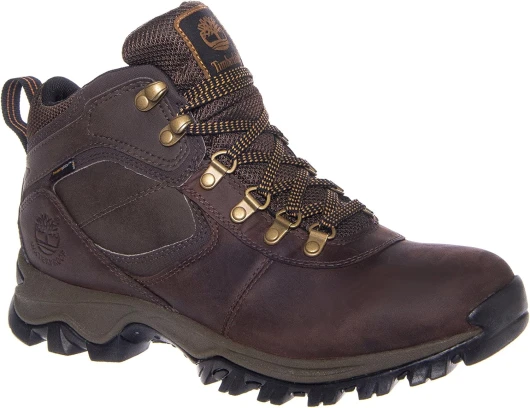
Looks like a hiking boot, wears like a casual boot
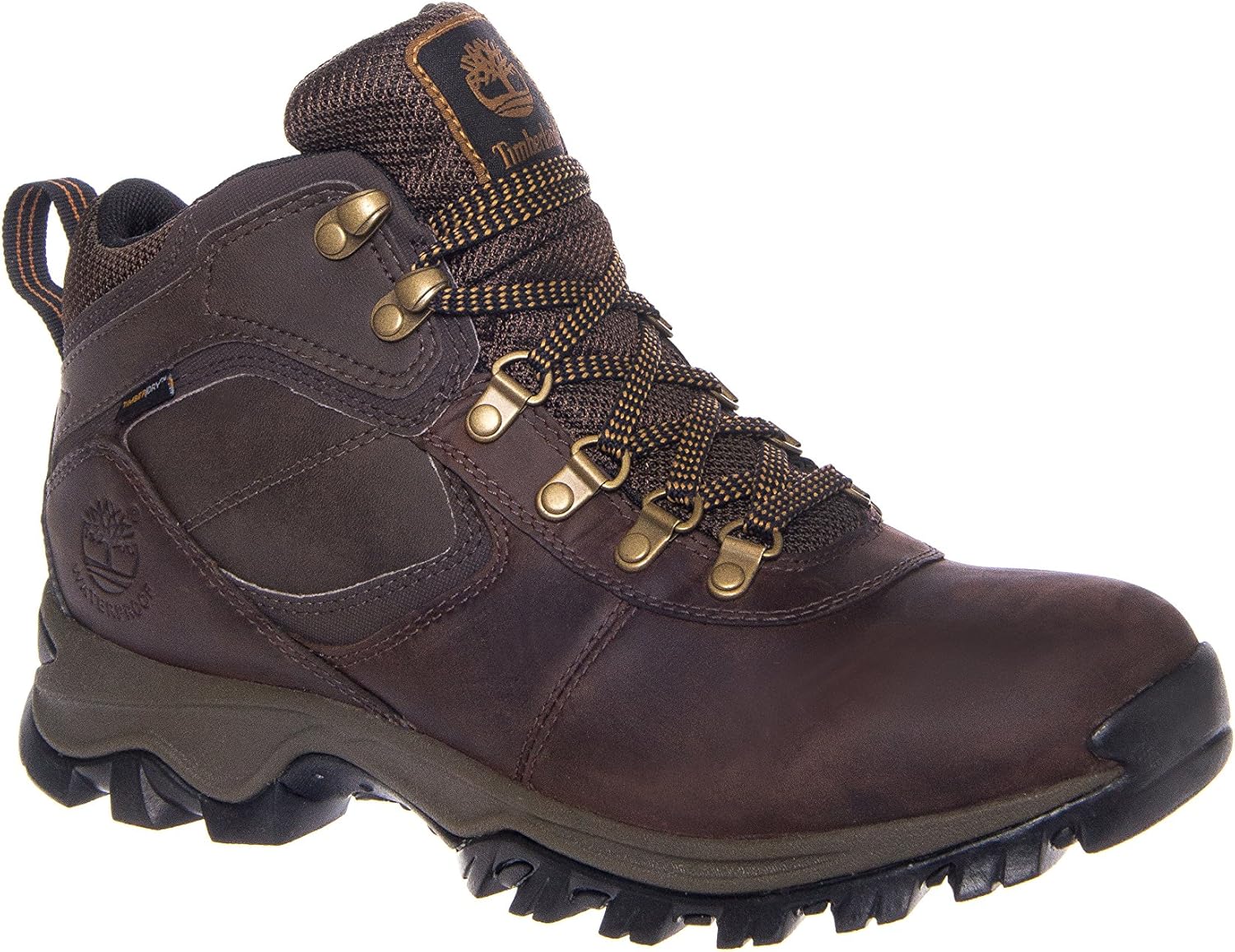
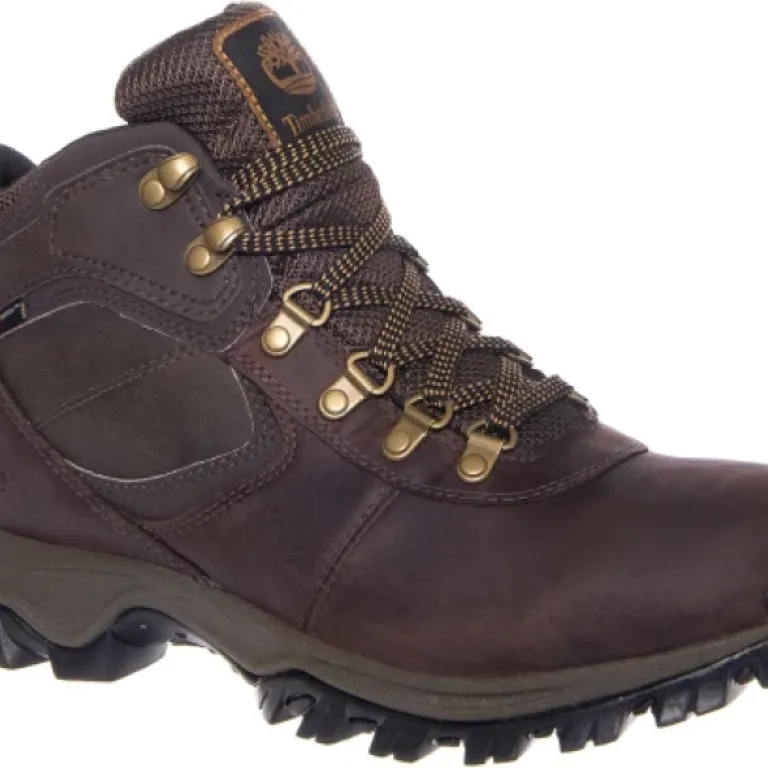
Design-wise, the Mt Maddsen leans toward the classic Timberland style but toned down. You get clean leather panels, metal D-rings and hooks, and a fairly simple silhouette. No flashy logos screaming from every angle, which I appreciate. On my dark brown pair, everything is basically one shade of brown with a matching midsole, so it’s pretty low-key. This makes it easy to wear with jeans and a hoodie without looking like you’re kitted for a thru-hike.
Functionally, the design is quite practical. The ankle height is enough to give some support and keep debris out, but not so high that it feels like a military boot. The gusseted tongue does its job: I walked through wet grass, mud, and shallow streams, and nothing came in from above as long as I stayed below that tongue line. The lacing hardware feels solid; the D-rings and hooks are metal and properly riveted into the leather, so I’m not worried about them ripping out anytime soon.
There are a couple of small design quirks. The top lace hooks are a bit shallow, so if you like to do a surgeon’s knot or wrap the laces aggressively, they don’t always grab as securely as deeper hooks. It still works, you just have to be a bit more deliberate when tightening. Also, the overall profile is slightly bulkier than some modern hikers; not clown shoes, but if you’re used to sleek trail runners, these will feel chunky at first.
From a style point of view, I’d call them “neutral and practical.” They’re not going to win any fashion awards, but they also don’t scream “dad on a guided tour.” If you want a boot that you can wear to the bar after a hike without looking out of place, they do that. If you want something super technical-looking or super trendy, this isn’t it. It’s basically functional design with a classic leather look, which fits the Timberland vibe pretty well.
Comfort: good out of the box, better after a week
Comfort is where these boots do pretty well. Out of the box, they were wearable for a full day without any major hot spots. That’s not something I can say for every leather hiking boot. The combination of the anti-fatigue footbed and the EVA midsole gives you a bit of bounce and takes the edge off hard surfaces. Walking on concrete for hours is still tiring, but my feet didn’t feel destroyed at the end of the day.
There is a short break-in period, mainly around the ankle and the flex point at the front. For the first 2–3 days, I felt a bit of stiffness when going downhill or bending the boot sharply, but no real blisters. After about a week of regular use, the leather softened enough that the boot started to move with my foot instead of against it. Compared to some stiffer leather boots I’ve had, this break-in is mild. If you’re used to sneakers, you’ll notice the difference, but it’s not torture.
On sizing, they run pretty true to size, but width matters. I have a slightly wide forefoot, and the standard width was just on the edge of snug. The wide version is more comfortable for me, especially with thicker hiking socks. The Amazon review from the guy who went from 10 regular to 10 wide matches my experience: if you know you have a wide foot, don’t mess around, just get the wide. The long laces help a lot with dialing in the fit; you can tighten the midfoot and leave the top a bit looser if you want more ankle freedom.
The only comfort downside is heat buildup on warmer days. The waterproof membrane and full leather upper mean these are not the most breathable things. On a hot day hike, my feet were definitely warm by hour three. Not unbearable, but noticeable. If you live in a hot climate or mostly hike in summer, that’s something to think about. For cool to cold weather, though, that same insulation effect is nice—my feet stayed warm in light snow and cold rain without needing super thick socks.
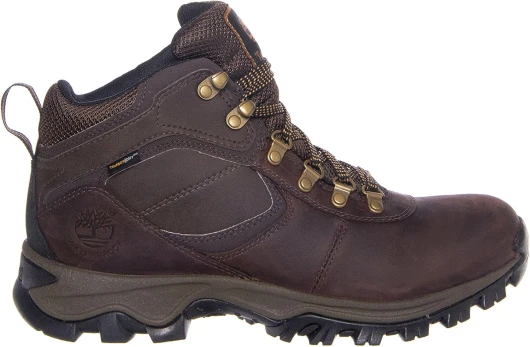
Leather, membrane, and a lot of rubber
The headline material here is the full-grain waterproof leather. It’s not the softest leather I’ve seen, but that’s fine for a hiking boot. It feels sturdy and has held up well to scuffs from rocks and general abuse. After walking through mud and then cleaning them, the leather still looks decent—more worn-in than damaged. I’ve had cheaper boots where the surface coating starts peeling; none of that so far on these.
Inside, you’ve got Timberland’s TimberDry waterproof membrane. That’s basically their version of a breathable waterproof liner (think of it as a Gore-Tex alternative). From my use, it does the waterproof part well: rain, wet grass, shallow streams, puddles—my feet stayed dry. Breathability is “okay but not great.” On cold or mild days, no problem. On warmer days or long walks, my feet got a bit warm and slightly sweaty. That’s pretty standard for leather + membrane boots though; if you want super breathable, you go for non-waterproof mesh, and then you lose the rain protection.
The sole is a 15% recycled rubber outsole with a compression-molded EVA midsole. Translation: the bottom is grippy rubber with some eco points, and the midsole is a foam layer that gives you cushioning. The rubber feels fairly soft and “sticky,” which is good for grip on rock and wet surfaces. The downside of softer rubber is usually faster wear, but after a few months of mixed use, the lugs still look fine—some rounding on the heel, but nothing dramatic.
Inside, the removable anti-fatigue footbed is actually not bad. It’s not as plush as a high-end aftermarket insole, but it has decent arch support and a bit of contouring. If you have tricky feet (flat feet, high arches, etc.), you might still want to swap it for your favorite insole, but for most people it’s perfectly usable. Overall, the materials feel honest for the price: not luxury, not cheap junk, just solid mid-range components that should survive a couple of seasons of real use if you don’t abuse them like crazy.
Durability: holding up well, but not a tank
Durability so far is pretty encouraging. I haven’t had them for years, obviously, but between my usage and what other buyers report (like the park ranger using them daily), they seem to handle real-world abuse decently. The leather shows normal scuffing, but no cracking or peeling. With a quick wipe and occasional leather conditioner, they clean up nicely. I’ve kicked them into rocks and curbs enough times to say they’re not fragile.
The outsole wear is moderate. After a few months of mixed use (pavement + dirt trails), the heel lugs are a bit rounded but nowhere near worn out. The front lugs still have their shape. If you mostly walk on asphalt, you’ll obviously chew through them faster, but that’s true for any softer hiking rubber. For a typical user doing a mix of city and trail, I can easily see these lasting a couple of years, like the park ranger mentioned in his review.
Stitching and hardware look solid. The metal D-rings and hooks are riveted properly and haven’t bent or loosened. No frayed stitching around high-stress areas yet (heel, toe flex, lace area). The gusseted tongue is still fully attached with no gaps. Inside, the lining isn’t showing any immediate signs of wear, no holes in the heel area, which is usually where cheaper boots die first.
That said, I wouldn’t treat these like heavy-duty mountaineering boots. If you’re doing constant volcanic rock, jagged scree, or construction-site-level abuse every day, you’ll probably kill them faster and might want something built like a brick. For regular outdoor work, weekend hikes, and daily wear in bad weather, they’re durable enough. Also worth noting: they’re covered by Timberland’s limited warranty for 12 months if bought from an authorized seller, which at least gives you a bit of backup if something fails early (as long as you keep your proof of purchase).
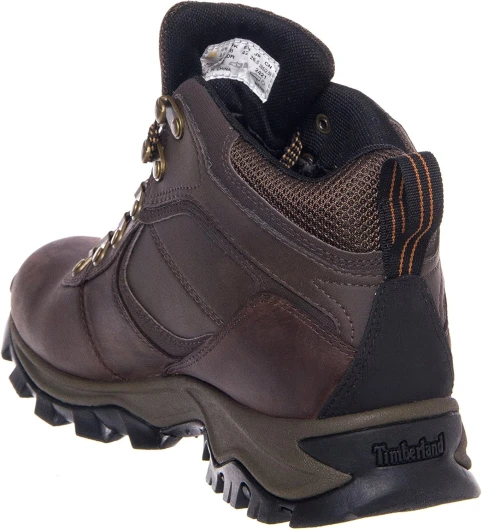
Trail performance: solid grip and reliable waterproofing
On the trail, the Mt Maddsen behaves like a reliable mid-range hiking boot. The grip is genuinely good. The rubber outsole feels sticky on rock, roots, and wet pavement. I’ve walked on muddy slopes, wet wooden bridges, and slick city tiles, and I never had that “oh crap I’m going to slide” feeling. One of the Amazon reviewers mentioned the outsole being quiet on indoor floors; I noticed the same thing. They don’t squeak or clack much, which is a small thing but nice if you’re wearing them into shops or offices.
Waterproofing has been solid so far. I’ve gone through shallow streams (a couple of inches), deep puddles, wet grass that soaks your pants, and a full day in steady rain. No leaks. As always, the limit is the boot height; once water goes above the gusseted tongue line, you’re done. But within normal conditions, the TimberDry membrane does its job. The leather also seems to resist soaking for a while before it starts to darken, which helps keep the boot from feeling like a wet sponge.
In terms of support, the ankle height gives enough stability for uneven terrain and small rocks, but it’s not a super stiff boot. If you’re carrying a huge backpack and tackling very rough trails, you might want something with more structure. For day hikes and general outdoor work, the level of support is fine. The anti-fatigue footbed and EVA midsole help with shock absorption on descents; my knees felt better in these than in some flatter work boots I own.
Where they fall a bit short compared to high-end technical boots is precision and weight. They’re not very nimble—on rocky, technical trails you feel the bulk a bit. Also, if you’re used to trail runners, these will feel heavy. But that’s the trade-off: you gain durability, waterproofing, and protection, and you lose a bit of speed and agility. For the kind of mixed use most people are doing—parks, moderate trails, job sites, city in bad weather—the performance is more than enough.
What you actually get with the Mt Maddsen
On paper, the Mt Maddsen ticks a lot of boxes: full-grain waterproof leather, TimberDry waterproof membrane, anti-fatigue footbed, recycled rubber outsole, and ankle-height shaft. Basically, Timberland is trying to give you a proper waterproof hiker in a cleaner, simpler leather package. It’s not covered in mesh and plastic like some Merrell or Keen models; it looks more like a classic leather boot with hiking hardware (D-rings and hooks).
When you pull them out of the box, they feel like a proper boot: around 3 pounds for the pair, so not feather-light, but not bricks either. The leather is fairly stiff on day one but not rock hard. The laces are long, which I actually like because you can play with different lacing patterns to lock your heel or leave the top a bit looser. The tongue is fully gusseted, which basically means water and crap have a harder time sneaking in from the top, as long as you don’t submerge past the tongue line.
One thing to flag: color expectations. The Amazon reviews are right; what you see on the product page doesn’t always match what shows up. The dark brown I got is a straight dark brown all over, not the two-tone style some photos suggest. It still looks fine, just more plain than the pictures. If you’re really picky about the exact shade, that might annoy you. For me it was more of a shrug moment; I care more about function than slight color variations, but I get why some people are irritated.
In daily life, I’ve used these for: walking to work in rain, a couple of 10–12 km forest hikes, standing around at outdoor events, and general weekend wear. They slot in nicely for that. If your use case is similar—mixed city and outdoors, no heavy mountaineering—then the overall package makes sense. If you’re hunting for a highly technical boot with a bunch of advanced features, this is not that. It’s a straightforward leather hiker with a waterproof membrane and decent comfort tech, nothing more fancy than that.
Pros
- Comfortable out of the box with anti-fatigue footbed and EVA midsole
- Reliable waterproofing thanks to TimberDry membrane and gusseted tongue
- Full-grain leather upper looks decent and holds up well to everyday abuse
Cons
- Product photos and actual color (especially dark brown variants) don’t always match
- Runs warm on hot days due to leather + waterproof membrane construction
Conclusion
Editor's rating
Overall, the Timberland Mt Maddsen is a solid all-rounder if you want one pair of boots that can handle bad weather, light to moderate hiking, and everyday use. The full-grain leather, decent grip, and reliable waterproofing are the main strengths. Comfort is good out of the box and gets better after a short break-in, especially if you choose the right width. They feel supportive enough for long days on your feet without being as stiff and punishing as more technical mountaineering boots.
They’re not perfect. The color on the product page doesn’t always match what you get, they run a bit warm in hot weather, and if you’re used to very light footwear, the weight will be noticeable. They also aren’t the best choice if you’re planning serious multi-day backpacking trips with heavy loads; for that, you’d want something more specialized and robust. But for park rangers, dog walkers, people who work outdoors, or anyone who just wants a dependable waterproof leather boot that doesn’t look out of place in town, they make a lot of sense.
If you value classic leather looks, waterproofing, and decent comfort at a mid-range price, these are worth considering. If your priority is ultra-light performance or super technical features, you should probably look elsewhere. In short: good, honest boots that do what they’re supposed to, with a few small quirks you can live with.