
Summary
Editor's rating
Value: worth it on sale, decent at full price if you add insoles
Design: classic work boot shape with a few annoyances
Comfort: good after break-in, but only with better insoles
Materials: tough leather, solid rubber, and a mediocre insole
Durability: one of the strong points, if you actually use them hard
Performance on the job: solid traction and protection, harsh for impact
What you actually get when you buy these Pit Boss boots
Pros
- Very durable leather and outsole, can handle a year+ of heavy construction use
- Good traction on concrete, dust, and light mud with slip- and oil-resistant rubber
- True-to-size fit with wide option and solid, protective build for jobsite work
Cons
- Harsh heel impact and weak stock insole; almost requires aftermarket insoles for long days
- Long and stiff break-in period, especially around the ankle and top of the foot
- Tongue tends to slide and upper lace hooks can dig into your leg without high socks

Specifications
View full product page →| Brand | Timberland PRO |
A work boot I actually put through real jobsite abuse
I’ve been wearing Timberland PRO Pit Boss boots on and off for a while, and this 6" soft toe version in wide fit is very much in the same family. Think of it as a basic, old-school work boot: thick leather, stiff out of the box, not the cushiest thing on earth, but it feels like something you can actually beat up on site. I didn’t baby them; I used them for long days on concrete, some light framing work, and general construction-type stuff where dust, mud, and ladders are normal.
First impression when you pull them out of the box: they’re heavy and feel solid in the hand. Not crazy heavy like some steel-toe tanks, but definitely not a lightweight hiker. You notice the weight when you walk around the first day. The leather is hard at the start, the sole is stiff, and they don’t feel like sneakers at all. If you’re coming from running shoes, you’re going to need an adjustment period.
Where they start to make sense is after a few wears. The leather slowly loosens up, the ankle area stops digging in, and they begin to feel more like a proper work tool than just new boots. They’re not instantly comfortable like some cushioned composite-toe boots I’ve tried, but they do feel more rugged. I was fine standing and working in them once they were broken in, but walking long distances right away was not fun.
If you want a quick summary: these boots are for someone who cares more about durability, traction, and old-school construction than cloud-like comfort out of the box. They’re not perfect; the stock insole is weak and the break-in is real. But if you’re okay adding your own insoles and taking a week or two to break them in, they’re pretty solid daily work boots that can take a beating.
Value: worth it on sale, decent at full price if you add insoles
In terms of price, these Pit Boss boots usually float in that mid-range work boot bracket. They’re not bargain-bin cheap, but they’re also not in the high-end $200+ territory. A lot of people, including one of the detailed reviewers, grabbed them on sale for just over $90, and at that price they’re very good value. For around a hundred bucks, getting a year or more of heavy construction use is fair. Even at a higher regular price, they’re still reasonable, just not a steal.
The catch is that to really get the most out of them, you should factor in the cost of a good pair of insoles. The stock insole is passable if you’re only wearing them for short shifts or light duty, but if you’re doing 8–10+ hour days on hard surfaces, especially with high arches, you’ll almost certainly want an upgrade. So add another $20–$40 for decent aftermarket insoles. Once you do that, you’ve basically turned them into a pretty solid, long-lasting work boot setup.
Compared to similar boots from Wolverine, Caterpillar, or even other Timberland PRO models, the Pit Boss sits in a kind of middle ground: more durable and rugged than the cheaper stuff, but not as cushy as more modern, sneaker-style work boots. If you care mainly about comfort and cushioning, there are better options in the same price range. If you care about leather thickness, outsole toughness, and proven jobsite wear, then the Pit Boss gives you good value.
So from a straight value-for-money angle, I’d say: good buy on sale, fair buy at full price, especially if you’re okay spending a bit extra on insoles. It’s not the best boot in every category, but it’s reliable, does the job, and doesn’t feel overpriced for what you actually get out of it over a year or so of real work.
Design: classic work boot shape with a few annoyances
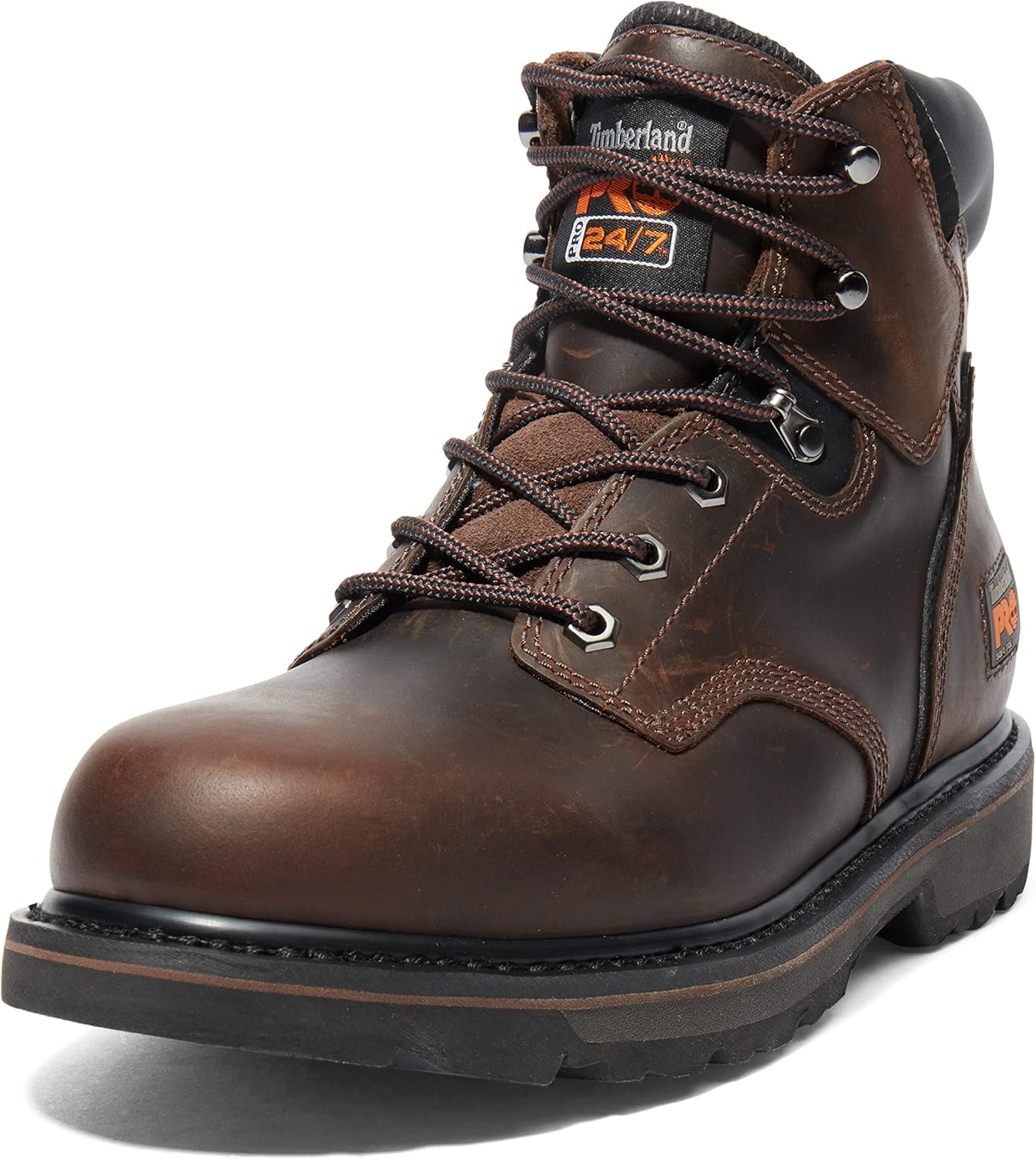
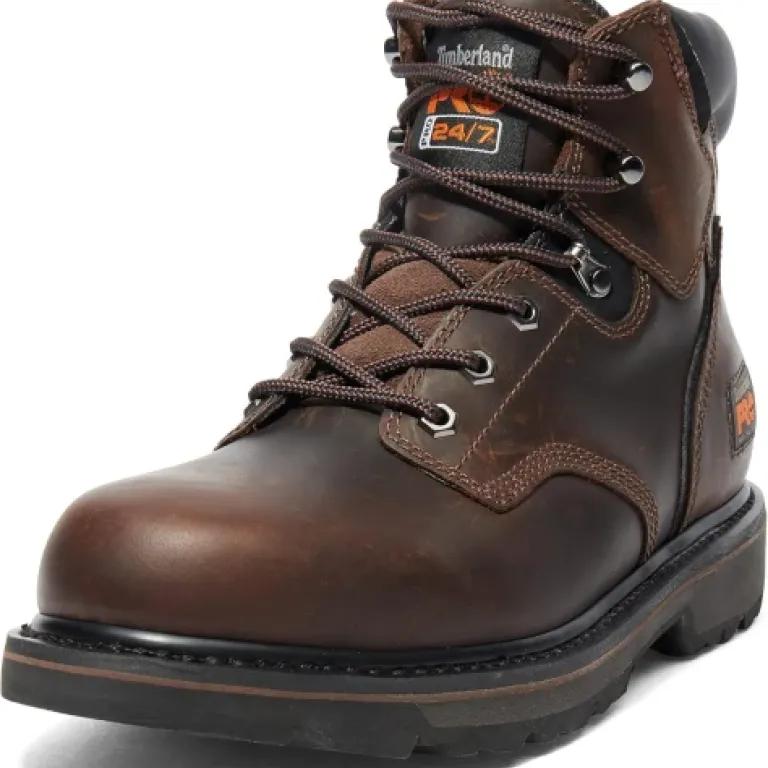
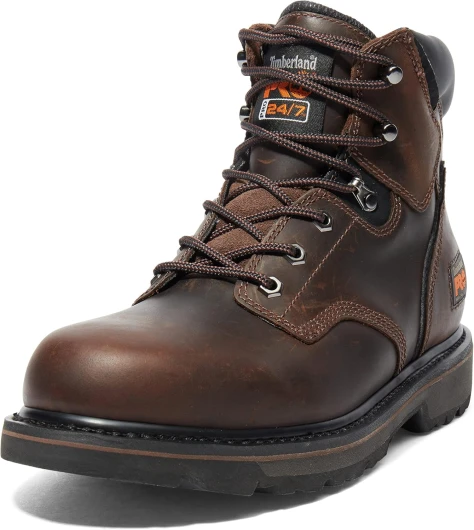
The design is pretty simple: 6-inch ankle height, padded collar, standard tongue, and a lace system with eyelets on the lower part and speed hooks on top. The look is classic Timberland PRO—nothing flashy, just brown leather and black sole. I like that it doesn’t scream “safety boot,” but at the same time, you’re not fooling anyone; this is clearly work gear. The soft toe means no bulky steel cap up front, so the toe box looks a bit cleaner and feels more natural for walking and kneeling.
Functionally, a couple of design details stand out. The lace hardware feels tough and well-mounted, and several users mentioned the eyelets and hooks holding up well even with daily construction use. That’s good because on some cheaper boots those are the first things to snap or bend. The tongue, though, is a bit of a weak point. It tends to slide off to the side over the day, which can expose the upper lace hooks and let them dig into your leg if your socks are too low. With proper crew or higher socks, it’s not a huge deal, but it’s one of those small annoyances you notice after a long day.
The overall shape is fairly wide and blocky, especially in the wide fit. That’s comfortable for people with broad feet or who like thick work socks, but it’s not a precise, locked-in feel like a hiking boot. It’s more like a solid work shell around your foot. The heel has a defined cup, and under that you’ve got a hard plastic piece under the insole, which you really feel when landing from jumps or steps off a ladder. One Amazon reviewer mentioned almost feeling like their heels got smashed jumping down a few feet, and I’d agree the heel design is on the unforgiving side.
In practice, I’d describe the design as: built to last, not built to feel plush. The stitching pattern is fairly exposed and will eventually fray at the welt after heavy use, but it seems to hang on for a long time before actually failing. The boot looks rougher and more beat-up over time, but according to that 17‑month update review, it stays functional much longer than it looks good. If you care about looks aging nicely, you’ll need to clean and grease the leather more often than most of us actually do.
Comfort: good after break-in, but only with better insoles
Comfort is where this boot is a bit of a mixed bag. Out of the box, it’s stiff and not very forgiving. The leather around the ankle and across the top of the foot is hard, and you definitely feel the edges when you walk and bend. For the first few days, I wore them just a couple of hours at a time, alternating with my older broken-in boots. That matched what one Amazon reviewer did: short sessions with days off in between to let the leather start to loosen up. If you try to go straight to 10–12 hour shifts on day one, you’re going to hate life.
The Timberland PRO 24/7 Comfort System is mainly about the suspension and arch support built into the midsole and footbed structure. On paper, that sounds like a lot. In reality, the comfort system is only as good as the insole on top of it, and the stock OrthoLite insole is just okay. It’s fine for standing and light walking, but if you’re on concrete all day or moving around a lot, you start to feel the hardness underneath. The big issue is the heel: that hard plastic piece under the insole makes landings and hard steps feel rough. Jumping off a 3-foot ladder with tools in hand, I felt a sharp jolt in my heels, similar to what the Amazon reviewer described.
Once I swapped in my own aftermarket insoles with better heel cushioning and arch support, the whole boot changed. With proper inserts, I could easily go 8–10 hours without thinking about my feet too much, aside from normal end-of-day tiredness. So I’d say: these boots are comfortable only if you’re willing to upgrade the insoles. If you rely on the factory insole and have high arches or sensitive heels, you’ll probably struggle on long days.
Fit-wise, the 11 Wide felt true to size. There’s enough toe room to wiggle, especially with work socks, but it doesn’t feel like your foot is sliding around. The wide width is nice if your feet swell during the day. Just make sure your socks go up at least to the top of the boot, because of that tongue-sliding issue and the upper eyelets rubbing your leg. Overall, comfort is decent once broken in and properly set up, but out of the box with stock insoles, it’s pretty average and even a bit harsh in the heel.
Materials: tough leather, solid rubber, and a mediocre insole
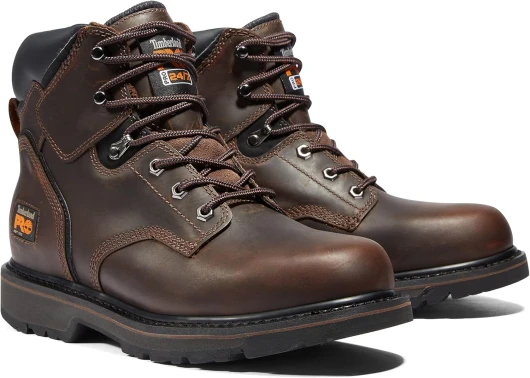
The upper is made of premium nubuck leather, and you can feel that it’s thick and stiff. This is not soft, supple leather that molds instantly to your foot. It feels more like armor at first. That’s good for protection and durability, but it’s the main reason the break-in period is longer. The upside is that this leather can take cuts and scrapes without tearing through. One user even mentioned hitting it with a box cutter and not cutting all the way through. So from a work perspective, the material choice makes sense.
Inside, the lining uses Timberland’s ReBOTL fabric, which is made with at least 50% recycled plastic. Environment stuff aside, what matters on the job is that it’s breathable and doesn’t feel like a plastic bag around your foot. Compared to fully waterproof boots with liners, these breathe better. The long Amazon review backs that up: they switched from waterproof Wolverines because their feet were sweating too much, and in these Pit Boss boots their feet stayed drier unless they wore super thick wool socks. So the lining and the non-waterproof build do help with ventilation.
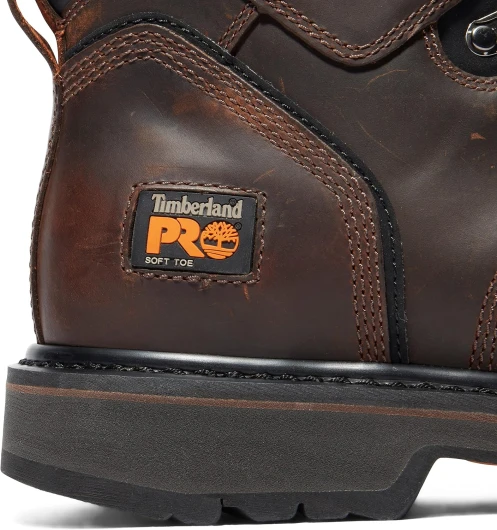
The outsole is Timberland PRO rubber with heat, oil, slip, and abrasion resistance. In practice, it grips well on dusty concrete and in clay mud stuck to the sole. The rubber compound feels firm but not rock-hard. Over time, it does show checking and small cracks, especially if you beat them up daily and don’t clean them. That same reviewer got about 15–17 months of heavy construction use before the sole and welt cracks finally started letting water in. For a sub-$150 boot (often closer to ~$100 on sale), that’s pretty reasonable.
The weak link in the materials is the stock OrthoLite insole and the hard plastic heel area under it. The OrthoLite itself is fine for light use, but for real all-day work it’s just not enough cushioning, especially if you have high arches or sensitive heels. Under the insole, the heel zone has a stiff plastic layer that transmits impact straight up into your foot. You really feel that if you come down off a ladder or jump down carrying tools. With aftermarket insoles, that problem mostly goes away, but it’s annoying that you pretty much have to upgrade the insoles to make full use of the boot’s otherwise solid materials.
Durability: one of the strong points, if you actually use them hard
This is where the Pit Boss shines. If you’re the type who destroys cheap boots in 6–8 months, these will probably last you longer, especially if you take basic care of the leather. The long Amazon review is basically a durability logbook: 11‑month, 13‑month, 15‑month, and 17‑month updates. The guy was using them 6–6.5 days a week in a very dusty, muddy construction environment, and they still hung on past a year before really starting to fall apart.
Realistically, here’s what happens over time based on that and my own experience:
- After ~10 months: laces go first. They collect dirt and eventually fray and snap.
- Stitching on the welt starts to chafe and break in a few spots, but the boot doesn’t immediately fail.
- Leather gets dry, scuffed, and can collapse in the toe area if you kick things a lot.
- By 13–15 months: tread mostly worn, more cracks in the rubber welt, but still usable, even in shallow water and mud.
- By 17 months of hard use: cushion basically dead, multiple cracks allow water in, leather looks shot, and it’s finally time to retire them.
If you’re working full-time in construction, getting roughly a year to a year and a half out of a sub-$150 boot is pretty good. If you rotate them with another pair or only wear them part-time, they’ll obviously last longer. The upper leather itself is tough; it’s the stitching and the rubber welt that give up first, which is normal for this kind of boot.
I will say, if you never clean them and never condition the leather, they’ll look wrecked much sooner. A quick scrub with saddle soap and some boot grease every few months goes a long way. The Amazon reviewer only did that occasionally and still got decent life out of them, so if you’re even a bit more diligent, you’ll probably stretch them further. Overall, durability is one of the main reasons to buy the Pit Boss, as long as you accept that they’ll end up looking rough long before they actually fail.
Performance on the job: solid traction and protection, harsh for impact
On the job, the Pit Boss does what you expect from a traditional work boot. The traction is good on concrete, in dust, and in light mud. The rubber sole grabs better than many cheap boots I’ve tried, especially when there’s clay stuck to the bottom. It’s not a miracle on slick steel or oily metal, but it’s clearly built with slip resistance in mind. The tread pattern isn’t super aggressive like a hiking boot, but it’s deep enough to handle typical jobsite mess without turning your foot into a ski.
Protection-wise, you get electrical hazard (EH) protection, a tough leather upper, and solid sole construction. Even as the boots aged in that long-term Amazon review, they stayed mostly water-resistant up to around 13–15 months of heavy use, only starting to leak when the sole and welt stitching had cracked badly. For a non-waterproof, non-membrane boot, that’s pretty decent. The leather also shrugs off scrapes and minor cuts. The user who worked in a very dusty, muddy construction environment mentioned multiple cuts and worn stitching, but still no actual water leaks until much later in the boot’s life.
Where performance drops is impact absorption and long-distance walking. The heel design just doesn’t soak up shocks well with the stock setup. Standing? Fine. Normal walking? Acceptable. Repeated jumping off equipment, ladders, or trucks? That’s where your heels will complain. Aftermarket insoles fix a lot of that, but it’s still not at the level of some more cushioned work boots from brands like Keen or some of the more modern Timberland PRO lines with thicker midsoles.
Over time, the boots hold up structurally but look progressively more beat up. The 17‑month update from the Amazon review paints a clear picture: tread mostly worn, stitching on the welt heavily damaged, leather dried and cracked looking, yet the boots were still usable right up until the end. For someone working 6–6.5 days per week in construction, that’s not bad at all. So performance summary: very good durability and traction for the price, average comfort unless you upgrade insoles, and impact absorption is the main weak point.
What you actually get when you buy these Pit Boss boots
Out of the box, the Timberland PRO Pit Boss 6" Soft Toe looks exactly like what it is: a no-nonsense work boot. Plain brown nubuck leather, standard 6-inch height, and a chunky black rubber sole. No flashy logos or weird patterns. If you’ve worn older Pit Boss models, this 2024 version will feel very familiar. It’s the same general shape and attitude: sturdy, a bit blocky, definitely more functional than stylish.
The pair I handled in 11 Wide matches what you’d expect from a wide work boot. There’s more room in the forefoot, and that’s good if your feet spread out during the day or you wear thicker socks. It doesn’t feel sloppy, but it’s not a snug, athletic fit either. This is a boot you lace up tight to get it to hug your foot properly. The dual-purpose hardware helps with that—speed hooks up top make it easier to crank them down or loosen them quickly at the end of the day.
Timberland pitches a bunch of features: electrical hazard protection, oil/heat/slip-resistant rubber outsole, OrthoLite insole, and their 24/7 Comfort System. On paper, it sounds like a modern comfort-focused boot, but in practice it’s still closer to an old-school leather work boot with a few comfort upgrades. If you read the long Amazon review, that lines up: good traction, good protection, but the stock insole and heel setup are on the harsh side, especially if you jump off ladders or walk on hard concrete all day.
So in terms of presentation, you’re getting a straightforward, tough-looking work boot that’s built for actual jobsite use, not for wearing with jeans at the mall. It looks like it belongs in construction, warehouses, or trades work. If you want something sleek or stylish, this isn’t it. If you want something that looks like it’s ready to get dusty and beat up, it fits the role.
Pros
- Very durable leather and outsole, can handle a year+ of heavy construction use
- Good traction on concrete, dust, and light mud with slip- and oil-resistant rubber
- True-to-size fit with wide option and solid, protective build for jobsite work
Cons
- Harsh heel impact and weak stock insole; almost requires aftermarket insoles for long days
- Long and stiff break-in period, especially around the ankle and top of the foot
- Tongue tends to slide and upper lace hooks can dig into your leg without high socks
Conclusion
Editor's rating
The Timberland PRO Pit Boss 6" Soft Toe is a classic, no-frills work boot that focuses more on toughness than comfort. The leather is thick, the outsole grips well, and the overall build can handle daily abuse on construction sites, in warehouses, or for general trade work. If you look at that long 17‑month user review, the story is consistent: the boots look wrecked long before they actually die, and they keep going far past the point most cheaper boots would have blown out. Durability and traction are the main selling points here.
The downsides are clear too. Out of the box, they’re stiff, the break-in period is real, and the stock insole is underwhelming. The heel area, with that hard plastic under the insole, is especially harsh if you jump off ladders or spend the whole day on concrete. With aftermarket insoles, the comfort jumps from “meh” to “pretty solid,” but that’s extra money and effort. Also, the tongue can slide and the upper hooks can rub if your socks are too short, which is a small but annoying detail.
I’d recommend these boots to people who: work in construction or similar trades, want a tough leather boot that can last a year or more of hard use, don’t mind a break-in period, and are willing to drop a bit more on good insoles. If you’re looking for something super cushy, lightweight, or stylish, or if you have very sensitive feet and hate stiff boots, you should probably look at more comfort-focused models instead. For what they are—rugged, reliable work boots at a mid-range price—they get the job done and offer good value, especially when you catch them on sale.