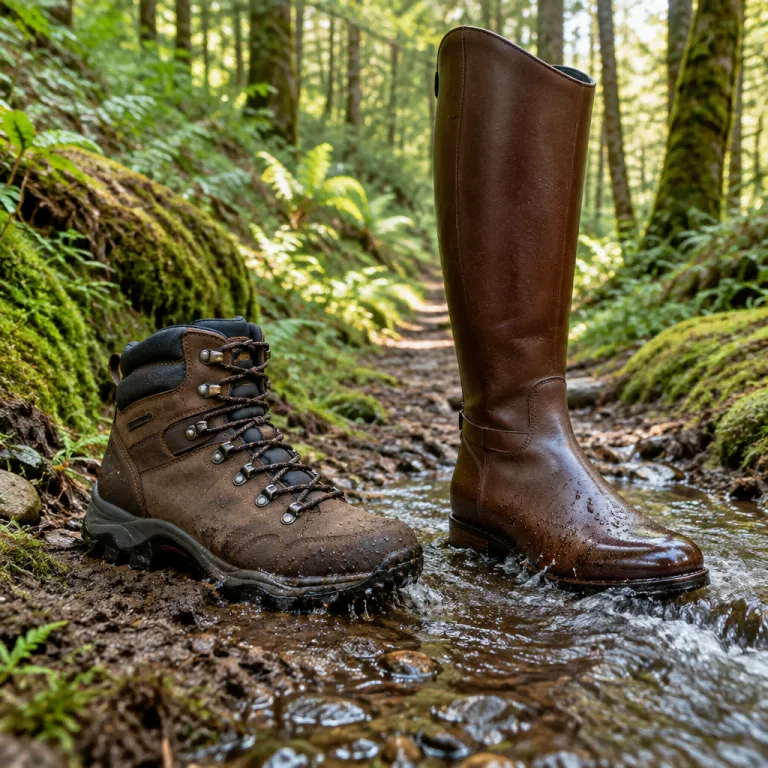
From equestrian men’s riding boots to technical mountain footwear
Experienced hikers rarely think about equestrian men’s riding boots when choosing gear. Yet the way a riding boot stabilises the ankle and lower leg mirrors what mountaineers need on steep, broken trails. This shared logic between boots for horse riding and boots for alpine approaches reveals how design lessons travel across disciplines.
Traditional tall boots for equestrian riding prioritise a close fit, precise control and predictable flex at the ankle, and these same priorities matter when edging on wet rock or traversing scree. When you compare a structured tall riding shaft with a modern high cut hiking boot, you see similar goals in how both products manage torsion, distribute pressure and protect the Achilles tendon. For outdoor enthusiasts who also ride, understanding why a tall boot works in the saddle can sharpen their eye when judging cuff height, lacing systems and heel counters on technical hiking models.
Many men who split time between horse riding and long distance trekking notice that their favourite equestrian riding boots and their preferred mountain boots share a familiar internal volume and heel lock. That familiarity is not accidental, because both categories are engineered so the boot regular profile keeps the foot centred over a narrow platform, whether that platform is a stirrup or a rocky ridge. Thinking in this cross discipline way helps serious hikers evaluate any new boot as a complete product rather than as a collection of isolated features.
Fit, shaft height and support lessons from tall boots
Riders have long understood that tall boots shape how power transfers from hip to heel. The same principle applies when a hiker leans into a steep ascent with a heavy pack and needs the shaft of the boot to resist collapse. Studying how equestrian men’s riding boots manage this relationship between leg and foot can refine expectations for mountain footwear.
Classic field boots for jumping use a softer instep and a slightly more flexible ankle than stiff dress boots, and that contrast mirrors the difference between agile approach boots and rigid high altitude models. When you examine field boots and tall boots side by side, you see how subtle changes in leather thickness, lining and shaft taper alter both comfort and precision. Hikers choosing between supportive three season boots and more forgiving trail shoes can borrow this same analytical lens, especially when deciding how tall a cuff they truly need for mixed terrain.
Many boots men wear in the arena feature a defined heel and a snug calf, while some hiking designs now echo that profile to improve edging and downhill braking. A tall riding shaft that feels perfect for an adult rider in the stirrup may feel restrictive on a long descent, so translating equestrian fit to mountain use requires careful testing. For nuanced comparisons of structured cuffs and underfoot stability, resources that contrast classic and original work oriented boots, such as analyses of Blundstone models for serious hikers and mountaineers, can complement lessons learned from the equestrian world.
Price, value and the real cost of performance footwear
Riders and mountaineers both face the same dilemma when they look at the price of premium boots. A high regular price for a technical boot or for elegant dress boots can feel daunting, yet the long term cost per kilometre often undercuts cheaper options that fail early. Evaluating equestrian men’s riding boots and serious hiking models through this shared value lens leads to better investment decisions.
In equestrian retail, the difference between regular price and a temporary sale price on a flagship paddock boot or on refined field boots usually reflects seasonal stock management rather than any change in the underlying product quality. The same pattern appears in specialist outdoor shops, where a price product label may drop when a new colour men option arrives, even though the construction and midsole remain identical. For both riders and hikers, the key is to judge how the boot is built, how it can be resoled and how its materials age under mud, sweat and repeated flex.
Many boots regular buyers track how long a pair lasts in hours of horse riding or in days on trail, then compare that lifespan to the original price and any later sale they might have missed. When a boot has been sold for several seasons and still earns strong word of mouth, that durability record often matters more than a short term discount. Hikers who also work in demanding environments can extend this thinking to hybrid models evaluated as field ready performance boots for trail and farm work, where value is measured in both safety and fatigue reduction.
From paddock boots to half chaps: modular systems and trail layering
Equestrian culture has long embraced modular lower leg systems built around paddock boots and half chaps. A short paddock boot paired with snug half chaps can mimic the feel of tall boots while offering more flexibility and easier replacement of worn components. This layered approach offers useful parallels for hikers who mix ankle height boots with gaiters and removable liners.
In the stable, riders might rotate between a zip paddock design for quick chores and a lace up paddock boot for longer schooling sessions, choosing whichever product best matches the task and weather. The same logic applies when a mountaineer alternates between light boots for fast approaches and more supportive models for glacier travel, sometimes adding insulated over boots as conditions change. Thinking in terms of systems rather than single items encourages both riders and hikers to plan for how socks, gaiters and aftermarket insoles interact with the base boot.
Many equestrian riding enthusiasts appreciate how a zip closure on paddock boots speeds transitions between the yard and the saddle, and hikers can borrow that appreciation when judging side zip mountain boots designed for rapid on off in cold bivouacs. A boot regular user who understands how half chaps change calf pressure and heat retention will also grasp how tall gaiters affect shin comfort on long snow slogs. For those exploring comfort upgrades, research on sheepskin inserts for all season boot comfort aligns closely with the way many riders fine tune fit inside both paddock and tall riding footwear.
Materials, closures and the role of brands like Ariat
Modern equestrian men’s riding boots and contemporary hiking boots share a reliance on advanced leathers, synthetics and closure systems. Brands such as Ariat helped normalise the use of athletic midsoles and moisture wicking linings in the horse world, and those same technologies now appear in many mountain boots. This cross pollination means that riders who already trust a specific equestrian product line often look for similar construction cues when buying trail footwear.
Within equestrian ranges, Ariat ladies tall boots and Ariat men’s paddock boots often combine full grain leather uppers with shock absorbing composite shanks, and that recipe closely resembles many premium trekking models. When boots men compare these designs, they notice how a carefully placed zip can ease entry without compromising lateral stiffness, especially on tall riding shafts that must remain supportive. Hikers evaluating side zip designs can borrow this scrutiny, checking whether the zip track is backed by a gusset and whether stitching is protected from abrasion.
In both arenas, color men options have expanded beyond traditional black and brown, yet serious users still prioritise stitching quality, welt construction and outsole compounds over fashion. A boot that has sold consistently to demanding adult riders or to professional guides sends a strong signal about real world reliability. Whether the label reads Ariat, another equestrian specialist or a mountaineering brand, the same questions about flex pattern, rand protection and resoling potential should guide the purchase.
Gender, style and crossover use between arena and alpine trail
Gendered marketing around equestrian men’s riding boots and ladies tall boots often obscures the underlying technical similarities. In practice, many women ride in models labelled for men and many men hike in lasts originally designed for ladies, simply because the fit suits their foot shape. Experienced users focus less on the box label and more on heel hold, forefoot width and instep volume.
Dress boots for the show ring, field boots for jumping and rugged paddock boots for yard work each express a different balance between elegance, flex and protection, and hikers face parallel choices between sleek approach shoes, mid cut trail boots and rigid alpine models. Riders who understand why a particular riding boot feels secure in the stirrup can often translate that insight into why a certain hiking boot edges confidently on slab or grips well in loose scree. The key is to map familiar sensations, such as how the shaft wraps the calf or how the heel seats, onto new environments.
Some equestrian riding enthusiasts already use retired tall boots for occasional countryside walks, while others bring robust paddock boots on gentle hill days, but serious mountaineers should still rely on purpose built mountain footwear for technical routes. Cross use works best when the terrain is forgiving and the load is light, because the priorities of horse riding and steep alpine travel diverge sharply once exposure and weather risks increase. Treating each boot as a specialised tool, while still learning from its design, allows both riders and hikers to build a coherent, high performing footwear quiver.
Key statistics on riding and hiking footwear performance
- Market research from the European Outdoor Group reports that hiking boots and shoes account for roughly one third of total outdoor footwear sales in Europe, highlighting how central technical boots are to serious trail use.
- Injury surveillance studies from alpine clubs in Germany and Austria indicate that inadequate ankle support and poor tread account for a significant share of non fatal hiking accidents on steep terrain, underscoring the value of well designed high cut boots.
- Surveys of equestrian participants published by national riding federations show that many regular riders own at least two pairs of boots, typically one pair of tall boots and one pair of paddock boots, mirroring the multi boot strategies used by experienced hikers.
- Laboratory tests on outsole compounds conducted by independent testing institutes have measured up to a 30 percent difference in wet rock traction between premium rubber formulations and basic compounds, a gap that affects both horse riding yard boots and technical mountaineering models.
- Lifecycle assessments of leather and synthetic footwear suggest that extending a boot’s usable life by just one year through resoling or careful maintenance can reduce its annualised environmental impact by double digit percentages, which strengthens the case for investing in durable, repairable designs.
FAQ about equestrian men’s riding boots and hiking footwear
Can equestrian men’s riding boots be used safely for hiking
Equestrian men’s riding boots can handle short, gentle walks on firm ground, but they are not engineered for steep, rocky or heavily loaded hiking. Their smooth soles and stirrup oriented heels reduce traction and stability on loose or wet terrain. For serious hiking or mountaineering, purpose built boots with aggressive tread and rock protection are the safer choice.
What fit similarities exist between riding boots and hiking boots
Both riding boots and hiking boots aim for secure heel hold, controlled ankle flex and enough toe room to prevent bruising. A well fitted tall riding boot and a high cut trekking boot will both wrap the lower leg closely without pinching the calf. The main difference lies in how the sole flexes and how the boot interfaces with either a stirrup or uneven ground.
How should I compare the price of equestrian boots and hiking boots
The most reliable way to compare price is to calculate cost per year or per hour of use rather than focusing only on the initial regular price. Durable boots that can be resoled and maintain support over many seasons often prove cheaper than budget models that fail early. Riders and hikers should also factor in comfort, injury prevention and performance when judging overall value.
Are paddock boots suitable for mixed stable and trail use
Paddock boots are designed primarily for yard work and riding, with soles optimised for stable surfaces and stirrups. They can cope with light countryside walking, but their tread and cushioning usually fall short of what is needed for long, uneven mountain trails. If you plan to split time between stable chores and serious hiking, owning separate specialist boots is the most effective approach.
What design lessons from equestrian footwear help when choosing hiking boots
Equestrian footwear teaches the value of consistent ankle support, precise fit and materials that resist sweat, mud and repeated flex. Riders learn to judge shaft height, closure placement and leather quality, and these same skills transfer directly to assessing high cut hiking boots. Paying attention to how a boot supports the leg under load, rather than just how it looks, leads to better choices in both arenas.