
Summary
Editor's rating
Value: fair price for what you get, if breathability is your priority
Design: wide-friendly shape with that classic KEEN toe bumper
Comfort: all-day wearable, especially if you have slightly wide feet
Materials: leather plus mesh, built for airflow not full waterproofing
Durability: built to last, but mesh means they’re not indestructible
Trail performance: stable, good traction, but know the limits in wet conditions
What these KEEN Voyageur boots actually are
Pros
- Very comfortable for all-day wear, with good arch support and roomy toe box
- Breathable design keeps feet from overheating compared to waterproof boots
- Stable and grippy on typical hiking terrain thanks to shank and 4 mm lugs
Cons
- Not fully waterproof; mesh will eventually let water in during heavy rain or deeper puddles
- Mesh panels are a potential long-term weak point compared to full leather
- Fit may feel too roomy if you have very narrow feet

Specifications
View full product page →| Brand | KEEN |
Breathable hiking boots that actually let your feet breathe
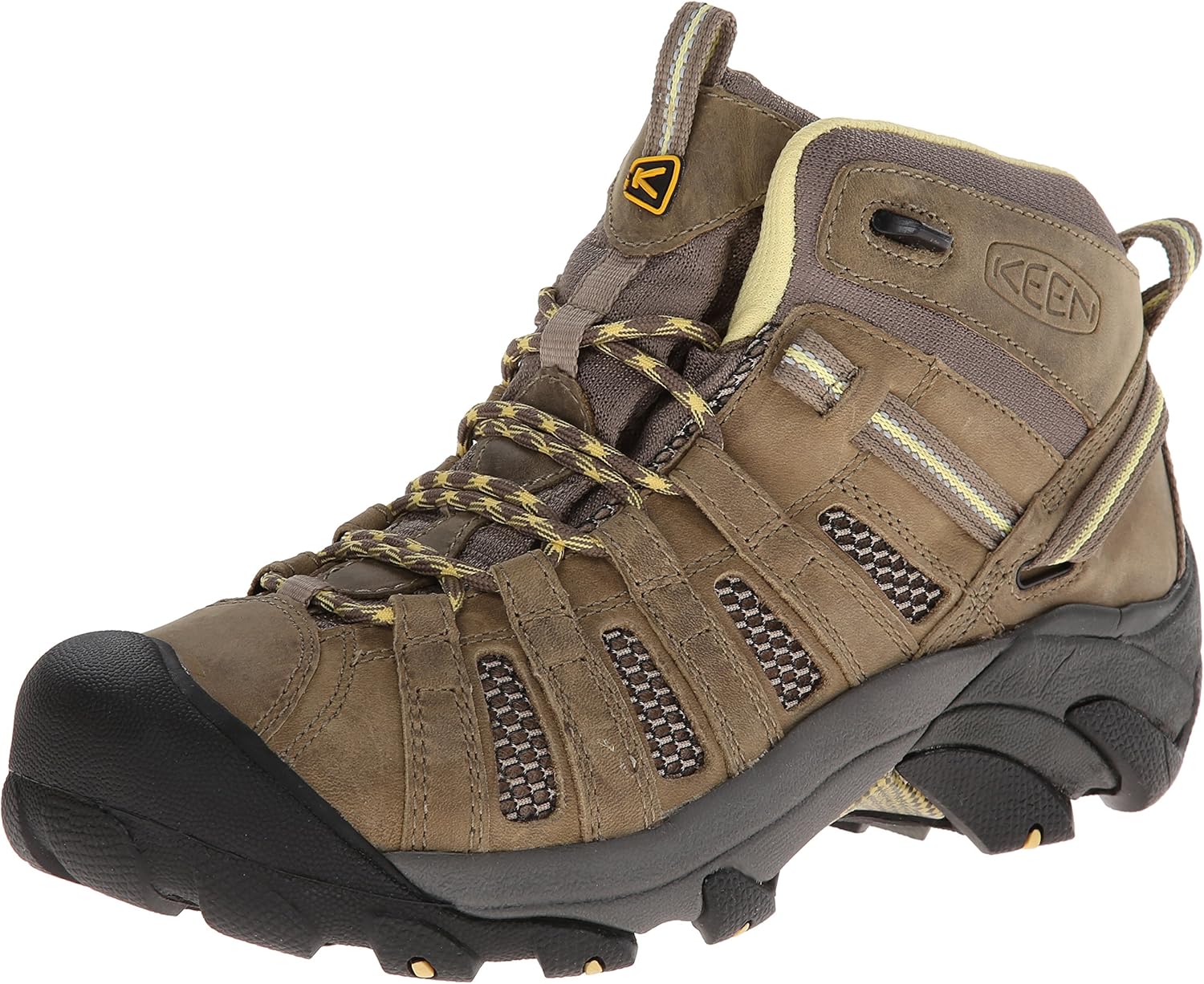
I picked up the KEEN Women's Voyageur Mid Height Breathable Hiking Boots in Brindle/Custard, size 8.5, because I was sick of my waterproof boots turning my feet into little saunas. Most of my hikes are in dry-to-mildly-wet conditions, and I’d rather deal with the occasional damp sock than walk all day with hot, steamy feet. These are basically the vented cousin of the classic KEEN Targhee, and that’s exactly what I was looking for.
Over a few weeks, I used them on mixed terrain: hard-packed forest trails, rocky paths with loose gravel, some muddy sections after rain, and a couple of urban walks just to see how they felt on pavement. I didn’t baby them at all. Straight out of the box, I threw them on for a 6-mile hike with a light daypack, which is usually enough to expose any hot spots or bad design choices pretty fast.
The short version: they’re solid, breathable hiking boots with good support, especially if you have slightly wide feet or need a bit more room in the toe box. They’re not magic, they’re not perfect, but they get the job done and I could wear them all day without counting the minutes until I could pull them off. That’s already a win in my book.
If you’re expecting them to behave like fully waterproof boots, you’ll be disappointed. They’re water resistant at best. But if your priority is comfort, decent support, and not having swamp feet on every hike, they’re worth a serious look. Just know what you’re buying: vented hiking boots first, water barrier second.
Value: fair price for what you get, if breathability is your priority
On the value side, these sit in that mid-range hiking boot price bracket—not bargain-bin cheap, not premium top-shelf. For that money, you’re getting good comfort, solid support, and real-world versatility. If you specifically want non-waterproof boots with solid traction and a roomy fit, they make sense. You’re paying for a boot that you can wear all day on mixed terrain without thinking about your feet too much, and for me, that’s worth more than a bunch of flashy features I’ll never use.
Compared to some waterproof boots at similar prices, you’re basically trading the membrane for better airflow. If you live or hike mostly in dry or warm conditions, that trade is worth it. I’ve owned waterproof boots that technically kept water out but cooked my feet; those ended up sitting in the closet. These KEEN Voyageurs actually get used, which, to me, is the real test of value. Gear that stays on the shelf is wasted money, no matter how “advanced” it is.
There are cheaper hiking shoes and boots out there, but when I’ve gone that route, I usually end up with something that either falls apart faster, has poor grip, or kills my feet after a few hours. Here, you’re paying a bit more than entry-level but getting better support (shank, heel capture), a proven fit for wider feet, and a removable insole that works with orthotics. That lines up with people using them for years or rebuying multiple pairs. It’s not a crazy bargain, but it feels fair for the performance and comfort.
If you need full waterproofing or do a lot of snow/rain hiking, the value drops, because you’ll be fighting the boot’s main design choice. But if you’re that person who always searches "non-waterproof hiking boots" and hates sweaty feet, these are a pretty solid deal. They’re not flashy, they just get the job done over and over, which is kind of the whole point.
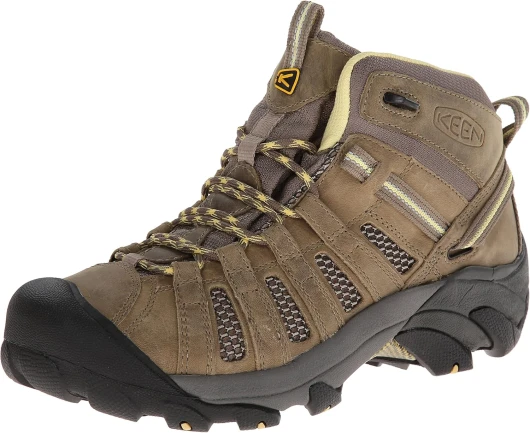
Design: wide-friendly shape with that classic KEEN toe bumper
The first thing you notice with these is the KEEN shape: fairly wide forefoot, rounded toe, and that trademark rubber bumper that wraps over the front. If you have narrow, low-volume feet, that might feel like too much space. But if you have slightly wide feet or just hate cramped toes, the design is pretty forgiving. In my 8.5, my toes had room to move without sliding around, which is exactly what I want for long days.
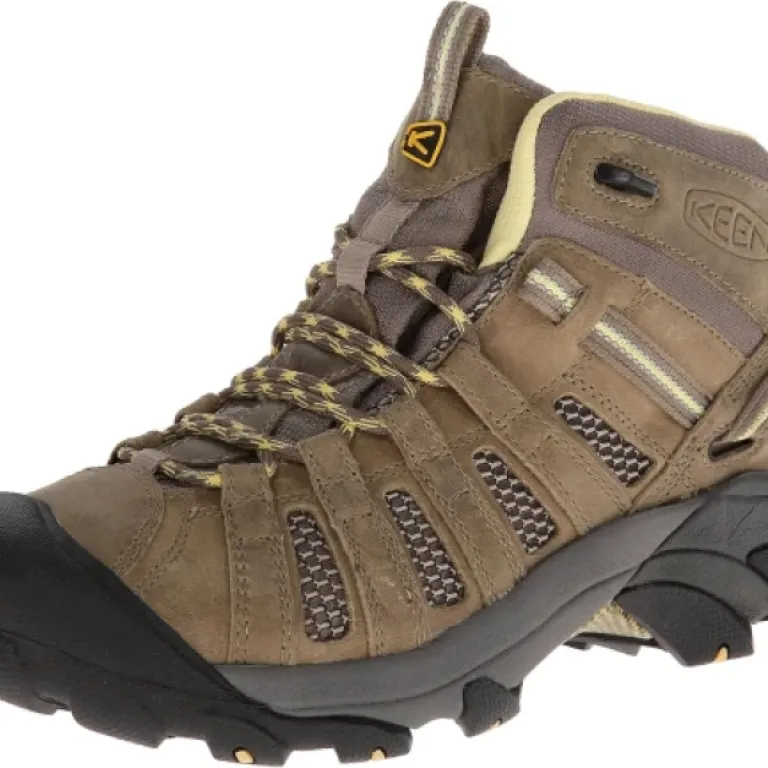
Visually, the Brindle/Custard color sits in the “practical but not ugly” zone. Brown leather with mesh inserts, some lighter accents, nothing flashy. You can walk into a café after a hike and not feel like you’re wearing neon ski boots. The mesh panels are obvious, though; you can tell right away these are made for airflow, not deep snow. The ankle cut is mid-height and there’s a slightly odd dip at the back of the collar, which some reviewers mentioned. On foot, I barely noticed it; it doesn’t rub my Achilles or anything.
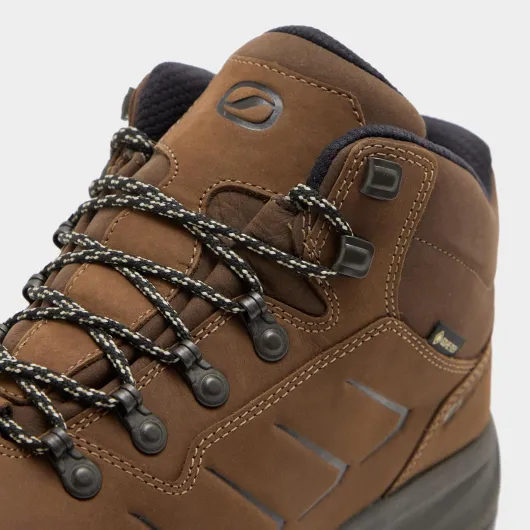
The lacing system is simple: standard eyelets with a couple of hooks at the top. Nothing fancy, but it works. I didn’t have issues with the laces coming undone, which lines up with other people saying the same. The tongue is padded enough to let you crank the laces a bit tighter over the midfoot without cutting into the top of your foot. The heel cup feels structured; there’s an injected heel capture system that basically helps lock your heel in place. On the trail, that translated into very little heel lift, even on uphill sections.
In practice, the design leans more toward comfort and protection than sleek looks. The toe bumper is chunky, the outsole is pretty aggressive, and the mesh panels break up the leather enough that these obviously look like hiking boots, not lifestyle sneakers. But everything has a purpose: roomy toe box, protective front, breathable sides, and a mid-height cut that supports without being overly stiff. For what they’re meant to do, the design choices make sense, even if they’re not going to win any style awards.
Comfort: all-day wearable, especially if you have slightly wide feet
Comfort is where these boots make the most sense. I wore them for several full days—think 6–8 hours of mixed walking and hiking—and I never had that "finally, I can take these off" moment at the end of the day. That lines up with other reviewers saying they could wear them day in, day out without fatigue. The mid-profile cut plus padded tongue and collar give enough ankle support without feeling like a ski boot. You can move naturally, and your ankle doesn’t feel trapped.
The fit in my 8.5 was generous in the forefoot. I don’t have super wide feet, but I do like having space for my toes to spread, especially on descents. These didn’t pinch across the sides, and I didn’t get any toe banging going downhill. If you have a slightly wider foot or usually hover between regular and wide, KEEN’s shape will probably feel pretty friendly. I’d say they run true to size with a bit of extra volume, which is handy if you want to wear liner socks plus medium wool socks the way one reviewer described. With just regular hiking socks, I still felt secure, not sloppy.
The insole has noticeable arch support—nothing extreme, but more than a flat footbed. People with plantar fasciitis have said they can use these with prescription orthotics, and that tracks because the stock insole pops out easily. Underfoot cushioning is decent: the dual-density EVA absorbs shock on hard-packed trails and pavement without feeling bouncy. After 10–12 km walks, my feet felt tired in the normal “I walked a lot” way, not "my arches are dying" or "my heels are on fire." Heel hold is also good; that injected heel capture system is not just marketing. I didn’t get heel blisters, which is usually my first issue with new boots.
The only comfort downside is heat vs. moisture trade-off. They’re more breathable than waterproof boots, but if you hike in hot weather, your feet can still get warm, especially over the toes where there’s more leather and less obvious venting. One user wanted a vent right above the toe box, and I get that. My feet never got grossly sweaty, but if you run hot, pair them with good moisture-wicking socks. Overall, they’re not slippers, but for proper hiking boots, they’re very easy to live with, even on long days.
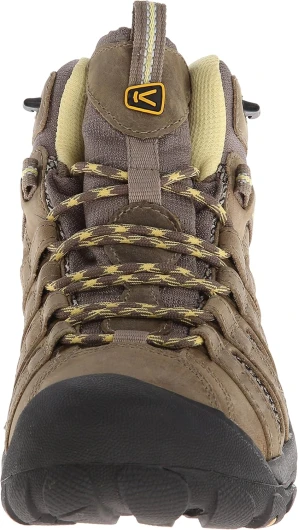
Materials: leather plus mesh, built for airflow not full waterproofing
Material-wise, KEEN went with a leather upper backed by performance mesh, and that combo is exactly why I picked these up. The leather gives some structure and basic water resistance, while the mesh panels are there to let air in and out. The leather is from an LWG-certified tannery, which is more of an eco/traceability thing than a comfort feature, but it’s still good to see they’re not using the cheapest possible stuff.
Inside, you’ve got a woven textile lining, not a waterproof membrane. That’s important. It means these boots breathe better than most waterproof models, but they will eventually let water in if you stand in puddles or get caught in heavy rain. In my use, they handled light mud, damp grass, and a couple of shallow puddle steps before I felt any moisture. When they did get a bit damp, they dried reasonably quickly once I was out of the wet area. One user mentioned spraying them with silicone and getting better water resistance; I haven’t done that, but it makes sense if you want to push them a bit more in wet weather.
The midsole is dual-density compression-molded EVA, which is pretty standard for hiking boots in this range. It gives you cushioning without feeling squishy. There’s also an ESS shank inside the midsole, which is basically a stiffener that adds torsional stability. On rocky terrain, that shank matters: you don’t feel every rock edge stabbing into your arch. The insole (metatomical footbed) is removable, which is key if you use custom orthotics or just want to swap for your favorite aftermarket insoles.
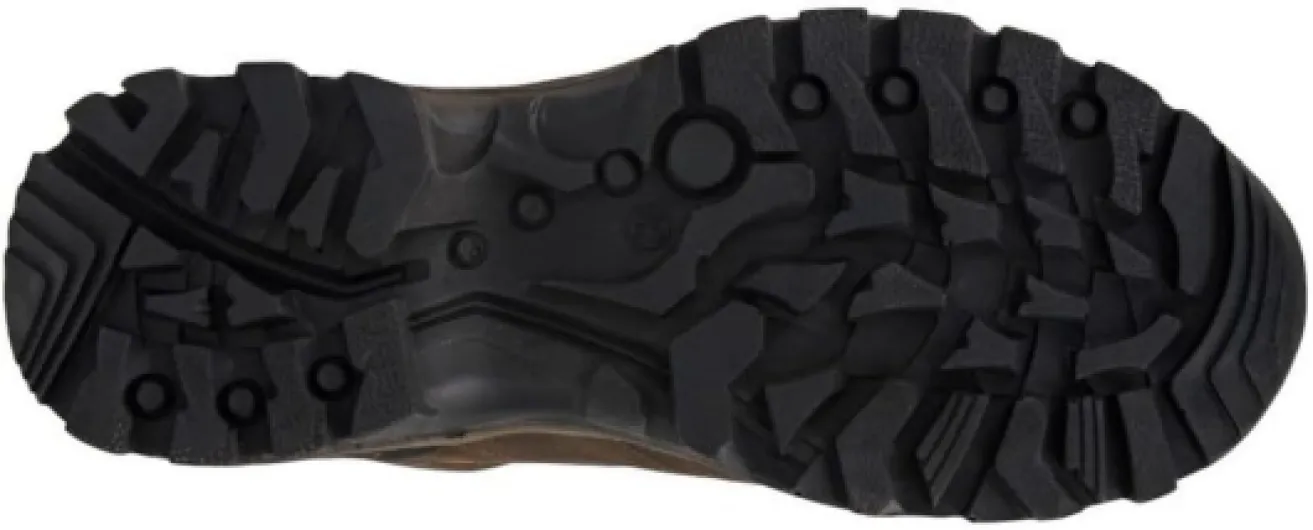
The outsole is non-marking carbon rubber with 4 mm lugs. Rubber quality feels decent: not rock-hard, not super soft. The lugs are multi-directional, so you get bite both going uphill and braking downhill. It’s not some fancy Vibram compound, but in real-world use it gripped well enough on dirt, roots, small rocks, and even a bit of loose sand. On wet, smooth rock, they’re okay but not magic—pretty much like most boots in this category. Overall, the material mix is focused on durability, protection, and breathability, with a conscious trade-off on full waterproofing.
Durability: built to last, but mesh means they’re not indestructible
Durability is always hard to judge early on, but there are a few good signs here, plus some long-term feedback from other users. The leather parts of the upper feel thick enough to take abuse without being bricks. After several muddy and rocky hikes, mine mostly show cosmetic scuffing on the toe bumper and a bit on the leather, which is normal. The stitching so far is tight with no loose threads or separation where the leather meets the mesh.
The weak point in most breathable boots is the mesh. That’s just the trade-off: you get airflow, but you also get more potential wear points. On these, the mesh feels reasonably tough, not like the super-thin stuff you see on some trail runners. Still, if you constantly drag your feet on rocks or bushwhack through sharp branches, expect that the mesh will be the first thing to wear out, not the leather. One reviewer mentioned wearing Voyageur shoes (low version) for about 10 years, going through a couple of pairs a year, which tells me the design is solid enough to keep people coming back, even if they’re not unbreakable tanks.
The outsole rubber shows normal wear for the distance I’ve put on them—no chunks missing, no lugs peeling. The 4 mm lugs are deep enough that even with some wear, they’ll still have grip for a while. I didn’t see any midsole compression issues early on either; no obvious flattening or weird creases that sometimes show up in cheaper boots after just a few hikes. The toe bumper, which takes a lot of abuse, is doing its job: I’ve kicked more than a few rocks and roots, and it’s just scuffed, not separating or cracking.
Given the build and what other users say (including someone on their fourth pair over 7+ years), I’d rate durability as solid for the category. They’re not indestructible mountaineering boots, but for regular hikers who go out weekly or on trips, they should hold up well for a few seasons at least. Just go in knowing that the breathable design comes with that usual mesh vs. leather trade-off in the long run.
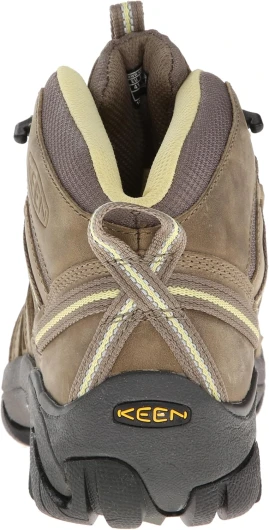
Trail performance: stable, good traction, but know the limits in wet conditions
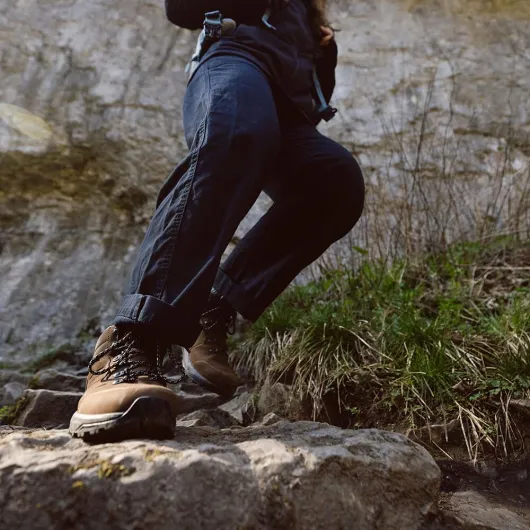
Out on the trail, these boots feel stable and predictable, which is honestly what I want from hiking footwear. The ESS shank plus the midsole stiffness keep your foot from twisting too much on uneven ground. On rocky sections and roots, I didn’t feel like my ankles were at risk, even after a past ankle sprain. Another reviewer who had a broken ankle and MCL issues said they felt secure in these, and I can see why. The mid-cut plus firm heel cup really hold your foot in place.
Traction from the 4 mm multi-directional lugs is solid on typical hiking surfaces. On dry dirt, packed trails, and light mud, they grip well. I went down a couple of short, steep, loose sections and never felt like I was sliding uncontrollably. On wet leaves and damp wooden bridges, they were fine as long as I didn’t do anything stupid like sudden sideways moves. On wet rock, they’re okay, but like most boots, you still need to watch your footing. They’re not ice skates, but they’re not miracle shoes either.
In terms of water behavior, they’re clearly water resistant, not waterproof. Light rain, wet grass, and shallow puddles are okay for a while. If you deliberately stomp through mud and deeper puddles repeatedly, water will eventually get in, especially through the mesh areas. The upside is that, once wet, they dry faster than a full waterproof membrane boot. One user mentioned spraying with silicone and getting through a very rainy hike with dry feet; if you want to stretch their range into wetter conditions, that’s a cheap upgrade. For snow or constant rain, though, I’d look at a true waterproof boot instead.
Over longer distances, the support holds up. The S3 heel support structure and shank keep your foot from collapsing when you’re tired, and I didn’t notice the boot getting sloppier as the hours went on. For day hikes and light backpacking with a moderate pack, they perform well. For heavy loads and very rough, alpine-style terrain, I’d probably want something stiffer and more protective. But for what most people actually do—state and national park trails, forest paths, occasional rocky sections—these boots handle it without drama.
What these KEEN Voyageur boots actually are
The KEEN Voyageur Mid is basically a mid-height, breathable hiking boot designed for people who want support and grip without a full waterproof membrane. The upper is a mix of leather and open mesh panels, so you get a decent structure around the foot but with a lot more airflow than a typical Gore-Tex style boot. The pair I used is the Brindle/Custard colorway, which is a brownish base with lighter accents. It’s pretty neutral and doesn’t scream “technical mountaineering boot,” which I like.
On paper, KEEN gives you a dual-density EVA midsole, a removable metatomical footbed (fancy way of saying shaped insole with arch support), and an ESS shank for torsion stability. In practice, that means they try to keep your foot from twisting too much on uneven ground, and they do it fairly well. The outsole is their KEEN.ALL-TERRAIN rubber with 4 mm multi-directional lugs. Translation: the grip is decent on dirt, roots, and small rocks, and you won’t be sliding all over the place unless you’re on wet, slick rock or deep mud.
The ankle height is in the "mid" category, so it covers the ankle bone and gives some support without feeling like a stiff mountaineering boot. There’s a padded tongue and collar, and the famous KEEN big rubber toe bumper up front. If you’ve ever kicked a rock with a softer hiking shoe and regretted your life choices, that toe bumper makes sense fast. They’re not light like trail runners, but at around 14 oz per boot (single, not pair, and that’s for a smaller size), they’re reasonable for a supportive boot.
So overall, the presentation is pretty simple: these are all-purpose hiking boots aimed at day hikes, light backpacking, and travel, especially for people who don’t want full waterproofing. KEEN doesn’t oversell them as mountaineering gear, and that’s fine. They sit in that "reliable daily driver" category rather than ultra-technical gear for extreme stuff.
Pros
- Very comfortable for all-day wear, with good arch support and roomy toe box
- Breathable design keeps feet from overheating compared to waterproof boots
- Stable and grippy on typical hiking terrain thanks to shank and 4 mm lugs
Cons
- Not fully waterproof; mesh will eventually let water in during heavy rain or deeper puddles
- Mesh panels are a potential long-term weak point compared to full leather
- Fit may feel too roomy if you have very narrow feet
Conclusion
Editor's rating
Overall, the KEEN Women's Voyageur Mid Height Breathable Hiking Boots are solid, practical boots for people who care more about comfort and airflow than walking through streams with dry socks. They offer a roomy fit, especially in the toe box, decent arch support, and good heel hold. On typical trails—dirt, roots, rocks, light mud—they feel stable and predictable, with enough grip from the 4 mm lugs to keep you confident on climbs and descents. The mid-height cut and shank give enough support for day hikes and light backpacking without feeling like overkill.
They’re not perfect. The big trade-off is clear: water resistant, not waterproof. If your hikes regularly involve heavy rain, deep mud, or snow, you’re better off with a true waterproof boot. The mesh also means that, long term, they won’t be as bombproof as a full-leather tank. But for dry-to-moderately-wet conditions, especially in warmer weather, they hit a nice sweet spot: your feet don’t roast, and the boots are comfortable enough that you can wear them all day without thinking about them much.
I’d recommend these to hikers with slightly wide feet, people who use orthotics, and anyone deliberately looking for non-waterproof, breathable hiking boots for parks, forest trails, and travel. If you’re a mountaineer, a thru-hiker in constant rain, or you want one boot to handle deep winter, look elsewhere. For everyday hiking and trips where you’re on your feet a lot and mostly avoiding deep water, these are a dependable choice that feel like money reasonably well spent.