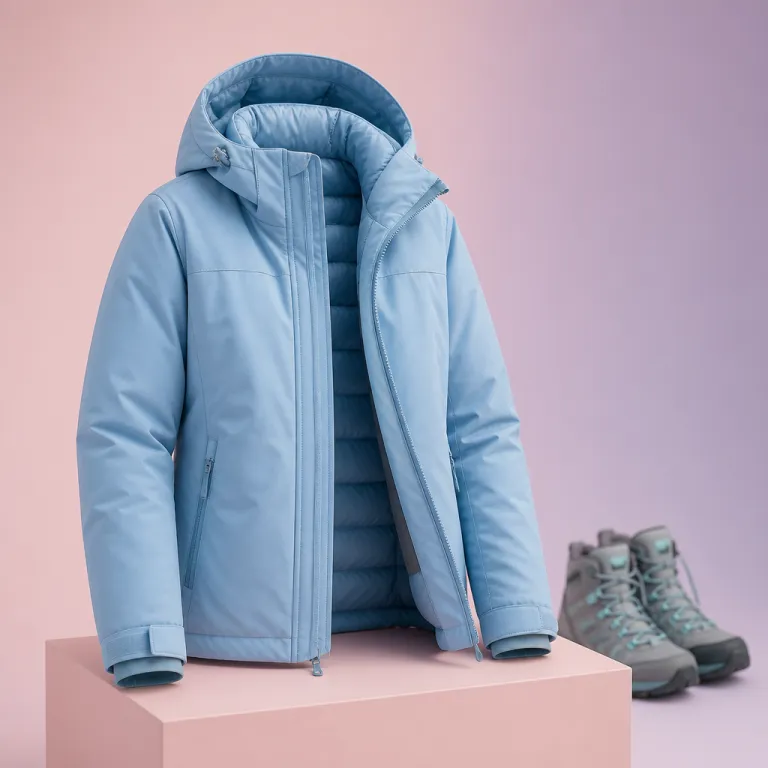
Why the Bisley extreme cold eco jacket matters more than your boots
On multi day alpine traverses, a true extreme cold shell often determines whether strong legs actually reach the summit. When temperatures drop below minus 15 °C and wind speeds rise above 60 km/h, even the best insulated hiking boots cannot compensate for inadequate upper body protection that allows cold to sap strength and decision making. Serious mountaineers treat the Bisley extreme cold eco jacket as part of their core safety apparel system, not as a casual outer layer for occasional snow walks.
Many experienced hikers focus on crampons, ice axes, and boots while underestimating how a high performance jacket controls sweat, moisture, and heat loss during steep winter ascents. Bisley’s design philosophy is different, because this eco friendly insulated shell is built as a technical jacket that balances insulation, breathability, and high visibility details for glacier travel and night approaches. When combined with insulated gloves, a seamless knit base layer, and wind resistant trousers, the jacket creates a thermal envelope that keeps muscles warm enough to move efficiently on exposed ridgelines.
From a practical standpoint, this outer layer also influences how much gear you carry and how fast you move through dangerous terrain. A well engineered jacket reduces the need for multiple spare layers in your pack, which lowers overall weight and improves balance on icy traverses. That efficiency translates into fewer stops, less time with your pack open in blowing snow, and more reliable protection against sudden weather changes that can turn a routine ascent into a rescue scenario.
Insulation, layering, and how this jacket works with technical hiking boots
Winter hikers who rely on insulated hiking boots quickly learn that foot warmth is meaningless if the torso is under insulated, and the Bisley extreme cold eco jacket addresses this imbalance directly. Its insulation strategy is designed around a type class of thermal performance that keeps your core warm while allowing enough ventilation to prevent sweat from soaking your base layers during steep climbs. When your torso stays dry and warm, blood flow to your feet improves, which means your boots and socks can actually deliver their promised protection against extreme cold conditions.
In practice, that means pairing the Bisley shell with a seamless knit merino base layer and a mid weight fleece or light synthetic puffer, then matching that system with insulated boots rated for at least minus 20 °C. This combination allows experienced mountaineers to move efficiently on frozen scree, where every pause to adjust layers or gloves increases exposure to wind chill and spindrift. For hunters and winter trekkers who already use specialized outer layers, resources such as the guide on essential winter hunting gear for men who refuse to stay indoors show how a disciplined layering system dramatically extends safe time outside.
Because the jacket is part of a broader safety apparel ecosystem, its cut and articulation matter as much as its insulation rating. The Bisley extreme cold eco jacket is shaped to avoid bunching above the hip belt of a heavy pack, which prevents cold air from entering when you bend to adjust crampons or tighten snowshoe bindings. That careful patterning also keeps the hem from riding up while you kick steps in steep snow, maintaining continuous protection from waist to hood in the harshest alpine environments.
High visibility, pockets, and real world safety for night approaches
Many alpine accidents occur during early morning approaches or late descents, when visibility is poor and fatigue is high, so the Bisley extreme cold eco jacket integrates high visibility elements as genuine safety products rather than decorative accents. Reflective piping and panels on the jacket increase visibility under headlamp beams, which helps rope teams track each other during whiteouts and complex glacier crossings. In avalanche terrain, those high visibility details also assist rescuers who scan debris fields with searchlights, where a bright jacket can cut precious minutes from the response time.
Storage design is equally deliberate, because pockets with a secure flap are positioned high enough to remain accessible above a climbing harness or heavy hip belt. These pockets with flap closures allow you to keep gloves, a compact headlamp, and navigation tools close at hand without exposing your torso to cold air every time you reach into your pack. When you combine this with a seamless knit liner glove and a heavier shell glove, you can swap layers quickly while keeping the Bisley extreme cold eco jacket fully zipped, which preserves warmth during technical transitions.
For hikers who already rely on advanced mid layers, such as those described in analyses of why serious hikers rate the Picture men’s Park Tech hoodie as essential mountain clothing, the Bisley extreme cold eco jacket becomes the protective outer shell that completes the system. Its hood is cut to fit over a climbing helmet without restricting peripheral vision, which is critical when moving on narrow ridges or crowded summit blocks. That combination of high visibility design, thoughtful pockets with flap security, and helmet compatible coverage turns the jacket into a practical tool for real mountain hazards rather than a simple winter fashion piece.
Environmental responsibility and eco friendly design in extreme cold gear
Outdoor enthusiasts increasingly demand that their safety apparel reflects environmental values, and the Bisley extreme cold eco jacket responds with eco friendly materials that do not compromise performance. The outer fabric uses a durable water repellent treatment that is engineered to be more environmentally responsible than older fluorocarbon heavy coatings, while still shedding snow and light rain effectively. For hikers who care about the bio impact of their equipment, this balance between environmental responsibility and technical performance is no longer optional, especially on long expeditions where gear failure has serious consequences.
Mountaineers who have tested PFAS free waterproofing on boots and shells, such as those who hiked 200 miles in PFAS free boots and tracked exactly when the DWR stopped working, know that sustainable chemistry must still deliver reliable field performance. The Bisley extreme cold eco jacket is designed with that reality in mind, using fabrics and insulation that maintain loft and water resistance after repeated compression in a pack. When combined with eco friendly gloves and base layers, the jacket allows you to build a full winter system that aligns with environmental ethics while still providing robust protection against extreme cold and high winds.
Responsible design also extends to durability, because a long lasting jacket reduces waste and the environmental cost of frequent replacement. Reinforced shoulders and sleeves on the Bisley extreme cold eco jacket resist abrasion from pack straps, ice tools, and rough granite, which keeps the jacket in service for many seasons of demanding use. By choosing a single high quality jacket instead of multiple cheaper jackets that fail quickly, experienced hikers reduce both their long term gear budget and their overall environmental footprint.
From product page to summit ridge: decoding price, shipping, and safety classes
When you evaluate the Bisley extreme cold eco jacket online, the technical details often hide behind retail language about price, sale price, and regular price that can confuse even experienced buyers. A transparent product page should clearly state the unit price of the jacket, any temporary price sale or sale price reductions, and whether the sale sold quantity is limited to specific sizes or colours. For serious mountaineers, the real calculation is not just the price but the cost per expedition, because a reliable jacket that prevents one aborted summit attempt often pays for itself in saved travel and guiding fees.
Shipping details matter as much as the listed price, especially when you need the jacket before a fixed departure date for a guided ascent or winter trek. Look for retailers who offer free shipping or clearly explain that shipping is calculated at checkout, rather than hiding shipping calculated fees until the final payment screen. A well designed order details page should open a separate window or opens a window style panel that provides a full refresh of information about delivery times, tracking, and any restrictions on shipping safety products such as insulated jackets and gloves to remote regions.
Many technical garments are classified under a specific type class of safety apparel, which indicates their intended use and tested performance in extreme cold environments. When a Bisley jacket is described as high visibility or assigned to a particular safety class, that label should reflect real testing against wind, moisture, and abrasion, not just marketing language. Before you complete payment, learn to read these classifications carefully, because they reveal whether the jacket is suitable for glacier travel, industrial cold storage work, or only casual winter hiking on groomed trails.
Practical buying checklist for experienced hikers choosing the Bisley extreme cold eco jacket
Experienced hikers approach the purchase of a Bisley extreme cold eco jacket with the same discipline they apply to selecting crampons or technical hiking boots. Start by confirming that the jacket’s insulation and wind resistance match the coldest conditions you realistically face, rather than the mild weather of local training hikes. Then examine whether the jacket’s cut, hood design, and pockets with flap closures integrate cleanly with your existing harness, pack, and glove systems without creating pressure points or cold gaps.
On the commercial side, scrutinize every element of the transaction before you commit to payment, because clarity here is part of overall safety and reliability. Check whether the retailer offers free shipping or whether shipping is calculated dynamically based on your location, and verify that any free shipping threshold still delivers the jacket in time for your planned expedition. A trustworthy site will provide detailed order details, a transparent calculated checkout process, and a clear explanation of how returns work if the jacket’s fit or type class of safety apparel does not match your expectations.
Finally, remember that a Bisley extreme cold eco jacket is not an isolated purchase but a central component of a complete winter protection system. Match its high visibility features with reflective elements on your backpack and helmet, and pair its insulation with seamless knit base layers and insulated gloves that maintain dexterity for rope work. When every element from jacket to boots is chosen with the same level of care, your overall safety margin in extreme cold conditions increases dramatically, allowing you to focus on route finding, efficient movement, and the quiet satisfaction of serious winter travel.
Key figures and data on extreme cold hiking gear performance
- Reports from alpine rescue organizations, including the International Commission for Alpine Rescue (ICAR) and the Swiss Alpine Club (SAC), indicate that a large share of winter hypothermia incidents in hikers involve inadequate torso insulation, highlighting why a high performance jacket often matters more than heavier boots in extreme cold conditions. For precise percentages and regional breakdowns, consult the latest ICAR and SAC accident statistics.
- Field testing by independent gear labs, such as the Norwegian Research Centre for Outdoor Clothing (NORCOC) and the German Hohenstein Institute, shows that modern synthetic insulated jackets can retain a substantial portion of their thermal efficiency after repeated compression cycles. Published test reports typically document retention values in the range of roughly two thirds to four fifths of original warmth after 20 compressions, which supports investing in newer eco oriented designs such as the Bisley extreme cold eco jacket.
- Market analyses of outdoor safety products from organizations like the European Outdoor Group (EOG) and the Outdoor Industry Association (OIA) report that high visibility elements on jackets and packs can significantly improve detection distances under headlamp beams. Several visibility trials cited in these reports describe detection gains on the order of one third to one half compared with non reflective garments, which is critical for night approaches and search operations in alpine terrain.
- Consumer surveys among experienced hikers and mountaineers, including reports from the American Alpine Club and the British Mountaineering Council, reveal that a clear majority now consider environmental impact a primary factor when purchasing winter jackets. Recent survey summaries commonly show more than two thirds of respondents ranking sustainability alongside warmth and durability, driving demand for eco friendly materials and PFAS reduced water repellent treatments.
- Retail data from major outdoor brands compiled in the Outdoor Foundation’s participation and gear reports show that premium winter jackets often have a higher initial unit price but lower cost per use, because their average service life frequently exceeds 8 to 10 seasons when properly maintained, compared with roughly 3 to 5 seasons for budget alternatives. For buyers, this reinforces the value of investing once in a durable extreme cold shell.
| Feature | Typical Bisley extreme cold eco jacket spec* | How to use this when buying |
|---|---|---|
| Insulation performance | Synthetic fill targeting comfort down to around −15 °C with active movement | Choose size and layers so you can add a mid layer for colder than −20 °C conditions. |
| Safety / visibility class | High visibility panels and reflective piping designed to meet common industrial and outdoor visibility guidelines | Confirm the stated safety class on the product label if you also use the jacket for work sites. |
| Fit profile | Technical, harness compatible cut with room for one or two mid layers | If between sizes, size up for bulky mid layers or down for fast and light day tours. |
| Helmet compatible hood | Adjustable hood designed to fit over most climbing helmets | Try the hood with your actual helmet to check vision and head movement. |
| Durability focus | Reinforced shoulders and sleeves for pack straps and tool use | Inspect these zones first when assessing wear after several seasons. |
*Exact specifications vary by model and region; always refer to the official Bisley product information for precise technical data.
FAQ about the Bisley extreme cold eco jacket for serious hikers
Is the Bisley extreme cold eco jacket warm enough for high altitude winter hikes ?
The Bisley extreme cold eco jacket is designed for sustained exposure to sub zero temperatures, with insulation and wind resistance suitable for typical winter conditions in mid altitude mountain ranges. For very high altitude expeditions or temperatures below minus 25 °C, most mountaineers pair it with additional mid layers and insulated belay jackets. Always match the jacket to your coldest expected conditions and personal tolerance to cold.
How should I layer under the Bisley extreme cold eco jacket ?
A proven system is a seamless knit merino or synthetic base layer, a mid weight fleece or light puffer, and then the Bisley extreme cold eco jacket as the outer shell. This combination balances moisture management, insulation, and wind protection for steep ascents and long descents. Adjust thickness based on activity level and forecast temperatures, adding or removing mid layers rather than changing the outer jacket.
Does the eco friendly design reduce durability or water resistance ?
Modern eco friendly fabrics and water repellent treatments are engineered to match or closely approach the durability of older fluorocarbon based technologies. The key is regular maintenance, including gentle washing and periodic reproofing according to manufacturer instructions. When cared for properly, the Bisley extreme cold eco jacket should maintain both water resistance and insulation over many seasons of demanding use.
What safety features matter most on this jacket for mountaineering ?
For technical hiking and mountaineering, prioritize high visibility details, a helmet compatible hood, and pockets with flap closures that remain accessible above a harness. Reinforced shoulders and sleeves are important for carrying heavy packs and using ice tools. A secure, adjustable hem and cuffs help seal out spindrift and wind, preserving core warmth during exposed traverses.
How do I evaluate price and value when buying this jacket ?
Look beyond the regular price or temporary sale price and consider cost per expedition or per season of use. A more expensive Bisley extreme cold eco jacket that lasts a decade and prevents aborted trips often offers better value than cheaper jackets that fail early. Factor in shipping, return policies, and whether the retailer provides clear order details and calculated checkout information before finalizing payment.