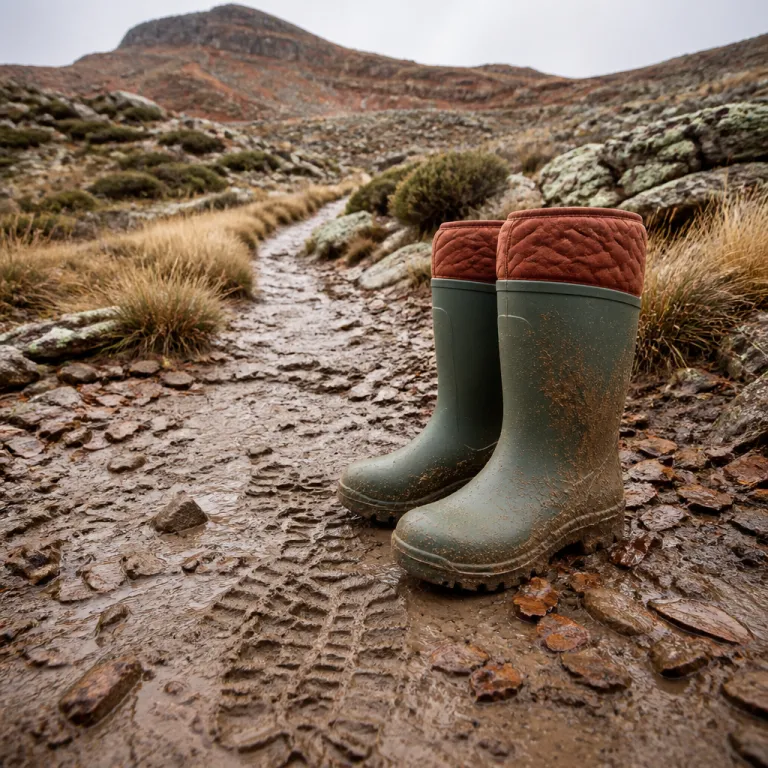
Why muck wellies for women matter on serious mountain trails
For women who hike in real weather, women’s muck wellies are more than a fashion choice. When a boot fails on a sleety ridge or a boggy approach, the entire day’s safety margin shrinks quickly and can compromise group decisions. Purpose-built muck boots for women bridge the gap between classic hiking boots and fully waterproof wellingtons for technical country terrain.
Experienced mountaineers often rotate between a classic mid hiking boot and insulated women’s muck wellies depending on the route profile. On long approaches across peat, tidal flats, or mossy oak forest, a tall boot with a sealed rubber lower and neoprene shaft keeps feet dry where leather would slowly wet out. That is why many guides now treat a pair of women’s waterproof muck boots as essential gear rather than casual farm footwear.
Colour and cut matter less than fit and function, yet details still count. A black boot finish hides abrasion marks from scree, while brown or grey uppers blend better for low-profile wildlife work in remote country. For women arctic specialists guiding in coastal storms, a fully insulated Arctic Sport tall boot offers warmth that standard ankle boots or a light mid boot simply cannot match.
Comparing muck wellies for ladies with traditional hiking boots
Many outdoor women weigh the trade-off between classic leather boots and modern women’s muck wellies before committing to a big expedition. A traditional nubuck hiking boot for women offers precise edging on rock and better breathability in dry alpine conditions, which is why technical climbers still favour high-quality leather models for ridge traverses. For readers comparing options, a detailed review of top nubuck leather hiking boots helps clarify when a classic boot design still excels.
In saturated ground or thawing snow, the equation changes in favour of insulated muck boots for women. A waterproof wellington-style shell with a supportive midsole keeps water out completely, while a fleece-lined Arctic Sport model maintains warmth during long static belays. When you add a grippy outsole and a supportive classic mid-height shaft, these women’s boots become viable for multi-hour approaches to winter climbs.
Weight and ankle control remain the main limitations of full-height wellies for technical scrambling. A tall boot can feel less precise on narrow ledges, so many experienced hikers carry both a lighter mid boot and a pair of women’s muck wellies in the vehicle, choosing on the day according to snow line and forecast. For mixed trips that include both city travel and remote country trails, a compact pair of ankle-height muckster lite boots offers a practical compromise.
Key design features in women’s muck wellies for demanding terrain
When evaluating women’s muck wellies, start with the outsole and midsole before admiring colours or branding. A serious boot for women who carry 12–18 kg packs needs a torsionally stiff platform that resists twisting on talus and wet roots. Look for women’s muck boot models with deep lugs, a defined heel brake, and a midsole that balances cushioning with firm support.
Shaft height should match your terrain and gait pattern rather than fashion trends. A classic mid boot height around the lower calf gives enough ankle support for side-hilling without the bulk of a full sport tall boot, which can feel restrictive on steep switchbacks. For deep bogs, tidal crossings, or snowshoe approaches, a tall boot that reaches just below the knee keeps water and slush out more reliably than shorter ankle boots.
Upper materials separate entry-level wellingtons from technical women’s muck wellies built for mountain work. Premium neoprene panels in Women’s Arctic and Arctic Sport lines flex with the calf while trapping warm air, whereas cheaper PVC cracks in cold conditions and fails early. Reinforced toe caps and randing on black or brown models protect against rock strikes, while grey or mossy oak patterns help hunters and wildlife photographers blend into the country environment.
For hikers who mix wet approaches with rocky scrambles, a hybrid design such as the Edgewater Classic or the Edgewater Classic mid boot offers a useful middle ground. These women’s boots combine a rubber lower with a more articulated upper, giving better ankle articulation than a rigid farm wellington. Pairing such footwear with supportive trekking poles, like those tested in the mid-rise waterproof hiking boots review, significantly improves balance on uneven ground.
Fit, sizing, and comfort for women using muck wellies in the mountains
Correct fit in women’s muck wellies determines whether they feel like protective armour or clumsy buckets on your feet. Unlike lace-up hiking boots, a pull-on boot relies on internal shaping and sock choice to control heel lift and forefoot movement. That makes it vital to test women’s muck boot models with the exact socks and insoles you plan to use on long days.
Many women find that a classic mid-height wellington design in their usual size feels loose in the heel when walking downhill. To counter this, consider sizing down half a size in some women’s ranges or adding a volume-reducing insole under your main footbed, which tightens the fit without crushing the toes. For winter use in Women’s Arctic or Arctic Sport tall boot models, leave enough space for a thick merino sock while still preventing the foot from swimming inside the boot.
Calf circumference is another critical variable, especially with tall boot designs. Some women’s muck wellies offer adjustable gussets or stretch neoprene panels that accommodate powerful hiking calves more comfortably than rigid rubber shafts. If your routes involve frequent steep side-hilling in remote country, a snug but not constricting shaft reduces rubbing and keeps the boot aligned with your ankle joint.
For mixed use around the campsite and in town, many hikers appreciate the lower profile of ankle boots or a muckster lite slip-on. These women’s options trade maximum flood protection for easier driving, quicker transitions, and less fatigue during long travel days. Whatever style you choose, treat the regular break-in period seriously and wear the footwear on shorter local walks before committing to multi-day expeditions.
Price, value, and durability of women’s muck wellies for harsh use
Evaluating the price of women’s muck wellies requires looking beyond the number on the box. A higher regular price often reflects thicker rubber compounds, better bonding processes, and more robust insulation that withstands repeated flexing in sub-zero conditions. When you spread that investment over several seasons of hard use, the effective price per expedition can be surprisingly reasonable.
Budget wellingtons may tempt occasional walkers, yet experienced mountaineers quickly see the hidden costs. Cheaper women’s models often crack at flex points or delaminate at the sole after a single demanding winter, forcing an early replacement that erases any initial saving. In contrast, a Chore Classic or Edgewater Classic boot design built for agricultural work often survives years of rocky trail abuse when maintained properly.
Colour has little impact on durability, though it can influence perceived wear. Black finishes hide scuffs and peat stains better than brown or grey, which some women prefer for a cleaner look during guiding work. For those who operate in hunting or wildlife survey roles, mossy oak patterned women’s muck boots justify their higher regular price by combining camouflage with the same rugged construction as plain versions.
When comparing options online, pay attention to how retailers present the regular price versus promotional discounts. A transparent listing that shows both the original price and the current offer helps you judge real value rather than marketing hype. For long-term reliability in wet country, prioritise proven lines such as Muckster, Muckster Lite, Women’s Arctic, and Arctic Sport over untested fashion-focused women’s boots that may not withstand repeated freeze–thaw cycles.
How experienced hikers integrate muck wellies into a complete gear system
Seasoned hikers rarely rely on a single footwear style, instead rotating women’s muck wellies alongside classic hiking boots and approach shoes. On multi-day trips that cross valleys, forests, and high passes, they choose a boot that matches each stage’s terrain and weather. A tall boot in the Arctic Sport line might handle the boggy approach, while a lighter classic mid leather boot takes over for the rocky summit push.
Carrying two pairs of boots may sound excessive until you have endured a full day in soaked socks. Many guides keep women’s muck boots in the vehicle as a backup, switching from ankle boots or a mid boot when the forecast shifts toward heavy rain or thawing snow. This flexible strategy reduces blister risk, preserves insulation, and keeps morale high during long expeditions in remote country.
For basecamp life and hut approaches, a compact pair of Muckster or Muckster Lite ankle boots offers comfort without sacrificing weather protection. These women’s designs slip on quickly for night-time tasks, yet still provide enough grip for icy paths and muddy tent platforms. Pairing them with reliable trekking poles, such as those reviewed in the collapsible hiking poles test, creates a stable system for moving safely around camp.
Colour coding footwear can simplify gear management on group trips. Assigning black models for technical use and brown or grey pairs for camp and travel helps you grab the right option quickly in low light. Over time, most serious outdoor women build a small quiver of women’s muck wellies, classic mid boots, and lightweight shoes that together cover every scenario from mossy oak forests to frozen arctic coastlines.
Key figures on women’s hiking boots and waterproof wellies
- Recent outdoor participation reports from major industry bodies indicate that women now account for a substantial share of day hikers and overnight backpackers, which has driven a rapid expansion in women-specific hiking boots and muck wellies lines over the past decade.
- Independent laboratory flex tests on rubber safety and outdoor boots show that high-quality wellingtons can remain waterproof through hundreds of thousands of flex cycles, while low-cost PVC models often fail significantly earlier under the same conditions.
- Winter hillwalking equipment surveys from national mountaineering councils consistently report that wet and cold feet are cited as a primary comfort issue by a majority of winter walkers, highlighting the value of insulated Women’s Arctic and Arctic Sport style boots in maritime climates.
- Consumer data from large European outdoor retailers between 2020 and 2023 suggest that black and brown remain the preferred colours for most women buying technical outdoor footwear, with grey and patterned options such as mossy oak accounting for much of the remaining share.
- Annual incident summaries from several national search and rescue organisations show that lower limb injuries account for a significant proportion of callouts in mountainous terrain, underlining the importance of supportive mid boot and tall boot designs with grippy outsoles.
FAQ about muck wellies for women who hike and mountaineer
Are muck wellies suitable for long distance mountain hikes
Women’s muck wellies can work for long distances if the fit is precise and the terrain is mostly wet, boggy, or snowy rather than highly technical. Their waterproofing and insulation outperform many classic boots in saturated ground, but they usually offer less precision on steep rock. Many experienced hikers reserve them for approaches and low-level days, switching to classic mid boots for scrambling and summit ridges.
How should I choose between ankle, mid, and tall muck boots
Choose ankle boots or Muckster Lite styles for camp life, travel, and short wet walks where agility matters more than maximum protection. A mid boot or classic mid height works best for mixed trails with shallow mud, stream crossings, and moderate snow. Tall boot designs in Women’s Arctic or Arctic Sport lines are ideal for deep bogs, heavy rain, and winter conditions where you expect frequent immersion.
Can I use insulated muck wellies for technical winter mountaineering
Insulated women’s muck wellies provide excellent warmth and waterproofing, yet they are not designed for crampon-intensive technical mountaineering. Their soles often lack the rigidity and defined welt needed for secure crampon attachment on steep ice. For graded winter climbs, a dedicated mountaineering boot remains the safer choice, while women’s muck boots serve well for approaches and lower-angle terrain.
How do I maintain and store my women’s muck boots
Rinse mud and salt from your women’s muck wellies after each trip, then dry them at room temperature away from direct heat sources that can crack rubber. Store boots upright in a cool, dark place to prevent the shafts from creasing and the compounds from degrading under ultraviolet light. Applying a rubber conditioner occasionally helps preserve flexibility, especially on black or brown models that see frequent use in rocky country.
What socks work best with women’s muck wellies in cold weather
For cold conditions, pair your women’s muck wellies with medium to heavyweight merino wool socks that manage moisture while providing loft. Avoid bulky cotton socks, which hold sweat and increase the risk of blisters and cold injuries. In very low temperatures, many women add a thin synthetic liner sock under a thicker wool layer inside Women’s Arctic or Arctic Sport boots to improve both warmth and comfort.