
Summary
Editor's rating
Value: decent leather hiking boots if you’re on a budget
Old-school hiking look with a few modern touches
Comfort: fine for a few hours, not ideal for long all-day hikes
Leather upper and rubber sole: tough but not very breathable
Built to take abuse, but time will tell on the finer details
Waterproof and grippy, but heavy and warm on longer outings
What you actually get when you open the box
Pros
- Genuinely waterproof in typical wet grass, puddles, and rain thanks to leather + membrane
- Sturdy leather upper and deep-lug rubber sole that feel built to last for regular use
- Good grip and stable feel on grass, forest trails, and uneven ground
Cons
- Heavy and a bit clunky compared to more modern, lightweight hiking boots
- Average insole and limited breathability, not ideal for long or hot-weather hikes

Specifications
View full product page →| Brand | Northwest Territory |
Solid budget boots or just heavy dog-walkers?
I’ve been using the Northwest Territory INUVIK men’s mid-rise waterproof boots in Waxy Brown (UK6) for a few weeks now, mainly for dog walks, muddy fields, and a couple of easy weekend hikes. I didn’t baby them at all: wet grass, shallow puddles, gravel paths, and some rocky woodland. I was looking for something leather, waterproof, and not crazy expensive, basically a boot I wouldn’t cry about if it got trashed in winter.
From the start, the main thing that stood out is that these feel more like traditional, slightly old-school walking boots than the modern lightweight hiking shoes you see everywhere. They’re on the heavier side, with a chunky rubber sole and a fairly stiff leather upper. If you’re used to trail runners or light fabric boots, you’ll notice the weight as soon as you pick them up and especially on longer walks.
On the other hand, they do give you that reassuring “tank” feeling: thick leather, deep lugs, padded collar, and a mid-rise cut that covers the ankle. I didn’t feel like they were going to fall apart in a month. They look like they’re meant to be knocked around on wet fields and stony tracks, not kept clean for Instagram photos. It’s a basic, functional boot, and that’s exactly how it behaves in practice.
Overall, my first impression after a few outings is that they’re pretty solid for casual use, but with clear limits if you plan to do long, technical hikes. They get the job done for walking, dog walking, and light hiking in bad weather, but there are trade-offs in weight, breathability, and long-distance comfort. If you keep that in mind, you won’t be too surprised once you start using them.
Value: decent leather hiking boots if you’re on a budget
In terms of value for money, I’d put these in the “good but not unbeatable” category. You’re getting a genuine leather upper, a waterproof membrane, a chunky rubber sole with deep lugs, and a generally sturdy build. For what these usually cost online compared to big hiking brands, that’s not bad at all. If your main use is weekend walks, dog walking, and the odd easy hike, they give you plenty of boot for the price.
Where you feel the budget side is in the finer details: the insole is basic, the lining isn’t especially breathable, and the overall weight is higher than more expensive alternatives. Brands like Salomon, Merrell, or Scarpa will give you lighter, more comfortable, and more breathable boots – but at a noticeably higher price. So it depends what you value more: absolute comfort and low weight, or saving some money and accepting a bit more bulk.
For someone who just wants one pair of solid boots by the door for rainy days, dog walks, and occasional hikes, these make sense. You’re not paying for fancy design or big-name branding, just a straightforward leather hiking boot that does the basics: keeps your feet dry, grips the ground, and doesn’t fall apart after a month. If you hike every weekend in the mountains or do multi-day treks, I’d say spend more and get something lighter and more supportive.
So, value-wise: if you’re realistic about what you’re buying – a no-frills, sturdy leather boot mainly for moderate use – they’re good value for money. If you expect premium comfort and performance at a budget price, you’ll probably be a bit underwhelmed. As long as you stay in that first group, you’ll feel you got a fair deal.
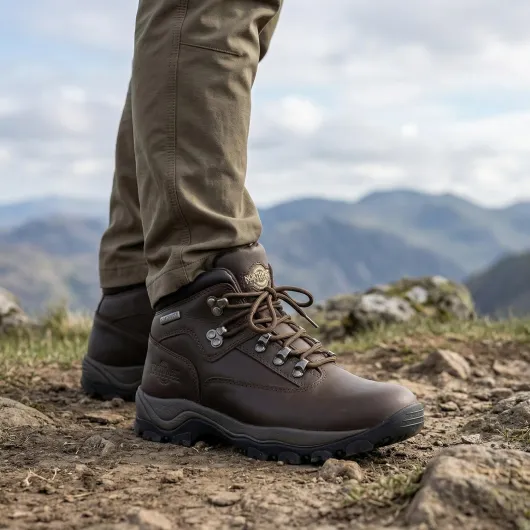
Old-school hiking look with a few modern touches
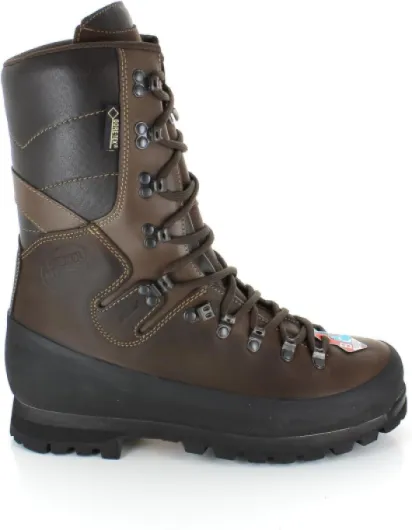
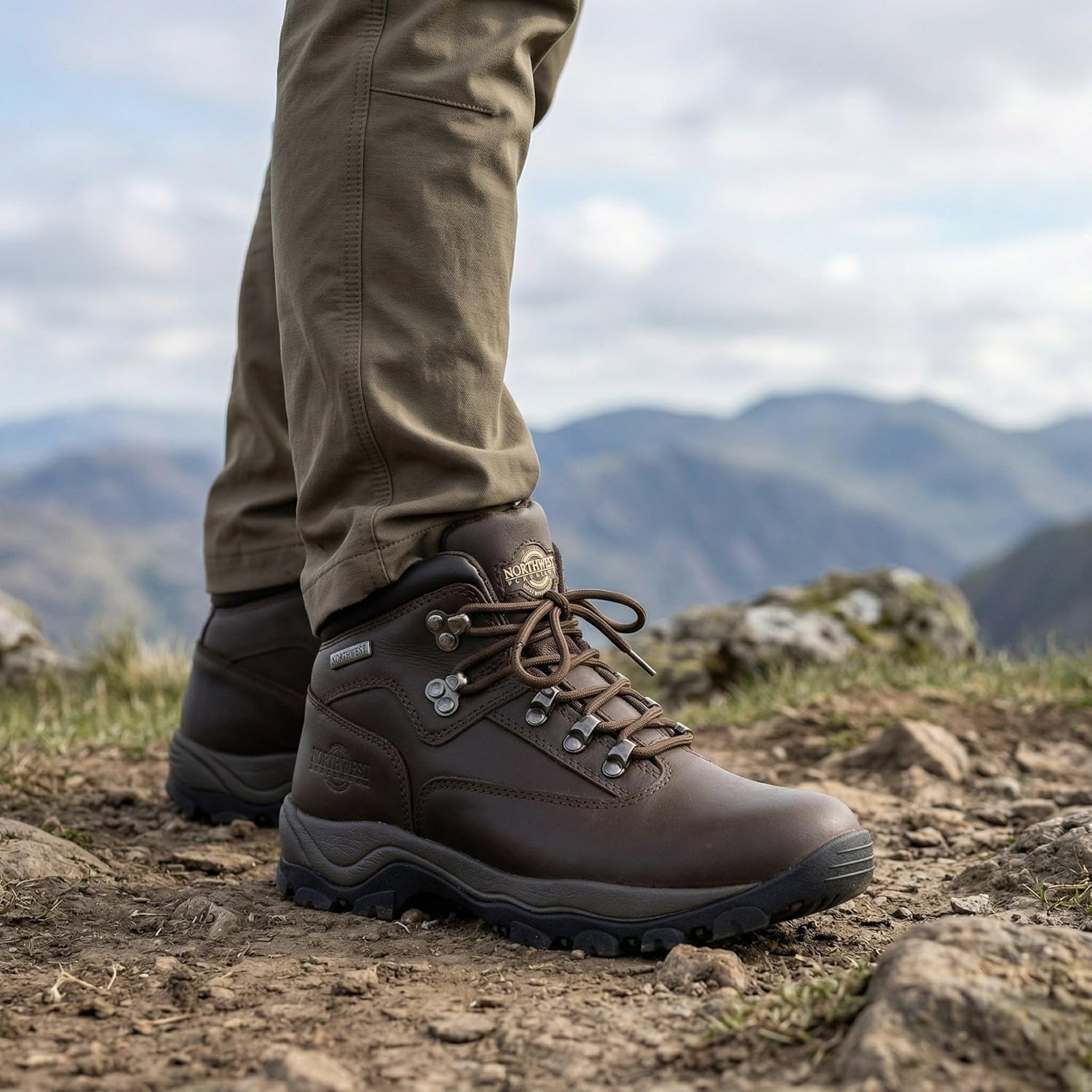
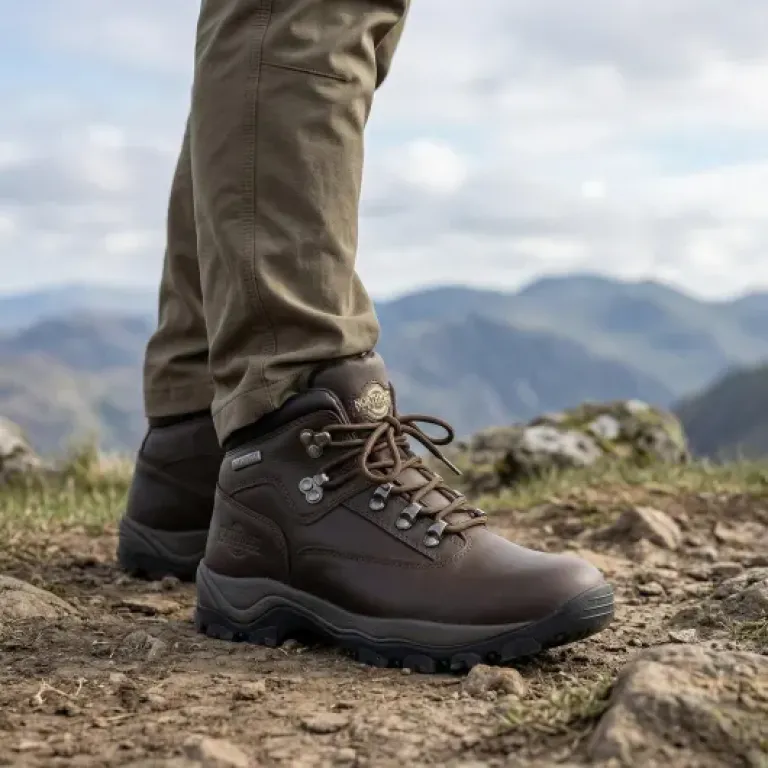
The design is pretty straightforward: classic hiking boot shape, mid-rise, closed toe, flat heel, and a solid brown leather upper. No bright colours, no weird patterns. If you like neutral, practical gear, this will suit you. You can wear them with jeans for a walk to the pub or with walking trousers on the trail and they don’t look out of place either way. They’re not stylish in any special way, but they also don’t look cheap or cartoonish.
The sole is where most of the visual character comes from. It’s thick, with deep lugs that clearly aim at grip on mud and loose ground. Side-on, the rocker profile is mild; it doesn’t roll you forward like a running shoe, which means the first few walks feel a bit flat and clunky, especially on tarmac. On the plus side, that flatness gives a very stable platform when you’re on uneven ground, roots, or rocks. I felt sure-footed stepping on loose stones, even if the boot doesn’t feel agile.
The upper uses panels of leather with stitching that looks decent, not super fine but robust enough. Around the toe area, there’s a sort of rock guard edge built into the design. It’s not a giant rubber bumper like some mountain boots, but it does protect your toes a bit from stubbing into stones. I kicked a couple of rocks by accident and didn’t feel anything painful; the boot took the hit. The padded collar and tongue also add a bit of bulk visually, but they help with comfort and stop debris getting in.
In terms of design flaws, the main one for me is bulk and weight. You feel like you’re wearing proper boots, not shoes. For short walks and bad weather, that’s fine. For long days or faster hikes, that design becomes tiring. Also, there’s not much ventilation built into the design – no big mesh panels, just small bits – so this is clearly aimed at autumn, winter, and maybe cooler spring days, not hot summer trails. Overall, the design is honest: built for durability and grip, not for speed or style points.
Comfort: fine for a few hours, not ideal for long all-day hikes
Comfort-wise, these boots are okay but not great. Out of the box, the leather was a bit stiff, especially around the toe box and the flex point near the ball of the foot. The padded collar and tongue helped a lot around the ankle – I didn’t get rubbing there – but the forefoot felt tight for the first couple of outings. After about four or five walks (roughly 2–3 hours each), the leather started to soften and flex better, and the overall feel improved quite a bit.
The midsole and insole combo gives decent cushioning on normal walks, but if you’re spending a full day on your feet, you’ll probably start to feel the hardness underfoot. On a longer hike I did (around 15 km, mixed terrain), by the last few kilometres my feet felt tired and a bit sore under the heel and ball. Not blistered, just fatigued. For me, that’s a sign that the cushioning is fine for casual use, but not really built for heavy mileage. With upgraded insoles, I think they’d be more comfortable on longer days.
One thing to note: they are on the heavier side. After wearing lightweight trail shoes for a while, going back to these made my legs work harder, especially on uphill sections. On flat ground, you don’t notice it so much, but on longer walks or if you’re carrying a backpack, you feel the weight. If you’re just walking the dog for 30–60 minutes, it’s no big deal. If you’re aiming for several hours of hiking, it adds up.
In terms of fit, in my usual UK size they felt true to size length-wise, but slightly narrow across the forefoot at first. After a short break-in period, that eased up, but if you have very wide feet, you might find them snug. The padded collar holds the ankle nicely without digging in, and the laces allow enough adjustment to get a secure fit. Overall, I’d call the comfort decent but nothing special: perfectly fine for daily walks and moderate hikes, but not the boot I’d choose for multi-day trekking or back-to-back long hikes.
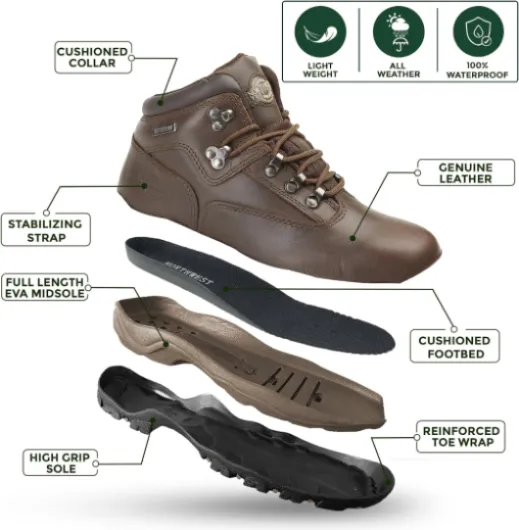
Leather upper and rubber sole: tough but not very breathable
The upper is full leather, and you can feel that right away. It has that slightly waxy, coated feel that suggests it will handle rain and mud reasonably well. After multiple walks through wet grass and a couple of shallow puddles, the leather surface beaded water nicely. I also lightly wiped mud off once it dried, and the leather didn’t stain badly. For the price range, the leather feels pretty solid, not luxury, but sturdy enough for regular outdoor use.
The sole is made of rubber with deep lugs. Grip-wise, it did its job on wet grass, leaf-covered paths, and compacted mud. I didn’t have any scary slips, even on sloped, damp ground. On smoother indoor surfaces like tiles, it’s okay but not perfect – you need to be a bit careful if the floor is wet. The EVA midsole is there for cushioning, but it’s not super soft. Think basic shock absorption rather than plush comfort. On rocky paths, I didn’t feel sharp stones poking through, which is a good sign if you often walk on gravel or forest tracks.
Inside, there’s a foam insole that’s removable. It’s fine but not great. After about an hour or two of walking, I could feel my feet wanting a bit more support under the arch. If you have flat feet or are picky about insoles, I’d honestly swap them out for a better pair. The lining feels synthetic and practical rather than comfy or breathable. It doesn’t irritate, but it also doesn’t help much with sweat management. After longer walks, my socks were damp, which is expected with waterproof leather boots that don’t have big mesh panels.
Overall, the materials feel geared toward durability and basic comfort, not high-tech performance. Leather upper, rubber sole, foam insole – nothing fancy, but it gets the job done. If you want something very light and airy, this isn’t it. But if you like the idea of a leather boot that can take abuse in wet fields and rough tracks, the material choice makes sense, especially considering the price bracket.
Built to take abuse, but time will tell on the finer details
Durability is one of the areas where these boots feel pretty reassuring. After several weeks of use on mixed terrain – wet fields, forest tracks, gravel paths, and some rocky sections – the leather upper still looks in good shape. There are a few creases where the boot flexes, which is normal, but no cracks, no peeling, and no stitching coming loose so far. I’ve knocked them against rocks and tree roots a few times, and the toe area with the rock guard edge has held up nicely, just a few scuffs that you’d expect on any outdoor boot.
The rubber sole shows minimal wear after this period, even under the heel where I usually wear shoes down first. The lugs are still sharp and deep. I’d expect this kind of sole to last a good while for someone using them for weekend hikes and daily dog walks. If you’re using them every single day for heavy work or long hikes, of course they’ll wear faster, but nothing in my testing suggests they’re fragile. The glue between the sole and the upper still looks solid with no signs of separation.
Inside, the insole has compressed a bit where my heel sits, which is normal for basic foam. It’s not falling apart, but you can feel it’s not as springy as on day one. The lining hasn’t torn or rubbed through anywhere yet, even at the heel where friction is highest. The laces are also holding up fine – no fraying or stretching so far – and the metal eyelets/hooks feel secure, not loose or rattling.
Overall, from a durability point of view, these boots give the impression of being tough enough for regular outdoor abuse, especially considering the price. They’re not indestructible mountain boots, but for someone who wants a pair of leather boots for several seasons of weekend walking and bad-weather chores, they seem up to the job. The only thing I’d keep an eye on long-term is the insole comfort; that’s usually the first thing to feel tired, and swapping insoles is an easy upgrade if you plan to keep them for years.
Waterproof and grippy, but heavy and warm on longer outings
On the performance side, the two things that stand out are waterproofing and grip. The NWTDRY membrane plus the leather upper did their job. I walked through wet grass, shallow puddles, and muddy paths several times, and my feet stayed dry every time. The only time I felt any dampness was from sweat on a longer, faster hike, not from water getting in. As long as you don’t fully submerge them above the ankle, they keep water out well enough for typical UK-style bad weather.
The grip from the deep lugs is solid on most outdoor surfaces: grass, forest trails, loose stones, and damp soil. I didn’t have any major slips going up or down mild slopes. On very smooth, wet rock, they’re okay but not amazing – you still need to watch your footing. On tarmac and pavement, the sole feels quite firm and a bit noisy, but that’s normal for a proper hiking-style sole. If most of your walking is on roads, they’ll feel overkill and slightly clunky.
Where performance dips is in breathability and long-distance comfort. Because they’re waterproof leather with a membrane, they run warm. On a cool autumn day, that’s nice. On a mild spring day or if you’re pushing the pace, your feet will likely get sweaty. After a 15 km walk, my socks were damp from sweat, even though it wasn’t very hot outside. They’re clearly better suited to autumn/winter and cooler spring conditions than to summer hiking.
In terms of stability, the mid-rise cut and firm sole give a secure feel. I never felt like my ankle was about to roll, even on uneven forest ground. But that stability comes with a trade-off in flexibility; they don’t feel nimble. If your idea of hiking is slow and steady, that’s fine. If you like moving fast or scrambling, you’ll notice the limitation. Overall, the performance is good enough for casual hiking, dog walking, and weekend trails, but I wouldn’t pick these for serious mountain routes or very long treks.
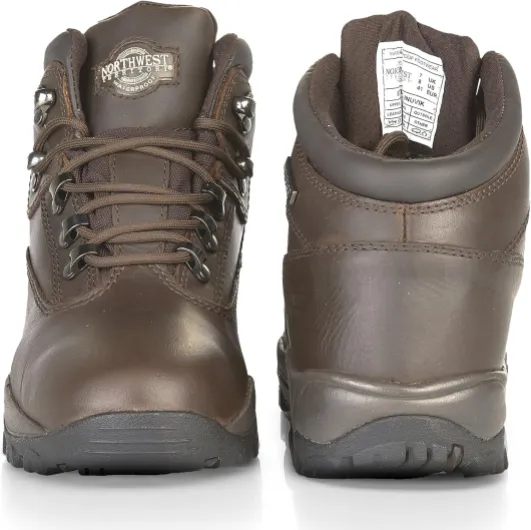
What you actually get when you open the box
Out of the box, the INUVIK boots look exactly like what they are: classic brown leather hiking boots with a mid-rise ankle. Nothing flashy. The colour is a dark “waxy brown” that hides dirt pretty well. After a couple of muddy walks and a quick wipe with a damp cloth, they still looked decent, which I appreciated because I don’t enjoy spending time cleaning boots. The branding is low-key, which I like – you’re not a walking billboard.
The boot is ankle-high with a padded collar and tongue. There’s a mesh detail around the collar, but most of what you see is leather. The lacing system is simple: standard eyelets down low, then hooks at the top for quick tightening. The sole is visibly chunky with deep lugs, and you can tell straight away it’s built more for grip and durability than for lightweight comfort. If you’re used to trainers, they’ll feel big and a bit clumsy at first.
In hand, they feel solid but not crazy stiff. You can flex the sole a bit with both hands, but not much. The leather out of the box is slightly stiff, so don’t expect a slipper-like feel on day one. The inside has a foam insole already installed; it’s not thick like a running shoe but not paper-thin either. I’d call it average. The lining feels synthetic even though the description mentions leather – whatever it is, it doesn’t feel luxurious, just practical and easy to wipe clean if needed.
Overall, as a product, the presentation screams practical and budget-friendly, not premium. The box is basic, no spare laces, no fancy extras. But at this price point, I wasn’t expecting more. You’re clearly paying for a leather upper and a chunky sole, not for fancy packaging or branding. If you just want a pair of boots you can throw by the door and grab for bad weather, the way they’re presented matches that purpose pretty well.
Pros
- Genuinely waterproof in typical wet grass, puddles, and rain thanks to leather + membrane
- Sturdy leather upper and deep-lug rubber sole that feel built to last for regular use
- Good grip and stable feel on grass, forest trails, and uneven ground
Cons
- Heavy and a bit clunky compared to more modern, lightweight hiking boots
- Average insole and limited breathability, not ideal for long or hot-weather hikes
Conclusion
Editor's rating
After using the Northwest Territory INUVIK boots for a while, I’d describe them as solid, no-nonsense leather hiking boots that suit casual walkers more than hardcore hikers. They’re waterproof enough for wet grass, puddles, and typical autumn/winter weather, and the grip from the deep rubber lugs is reliable on most trails. The build feels sturdy, the leather holds up well, and they give a reassuring, protective feel underfoot and around the ankle.
On the flip side, they’re not light, not especially breathable, and the stock insole is pretty average. For dog walks, weekend strolls, and moderate hikes, they’re perfectly fine once broken in. For long, fast, or technical hikes, you’ll probably want something lighter and more comfortable from a bigger outdoor brand. If you’re on a budget and just want a tough, waterproof leather boot for everyday outdoor use, these are good value. If you’re planning serious trekking or you’re picky about comfort, I’d treat these as an entry-level option and consider spending more.