
Summary
Editor's rating
Value: fair price if you use them hard
Design: wide, rugged, and a bit old-school
Comfort: wide and supportive, but not a slipper
Materials: tough leather, legit waterproofing, decent breathability
Durability: built to take abuse, time will tell on the membrane
Trail performance and everyday use
What you actually get with the Targhee 3 Low
Pros
- Wide toe box and good arch support make them comfortable for wider feet and weak arches
- Durable leather upper with strong toe protection and solid outsole grip on mud and rocks
- Waterproof membrane that actually keeps feet dry in wet grass and shallow puddles
Cons
- Run a bit warm due to leather and waterproof membrane, not ideal for hot climates
- Laces are on the short side, making secure double-knotting tricky
- Feel firmer and heavier than lightweight trail runners, which some people may not like

Specifications
View full product page →| Brand | KEEN |
Trail shoes I can actually wear all day
I’ve been using the KEEN Men’s Targhee 3 Low Height Waterproof Hiking Shoes (size 11, Bungee Cord/Black) as my main pair for about three weeks now. I’ve worn them on actual hikes, walking the dog on wet sidewalks, and just as everyday shoes for errands. So this isn’t a lab test; it’s just how they behave in real life when you stop babying them. Short version: they’re solid, especially if you have wider feet, but they’re not perfect.
The first thing I noticed when I put them on was the fit around the toes. KEEN’s wider shape is real – my toes finally had room to move instead of being squeezed like in most "sporty" shoes. I didn’t get that instant wow feeling, but after a full day on my feet, I realized I wasn’t thinking about my shoes, which is usually a good sign. They just quietly did their job.
I used them on two decent hikes: one rocky, dry trail of about 8 km, and another muddy walk after a full night of rain. They handled both without me slipping around or feeling every rock through the sole. They feel more like sturdy trail shoes than light runners. If you’re coming from a soft sneaker, they’ll feel a bit heavier and more rigid at first, but that’s kind of the point with this type of shoe.
Overall, my first impression is: practical, built to last, not flashy. They’re the kind of shoe you grab when you don’t want to think too much: wet day, mixed terrain, weekend trip, whatever. There are a couple of annoyances, like the laces and the break-in feel, but nothing that kills the deal. Just don’t expect them to feel like running shoes out of the box.
Value: fair price if you use them hard
In terms of value, these KEEN Targhee 3 Low shoes sit in that mid-to-upper price range for hiking shoes. They’re not budget, but they’re not the most expensive either. For the money, you’re getting real leather, a waterproof membrane, solid support, and a design that can double as an everyday shoe. If you’re the kind of person who will actually hike, walk a lot, and wear them in bad weather, the cost makes sense because they feel like they’ll last more than one season.
Compared to cheaper hiking shoes I’ve tried, the main differences are: better toe room, more stable support, and a more durable feel in the leather and outsole. Cheaper pairs often start peeling, cracking, or losing grip pretty fast. Here, it feels like you’re paying for longevity and comfort for wider feet. If you have narrow feet and never had issues with cheap shoes, you might not see the point in paying extra for these.
On the flip side, if you’re mostly walking on city streets or doing very light trails a couple of times a year, these might be overkill. You could get a non-waterproof trail runner or a lighter hiking shoe for less money and be perfectly happy. Where the Targhee 3 really earns its price is for people who want one pair that can handle: rain, mud, rocks, and daily wear without falling apart. The Amazon rating around 4.3/5 lines up with my feeling: very good overall, with a few quirks like short laces and some warmth in hot weather.
So, value-wise, I’d say they’re a good buy if you need durability, waterproofing, and a wide fit. If you’re just chasing the lowest price, you’ll find cheaper options. If you want something more technical and lighter for fast hiking or trail running, you’ll find more specialized shoes too. These sit in the middle: solid, dependable workhorses for regular outdoor use.
Design: wide, rugged, and a bit old-school
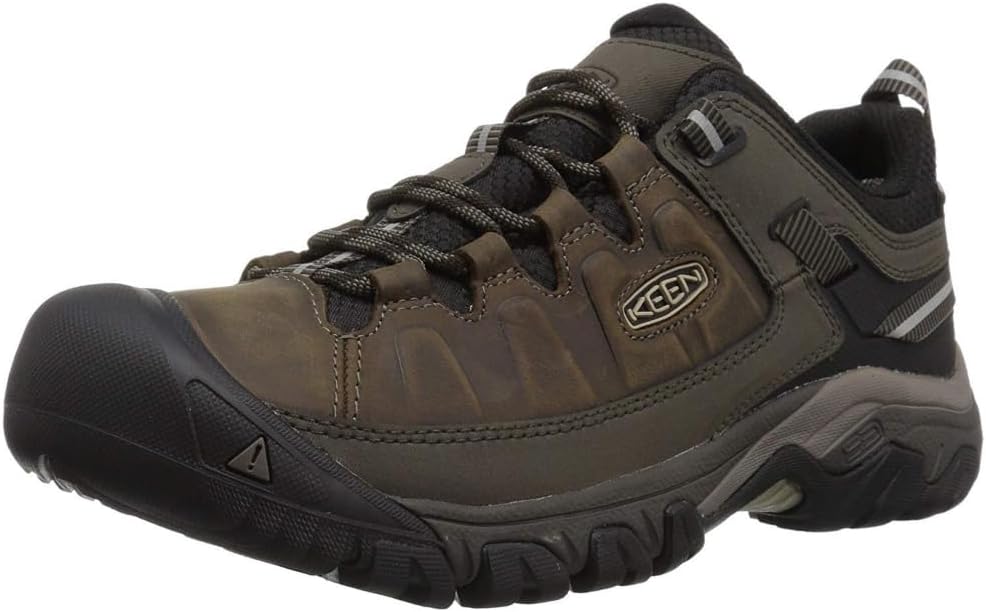
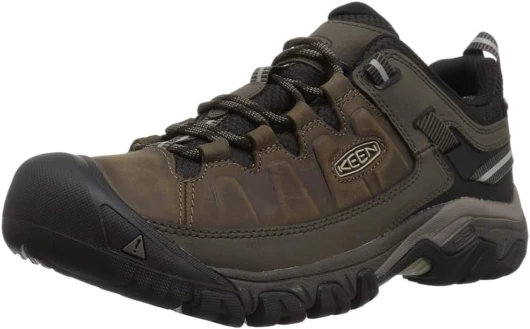
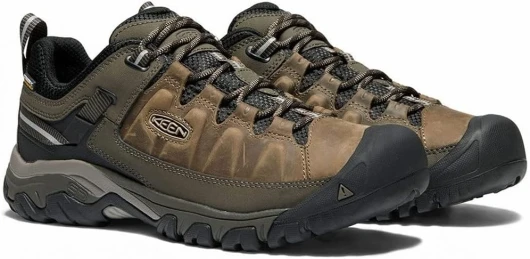
The design is very much function first, style second, but in a good way. The toe box is noticeably wide – KEEN’s “Original Fit” is not marketing talk, you can see the difference just by looking at it next to a more narrow hiking shoe. The toe area is also heavily protected with a thick rubber cap. That’s not the prettiest thing, but when you slam your toes into a rock or a root, you’re glad it’s there. I did that a couple of times and felt pressure but no pain, so the protection works.
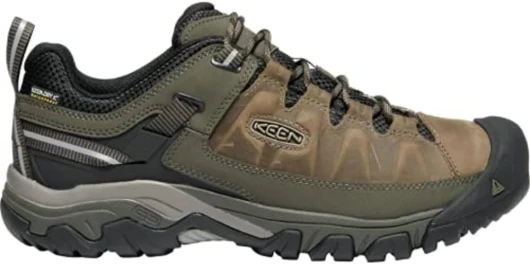
The upper combines leather panels with mesh sections. The leather gives structure and durability, while the mesh areas help a bit with breathability. The color blocking on the Bungee Cord/Black version is low key: mostly earthy brown with dark grey/black overlays. It’s the kind of design that hides dirt and mud well. After a muddy walk, once the mud dried and I brushed it off, they looked almost new aside from a few small creases in the leather.
The lacing system is pretty standard: fabric loops and a couple of stronger eyelets near the top. Nothing fancy like BOA or weird hooks, but it works. My gripe is with the lace length: for my size 11, the laces feel a bit too short if I want to tighten them properly and still have room for a good double knot. One Amazon user even reused old laces because of that, and I understand why. It’s not a dealbreaker, but for this price range, slightly longer laces would be a simple fix.
Underneath, the outsole has 4 mm multi-directional lugs that are pretty aggressive without being ridiculous. You can walk on pavement without feeling like you’re wearing soccer cleats, but you still get grip in mud and on rocks. The sole is also non-marking, which I tested on indoor floors – no black streaks in the hallway, which is nice if you wear them indoors sometimes. Design-wise, these shoes are clearly built to take abuse, not to win style contests, and for a hiking shoe, that makes sense.
Comfort: wide and supportive, but not a slipper
Comfort-wise, these are very friendly to wider feet and weak arches, but they’re not cloud-soft. The first two days, I could feel that the midsole was firmer than my usual casual sneakers. Not painful, just more structured. After a few walks, the shoe softened a bit and my foot got used to the support. The key thing is the toe box: my toes finally had room to spread out. If you’re used to narrow trail shoes, this will feel like a relief. I didn’t get any blisters, even on a first 6 km hike, which surprised me.
The arch support is clearly better than in regular sneakers. One Amazon reviewer mentioned having weak arches and liking these, and I can back that up. I normally start feeling arch fatigue after a long day in flat shoes. In these, I did a full day (shopping, walking, stairs) and my arches felt fine. The external support shank and the heel cradle do their job: your foot feels locked in, especially around the midfoot and heel, while the toe area can move. If you like a very loose, flexible feel, you might find them too structured, but if you want support, they deliver.
Underfoot cushioning is on the firmer side but with decent rebound. It doesn’t pack down quickly. After several longer walks, they still feel the same. I’d say they are comfortable in a practical way: your feet feel supported and protected, not pampered. For me, that’s better on rocky trails – I don’t want to feel every little stone. On the downside, if you do mostly city walking and want a super soft ride, these might feel a bit overbuilt.
One small negative: because they’re waterproof and leather-heavy, they run a bit warm. On a hot day, my feet wanted to get out of them once I got home. On cooler or rainy days, they’re perfect. So comfort is great for support and width, decent for all-day wear, but just okay for hot-weather breathability. If your priority is foot support and toe room, these are a strong option. If your priority is a light, airy shoe, look elsewhere.
Materials: tough leather, legit waterproofing, decent breathability
The upper is 100% leather combined with breathable mesh, plus KEEN’s KEEN.DRY waterproof membrane inside. The leather feels thick and sturdy, not thin and plasticky like some cheap “leather” shoes. After a few hikes and some kneeling in the yard, I don’t see any peeling or cracking. There are some creases where the foot bends, which is normal. The mesh inserts don’t look fragile either; they haven’t snagged or frayed yet, even after brushing off dried mud with a stiff brush.
Waterproofing actually holds up. I walked through wet grass and some shallow puddles where water came up to just below the laces. My socks stayed dry the whole time. The membrane seems solid: it lets some moisture out but not like a super-breathable trail runner. On cool to mild days, my feet felt fine. On a warmer day (around 24°C) doing a long walk on pavement, my feet got warm and a bit sweaty, but not soaked. So breathability is okay for a leather waterproof shoe, but if you run hot or hike in very warm climates, you’ll notice the heat build-up.
The lining is quick-dry fabric. After getting some sweat in them one day, I left the insoles out overnight and by the next morning, both shoes and insoles were dry enough to wear again. The insole itself is removable and has some arch support built in. It’s not the most high-tech insole ever, but it’s better than the flat ones you get in cheap sneakers. If you use custom orthotics, you can pull the stock insole out easily and drop yours in.
KEEN also mentions Eco Anti-Odor (a probiotic-based treatment) and leather from Leather Working Group–certified tanneries. In real life, what that means is: after a few sweaty uses, the shoes don’t stink yet. I can’t say how that holds up in six months, but so far they’re fine. Overall, the materials feel like they’re built to be used hard: thick leather, strong stitching, and a sole that doesn’t feel like it’s going to peel off after one season.
Durability: built to take abuse, time will tell on the membrane
Durability is where these shoes feel reassuring. The leather upper is thick and doesn’t show much wear after a few weeks of regular use and a couple of dirty hikes. I’ve scraped them against rocks and branches, and the leather just has minor marks that you can mostly brush off or condition later. The rubber toe guard is tough – I’ve hit it on rocks more than once and it hasn’t peeled or separated from the leather at all.
The outsole shows very little wear so far. The lugs still look sharp, and there’s no rounding off at the heel yet, even though I’ve worn them on pavement a fair bit. That’s usually where cheaper soles start to go first. The stitching all around the shoe looks clean and solid. I checked the joins between the upper and the sole, and there’s no sign of separation or bubbling. One Amazon reviewer mentioned having several pairs last many years, and based on how these feel in hand, I can see why.
The only long-term unknown is the waterproof membrane. All membranes eventually lose some performance over time, especially if you flex them a lot and don’t care for the leather. Right now, they’re fully waterproof in puddles and wet grass. To keep that going, you’ll want to clean off mud, let them dry away from direct heat, and occasionally use a leather cleaner/conditioner or DWR spray, like KEEN suggests. If you treat them like cheap sneakers and throw them in a corner wet, don’t expect miracles in two years.
Overall, these feel like shoes that can handle several seasons of weekend hikes plus daily abuse. They’re not fragile, and nothing about them feels "on the edge" of breaking. If something does annoy me long-term, I suspect it would be the laces wearing out first, or the inside heel lining eventually rubbing through, which happens with most shoes. But in terms of build, they seem pretty solid for the price bracket, especially compared to lighter, more "fast" hiking shoes that often die quicker.
Trail performance and everyday use
On the trail, the traction is the standout. The KEEN ALL-TERRAIN rubber with 4 mm lugs grips well in mud and on rocks. On a wet, muddy path, I didn’t feel like I was skating around, and going downhill felt controlled. On rocky sections, the lugs and the bruise plate did their job: I could step on sharp rocks without feeling a painful pressure point under my foot. That bruise plate is one of those things you don’t think about until you don’t have it. Here, it’s clearly there, and it helps.
On wet pavement and smooth surfaces, they’re also solid. I walked through wet city streets and polished tiles in a store, and I didn’t feel them slipping. The soles are non-marking, and I tested that on indoor floors – no black lines. So you can wear them inside without annoying anyone. They’re not running shoes though: the flex is moderate, not super bendy, so while you can walk fast in them, they’re not ideal if you plan to jog.
Waterproof performance has been good so far. I intentionally stepped into puddles and walked through soaked grass for about 15–20 minutes. My socks stayed dry. The only way you’d get wet is if water goes over the top or if you stand in deep water for a long time. The KEEN.DRY membrane seems to be working as advertised. Of course, like all waterproof shoes, if you sweat a lot inside, some moisture will stay in, but that’s normal.
For everyday use, they act like supportive, tough sneakers. I’ve worn them to run errands, stand around for a couple of hours, and walk the dog. They’re comfortable enough for daily use, but you feel that they’re built for more than just city walking. If you do a mix of trail and urban, these make sense. If you only walk on flat sidewalks and never see dirt, they might be overkill, and you’d probably be happier in something lighter and cheaper.
What you actually get with the Targhee 3 Low
On paper, the KEEN Targhee 3 Low is sold as a waterproof hiking shoe with a leather upper, KEEN.DRY membrane, and a wider fit. In practice, it feels like a halfway point between a classic leather hiking boot and a beefy sneaker. Each shoe is around 500 g, so not ultra-light, but you can still wear them all day without feeling like you’ve got bricks on your feet. If you’re used to minimal shoes, these will feel bulky; if you’re used to older hiking boots, these will feel reasonably light.
The Bungee Cord/Black color is pretty neutral. It’s basically brownish with black accents and some subtle details. It goes fine with jeans, hiking pants, even casual chinos. Nothing flashy, nothing that screams “I just came down from Everest” when you walk into a store. That’s good if you want one pair that works for workdays and weekends. Several Amazon reviewers mentioned liking the look and calling them sturdy and good-looking, and I’d agree – they look like proper outdoor shoes without being loud.
Out of the box, mine had no glue marks, no bad stitching, and no weird chemical smell. The laces, though, felt a bit short for my taste, especially if you like to really lock your foot in. One Amazon review called that out too, and I get it. I can tie them, but I don’t have a lot of extra lace to double-knot. On a long hike, that’s a bit annoying because I like a secure knot so I’m not stopping all the time.
So overall, what you get is a robust, waterproof low-cut hiking shoe that looks decent enough for daily use, with a clear focus on durability and support rather than being super light or ultra-breathable. It’s not flashy tech, but the basics are there: solid leather, thick sole, reinforced toe, and a shape that actually respects wider feet. For most people who just want a reliable outdoor shoe, this is exactly the kind of package that makes sense.
Pros
- Wide toe box and good arch support make them comfortable for wider feet and weak arches
- Durable leather upper with strong toe protection and solid outsole grip on mud and rocks
- Waterproof membrane that actually keeps feet dry in wet grass and shallow puddles
Cons
- Run a bit warm due to leather and waterproof membrane, not ideal for hot climates
- Laces are on the short side, making secure double-knotting tricky
- Feel firmer and heavier than lightweight trail runners, which some people may not like
Conclusion
Editor's rating
The KEEN Men’s Targhee 3 Low Height Waterproof Hiking Shoes are reliable, wide, and built to work, not to impress on Instagram. The main strengths are the roomy toe box, solid arch and heel support, and real waterproofing that actually keeps your feet dry in puddles and wet grass. The leather feels tough, the outsole grips well on mud and rocks, and overall they give you that “I can step anywhere and not worry” feeling. If you have wider feet or weak arches, these make a lot of sense as both trail shoes and everyday beaters.
They’re not perfect though. They run a bit warm because of the waterproof membrane and leather, so they’re not ideal for hot climates or people who run very hot. The laces are on the short side, which is annoying if you like a double knot. And if you’re used to light, flexible running-style shoes, the firmer, more structured feel will take some getting used to. They’re more about stability and protection than about being ultra-light and airy.
I’d recommend these to hikers, dog walkers, and anyone who spends a lot of time on their feet outdoors in mixed weather and wants one pair that can handle most situations. They’re also a good choice if you’ve struggled with narrow hiking shoes crushing your toes. If you mainly walk on flat city sidewalks, rarely see mud, or want something super light for fast hiking or trail running, I’d look at other models. But if you want a tough, comfortable, waterproof low-cut hiker with extra toe room, the Targhee 3 Low is a pretty solid option.