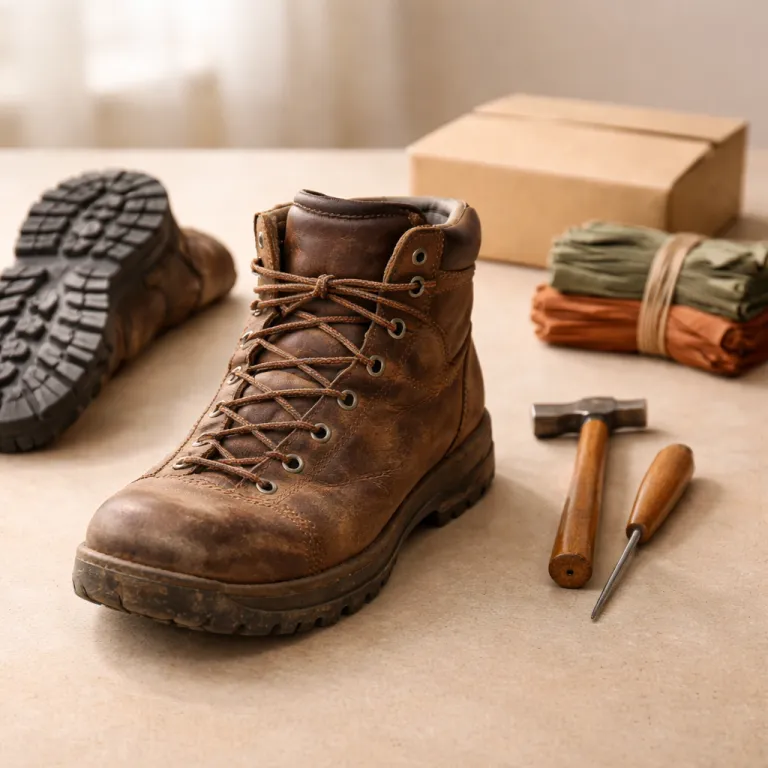

Keeping sustainable hiking boots on the trail, not in the bin
The greenest outdoor footwear on your porch is the hiking boot you already own and can keep walking in. For serious sustainable hiking, the first question is not which eco friendly brands to buy, but which existing boots can be repaired, resoled and kept in service for another 800 to 1,000 kilometres. That shift in mindset matters more for the planet than any marketing about recycled materials or ethical sustainable fashion, because it directly cuts new manufacturing, transport emissions and waste; a 2018 life cycle assessment from the Massachusetts Institute of Technology estimated that producing a single pair of running shoes can generate around 14 kilograms of CO₂-equivalent, so every extra year of use spreads that footprint over more distance.
Look closely at your current hiking boots or hiking shoes and you will usually see either a cemented construction or a stitch down or double stitch welt that joins the upper to the outsole. Cemented shoes and boots glue the midsole and rubber together, which keeps the regular price low but makes resoling almost impossible once the foam dies and the tread peels. Stitch down or Norwegian welt construction, by contrast, lets a cobbler remove a worn Vibram sole, add fresh sustainable materials where possible and send the same friendly footwear back to you with many more seasons of sustainable hiking ahead, often for a resole cost in the range of a mid priced new pair of trail shoes; specialist repair shops such as Dave Page, Cobbler in Seattle and Rocky Mountain Resole in Colorado publicly list typical resoling prices between roughly 120 and 200 US dollars, depending on the boot and the replacement sole.
For backpackers who care about sustainability and price, that construction detail is the sure check that separates sustainable footwear from disposable fashion footwear. Limmer boots, the Hanwag Alaska, the Alico Summit and the Danner Mountain Light are classic examples of a hiking boot built on a resoleable platform with a full leather upper and a stitch down or double stitch rand. Those models cost more than a typical sale price trail runner at a big brand retailer, but when you spread the cost over two or three resoles the effective price per kilometre and the carbon impact both drop sharply, because each resole can add hundreds of kilometres of use without repeating the full production footprint; several specialist cobblers and brand repair partners publicly quote resoling prices in the region of 120 to 200 US dollars, which aligns with the independent repair ranges noted above and confirms that long lived boots can compete with fast fashion footwear on total cost of ownership.
Resoleable vs cemented boots: where sustainability really lives
Most modern hiking boots and hiking shoes use cemented construction, which means the outsole is glued to the midsole and upper in a way that is fast, cheap and hard to reverse. Industry repair specialists and cobblers commonly estimate that a clear majority of mass market outdoor footwear on a typical wall falls into this category, which is why so many otherwise sustainable hiking boots still end up in landfill once the tread is gone. The regular price looks attractive and the sale price looks even better, but the boot is effectively a consumable rather than a long term tool, with limited repair options and a short practical lifespan that often ends when the midsole foam collapses or the rubber delaminates under normal backpacking loads.
Stitch down and double stitch boots tell a different story, because the leather upper flares out and is sewn directly to the midsole and then to a Vibram or similar outsole. That design lets a skilled cobbler cut the thread, peel the worn sole, add new recycled materials where appropriate and rebuild the boot around the original last, which keeps both fit and working conditions for your feet consistent. When brands pair this construction with sustainable materials such as recycled polyester linings and eco conscious water repellents that are free from PFAS, you get genuinely sustainable hiking boots rather than just eco friendly marketing copy, and you gain access to multiple future resoles instead of a single use outsole, which is why many European mountain boot makers still promote stitch down and Norwegian welt designs as their most durable and repairable options.
There is one honest counterpoint that every experienced hiker should understand before paying for a resole at full price. If the midsole foam has compressed into a brick after years of heavy hiking, no amount of new rubber will restore cushioning or stability, so the boot is mechanically dead even if the leather still looks friendly and polished. Many repair shops describe this as a boot that feels harsh and unstable under load, with visible creasing and cracks in the midsole, and in that case sustainable footwear practice means salvaging insoles and laces, sending the boot into a dedicated shoe recycling stream and choosing a new hiking boot with a construction and supply chain that will support future resoles, ideally confirmed by the manufacturer or a trusted repair shop that can tell you in advance whether the model is built on a serviceable platform.
Brand programs, PFAS phase outs and the ethics behind the label
Once you accept that keeping boots alive is the first sustainable move, the next step is to look at brands and their repair or takeback programs. Patagonia Worn Wear, REI Re/Supply and Arc'teryx Used Gear all create second life pathways for hiking boots and hiking shoes that still have structural integrity but no longer fit their first owner. These programs often resell at a lower regular price than new models, which makes ethical sustainable choices more accessible while extending the life of existing materials and reducing demand for virgin resources; Patagonia and Arc'teryx have publicly highlighted repair volumes in annual impact reports, and REI’s used gear initiative has expanded from pilot projects into a standing resale channel for outdoor footwear and apparel.
Some brands go further by publishing a code of conduct that covers working conditions, leather animal welfare and the environmental impact of every boot and shoe in their range. When you evaluate sustainable hiking boots, read beyond the glossy sustainability page and look for concrete details about the tannery, the recycled materials content, the use of recycled polyester and the transparency of the supply chain. A truly eco conscious brand will explain how it manages friendly footwear chemistry, including the shift to PFAS free waterproof membranes that REI and Keen have already pushed across much of the outdoor footwear market, often documented in public product standards, corporate responsibility reports and chemical management updates that outline timelines, restricted substance lists and progress toward eliminating long chain fluorinated compounds.
Ethical questions do not stop at the factory gate, because sustainability also includes end of life planning and honest product ratings. Some brands now label their sustainable footwear with repairability scores, resoling options and guidance on whether the boot is best suited to light hiking, regular backpacking or technical mountaineering. When those ratings are backed by clear information about sale price versus regular price and the expected lifespan in kilometres, you can make a rational choice that balances eco friendly intent, financial cost and real world durability, instead of relying only on broad green claims; where possible, look for independent testing summaries or third party audits that support the brand’s stated performance and impact, such as certification from recognised leather working groups, published lifecycle assessments or verified social compliance programs.
What to do with dead boots and how to buy better next time
Every hiker eventually faces a pair of boots that are truly finished, with cracked leather, delaminated midsoles and no realistic path to repair. When that day comes, resist the urge to toss them straight into the household bin and instead look for municipal or retailer shoe recycling programs that can shred and separate the remaining materials. Some Terracycle style schemes accept mixed footwear, which lets the rubber, foam and recycled materials be downcycled into flooring, playground surfaces or insulation rather than wasted, and some city waste authorities now publish clear guidance on where to drop off worn out outdoor footwear, often alongside textile recycling points or special collection days for complex consumer products.
Before you send those hiking boots away, strip any usable parts such as laces, aftermarket insoles and hardware that can serve as spares for other shoes or boots. Then take a moment to audit what failed first, whether it was the outsole, the midsole, the leather upper or the waterproof lining, because that failure point should guide your next sustainable hiking purchase. If the midsole died early on a cemented boot, move toward a stitch down hiking boot with a known resoleable design and a brand that offers clear information about sustainable materials and working conditions in its supply chain, and consider asking a local cobbler which models they most often and most successfully repair, since many will happily share examples of boots that have already seen two or three full resoles and can point to specific models that consistently survive long mileage.
When you finally shop for new sustainable hiking boots, treat the marketing claims as a starting point rather than a verdict. Ask whether the boot is PFAS free, whether the leather animal sourcing is traceable, whether recycled polyester or other recycled materials are used in the lining and whether the brand participates in any takeback or repair program. In the end, the most ethical sustainable choice is not the pair with the highest eco fashion ratings on a hangtag, but the boot that fits your foot, survives real kilometres and can be resoled after the tenth river crossing rather than replaced at the first sign of wear, giving you a lower impact cost per kilometre over the full life of the boot and aligning your trail time with a genuinely lower footprint.
Key statistics on sustainable hiking boots and repairability
- By the middle of this decade, several major outdoor brands in the United States had announced plans to remove PFAS from mass market boots and shoes, which significantly reduced the long term environmental persistence of waterproof treatments and aligned with emerging state level regulations and retailer standards; public commitments from companies such as REI, Patagonia and Keen referenced phase out dates between 2023 and 2026 for most general outdoor footwear.
- REI committed to phasing out PFAS from its own brand footwear and from most vendor outdoor footwear models, which pushed many hiking boot brands to reformulate their durable water repellent finishes and publish updated product impact standards and chemical restriction lists, and those retailer requirements have been cited in several industry briefings as a key driver of rapid change in waterproof hiking shoes.
- Keen acted as an early mover on PFAS elimination in hiking boots and hiking shoes, which demonstrated that eco friendly chemistry could still deliver reliable waterproof ratings for serious backpackers and set a benchmark for other sustainable footwear manufacturers that later reported similar performance; Keen’s public statements on its “Forever Chemical Free” initiative helped normalise PFAS free membranes for mainstream hikers.
- High altitude mountaineering boots received a longer transition window to comply with new state level PFAS bans, which reflected the technical challenges of replacing legacy materials in extreme cold conditions and the need for further field testing before full adoption, as noted in several regulatory impact assessments and trade association submissions that discussed safety margins for professional guides and rescue teams.
Frequently asked questions about sustainable hiking boots
How can I tell if my hiking boots can be resoled ?
Look at the edge of the boot where the upper meets the sole and check whether you see visible stitching that runs all the way around. If the leather flares outward and is clearly stitched to a separate midsole and outsole, you probably have a stitch down or double stitch construction that a cobbler can resole multiple times. If everything looks like one glued block with no stitching at the edge, the construction is cemented and resoling is usually not practical, so the boot will likely be recycled or replaced once the tread and cushioning are worn out, even if the upper still appears intact.
Are leather hiking boots more sustainable than synthetic models ?
Leather hiking boots can be more sustainable when the leather comes from audited tanneries, the leather animal sourcing is transparent and the boot is built to be resoled several times. Synthetic hiking shoes that use recycled polyester and other recycled materials can also be sustainable, especially when they are PFAS free and part of a brand takeback program with clear repair or recycling routes. The most important factor is overall lifespan and repairability rather than whether the upper is leather or textile, so compare expected kilometres of use, midsole durability and resoling options before deciding which pair will genuinely stay on your feet the longest.
What should I prioritise when buying sustainable hiking boots on a budget ?
When price is tight, focus first on fit and durability, then on sustainability features that genuinely extend the life of the boot. A well fitting pair of hiking boots with a robust outsole, quality materials and access to repair services will usually beat a cheaper eco fashion option that falls apart after one season. Check whether the brand offers clear information about its supply chain, working conditions and code of conduct, and look for sale price opportunities on proven models rather than chasing the newest trend, especially if a local cobbler confirms that the model can be resoled and has a track record of surviving repeated repairs.
How do PFAS free waterproof boots perform in wet conditions ?
Modern PFAS free waterproof treatments on hiking boots and hiking shoes have improved significantly, especially from brands that invested early in new chemistries. In real trail use, PFAS free membranes and durable water repellents now keep pace with older formulas for most three season hiking, as long as you maintain them with regular cleaning and reproofing. For extreme winter or high altitude mountaineering, performance still depends heavily on overall boot design, gaiter use and user technique rather than the chemistry alone, so check product testing notes and user reviews for your specific activity and consider whether a fully resoleable boot with a robust rand will better protect your feet over time.
What is the best way to dispose of worn out hiking footwear ?
Once a boot is structurally finished and cannot be repaired, remove reusable parts such as laces and insoles, then look for dedicated shoe recycling programs through retailers or municipal waste services. These schemes can separate and downcycle rubber, foam and textile materials, which keeps your old outdoor footwear out of landfill and supports circular economy goals in the footwear industry. Avoid putting dead boots in regular household waste, because mixed materials in footwear take a very long time to break down in conventional dumps and can release pollutants over time, undermining the environmental benefits you gained from choosing sustainable hiking boots in the first place.