PFAS free rainwear hiking as the new performance baseline
Legacy waterproof shells felt immortal, but their PFAS chemistry never left our rivers. When you pull on a modern PFAS free rainwear hiking jacket, you are choosing a shorter gear lifespan over a longer planetary one, and that is a trade serious hikers should embrace. The best way to think about this shift is to treat your rain jackets as consumable safety gear rather than heirlooms.
For years, brands sold men’s and women’s hard shells with C6 or C8 durable water repellent (DWR) that beaded rain perfectly while quietly spreading PFAS into soil and bloodstreams. Many of those jackets used expanded polytetrafluoroethylene (ePTFE) membranes, the classic Gore‑Tex construction that became synonymous with waterproof and breathable protection, yet the environmental bill arrived late and steep. PFAS are now measured in rain itself, which means every free rain shower on a remote ridge can carry the same chemistry that once made your favorite rain jacket feel invincible.
Today’s pivot to PFC free systems is not marketing spin, it is regulatory reality. States from Colorado to Maine are banning PFAS in textiles and other consumer products, and by the time most current ultralight rain shells wear out, nearly every major outdoor retailer from REI to smaller co‑ops will stock only PFAS free options. That means the question for outdoor enthusiasts is no longer whether to buy PFAS free rainwear hiking gear, but which price, fabric, and construction details offer the best balance of durability, weight, waterproof performance, and ethics.
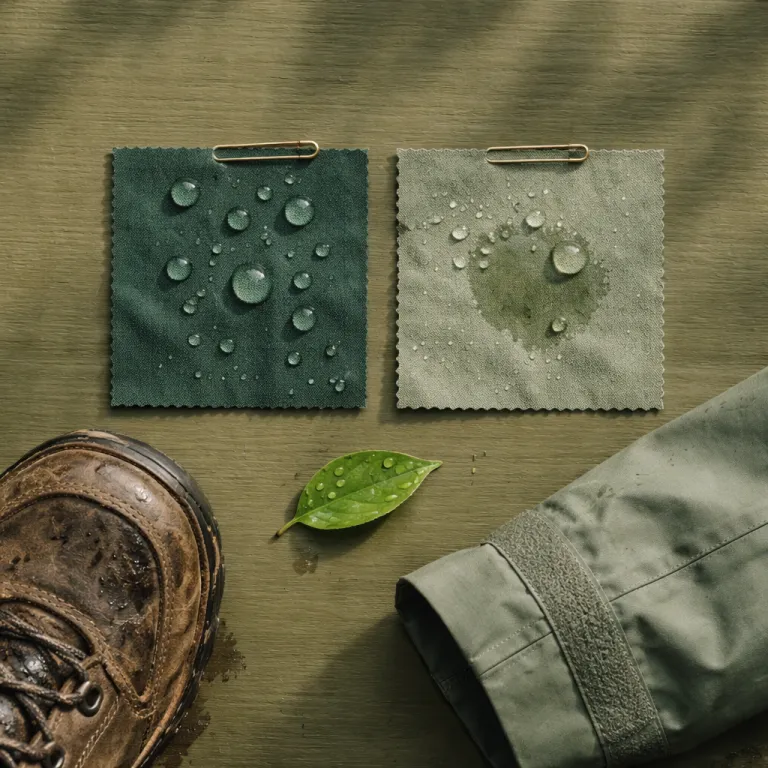
On trail, the difference shows up first in the DWR. C0 (non‑fluorinated) DWR treatments on modern jackets wet out faster under sustained rain, so your waterproof rating on paper can stay high while the face fabric darkens and clings, making the breathability rating feel worse in real storms. Hikers used to old Gore‑Tex shells often blame the new membranes, but the real culprit is the surface treatment and how often we wash and restore it.
For mountaineers and thru‑hikers who live in their rain jackets, this shift demands new habits. You cannot neglect washing, skip reproofing, and still expect a PFAS free shell to behave like an old Arc’teryx alpine jacket that shrugged off neglect. Treat your rain jacket like a rope or a helmet, with maintenance and eventual retirement baked into your plan for PFAS free rainwear hiking across seasons.
What changed inside the fabric: ePE, C0 DWR, and honest failure points
Under the hood, the new Gore‑Tex ePE and similar membranes from Arc’teryx and Patagonia are not magic, they are different compromises. Legacy ePTFE laminates relied on fluorinated chemistry end to end, while the new generation uses a thinner expanded polyethylene (ePE) layer paired with non‑fluorinated DWR on the face fabric. The result is lighter jackets with slightly lower long‑term abrasion resistance and a more honest relationship between waterproof rating and real storm abuse.
Take a modern alpine jacket from Arc’teryx or a Patagonia Torrentshell built for PFAS free rainwear hiking. On paper, the waterproof rating still clears 20,000 millimetres, and the breathability rating looks competitive with older Gore‑Tex Pro numbers, yet the face fabric will wet out sooner if you never clean it. That wet out does not mean failure of the membrane, but it does mean you feel clammy faster, especially when you close the pit zips and push hard on steep ground.
Mountaineers often ask whether the new Pro‑level membranes can handle multi‑week expeditions. The honest answer is that ePE‑based Gore‑Tex and similar “tex” systems from other brands can absolutely survive, but they will show wear in high‑friction zones sooner than the old armor‑like shells, particularly around shoulders, hip belts, and hand pockets. If you are planning serious technical routes, read detailed shell reviews alongside resources on why the Pacific Trail jacket matters for serious mountain travel to understand how specific models balance weight, waterproof performance, and long‑term durability.
For most backpackers, the failure point is not catastrophic leakage, it is cumulative dampness. Once the DWR on your rain jackets is shot, the outer fabric soaks, the zips feel cold against your neck, and even the best membrane cannot move sweat efficiently. That is why PFAS free rainwear hiking demands more disciplined washing, careful use of reproofing sprays, and storage that does not crush the fabric under heavy packs or boots.
There is a narrow but real counter‑argument from high‑altitude guides and polar travelers. On month‑long expeditions, where a single shell must endure constant harness abrasion and frozen zips, the shorter lifespan of PFAS free membranes can feel like a liability, yet that is a niche use case compared with the millions of weekend hikers buying a rain jacket at REI. For everyone else, accepting a three‑year shell instead of a five‑year one is a rational price to pay for less PFAS in trail water and less free PFAS drifting into the places we claim to love.
Field performance: how PFAS free shells really behave on trail
Out on the West Highland Way and the GR20, the new PFAS free rainwear hiking shells tell a consistent story. They feel softer, pack smaller, and demand more attention to venting than the crunchy Gore‑Tex armor many of us grew up with. If you manage expectations and use the features properly, the real‑world gap between old and new shrinks fast.
Consider a day of cold rain on the Pacific Crest Trail with a Patagonia Torrentshell, a Montbell Versalite, and an Outdoor Research Helium style ultralight rain shell in the group. The Patagonia jacket leans on a slightly heavier face fabric and generous pit zips, so it handles brush and repeated pack‑on, pack‑off cycles better, while the Montbell Versalite wins on weight‑to‑protection balance but needs more careful layering to avoid clammy build‑up. The Helium‑type shell, with minimalist hand pockets and simple zips, excels as an emergency layer yet feels out of its depth when the rain turns to sleet and the wind starts loading spindrift into every seam.
Across these jackets, the breathability rating numbers matter less than how you use the vents. Open pit zips early, manage your pace, and do not be afraid to hike with the front zip partially open under a brimmed hat to keep free rain off your face. For serious backpackers who already obsess over midsole foams and last shapes in their boots, the same attention to detail should extend to how they deploy a PFAS free rain jacket hour by hour.
Footwear choices intersect with shell performance more than most hikers admit. When your boots or trail shoes are dialed for the terrain, you move more smoothly, sweat less, and lean less on the membrane’s theoretical breathability rating to stay comfortable. Resources on choosing the right traction and spikes for mixed hiking can be as relevant to staying dry as the latest marketing around Pro‑level membranes or other waterproof technologies.
In mixed groups, I have watched men and women swap shells mid‑storm to compare feel. The pattern is clear: those coming from old The North Face or Arc’teryx Gore‑Tex shells initially complain about faster wet out, then admit that the lighter, quieter PFAS free fabrics feel better for actual hiking. Once they learn to wash the jacket regularly, refresh the C0 DWR, and avoid stuffing it damp into a pack, the performance gap narrows to the point where ethics and environmental impact become the deciding factors for PFAS free rainwear hiking.
Buying and maintaining PFAS free shells with a long view
Choosing PFAS free rainwear hiking gear now is not just a personal comfort decision, it is a generational one. The hikers buying shells today are the ones whose kids will drink from the same rivers we cross in trail runners and boots. That means we need to think about price, fabric trade‑offs, maintenance habits, and brand behavior with the same scrutiny we bring to pack weights and route planning.
Start with brands that moved early. Patagonia, KEEN, and Arc’teryx publicly committed to PFC free and PFAS free timelines before legislation forced their hand, while retailers like REI used their buying power to push suppliers toward PFAS free membranes and C0 DWR across men’s and women’s lines. When you compare a The North Face shell, an Arc’teryx alpine jacket, and a budget option on a crowded rack, you are not just weighing weight and waterproof numbers, you are voting for how quickly the industry abandons “forever chemicals.”
Next, match the jacket to your actual use, not your aspirational one. If most of your outdoor time is spent on forested trails and weekend summits, a mid‑weight PFAS free rain jacket with robust hand pockets, reliable zips, and a realistic waterproof rating is a better choice than an overbuilt expedition shell that will rarely see crampons. For gram counters and thru‑hikers, pairing a lighter ultralight rain shell with a solid pair of technical boots from a curated list such as the top technical hiking boots can free weight for extra food or a warmer midlayer.
Finally, accept that maintenance is part of the deal. Wash your rain jackets with dedicated cleaners, restore the DWR when water stops beading, and store the jacket loosely rather than crushed under gear to protect the fabric and membrane. If you treat a PFAS free shell with that level of care, stretching its life from three seasons toward five, you are not just saving money, you are reducing how often new PFAS free garments must be produced and shipped.
Performance gear has always been about trade‑offs, but this one is unusually clear. We can cling to the illusion of indestructible Gore‑Tex shells and keep dosing our trail water with invisible chemistry, or we can accept slightly shorter gear lifespans as the cost of cleaner summits and safer bloodstreams. In the end, what defines a generation of hikers is not the waterproof rating on their jackets, but the tenth river crossing where the water is still worth drinking.
Key figures on PFAS, rainwear, and regulation
- Multiple US states including Colorado, Connecticut, Maine, Minnesota, Vermont, and Washington have passed laws that will restrict or ban PFAS in many textile products starting from early in the next regulatory cycle, which is already forcing outdoor brands to accelerate PFAS free rainwear hiking development (for example, see Colorado’s HB22‑1345 and Maine’s 38 M.R.S. §1614, summarized in Manufacturing Dive and legal analyses from Morgan Lewis).
- Environmental Health News and Better Trail have reported that by the end of the current product cycle, nearly every major US outdoor brand will have phased out PFAS from mass‑market jackets and rain shells, meaning most new garments labeled with Gore‑Tex or similar membranes will rely on PFAS free or PFC free constructions.
- Research compiled by the PFAS Project Lab and other academic groups has found PFAS contamination in human blood, in global rain samples, and even in remote trail water sources, underscoring that the chemistry used to make older waterproof fabrics and DWR treatments does not stay confined to the jacket.
- Policy roadmaps from states such as Maine and Minnesota outline plans for near‑total bans on PFAS in most products by the early next decade, which will effectively end the sale of traditional fluorinated Pro‑style shells and push the entire outdoor sector toward alternative membranes and finishes.