
Summary
Editor's rating
Value: good deal if you actually use what they’re built for
Design: stiff, technical, and not really for the café afterwards
Comfort: zero blisters for me, but hard underfoot and definitely not "cozy"
Materials and build: tough, synthetic, and very much on the rigid side
Durability: built to take a beating, but you pay in weight and feel
Performance: shines in rough terrain, overkill on easy trails
What kind of boot this actually is (and what it isn’t)
Pros
- Very secure fit with strong heel and ankle support, genuinely low blister risk for me
- Stiff sole works well with semi-automatic crampons and on rocky/snowy terrain
- Durable construction with full rubber rand and solid waterproof Gore‑Tex lining
Cons
- Hard underfoot with limited cushioning, stock insoles are weak for long days
- Relatively heavy and stiff, overkill and tiring for easy or everyday hiking
- Not warm enough for very low temperatures without careful sock management

Specifications
View full product page →| Brand | Salewa |
Serious boots for when the path stops being a path
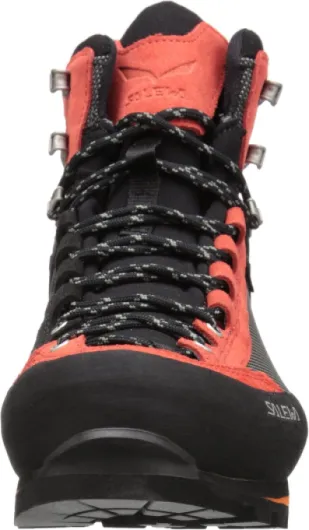
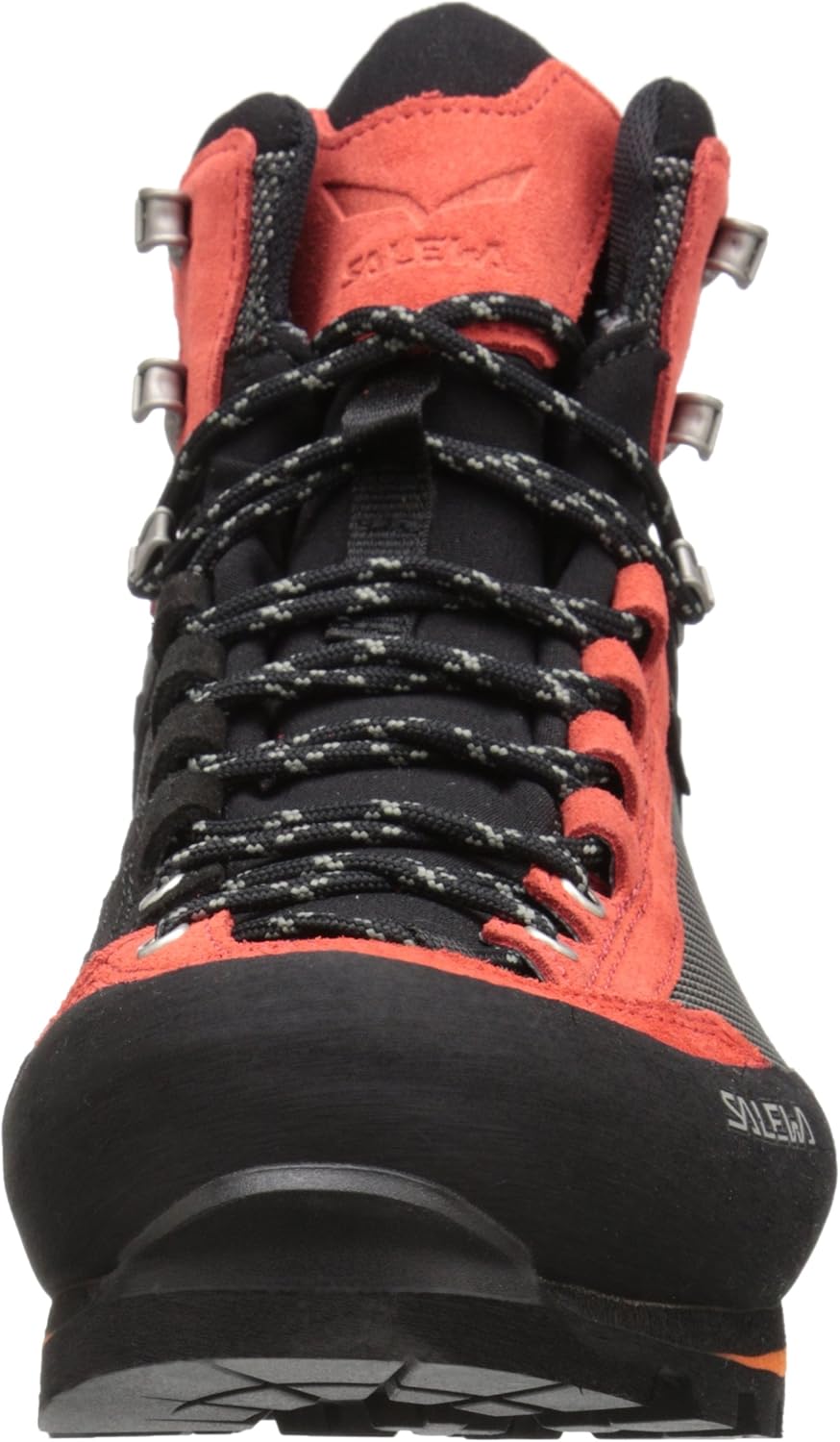
I’ve been using the Salewa Crow Gore-Tex men’s boots (size 11.5 UK, Black Papavero) as my main mountain boots for mixed stuff: long rocky hikes, Scottish-style wet days, some snow, and a bit of easy crampon work. These aren’t casual hiking shoes, they’re proper semi-automatic crampon compatible boots, so I went into this knowing they’d be on the stiff and heavy side. If you’re used to soft trail shoes, they’re going to feel like ski boots at first.
What pushed me to try them was the mix of Gore‑Tex, Vibram Mulaz sole, and the 3F heel/ankle support. I’ve had ankle issues and I wanted something that actually locks my foot in place. I also saw the 4.4/5 rating and a lot of people saying they were blister-free, so I was curious if that was true or just marketing fluff.
I’ve put them through around 50–60 km over several weekends: wet UK hills, a couple of full days in snow, and some rough scree and rocky ridges. I also used them on one long approach where I instantly regretted not taking lighter boots, so I’ve seen both the good and the annoying sides. No brand collaboration, I paid for them, so I don’t feel the need to be polite.
Overall: they’re very capable boots for serious terrain, but they are not comfy slippers. If you expect soft cushioning and running-shoe comfort, you’ll be disappointed. If you want something that feels like a tank on your feet and you’re OK with the weight and stiffness, they start to make sense.
Value: good deal if you actually use what they’re built for
Price-wise, the Salewa Crow GTX usually sits in that mid-to-high bracket for mountain boots. Not the cheapest, not the top-end either. For what you get – Gore‑Tex, Vibram sole, crampon compatibility, serious rand, and solid construction – I’d say the value is pretty solid if you actually need a mountaineering-capable boot. If you only stroll on waymarked paths, you’re basically paying for features you won’t use and carrying weight you don’t need.
Compared to similar boots I’ve used from Scarpa and La Sportiva, the Crow feels like a slightly more modern, synthetic-heavy alternative. Some reviewers even compare them to older Scarpa Rebel Lite models, and I agree: they’re in that same category of technical, relatively light (for what they are) mountain boots. The big plus is that you can often find them at a discount because they’ve been around for years and aren’t the “latest model” anymore. At full RRP they’re fair, at a discount they’re good value for money.
There are a couple of hidden costs to consider. First, I’d strongly recommend buying better insoles. The stock ones are basic and don’t do much for cushioning, and that really affects comfort on long days. Second, if you rarely need crampons, you might be better off with a lighter hiking boot and save both money and energy. So the value equation depends a lot on your usage: frequent alpine/winter days = worth it; casual dog walks and summer trails = not worth it.
Overall, for someone who does proper mountain routes, winter hillwalking, and occasional easy mountaineering, the Crow GTX hits a nice balance between cost, durability, and performance. For beginners or occasional hikers, I’d say this is more boot than you need and your money might be better spent on something lighter and more comfortable.
Design: stiff, technical, and not really for the café afterwards
Design-wise, these boots scream “mountain”, not “lifestyle”. The Black Papavero colour is basically black with red/orange accents. It’s fairly low-key by mountaineering standards, but nobody will mistake them for everyday trainers. The 360° rubber rand wraps all around the boot, and that’s one of the better design points: you can scrape them on rocks and kick into scree without worrying about shredding the upper.
The lacing system is actually well thought out. You get a "cinch" lace hook halfway up that locks the tension so you can keep the lower part tight and the upper part looser (or vice versa). On long days, I liked being able to keep the forefoot snug for precision but ease off the top to stop my ankle bones getting sore. The laces themselves are standard but grip well in the hooks and don’t slip once tied.
Profile-wise, the sole is fairly narrow and precise at the front, which is good for edging on rock and placing your feet on small holds or steps. The heel has a defined block and tread that bites decently into soft ground and snow. On wet rock, grip is decent but not magic – I’ve had a couple of moments where they felt a bit sketchy on very smooth, wet stone, so don’t expect miracles. Compared to my softer hiking boots, they feel more secure on steep rock but less forgiving on muddy, rooty trails.
Daily wear? Forget it. They’re too stiff, the sole doesn’t flex naturally, and you’ll look like you’re either coming from or going to a glacier. But as a technical design for alpine and winter hiking, the choices make sense: lots of protection, strong rand, precise toe, and an ankle system focused on stability over comfort. If you want a boot you can also wear to work, this isn’t it.
Comfort: zero blisters for me, but hard underfoot and definitely not "cozy"
Comfort is where these boots are a bit split. On the one hand, the fit and heel hold are genuinely good. On the other hand, the underfoot feel is hard and unforgiving. I sized up half a size (similar to a lot of reviewers) and that worked well: enough room for thicker socks and downhill swelling, but still precise enough on technical bits. Once laced up, my heel barely moves, even on steep ascents, and I’ve had no blisters at all, which for me is rare with new boots.
The downside is the lack of cushioning. After about 20 km over three days on mixed terrain, the soles of my feet were tired. Not in a “wrong size” way, more in a “these boots are basically a stiff board” way. Swapping the stock insoles for aftermarket ones with more padding helped a lot. If you buy these, I’d almost budget an extra pair of proper insoles right away, especially if you’re planning multi-day trips. The rigid insole is great for crampons, but for long approaches, it’s pretty brutal.
Around the ankle, padding is decent but not luxurious. The Flex Collar does help on descents; you get a bit more backward movement, so your shins don’t get destroyed. That said, if you have bony ankles, you might find the upper hooks and collar rub until you dial in the lacing. One reviewer mentioned ankle tenderness from a prominent ankle bone – I had something similar after a long first day. Loosening the top section of laces fixed it for me.
Temperature-wise, I’d say they’re fine down to around -10 to -15°C with good socks if you’re moving. I’ve used them in cold, windy conditions, and my feet stayed okay, but they’re not insulated winter boots. Someone used them around -28°C and reported cold feet, which doesn’t surprise me. For summer and shoulder seasons in the Alps or Scottish winter days, they’re in the right zone. For deep arctic cold, look elsewhere. Overall: comfortable in terms of fit and blister prevention, but not comfortable in the cushioned, soft sense.
Materials and build: tough, synthetic, and very much on the rigid side
The upper is mostly synthetic with 1.6 mm suede/velvet leather panels and a full rubber rand. In practice, this means the boot takes abuse well. I’ve scraped them against sharp rocks, kicked steps into firm snow, and jammed my foot into cracks while scrambling – so far, no peeling, no obvious damage, just cosmetic scuffs on the rand. Compared to full leather boots, these dry faster and don’t get as heavy when soaked.
Inside, you’ve got a Gore‑Tex Performance Comfort lining. That’s the middle-ground Gore‑Tex: meant to be waterproof but still somewhat breathable. Waterproofing has been solid for me. I’ve stood in streams, hiked in wet snow, and crossed boggy sections where water went up over the rand. No leaks so far. Like one Amazon reviewer said, water tends to bead off the outer material at first. After a few outings, that beading drops off, so you’ll probably want to refresh the DWR at some point, but the membrane itself holds up.
The midsole and insole combo are where the boot really shows its mountaineering DNA. The insole is a rigid polyamide with fibreglass, and you feel it: forefoot flex is minimal. Good for crampons and edging, not great for long, flat approaches. Cushioning in the midsole is on the thin side. There’s enough to take the sting out of rocks, but it’s nowhere near the plush feel of a typical hiking shoe. After back-to-back long days, the balls of my feet felt beaten up until I added better insoles.
Overall build quality feels solid: neat stitching, no glue blobs, no weird pressure points from badly finished seams. The synthetic materials make it feel more like a technical tool than a classic boot. If you’re into traditional leather boots, this will feel a bit cold and plasticky. But if you care more about durability and function than looks, the material choices are pretty sensible for what the boot is meant to do.
Durability: built to take a beating, but you pay in weight and feel
In terms of durability, these boots feel like they’re built to be abused. The 360° rubber rand is the star here. You can smash your toes into rocks, drag your feet along rough edges, or kick steps into firm snow and the upper barely shows it. After a bunch of outings on rocky ground and scree, mine have a few cosmetic scuffs but nothing structural. No peeling rand, no loose stitching.
The synthetic upper and suede mix also handle water and mud well. I’ve rinsed them off with a hose and scrubbed them a few times, and they clean up easily. Because they’re not full leather, you don’t have to baby them with wax all the time, though reproofing the outer with a spray will help maintain the water beading. The Gore‑Tex liner has stayed watertight so far, and given the track record of similar boots, I’d expect a few solid seasons out of them if you’re not out every single weekend.
The sole wear has been reasonable. The Vibram New Mulaz rubber isn’t super soft, so it doesn’t wear down crazy fast. After a mix of rocky trails, some road walking (unavoidable on approaches), and scrambling, the lugs are still in good shape. The heel edge is holding up, which matters for braking on descents and for snow use. I don’t see myself needing a resole any time soon at my current usage rate.
The trade-off is that all this durability adds to the heavy, rigid feel. You get a boot that will probably outlast a softer trekking shoe by a good margin, but it also feels more like equipment than footwear. If you hike a few times a year, this is overkill. If you’re out regularly in rough conditions, the toughness starts to pay off.
Performance: shines in rough terrain, overkill on easy trails
Where these boots really make sense is on rough, steep, or mixed terrain. On rocky ridges, scrambling sections, and firm snow, they feel very secure. The Vibram New Mulaz sole has a fairly aggressive heel and a precise front. I’ve been impressed a few times on wet grass and loose scree where I expected to skid but stayed upright. They’re not magic on slimy rock, but no boot really is. Compared to my softer hiking boots, I trust these more on awkward steps and side-hilling.
Crampon-wise, the rigid sole and heel design work well with semi-automatic crampons. I’ve used them for easy snow gullies and icy slopes, and the platform feels stable, without that flexy, insecure feeling you get when you stick crampons on a soft hiking boot. That’s probably the main reason to buy these over a standard trekking boot: they actually work properly with crampons and feel built for it.
Waterproofing performance has been strong. I’ve walked through streams and bogs where water was up to the rand, plus long days in wet snow. So far, no leaks, no damp toes. Breathability is average for Gore‑Tex: your feet will get warm on hot days, but for a boot that’s meant to take snow and cold, it’s fine. I wouldn’t pick them for a summer heatwave hike, but for 90% of mountain weather they’re okay.
The weakness is on long, easy mileage. On forest tracks or gently rolling paths, the stiffness starts to feel pointless. You’re dragging more boot than you need, and your feet get more tired than they would in a lighter, more flexible shoe. So performance is very dependent on the use case: excellent in technical or winter conditions, kind of annoying for casual hikes where you don’t need crampons or a rigid sole.
What kind of boot this actually is (and what it isn’t)
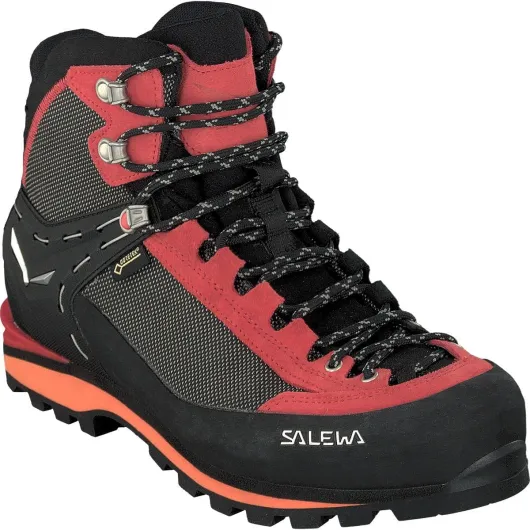
The Salewa Crow GTX is basically a light-ish mountaineering / heavy-duty trekking boot. It sits between a classic B2 mountaineering boot and a tough hiking boot. The outsole is a Vibram New Mulaz that’s compatible with semi-automatic (combi) crampons, and the insole is pretty rigid (polyamide with fibreglass), so it’s built more for edges, snow, and rock than for walking soft forest trails all day.
Weight-wise, you’re looking at around 620–675 g per boot, depending on size. On the foot, you really feel that. After a few hours, especially on easy tracks, you’re very aware you’re hauling more boot than you’d like. On steeper or technical ground though, that same stiffness and weight feel more justified – you get a stable platform, especially on rock steps, snow, and when side-hilling.
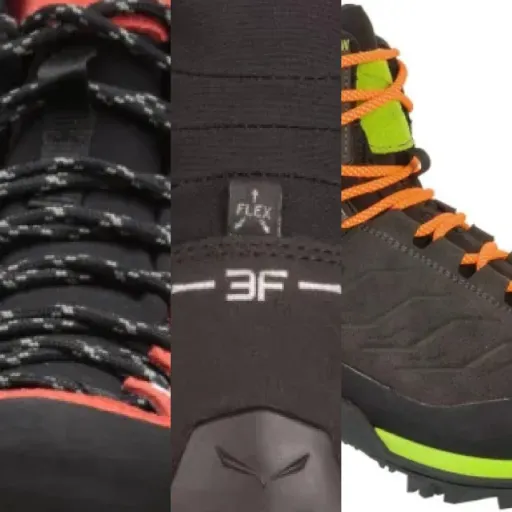
The boot height is mid-top/ankle, with a Flex Collar at the back. In practice, that collar does give a bit more rearward movement on descents compared to old-school rigid boots. It’s still a stiff boot, but you don’t get that brutal shin pressure you sometimes get with very rigid mountaineering models. The 3F system basically ties the heel, ankle, and lacing together, so when you crank the laces, your heel stays put. On me, heel lift was almost zero, even on steep ascents.
In terms of positioning: if you mainly hike on paths below snow line, this is overkill. If you do rocky alpine routes, Scottish winter days, or mixed snow/scree stuff, they fit the brief pretty well. They’re not insulated like a proper winter boot though, so think “alpine summer / shoulder season / mild winter with good socks”, not “-30° expedition boot”.
Pros
- Very secure fit with strong heel and ankle support, genuinely low blister risk for me
- Stiff sole works well with semi-automatic crampons and on rocky/snowy terrain
- Durable construction with full rubber rand and solid waterproof Gore‑Tex lining
Cons
- Hard underfoot with limited cushioning, stock insoles are weak for long days
- Relatively heavy and stiff, overkill and tiring for easy or everyday hiking
- Not warm enough for very low temperatures without careful sock management
Conclusion
Editor's rating
The Salewa Crow Gore‑Tex men’s boots are serious mountain boots that make sense if you spend time on rocky ridges, in snow, or using crampons. They’re stiff, protective, and feel very secure around the ankle and heel. Waterproofing is solid, grip is good on most mountain surfaces, and durability looks strong thanks to the full rubber rand and synthetic upper. I had no blisters, which for me is a big deal, and once I dialled in the lacing they felt very locked-in and precise.
On the flip side, they’re heavy and hard underfoot. Long, easy walks are not their thing, and the stock insoles really don’t help. Plan on adding better insoles if you’re doing multi-day trips. They’re also not very warm for extreme cold, more suited to alpine summer, shoulder seasons, and typical Scottish winter days than deep arctic conditions. If you mainly want comfy hiking boots for casual trails, these will feel like overkill and might put you off hiking altogether.
If you’re a hiker or mountaineer who wants one boot for mixed rocky routes, winter hillwalking, and occasional crampon use, the Crow GTX is a pretty solid option, especially when found on sale. If you’re a beginner, a low-level walker, or someone who values all-day comfort over technical performance, I’d skip these and look at lighter trekking boots instead.