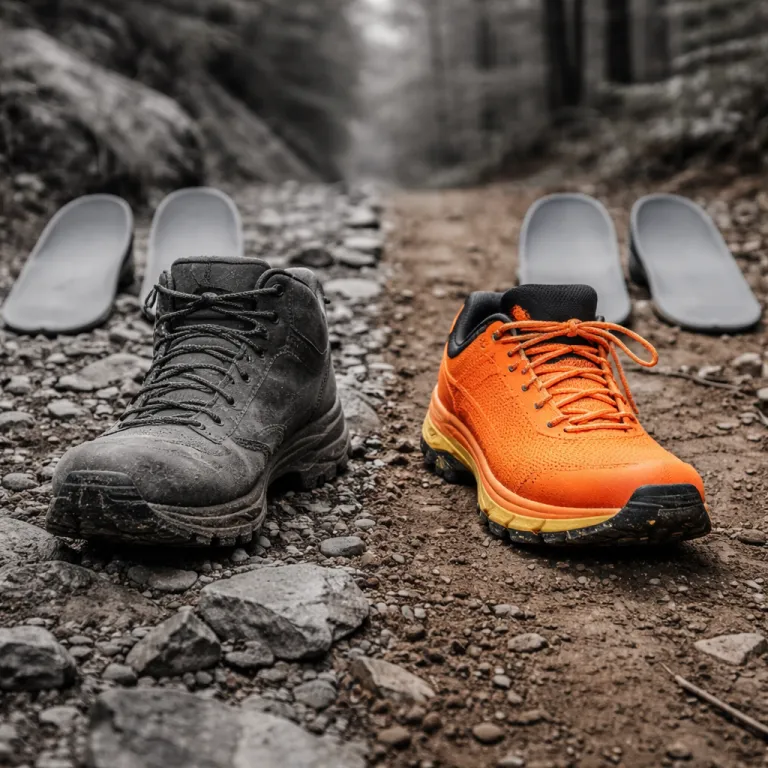
Why hiking boots vs trail runners is the wrong first question
Executive summary: Do not start by asking “hiking boots vs trail runners.” Begin with terrain, pack weight and your own feet. Light, flexible footwear shines on well-maintained paths with modest loads and stable ankles. Supportive boots still win on rough ground, in cold, wet weather and with heavy backpacks. Most experienced hikers end up with a small “quiver” of footwear rather than one do‑everything pair.
The real decision is not hiking boots vs trail runners, but how your terrain, pack weight and feet interact over long days. When you hike a mixed trail with a 20 kilogram pack, the right balance between running shoes style cushioning and classic boots style structure will decide whether your feet stay injury free or feel wrecked by dinner. Years ago I thought one perfect pair could do everything, yet repeated seasons on rocky terrain proved that each category has a clear lane.
Start with terrain before you obsess about shoes or brands, because a smooth forest trail asks very different things from your foot than a broken alpine ridge. On well graded trails where every step feels predictable, lightweight trail runners with soft midsoles and flexible uppers let your feet move naturally and keep your pound per feet ratio low, which matters when you repeat thousands of strides. Once the path turns into steep scree, wet roots and off camber slabs, a stiffer hiking boot with a defined heel brake, full length shank and serious ankle protection keeps your foot from folding where a pure trail runner would twist.
Pack weight is the second lever, and it is non negotiable if you care about staying injury free over years of hiking. To simplify the numbers in this article, think in three bands: roughly under 10 kilograms (light), 10 to 18 kilograms (moderate) and above 18 kilograms (heavy). Under the light threshold on maintained trails, most healthy runners hiking with running shoes or hybrid shoes hiking models will not feel underbuilt. Push that same foot and the same pair into a heavy pack on multi day trails, and you will feel every extra kilo through your ankles, knees and hips unless your boots will add torsional support and a more supportive midsole.
The third variable is your own foot, which this article treats as seriously as any gear spec. A high arched, rigid foot behaves like a natural carbon plate and often loves the freedom of trail running shoes, while a low arched, pronating foot collapses inward and usually benefits from a hiking boot with a wider base and stronger medial support. Ignore this and you will join the long list of hikers who blame their boots trail choice when the real issue was unaddressed biomechanics.
For experienced hikers and mountaineers, the question becomes more nuanced, because you rarely walk just one type of trail in a season. You might spend spring on muddy forest trails, summer on high alpine rocky terrain and autumn on wet leaf covered paths, which means one pair boots cannot be perfect for every context. That is why serious runners hiking long distances often rotate between a lighter trail runner for fast, light missions and a more protective hiking boot for shoulder season and heavy pack trips.
Think about how your feet felt at the end of your last demanding trip, not how your boots looked in photos. If your foot was sliding forward on descents, your running shoe style footwear probably lacked heel hold and midfoot support, even if the overall weight felt great. If your ankles felt locked and your stride felt like marching rather than hiking, your boot may have offered too much ankle support for your natural gait and the trails you actually walk.
One more reality check before we dive into specific use cases for hiking boots vs trail runners. Halfway Anywhere surveys of Pacific Crest Trail hikers show that trail runners dominate thru hiking on long, graded trails, while Backpacker, Treeline Review and Switchback Travel testing still favor boots for heavy loads, winter and technical mountain routes. Both can be true at once, and this article will keep returning to that tension instead of pretending there is a single best pair for every hiker and every trail.
Where trail runners and running shoes genuinely win
On long, mostly smooth trails with moderate pack weight, trail runners and modern running shoes are simply easier on your feet and joints. When your base pack sits under about 7 kilograms and your total pack weight stays below 11 kilograms, the reduced pound per feet load from a lightweight trail runner lets you move faster, recover quicker and stay mentally fresher. That is why thru hikers on the Pacific Crest Trail and Appalachian Trail overwhelmingly choose trail running shoes like the Altra Lone Peak or Hoka Speedgoat for their main pair.
These shoes hiking models use soft, resilient midsoles that feel like road running shoe foam, but with lugs and rock plates tuned for dirt and rocky terrain. The result is a cushioned ride that keeps your foot from feeling every small stone, while still allowing enough flex for natural toe off and efficient walking mechanics. If your foot is stable and your ankle does not collapse inward, that combination of flex and cushioning can keep you injury free over thousands of kilometres.
Summer day hiking is another clear win for trail runners, especially when temperatures climb and your feet swell. A light, breathable pair with a mesh upper dumps heat and moisture far better than a waterproof hiking boot, which means less maceration, fewer blisters and happier skin after long days on hot trails. Many runners hiking in shoulder season will still reach for these shoes, pairing them with wool socks and careful route choices to avoid prolonged snow or slush.
Foot shape matters even more when you lean toward running shoes for hiking, because the wrong last will punish you quickly. Wide forefoot hikers often thrive in trail runners with generous toe boxes, while narrow heels may need a more sculpted running shoe to avoid slippage and hot spots. If your foot feels locked in and your toes can splay naturally, that pair will likely serve you well for years of mixed trail use.
There is also a psychological benefit to light footwear that does not get enough attention in most hiking boots vs trail runners debates. When your shoes feel light and responsive, you are more likely to adjust your stride, dance around obstacles and stay nimble on technical sections, which can reduce the need for brute force ankle support. Combine that with trekking poles, which several studies show can reduce knee impact by roughly a quarter, and you have a system that keeps you upright and injury free without relying solely on a stiff boot.
For fastpacking and ultralight backpacking, the calculus tilts even further toward trail runners and running shoes. If you keep your pack weight under 9 kilograms and your route stays mostly on established trails, the energy savings from lighter footwear add up hour after hour, day after day. Many hikers who switched from a traditional hiking boot to a trail runner on routes like the Tour du Mont Blanc report feeling less fatigue in their feet and calves, even when covering more vertical gain.
That does not mean every running shoe marketed as trail ready is appropriate for serious mountain use. Some models lack a rock plate or adequate outsole rubber for wet rock, which can turn a casual trail into a slip hazard when you add a heavy pack. Before you commit, read detailed reviews from outlets that test on real mountains and compare how specific models handle wet slabs, loose scree and mixed terrain, then match those findings to your own gear list and objectives.
When your trips lean toward three season, on trail and relatively light, your default choice can reasonably be a trail runner or hybrid running shoe. Keep one more supportive pair boots in your gear closet for winter, snow and heavy loads, but let your feet enjoy the freedom and efficiency of lighter footwear whenever conditions allow. For mountaineers who still need serious boots for technical climbs, a dedicated pair of trail runners for approach hikes can save your legs before the real work even begins.
For readers comparing specific models, resources that focus on top mountaineering hiking boots can help you see where trail runners stop and true alpine gear begins. Use those comparisons to decide when a lightweight trail shoe is enough and when a full mountaineering boot is non negotiable for safety. The line is not just about crampon compatibility, but about how much ankle protection and underfoot stiffness you need when the trail disappears and the mountain takes over.
Where hiking boots still beat trail runners
Once you leave the comfort of graded trails and light packs, the balance in hiking boots vs trail runners shifts decisively toward boots. Carry more than about 14 kilograms, add multi day food and water, then step onto steep, rocky terrain, and the extra structure of a hiking boot becomes less about tradition and more about physics. Your foot and ankle simply have more leverage acting on them, and a supportive boot spreads that load across leather, lacing and midsole instead of asking your tendons to do everything.
Cold rain and shoulder season snow are another arena where hiking boots earn their keep. A high cut, well sealed boot with a quality waterproof membrane and a tall rand keeps your feet warmer and drier when trails turn into streams and mud, especially when paired with gaiters. Trail runners can work in these conditions with careful sock management, but once water is near freezing, the extra insulation and ankle protection from a boot are hard to beat.
Off trail scrambling, talus hopping and bushwhacking punish light shoes in ways that do not show up on easy paths. A robust hiking boot with a full rubber rand, dense leather or synthetic upper and a stiffer sole protects your foot from sharp rocks, hidden roots and sudden edge loads that can roll an ankle in a soft trail runner. If you have ever kicked a buried stone in a minimal running shoe, you already know how much that extra toe and metatarsal protection matters.
For hikers rehabbing ankle injuries or with chronic instability, boots trail models with real ankle support are not optional fashion pieces. The combination of a taller cuff, strategic padding and lacing that locks the heel down can reduce unwanted motion and give damaged ligaments a chance to heal while you still enjoy hiking. In these cases, boots will not magically make you injury free, but they can be a crucial part of a broader rehab plan that includes strength work and careful route selection.
Durability over years of use is another area where a well built hiking boot often outlasts a lightweight trail runner. A quality leather hiking boot can log several seasons of weekend trips and a few long treks before the midsole packs out, while many running shoes and trail runners feel tired after 800 to 1 000 kilometres. If you only buy one pair boots every few years, the higher upfront cost can make sense compared with burning through multiple pairs of lighter shoes.
Technical winter and shoulder season mountaineering demand even more from your footwear, and this is where true high cut boots remain non negotiable. When you are front pointing on firm snow, kicking steps on icy trails or edging on frozen turf, you need a boot that interfaces securely with crampons and keeps your foot warm at rest. Trail running shoes and standard trail runners simply do not offer the insulation, stiffness or ankle protection required for this kind of terrain, no matter how strong your legs are.
For hikers who split time between demanding winter routes and easier three season trails, a two shoe quiver makes more sense than forcing one compromise pair into every role. Use a supportive hiking boot or mountaineering boot for snow, heavy pack trips and technical scrambles, then switch to a lighter trail runner when the trail dries out and your pack weight drops. That strategy respects what each category does best and keeps your feet happier across a full calendar of hiking.
If you are unsure where your needs fall, curated lists of top high cut hiking boots can clarify what serious support and protection look like in practice. Compare shaft heights, midsole stiffness and outsole compounds, then map those features to the specific trails and conditions you face most often. The right hiking boot should feel like an extension of your leg on rough ground, not a cast that fights your natural stride on every step.
One final note for the boot skeptics who have fully converted to trail running shoes. There will be trips where a running shoe or trail runner is simply the wrong tool, such as early season alpine traverses with lingering snow bridges or remote routes with no easy exit. In those contexts, carrying a few extra hundred grams on each foot is a small price to pay for the margin of safety that a real hiking boot provides when conditions turn against you.
How to match footwear to your feet, pack and style of hiking
Choosing between hiking boots vs trail runners becomes easier when you start with your own body and style of hiking. Look honestly at your foot shape, past injuries, typical pack weight and the trails you actually walk, not the ones you scroll past online. That self audit will tell you whether your default should be a trail runner, a hiking boot or a hybrid shoe that blends both worlds.
Foot type comes first because no amount of clever gear can override bad biomechanics forever. If you have a high, rigid arch and a naturally stable ankle, you can usually thrive in lighter running shoes or trail runners with moderate support, even under a reasonable pack weight. If your arch collapses, your foot rolls inward and you have a history of ankle sprains, a more structured hiking boot with real ankle support and a wider base will likely keep you injury free over the long term.
Pack weight is the next filter, and it is brutally simple once you stop arguing on forums. Under about 9 kilograms, most healthy hikers on maintained trails can safely use trail running shoes or hybrid shoes hiking models without feeling underbuilt, especially if they use trekking poles. Between 9 and 16 kilograms, the choice becomes more personal, but once you push past 18 kilograms, a supportive hiking boot or at least a very robust trail runner with a firm midsole is the safer bet.
Style of hiking matters just as much as the numbers on your scale. If you mostly hike short, fast loops on local trails with minimal gear, a responsive running shoe or lightweight trail runner will keep your feet happy and your stride lively. If your calendar is full of multi day trips, off trail passes and shoulder season storms, your primary pair boots should lean toward the protective end of the spectrum, with a second lighter pair for easy days.
The honest middle ground is where many experienced hikers quietly live, even if online debates pretend otherwise. Mid height trail shoes like the Salomon X Ultra Mid or La Sportiva TX Hike blend elements of both hiking boots and trail runners, offering more ankle protection and support than a low running shoe without the full weight of a traditional boot. For many feet and many trails, that compromise keeps you upright on rocky terrain while still feeling light enough for long days.
Real world testing often forces us to change our minds mid trip, and that humility is healthy. I have started routes in a trusted trail runner only to swap into a stiffer hiking boot after two days of side hilling on loose scree, once my ankles and the small muscles in my feet started to complain. I have also bailed on a heavy boot during a heat wave and finished a trek in a spare pair of running shoes, trading some ankle support for cooler, happier feet.
Protection from the environment extends beyond just footwear, especially on overgrown or poison ivy lined trails. Pairing the right shoes with dedicated protective gear for serious hikers and mountaineers keeps your skin and joints safer, letting you focus on movement instead of damage control. Think of your boots, socks, gaiters and clothing as a single system that manages friction, moisture and impact across every kilometre.
Whatever you choose, remember that boots will not fix poor training, and trail runners will not magically make you fast. Strong feet, mobile ankles and a realistic approach to pack weight matter more than any single gear choice, especially if you want to keep hiking hard trails for many years. In the end, the best pair boots or shoes is the one that matches your body, your routes and your willingness to adapt when conditions change, not the one that wins arguments online.
Key figures for hiking footwear choices
- Surveys of Pacific Crest Trail thru hikers consistently show that more than 80 percent choose trail runners or running shoes over traditional hiking boots for the majority of the route, reflecting the dominance of lightweight footwear on long, graded trails. Halfway Anywhere’s annual PCT Gear Survey (for example, the 2022 and 2023 reports) is a widely cited source for these figures.
- Independent lab and field tests on trekking poles indicate that using poles can reduce knee joint loading by roughly 20 to 25 percent on descents, which helps compensate for the reduced ankle support found in many trail running shoes compared with high cut boots. These results appear in multiple biomechanics studies on pole assisted hiking and downhill walking, including controlled treadmill experiments.
- Many footwear brands and reviewers report that typical trail runners and running shoes feel significantly degraded after about 800 to 1 000 kilometres of use, while well built leather hiking boots can remain structurally supportive for several seasons of regular hiking before midsoles and outsoles require replacement. Long term tests from outlets like Backpacker, Treeline Review and Switchback Travel frequently echo this range in their durability notes.
- Backpack load recommendations from experienced guides often suggest that once total pack weight exceeds roughly 18 to 20 kilograms, hikers benefit from the added torsional stiffness and ankle protection of a supportive hiking boot, especially on uneven or rocky terrain. Guide services and outdoor education programs commonly teach similar thresholds when they discuss pack planning and footwear.
- Market analyses of outdoor footwear sales show a steady increase in the share of trail running shoes and hybrid trail runners over the past decade, even as demand for technical mountaineering and high cut hiking boots remains stable in regions with alpine and winter conditions. Industry reports from major retailers and trade groups highlight this shift toward lighter footwear and more versatile shoes hiking designs.
References
- Halfway Anywhere Pacific Crest Trail Gear Surveys (multiple years)
- Backpacker Magazine footwear reviews and long term tests on hiking boots and trail runners
- Treeline Review and Switchback Travel hiking footwear guides and durability reports
- Biomechanics research on trekking poles and knee joint loading during downhill walking