
Summary
Editor's rating
Value: worth it if you actually use what you’re paying for
Design: more approach-boot than casual hiker
Comfort: stiff at first, then solid all-day support
Materials: tough upper, synthetic feel, proper Gore-Tex
Durability: built to take abuse, but not ultra-light
Performance on the trail: grip, support and waterproofing
What you actually get when you unbox them
Pros
- Very good heel hold and ankle support, especially on descents
- Tough upper with strong toe protection and solid overall durability
- Reliable waterproofing with Gore-Tex and a grippy Vibram outsole on mixed terrain
Cons
- Stiff out of the box, needs a break-in period
- Heavier and more technical than needed for casual flat walks
- Can run warm in mild weather, especially with thick socks

Specifications
View full product page →| Brand | Salewa |
Midweight boots that feel more 'alpine' than 'casual hike'
I’ve been using the Salewa Mountain Trainer Mid Gore-Tex (Asphalt Fluo Orange, size 9 UK) for a mix of UK hill walks, rocky trails and muddy woodland. I usually hike in Scarpa and Meindl, so I had a decent reference point. These Salewas sit somewhere between a classic heavy leather boot and a lighter approach shoe. They’re not your easy dog-walk boots; they feel built for proper terrain.
Out of the box, the first thing I noticed was the stiffness. Not brick-hard like full mountaineering boots, but definitely firmer than most “hiking trainers”. If you’re used to soft, bendy trail shoes, these will feel a bit like overkill at first. But once I got them on rocky ground and steep paths, that stiffness started to make sense: the foot stays stable, and you don’t feel every stone through the sole.
I tested them on wet grass, muddy bridleways and some rocky sections with loose stones. Grip has been solid so far, and the ankle support is noticeable without being restrictive. I carried a 10–12 kg backpack on a couple of hikes, and ankle roll just wasn’t a concern. If you do a lot of uneven or mixed terrain, that’s where these start to justify their weight and feel.
Overall, my first impression: serious mid-cut boots for people who actually go off the nice paths. They’re not perfect – there’s a break-in period and they’re not the lightest – but they feel trustworthy. If most of your walking is on flat gravel paths, they’re probably too much. If you’re in the hills a lot, they start to make sense pretty quickly.
Value: worth it if you actually use what you’re paying for
Price-wise, the Salewa Mountain Trainer Mid GTX usually sits in the mid-to-high range for hiking boots, roughly in the same ballpark as similar Gore-Tex models from Scarpa, Meindl, etc. So this isn’t a budget boot. You’re paying for a branded waterproof membrane, a Vibram sole, and a fairly complex upper with good protection. The real question is whether you actually need that level of boot for what you do.
If your use case is mostly dog walks on flat tracks, the value is honestly not great. You’d be paying for stiffness, protection and technical features that you rarely use, and you might end up slightly annoyed that they feel like overkill. On the other hand, if you’re doing regular hikes in the hills, rocky terrain, or carrying a pack over longer distances, they start to make more sense. The support and durability mean you’re not buying a new pair every year because the sole’s gone flat or the fabric’s torn.
Compared to full leather boots, you’re getting a bit less classic feel but probably similar or better performance in wet conditions with less maintenance. Compared to cheaper fabric boots, you’re getting better heel hold, better outsole and a more solid build. That Amazon rating around 4.4/5 matches my feeling: good value if you’re the right user, average value if you’re not pushing them.
So, are they worth the money? For me, yes – because I actually use them on rough ground and like the secure, technical feel. If you just want something comfy straight from the box for easy paths, I’d look at something cheaper, softer and lighter. In that scenario, paying extra for this boot doesn’t really make sense.
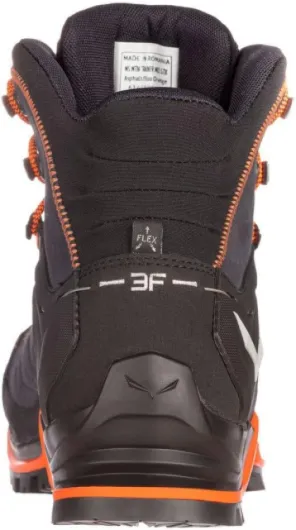
Design: more approach-boot than casual hiker
Design-wise, these sit closer to an approach boot than a soft hiking shoe. The toe area is heavily protected with a rubber bumper that wraps quite high, which I appreciated the first time I kicked a hidden rock. The overall profile is quite low-volume and technical, not wide and chunky like some traditional leather boots. If you have very wide feet, you might find them a bit tight at first, especially around the midfoot.
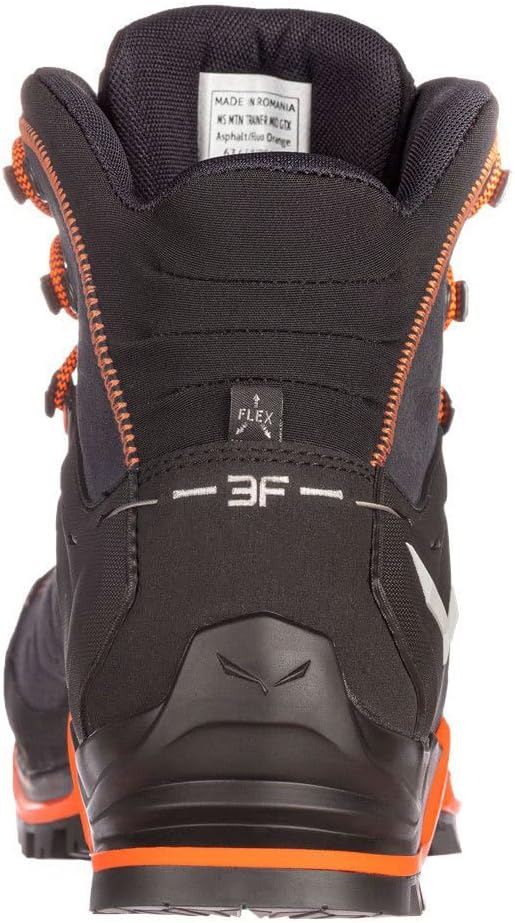
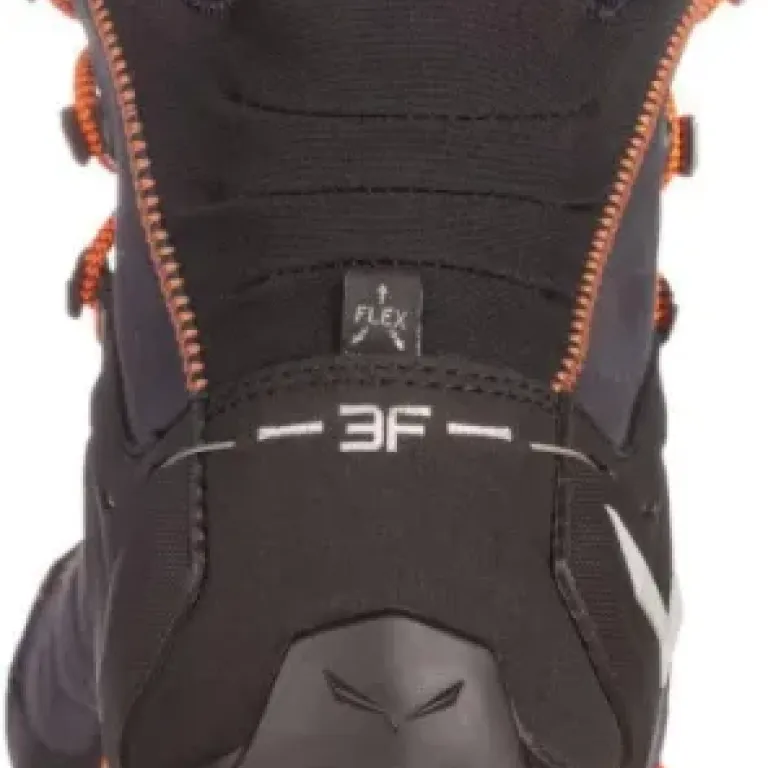
The lacing system is one of the strong points. It comes down close to the toe and ties in with Salewa’s 3F system at the heel, which basically locks your heel down without crushing the top of your foot. In practice, it works: I had almost no heel lift even walking downhill with a pack, which is usually where I start to get rubbing in other boots. The hooks at the top are easy to use with cold fingers or gloves, which matters in autumn/winter.
One nice design detail is the Flex Collar at the back of the ankle. It’s slightly cut away and curved, so when you step downhill with a long stride, the boot doesn’t dig into your Achilles. It’s not marketing fluff; I noticed less pressure on steep descents compared to stiffer collars on some Meindl boots I’ve used. The mid-height shaft gives enough support without feeling like a rigid ski boot.
On the downside, the design is clearly geared toward technical use, so they’re not very discreet. The bright orange and the aggressive outsole pattern scream “hiking boot”. If you were hoping to use one pair for city commuting and mountain trips, these will look overkill in town. But for their actual purpose – proper hiking, scrambling, rough paths – the design choices are sensible and mostly practical.
Comfort: stiff at first, then solid all-day support
Comfort is where these boots can split opinions a bit. Out of the box, they are noticeably stiff. The first short walk I did (about 5 km on mixed paths) I could feel the rigidity in the sole and around the ankle. It wasn’t painful, but it was very clear that they weren’t broken in yet. After 2–3 outings, around 20–25 km total, they started to soften just enough to feel natural while still supportive.
The fit, for me, is slightly on the snug side in the forefoot with a secure midfoot and locked-in heel. I usually size up half a size in hiking boots, and I’d say that’s a safe move here if you use thicker hiking socks. With my normal size and mid-weight socks, my toes had enough room not to bash the front, even on descents, thanks to the good lacing and heel hold. People in the Amazon reviews mentioning “blister-free from the start” – I’d say that’s possible if you get the sizing right, but I wouldn’t promise it to everyone. The boot’s structure is firm, so any hot spots from poor fit will show up quickly.
On longer days (12–15 km with some ascent), the support really pays off. My feet felt less tired compared to softer shoes because the midsole doesn’t bend much on sharp rocks and uneven ground. Ankle support is good without rubbing; that Flex Collar helps when stepping down big drops. Under the ball of the foot, cushioning is firm but adequate – not cloud-like, but my feet weren’t sore at the end of the day.
If you want something you can wear straight from the box on a multi-day trek, I’d still recommend a few shorter break-in walks first. Once they’ve loosened up a bit, they’re comfortable for long hikes, especially if you value stability and protection more than a soft, slipper-like feel. For casual short walks on flat ground, they’re frankly overbuilt and will just feel like too much boot.
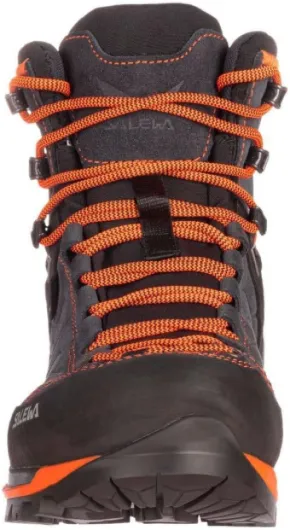
Materials: tough upper, synthetic feel, proper Gore-Tex
The upper is a mix of suede leather and abrasion-resistant synthetic fabric, with a chunky rubber rand around the toe and lower sides. In hand, it feels tough and built for scraping on rocks rather than looking pretty. After several muddy, rocky hikes and a few lazy cleanings with just water and a brush, the material has held up well: no peeling, no stitching coming loose, and no weird creasing that suggests early failure.
Inside, you’ve got a Gore-Tex Performance Comfort lining. That means a typical waterproof-boot feel: your foot doesn’t breathe like in a mesh trail runner, but it stays dry from the outside. I walked through wet grass, shallow muddy puddles and steady drizzle without any water coming in. As usual with Gore-Tex, if you wear thick socks and hike hard, your feet will warm up and you’ll get some internal sweat, but that’s normal. Compared to full leather boots, I’d say breathability is slightly better, but it’s still a waterproof boot, not a running shoe.
The sole unit is synthetic with a Vibram WTC outsole. The rubber feels reasonably soft to the touch, which usually means better grip but faster wear. So far, after a few dozen miles on mixed terrain (rock, mud, forest tracks, a bit of tarmac), the lugs are holding up fine. No chunks missing, no obvious flattening. The midsole is a 2-layer “Bilight” setup that’s meant to give cushioning but still feel supportive. Underfoot, it feels firm rather than plush – good for long days, less good if you want a bouncy sneaker-like ride.
If you like the feel and smell of natural leather, this boot is more on the synthetic/technical side. It doesn’t feel cheap, but it also doesn’t give that classic leather-boot vibe. The trade-off is less maintenance: no waxing or heavy care required, just basic cleaning and maybe a spray proofing now and then. For me that’s a win, but purists might prefer full leather models.
Durability: built to take abuse, but not ultra-light
In terms of durability, these boots feel reassuringly tough. The suede and synthetic upper hasn’t shown any serious signs of wear after regular use on rocky paths and muddy fields. I’ve scraped the toe against rocks more times than I’d like to admit, and the rubber bumper is doing its job – just cosmetic scuffs, nothing structural. The stitching around the rand and upper looks clean and has stayed intact so far.
The outsole wear is reasonable for this type of boot. After a decent amount of mixed use (let’s say around 80–100 km), the lugs are slightly rounded at the very edges but still deep and functional. If you mostly walk on rock and tarmac, any boot will wear faster, but I don’t see these shredding themselves quickly. The midsole hasn’t collapsed or gone mushy, which is a good sign for longer-term support.
The only thing to keep in mind is that all this robustness comes with weight and stiffness. They’re not ultra-light fastpacking boots; they’re more in the "I want these to last multiple seasons" camp. Compared to lighter fabric-only boots I’ve owned, I’d expect these to outlast them, especially in rocky areas where lighter uppers often tear or delaminate. The fact that people in the Amazon reviews are buying a second pair after heavy use lines up with how they feel in hand: built for the long haul.
As always, a bit of care helps. Rinse off mud, let them dry naturally (no radiators), and re-proof occasionally, and I don’t see a reason they wouldn’t do several years of regular hill use. If you abuse boots hard and hate replacing them every season, these seem like a sensible choice. If you’re chasing the absolute lightest option, you’ll trade away some of this durability.
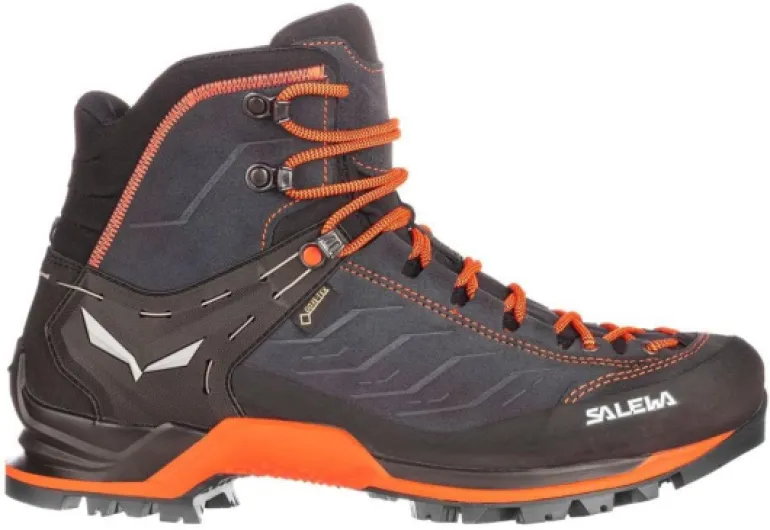
Performance on the trail: grip, support and waterproofing
On the trail, these boots do what they’re meant to do: keep you stable and dry on rough, mixed terrain. The Vibram WTC outsole has fairly aggressive lugs and a noticeable heel, which bites well into mud, wet grass and loose gravel. I used them on a damp, rocky ridge and some greasy, muddy descents, and I never had that "I’m about to skate" feeling. On wet tarmac or smooth paving, they’re fine – not magic, but no worse than other Vibram-soled boots I’ve used.
Stability is one of the strong points. The sole is torsionally stiff, so your foot doesn’t twist much when you step on uneven rocks or roots. Combined with the mid-height ankle and the 3F heel system, it gives you confidence when side-hilling or stepping on awkward edges. I carried a pack around 10–12 kg on a few hikes, and my ankles felt supported without feeling locked in a rigid shell. If you often hike on rocky or alpine-style terrain, this is where these boots start to justify themselves.
Waterproofing has been solid. I walked through wet fields, shallow streams (ankle depth) and steady rain, and so far no leaks. The Gore-Tex lining and gusseted tongue keep water out as long as you don’t go past the collar height. The trade-off is warmth: on cooler days (5–10°C) they’re great, on warmer days you’ll definitely notice your feet getting toasty, especially with thick socks. I’d call them a solid 3-season boot for the UK and similar climates, with winter use possible if you’re moving and not standing still for hours.
Where they’re less strong is in super long flat walks on hard surfaces. The stiffness that helps on rocky ground can feel a bit tiring if you’re just plodding along on tarmac or very hard packed tracks all day. They’re clearly tuned for mixed, uneven terrain rather than canal-path strolls. If that matches your use, performance is pretty solid. If not, you’d be better off with something softer and lighter.
What you actually get when you unbox them
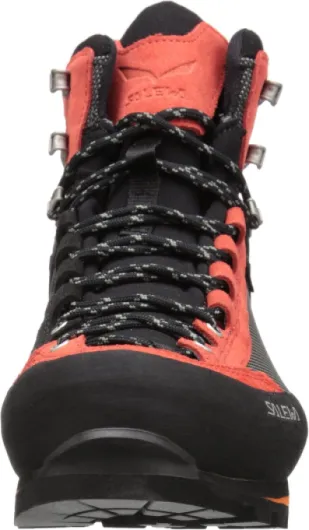
Out of the box, the Salewa Mountain Trainer Mid GTX looks like a technical boot, not a lifestyle sneaker pretending to be outdoorsy. In this Asphalt Fluo Orange colour, you get a dark grey base with bright orange accents. It’s not subtle, but it’s not clown-level either. The boot looks like it’s meant to be scraped on rocks and dragged through mud, not kept clean for Instagram.
Weight-wise, they’re in the mid range. They’re not featherlight trail runners, but they’re also not old-school bricks. The spec says around 700 g per shoe; on foot they feel slightly lighter than that number suggests, probably because the weight is well balanced and the mid-cut height isn’t too bulky. You do notice them if you’re coming from low-cut shoes, but they don’t feel like work boots.
The lacing goes down quite far towards the toe, a bit like an approach shoe, which is handy for getting a precise fit. The eyelets and hooks feel solid – nothing flimsy or rattly. The tongue is well padded and gusseted, so water and grit don’t easily get in. Inside, the Gore-Tex lining gives that slightly plasticky, technical feel you expect from waterproof boots, but nothing out of the ordinary.
In short, the presentation matches the promise: a proper trekking/hiking boot with a technical vibe. No fancy packaging, no lifestyle story printed everywhere, just a sturdy pair of boots that look ready for bad weather and rocky ground. If you want something that looks like streetwear, this isn’t it. If you want a boot that looks like it belongs in the mountains, you’re in the right place.
Pros
- Very good heel hold and ankle support, especially on descents
- Tough upper with strong toe protection and solid overall durability
- Reliable waterproofing with Gore-Tex and a grippy Vibram outsole on mixed terrain
Cons
- Stiff out of the box, needs a break-in period
- Heavier and more technical than needed for casual flat walks
- Can run warm in mild weather, especially with thick socks
Conclusion
Editor's rating
The Salewa Mountain Trainer Mid Gore-Tex is a solid mid-cut trekking boot for people who actually go off the easy paths. It’s stiff at first, but once broken in it gives very good support, strong grip and reliable waterproofing. The build feels tough, the heel hold is one of the best points, and the Vibram sole does its job on mud, rock and wet grass. If you hike in the hills, carry a pack, or like more technical routes, these boots feel trustworthy underfoot.
They’re not perfect. They’re not the lightest, they do run a bit stiff, and on warm days your feet will get hot. For casual use or short flat walks, they’re frankly too much boot and will feel a bit clumsy. But if you want a boot that can handle Scottish-style wet, rocky ground or regular trips to the mountains, the balance of durability, support and protection is pretty good for the price bracket.
In short: great for regular hikers who want a tough, supportive, waterproof boot. If you’re more of a casual weekend walker on easy terrain, save your money and get something lighter and softer instead.